A Bl’ast! from the past: ‘Blood!’ sheds new light on William DuVall’s secret history

Bl’ast! Blood! Photo courtesy Southern Lord.

In September of 1986, just six months after guitarist, singer, and songwriter William DuVall had moved away from his home in Atlanta, effectively disbanding the city’s seminal hardcore group Neon Christ, he turned up in sunny Santa Cruz, Calif. It was there amid the late ’80s flashpoint, when thriving surfing, skateboarding, and punk scenes had all converged, that DuVall joined the ranks of local hardcore outfit Bl’ast! Alongside his new bandmates, Mike Neider (guitar), Clifford Dinsmore (vocals), Dave Cooper (bass), and Bill Torgerson (drums), DuVall’s second guitar brought strength and focus to the group’s already snarling melodies.

With DuVall in town, and now functioning as a five-piece, Bl’ast! spent countless chaotic, and oftentimes bloody, nights on stages hammering out songs that would go down in history as the group’s crowning achievement — culminating with the 1987 LP, It’s in My Blood (SST Records).

The album arrived as a powerful step up from the terse but clumsy songwriting that Bl’ast! had delivered three years earlier with its debut, The Power of Expression. Nailing the high-speed tempos of songs such as “Only Time Will Tell,” “Something Beyond,” and the album’s title track became an audacious testament to the band’s physical and mental dexterity.

“They were pissed-off Reagan-era California kids who all knew each other since junior high,” DuVall says. “Then, much like what happened to Neon Christ on the opposite coast, one gets a little older and the music gets more sophisticated—it develops a different kind of swag.”

Although DuVall parted ways with Bl’ast! in March of 1987, less than a year after he’d joined the group, he co-wrote and recorded the early versions of the songs that would later be re-cut without his parts for It’s in My Blood. For more than 25 years, the only real document of the time he’d spent playing with Bl’ast! has been a few grainy live shots flashing across the screen in the “Surf and Destroy” video. But a recently unearthed cache of the original It’s in My Blood recordings, featuring DuVall’s guitar parts, reveals the significant role he played in the group’s evolution.

Released in August of 2013 via Southern Lord, and re-titled simply as Blood!, the re-released album compiles a more hard-hitting version of the group’s songwriting of the era in all of its teeth-gnashing glory. From the thundering bass and charged air of anguish that rushes in with the album’s opener, “Only Time Will Tell,” Blood takes aim at anything and anyone that gets in its way.

In the American music press, Bl’ast! was often saddled with Black Flag comparisons, and rightfully so. The visceral intensity and real-time emotional confrontation playing out in such songs as “Ssshhh,” “Winding Down,” and “Your Eyes” bear an unmistakable mark of Black Flag’s influence. But Bl’ast! adhered to a fiery and baroque dynamic. Stylistically, Blood! personifies the late ’80s era when punk and metal found common ground with a dark balance of catharsis and experimentation. The bombast of each of the album’s 11 songs builds both attitude and tension in the subtle interplay between Neider and DuVall’s guitar attacks, particularly throughout the songs “Sequel” and “Poison.” The music for the former was written by DuVall, as were most of the lyrics for the latter number.

Ultimately, this is the lineup that wrote and arranged these songs. As such, there’s a breadth and intensity here that the original release just doesn’t capture. Of course, mixing the album on the Sound City board at Dave Grohl’s Studio 606 gives the songs a thickness that the originals never projected. The members of the band worked alongside Grohl, Southern Lord’s Greg Anderson, and John “Lou” Lousteau — the latter of whom did some engineering work with Duvall for Alice in Chains’ 2009 album, Black Gives Way to Blue — to flesh out the sound. The lo-fi grit of the original release is lost, but it’s a small price to pay when setting such a powerful record straight. “The important thing for me is that with Blood!, the world finally gets to hear a more accurate version of what we were doing,” DuVall says.


Credibility aside, Blood! is a richly detailed redux that’s far more solid than anything else from Bl’ast!’s catalogue, making it an excellent artifact from a chapter in DuVall’s career that until now has remained lost in time.

A version of this story originally appeared in CL Atlanta.
The Doors open and shut : Drummer John Densmore puts Jim Morrison’s legacy on trial with ‘Unhinged’ memoir

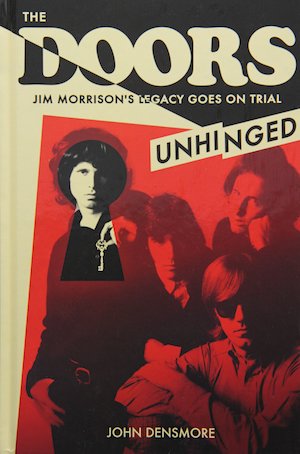
In October 1968, the Buick Motor Company paid the American rock ‘n’ roll group the Doors $75,000 to use the song “Light My Fire” in a commercial for a new luxury car, the Opel. For drummer John Densmore, keyboardist Ray Manzarek, and guitarist Robby Krieger, the deal was simply a way of getting paid for their song. But the group had previously agreed that every decision the Doors made was to be done unanimously, and each of its four members, including Dionysian front man Jim Morrison, had 100 percent veto power. When Buick came knocking, Morrison was out of the country, so the other three went forward with the commercial. When Morrison returned and found out, he was so angry that he threatened to smash an Opel with a sledgehammer on television if the commercial continued airing. For Morrison, the Door’s artistic integrity was at stake. He died in 1971, but his reaction to the commercial resonated with Densmore profoundly. So much so that it became the basis for waging legal action to stop Krieger and Manzarek when they tried to relaunch the group without him, and without Morrison, in 2002 as the Doors of the 21st Century. In his latest book, The Doors Unhinged: Jim Morrison’s Legacy Goes On Trial (CreateSpace.), Densmore chronicles the courtroom proceedings, and his subsequent victory, while justifying his actions against his former bandmates to honor Morrison’s vision.

Chad Radford: Why did you feel compelled to write The Doors Unhinged?

John Densmore: Several years ago, the Doors were knocked off of their hinges because the guitar player and the keyboard player thought they could continue without Jim. The Doors without Jim Morrison is like the Stones without Mick, or the Police without Sting. No. No. No. So I rallied Jim’s estate and we entered a legal struggle to stop them. At the time, some fans—the hardcore ones, certainly—said “What!? They’re suing the other guys?! Then it was ‘Ugh! … The other guys are countersuing for $40 million?! Oh my God, this is a train wreck.” If you read the book, you get that our goal was to preserve the Doors’ legacy, and to keep the original band and its intent intact. That’s why I wrote it. I want that story out there for those that are interested.

The word that keeps coming up around this case is “integrity …”

Jim Morrison—when he gave us that great line about “Come on Buick light my fire,” he said, “Great! I’ll smash one on television with a sledgehammer!” When he said that, he sledgehammered his feelings into my brain. I can’t get that out of my head, and the underlying thing that the book is all about is integrity. What’s interesting is that the song “Light My Fire” was primarily written by Robby. Jim wrote a couple of lines—”Our love becomes a funeral pyre.” But he went ballistic when he saw the commercial, so what does that say? He cared about the whole catalog and the meaning of the whole band. He’s dead; he’s my ancestor, and I’m going to honor him as much as I can.

Your perspective is from a very pure, circa 1965-67 kind of ideology.

That’s really smart, because when people talk about the ’60s, they really do mean ’65-’67. After that, 1968, ’69, ’70, that’s when people started getting burned out, and went from using street psychedelics to cocaine. Yuck.

Point being, you’ve carried that ideology into 2013, an era when a lot of bands would trip over themselves to have a song used in a commercial.

If you’re trying to pay the rent, the music industry is tough, man. If you have to use your songs to hawk stuff, do it. But if things get going for you, think about what Tom Waits said about selling your songs: “You’re turning your lyrics into a jingle, which means, you’re saying whatever you’re saying with your lyrics, plus you won’t be happy without this product!” And it’s true, when you sell your songs you’re selling your audience. It changes the meaning of your songs. I understand that in the beginning you have to do what you have to do to get going. But the Doors were in a different situation. People often ask, why not play Robin Hood, take the money and donate it to charity, or something, but turning a song into a commodity like that violates the sacred exchange that takes place between the artist and the listener.

Also, let me just say, a lot of people like to pooh-pooh the ’60s, and they did burn out toward the end. But it really was an incredible renaissance. The seeds of integrity, civil rights, the peace movement, feminism, and all these things were planted in the ’60s. These are big seeds! Maybe it’ll take 50 or 100 years for them to flourish, but they were planted. So keep your water cans out. Those seeds are going to grow into big beautiful trees that break up sidewalks.

Did you worry about being perceived as the villain when you took Ray and Robby to court?

In the beginning, yes, I did. Ray and Robby are great musicians, and I want them to be out there playing music, but let’s get the name straight, and it is straight now: Manzarek–Krieger, founding members of the Doors. Go see them play, they’re great. But I’m not there because Jim’s not there. Why would I play these songs without him, when I played them with him? At the beginning of the whole Doors of the 21st Century thing, people would ask, “Why aren’t you playing with them?” Truth is, a long time ago Jim said, “We’re all together in this. I don’t know how to write a song, or play a chord on any instrument. We’re going to share everything, equally. Everything! It was a beautiful pact. And you know, the Beatles are John, Paul, George, and Ringo. The Doors are Jim, Ray, Robby, and John—not Ray, Robby, Ian, Tom, Fred, Stewart, and whoever the hell else. That’s no slight on those guys, they’re fine musicians, but Ian is not Jim, and that was not the Doors.

That kind of pact—four equal shares, each with 100 percent veto power—was unprecedented at the time, correct?

It was completely unheard of in musical and in popular culture, but it made us all feel empowered to give 200 percent into those songs.

John Densmore. Photo by Scott Mitchell.

In the end, were you also putting yourself on trial by writing this book?

Yeah. Just bringing all of this up—money is such a volatile subject. It makes us crazy, and people have criticized me: “Obviously you’re just hanging out with rich socialists …” You can’t please everybody, but it affects you a little. The great thing about the Internet is that it unites us as a global village, but it gives a prominent voice to the fringe crazies. But yes, I really did feel like I was taking myself to task.

Are you willing to make amends with Ray and Robby now that the case is settled, and they’re not calling themselves the Doors of the 21st Century?

Yeah, and the road to recovery is open. I sent them the last chapter a few weeks ago, and want to make sure they get them. It’s a hard pill to swallow, but how could I not love Ray and Robby? We created this thing that’s bigger than all of us in a garage in Venice. They will forever be my musical brothers. Maybe we’ll hang again, and maybe we’ll make music again one day. Not playing Doors songs, but maybe a benefit, like Pink Floyd did a few years ago. That would be a nice, altruistic reunion.

Until then, you’re on the road with the book.

Yes, and I’m excited to come to Criminal, because I feel like one! The Doors were banned from Atlanta—oh my God. After Jim died, we tried to continue for a while, and it was kind of stupid. Anyway, we did a couple albums and were touring with one called Other Voices. We wound up on the phone with the mayor of Atlanta [Sam Massell] saying, “I don’t want no obscene Doors in my town!” Because of what went down with Jim in Miami. I said, “Our singer has passed and things are somewhat different …” He said, “I don’t care, the Doors are not playing in my town!” So we were banned from Atlanta, unceremoniously. This must have been 1973, give or take. So it’s an appropriately named venue for me. Hopefully I’ll be better received this time.

A version of this interview originally appeared in Creative Loafing on April 30, 2013.

If you have enjoyed reading this article, please consider making a donation to RadATL.

Donate with PayPal

Photographer Lyle Owerko’s ‘The Boombox Project’ offers lessons in urban Americana

Photo courtesy Lyle Owerko.

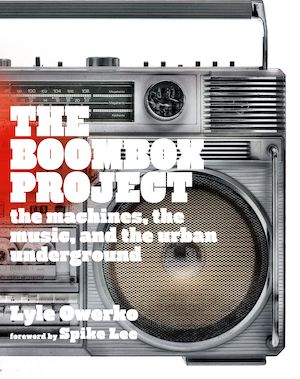
While nursing his morning coffee in his Tribeca apartment, Lyle Owerko‘s voice perks up over the phone as he recounts the chain of events that led to the creation of his first photography book, The Boombox Project. Subtitled, “The Machines, the Music, and the Urban Underground,” the book is more than just a collection of photos that fetishize the so-called “ghetto blasters” or “ghetto briefcases,” a term Spike Lee dismisses for its racist connotations in the book’s forward. At its core, The Boombox Project is both an oral history and an anthropological study. In the late 1970s and early ’80s, hip-hop, punk, and new wave were all at a flash point. The one thing that tied them all together was the ever-present but often-overlooked icon of the times—the boombox.

Owerko’s boombox series shows off the sleek designs and battle scars of this once ubiquitous machine. In the book, he juxtaposes his crisp color photos, which are set against a stark white backdrop, with a collection of historical images that illustrate the boombox’s cultural significance. Owerko likens its role to a “sonic campfire” around which people would gather to laugh, dance, tell stories, and exchange ideas.

To accentuate the reverential photos, Owerko conducted interviews with a cross-section of voices from the times: DJs, producers, and several generations of New York City hip-hop artists, including Fab 5 Freddy, LL Cool J, DJ Spooky, and Adam Yauch, aka MCA, of the Beastie Boys.

But before Owerko becomes too engrossed in tales of nostalgia, urban Americana, and his own passion for these antiquated pieces of stereo machinery, he relates the dark tale that ultimately helped fuel The Boombox Project. In late summer 2001, Owerko returned to New York for a photo assignment after a six-week stint in Africa. Visible from his living room, Owerko had always thought of the World Trade Center as the metaphorical tree in his front yard. “I could look at the towers and tell what the weather was going to be like by how much of them that I could see,” he says.

On the morning of Sept. 11, 2001, he was up early, jet-lagged, and still functioning on Africa time when he heard the first plane slam into a tower. He hadn’t yet unpacked his camera bag, so he grabbed his gear and raced toward the buildings to see what was happening. “I composed a shot that showed one tower that was still virgin and untouched next to the other tower that had this gaping hole in the side of it,” Owerko recalls. “I put the sun behind myself and composed these two shots of the tower with the sun in the perfect lighting position, and that put me in the perfect place to catch the second plane hitting.”The image he captured of the second plane hitting the World Trade Center appeared on the Sept. 13, 2001, cover of TIME magazine, just 48 hours after the attack. In 2005, the American Society of Magazine Editors ranked it as one of the 40 most important magazine covers of the last 40 years.

Accolades aside, witnessing such death and destruction was traumatic for Owerko. But in the years following the 9/11 attacks, when the War on Terror was in full swing, the idea for The Boombox Project began to grow. “When everyone else was showing the worst side of mankind, I thought why not try to find something that really shows the best of mankind?” Owerko says.

The project was initially conceived as a series of 40 to 50 portraits of boomboxes, with a plan to have someone write an introduction, which Owerko hoped would lead to a book deal. But as the photos materialized, he began to see the boom box as a larger metaphor for free speech, empowerment, innovation of youth culture, and the powerful effects of pop culture on the voices of many generations.

Throughout the book, Owerko combines vivid color photography of various boom box designs, with portraits of dancers, rappers, and rock musicians, ranging from LL Cool J and the Beastie Boys to Bruce Springsteen and the Clash to shape a coherent and surprising narrative of the machine’s history and legacy.

In addition to its social, political and historical contexts, the book traces the equally intriguing evolution of boombox aesthetics.

“I was falling in love with the objects, and I wanted to celebrate the fact that they were beat up,” he says. “At the time of the photos we were really just being bombarded with so much militaristic imagery, that when I was designing the images, the boomboxes took on sort of a militaristic look themselves, and they had lived through an embattlement of the times—the late ’70s and early ’80s—that was a really tough time in America’s history.”

Owerko claims to own somewhere in the neighborhood of 50 boom boxes, many of which will be on display with the traveling exhibit accompanying the book tour. The artist bubbles with childlike enthusiasm when he talks about some of his favorite makes and models. “My favorite is the Sharp GF-9696,” Owerko says. “That one and the Rising 20/20, which was the first mint vintage one that I found.”

The boombox gracing the book’s cover now resides in London’s Victoria and Albert Museum as part of its permanent collection. “It’s a great-looking box with the crash bars on it,” he adds. “It looks mean.”

“Boomboxes are a kind of hidden archaeology for me,” says experimental hip-hop/trip-hop turntablist/producer DJ Spooky, who contributes to the book’s oral history. “I had forgotten how influential they are until I saw Lyle’s book. I don’t have a particular, specific boombox favorite. I just live through the memories that Lyle’s book brings back.”

A version of this story was first published by CL, Atlanta. June 21, 2011, when the Owerko’s show appeared at Jackson Fine Art Gallery.

If you have enjoyed this article, please consider making a donation to RadATL.

Donate with PayPal