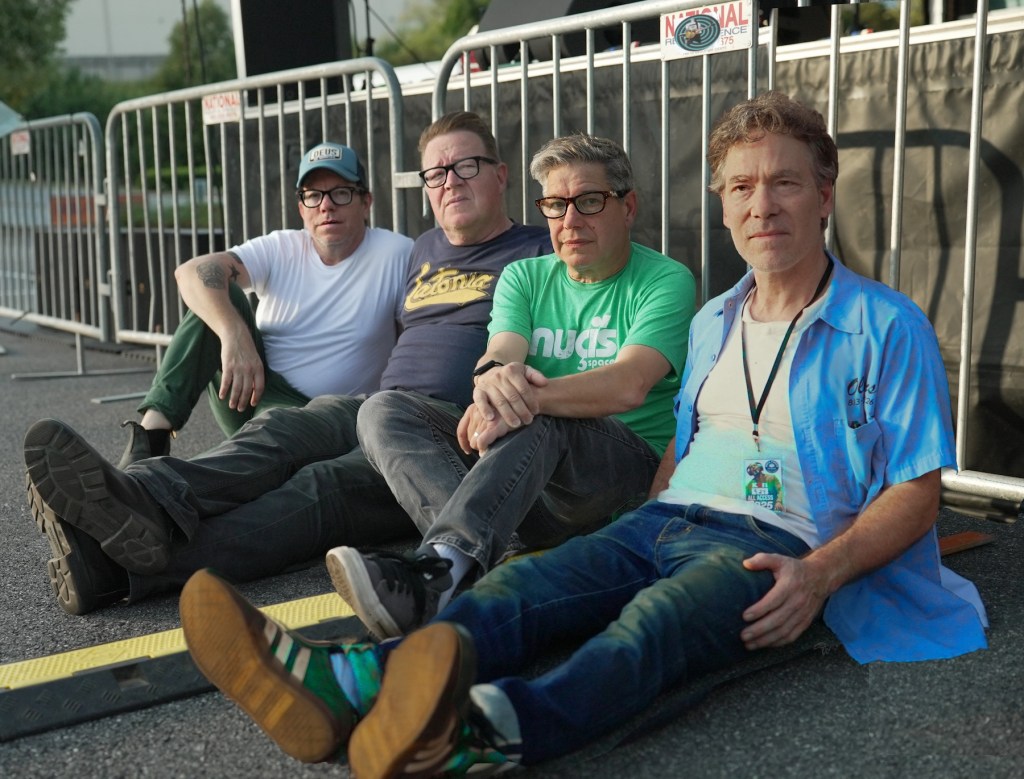
Fresh off a year of renewed energy sparked by Marc Pilvinsky’s documentary Weirdo: The Story of Five Eight, the group released their first new single in over six years, a ramped up number titled “Take Me To the Skate Park.” A successful run at SXSW served as a sharp reminder that Five Eight’s fire still burns with undeniable force.
Now, Five Eight is one of the first 100 bands announced to play SXSW 2026. In the meantime, the group hits the Music Room stage with the force of a band that’s lived through triumph, tragedy, and chaos, only to come out swinging.
Their latest single, “I’m Alone,” arrived on Nov. 7, offering a sharp, emotional snapshot of the songwriting depth that has elevated Five Eight from an underdog to a bonafide Georgia music fixture. With a new album slated to arrive next Spring via hardcore label Static Era, the show offers a chance to catch the band as they embark on a bold new chapter.
Singer and guitar player Mike Mantione, bass player Dan Horowitz, guitarist Sean Dunn, and drummer Patrick “Trigger” Ferguson share the stage with the Ladies Of… featuring James Hall, whose hybrid of glam, punk, hillbilly boogie, and dark-edged poetry turns every set into a spectacle. Hall’s presence alone brings an electric gravity to the room—equal parts swagger, invocation, and celebration. Together, Five Eight and The Ladies Of… promise a holiday show that trades sentimentality for sweat, noise, and raw, communal release.
In the true spirit of the season, the Music Room will also feature a photo booth. There will also be blind contour drawings by artist Kayti Didriksen, adding a visual counterpoint to the evening’s sonic fireworks.
Before the show at Smith’s, Five Eight’s Mike Mantione and James Hall make a stop at Criminal Records on Thursday, December 4, hosting a listening party for their new holiday tune “Christmas Without You.”
The Criminal Records in store show is free. Music starts at 4 p.m.
For the Smith’s Olde Bar show, doors open at 7 p.m., showtime is 8 p.m. $20 (advance). $30 (day-of show). $48 (VIP pre show meet-and-greet, includes a signed poster).
If you have enjoyed reading this post, please consider donating to RadATL. Venmo to @Chad-Radford-6 or click on the PayPal link below.
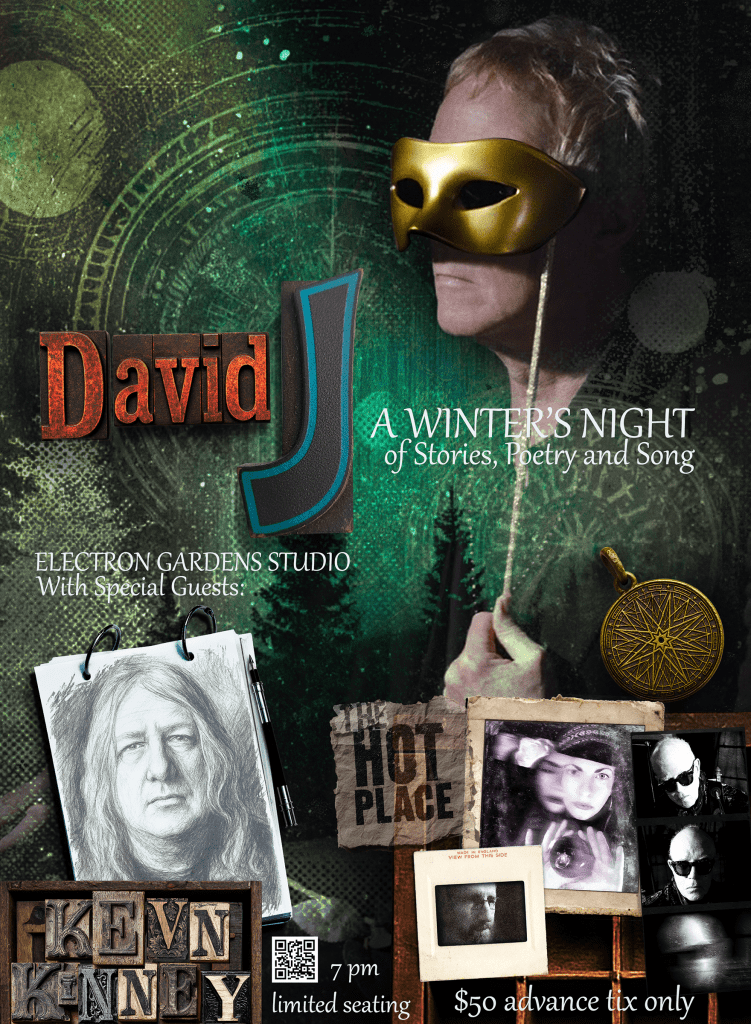
For one night only, each act brings their signature wavelenghth of Southern-gothic glow and post-punk introspection to the intimate confines of Electron Gardens in Avondale Estates’ Rail Arts District.
Lisa King of the Hot Place sets the night in motion reading selections from her book of poetry, Dark Queens and Their Quarry: Boneshadows of Motherskin. Framed by hand percussion and the crackling intimacy of her voice, King will read poems that drift between dream logic and ancestral hauntings, dovetailed by an atmospheric backdrop created by sound artist Penny Courtney.
From there, bass player and vocalist King leads the Hot Place—a trio filled out by guitarists Jeff Calder (the Swimming Pool Q’s) and Mike Lynn—delving into a set pulling equally from the shimmering noir-indie pop of the group’s debut LP, The Language of Birds, and the crystalline tension of their 2023 self-titled LP. They’ll slip in a few freshly minted numbers as well as a cover or two—songs that glide between post-punk minimalism and melodic spells sharpened by years of collaboration and collective experience.
Drivin’ N Cryin’ frontman Kevn Kinney follows with a solo set that delivers the kind of stripped down and intimate performance that’s become his signature each time he steps outside the band’s rock ‘n’ roll roar. Kevn’s solo sets take shape like opening a notebook that’s filled with decades of road stories—funny, bruised, wandering, mystical, and deeply human.
Capping the evening, David J, founding bass player of Bauhaus and Love and Rockets, threads poetry, storytelling, and songs from across his vast catalog into a singular performance.
Each number floats like a lantern through a library of obsessions: goth punk standards, solo deep cuts, and hymns of romance and ruin. And yes—expect a few beloved Bauhaus and Love and Rockets classics to work their way into the set as well.
Das Damen plays the Masquerade’s Altar stage this Friday, November 7, bringing a night of post-punk, grunge, and rock ’n’ roll spectacle. The group’s name carries weight among late-’80s and early ‘90s noise-rock aficionados. Das Damen was the rare band that channelled the fuzzed-out psychedelic sprawl of Sonic Youth with the melodic instincts of the Meat Puppets.
Longtime Atlanta showgoers might recall one of their previous local appearances opening for Nirvana at the old Masquerade in October 1990—35 years ago. The following year, Das Damen disbanded, leaving behind a cult legacy of warped riffs and stoned-out, high-volume catharsis. Now, the later lineup is on the road playing a short Southeastern run that doubles as both a reunion and a rebirth.
For this tour, singer and guitar player Jim Walters, drummer Lyle Hysen, bass player David Motamed, and new guitarist Diego Ramirez are pulling from across the group’s entire catalog, revisiting standout moments from albums such as 1987’s Jupiter Eye, ’88s Triskaidekaphobe, and ’89s Mousetrap. They’ll also roll out a previously unreleased song that’s slated for a possible (or not possible) new LP with the working title Nobody Wants This.
After Das Damen’s proper set, the group will back up singer and songwriter Bebe Buell—Playboy Magazine’s November 1974 Playmate of the month, a fixture of NYC’s rock ‘n’ roll scene, and mother of actress Liv Tyler (daughter of Aerosmith frontman Steven Tyler). Buell’s set leans into classic rock ‘n’ roll energy, offering a counterpoint to Das Damen’s heavy grooves.
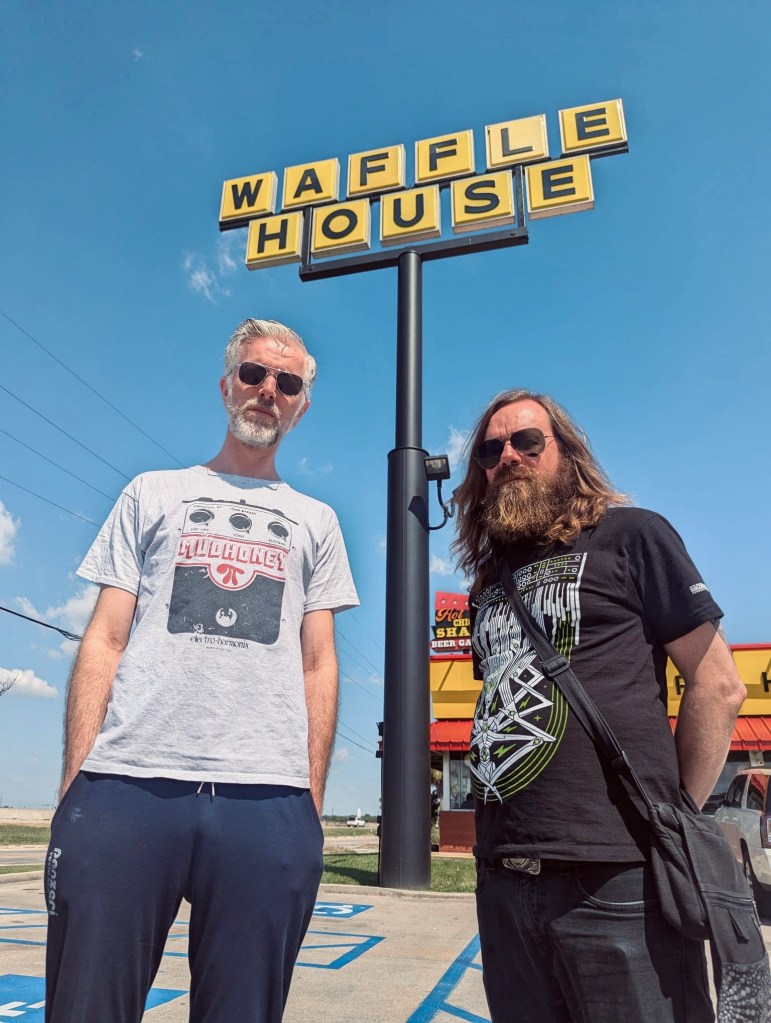
ORBIT SERVICE: Erik Drost (left) and Randall Frazier. Photo by Joep Hendrikx.
The Legendary Pink Dots and Orbit Service are two bands bound by a shared sense of mystery, atmosphere, and musical exploration. Over the years, both projects have cultivated an aura that’s equal parts cosmic and deeply personal—music that drifts between dream states, where melody and texture blur into something transcendent. Now, the connection between the two acts runs deeper than ever. Guitarist Erik Drost and keyboard and electronics player Randall Frazier—both longtime fixtures in the Pink Dots’ ever-evolving lineup—are on the road performing sets steeped in the ethereal tones of both Orbit Service’s Spirit Guide and the LPD’s latest album, So Lonely in Heaven, and the more abstract, experimental energy of Chemical Playschool 23–24.
In conversation, Drost and Frazier reflect on their creative chemistry and how their paths crossed during the making of 2004’s The Whispering Wall. They trace the evolution of Orbit Service from its early recordings to its current incarnation, and share what it means to inhabit the ever-expanding universe of Edward Ka-Spel’s songwriting. Together, they reveal that for all the mystery and gravity that surrounds their music, the heart of it all remains simple: connection, experimentation, and the pursuit of transcendence through sound.
Before playing a show in Purgatory at the Masquerade, on Friday, October 17, Drost and Frazier took an hour out of their day to talk about collaborating with each other, collaborating with Ka-Spel, and their go-to Waffle House meals while traveling across the United States.
Press play below to listen in on our conversation.
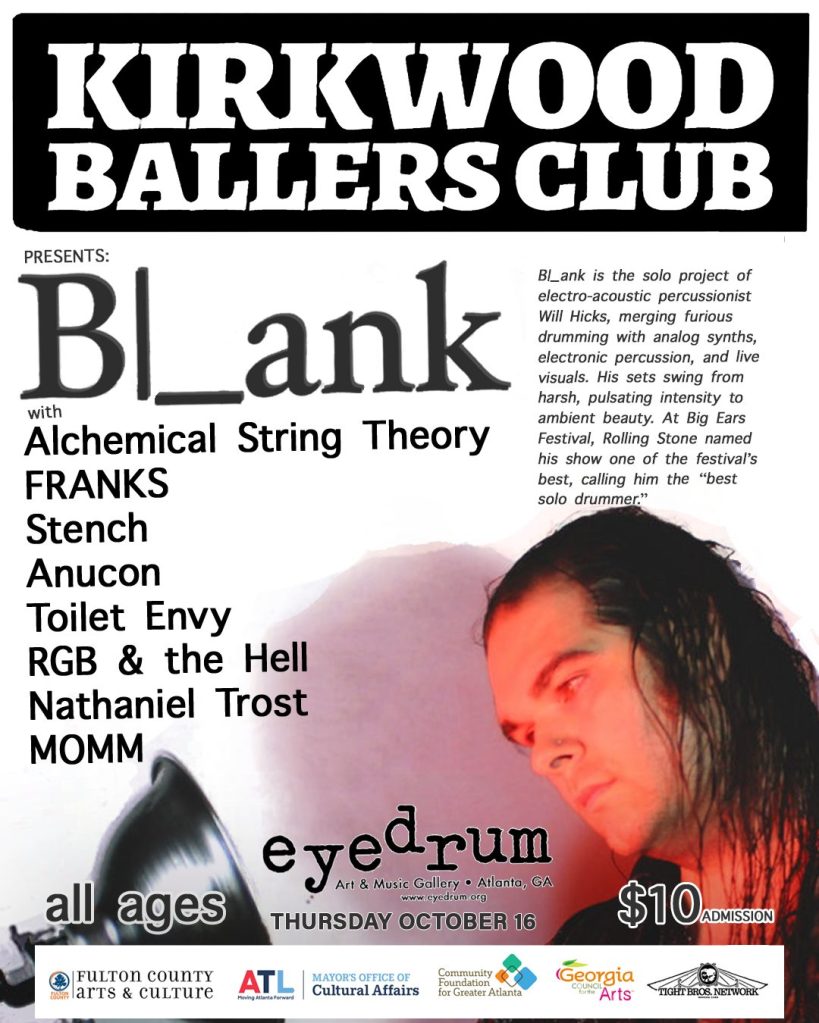
Every third Thursday of the month, Kirkwood Ballers Club takes over Eyedrum with an open forum for experimental, improvisational, and otherwise adventurous musicians and performance artists. It is the long-standing home to Atlanta’s avant-garde, experimental, and DIY musical underground. This month’s KBC takes place on Thursday, October 16. The lineup for the evening features a headlining performance by Bl_ank, the solo project of Portland Oregon’s electro-acoustic percussionist Will Hicks.
Alchemical String Theory, FRANKS atl, Stench, Anucon, Toilet Envy, RGB & the Hell, Nathaniel Trost, and Momm are also on the bill.
FRANKS atl. Photo by Ben Garden.
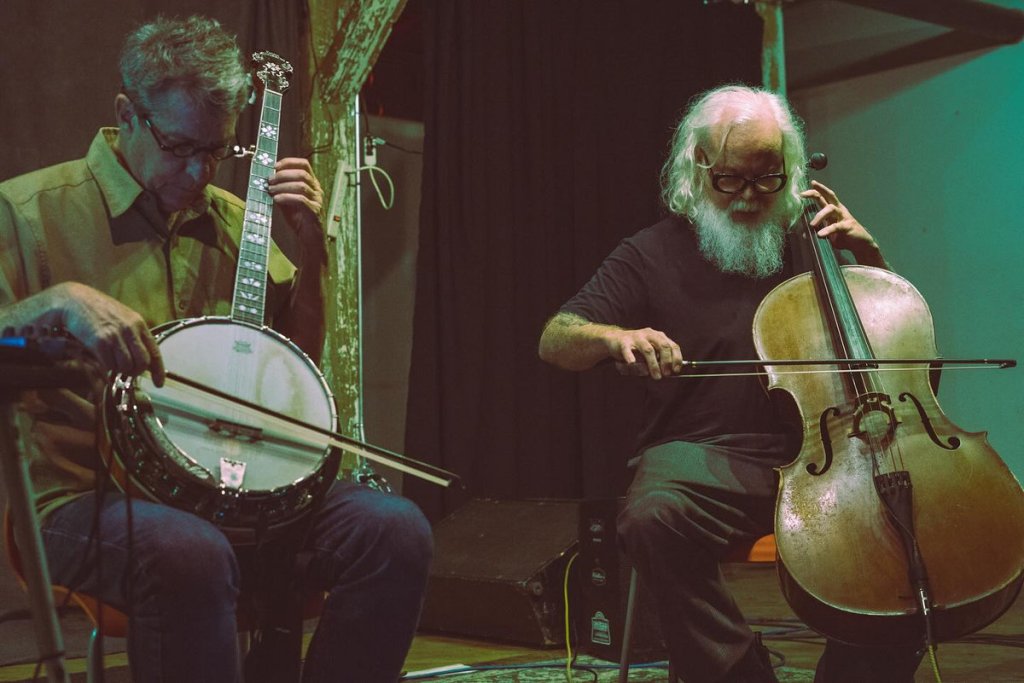
FRANKS atl, the two-piece collaboration featuring Frank Schultz (formerly of Duet For Theremin and Lap Steel) and B. Frank Holleran (W8ing4UFOs, ex-Smoke), are releasing a debut album, titled Ode to Lucenay’s Peter. They’re also hosting a Bandcamp release party on Oct. 19. Press play below for an enticing teaser of what they have in store.
Since forming in London in 1980, the Pink Dots have carved out a singular space in the underground—too strange for pop, too melodic for noise, too abstract for goth, and too open-ended to be called industrial music. Led by enigmatic vocalist and founding member Edward Ka-Spel and rounded out by Randall Frazier (synths, samples, and electronics), Erik Drost (guitar), and Joep Hendrikx (live engineering and effects), the LPDs weave together surreal narratives and immersive, cinematic soundscapes that take shape like dispatches from a fever dream.
The group’s catalog spans countless albums, each one a kaleidoscopic swirl of experimental electronics, post-punk texture, avant-garde noise, and darkly poetic meditations on the human condition. On stage, their shows become ritualistic experiences—hypnotic and theatrical, blurring the line between performance and séance.
Erik Drost (from left), Randall Frazier, Edward Ka-Spel, and Joep Hendrikx. Photo courtesy the Legendary Pink Dots.
The LPD’s latest album, So Lonely In Heaven (Metropolis Records), finds the group at its most evocative, melancholy, and Orwellian in years, layering haunting synths, spectral melodies, and existential poetry into a deeply human meditation on isolation and transcendence. It’s a reminder that even after 40-plus years, the LPDs are still evolving; still chasing the unknown.
Bologna, Italy-based Orbit Service opens the evening with a set of deep, slow-burning atmospherics and haunted melodies. Featuring Frazier and Drost performing together, the duo builds patient, ethereal songs that hum with existential weight. They are the perfect gateway into the LPDs’ strange and beautiful world. The latest offering, Spirit Guide, leans deeper into cosmic territory, expanding its sound with shimmering drones, meditative textures, and a slow, patient gravity that feels like it’s tuning into another frequency.
For the faithful, this show is a rare chance to step back into the Dots’ orbit. For the uninitiated, it’s an invitation to get lost in one of experimental music’s most enduring and imaginative universes.
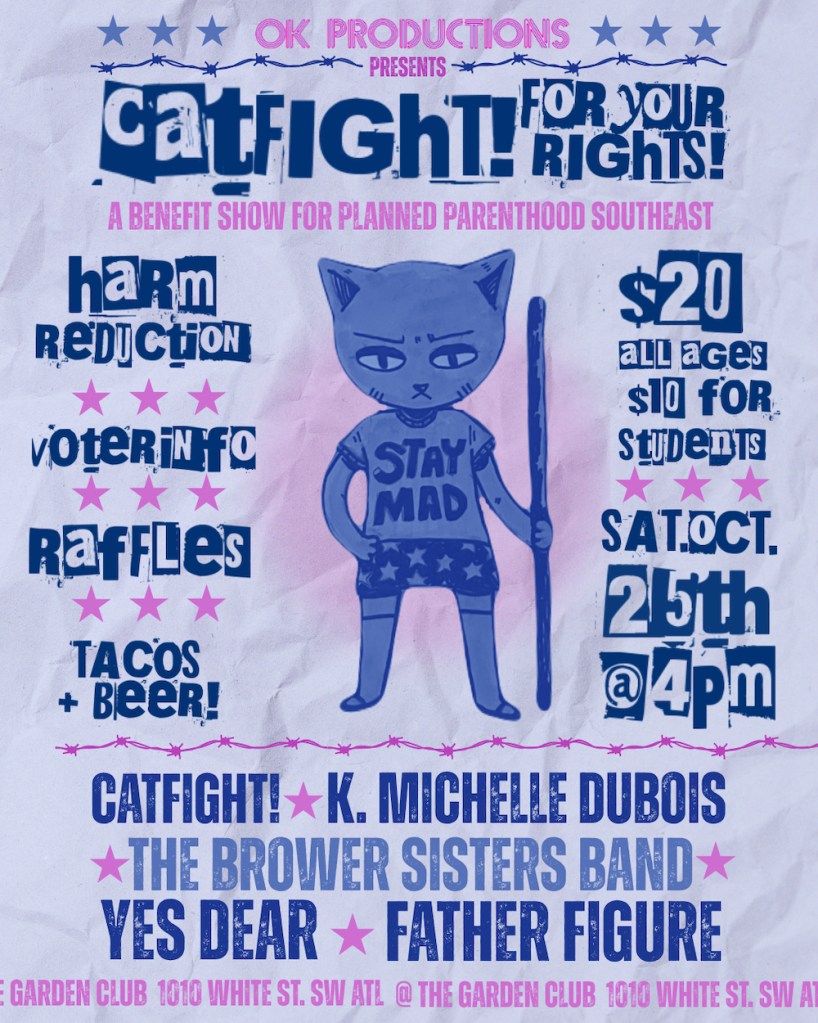
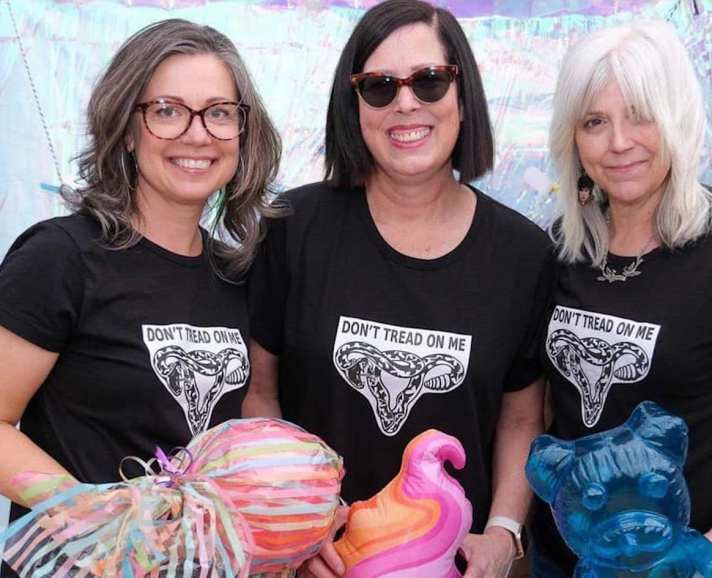
Atlanta garage-punk trio Catfight! celebrates 30 years with the second annual “CatFIGHT! FOR YOUR RIGHTS!” benefit show on Sat., Oct 25. Featuring performances by five bands, the event benefits Planned Parenthood Southeast, and includes information tables about voter registration, reproductive health, overdose prevention, and raffles. Over the years, Catfight! has raised over $7,000 for multiple reproductive rights organizations, as well as the Trevor Project, which supports trans youth.
DON’T TREAD ON ME: Catfight! Jennifer Leavey (from left), Stacy Kerber, and Katy Graves. Photo by Rose Riot.
After Words at Excelsior Mill (pre-Masquerade). Photo by Sara Epstein.
Between July of 1987 and December of 1989, After Words played a crucial role in pushing Atlanta’s post hardcore scene into new musical terrain. Seminal hardcore band Neon Christ had called it quits a year earlier. In their wake, a new generation of musicians stepped up to carry their influence forward.
In the late ‘80s, After Words co-founding guitar player Brian Nejedly began booking shows while he was still in high school. “When the Metroplex shut down, that was the only all ages venue in town, so I just started looking for places that I could rent out to put on shows,” Nejedly says.
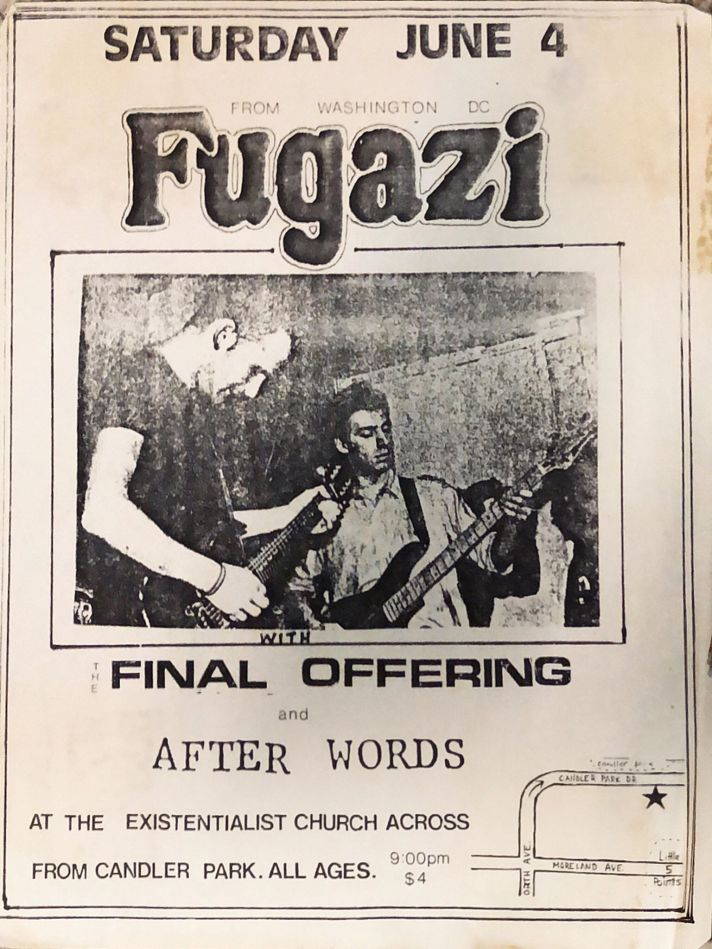
He booked Fugazi’s first Atlanta show at the First Existentialist Congregation in Candler Park. He booked Ignition, Soul Side, 7 Seconds and dozens of other acts. “Once I started booking shows, I realized that a lot of these bands had a list of people and places to call for shows in each town, and I was on that list,” Nejedly says. “For a while, I was the only guy in Atlanta on that list.”
Along the way, Nejedly sent After Words demo tapes out to pretty much every label that was on his radar. “I sent a demo to Cruz Records because we loved the band All,” he says. “We sent tapes to everyone, and Amanda MacKaye at Sammich Records wrote back.”
Amanda, sister of Ian (Dischord Records, Minor Threat, Fugazi, Coriky) and Alec (Ignition, Faith, and Hammered Hulls) MacKaye ran Sammich with Soul Side’s Eli Janney (Girls Against Boys). She offered to release the demo tape, making After Words the only band from outside of D.C. at the time to receive distribution through Dischord.
The label’s approval validated Atlanta as a place where post-hardcore ideas could thrive, and it placed After Words on the same label as Soul Side, Shudder to Think, and Swiz.
Drop a needle on After Words’ record and Nejedly’s jagged guitar carries weight over vocalist Noel Ivey’s cathartic voice, and propulsive rhythms laid down by bass player Craig McQuiston and drummer Kevin Coley. Emotional urgency guides songs such as “Looking Back,” “Ghost Dance,” and “As I See It,” all bearing the intensity of an early emo sound. The songs were never about nihilism or aggression. They were about wrestling with meaning, memory, and self-understanding.
In February 2024, Nejedly revived After Words for a one-off show 35 years after the album’s release. Ivey, McQuiston, and Coley are no longer living in the area. So Nejedly formed a new lineup featuring Geoey Cook (Fiddlehead) on vocals and guitar, James Joyce (Cheifs, Car Vs. Driver, Blood Circuits) on drums, and Justin Gray (3D5SPD) on bass to bring renewed energy to the songs.
In 2024, they locked in on an eight-song setlist—five from the original After Words LP, along with two other older numbers.
The two non-LP songs: “Things They Never Taught You” first appeared on The View: An Atlanta Compilation: 1984-1990, a cassette-only release that captured snapshots of the city’s underground post-hardcore and emo scene. Another song, titled “Without Answers” was documented during a 1989 Live at WREK session.
Earlier this year, the group recorded six songs with Tom Tapley at West End Sound—“Looking Back,” “As I See It,” “Without Answers,” “Third Party,” “Tell Me,” and “Ghost Dance.”
“We’re not doing anything different with the songs,” Nejedly says. “Pretty much keeping it true to the original with only minor changes. ‘Ghost Dance’ will always be my favorite,” he adds. “I think it’s the best song I’ve written and Noel’s lyrics were really good.”
Cook’s voice adds new dimensions to each song, adding depth and interplay. Joyce’s drumming locks into Gray’s bass lines with precision, adding heft, pushing each arrangement even further.
“We recorded it as a live studio session just for ourselves to document us getting together and playing these songs, but it came out so well Echodelick decided to release it,” Joyce says.
A release date for the record remains TBD.
What defined After Words in the beginning, and what continues to define the group now, is its place on the sonic landscape as early hardcore’s influence became diffuse and less severe. After Words proved that Atlanta was producing its own singular voices, capable of standing shoulder to shoulder with their peers in D.C., New York, Chicago, and elsewhere.
For Nejedly, the new recordings are about carving out relevance in the present tense, and honoring what the group built decades ago while refusing to let it calcify. For Cook, Joyce, and Gray, it’s about expanding on a framework that still has room to grow.
“After Words pivoted bands from Atlanta into a different direction in the early ‘90s,” says Joyce. “If you think about Fiddlehead or Freemasonry, Scout, or Car Vs. Driver, or the next wave of bands that followed them, they all changed course because of After Words.”
Moving forward, the group will play sporadic shows, but for now they aren’t writing any new material.
After Words. Photo by Brad Sigal.
If the late ’80s Atlanta scene was about carving out new space, After Words now stands as a reminder that the past can still fuel the present. The songs remain restless, powerful, and full of questions. That sense of questioning remains as vital now as it did when After Words record arrived in 1989.
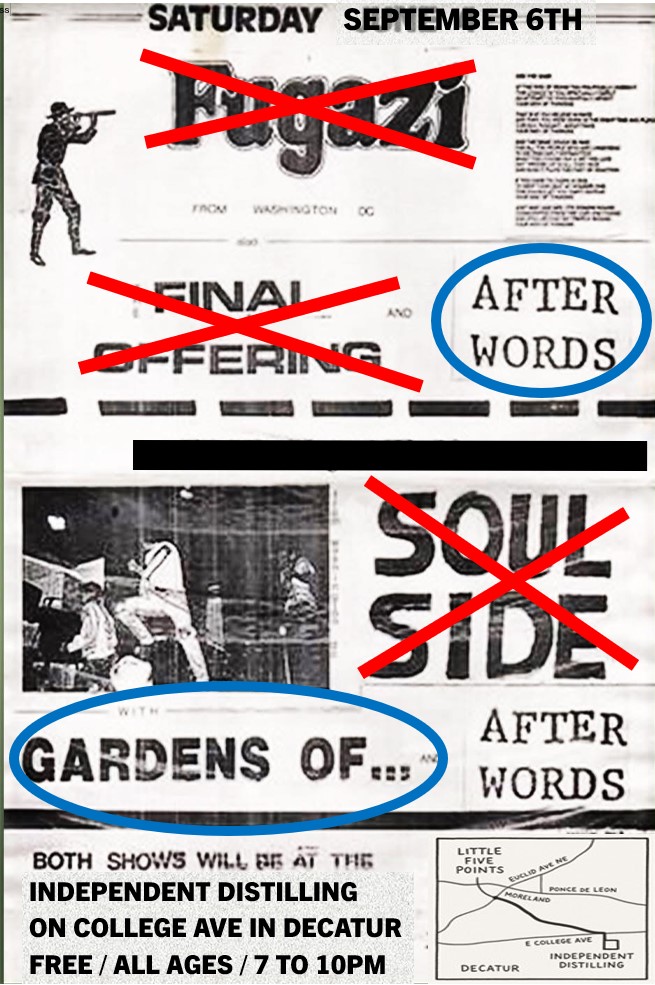
After Words and Gardens Of… play Independent Distilling Company on Sat., Sept. 6.Free. All Ages. 7-10 p.m. 547 E College Ave, Decatur.
Atlanta’s mid-’80s hardcore staple Neon Christ played its final show in February of 1986. One day later, drummer Jimmy Demer, bass player Danny Lankford, and vocalist Randy DuTeau reconvened as Gardens Of… It was a new and ineffable post-punk outfit that thrived in the outer limits of punk and metal’s diffuse influence on underground and popular culture—well before the term “alternative” entered the canon.
“We never called it that,” Demer says. “We listened to a lot of Stooges and Black Sabbath at the time.”
Demer moved to guitar while Lankford remained on bass. Drummers and vocalists came and went. “We had lots of lineup changes and were never that great, but we played with the intensity of people who were sure they were great,” Demer adds.
Gardens Of… recorded one demo tape, but nothing was properly released. The group called it quits in ’89. Still, their presence on the local scene resonated—channeling punk and hardcore’s scorched earth ethos inward, transforming a confrontational sound into equal parts menace, groove, and rock ‘n’ roll. Their jagged, hypnotic sound peeled away the last layers of hardcore orthodoxy.
Now, 36 years later, Gardens Of… is back with a new lineup, new songs, and a more refined disposition.
During their original run, they shared stages with the Rollins Band, Social Distortion, Die Kreuzen, Bl’ast, Suicidal Tendencies, and like minded locals including Sabotortoise (who later became Melts), funk punk band Follow For Now, Mr. Crowes Garden (early Black Crowes), and No Walls featuring their former Neon Christ bandmate William Duvall, later of Alice In Chains. They also played with another DuVall band called the Final Offering, which featured Mike Dean of Corrosion of Conformity.
Gardens Of… also opened for Washington D.C. stalwarts Fugazi’s first Atlanta show at the First Existentialist Congregation in Candler Park, on June 4, 1988, along with After Words. After Words’ self-titled LP was released by Amanda MacKaye and Eli Janney’s Sammich Records in 1989. At the time, After Words were the only band from outside of Washington D.C. to receive distribution through Dischord Records.
“There were a couple dozen people there,” Demer says. “We had no idea what to expect from Fugazi. It was before they had released any music, and of course our minds were blown.”
Fast forward to the COVID era, and Demer was at home writing songs inspired by his early heroes. “It was time to get Gardens Of… together again to play this punk-metal stuff,” Demer says.
Lankford was in, and Brent Addison returned to drums. “He was the best of the four-five drummers we had back in the day,” Demer says. “We brazenly poached him from After Words.”
Vocalist Emily Lawson joined under unusual circumstances. At a karaoke party, Lankford and his wife Shelley heard her singing songs by Nine Inch Nails, Blondie, Prince, Beastie Boys, M.I.A., and the likes. “She sounded good and projected confidence,” Lankford says. “I invited her to sing in my basement—more informal, maybe less intimidating.”
Lawson had never played in a band, but revealed a powerhouse voice in new Gardens Of… numbers such as “Do It For the Kids,” featuring the lyrics: “Do it for believers squatting in abandoned factories / Do it for the cold case / Do it for its own majesty / For DRI and MDC / Do it for the ceremony / Do it for the summer sun / Do it, do it, do it for free.”
It’s a hard reset for a veteran act from a bygone era with nothing to prove. “We’re all better players now,” Demer says. “I had time during the pandemic to broaden my abilities as a guitar player and writer. The songs don’t sound like Dio or Black Flag, but they stand on their own nevertheless.”




 Rad/ATL