Sonic Youth unleashes Blastic Scene (Live in Lisbon 1993)


Blastic Scene (Live in Lisbon 1993) was a semi-official bootleg, now unleashed via Bandcamp, celebrating 26 years of Sonic Youth’s 1994 album, Experimental, Jet Set, Trash and No Star.

In many ways, Experimental, Jet Set, Trash and No Star is a revelatory album for the group. Songs such as “Bull In the Heather,” “Self-Obsessed and Sexxee,” and “In the Mind of the Bourgeois Reader” distil the sharp songwriting honed between 1988’s Daydream Nation through 1992s Dirty with the roughly-hewn drone and clatter of 1985’s Bad Moon Rising.

Blastic Scene captures a live, 17-song set, recorded July 14, 1993, in a bullring in Campo Pequeno, Lisbon. The recording stamps in time Sonic Youth’s first ever concert in Portugal. It also offers an early snapshot of many of the songs that later ended up on Experimental, Jet Set, Trash and No Star when they were still works in progress.

The texture and the urgency that binds a number like “Skink” to careening renditions of “100%,” “Screaming Skull,” and “Sugar Kane” underscores the symbiotic flow and propulsive motion of the group’s larger vision.

“Starting around the time of Daydream we loved taking new material out and playing it live a few times before we recorded the new songs in the studio,” says drummer Steve Shelley. “Sometimes [we’d do it] in smaller clubs like the original Knitting Factory, where we previewed early Experimental, Jet Set, Trash and No songs during an Ecstatic Peace! showcase, and later at T.T. the Bear’s Place in Boston where we played Daydream Nation material before it was recorded as the Steve Shelley Experience.”

For this summer of ’93 European festival tour, the group rolled out five or six Experimental, Jet Set, Trash and No songs each night. “Playing the songs live before we recorded helped see what worked—it’s kind of like sink or swim—either the material worked or it didn’t and needed more help in the rehearsal room,” Shelley says.

The Blastic Scene recordings were previously released in Portugal via Moneyland Records in 1995. A portion of the CD pressing was made available via the group’s Sonic Death fan club and zine.

The recording, mastered by then unknown producer and electronic and avant-garde music composer and performer Rafael Toral captures all of the atmosphere and the energy in one cohesive swoop.

Picture One plumbs the depths of the imagination to find resolve

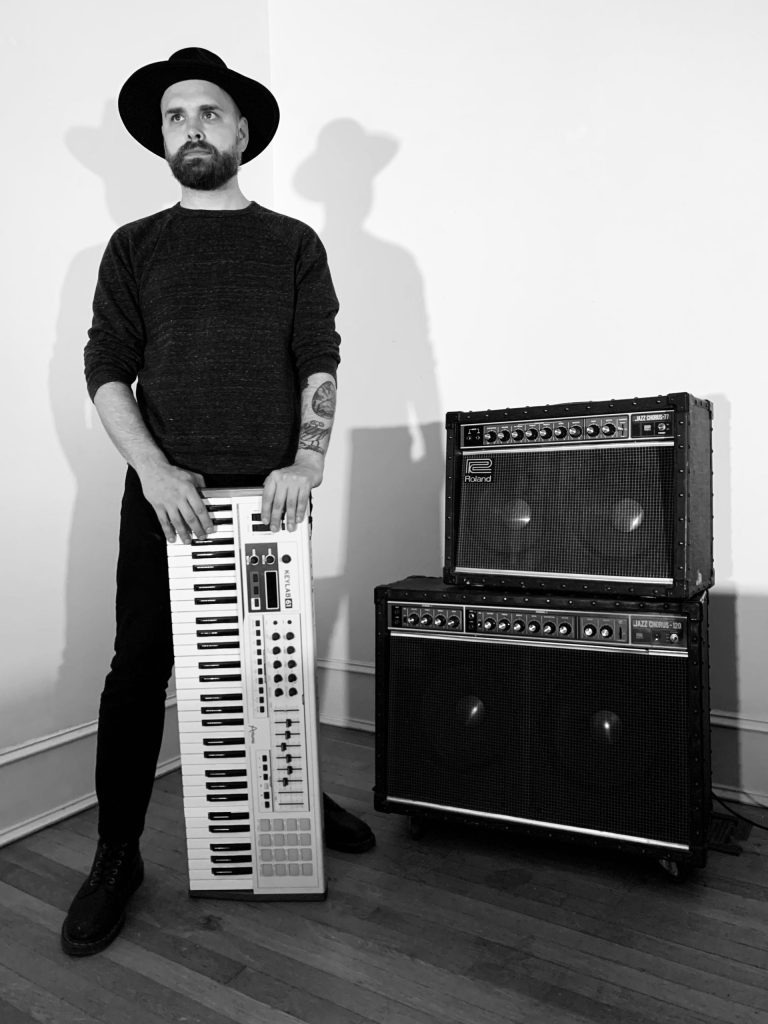
STRANGE MAGIC: Thomas Barnwell of Picture One. Photo by Todd Briner.


Thomas Barnwell is, perhaps, best known as the co-composer of the score to director Adam Pinney’s 2016 film, The Arbalest, and as the guitar player with the now-defunct indie rock groups Thy Mighty Contract and the Orphins. Alongside his film-composing partner Ian Deaton, Barnwell also runs Deanwell Global Music, compiling and re-releasing LPs of ‘80s material by acts ranging from French new wave outfit Asylum Party to Atlanta synth-punks the Modern Mannequins. The label has also released cassettes such as Deaton’s score to the imaginary film Atlanta Crime Wave, along with titles from hardcore and blackened metal tormentors Rapturous Grief, Waste Layer, and the Haunting, the latter being an early project that featured Cloak’s singer and guitar player Scott Taysom.

When left to his own devices, however, Barnwell writes and records songs using the name Picture One. With his self-titled 2015 debut, and again with 2019’s Bright Spot and the Midnight Sun, Barnwell relied on abstract imagery and purely instrumental arrangements to build spectral atmospheres. However, the arrival of Picture One’s third album, Across the Depths of Seven Lakes, marks a profound change in his songwriting. Here, Barnwell fleshes out a stylish blend of European and American indie, gothic rock, and post-punk influences, culminating in spellbinding soundscapes, and reaching new heights in his songwriting. 

Barnwell’s  low-register, atonal singing brings a more personal and transcendent touch to the album.

“I started singing on this record because I wanted to process a lot of what I have been going through over the last couple of years,” Barnwell says. “I am trying to be more creative lyrically than I have been — I haven’t done lyrics in maybe 10 years, and I wanted that connection again. When you play stuff live, people really connect with vocals.”

What he was going through while writing the album is the timeless fodder of reflecting on a relationship that has come to an end, and the whirlwind of social, psychological, and emotional turbulence that comes along with such upheaval. To make sense of, and ultimately resolve, his cycle of dark feelings, Across the Depths of Seven Lakes summons the strength of unearthly forces. The album’s title is taken from the lyrics of “Love Spell,” a song in which Barnwell sings, “Because distant power is what it takes, and tubes of light lead to this place, spread the flowers and snowflakes, across the depths of seven lakes.” Here, a spell is cast to break through a sense of powerlessness over his circumstances.

“When I wrote the lyrics, I was sitting there, thinking about how I wished I could just do something,” Barnwell says. “I had this idea of magic as a proactive thing that people do because they’re in situations where they can’t do anything. The lyrics came out about someone who wants to conjure love,” he adds. “But in the end it becomes something that helps them to move on.”

The songs and lyrics take on a more honest approach to songwriting than anything Barnwell has offered in the past. Even when fronting the Orphins, songs such as “Sea Song” and “Lost In the Wild” from the 2009 CD Wish You Well (Adair Park) relied on symbolism over real-time, confessional songwriting. Still, the songs on Across the Depths of Seven Lakes sidestep traditional songwriting as Barnwell adopts a wholly different internal persona.

“Singing in a way that I don’t normally sing, and thinking from the perspective of someone else — playing the part of an imagined person, maybe someone who was in a band in the ’80s — helped me be more honest,” Barnwell says.

A palette of constrictive, bass-driven rhythms, heavy chorus, and barreling melodies drive the noisy and claustrophobic opening number “Resolute: The Absolute,” the melancholy pop of “Lily Pad,” and the monolithic EBM dirge of “Chaser of the World.” Each number hands in a balance of graceful and monolithic darkness, fostering a fully-formed concept album that’s fueled by a greater sense of urgency and variety than anything Barnwell has created with Picture One’s previous releases.

“I wanted the first album to be a dark and emotionally melodic record with roots in ’80s cold wave and goth and post-punk,” Barnwell says. “I also wanted to see if I could write something both memorable and catchy without vocals. I wanted to explore a certain sound that I’ve always loved but had never had a chance to with my previous bands.”

Three albums in, Across the Depths of Seven Lakes moves one step deeper and higher into the framework he’s built. — Chad Radford

PREMIERE: ‘A Lighter Shade of Delorean Gray’

Delorean Gray. Photo by Brittany Wages.


Delorean Gray is back from exploring the farthest reaches of the cosmos with a new three-song EP to score the lingering feelings of early Spring ennui. This time around, songwriter and multi-instrumentalist Jacob Chisenhall dials back on the posturing and conceptual elements of his whimsical space captain alter ego to present A Lighter Shade of Delorean Gray, his most guitar-driven round of songs yet.

Chisenhall, performing alongside keyboard player Jason Bronson and Freeman Leverett, who makes the switch from bass to guitar here, adopts a back-to-the-basics approach for a release that’s all about taking a pause to celebrate the moment. The Beach Boys’ soaring melodies circa Pet Sounds and the pop song reductionism on display throughout Of Montreal’s Lousy with Sylvianbriar are clear touchstones here. The breezy fantasy qualities of “Boys For the Summer” are enhanced by the most vibrantly layered upper-register singing that Chisnehall has summoned yet. Likewise, Andy Barton of sentimental pop outfit Reverie Rush takes lead on “Black Lipstick.” But it’s the instrumental demo, “Back To The Beach-Front,” that underscores the ambient depth and breadth of these songs.

It’s a staycation for the mind, so to speak, music to ease the mental burdens of the daily grind, whether coping with the mundane or the macabre — adopting a less-is-more approach after laying the foundation for a highly animated conceptual vehicle with previous releases such as 2018’s Star Tropics and 2019’s Otaku Punk. When taken in altogether, A Lighter Shade of Delorean Gray is as tropical, carefree, or as cosmic as the listener wants it to be. Press play.

In the interest of full disclosure, Jacob Chisenhall is RadATL’s go-to podcast engineer.

SONG PREMIERE: Hear 'Fine' by Thousandaire

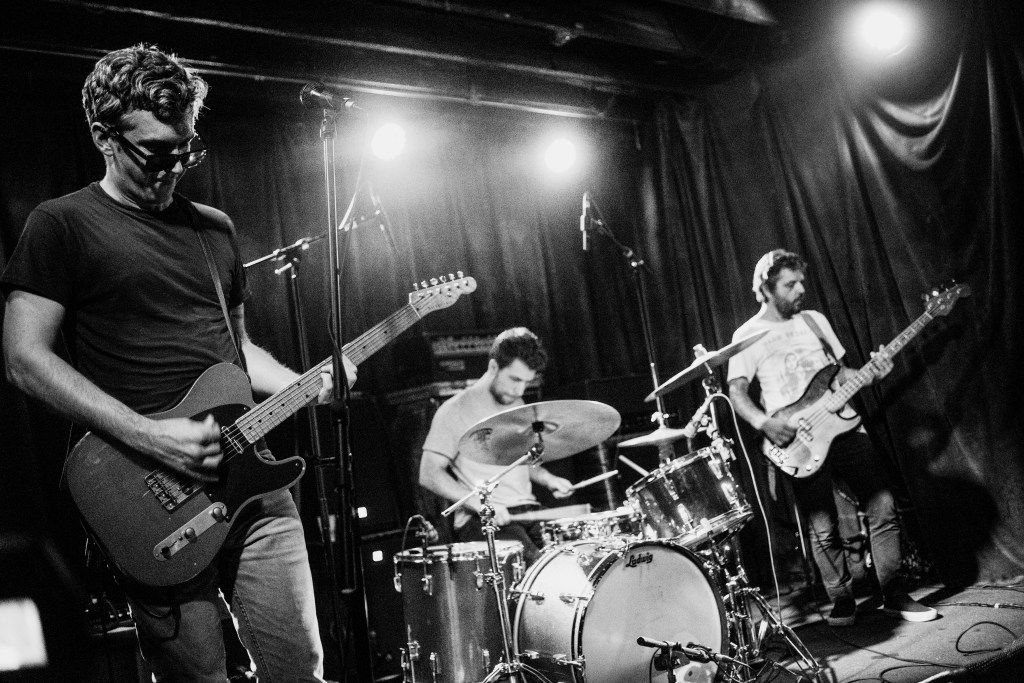
THOUSANDAIRE: Andrew Wiggins (left), Adam Weisberg, and Chad LeBlanc.


Thousandaire’s debut single, “Fine,” offers a first look at the prime, no-frills indie rock and fuzz pedal symphonies the Atlanta trio has in store with its self-titled debut album, out June 12 via Colonel Records.

On the surface, “Fine” is a deceptively simple number. Singer and guitar player Andrew Wiggins (Caesium Mine, ex-HAWKS, Wymyns Prysyn, Uniform, Blame Game), drummer Adam Weisberg (Rose Hotel, True Blossom), and bass player Chad LeBlanc (ex-Iron Jayne and Vegan Coke) stir up a sentimental journey into early ‘90s indie rock. Heavy distortion sets the scene for a swelling guitar melody, rolling bass and drums, and a voice that drifts from a roar to a self-effacing admission, “While that might not do the trick it’s the best I could come up with. But since you’re leaving, fine.”

The song is a primer for a new take on Wiggins’ songwriting that’s been brewing since 2008, and finally coming to fruition with an album that’s built around the premise that good songs are uncomplicated and draw upon the eloquence of everyday life — work-a-day life that can be poetic, melancholy, and irreverent, all in the same distorted riff.

On stage, the group has been playing for about a year, letting each song follow its own lead. All the while, Wiggins has honed a presence that restores the archetype of the self-conscious guitar hero, leading a group that soars with simplicity and pure volume. It is, in fact, this reliance on visceral directness that elevates Thousandaire to a deeper, higher level of universal hooks, melodies, dirges, and storytelling. Press play.

PHOTOS: The Jesus Lizard

Photo by Mike White / Deadly Designs

On December 28, intrepid photographer Mike White of Deadly Designs made the trek from Athens to Nashville to bring back these 10 photos of the Jesus Lizard live at Marathon Music Works. Frontman David Yow, bass player David Wm. Sims, guitarist Duane Denison, and drummer and Atlanta expat Mac McNeilly tore through a 24-song set that included one previously unreleased number titled “Lord Godiva.”

Setlist
“Puss”
“One Evening”
“Mouth Breather”
“Glamorous”
“Nub”
“My Own Urine”
“If You Had Lips”
“Boilermaker”
“Seasick”
“Killer McHann”
“Chrome” (Chrome cover)
“Bloody Mary”
“Blue Shot”
“7 vs. 8”
“Monkey Trick”

Encore
“Gladiator”
“Blockbuster”
“Lady Shoes”
“Thumbscrews”
“Then Comes Dudley”

Encore 2
“Lord Godiva” (unreleased song)
“Destroy Before Reading”
“Wheelchair Epidemic” (the Dicks cover)
“(Fly) on (the Wall)”

View the complete gallery of photos at Deadly Designs.