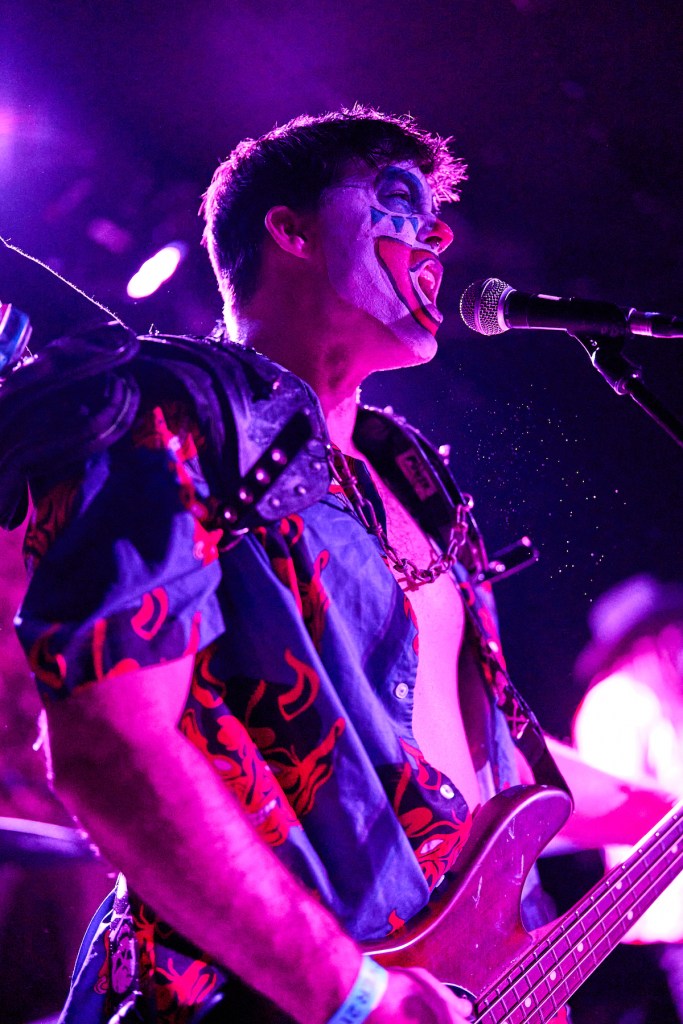
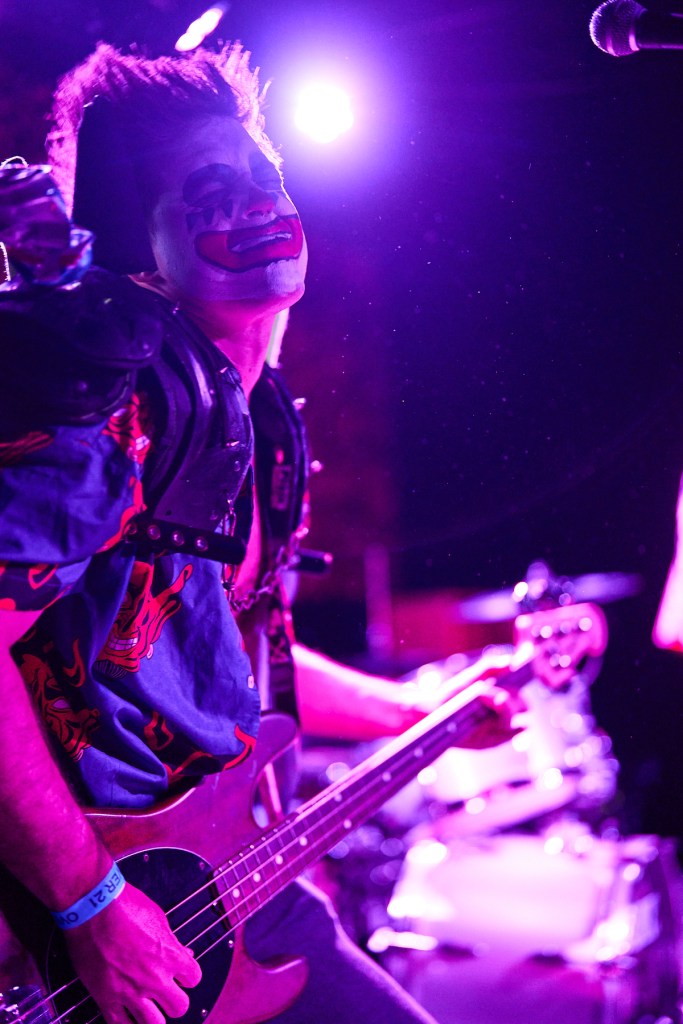
Three years in the making, Total Peace’s self-titled debut album comes out of the gate strong with volume and urgency. What began as a neighborly chat between Michelle Williams and Matt Cherry during the peak of COVID isolation turned into a full-fledged band grounded in old school human interaction and no-frills songwriting.
Cherry is best known for slinging layered and complex guitar parts in the psychedelic post rock outfit Maserati. Here, he trades his effects pedals for a bass and a microphone. His voice is heavy, tuneful, and raw in songs such as “Taped Up,” “Trance,” and “Slipped.” It’s a bold pivot that calls to mind the ramped up energy of Gang of Four’s Entertainment! and the introspective back-and-forth between Tom Verlaine and Richard Lloyd throughout Television’s Marquee Moon—all driven by the sheer exuberance of the Stooges’Self-titled LP. The riffs are bold and the rhythms are undeniable, reveling in the power of repetition.
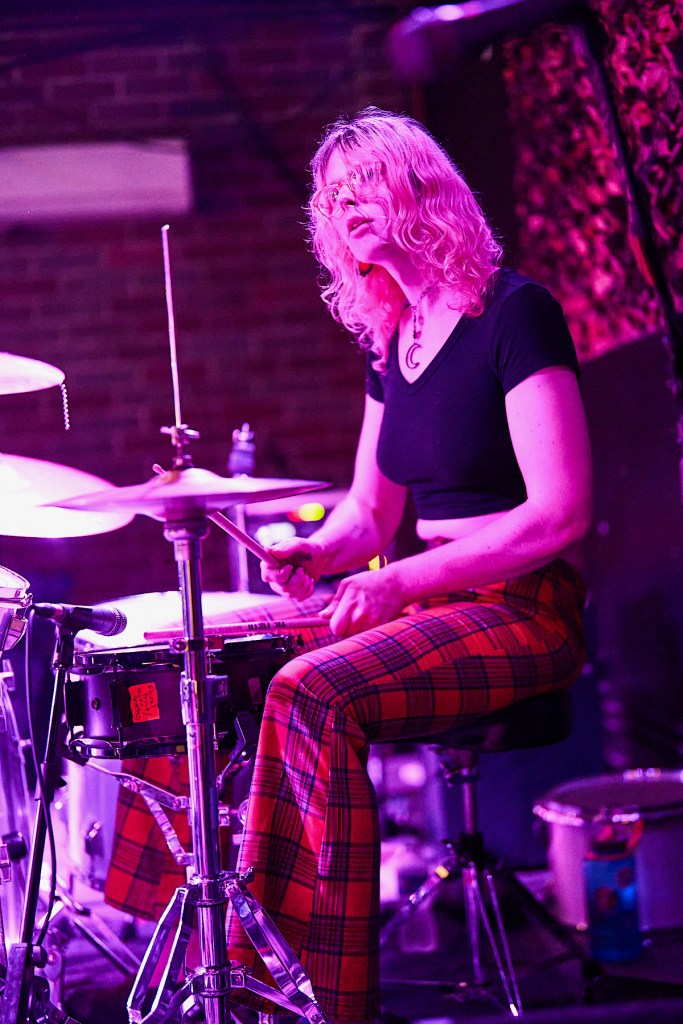
Guitarists Williams and Craig Gates and drummer Greg Stevens round out the lineup with a compelling synergy. Stevens and Williams share roots in Atlanta’s early aughts indie rock band Red Level 11. Their chemistry grounds the record’s driving pulse, as they thrive on stripped-down dynamics—no synths and no nonsense.
There is no concept at work here per se, but Cherry says, “Michelle and I are neighbors in Inman Park. She has a bunch of historical documents about people and events on our street in the 1910s and 1920s that we thought were interesting. Several of the songs are loosely about those things. Other songs,” he goes on to says,” “are about different topics ranging from fictional characters to various midlife crises and dark thoughts.”
Recorded live at Maze Studios in Reynoldstown with engineer Ben Etter (Erasure, Washed Out, Nikki and the Phantom Callers) and mastered by Joel Hatstat (Bambara, We Vs. the Shark, Liz Durrett), this self-titled debut leans into its compact and hook-laden energy. “Tom Talbot,” “Mold Blue” and “Be Free” dance on a tightrope between post-punk tension and anthemic release. There’s a visceral joy in cranking it up for the sake of catharsis, and Total Peace hits like a welcome jolt of electricity.
Nicholas and Peter Furgiuele are men of few words. For 23 years the closely-knit Atlanta-born brothers and songwriters have let their music do the talking for them. They first recorded together under the name A Fir-Ju Well in 2002. Years later, in 2007, they rebranded as Gringo Star and have carried on ever since, navigating shifting cultural tides, changing musical trends, and seemingly endless lineup shuffles with the kind of determination that comes from shared musical instincts, experiences, and D.N.A.—call it brotherly love.
Gringo Star’s latest album, Sweethearts, trades indie-rock grit for a 1950’s pop shimmer, weaving together soft-focus textures that imbue their signature blend of garage rock and psychedelia with a new and introspective depth. The album’s first two singles, “Blood Moon” and “I Sleep to Dream,” highlight a musical evolution in progress, each one floating in reverb, harmonies, and instantly familiar melodies wrapped around love stories. The songs shapeshift with dreamlike grace, expanding upon elements of both nostalgia and innovation, carrying the band into new terrain.
“We didn’t set out to make a record with any kind of underlying theme, but all the songs told these love stories, and the sound evolved as we went along,” says singer and guitar player Nicholas Furgiuele. “There is an underlying theme to it all, but I wouldn’t know how to explain it,” he goes on to say while offering that if anyone does hear a coherent concept at work throughout the album, it’s something that wrote itself.
“I have always been into the idea that music is open to interpretation, and what it means to me might mean something completely different to anyone else who’s hearing it and putting it all together in their head,” he adds.
Sweethearts is Gringo Star’s eighth full-length album, and their first with the Grand Rapids-based dizzybird Records. It’s also their second post-pandemic offering, recorded between 2023 and 2024, expanding upon the murky sound and vision of 2023’s On And One And Gone. Its songs take shape as surreal nods to simpler times in American life, channeling equal parts dreamy reverie and swirling self-reflection, filtered through a lens of vintage melancholy.
“We wanted to make a record that felt good, you know? Something that felt like remembering love,” Furgiuele says. “But at the same time, there’s a sadness in that memory. It’s not all sunny.”
Familial tendencies are also behind Nick and Peter’s penchant for a 1950s sound as well. From the 1940s-1975, their maternal grandfather, Ed “Dr. Jive” Mendel, was a DJ for WGBA-AM in Columbus, GA. He was also a chitlin’ circuit promoter, and record label owner who earned a couple of gold records for a duo he managed, Peggy Scott & Jo Jo Benson. Sam Cooke, Soul Stirrers, Otis Redding, James Brown, Martha and the Vandellas, the Shirelles, Little Stevie wonder, and Jackie Wilson were also among his associates.
“He died before my parents got together so we never knew him,” Nick says. “But my grandma’s photo albums were all filled with pictures of them with James Brown, Jackie Wilson, being around all of this music and all of these images of our grandparents was for sure an influence on what we do with Gringo Star.”
But an aura of peaceful optimism is the album’s guiding light. “Blood Moon” takes shape as a waltzing lullaby where layered vocal harmonies and languid guitars remain suspended in sensual ether.
One song, “Some Things Don’t Change,” was originally written for Nick and Peter’s first band, the King Street Blues Band, circa 1995 when they were in 9th and 7th grades respectively, while living for several years in Boone, N.C.
The band was named after downtown Boone’s main thoroughfare. “Some Things Don’t Change” was originally penned by their bandmate John Fulkerson, but it had never been properly recorded. For Sweethearts, Nick and Peter took what they remembered of the song, retooled it and wrote some new lyrics here and there.
“I kind of don’t remember what the original song sounded like, and it never really had any kind of arrangements,” Nick says.
The idea to revisit the song came when Nick realized he was unconsciously noodling the bass lines between other songs when the group was on stage. “I don’t know why it got stuck in my head, but it did, and so we gave it a whole new treatment—a whole new life.”
“Some Things Don’t Change,” as it appears on Sweethearts, is now one of the more sophisticated numbers that takes shape amid the tracklist. Still, the album remains deceptively simple, unraveling to reveal miniature worlds thriving inside lush turns of phrases, baroque instrumentation, and emotionally intense shading.
Gringo Star. Photo by Francis Furgiuele.
Since recording Gringo Star’s 2008 debut album, All Y’all, produced by Ben H. Allen III (Animal Collective, Deerhunter, Gnarls Barkley), the group’s body of work has existed outside of easy classification. But they have always been interested in stirring hot-blooded emotional meditation into their work. Nick, working alongside his brother Peter on bass, guitar player and vocalist Josh Longino, and drummer Mario Colangelo the group has carved out a one-of-a-kind cosmic rock sound. Surf-inflected riffs and distant rhythms in the instrumental song “Girl,” and a traipsing cover of Sam the Sham and the Pharaohs’ 1966 hit “Li’l Red Riding Hood” underscore the album’s surreal, dream-like essence.
On stage, instruments get swapped. Roles shift. There’s an elastic energy to the way the group performs—egalitarian and impulsive—and this live dynamic carries over into Sweethearts, careening movements from the janggling exuberance of “Count the Ways” to the wall-of-sound that binds “A Lonely One.” Each number offers a distinct postcard from a dream-world version of the past. A sense of longing underpins the whole affair—an ache for connection in a time when disconnection is the norm.
“In a world where division has become a rallying cry, we wanted to make something that reminds people of what connects us,” Peter says. “We wanted to get back to that raw emotion—love, heartbreak, joy, sadness. All of it.”
It’s easy to forget, in the churn of modern music, how rare it is for a band to last this long, all the while continuing to evolve. Gringo Star is one of those rare groups that has never stopped pushing forward, even when the rest of the world shut down, and even when doing so meant carving their own path outside of whatever music scene was in vogue at the time.
They’ve toured relentlessly over the years, sharing stages with the Zombies, Cat Power, Weezer guitarist Brian Bell’s band the Relationship, Best Coast, and Shannon and the Clams. Their sound has zigzagged across records like a living document of who they were at a given moment.
But what is, perhaps, most remarkable is the way the band has retained its identity while allowing each record to bloom in its own way, bringing their songs to life, and turning raw ideas into something that is quite cinematic.
Sweethearts sits comfortably out of time, reverent of the past but not beholden to it. The songs invite listeners to slow down, and to feel things deeply.
Nick and Peter may not be chasing any zeitgeist, but they are staying true to a vision that’s lasted nearly three decades without growing stale. With Sweethearts, they’ve added a rich new chapter to an already impressive catalog—one that lingers long after the needle lifts. And maybe that’s the real trick to Gringo Star’s longevity. The group doesn’t just survive. It resonates beyond words.
If you have enjoyed reading this post, please consider donating to RadATL. Venmo to @Chad-Radford-6 or click on the PayPal link below.
A version of this story originally appeared in the May 2025 issue of Record Plug Magazine.
Shane Parish: Solo at Cafe Oto (Red Eft Records). Cover photo by Petra Cvelbar.
Shane Parish has unveiled details for an evocative new album, titled Solo at Café OTO, due out July 1, via his own label, Red Eft Records.
Captured live in London on November 14, 2023, the album showcases Parish in full exploratory mode, performing an instrumental fingerstyle electric guitar set drawn from a deep well of British and American folk traditions. The performance took place during a sold-out evening of solo sets the night before Bill Orcutt’s Guitar Quartet appearance at the London Jazz Festival.
The album’s first single, a rendition of Angelo Badalamenti and David Lynch’s “Sycamore Trees,” from the Twin Peaks soundtrack, sets the tone for a dark, drifting, and emotionally resonant album. Parish also leans into the melancholy and mysticism of folk ballads by Anne Briggs, Shirley Collins, and John Jacob Niles, reinterpreting them with his own idiosyncratic voice and a minimalist rig: just a Fender Squier Telecaster plugged directly into the house amp. It’s the same guitar he used for 4 Guitars Live at Le Guess Who? Festival in Utrecht the night before—a gift from Bill Orcutt, passed down when Parish joined the four-guitar ensemble.
Parish’s 2024 release, Repertoire (Palilalia Records) featured tight arrangements of outsider standards from various musical genres—Kraftwerk’s “Europe Endless,” Alice Coltrane’s “Journey Into Satchidananda,” Aphex Twin’s “Avril 14th,” John Cage’s “Totem Ancestor”—allowing their melodies and their vital essences to take on a gently glowing body via the resonating steel strings of his guitar. With Solo at Café OTO, Parish summons a raw and intuitive performance that’s closer in spirit to 2016’s Undertaker Please Drive Slow(Tzadik). Here, each melody becomes a jumping-off point for spontaneous invention, with Parish letting the songs drift, fracture, and reform as if guided by wind and water. The result is both intimate and expansive—an arresting document of a singular guitarist at the height of his expressive powers.
Raw and slowly burning tension runs through TVAD’s latest single, “The Island Song,” which takes shape as a stark meditation on the damage that mankind’s obsession with religion has inflicted upon the world.
With TVAD (Television After Death) recently paring down to a two-piece lineup, principal songwriter Dizzy Damoe—who prefers to not use his Christian-born name—handles guitar, synth, and vocal duties while working alongside bass player John Holloway.
Damoe is currently a member of Alanta’s purveyors of blackened doom and death metal Withered, and is a former member of sludge metal and post-hardcore acts Leechmilk, Sons of Tonatiuh, the Love Drunks, and Canopy. Holloway first made an impression in the bands Tabula Rasa and Of Legend.
“The Island Song” conjures an eerie atmosphere, built upon minor-key melodies and mechanical rhythms that recall the bleak romanticism of early Wax Trax Records releases, threaded through with brittle textures of post-punk and dark wave. Damoe’s guitar oscillates between shimmering ambience and sharp, metallic jabs, while Holloway’s bass carves out a grim undercurrent, grounding the song’s sprawling pace.
Cut from lyrics such as “They hunt, looking for a reason. The wolf, still eats all season. A child, may go hungry. But pray, and seek out your vision,” the song stares down organized religion with an unflinching eye. It’s tone is neither preachy nor dogmatic, but there are no minced words. Damoe delivers each line with a weary conviction, as though bearing witness to the long arc of history’s spiritual missteps. “The Island Song” doesn’t offer solutions, just stark reflection.
It’s a bold move — a track that walks a fine line between sonic exploration and thematic clarity. And for TVAD, it sets the stage for something bigger. If this is the first glimpse into the group’s forthcoming body of work, it’s clear they’re not pulling any punches.
TVAD’s next show is booked at 529 on June 12, which is Damoe’s birthday. A few more shows throughout the summer will be announced soon. Until then, press play on “The Island Song.”
If you have enjoyed reading this post, please consider donating to RadATL. Venmo to @Chad-Radford-6 or click on the PayPal link below.
86: Max Koshewa (from left), Ken Schenck, and Mac McNeilly. Photo by Mary Alexander.
Chunklet Industries is dusting off a crucial piece of Atlanta’s post-punk and new wave past with an online reissue of 86’s first two singles. The trio—featuring Mac McNeilly (before his seismic drumming found a home in the Jesus Lizard), Ken Schenck’s jagged guitar lines, and Max Koshewa’s brooding bass—captured a restless energy that redefined the city’s underground music scene in the early ’80s.
“Useless” and “Behind My Back” were recorded at Southern Sound in Knoxville, Tenn. in July of 1983. “Youth Culture” and “Inside” were laid down a year later 1984. Both singles were originally released via Knoxville’s short-lived indie label OHP Records. Placed together here, both singles channel the urgency of the era while hinting at the band’s singular presence in Atlanta.
Audio restoration duties for this new issue fell to Jason NeSmith at Chase Park Transduction, where the songs were delicately digitized from the original vinyl 7-inches. NeSmith applied subtle de-clicking and EQ adjustments, preserving the grit and urgency of the recordings while amplifying their visceral punch.
86: Max Koshewa (from left), Ken Schenck, and Mac McNeilly. Photo by Mary Alexander.
While 86 is often remembered as the band that gave McNeilly his start, these singles cement the group’s place as a vital force in Atlanta’s music history. And this is only the beginning: Chunklet reportedly has a trove of unreleased recordings from the 86 archives queued up for release later this year.
If you have enjoyed reading this post, please consider donating to RadATL. Venmo to @Chad-Radford-6 or click on the PayPal link below.
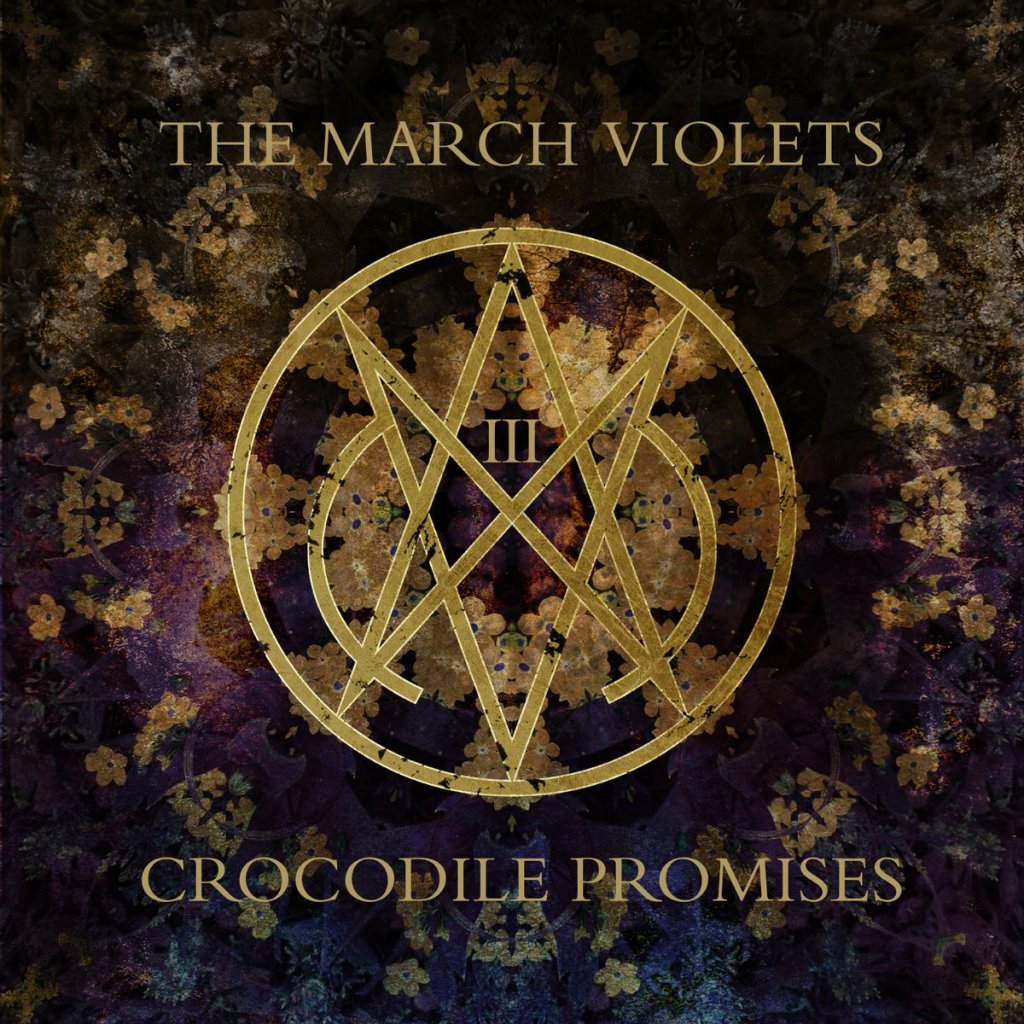
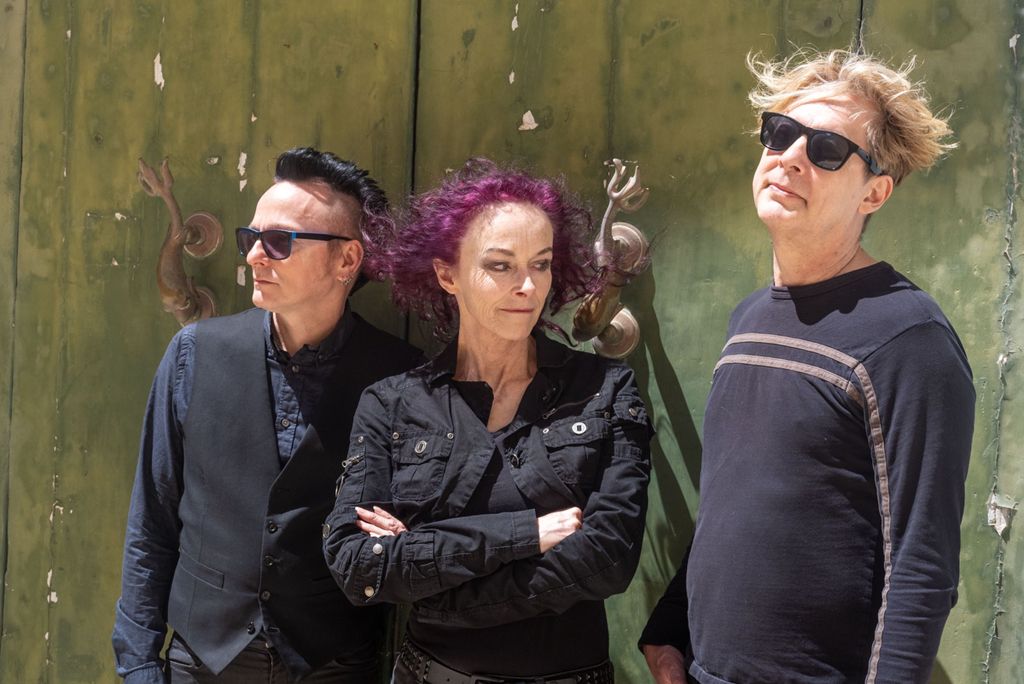
After more than a decade between releases, the March Violets return with Crocodile Promises, a sleek and muscular new album that is as much a return to the group’s classic gothic rock and post-punk form as it is a bold step forward. The secret to the Violets’ success has long been their penchant for crafting undeniably catchy songs that thrive in an atmosphere of rich imagery and ambiance. Press play on the ‘80s hits: “Walk Into the Sun,” “Snakedance,” “Grooving In Green,” “Crow Baby,” et al. The art of balancing complex harmonies and melodies with lyrics steeped in perfectly compelling abstraction is the March Violets’ strong suit. For Crocodile Promises, core members vocalist Rosie Garland and guitar player Tom Ashton were joined by former Violets bass player Mat Thorpe (also of the group Isolation Division). Together, they fleshed out nine new numbers at Ashton’s SubVon Studios in the rural countryside near Athens, Georgia, where Ashton produced the record.
Crocodile Promises opens with “Hammer the Last Nail,” a song that’s bound by billowing and shadowy textures that slowly open up to reveal the album’s vast and majestic palette. Thick and undulating guitar riffs and constrictive hooks match Garland’s bewitching traipse into modern terrain. “Bite the Hand” and “Virgin Sheep” kick up the energy with a full-bore punk charge.
The “Kraken Awakes” and “Mortality” are slow-burners invoking tales of revenge and deceit. “This Way Out,” builds into a roaring and hypnotic groove, with its thumping beats and Garland’s pointed delivery.
The March Violets: Mat Thorpe (from left), Rosie Garland, and Tom Ashton. Photo courtesy Jace Media.
There’s a real sense of urgency at work in Crocodile Promises. The production is as subtle as it is sweeping when it needs to up the intensity, pushing heaviness, real-world angst, and aggression into new dark realms, alternating between understated tension and unleashed power.
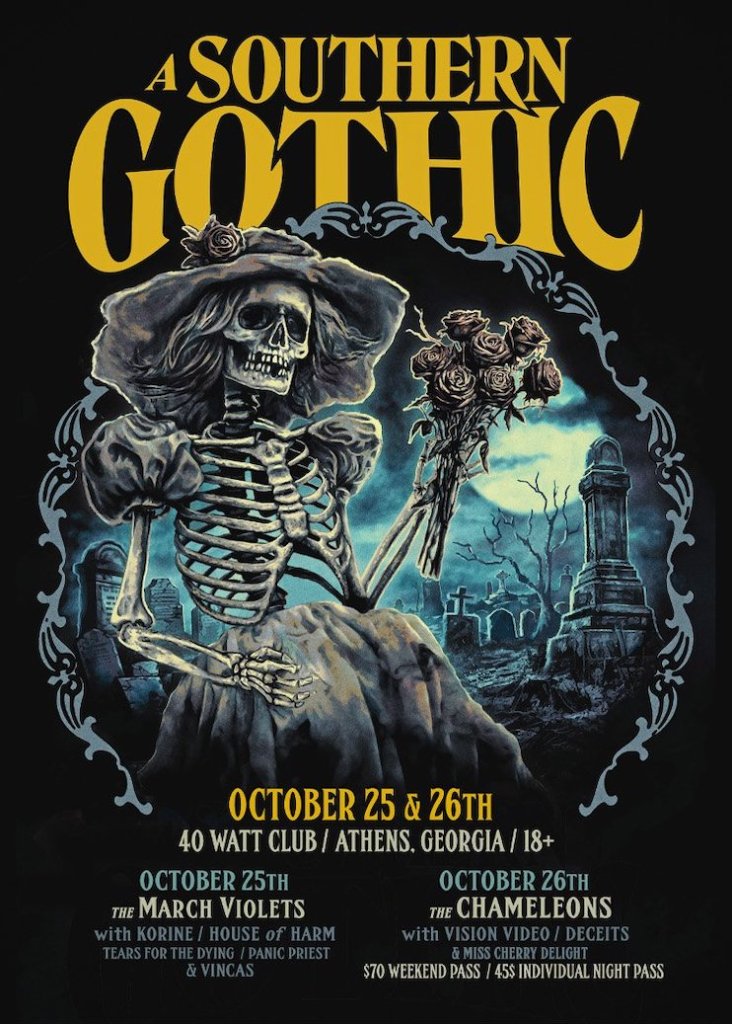
Friday, October 25 March Violets, Korine, Tears for Dying, House Of Ham, Vincas, Panic Priest, and Miss Cherry Delight. Find Friday night tickets here.
Corndogorama: The Musical. Photo by Sam Feigenbaum
Corndogorama is back!
It’s been eight years since our friend David Railey—a veritable Vanna White to Atlanta’s indie rock scene—hosted the Corndogorama. The DIY summer music festival is known for its casual community-oriented atmosphere and marathon of local bands on stage.
This year’s resurrection may have seemed like a Record Plug event to the uninitiated. The magazine was a key sponsor and a curator of this year’s lineup, as we sought out and rallied the bands to play all three days—June 21-23, 2024. But make no mistake, Corndogorama is the brainchild of—and the birthday party celebrating—Railey’s decades-long tenure in Atlanta’s music scene. Remember his bands? American Dream? Ancient Chinese Secret? Casionova? Day Mars Ray? Jesus Honey? The list goes on. Corndogorama has endured countless ups and downs since it kicked off at Dottie’s on Memorial Drive way back in 1996.
This year was wrought with an equal number of ups and downs. But hey, we raised $2,515 for Upbeat: The Tigerbeat Foundation for musicians, a non-profit organization dedicated to getting struggling independent musicians back on their feet via an emergency grant program.
Over the years, my [Kip’s] bands (Haricot Vert, Freemasonry, Chocolate Kiss, Clemente, Victory Hands, et al) have played various benefit shows. Oftentimes I never heard how the numbers turned out, so I wanted everyone to know what their collective efforts raised.
The attendance for Friday was decent, Saturday turned out great, and Sunday was a bust. But that’s okay. Three days in the June heat is a big ask. But the bands played on, and we appreciate every one of you who came out, said hello, and watched the show.
It was three days of musical triumphs and logistical catastrophes: No Corndog eating contest? No vendor tents? No flip-flop parade, no ass-kissing booth? No Topo Chico! That sucked! Oh well. It’s been nearly a decade since the Corndogorama went down, and some skills have to be relearned. We’ll be back next year stronger than ever.
Saturday’s crowd warmed our hearts, and it helped cover the whole weekend’s production costs. I [Kip] personally want to thank Amos, Van, and the whole A Rippin Production crew for keeping everything running smoothly, despite Saturday’s murderous heat. They put in the work and kept the costs low to raise as much as possible for Upbeat. Thanks are also due to Shane Pringle, Tim Song, and Boggs Social & Supply, who selflessly took no money from the ticket sales. They worked the full weekend, relying on bar sales alone to cover their end. It’s a good thing y’all drank so much.
Shane’s band Bad Spell tore up the outdoor stage on Saturday.
Pabst Blue Ribbon was an excellent sponsor, donating kegs and money, and Music Go Round saved our tails by loaning us the outdoor backline. Topo Chico! Where were you? We waited for you with bated breath and hope in our hearts, but you left us hanging.
Ups and downs. Maybe we’ll see you next year.
A sincere and exhaustive shout-out goes to all the bands that performed throughout the weekend; those who gave their time and delivered stellar performances reminded us of why we’re in this in the first place. And we know it’s a labor of love to practice even a short set, haul yourselves and your equipment across the city to the venue, put on a show under the squelching summer sun, and then break it all down, load it up, and lug it all back to the practice space.
Absolutely 100%, Corndogorama would not have been able to raise a single penny for Upbeat without your time and energy. We’re sending the most sincere thanks to all of you. There were too many bands to name here, but we see you, and we love you. All of you. Thank you for sticking by Corndogorama (see what we did there?). See you next year! Until then, check out Alexa Kravitz and Sam Feigenbaum’s photos from Corndogorama: The Musical. — Kip Thomas (with some help from Chad Radford)
Saddam Death Cave’s Planned Obsolescence EP proves that the hardcore struggle is real, and life’s daily tormentors grow increasingly difficult to rise above as time passes. The 10-inch record’s collective resume channels decades of Southern punk, hardcore, and alternative rock pedigree: Guitar player Marlow Sanchez is an alumnus of All Night Drug Prowling Wolves, Rent Boys, and Swing Riot. Bass player Brian Colantuno played in Mission To Murder. Guitarist Mike Brennan played in Otophobia and still plays in Primate with Mastodon’s Bill Kelliher. Drummer Keefe Jutice was in the Close. Vocalist Gray Kiser fronted Winston-Salem’s straight-edge crew Line Drive.
With Planned Obsolescence, these statesmen of the scene tighten their focus to hone a classic hardcore charge, fusing experience with razor-sharp riffs and manic rhythms. Kiser’s visceral, powerful voice in the opening number, “The Last Living Mountain” is a fiery rip on rising above repression and the mechanisms of societal control. “The Gods They Made” follows through with a high-speed agit-snarl that hits on an existential level. “Aging Well, Aging Often,” Midlife Christ,” and a breakneck cover of Naked Raygun’s “Rat Patrol” vacillate between moving at a full-throttle pace, and proving that humor goes a long way, as fighting the age-old tyrants—authoritarianism, social control, and complacency—culminates here in 10 blasts of passionate, intelligent hardcore. SDC plays them like they mean it.
NOTE: Since the Planned Obsolescence EP was released, co-founding bass player Colantuno has parted ways with SDC. Ex-Otophobia and 12 oz. drummer and guitar player Elliot Goff has joined the group playing bass.
SDC’s first show with Goff playing bass is at Disorder Vinyl on Sun., June 23. They’re playing Athens at Buvez on Thurs., July 18, and at Boggs Social & Supply with Dayglo Abortions on Wed., Aug. 7.
If you have enjoyed reading this review, please consider donating to RadATL. Venmo to @Chad-Radford-6 or click on the PayPal link below.
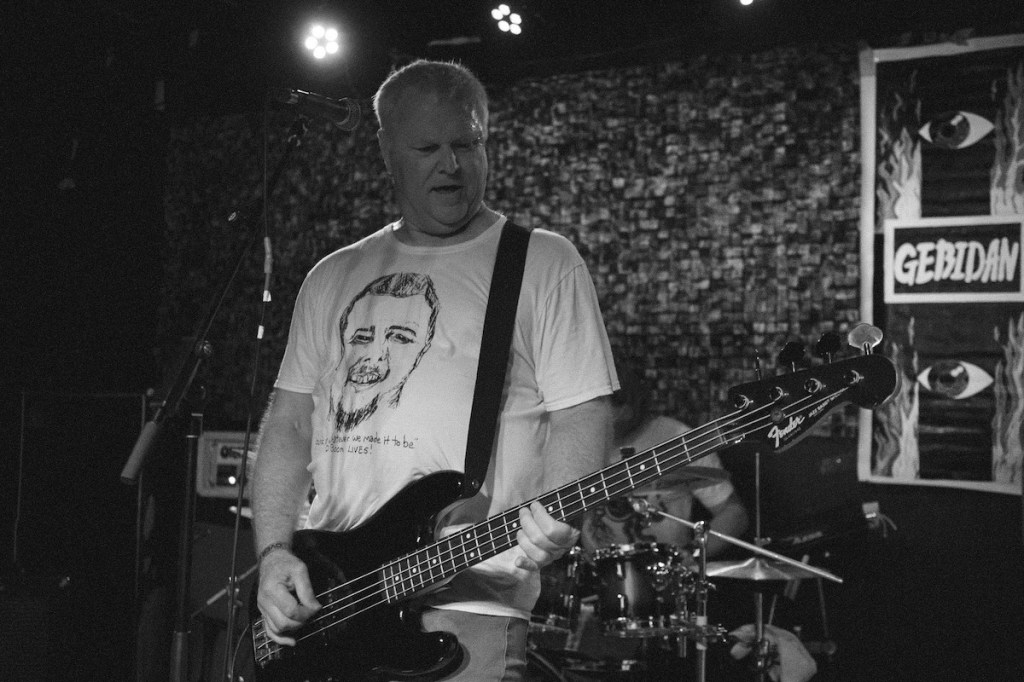
Gebidan is (from left) Geoff Knott, Daniel Whitman, Dennis Doherty, and Mike Patton. Photo by Amanda Corbett.
Entropy is the way of all things losing order as they move forward through time, evolving into something different every step of the way. It’s a concept that hangs heavily on Mike Patton’s mind while reliving his nearly 50 years of history playing music with Southern California’s hardcore and post-punk bands the Middle Class, Eddie & the Subtitles, Trotsky Icepick, Cathedral of Tears, and most recently singing and playing bass with Athens, GA’s Gebidan. The band’s name evokes the old English word for “endure” or “abide,” and there are layers of unspoken context to absorb inside the group’s debut album, titled Entropy, which kicks off with an opening number of the same name.
“That was our first song and it really describes the universal condition, I believe,” Patton says.
Since August 2023, Patton, along with guitar player and vocalist Geoff Knott, guitarist Dennis Doherty, drummer Daniel Whitman, and occasional keyboard player Drew Costa have amassed a body of songs that pull from Patton’s past while finding new meaning in the present. Press play on songs such as “Something Somewhere,” “Million Stars,” and “Achilles,” and hues of melancholy and psychedelia are corralled into bursts of alternative rock imbued with a spectral Southern allure—sometimes the writing is quite abstract, other times stories unfold as if they’re being told in real-time.
The latter number, “Achilles,” relives a night of fleeing from the famed 1979 Elks Lodge Hall riot. When a show featuring performances by X, the Alley Cats, the Plugz, the Go-Gos, the Zeros, and the Wipers was shut down by police, Patton’s former Middle Class bandmate Jeff Atta and his girlfriend Dorothy were in attendance and were severely beaten. The song chronicles a desperate attempt to get them to a hospital. The getaway car was being driven by famed LA punk producer and provocateur Geza X (the Germs, Dead Kennedys, Black Flag, Redd Kross), and the story goes sideways.
On the eve of releasing Entropy, Patton took a few minutes to talk about his past, his present, and Gebidan’s future in music.
Let’s begin by talking about how Gebidan got started.
Geoff Knott and I started playing together a few years ago. We’re both transplants to Georgia. Geoff is from Albuquerque. I didn’t know anybody here so I put my profile on some website where musicians connect. He was the only guy that reached out so we started playing together. The full incarnation of the group has been together since August 2023.
How did you wind up in Bogart, Georgia?
During the pandemic, my wife’s parents were living here. Her dad’s health is declining and she was feeling the need to come out here. I got laid off right toward the end of the pandemic. I said, “If you want to go now is the time.” We’ve been here since 2021.
I was at Bogg’s Social and Supply the first time MSSV played there. After the show, I was waiting in line to say hello to Mike Watt. You were in front of me. I remember you said, “I’m not sure if you remember me. My name’s Mike and I was in the Middle Class and …” Before you could finish your sentence Watt looked at me and sang the words to “Out of Vogue,” and said “Yeah, I remember you, Mike! I remember when the Minutemen played with you in San Diego!” It took a minute to process what I had witnessed.
[Laughs] I knew those guys back in the day, but I’ve been not going to shows for a long time. I hadn’t seen Mike in like 15 years. I wasn’t sure if he would recognize me, but we reconnected right away. I was friends with the Minutemen back in the day; everybody was. They were real cool working-class guys from Pedro. We were-working class guys from Orange County. We had stuff in common.
When I looked up your Discogs page I found your name on an impressive list of records: There’s the Minutemen’s “Joy” 7-inch.
I produced that.
Your name is also on the Adolescents Blue album.
Yeah, I produced that. I was managing them at the time. This guy Eddie Joseph that I played with in Eddie and the Subtitles would kind of let me do whatever I wanted to do. One day I said I wanted to produce one of our singles, called “American Society.” I kind of turned it on its head, and slowed it way down. I took over the vocals and turned it into an anthem. It came out good! Eddie was managing the Adolescents at the time, and Frontier Records had just signed them. Eddie was getting ready to take them into the studio and I said, “I want to produce the Adolescents.” Eddie said okay! Then a bunch of shit happened and he was out of the project. I took over managing the Adolescents for a while, and that’s when we went into the studio to record the Blue album. I was fortunate to get to produce such a great album.
That’s not hyperbole. It’s a game-changing record.
Yeah, they brought a melodic sensibility that hadn’t been there before. Rikk Agnew; I mean, those are powerful, good songs, and they were so different than what anybody else was doing.
Discogs says you do backing vocals on the Blue record.
I didn’t sing on the record. There’s one song where I was talking to them over the mic. It was “L.A. Girl” and I say “L.A. Girl, take 1,” or something like that. They wanted to keep it in there. That’s the only time my voice is on the record. I was still doing Middle Class at the time. The Subtitles had broken up. When the Eddie empire fell apart he had been managing and booking a lot of the local bands. When he bailed I took over the Eddie empire for a while. All of those bands, like the Adolescents, were just kids. They didn’t know what was going on, and they were lightning in a bottle. Everything was happening fast for them. I was just trying to help them out because they were kids! They were nice and smart and good.
I was kind of an elder statesman or something in Orange County. The Middle Class had released “Out of Vogue” and we were the first Orange County band to play L.A. and get accepted. We had a certain status in Orange County with all those bands. The Adolescents came up about a year after we started playing on the scene. I think that’s when Orange County really started happening.
The Middle Class is often hailed as the first hardcore band ever.
The guys who wrote the book—and then made the film—American Hardcore determined that. It’s always between us and the Bad Brains. They were in Washington D.C. We were in Orange County. We didn’t know each other existed. For what it’s worth, Middle Class gets the crown because “Out of Vogue” came out first. We were the first ones to release a record. We were inspired by the Damned and the Sex Pistols and had gone to see the Ramones. We were the classic punk ethos, people who didn’t know how to play their instruments.
We made up for our lack of musical ability with energy. We rehearsed five days a week for maybe six months before we got our first show. We didn’t realize it but we’d become this blazing fast band. We were trying to be the Ramones but we were way faster than the Ramones! When we first saw them at the Roxy in ‘76 we thought they were absolutely blistering. Then when we played our first show in L.A. at Larchmont Hall with the Germs and the Bags and the Controllers, the original punk scene was pretty much established. Everybody knew each other so a lot of the bills were getting kind of stale.
Hector Penalosa from the Zeros got us our first show. None of us drank. We were these normal-looking kids from Orange County. Then we got up and just roared on stage. Everybody immediately glommed onto us. We opened for everybody for the next three months. We played with the Screamers a bunch of times. We always played with the Germs. We were the opening band for everybody because we were different. So we got to be locked into the Hollywood scene really quickly from that first show.
The Middle Class
How was the Middle class received?
We were received really well when we first started playing. Everybody thought we were cute because we didn’t drink and we didn’t smoke and we wore thrift store suits—jackets and ties. We looked really straight and we were pretty young at the time. But then we were just roaring. The dichotomy between how we presented ourselves, who we were, and what we were playing really worked at that moment.
Hollywood accepted us immediately. The “Out Of Vogue” single was supposed to be on Danger House Records. All the good punk bands were on Danger House. Black Randy talked this guy Billy Star into putting up the money to record it. We went into Stevie Wonder’s studio and had like two and a half hours of studio time. We did two takes and that was all.
Then the fact that there was an in crowd and an out crowd revealed itself. Danger House didn’t want us. The guy who put up the money was stuck with the record so he released it on Joke Records because he was mad at Black Randy for telling him Danger House was gonna release it.
We were well established on the scene and were headlining or playing second bill on all of our shows. Then the dividing lines were apparent. Punk wasn’t supposed to be like that, everybody’s equal. It didn’t matter where you came from. There were no stars. That wasn’t true. So that single came out right at the time when it was becoming obvious that the philosophy we thought punk rock was, really wasn’t.
“Out Of Vogue” came out when the high schools opened up and all the kids started coming to the show. I’ll give you my two-bit interpretation of what happened:
Originally, the punk bands were into glam, glitter, Bowie, and all of that stuff. They were musicians before punk rock. They were already musicians with the ability to play their instruments and play songs. Then people like us hear that music and get a feel for what the punk ethos was: There’s no such thing as talent. Anybody can do it. So that’s what we did. By the time we got a show, we were really tight.
We weren’t proficient with our instruments, we just put it all into energy. That translated into speed. So by the time we got up and played all of our songs were like a minute-and-a-half. We didn’t think anything of it, we were just following our noses. But everybody reacted to it, and they liked it.
That was when they were still pogoing at the clubs. Slamming wasn’t going on yet. Pits weren’t happening yet. As the music became more available all of these high school kids and junior high school kids in Orange County, Long Beach, and all of the surrounding areas started finding out about punk rock, but they didn’t have a background. We had a background. I knew about surrealism and Dada and I knew about the Situationists—the cultural touchstones that punk rock was drawing from. But these kids that were listening to it didn’t have any of that background. They didn’t get any of the context. They just saw and heard what was being put out there and they reacted to it. They showed up to the scene and chased a lot of the original punks away because they didn’t get the fact that all the violence was just for show. It was an inside joke and everybody understood it. As soon as those kids came in their only understanding of punk rock was what was being presented to them by the style, the fashion, and the music. They came in expecting a completely different thing. So all of a sudden they came in and saw Black Flag and Circle Jerks and when that happened we were a pretty big band. Those kids wanted to hear “Out Of Vogue,” and that was fine. It’s good to draw a crowd, but we didn’t like the violence.
We were playing a show at a club called The Fleetwood which was just a pit in Long Beach. It was an empty warehouse—concrete walls and floors. We were playing “Out Of Vogue” when this guy came in to check out the punks. He was a regular stoner, long-haired guy. He’s watching us play and these kids from one of the high schools just beat the guy up for the duration of the song. When the song was over they had to call paramedics and haul the guy away. He was hurt. Jeff Atta, the singer, said we’re never playing that song again. And we turned away! That’s what the hardcore punks wanted to hear so they eventually stopped coming to our shows.
We started doing stuff more like the second single, “A Blueprint For Joy,” and then the Homeland album which is completely different from “Out Of Vogue.” The Circle Jerks and Black Flag were playing music to those people, and so they became really big. We went into the background, but we get credit for starting it, which is cool. So the people who know about the Middle Class are really into the Middle Class. They’re the people who know the minutiae of the scene. Most people haven’t heard of the Middle Class, but they have heard of the Adolescents, Black Flag, Henry Rollins, and Keith Morris. We were their contemporaries but we turned away from it because we did not dig the violence.
To me, all of that music was empowering and positive. Punk and hardcore gave me the confidence to be comfortable with myself and to ‘rise above’ the jocks and the people who wanted to fight.
The first time I heard punk was the first time I heard something that spoke directly to me. I was always like a stranger in a strange land, not fitting in, being an alien in my environment. Suddenly, I hear this music and it’s speaking directly to me.
The Middle Class found this community that accepted us, celebrated our music, and came to our shows. At first, there were no divisions. There was no person that’s too cool to talk to … None of that. I was no longer this isolated guy just existing in this world where I didn’t belong.
I want to ask you about a couple of different bands: When viewed through the lens of time and distance, and my taste, there are a few bands from Orange County that pique my interest. I’ll start with the Mechanics:
We might have played one or two shows together but we didn’t hang out much. They were a Fullerton band. They would be at parties, so I knew those guys. We weren’t tight but they were on the scene and I certainly knew about the band.
I think of them as one of the early—if not the first—punk bands from Fullerton.
They were proto-Fullerton. They were pretty early, and when the Fullerton scene was getting started I didn’t even know it existed. I didn’t know about Fullerton and Huntington Beach until Al from FlipsideMagazine asked me to write an article. Occasionally, I wrote articles for Flipside. He wanted me to write about the Orange County scene. I said, “What scene?” I didn’t know! He put me in contact with a couple of people. One in Fullerton and one in HB. They told me about parties that were going on so I went and saw the Crowd and China White might have been playing.
In Fullerton, I saw Agent Orange and Sexually Frustrated, and proto Social Distortion when they were called the Dustbin. They were playing at house parties, and these bands were all just kids. That’s how I got to know them. The first band from Orange County that I was the most impressed with was Agent Orange, and that was when Steve Soto was still in the band.
Agent Orange is another band I wanted to bring up.
That band was doing something distinctive and tight. They were really good. It wasn’t too long after that Mike Palm kicked Steve Soto out of the band because Steve wanted to contribute musically. Mike wanted to be in charge of all of that. Then Steve ended up getting involved with Rikk and Tony and the Adolescents started.
Agent Orange tours regularly. For the last two or three shows that I’ve seen the drummer was Sandy Hanson from the Mechanics. He was also with the Adolescents for Brats In Battalions and Balboa Fun*Zone. What was going on back then that gave rise to so many great bands?
Orange County is a gigantic suburb that was very conservative. It was home base for the John Birch Society and a bastion of conservatism in liberal California. The first person I heard say “behind the orange curtain” was Eddie Joseph. He said it to me as we were talking about how you’ve got this image of the suburbs: Everything is all manicured lawns, everything is cookie-cutter. Everything looks nice, but look just below the surface and everything is terrible.
These kids had no place to go, and unless you were a jock or were into Led Zeppelin, you weren’t a stoner, and you weren’t a surfer you had no tribe. You were an outlier. That angst and tension about living in that environment is like living in Disneyland but you can’t go on any of the rides. You just have to stand in the lines. That generated a lot of creative energy.
That’s what the Adolescents songs are all about anyway, looking around and realizing that everything you have been told is not true. I don’t have a bright future to look forward to. Everything kind of sucks. My dad’s an alcoholic. Whatever is going on you realize that the world your parents tried to protect you from or explain away is real. The stories are not, and when you realize that, you’re feeling pretty isolated. To me, that is where that punk primal scream came from. The beats probably had the same thing. The hippies kind of had something similar.
All of those elements are still there.
The strange thing is it felt for a while like something big was about to change. It felt like something was happening all over the country. There were these pockets of music popping up. Then nothing changed. We used to look down our noses at the hippies but they experienced the same thing. So did the beats; this youthful recognition that the world is not what we were led to believe it is. When you realize that the first logical reaction is anger and rejection.
The nice thing about punk rock, when I got into it, it was wide open. It got regimented once the skinheads came in and the high schools opened up. Before that, there were all kinds of different bands. Everything was allowed. Some bands were more popular than others, but you could have a band like the Eyes that did a song about going to Disneyland. Blow up “Disneyland.” And you had the Germs and the Controllers playing with them. Everybody accepted it. It was this creative free space where you were encouraged to pick up an instrument and start doing it.
To go from being an isolated loner just trying to not get too much attention because bad things happen when you get too much attention, to all of a sudden there’s this tribe of people who are celebrating what you’re doing … They get it and they’re friendly. The most extreme punks, the most-extreme looking people, you go talk to them, they’re pretty mild-mannered. I remember we played a show in San Diego with the Germs and the Bags. We went down early and half of the bands were going to Tijuana, and the other half of the bands were gonna go to San Diego Zoo.
I went to the zoo. Black Randy was going down to Tijuana with the others, and I did not want to be with those guys. They were crazy. So I was getting picked up by Pat from the Bags and Darby from the Germs. They stopped at my house in Santa Ana, and I remember my mom knocked on my bedroom door and said, “Hey, Mike, your friends are here.” I came out of my room and my dad was giving Darby a cup of coffee because that’s what my dad did. He was a Navy guy. Everybody got coffee. We always had hot coffee. Coming out into the living room and seeing these two Hollywood punks sitting on the couch was the most bizarre thing in the world, but that was cool.
I’ve talked with Jack Grisham from TSOL a bit over the years. His dad was a military man too, and he has similar stories. It sounds like a lot of people in the music scene lived at Jack’s house with his parents over the years.
Same thing with the Minutemen. They lived in military housing. Their dads were actively serving. My dad was retired, but we got all our healthcare and our groceries from the base. We didn’t fit in with normal California society. My parents had us when they were older; my dad was an Okie.
Cathedral of Tears
Can we talk about the band you were in with Jack from TSOL, Cathedral of Tears?
MTV was happening and Jack was watching Duran Duran and all of those bands. He wanted to capture that in a more sophisticated way. I saw him at a show and he asked if I wanted to play bass. So I went over there and it was cool. It was interesting being in a band with Jack. He gave me complete freedom to do what I did. There were two iterations of the band. At one point he kicked everybody out of the band aside from me and got all new players. I’m not sure how long that band lasted, maybe a year and a half, something like that. We did one release. One thing I will say about Jack: He has always been very cool to me. He even sought me out at one point to tell me that the label needed my contact information because they were holding onto money from that release for me. He didn’t need to do that, and I appreciated that.
Being in a band with him, I watched a lot of ugly stuff go on. Jack wasn’t always the kindest person to his fans, but he was always absolutely great with me.
At some point, you stepped away from playing music altogether.
For 14 years I was the Director of Transportation and then Executive Director of Maintenance Operations and Transportation for the Capistrano Unified School District in South Orange County.
I had two small kids. I was on tour with Trotsky Icepick supporting the album Carpetbomb the Riff, which was the only one that I wrote my parts for the songs.
Somebody threatened my wife at the time and she basically gave me an ultimatum. I had to leave the tour to come home and make sure that everything was ok. I joined the group back on tour and finished up. She gave me the: “Either you leave the band or this isn’t going to work.” I had kids and I wanted to do the right thing. For a very long time, I didn’t play. While I was at the school district I would meet people and play with them, jam with them. But we were never trying to be in a formal band. I was focused on my responsibilities. We would work on songs. A couple of times we’d have an album’s worth of material. I’d say, “Let’s go play a show!” But it never happened. That happened two or three times. I kept grinding away.
Then Mike Atta got cancer. He got better and changed his mind and wanted to play again. So we got back together and I was working at the school district.
The Middle Class getting back together ruined my career [laughs]. I was tapping into something extremely important to me, and I missed it. Now I was experiencing it again! At the first reunion for the Middle Class, I talked to this German couple that had flown in just to see us. We were way more popular than we were when we were playing originally.
So then I would go back to the school district and deal with this political nonsense of being a director and having 500 employees. I was good with the employees. It was my superiors. I was successful when I wanted to make it work. When I lost the desire to put up with these idiots my career stopped after a while. I eventually left the school district. I kept working for a while. The Middle Class played for six-seven-eight months. Mike’s cancer came back. We played periodically, and then he died.
I talked with Jeff Atta. I knew what he wanted but I would never do a tribute band. He didn’t want to carry on the band. I said, “I may play some of the songs, but I’ll never put together the Middle Class with a bunch of guys.” Our drummer Matt Simon wanted to do the Subtitles again. I was excited and I threw myself into that. But it turned out that he didn’t really want to be a band. He just wanted to hang out and party and play music. That wasn’t going anywhere. Then the pandemic hit and we moved to Georgia.
Gebidan photo by Geoff Knott
Which brings us to Gebidan.
Most of the songs that we’re doing are songs that I’ve come up with over the years when I was working with a 4-track or started working with a computer. There are all of these ideas that I was able to regurgitate and Geoff was able to revise them. We wrote some songs together as well. It’s very different from the Middle Class, but it’s muscular. It’s serious. Everything I’m singing about means something to me.
I would like to tour and I’d like to go play LA. I’d like to re-engage. So far, people seem to respond to the music and I’m just going forward with it. I want to do it as long as I can.
Are you approaching Gebidan differently from how you approached your previous groups?
With the Middle Class, it was this new thing. We just wanted to get on it. We figured it out together and we had a lot of initial success. Everybody embraced us. That was gratifying and I learned that it can work and people do respond to it. All of that punk ethos of just do it is true. If you do it with confidence and sincerity people are going to respond.
The Subtitles taught me that I can change things: take one thing and turn it into something else. “American Society” was a punk song and we turned it into an anthem. That was really freaking cool. Eventually, we turned into this weird acid jam band and that was cool as long as I was committed to the joke we were able to pull it off. As soon as it stopped being fun it was a house of cards.
Trotsky Icepick was my friends from 100 Flowers. They had a record and a tour. They reached out to me and I was available. They were really good guys. I always liked them. And so I did that tour with them. Then they lost their drummer. I brought this guy Skippy in and we wrote Carpetbomb the Riff and did another tour. I would have kept playing with them but I had to bail out.
When I moved out here I met Geoff. We’re coming at the music from different places—he’s kind of a jazz guy. I was pushing him to find more people. He found Dennis and Dan. Now we have a lot of songs in various states of disrepair, and we have a set that sounds good.
I know it’s kind of stupid to be 66 years old and start a rock band, but what’s cool is I’ve got the time! Why not? What else am I going to do?
Someone with your history and experience needs to keep putting your songs and ideas out there and sort of course correct underground history and culture. It’s good to remind people of what role music played in our lives before it became something to skip through on Spotify.
There is certainly an interesting perspective that comes with doing it at this point in one’s life. For me, there’s something of depth there that people—if they hear it—it will likely mean something to them. The most fulfilling thing for me is when someone that I don’t know tells me how meaningful something that I did was to them.
I communicated with them. We shared a common experience. The human experience is communal; we all react to the same things. We’re all different, but the bottom line is that we are also all very similar. When people can relate to your experiences hopefully they feel less alone. We all feel isolated but we have more in common than we realize. That might sound pompous [laughs].
This music is something that transcends time and space. We are having this conversation in Atlanta, GA in 2024. You started your musical legacy in Los Angeles—on the other side of the country—in 1978, and the music is still affecting people.
It’s cool to have participated in that. It was way more meaningful than we realized to way more people than we ever would have thought.
I wouldn’t have been able to do Gebidan in California because there’s an expectation on me in California. I’m so tied to the Middle Class and the Subtitles that when I played music with people (for the most part) it wouldn’t work. I didn’t want to play punk rock anymore. Punk is an attitude, and it’s a seriousness, but that style of music is of a time and I’m past that. I wanted to do something that had some beauty to it or be more than that. Hopefully, people can relate to it. So far so good.
Jeremy Wilms has spent much of his professional life working as an auxiliary player—a sideman to a cast of musical innovators both revered and obscure. While discussing highlights from throughout his career he connects the dots from Atlanta’s early ‘90s free jazz outfit the Gold Sparkle Band to pop megastar Beyoncé; New York’s free jazz icon Ornette Coleman to Duluth, GA’s late ‘80s hardcore scene (he was in the acoustic punk outfit No Marching Orders alongside Act of Faith vocalist Robbie Fuller). Wilms even arranged the strings and brass heard in “A Few Words For the Firing Squad,” the closing number from Run the Jewels’ latest album, RTJ 4.
The more collaborators he mentions the more impressive the list becomes. From suppertime jazz to skronking and wailing, Wilms has achieved about as much as is possible in his role. With his latest album, The Fighter (Cart/Horse Records), Wilms reaches for a deeper plain of existential songwriting that comes from within.
“In the past, I never felt secure as a strong songwriter,” Wilms says. “It was easier to learn stuff on guitar, bass, piano, even drums, and work as a musician right away than it was to get out there and sing or front any kind of act. As I was writing a lot of these songs, I realized that I was reconciling leaving the working musician lifestyle behind.”
In 1995, Wilms graduated from Georgia State University with a Bachelor’s degree in music. Soon after, he moved to New York to earn his Masters at CUNY Queens College. In New York, he studied under renowned pianist, composer, and educator Kenny Werner.
“I studied off-and-on with him for about a year,” Wilms says. “At the time, I was playing pretty heady jazz stuff and was writing new music. Probably the most important lesson I got from him came when he said to me, ‘There are plenty of jazz guitarists. You don’t need to play jazz guitar. What’s your thing, man? What do you do?’ More than any technical thing that I learned from him, that was the crux of what I got out of studying with Kenny Werner, and I spent a lot of money getting that out of him!”
While in New York, Wilms found work playing alongside everyone from Martín Perna’s afrobeat ensemble Antibalas, and even played bass in the Broadway production of Fela!, based on the songs of Nigerian composer and political activist Fela Kuti. He also did a stint playing with jazz drummer Chico Hamilton, and the electronic funk band Chin Chin who released music on El-P’s Def Jux label.
When the pandemic hit in 2020, life in New York became untenable. A few of Wilms’ neighbors succumbed to early variants of COVID-19. Around that same time, the city placed massive body storage freezers within blocks of his home.
He moved back to Atlanta to escape the seemingly apocalyptic conditions. With the move came a desire to avoid returning to a life of balancing live gigs five nights a week between long stints on tour. In time, as he continued writing music, new songs bearing titles such as “All the Roads,” “Born To Die,” and “Stopping On A Dime,” began taking shape.
“All the Roads” kicks off The Fighter, laying out a blueprint for the album’s rich melodies and sparse acoustic folk stylings. The Fighter takes shape as a focused and refined effort when placed next to previous releases such as Layers: Compositions from 2010-2012 and 2013’s Dancer Pants.
“It’s happened to me only a few times in life, but I dreamed the last chorus of ‘All The Roads,’” Wilms says. “I woke up singing the last chorus, the words, and the melody in my head. Immediately I got up and figured it out on my piano.”
Jeremy Wilms
Wilms continued writing the song in his head while breaking up the monotony of his pandemic days by taking long walks alone, sometimes for hours.
“All The Roads” builds around a theme of spending a lifetime making decisions aimed at achieving one singular goal but still feeling lost. “But then you reach a point where you come back around and figure out that you’ve had what you’ve needed all along,” Wilms says.
The third song on The Fighter, “Hey My,” is a sparse and droning organ, acoustic guitar, and mandolin piece that fleshes out the album’s psychedelic essence. It also illustrates the chemistry in the studio between Wilms and co-producer Kyle Spence working at RJS studio in Athens.
The song came about after both Wilms and Spence spent time discussing the songs’ arrangements and zeroing in on the sounds they wanted.
The bright, upfront songs are the perfect showcase for Wilms’ voice. Other musicians joined in as well. Drummer Bo Bedingfield, bass player Nick Robbins, and backing vocalist Julia Haltigan all contribute to the remarkable care and depth that went into crafting The Fighter’s majestic aura.
“Hey My” and another song titled “Props”—the latter featuring ethereal trombone sounds courtesy of Smoota—are tonal pillars for a conceptual arc that revealed itself as the album came together.
“I’m not trying to jump through hoops or check off someone else’s boxes,” Wilms says. “As long as I can pull it together and keep doing that, who knows? Maybe next year it’ll be a total noise record. It might not be a singer-songwriter thing. Whatever it is, as long as I can do it without having to be someone else for other people, I will keep at it.”
A version of this story originally appeared in the January 2024 issue of Record Plug Magazine.
If you have enjoyed reading this review, please consider making a donation to RadATL. Venmo to @Chad-Radford-6 or click on the Paypal link below.





















 Rad/ATL