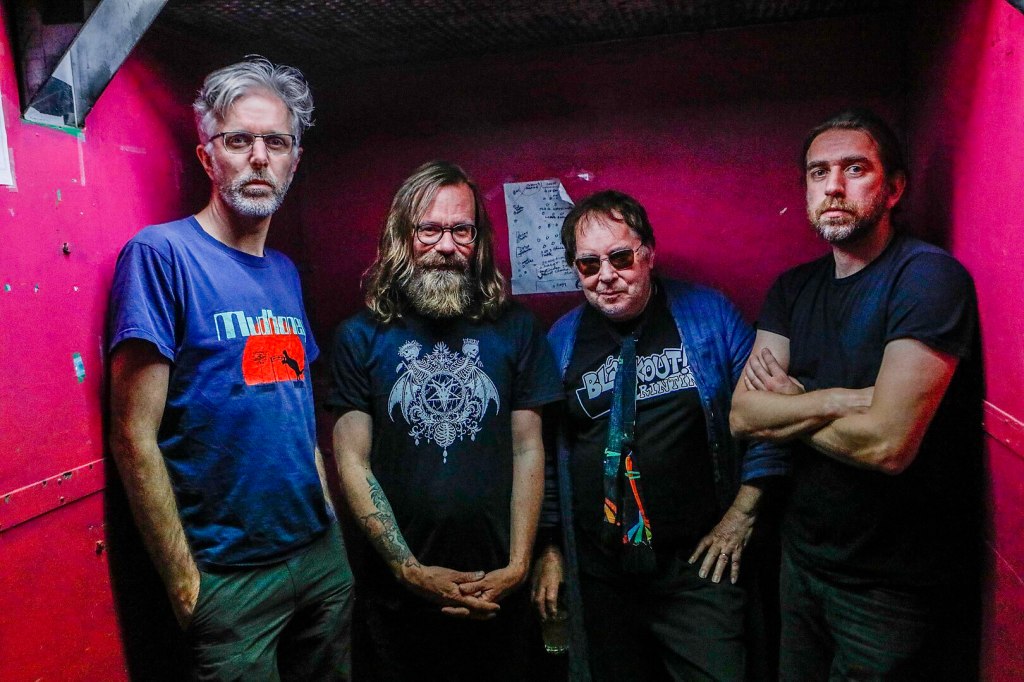
After Words and Gardens Of … play Independent Distilling Company on Saturday, September 6

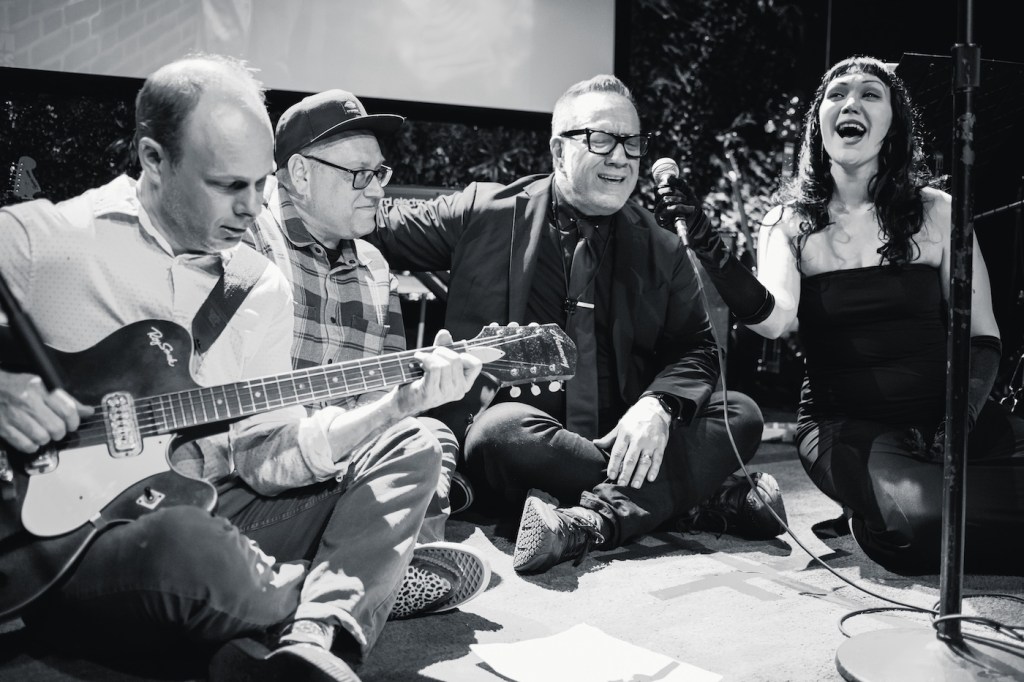
After Words at Excelsior Mill (pre-Masquerade). Photo by Sara Epstein.

Between July of 1987 and December of 1989, After Words played a crucial role in pushing Atlanta’s post hardcore scene into new musical terrain. Seminal hardcore band Neon Christ had called it quits a year earlier. In their wake, a new generation of musicians stepped up to carry their influence forward.

In the late ‘80s, After Words co-founding guitar player Brian Nejedly began booking shows while he was still in high school. “When the Metroplex shut down, that was the only all ages venue in town, so I just started looking for places that I could rent out to put on shows,” Nejedly says.

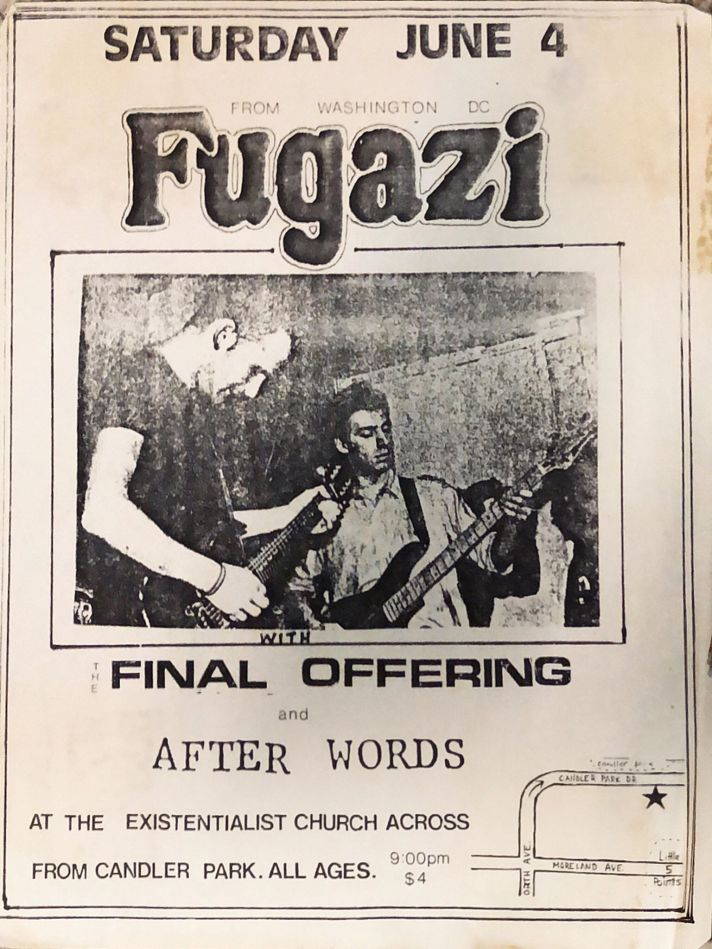
He booked Fugazi’s first Atlanta show at the First Existentialist Congregation in Candler Park. He booked Ignition, Soul Side, 7 Seconds and dozens of other acts. “Once I started booking shows, I realized that a lot of these bands had a list of people and places to call for shows in each town, and I was on that list,” Nejedly says. “For a while, I was the only guy in Atlanta on that list.”

Along the way, Nejedly sent After Words demo tapes out to pretty much every label that was on his radar. “I sent a demo to Cruz Records because we loved the band All,” he says. “We sent tapes to everyone, and Amanda MacKaye at Sammich Records wrote back.”

Amanda, sister of Ian (Dischord Records, Minor Threat, Fugazi, Coriky) and Alec (Ignition, Faith, and Hammered Hulls) MacKaye ran Sammich with Soul Side’s Eli Janney (Girls Against Boys). She offered to release the demo tape, making After Words the only band from outside of D.C. at the time to receive distribution through Dischord. 

The label’s approval validated Atlanta as a place where post-hardcore ideas could thrive, and it placed After Words on the same label as Soul Side, Shudder to Think, and Swiz.

Drop a needle on After Words’ record and Nejedly’s jagged guitar carries weight over vocalist Noel Ivey’s cathartic voice, and propulsive rhythms laid down by bass player Craig McQuiston and drummer Kevin Coley. Emotional urgency guides songs such as “Looking Back,” “Ghost Dance,” and “As I See It,” all bearing the intensity of an early emo sound. The songs were never about nihilism or aggression. They were about wrestling with meaning, memory, and self-understanding.


In February 2024, Nejedly revived After Words for a one-off show 35 years after the album’s release. Ivey, McQuiston, and Coley are no longer living in the area. So Nejedly formed a new lineup featuring Geoey Cook (Fiddlehead) on vocals and guitar, James Joyce (Cheifs, Car Vs. Driver, Blood Circuits) on drums, and Justin Gray (3D5SPD) on bass to bring renewed energy to the songs. 

In 2024, they locked in on an eight-song setlist—five from the original After Words LP, along with two other older numbers.

The two non-LP songs: “Things They Never Taught You” first appeared on The View: An Atlanta Compilation: 1984-1990, a cassette-only release that captured snapshots of the city’s underground post-hardcore and emo scene. Another song, titled “Without Answers” was documented during a 1989 Live at WREK session.


Earlier this year, the group recorded six songs with Tom Tapley at West End Sound—“Looking Back,” “As I See It,” “Without Answers,” “Third Party,” “Tell Me,” and “Ghost Dance.”

“We’re not doing anything different with the songs,” Nejedly says. “Pretty much keeping it true to the original with only minor changes. ‘Ghost Dance’ will always be my favorite,” he adds. “I think it’s the best song I’ve written and Noel’s lyrics were really good.”

Cook’s voice adds new dimensions to each song, adding depth and interplay. Joyce’s drumming locks into Gray’s bass lines with precision, adding heft, pushing each arrangement even further.

“We recorded it as a live studio session just for ourselves to document us getting together and playing these songs, but it came out so well Echodelick decided to release it,” Joyce says.

A release date for the record remains TBD.

What defined After Words in the beginning, and what continues to define the group now, is its place on the sonic landscape as early hardcore’s influence became diffuse and less severe. After Words proved that Atlanta was producing its own singular voices, capable of standing shoulder to shoulder with their peers in D.C., New York, Chicago, and elsewhere.

For Nejedly, the new recordings are about carving out relevance in the present tense, and honoring what the group built decades ago while refusing to let it calcify. For Cook, Joyce, and Gray, it’s about expanding on a framework that still has room to grow.

“After Words pivoted bands from Atlanta into a different direction in the early ‘90s,” says Joyce. “If you think about Fiddlehead or Freemasonry, Scout, or Car Vs. Driver, or the next wave of bands that followed them, they all changed course because of After Words.”

Moving forward, the group will play sporadic shows, but for now they aren’t writing any new material.

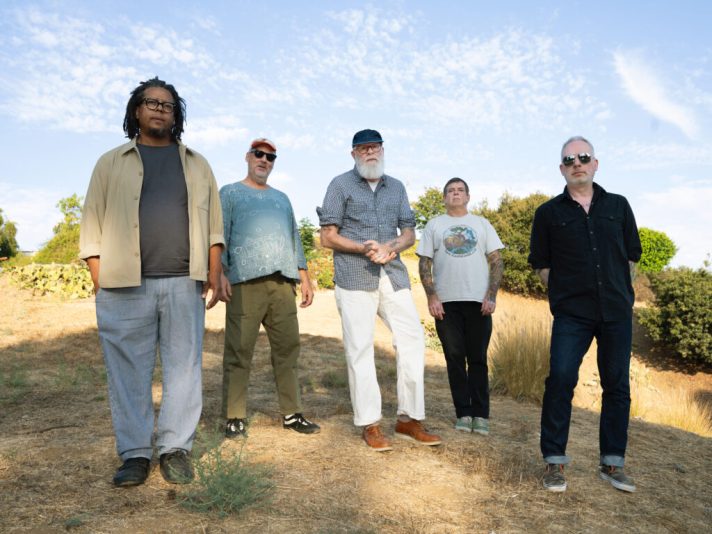
After Words. Photo by Brad Sigal.

If the late ’80s Atlanta scene was about carving out new space, After Words now stands as a reminder that the past can still fuel the present. The songs remain restless, powerful, and full of questions. That sense of questioning remains as vital now as it did when After Words record arrived in 1989.

After Words plays with Gardens Of … on Saturday, September 6 at Independent Distilling Company in Decatur. Free. 7 p.m. (doors). 547 E College Ave., Decatur.

A version of this story appears in Record Plug Magazine‘s September 2025 issue.

If you have enjoyed reading this post, please consider donating to RadATL. Venmo to @Chad-Radford-6 or click on the PayPal link below.

Donate with PayPal

Simon Joyner & the Nervous Stars play the Star Bar Sunday, August 31

Simon Joyner. Photo by Josh Doss.

Simon Joyner has spent more than three decades constructing one of the most devastating bodies of songs in American underground music. His catalog is steeped in bleak, Midwestern imagery, haunted characters, and unflinching emotional honesty that has drawn praise from the likes of Beck, Gillian Welch, John Darnielle of the Mountain Goats, and fellow Omaha songwriter Bright Eyes’ Conor Oberst.

With his most recent album, Coyote Butterfly, Joyner taps into a deeper vein of sorrow and resilience, reckoning with the loss of his son Owen, who died in August of 2022. The result is one of the most affecting albums in his career—and he’s bringing it to the stage with a six-piece band that adds weight to every cracked note, every rich musical texture, and every solemn word.


Simon Joyner & the Nervous Stars’ lineup includes Australian songwriter Leah Senior (keyboards, vocals, and percussion) and her partner Jesse Williams (guitar), both of whom accompanied Joyner during a recent tour of Australia and New Zealand. The live band also includes Mychal Marasco on drums and Phoenix-based brothers and experimental musicians Caleb (bass and vocals) and Micah Dailey (guitar, miscellaneous instruments, and tape loops). 

Following the lead of Joyner’s voice and guitar, the group moves with unhurried rhythms and quiet existential resonance. Together, they’ll breathe new life into some of Coyote Butterfly’s bedrock numbers such as “The Silver Birch” and “Port of Call,” allowing the grief to unfold in real time.

If Coyote Butterfly explores a raw, open wound, songs from Joyner’s upcoming album, Tough Love, promise a more complicated take on perseverance and connection. Many of the songs from the LP in-progress are being revealed here for the first time on this tour. Both albums are intrinsically linked.

“For the kinds of tough love the album addresses, there’s the tough love that exists between citizen and government where you love the country but are struggling with its faults and are at the point of choosing to fight for it to change or maybe abandon it,” Joyner says. “There are a couple of political songs on the album dealing with the state of the country right now. There’s the tough love between siblings, and the tough love of a marriage or any romantic partnership. And of course the tough love as the term first came about, where loved ones of an addict wrestle with how to support the person they love who is struggling and sometimes resort to tactics which isolate or cut off the person struggling with the problem. There are a million little ways we all behave which could be forms of tough love, so the album is about people in various kinds of relationships behaving like humans do which is sometimes good but not always.”

Recently, Joyner & the Nervous Stars released a 7-inch and a CD featuring  Bob Dylan, Lou Reed, and Velvet Underground covers to raise money to help offset the cost of taking a six-piece band on the road.

The group will also play various songs from throughout Joyner’s career, all elevated to the full-bodied sound that a six-piece band affords. Joyner’s songs have always balanced poetry and brutal realism, but there’s a new weight in the air this time—a sense that the personal and political grief he’s singing about is inescapable, but not insurmountable. These songs don’t offer resolution. They offer endurance, and in this moment, that might be exactly what the world needs.

Simon Joyner & the Nervous Stars play the Star Bar on Sunday, August 31, with Anagrams and Karl Syrylo. $15. 7 p.m. (doors).

A version of this story first appeared in the August 25 issue of Record Plug Magazine.

If you have enjoyed reading this post, please consider donating to RadATL. Venmo to @Chad-Radford-6 or click on the PayPal link below.
Donate with PayPal

Record review: Total Peace comes out of the gate strong with self-titled debut

Three years in the making, Total Peace’s self-titled debut album comes out of the gate strong with volume and urgency. What began as a neighborly chat between Michelle Williams and Matt Cherry during the peak of COVID isolation turned into a full-fledged band grounded in old school human interaction and no-frills songwriting.


Cherry is best known for slinging layered and complex guitar parts in the psychedelic post rock outfit Maserati. Here, he trades his effects pedals for a bass and a microphone. His voice is heavy, tuneful, and raw in songs such as “Taped Up,” “Trance,” and “Slipped.” It’s a bold pivot that calls to mind the ramped up energy of Gang of Four’s Entertainment! and the introspective back-and-forth between Tom Verlaine and Richard Lloyd throughout Television’s Marquee Moon—all driven by the sheer exuberance of the Stooges’ Self-titled LP. The riffs are bold and the rhythms are undeniable, reveling in the power of repetition.

Guitarists Williams and Craig Gates and drummer Greg Stevens round out the lineup with a compelling synergy. Stevens and Williams share roots in Atlanta’s early aughts indie rock band Red Level 11. Their chemistry grounds the record’s driving pulse, as they thrive on stripped-down dynamics—no synths and no nonsense.

There is no concept at work here per se, but Cherry says, “Michelle and I are neighbors in Inman Park. She has a bunch of historical documents about people and events on our street in the 1910s and 1920s that we thought were interesting. Several of the songs are loosely about those things. Other songs,” he goes on to says,” “are about different topics ranging from fictional characters to various midlife crises and dark thoughts.”

Recorded live at Maze Studios in Reynoldstown with engineer Ben Etter (Erasure, Washed Out, Nikki and the Phantom Callers) and mastered by Joel Hatstat (Bambara, We Vs. the Shark, Liz Durrett), this self-titled debut leans into its compact and hook-laden energy. “Tom Talbot,” “Mold Blue” and “Be Free” dance on a tightrope between post-punk tension and anthemic release. There’s a visceral joy in cranking it up for the sake of catharsis, and Total Peace hits like a welcome jolt of electricity.

Catch Total Peace’s live debut at Waller’s Coffee Shop on Friday, August 15, with Go Public and Tall Fences. 6-10 p.m.

If you have enjoyed reading this post, please consider donating to RadATL. Venmo to @Chad-Radford-6 or click on the PayPal link below.
Donate with PayPal

Gringo Star’s ‘Sweethearts’ blends psychedelic grit with a ’50s pop shimmer

Photo courtesy Gringo Star.

Nicholas and Peter Furgiuele are men of few words. For 23 years the closely-knit Atlanta-born brothers and songwriters have let their music do the talking for them. They first recorded together under the name A Fir-Ju Well in 2002. Years later, in 2007, they rebranded as Gringo Star and have carried on ever since, navigating shifting cultural tides, changing musical trends, and seemingly endless lineup shuffles with the kind of determination that comes from shared musical instincts, experiences, and D.N.A.—call it brotherly love.

Gringo Star’s latest album, Sweethearts, trades indie-rock grit for a 1950’s pop shimmer, weaving together soft-focus textures that imbue their signature blend of garage rock and psychedelia with a new and introspective depth. The album’s first two singles, “Blood Moon” and “I Sleep to Dream,” highlight a musical evolution in progress, each one floating in reverb, harmonies, and instantly familiar melodies wrapped around love stories. The songs shapeshift with dreamlike grace, expanding upon elements of both nostalgia and innovation, carrying the band into new terrain.


“We didn’t set out to make a record with any kind of underlying theme, but all the songs told these love stories, and the sound evolved as we went along,” says singer and guitar player Nicholas Furgiuele. “There is an underlying theme to it all, but I wouldn’t know how to explain it,” he goes on to say while offering that if anyone does hear a coherent concept at work throughout the album, it’s something that wrote itself.

“I have always been into the idea that music is open to interpretation, and what it means to me might mean something completely different to anyone else who’s hearing it and putting it all together in their head,” he adds.

Sweethearts is Gringo Star’s eighth full-length album, and their first with the Grand Rapids-based dizzybird Records. It’s also their second post-pandemic offering, recorded between 2023 and 2024, expanding upon the murky sound and vision of 2023’s On And One And Gone.  Its songs take shape as surreal nods to simpler times in American life, channeling equal parts dreamy reverie and swirling self-reflection, filtered through a lens of vintage melancholy.

“We wanted to make a record that felt good, you know? Something that felt like remembering love,” Furgiuele says. “But at the same time, there’s a sadness in that memory. It’s not all sunny.”

Familial tendencies are also behind Nick and Peter’s penchant for a 1950s sound as well. From the 1940s-1975, their maternal grandfather, Ed “Dr. Jive” Mendel, was a DJ for WGBA-AM in Columbus, GA. He was also a chitlin’ circuit promoter, and record label owner who earned a couple of gold records for a duo he managed, Peggy Scott & Jo Jo Benson. Sam Cooke, Soul Stirrers, Otis Redding, James Brown, Martha and the Vandellas, the Shirelles, Little Stevie wonder, and Jackie Wilson were also among his associates.

“He died before my parents got together so we never knew him,” Nick says. “But my grandma’s photo albums were all filled with pictures of them with James Brown, Jackie Wilson, being around all of this music and all of these images of our grandparents was for sure an influence on what we do with Gringo Star.”


But an aura of peaceful optimism is the album’s guiding light. “Blood Moon” takes shape as a waltzing lullaby where layered vocal harmonies and languid guitars remain suspended in sensual ether. 

One song, “Some Things Don’t Change,” was originally written for Nick and Peter’s first band, the King Street Blues Band, circa 1995 when they were in 9th and 7th grades respectively, while living for several years in Boone, N.C.

The band was named after downtown Boone’s main thoroughfare. “Some Things Don’t Change” was originally penned by their bandmate John Fulkerson, but it had never been properly recorded. For Sweethearts, Nick and Peter took what they remembered of the song, retooled it and wrote some new lyrics here and there.

“I kind of don’t remember what the original song sounded like, and it never really had any kind of arrangements,” Nick says.

The idea to revisit the song came when Nick realized he was unconsciously noodling the bass lines between other songs when the group was on stage. “I don’t know why it got stuck in my head, but it did, and so we gave it a whole new treatment—a whole new life.”

“Some Things Don’t Change,” as it appears on Sweethearts, is now one of the more sophisticated numbers that takes shape amid the tracklist. Still, the album remains deceptively simple, unraveling to reveal miniature worlds thriving inside lush turns of phrases, baroque instrumentation, and emotionally intense shading.

Gringo Star. Photo by Francis Furgiuele.

Since recording Gringo Star’s 2008 debut album, All Y’all, produced by Ben H. Allen III (Animal Collective, Deerhunter, Gnarls Barkley), the group’s body of work has existed outside of easy classification. But they have always been interested in stirring hot-blooded emotional meditation into their work. Nick, working alongside his brother Peter on bass, guitar player and vocalist Josh Longino, and drummer Mario Colangelo the group has carved out a one-of-a-kind cosmic rock sound. Surf-inflected riffs and distant rhythms in the instrumental song “Girl,” and a traipsing cover of Sam the Sham and the Pharaohs’ 1966 hit “Li’l Red Riding Hood” underscore the album’s surreal, dream-like essence.

On stage, instruments get swapped. Roles shift. There’s an elastic energy to the way the group performs—egalitarian and impulsive—and this live dynamic carries over into Sweethearts, careening movements from the janggling  exuberance of “Count the Ways” to the wall-of-sound that binds “A Lonely One.” Each number offers a distinct postcard from a dream-world version of the past. A sense of longing underpins the whole affair—an ache for connection in a time when disconnection is the norm.

“In a world where division has become a rallying cry, we wanted to make something that reminds people of what connects us,” Peter says. “We wanted to get back to that raw emotion—love, heartbreak, joy, sadness. All of it.”

It’s easy to forget, in the churn of modern music, how rare it is for a band to last this long, all the while continuing to evolve. Gringo Star is one of those rare groups that has never stopped pushing forward, even when the rest of the world shut down, and even when doing so meant carving their own path outside of whatever music scene was in vogue at the time.


They’ve toured relentlessly over the years, sharing stages with the Zombies, Cat Power, Weezer guitarist Brian Bell’s band the Relationship, Best Coast, and Shannon and the Clams. Their sound has zigzagged across records like a living document of who they were at a given moment.

But what is, perhaps, most remarkable is the way the band has retained its identity while allowing each record to bloom in its own way, bringing their songs to life, and turning raw ideas into something that is quite cinematic.


Sweethearts sits comfortably out of time, reverent of the past but not beholden to it. The songs invite listeners to slow down, and to feel things deeply.

Nick and Peter may not be chasing any zeitgeist, but they are staying true to a vision that’s lasted nearly three decades without growing stale. With Sweethearts, they’ve added a rich new chapter to an already impressive catalog—one that lingers long after the needle lifts. And maybe that’s the real trick to Gringo Star’s longevity. The group doesn’t just survive. It resonates beyond words.

If you have enjoyed reading this post, please consider donating to RadATL. Venmo to @Chad-Radford-6 or click on the PayPal link below.
Donate with PayPal

A version of this story originally appeared in the May 2025 issue of Record Plug Magazine.

Shane Parish unveils live ‘Solo at Café OTO’ LP

Shane Parish: Solo at Cafe Oto (Red Eft Records). Cover photo by Petra Cvelbar.

Shane Parish has unveiled details for an evocative new album, titled Solo at Café OTO, due out July 1, via his own label, Red Eft Records.

Captured live in London on November 14, 2023, the album showcases Parish in full exploratory mode, performing an instrumental fingerstyle electric guitar set drawn from a deep well of British and American folk traditions. The performance took place during a sold-out evening of solo sets the night before Bill Orcutt’s Guitar Quartet appearance at the London Jazz Festival.


The album’s first single, a rendition of Angelo Badalamenti and David Lynch’s “Sycamore Trees,” from the Twin Peaks soundtrack, sets the tone for a dark, drifting, and emotionally resonant album. Parish also leans into the melancholy and mysticism of folk ballads by Anne Briggs, Shirley Collins, and John Jacob Niles, reinterpreting them with his own idiosyncratic voice and a minimalist rig: just a Fender Squier Telecaster plugged directly into the house amp. It’s the same guitar he used for 4 Guitars Live at Le Guess Who? Festival in Utrecht the night before—a gift from Bill Orcutt, passed down when Parish joined the four-guitar ensemble.

Parish’s 2024 release, Repertoire (Palilalia Records) featured tight arrangements of outsider standards from various musical genres—Kraftwerk’s “Europe Endless,” Alice Coltrane’s “Journey Into Satchidananda,” Aphex Twin’s “Avril 14th,” John Cage’s “Totem Ancestor”—allowing their melodies and their vital essences to take on a gently glowing body via the resonating steel strings of his guitar. With Solo at Café OTO, Parish summons a raw and intuitive performance that’s closer in spirit to 2016’s Undertaker Please Drive Slow (Tzadik). Here, each melody becomes a jumping-off point for spontaneous invention, with Parish letting the songs drift, fracture, and reform as if guided by wind and water. The result is both intimate and expansive—an arresting document of a singular guitarist at the height of his expressive powers.

Click here to pre order Solo at Café OTO.

If you have enjoyed reading this post, please consider donating to RadATL. Venmo to @Chad-Radford-6 or click on the PayPal link below.
Donate with PayPal

TVAD takes on religion with their latest single, ‘The Island Song’

Raw and slowly burning tension runs through TVAD’s latest single, “The Island Song,” which takes shape as a stark meditation on the damage that mankind’s obsession with religion has inflicted upon the world.

With TVAD (Television After Death) recently paring down to a two-piece lineup, principal songwriter Dizzy Damoe—who prefers to not use his Christian-born name—handles guitar, synth, and vocal duties while working alongside bass player John Holloway.

Damoe is currently a member of Alanta’s purveyors of blackened doom and death metal Withered, and is a former member of sludge metal and post-hardcore acts Leechmilk, Sons of Tonatiuh, the Love Drunks, and Canopy. Holloway first made an impression in the bands Tabula Rasa and Of Legend.

“The Island Song” conjures an eerie atmosphere, built upon minor-key melodies and mechanical rhythms that recall the bleak romanticism of early Wax Trax Records releases, threaded through with brittle textures of post-punk and dark wave. Damoe’s guitar oscillates between shimmering ambience and sharp, metallic jabs, while Holloway’s bass carves out a grim undercurrent, grounding the song’s sprawling pace.

Cut from lyrics such as “They hunt, looking for a reason. The wolf, still eats all season. A child, may go hungry. But pray, and seek out your vision,” the song stares down organized religion with an unflinching eye. It’s tone is neither preachy nor dogmatic, but there are no minced words. Damoe delivers each line with a weary conviction, as though bearing witness to the long arc of history’s spiritual missteps. “The Island Song” doesn’t offer solutions, just stark reflection.

It’s a bold move — a track that walks a fine line between sonic exploration and thematic clarity. And for TVAD, it sets the stage for something bigger. If this is the first glimpse into the group’s forthcoming body of work, it’s clear they’re not pulling any punches.

TVAD’s next show is booked at 529 on June 12, which is Damoe’s birthday. A few more shows throughout the summer will be announced soon. Until then, press play on “The Island Song.”

If you have enjoyed reading this post, please consider donating to RadATL. Venmo to @Chad-Radford-6 or click on the PayPal link below.
Donate with PayPal

86’s first two 7-inches restored and reissued

86: Max Koshewa (from left), Ken Schenck, and Mac McNeilly. Photo by Mary Alexander.

Chunklet Industries is dusting off a crucial piece of Atlanta’s post-punk and new wave past with an online reissue of 86’s first two singles. The trio—featuring Mac McNeilly (before his seismic drumming found a home in the Jesus Lizard), Ken Schenck’s jagged guitar lines, and Max Koshewa’s brooding bass—captured a restless energy that redefined the city’s underground music scene in the early ’80s.

“Useless” and “Behind My Back” were recorded at Southern Sound in Knoxville, Tenn. in July of 1983. “Youth Culture” and “Inside” were laid down a year later 1984. Both singles were originally released via Knoxville’s short-lived indie label OHP Records. Placed together here, both singles channel the urgency of the era while hinting at the band’s singular presence in Atlanta.

Audio restoration duties for this new issue fell to Jason NeSmith at Chase Park Transduction, where the songs were delicately digitized from the original vinyl 7-inches. NeSmith applied subtle de-clicking and EQ adjustments, preserving the grit and urgency of the recordings while amplifying their visceral punch.

86: Max Koshewa (from left), Ken Schenck, and Mac McNeilly. Photo by Mary Alexander.

While 86 is often remembered as the band that gave McNeilly his start, these singles cement the group’s place as a vital force in Atlanta’s music history. And this is only the beginning: Chunklet reportedly has a trove of unreleased recordings from the 86 archives queued up for release later this year.

If you have enjoyed reading this post, please consider donating to RadATL. Venmo to @Chad-Radford-6 or click on the PayPal link below.
Donate with PayPal

The March Violets push subtlety and aggression into new dark realms with ‘Crocodile Promises’

The March Violets’ Crocodile Promises

After more than a decade between releases, the March Violets return with Crocodile Promises, a sleek and muscular new album that is as much a return to the group’s classic gothic rock and post-punk form as it is a bold step forward. The secret to the Violets’ success has long been their penchant for crafting undeniably catchy songs that thrive in an atmosphere of rich imagery and ambiance. Press play on the ‘80s hits: “Walk Into the Sun,” “Snakedance,” “Grooving In Green,” “Crow Baby,” et al. The art of balancing complex harmonies and melodies with lyrics steeped in perfectly compelling abstraction is the March Violets’ strong suit. For Crocodile Promises, core members vocalist Rosie Garland and guitar player Tom Ashton were joined by former Violets bass player Mat Thorpe (also of the group Isolation Division). Together, they fleshed out nine new numbers at Ashton’s SubVon Studios in the rural countryside near Athens, Georgia, where Ashton produced the record.


Crocodile Promises opens with “Hammer the Last Nail,” a song that’s bound by billowing and shadowy textures that slowly open up to reveal the album’s vast and majestic palette. Thick and undulating guitar riffs and constrictive hooks match Garland’s bewitching traipse into modern terrain. “Bite the Hand” and “Virgin Sheep” kick up the energy with a full-bore punk charge.

The “Kraken Awakes” and “Mortality” are slow-burners invoking tales of revenge and deceit. “This Way Out,” builds into a roaring and hypnotic groove, with its thumping beats and Garland’s pointed delivery.

The March Violets: Mat Thorpe (from left), Rosie Garland, and Tom Ashton. Photo courtesy Jace Media.

There’s a real sense of urgency at work in Crocodile Promises. The production is as subtle as it is sweeping when it needs to up the intensity, pushing heaviness, real-world angst, and aggression into new dark realms, alternating between understated tension and unleashed power.


The March Violets play the 2nd Annual Southern Gothic Festival at the 40 Watt Club in Athens October 25-26.

Friday, October 25
March Violets, Korine, Tears for Dying, House Of Ham, Vincas, Panic Priest, and Miss Cherry Delight. Find Friday night tickets here.

Saturday, October 26
The Chameleons, Vision Video, and Deceits. Find Saturday night tickets here.

Tickets for both nights can be found here.


If you have enjoyed reading this post, please consider donating to RadATL. Venmo to @Chad-Radford-6 or click on the PayPal link below.
Donate with PayPal

A few words from Record Plug Magazine about Corndogorama: The Musical

Corndogorama: The Musical. Photo by Sam Feigenbaum

Corndogorama is back! 

It’s been eight years since our friend David Railey—a veritable Vanna White to Atlanta’s indie rock scene—hosted the Corndogorama. The DIY summer music festival is known for its casual community-oriented atmosphere and marathon of local bands on stage.

This year’s resurrection may have seemed like a Record Plug event to the uninitiated. The magazine was a key sponsor and a curator of this year’s lineup, as we sought out and rallied the bands to play all three days—June 21-23, 2024. But make no mistake, Corndogorama is the brainchild of—and the birthday party celebrating—Railey’s decades-long tenure in Atlanta’s music scene. Remember his bands? American Dream? Ancient Chinese Secret? Casionova? Day Mars Ray? Jesus Honey? The list goes on. Corndogorama has endured countless ups and downs since it kicked off at Dottie’s on Memorial Drive way back in 1996.

This year was wrought with an equal number of ups and downs. But hey, we raised $2,515 for Upbeat: The Tigerbeat Foundation for musicians, a non-profit organization dedicated to getting struggling independent musicians back on their feet via an emergency grant program.

Over the years, my [Kip’s] bands (Haricot Vert,  Freemasonry, Chocolate Kiss, Clemente, Victory Hands, et al) have played various benefit shows. Oftentimes I never heard how the numbers turned out, so I wanted everyone to know what their collective efforts raised.

The attendance for Friday was decent, Saturday turned out great, and Sunday was a bust. But that’s okay. Three days in the June heat is a big ask. But the bands played on, and we appreciate every one of you who came out, said hello, and watched the show.

It was three days of musical triumphs and logistical catastrophes: No Corndog eating contest? No vendor tents? No flip-flop parade, no ass-kissing booth? No Topo Chico! That sucked! Oh well. It’s been nearly a decade since the Corndogorama went down, and some skills have to be relearned. We’ll be back next year stronger than ever.

Saturday’s crowd warmed our hearts, and it helped cover the whole weekend’s production costs. I [Kip] personally want to thank Amos, Van, and the whole  A Rippin Production crew for keeping everything running smoothly, despite Saturday’s murderous heat. They put in the work and kept the costs low to raise as much as possible for Upbeat. Thanks are also due to Shane Pringle, Tim Song, and Boggs Social & Supply, who selflessly took no money from the ticket sales. They worked the full weekend, relying on bar sales alone to cover their end. It’s a good thing y’all drank so much.

Shane’s band Bad Spell tore up the outdoor stage on Saturday.

Pabst Blue Ribbon was an excellent sponsor, donating kegs and money, and Music Go Round saved our tails by loaning us the outdoor backline. Topo Chico! Where were you? We waited for you with bated breath and hope in our hearts, but you left us hanging. 

Ups and downs. Maybe we’ll see you next year.

A sincere and exhaustive shout-out goes to all the bands that performed throughout the weekend; those who gave their time and delivered stellar performances reminded us of why we’re in this in the first place. And we know it’s a labor of love to practice even a short set, haul yourselves and your equipment across the city to the venue, put on a show under the squelching summer sun, and then break it all down, load it up, and lug it all back to the practice space.

Absolutely 100%, Corndogorama would not have been able to raise a single penny for Upbeat without your time and energy. We’re sending the most sincere thanks to all of you. There were too many bands to name here, but we see you, and we love you. All of you. Thank you for sticking by Corndogorama (see what we did there?). See you next year! Until then, check out Alexa Kravitz and Sam Feigenbaum’s photos from Corndogorama: The Musical. — Kip Thomas (with some help from Chad Radford)

If you have enjoyed reading this review, please consider donating to RadATL. Venmo to @Chad-Radford-6 or click on the PayPal link below.
Donate with PayPal

Saddam Death Cave: ‘Planned Obsolescence’

Photo courtesy Saddam Death Cave

Saddam Death Cave’s Planned Obsolescence EP proves that the hardcore struggle is real, and life’s daily tormentors grow increasingly difficult to rise above as time passes. The 10-inch record’s collective resume channels decades of Southern punk, hardcore, and alternative rock pedigree: Guitar player Marlow Sanchez is an alumnus of All Night Drug Prowling Wolves, Rent Boys, and Swing Riot. Bass player Brian Colantuno played in Mission To Murder. Guitarist Mike Brennan played in Otophobia and still plays in Primate with Mastodon’s Bill Kelliher. Drummer Keefe Jutice was in the Close. Vocalist Gray Kiser fronted Winston-Salem’s straight-edge crew Line Drive.


With Planned Obsolescence, these statesmen of the scene tighten their focus to hone a classic hardcore charge, fusing experience with razor-sharp riffs and manic rhythms. Kiser’s visceral, powerful voice in the opening number, “The Last Living Mountain” is a fiery rip on rising above repression and the mechanisms of societal control. “The Gods They Made” follows through with a high-speed agit-snarl that hits on an existential level. “Aging Well, Aging Often,” Midlife Christ,” and a breakneck cover of Naked Raygun’s “Rat Patrol” vacillate between moving at a full-throttle pace, and proving that humor goes a long way, as fighting the age-old tyrants—authoritarianism, social control, and complacency—culminates here in 10 blasts of passionate, intelligent hardcore. SDC plays them like they mean it.

NOTE: Since the Planned Obsolescence EP was released, co-founding bass player Colantuno has parted ways with SDC. Ex-Otophobia and 12 oz. drummer and guitar player Elliot Goff has joined the group playing bass.

SDC’s first show with Goff playing bass is at Disorder Vinyl on Sun., June 23. They’re playing Athens at Buvez on Thurs., July 18, and at Boggs Social & Supply with Dayglo Abortions on Wed., Aug. 7.

If you have enjoyed reading this review, please consider donating to RadATL. Venmo to @Chad-Radford-6 or click on the PayPal link below.
Donate with PayPal