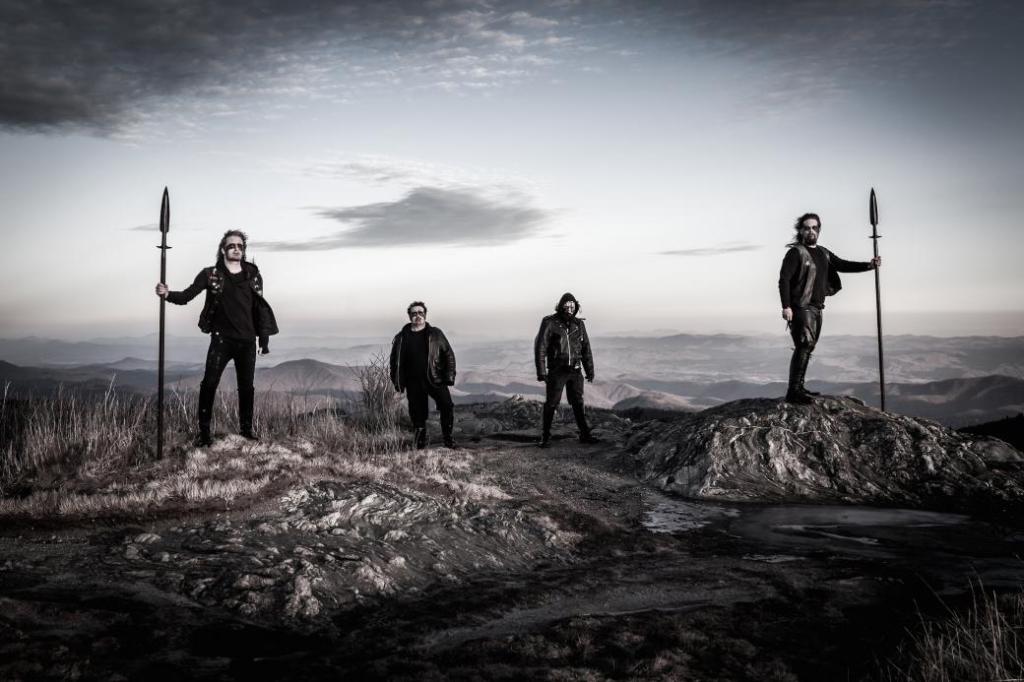
MASTERS OF THE UNIVERSE: Vimur takes black metal into the void with ‘Triumphant Master of Fates.’ Photo by David Parham.
The cover art for Vimur’s second album, Triumphant Master of Fates features a painting by Portland, Oregon-based artist Adam Burke (of Nightjar Illustration), depicting a mountainous landscape divided by a river of blood. Standing atop a mountain, a lone traveler gazes into a massive black hole that has formed in the sky, radiating beams of light back at the viewer. It’s an arresting image that, like the cover of a 1950s pulp sci-fi novel, captures a climactic moment plucked from an epic journey.
For Vimur, Burke’s painting illustrates a moment of reckoning on a quest to find deep knowledge, a reverence for the expanding cosmos, and a vision of arcane knowledge, imperceptible when viewed through the lens of humankind’s earthbound senses. It’s also an enticing entry point that sets the tone for the Atlanta black metal outfit’s dive into a much older, colder, and infinitely larger universe than the Norse mythology hinted at with 2014’s Traversing the Ethereal Current and 2016’s Exegesis EP.
“The themes on the new album are all about seeking truth regarding the micro, the macro, the inner, the outer, darkness, and light; they’re about totality and all of its many dimensions,” offers the group’s singer, guitar player, and founding member, Vaedis Eosphorus. “In the past, I feel like I was just knocking on the door of concepts rather than fully opening the door and letting them come into me — come through me. I was exploring rather than exuding,” he says. Read the full story at CL ATL.
Daniel Ash has a story he likes to tell about how the inspiration behind his current group Poptone came like a thief in the night. Ash, the former Bauhaus and Love and Rockets singer and guitarist, had fallen asleep at his desk with a pair of headphones on. He’d been clicking around Youtube, and recalls with hazy detail one of the last things he heard before drifting off to sleep: Brian Eno’s 1975 album, Another Green World.
“Eno is one of my favorites of all time,’ Ash says over the phone from his home in Los Angeles. The album’s flowing atmosphere and minimal pop rhythms are more than enough to send anyone’s subconscious mind drifting through dreamland on a cloud of pastel impressionism.
But sometime around 4 a.m., the spirit of rock ‘n’ roll Lemmy Kilmister of Moțrhead emerged to commandeer the streaming algorithm of Youtube on continuous play.
The buzzsaw guitars of Moțorhead’s “Ace of Spades” came ripping through the headphones at maximum volume. When Ash heard the song and Lemmy’s rasp growling out from beyond the grave, “You win some, lose some, it’s all the same to me/The pleasure is to play, makes no difference what you say,’ it was as though Ash was given a new lease on life. “I knew what I had to do,’ he says.And it had to happen immediately.
“Until that moment, I had given up on the idea of ever playing live again I wanted to make film and TV music,’ he says. “I had lost my confidence, and thought that playing live would never happen for me again.”
Charged by this late night shakeup, Ash let the idea simmer. “I slept on it for a few days,’ he says. “I just wanted to make sure it really was a good idea.” Sure enough, the powerful late-night jolt had awakened in Ash a desire to break his long hiatus from performing live.
His longtime cohort and drummer Kevin Haskins was ready as well. Back in the ’80s, Ash and Haskins had played only a handful of shows with Tones On Tail, the short-lived band they shared with bass player Glenn Campling.
Revisiting Tones On Tail’s songs and giving them the attention they deserved became priority one. But Ash and Haskins had other songs on their minds as well. There was Bauhaus’ austere “Slice Of Life,’ from 1983’s Burning From the Inside a song that Ash identifies as the birth of Love and Rockets. There was also Love and Rockets’ early cover of the Temptations’ 1970 hit “Ball of Confusion,’ which consummated the group’s vitality, along with its shift from Bauhaus’ visceral goth and post-punk charge into the realms of shimmering psychedelic pop.
Love and Rockets also scored a legitimate Top 10 hit with the seductive 1989 single “So Alive.” Poptone was born as a career retrospective, but Ash wanted the group to be a nostalgia trip with a life of its own. It was a new band rather than a reunion with Campling, or Bauhaus and Love and Rockets bass player and Haskins brother David J. The latter has carried on with an extensive a solo career, and has recently been supporting his latest album Vagabond Songs
Ash’s first question: “Who’s going to play bass?” They decided on Haskins’ daughter Diva Domp̩. Domp̩ has carved a niche for herself in Los Angeles’ music scene, releasing solo albums via Critical Heights, and performing in bands such as Pocahaunted, Blackblack, and most recently as Yialmelic Frequencies, as well as hosting a monthly guided-meditation show for DubLab.com.
While much of Diva’s musical aesthetic is steeped in layers of mystical, electronic, and largely instrumental drones, adapting to the role of bass player for Poptone came naturally. After all, she shares the Haskins DNA with her father and David J, and has been exposed to the songs her entire life. The influence even manifests itself in subtle ways, such as her 2015 single “Satori,” which gives a nod to Bauhaus’ 1981 single “Kick In the Eye.”
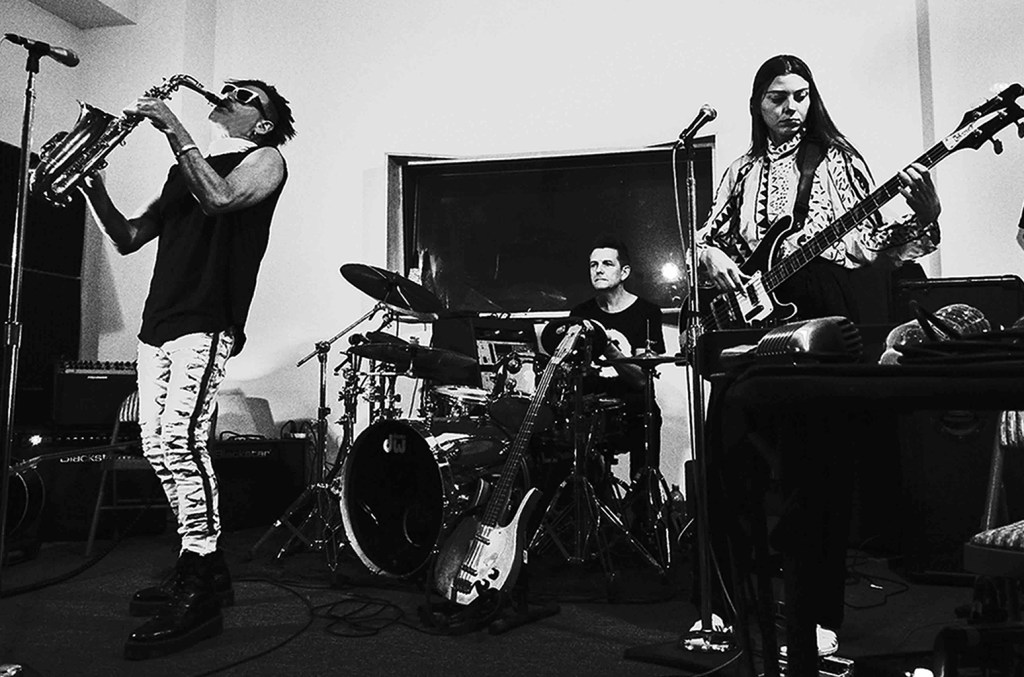
“I have always been inspired by my dad’s music,’ Domp̩ says. “It was challenging at first, but I wanted to honor this musical legacy, stay close to the original songs, and do my part to hold the space energetically, and make this group happen.” In April, Poptone premiered with a two-night stand at Swing House Rehearsal Studios in Los Angeles. Since then, the trio has been touring across the country in short two-week bursts of shows that keep the group’s energy levels high amid a flurry of blazing lights and the haunted pop ambiance of songs such as Love and Rockets’ “Mirror People’ and Tones On Tail’s “Movement of Fear,’ “Lions,’ and “Go!” Through it all, “Slice Of Life’ is the one song that Poptone has chosen to represent Bauhaus, and it’s still one of Haskins’ favorite songs to play. “I kind of feel proud when we come to that song,’ Haskins says. “I don’t know any other way to explain it, but I start feeling a little emotional when we play it.”
Haskins says the Tones On Tail songs are at the heart of Poptone’s drive. And now, because of technology, they more closely resemble how they sound on the records; each one maintains the haunting presence of its original version, packed with a renewed energy. From Tones On Tail’s ghostly cover of Elvis Presley’s “Heartbreak Hotel’ to the distorted rush of Love and Rockets “No Big Deal,’ inhabiting these songs in a modern context has been enriching for both Ash and Haskins. But it’s the audience’s responses that have affirmed their instinct to return to the stage.
With confidence rekindled, what happens next remains to be seen. Writing new material has been discussed, but nothing has been determined.For Ash, the power of Poptone lies in the freedom of living in the moment. “I get tunnel vision when I’m involved with a project, and I’ll follow it to the end,” he says. “I put everything into one thing, and when it’s done, I move on. So I’m not really thinking about what happens next. It’s like something John Lennon said: ‘One thing I can tell you is you got to be free,’ and I’m a huge believer in that. I don’t know how long this will last, but it’s an absolute pleasure.”
This story was originally published by CL ATL.
If you have enjoyed reading this article, please consider making a donation to RadATL.
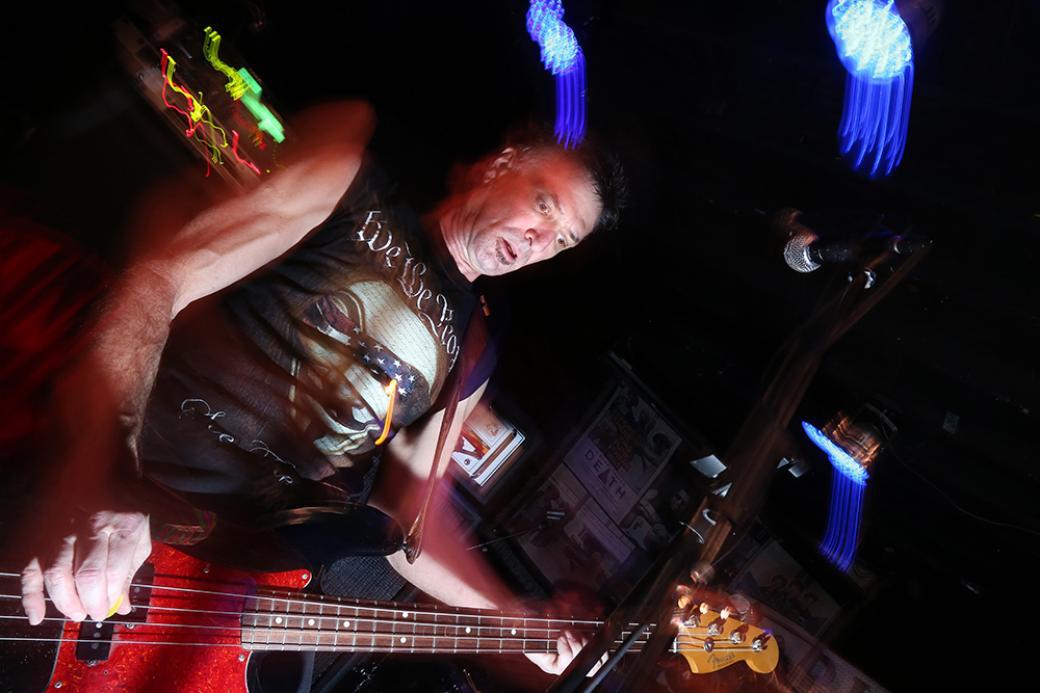
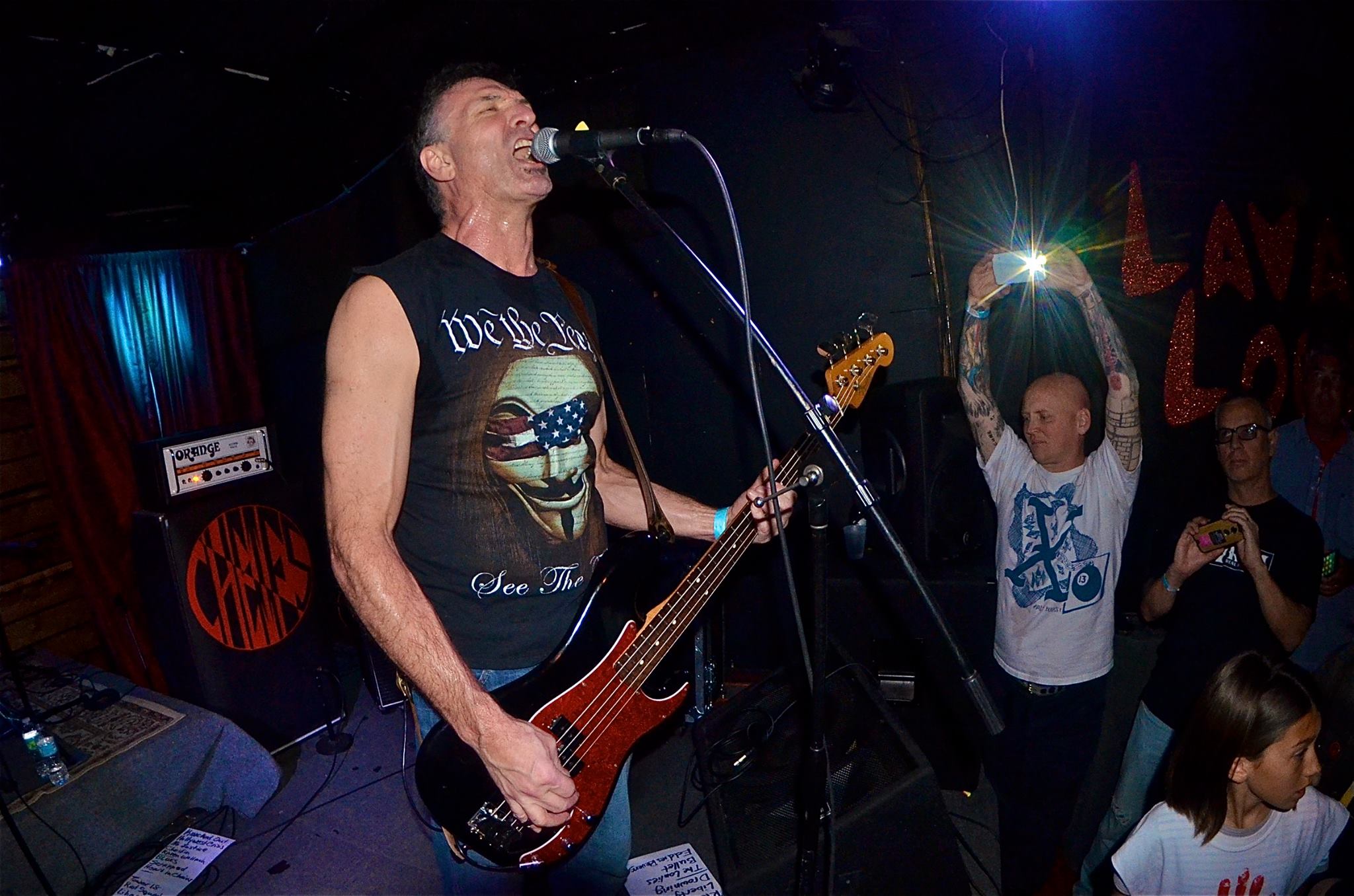
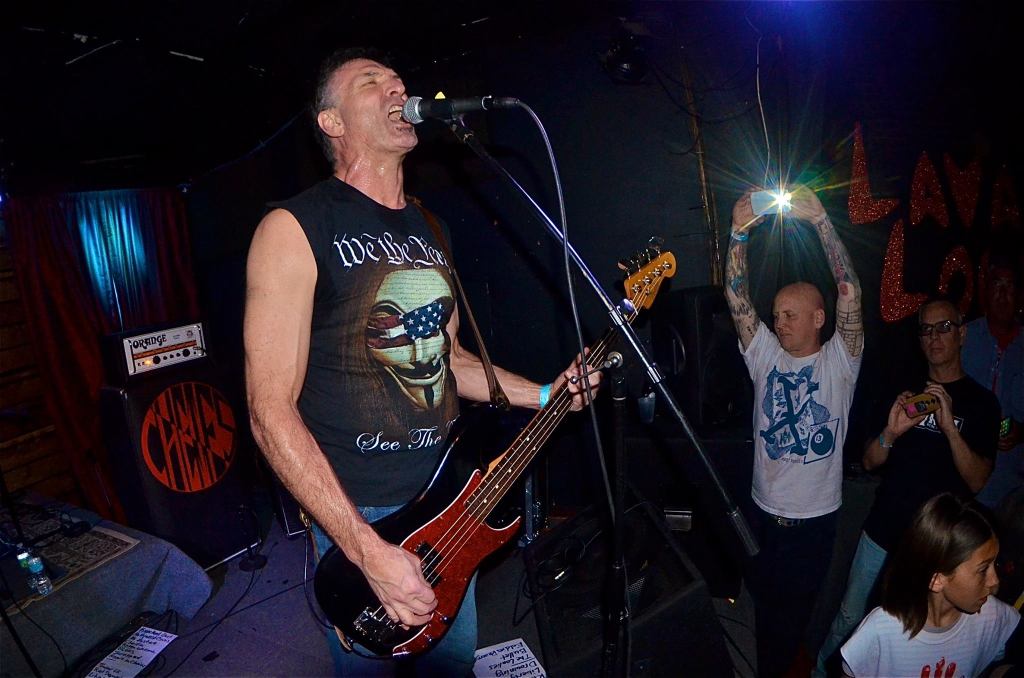
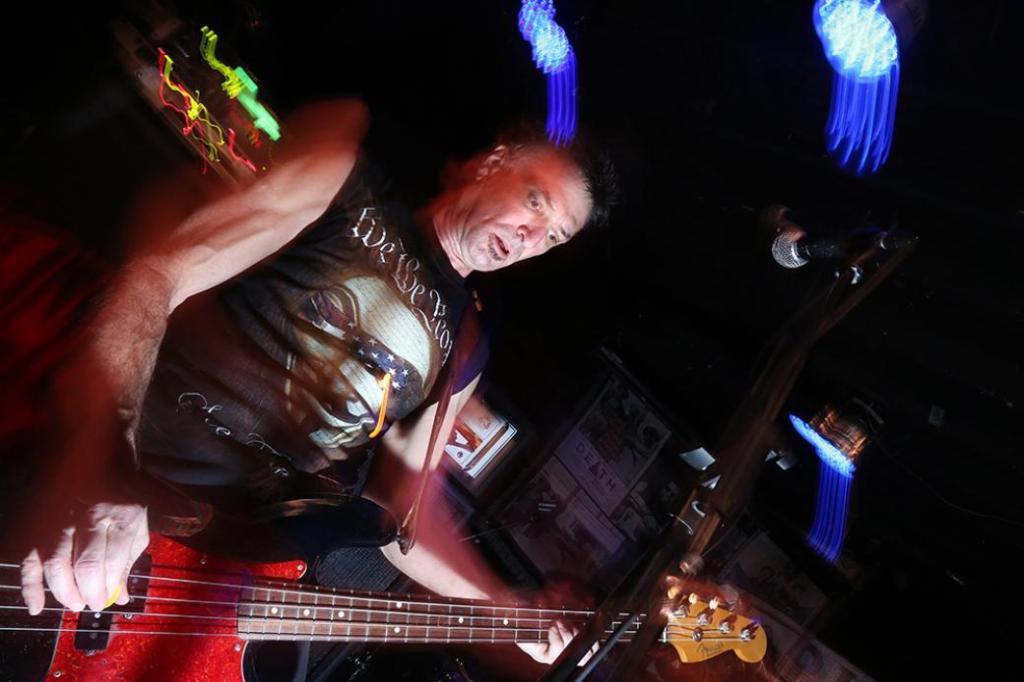
WE THE PEOPLE: Bob Glassley on stage at the Earl with the reignited Cheifs, February 2017. Photo by Brandon English
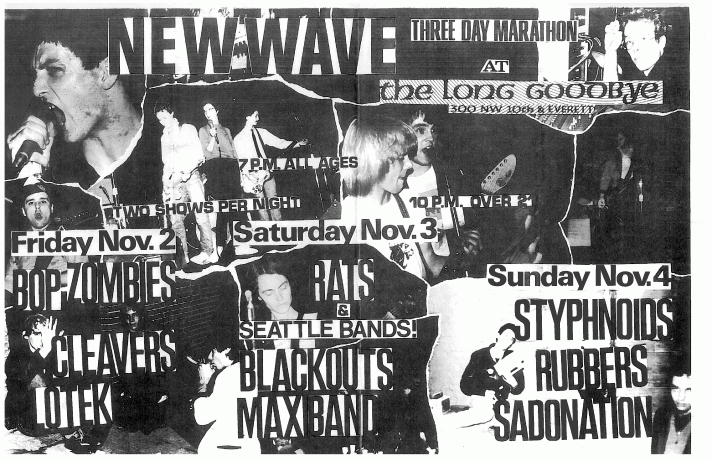
In November of 1979, Bob Glassley and a few friends piled into his car for a road trip down the West Coast. It was a retired police cruiser from the Dorris California Police Department, an all-white Plymouth with a souped-up engine. At the time, Glassley sang for a young punk band from Portland called the Rubbers. They were on a mission that day, to make some alliances in the Los Angeles music scene, and to line up some shows for a touring caravan of Portland bands. “We set out for L.A., and the motor blew somewhere outside of Stockton,” Glassley says. “When we got back on the road we found out it was the day they were taping the Hollywood Christmas parade. All of the freeway exits were closed, so we just kept driving around the city, looking for an off-ramp.”
Eventually they made it into the city and crashed at the Holly-West in Hollywood. The space was a former MGM studio and office building on the corner of Hollywood Boulevard and Western, housing everything from a porno studio and a church led by a gay preacher to rehearsal spaces where musicians lived, practiced, and spent most of their time hanging out.
One day, Glassley was listening to a group making noise in a nearby room when a young man with bright blue hair — George Walker — poked his head around the doorway and asked if anyone played bass. “I said I did, although that was a serious stretch,” Glassley says. “I owned a cheap bass back in Portland, so I felt qualified.”
Walker was a gay black man in the late ’70s L.A. punk scene at a time when there were few out gay or black punk musicians.
The two became friends, and after sticking around and playing music for a few days, Glassley was invited to join the group and play bass alongside Walker on guitar with singer Jerry Koskie and drummer Kenneth “Rabit” Bragger. Soon they would come to be known as the Cheifs.
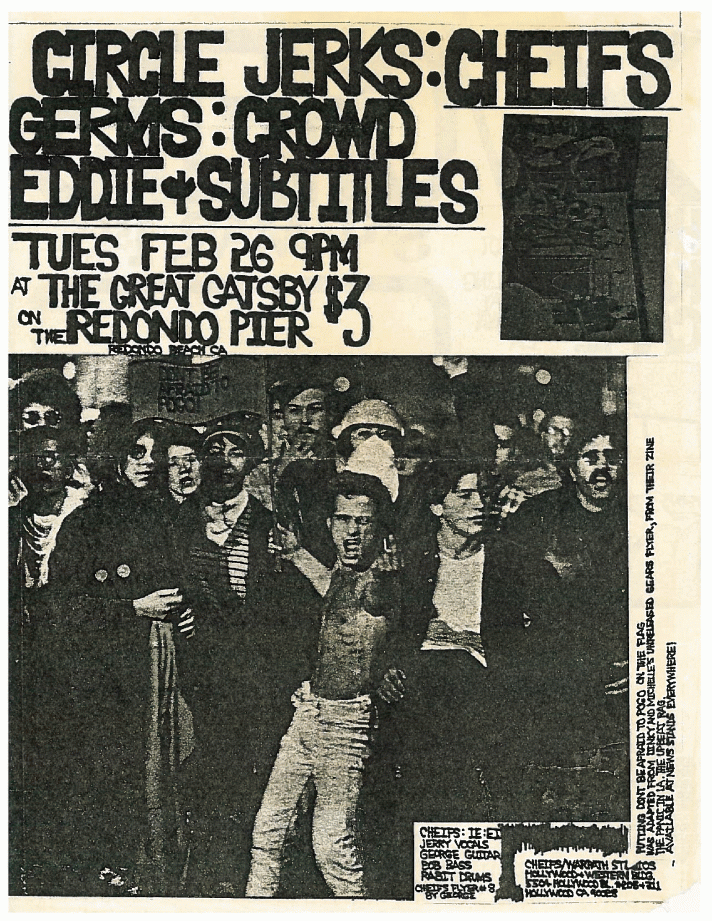
Glassley returned to Portland to play the final shows the Rubbers had booked and was L.A.-bound soon after. The Rubbers’ Bruce Loose went on to sing and play bass with San Francisco’s legendary punk outfit, Flipper. Back in L.A., Glassley experienced a thrilling new beginning, building friendships with the now-legendary denizens of the local punk scene, including Darby Crash and Lorna Doom of the Germs, Keith Morris of Black Flag and the Circle Jerks, and Jack Grisham of T.S.O.L.
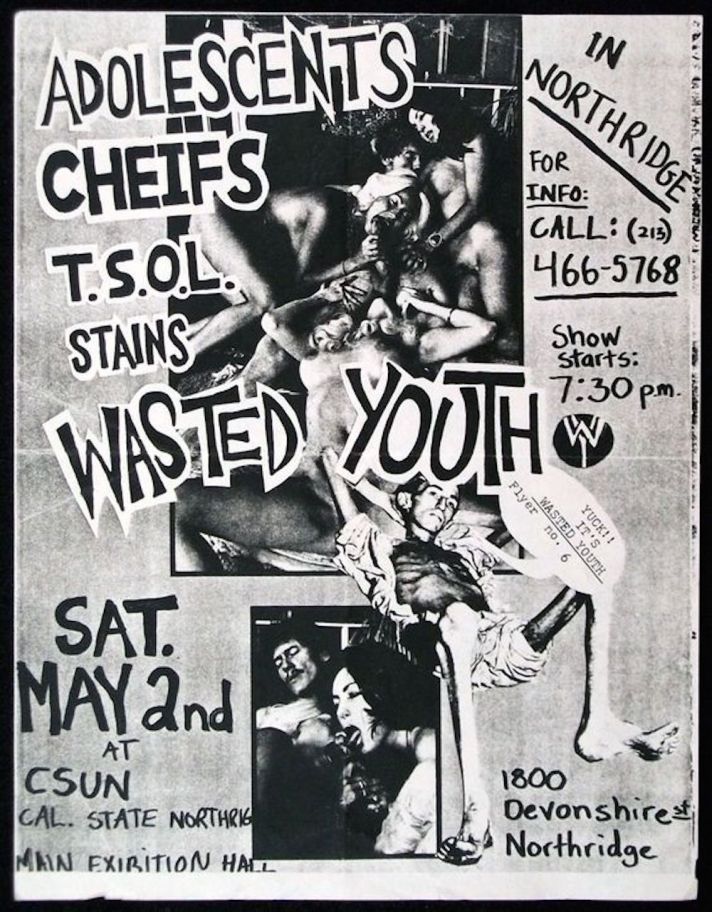
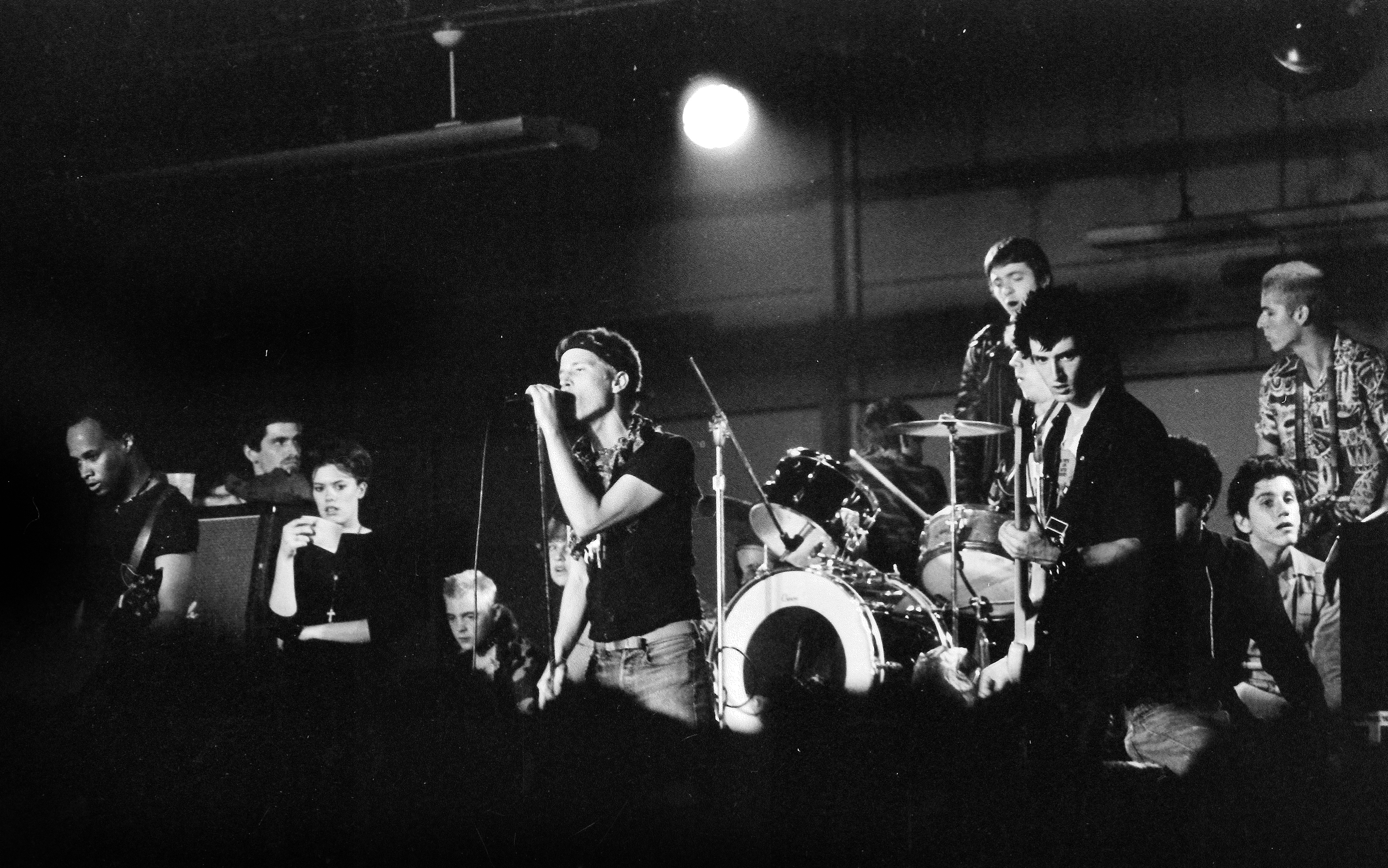
OLD SCHOOL: The original Cheifs lineup featuring guitarist George Walker (left), singer Jerry Koskie, drummer Rabit, and bass player Bob Glassley on stage, May 2, 1981, at Devonshire Downs in Northridge, CA. Photo courtesy Vincent Ramirez Photography.
He was thrust into a life bound by the live-fast, die-young ethos of late ’70s and early ’80s punk scene. But nearly 40 years after breaking up, the specter of the Cheifs has returned, demanding the songs be heard again.
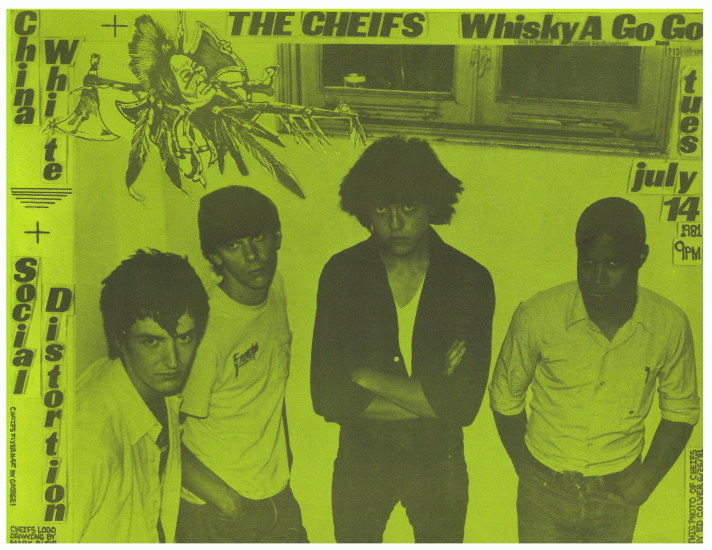
In their prime, the Cheifs were a lauded act that bridged the gaps between West Coast punk and hardcore. They were a fixture of the Los Angeles scene but after scant few releases, the group has languished in obscurity.
From 1979 to 1982, the Cheifs were a staple of the L.A. punk scene. Even though he hadn’t played in a band since they broke up, a chance meeting with a fan one night at the Masquerade proved the catalyst for Glassley to head up a new Atlanta-based incarnation of the Cheifs.
Now 57 years old, Glassley lives near Woodstock, Georgia, where he works as a director of technology for Triton Digital. After watching social and political turmoil surge in recent years, the old familiar sting of unease that drove him to punk in the first place is stirring once again. With a new lineup together, Glassley is paying respect to the Cheifs’ Hollywood legend while laying the groundwork for a new chapter in his musical career.
Despite the decades that have passed, the songs he played and wrote leading into the Reagan era remain as urgent and relevant as the day they were penned. “It’s unfortunate,” Glassley says. “Some of those songs are even more relevant now, in the face of everything the country — the world — is going through.”
By December of ’79, the group had settled on the name the Cheifs. A friend of the band, Roger Rogerson, who played bass for the Circle Jerks, often playfully called out bossy people for being “the big chief,” or saying they were “chiefin’ out.” The band rolled with it.
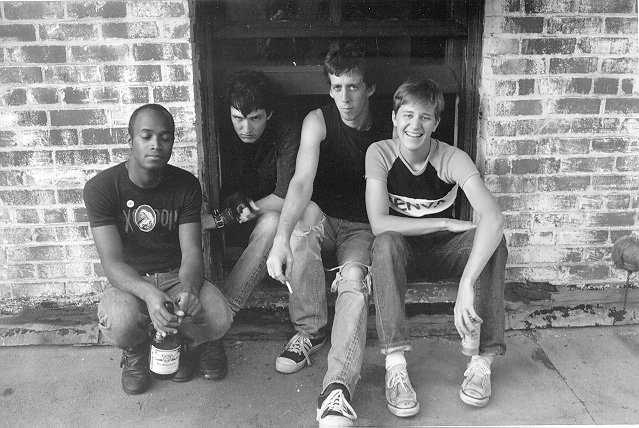
THE VIEW FROM THE TOP: Rabit (left) wearing one of the shirts that gave Cheifs their name, George Walker, and Bob Glassley circa 1979. Photo by DL Jacobs.
Around the same time, Glassley had an uncle die from Leukemia. He’d worked as a butcher and always wore plain white T-shirts. When he died, Glassley inherited those shirts. One afternoon he bought some red and black spray paint, went to his room at Holly-West, and made band shirts. When he showed them to the rest of the band, the reaction was a resounding, “Ah dude, you spelled it wrong! On every single one of them!”
But amid the punk era’s landscape adorned with logos like the Misfits’ skull and Black Flag’s bars, “Cheifs” presented a golden opportunity for branding. “I know how to spell,” Glassley laughs. “The i and the e came after c! … And ask anyone named Keith how they spell their name!”
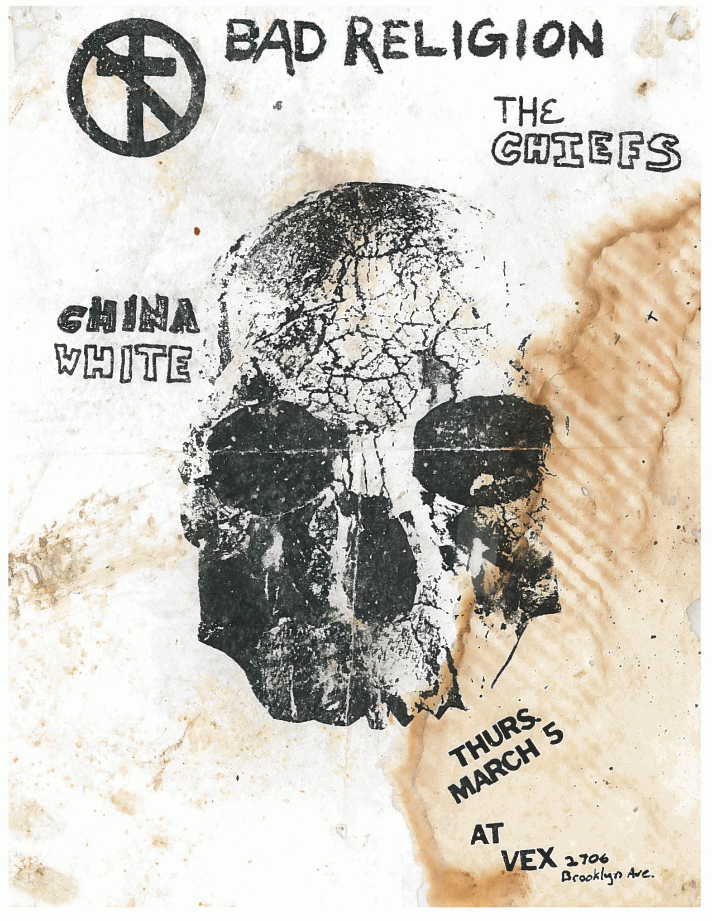
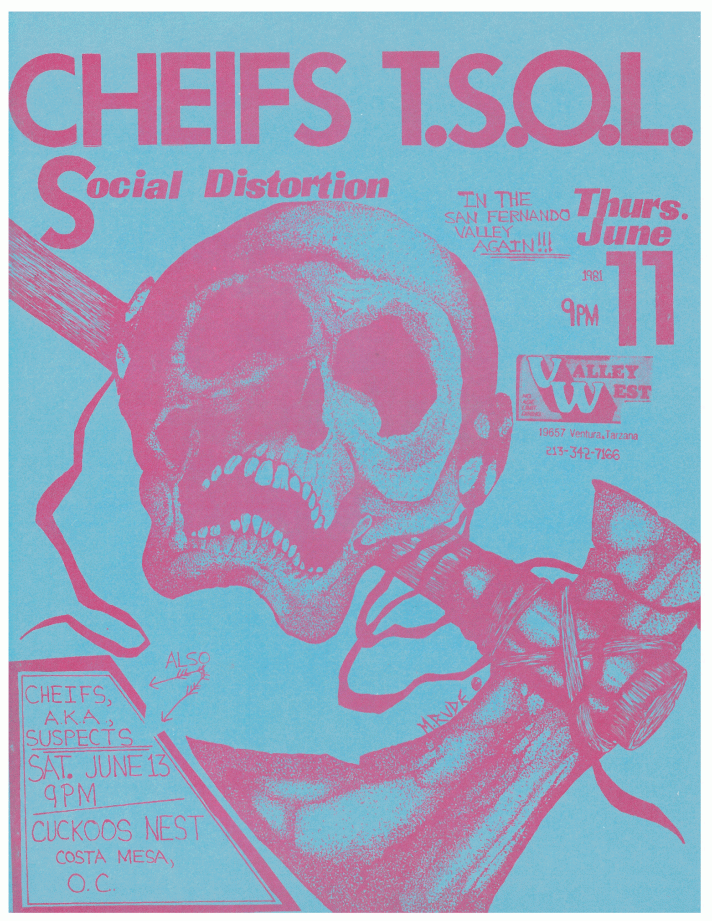
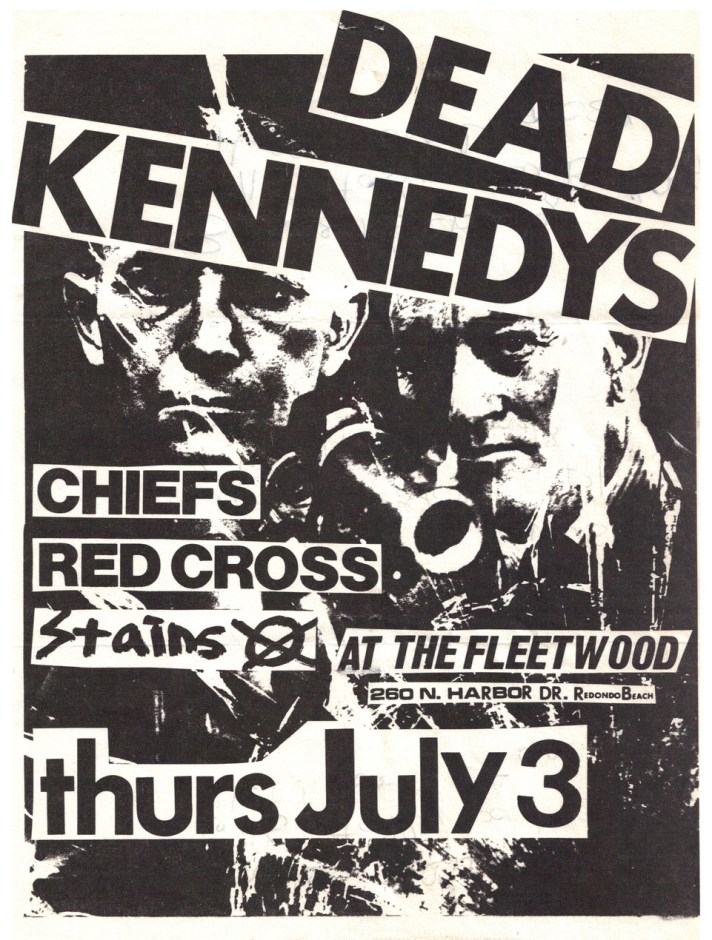
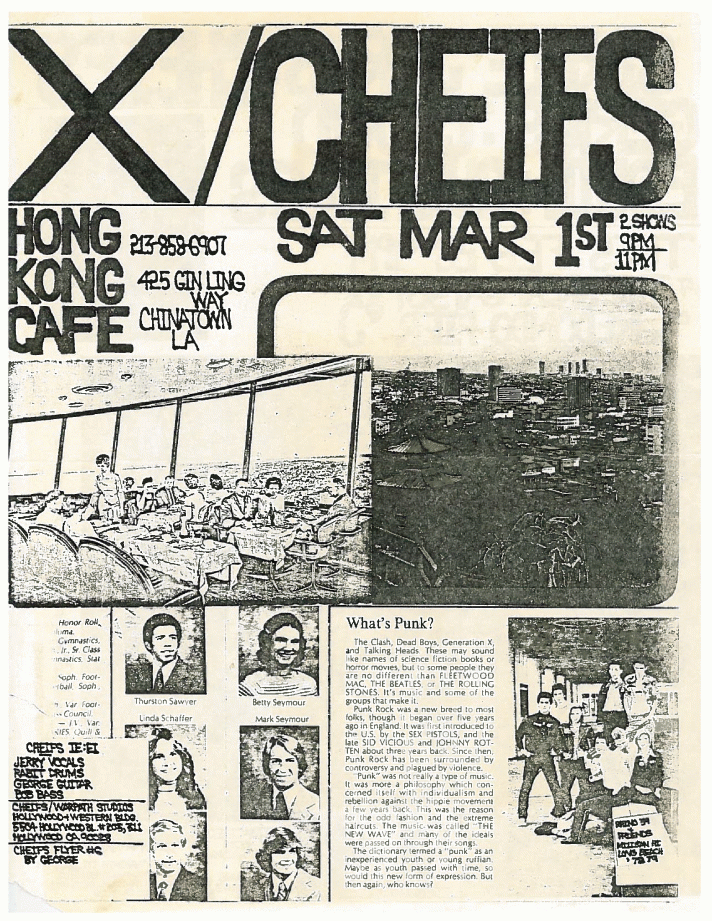
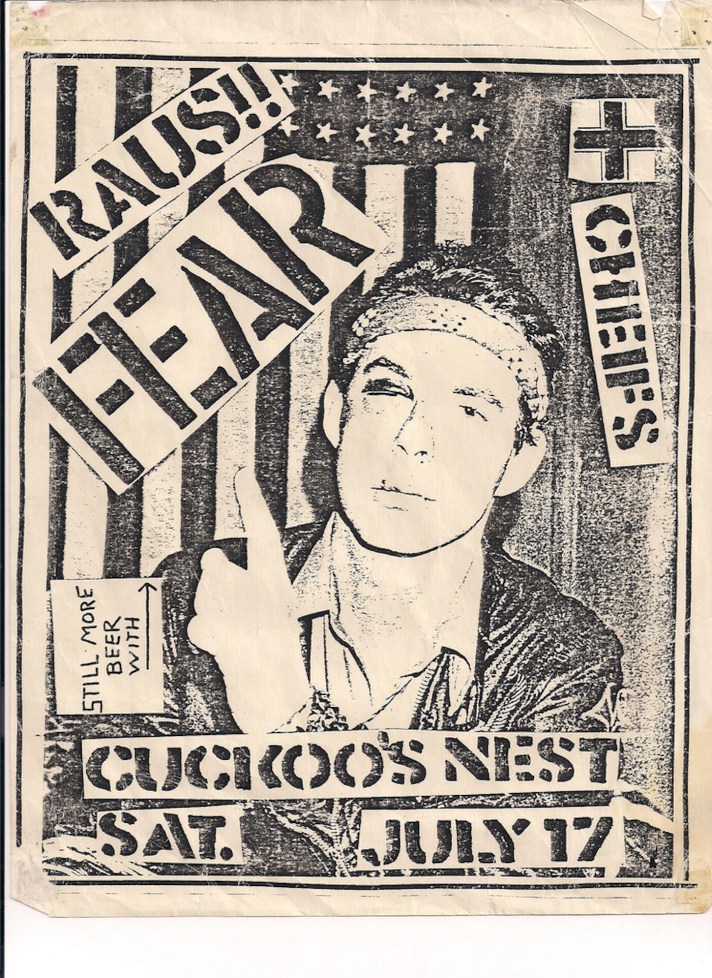
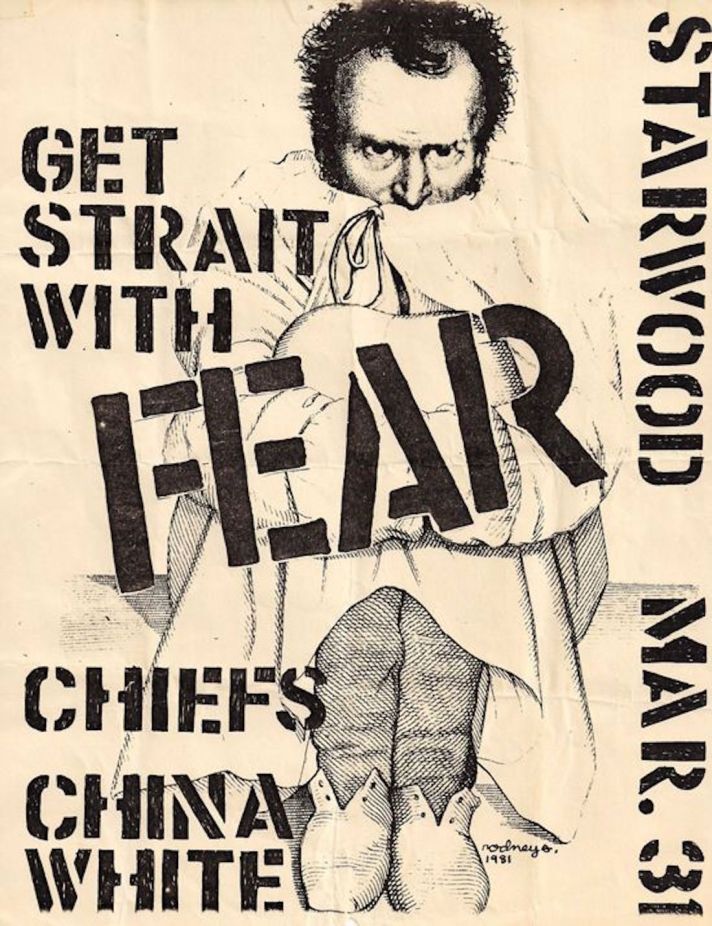
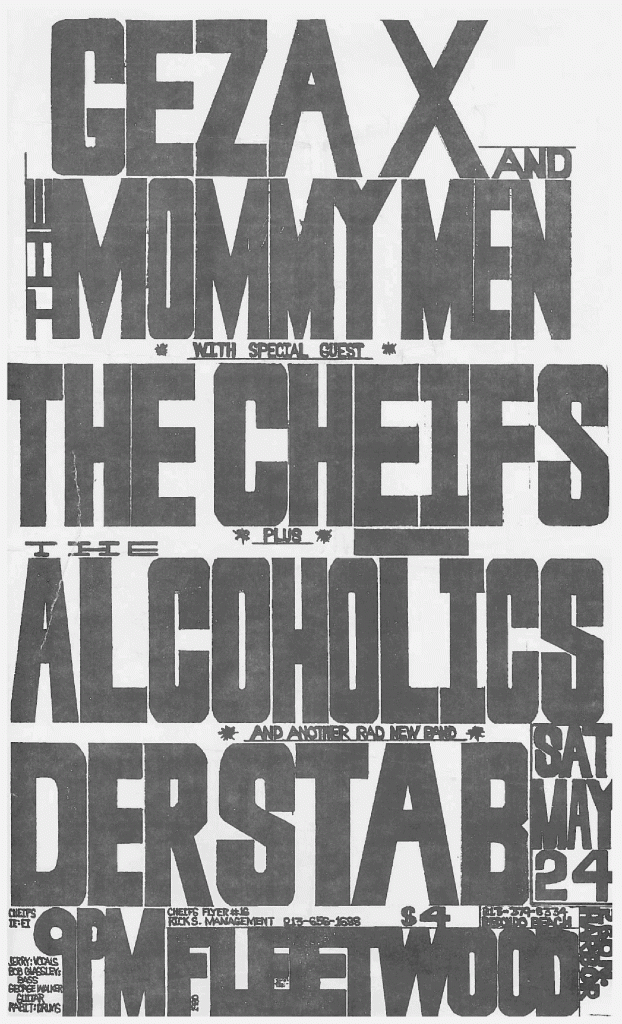
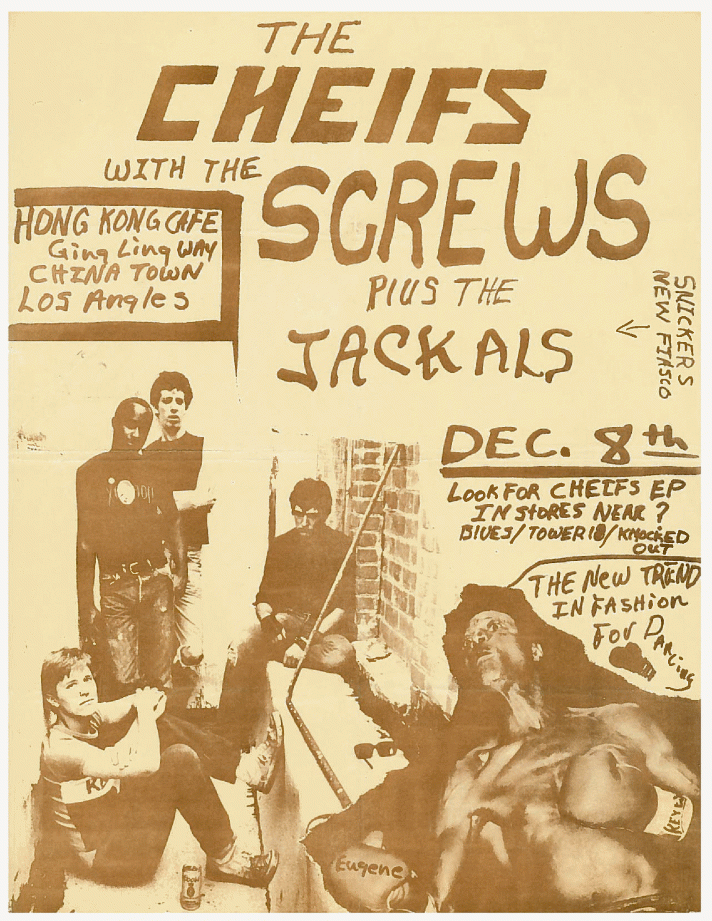
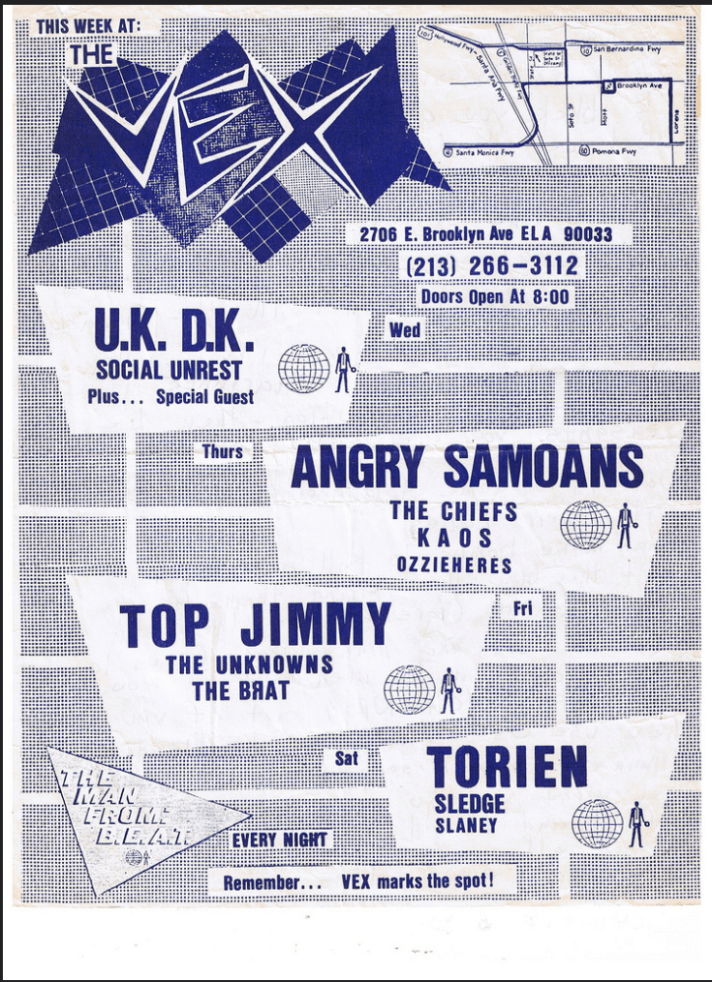
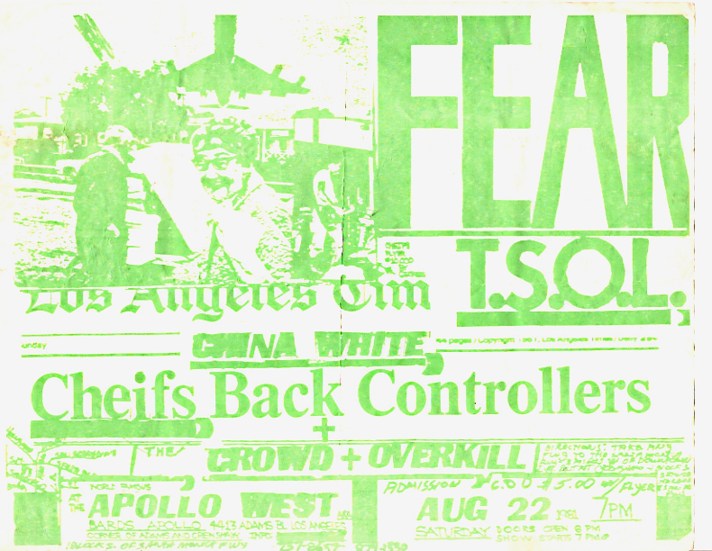
The Cheifs played regularly at venues such as Hong Kong Café and The Fleetwood, sharing stages with a who’s-who of Southern California punk legends: Black Flag, X, the Minutemen, Fear, Redd Kross, Descendents, Germs, T.S.O.L., Social Distortion, and more.
“The Gears, too, if I can add a band to that list,” says former Black Flag and Circle Jerks vocalist Keith Morris, who currently sings with the band Off! “The Gears and Cheifs were our party buddies. How many times did we all just crash on that floor where they practiced in the Holly-West building? Cheifs were easily one of the greatest bands around,” Morris adds. “When Holly-West Crisis finally came out it was such a great record.”
The Cheifs’ sound occupied a strange but growing middle ground in the post-punk era, when the term hardcore didn’t yet denote a musical genre. Before Cheifs came along, groups like X, the Screamers and the Weirdos had stylized a Hollywood punk sound by infusing short, sharp blasts of rock ’n’ roll with outsider art leanings. The more aggressive sound of bands like Black Flag and the Adolescents had yet to fully reveal itself.
In the Cheifs, Walker’s twisted hooks and bar chords taking shape in songs such as “Blues” and “(At The Beach At) Tower 18” were driven by a contentious snarl and fast, reflexive melodies. Rabit’s jittery drumming in “Knocked Out” was cut from a loud-fast and deceptively simple style on par with New York’s no wave scene. Koskie’s sneering voice was a conduit for disturbed visions of disenfranchisement, and Glassley gave direction to Cheifs’ buzzsaw onslaught.
KNOCKED OUT: The photo featured on the sleeve of Cheifs’ “Blues” b/w “(At The Beach At) Tower 18,” and “Knocked Out” 7-inch. Photo by DL Jacobs.
One song that Glassley penned the music and lyrics for, “Eddie’s Revenge,” tells the true story of a journalist who was gunned down by police. “The LAPD at the time were neo-Nazis, I won’t mince words,” he says. “I read a story in the newspaper about this amateur writer who was shot while standing inside a phone booth, holding a typewriter. A cop felt threatened. There was even a witness,” he adds. “The song is from his perspective, wanting payback because justice wasn’t served.”
Glassley sings: “Armed with a typewriter you look very threatening/They know you’re a nut case so they’ll say anything/And don’t try to resist your life’s worth nothing.”
Other songs such as “Blues” confront the hardships of the world with thick skin. In “(At The Beach At) Tower 18,” Walker offers insight into the perils of a gay lifestyle in the Reagan era when he sings, “You think your sex action’s better than theirs/They’re doing a job you could never do/At the beach!”
“Knocked Out” celebrates the youthful abandon and persistence of throwing punk shows whether the cops liked it out not.
The Germs’ vexed singer Darby Crash was a friend of the band, who hung out at Holly-West. Glassley recalls an afternoon in 1980 when Cheifs’ manager Debbie Johnson announced she’d lined up studio time at Present Time Records in North Hollywood. Crash wanted to be there. “I recall him setting in the control room and making suggestions about sound and vocal tricks, like the doubling that Jerry used on most of the recordings,” Glassley says.
The songs they recorded — “Blues,” “(At The Beach At) Tower 18” and “Knocked Out” — were pressed on a 7-inch via Playgems. It was Cheifs’ only release while the group was active. Crash is credited as “Creative Consultant” on the sleeve. “That wall of sound on the guitar was likely his doing,” Glassley says. “He was there from beginning to end, providing input, effectively working as a producer. He was a good friend of the band,” Glassley adds. “His fans demanded him to be someone he wasn’t 24/7. They expected him to be on stage all the time. I think he really enjoyed chilling with everyone at Holly-West.”
Holly-West is hallowed ground in the annals of punk history. Redd Kross’ bass player, Steven McDonald, remembers the intimidating feel of the place when he was a kid. “I was only 12 years old back in the those days,” says McDonald. Redd Kross also plays the Mess-Around on Sat., April 29.
“Redd Kross recorded a project there, and we hung out with Cheifs and the Gears and everyone else,” McDonald A. Everyone was friendly and accepting, but the place had this Bukowski vibe. It was a scary, old, decrepit building, but the community was really cool.”
Cheifs’ song “The Lonlies” appeared on the New Alliance/SST compilation titled Chunks that year. Later, “Riot Squad” (an adopted Rubbers song), “No Justice” and “Scrapped” appeared on an American Standard compilation titled Who Cares.
A half-dozen more songs were recorded, but personal differences caused Koskie and Rabit to leave the band. Glassley and Walker reconvened with vocalist Paul Brashier and drummer Gilbert Navarro, aka Jack Rivera, but they were together less than a year. By 1982, Cheifs were done. Glassley sold his bass and bought a computer, and has worked with technology ever since. He has made attempts to get the original lineup together for occasional one-off shows, even a surprise birthday party that Descendents’ drummer Bill Stevenson was throwing for singer Milo Aukerman. But neither Koskie nor Rabit have expressed any interest in playing with Cheifs again. The two have reunited to play shows with their pre-Cheifs band, the Simpletones. Neither Koskie nor Rabit were available for comment. Walker is presumed dead, although no death certificate has been produced yet. He was last seen hanging around Newport Beach in the early ’90s, but when Glassley went searching, word on the street was he had died.
Cheifs have since languished in obscurity, but the music refuses to disappear. A 1997 Flipside compilation titled Holly-West Crisis emerged as the definitive Cheifs document rounding up everything the group recorded. In 2000, Hate Records repackaged the songs for a European release, and Dr. Strange reissued Holly-West Crisis in 2004. The same year Spontaneous Combustion reissued Cheifs’ “Blues” b/w “(At The Beach At) Tower 18” and “Knocked Out” 7-inch.
In 1989, “Blues” appeared on the seminal Killed By Death Vol. 2 LP. What’s more, the Descendents often whip out a cover of “Knocked Out” during live shows.
Glassley moved to Georgia for work in 2000. His time with Cheifs had become a distant memory ever since. But that changed in July 2016 when Flag, a hardcore supergroup featuring singer Keith Morris, bass player Chuck Dukowski, drummer Bill Stevenson and vocalist/guitarist Dez Cadena — all Black Flag alumni — along with Descendents guitarist Stephen Egerton played the Masquerade. Glassley went backstage to say hello. While talking with Stevenson, Glassley felt a hand on his shoulder. A stranger asked: “Excuse me, did you say you were in the misspelled Cheifs?”
It was Scott Hedeen who owns Burnt Hickory Brewery in Kennesaw. The brewery is known for naming beers after punk bands, such as the Didjits Blood Orange IPA and Die Kreuzen Imperial Pumpkin Porter. Atlanta metalheads Order of the Owl even have a Chocolate Orange Stout in their name.
“Some of the seed money I used to start the brewery came from selling my punk record collection,” Hedeen says. “I sold a Cheifs single for $300, so I joked that he was a partial investor in the brewery.”
Hedeen and Glassley became friends. Hedeen hadn’t played guitar in a long time, but one night he sent Glassley a text. “I asked if he’d ever considered playing Cheifs’ music again,” Hedeen says. “I was in his ear. At the time he didn’t know the depths of where he had been, and the interest that’s out there for that era of music. It’s like you’ve seen a famous photograph from history countless times, and suddenly you realize that you see someone in the background. He was there.”
SCREAMING AGAIN: The Cheifs current vocalist Brad Castlen. Photo by Mark Kocher.
Glassley knew former Crisis Under Control singer and punk historian Brad Castlen would be interested. “When this started out last July, it was more for fun, but as people responded to the potential of the Cheifs’ music being played live again, I realized this was something more,” Glassley says. “Brad and Scott helped me see that. As I started posting lyrics on Facebook, it became clear there was still relevancy and many of the songs could have been written today and people related. That said, I was dead set against doing anything that would not live up to the original spirit and energy.”
They convened with a temporary drummer to play a Halloween party at Burnt Hickory. Hedeen made posters boasting a performance by “Holly-West Resurrection playing the songs of Cheifs.” Glassley was hit hard by seeing the name again. “He said, ‘You can’t do that!’” Hedeen says. “He didn’t want to dis the other members of the band, but I think we’ve convinced him now that they don’t care. Our intention is to make sure that Bob and the band get their just deserts.”
When Hedeen takes the stage, he sticks a laminated photo of Walker on his guitar, adorned with the word “Respect” — Shepard Fairey style. “George was a trailblazer on so many levels,” Hedeen says. “Getting into his head and figuring out how these songs work is a major accomplishment for me. I had to decode this man’s web of how he did it. I had to reinvent myself.”
Drummer James Joyce (ex Noot d’ Noot and Car Vs. Driver) knew Hedeen through the brewery and tried out for the gig. He’d also been friends with Castlen for nearly 25 years. After one practice, they looked at each other and said, “OK, we’re the Cheifs!” A Christmas party at Burnt Hickory was followed by a show at the Earl opening for Detroit proto-punk rockers Death. Then came a run of L.A.-area shows in March.
At first, wondering if they’d be accepted by the group’s hometown was nerve-wracking. “There were people who came out to the shows and said, ‘Wait, where’s Jerry?’” Glassley says. “I was worried about it at first, but the bottom line is, I tried to get him involved, but I found somebody else.”
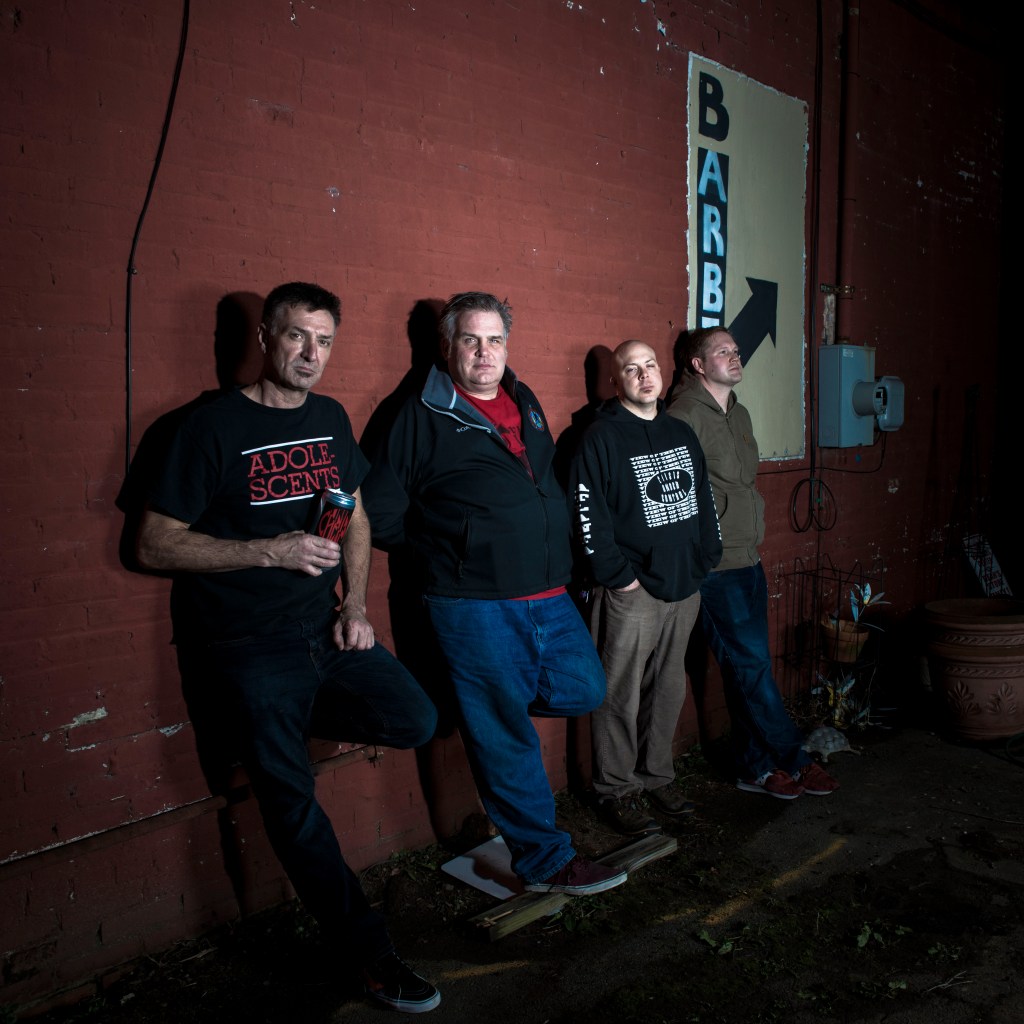
BACKS AGAINST THE WALL: The new incarnation of the Cheifs features Bob Glassley (left), Scott Hedeen, Brad Castlen, and James Joyce. Photo by Mark Kocher.
Still, anxiety was high, especially for Castlen and Joyce, both of whom are of a younger generation than Glassley and Hedeen. Before their Saturday night show at Cafe NELA, they were sitting at the bar when Joyce noticed Keith Morris walk in. “Brad started losing it,” Joyce says. “He kept saying, ‘This is your fault! If it wasn’t for you being able to play these drum beats and tying everything together, I wouldn’t have to perform in front of Keith Morris, and have him judge me as the singer for Cheifs.’”
Morris, in his 2016 memoir, My Damage: The Story of A Punk Rock Survivor, writes that Cheifs were one of the few bands he thought of as the Circle Jerks’ competition. Now, he was there to see what the new group was all about.
“In the early days we were always friends — all of it was friendly until it was time to play shows,” Morris says. “That’s when some darkness crept up: ‘We’ve been playing longer, and we’ve played more shows than you. We’re from Hollywood, you’re from where you’re at, we draw more people, can you keep up with us?’ All of that kind of drama. But I always drank a few extra beers, got a little more fuzzy-headed and tried to keep the camaraderie at a social and friendly level.”
The Circle Jerks played their first show with Cheifs at a club in Redondo Beach called Kahuna’s Bearded Clam. “We pissed off everybody that night,” Morris says. “One of the songs we played was ‘Wasted’ and the guys from Black Flag wanted to firebomb our vehicles and run us out of town.”
The anxiety that Castlen felt, however, was over respect for the music. “There’s a lot of attitude in punk about where you come from,” Castlen says. “Crisis Under Control used to get that attitude from Atlanta punks because we didn’t live in Fulton County. ‘You can’t play punk or hardcore if you’re from Gwinnett County!’ So that’s just magnified. Here we are a bunch of guys from Georgia. How are we going to play these L.A. punk songs? I was worried people would have a problem with that and that we’re playing with just one original member.”
Afterward, Castlen thought, “If I don’t ask, it’s going bother me the rest of my life.” He approached Morris and asked, “What did you think?” Morris looked over his glasses and gave a thumbs up. “We did it justice?” Castlen asked. In the conversation Morris replied, “Oh, I woulda told you if you didn’t!”
Neither Koskie nor Rabit showed up for the L.A. shows. But other old friends were there: Don Bolles of the Germs was at the Cafe NELA show, and second Cheifs drummer Jack Rivera sat in for a performance of “Blues.” The night before, at a show in Anaheim, Brian Brannon of skate punk legends JFA and members of the Vandals were there offering praise.
Castlen recalls overhearing a conversation at a record store out there when their merch guy asked the record store clerk — an older guy — if he was going to the show. His response: “No. I don’t want to ruin it. I saw them back in the day.”
That kind of skepticism is understandable; plenty of people feel similarly about any bands who are resurrected with a new lineup. “But we’re busting our asses, making it sound as close to the original recordings as possible,” Castlen says. “I heard the criticism, but the legend of Cheifs means a lot to us, and we all felt like we had to prove ourselves.”
Kendall Behnke, who sang alongside Koskie and Rabit in the Simpletones, came out for the Friday night show. He showed up again the following night at Cafe NELA. According Castlen, Behnke called Koskie to get him out for the show. He didn’t come but asked how they were. Behnke’s reply: “I’m not going to lie to you … they killed it.”
Castlen says the band discussed what would happen if Koskie showed up. “I’d have no problem handing the mic over to him, if he wanted to sing,” he says. “But Bob’s in Woodstock, Georgia, so it would be hard to have a Cheifs reunion with two guys in California. I think he’s a great singer; I love the songs, and I have nothing bad to say about him. But I’m glad he doesn’t want to be involved, because here I am.”
FLASH TO BANG: Bob Glassley (from left) leads the Cheifs at Dipiazzas in Long Beach, March 2017. Photo by Albert Licano.
While practicing for the L.A. run, the new lineup learned a few songs that the original Cheifs played but never recorded, including “Heart in Chains” and “1988,” both originally performed by the Rubbers. Both songs will appear on a 7-inch with “Mechanical Man,” a partially reconstructed older song, along with a newer number, titled “Alienated.”
“I love playing and didn’t realize how much I missed it,” Glassley says. “Even my wife, Vicki, has commented on how playing again affected me, in a good way. Add to that the relevancy of this music, these words at this time, and it makes sense. Given the situation our country and the world faces, I think there is a lot to say, and this is a familiar vehicle to make oneself heard. I fully expect us to be writing new songs in the months ahead, and we’ll see where that goes, but for me it feels like 1980 all over again — only worse.”
They’re recording at the Living Room in June. After recording those two songs, they’ll record the rest of the songs they’ve learned, if for no other reason than to have a document of this lineup’s time together. Whether what they record gets released remains to be seen. “If you’re a legendary band that can release a new album, people will buy it, like it was an original Descendents album,” Joyce says. “We’re not there, so we’re not trying to push out an entire album’s worth of material that somebody has to digest. It’ll be more like a song or two here and there.”
This approach takes the pressure off while fleshing out the strongest material a song or two at a time. But before Cheifs start writing new songs, their priority lies in taking the show on the road. Until now, the group has never played outside of L.A. and San Diego. But with the new lineup clicking in Atlanta, the group has its sights set on the East Coast.
After 35 years, excitement surrounding the group only underscores the strength of the songs. Giving the music a chance to be heard by a new generation, in an entirely new era, the new incarnation of Cheifs is already uncovering new meanings for these songs. For nearly 40 years, the road has been long and full of pitfalls. Like it was the day that Glassley and his friends piled into his converted cop car heading for Los Angeles, the future is unwritten. “I still have difficulty wrapping my head around it all. I have a split personality in this regard,” Glassley says. “On one hand, I’m coming to grips with the legacy side of it for the first time, and the other hand, I want to hit the road and play some fucking punk rock!”
Between December 1979 and May 1980, director Penelope Spheeris shot The Decline of Western Civilization, documenting the exploits of Black Flag, the Germs, X, the Circle Jerks, and the denizens of L.A.’s early punk scene. The film spawned two sequels, 1988’s The Decline of Western Civilization Part II: The Metal Years, and 1998’s The Decline of Western Civilization III—each offering a look into the lives of musicians in various states of desperation. Spheeris’ Decline trilogy changed the world’s perceptions of punk and metal forever. Although she achieved mainstream success directing later films such as Wayne’s World, The Beverly Hillbillies, and The Little Rascals, it is her work with Decline that defines her career.
Spheeris took a few minutes to talk about the pain of reliving the past, reconnecting with her daughter, and the noble cause of helping other people.
The mark of a truly timeless work of art is that you can revisit it 35 years later and find new meaning and relevance, maybe in wholly different ways than what you originally intended. How has the meaning of The Decline of Western Civilization changed for you?
Having done the films so long ago—I really shied away from watching them for so many years. I asked my daughter if she would come to work for me. She said she would but only if I released the Decline movies first. I thought, ‘Oh God, what a nightmare.’ But what has been very gratifying is to experience other people watching them 20 and 30 years later. That, for me, is astounding. When I look at them, I don’t think that I did something profound, but that is what other people say. I was just making movies about subjects I was interested in. They kind of turned out, all these decades later, to be interesting to other people. It’s been a real weird trip, I’ll tell you that.
I get the impression that you feel some anxiety over these films. Why do you say it was a nightmare to revisit them?
Anxiety … That’s an understatement. I have a lot of anxiety over these films. If you think about it, as a filmmaker or as any kind of creative person, you want to have the product of your creativity seen by other people, and hopefully appreciated. For me, so many of the movies I’ve done—certainly Decline I and III, not so much with II—were not really ever seen on a legitimate platform. Decline I was bootlegged to death. People passed it around like underground contraband for decades because it wasn’t in distribution. It was extremely painful for me to go back and deal with these movies because, on a subconscious level, they brought up a lot of pain. That pain was that people couldn’t see my work; people who seemingly were interested in it.
That happened with a film I did with Sharon and Ozzy, We Sold Our Souls for Rock ‘n’ Roll. Nobody got to see it. It happened with Dudes, which I did with Jon Cryer and Flea. It happened with The Boys Next Door that I did with Charlie Sheen. I had a long history of making movies that didn’t get seen. On the other hand, when I would do a comedy, it would definitely be seen. Especially Wayne’s World.
The thing to be said is that it’s hard to hide truly brilliant work. Even without distribution, I found a bootleg of Decline I in Omaha, Neb., in the early ’90s. That film put a face on punk rock for me and many others. It also made my relationship with the music more complicated—I had to put my life’s situation into context. I learned more about myself from Decline than I did from Wayne’s World—even though Wayne’s World is a fun movie.
Yeah, and the anxiety that comes along with putting out a box set is that, like you, I personally identify a lot more with the Decline movies than I do with the studio comedies. So I wanted it to be done right. When I am dead and gone, I want the right piece of physical items there to represent what they are. Once you do it, it’s done. It’s not like I can redo that. So that’s why there was so much trepidation involved with doing it. Now it’s like okay, you did it. Now you can die.
That has to be sort of rewarding.
What’s rewarding is that it’s no longer bearing down on me like a big dark cloud. For that, I really have to thank my daughter. Without her, I would have just died without doing it. I swear to God. It was just painful. Just watching the movies brought up so many memories, and she kept coming up with more pieces for the extras, which included a lot of interviews with me and with people I know from way back in the day. It was just hard to look at it. It’s like having your life flash before you. I just like to keep moving forward. I don’t like to look back. That’s why they never got put out before.
When you look back over the films—all three of them—are there subjects that stand out for you, or that you walked away from with some insight?
For Decline I, when I look at that movie I think, jeez, it’s pretty amazing that so many elements of today’s young people’s lives originated way back then. Now everybody has their tattoos and tight jeans and they have their haircuts, and it all started back then. So many social trends and philosophical ways of thinking started back then. So, for those reasons, I’m glad I was able to document all of that.
I don’t think there’s a profound lesson to be learned in Decline II except for trying to make it for the wrong reasons is stupid. That’s a pretty easy one.
For me, Decline III is the most important film of my entire career. It made me realize that I don’t want to be working in Hollywood anymore. There are more important things in life, and I should go help homeless kids, which is what I have done. If you go see it, bring a Kleenex, because it’s a heartbreaker. It was so hard to get it released because it is extremely sad. It reveals some really terrible domestic situations that happen with young kids that make them leave their homes and go live in the streets. Those are my buddies. Those are my family — the Decline III kids. Those are the people I’m close to.
There’s a kid named Eugene in that first film. I don’t have the same kind of anger in me, but I found him to be such a compelling character. How did you find him, and do you ever cross paths with him? Do you know how his life turned out?
He was friends with the HB kids—Huntington Beach, surfer punks. I saw Eugene up on the Slash office’s roof and I asked if he would be interviewed for the film. He kept saying no, but finally I talked him into it. He was 14 years old at that time. And he is very compelling. That’s why he starts the movie out. Today he lives in Berlin. I just sent him his 50 year-old birthday present. He’s a very good friend. He’s a folk singer. He’s known now as Euge From the Coast. He’s very happy in Berlin, and we email each other about once a week.
How have these films played a role in your relationship with your daughter Anna?
We sure do know each other a lot better after spending four years in the same room together!
Were the two of you estranged before this project?
In a way. When she was Four years old, her father died from a heroin overdose. So I raised her as a single parent. I think it wasn’t until it hit me in the face that addiction is extremely genetic. Five years ago, she had a drug problem that could have ended very tragically. We were fortunate enough that it didn’t. She wrecked a car with a kid in it. But she did a really good job with rehab and I said, “You have to come to work for me.” I wanted to keep an eye on her and make sure she didn’t relapse. She said she would do it, but we had to do Decline. You never know if something is bad or good until some time has passed. It was the most horrible thing in my life to deal with my daughter having that problem. But from out of that mess came this thing that people appreciate quite a bit—this box set for the DVDs.
She had been in touch with so many of the people who’ve been in the movies. She’s quite in touch with the people from Decline I and II. Whereas I’m the Decline III woman here. Those are my friends.
Honestly, Anna deserves 90% of the credit for the movies being seen again. I did the movies way back, but they would have never been seen in this form by so many people if she hadn’t virtually put a gun to my head and said you have got to do this. It was daunting and horrible. I would avoid it at all costs. She was down there with three editors at one time, sorting things out. She would have to drag me down to the editing room because I didn’t want to deal with it. For that, I am extremely grateful that she made me do it. She was so smart about so many things. She uncovered a lot and was like an archaeologist. A lot of the old tapes and old formats wouldn’t even play. She had to go and borrow chunks of equipment from friends—a DAT player—because nothing else would play them. She just kept going and going and going.
I could definitely see the evolution with the punks between Decline I and III. In Decline III, each individual was so much more tolerant, and kind, and not mean to the people that might be different from them. So there was some sort of evolution going on there. Flea is in Decline III and describes the original L.A. punk scene as being like an experimental art scene. Whereas in Decline III, even though everybody looks the same, physically, it’s not an art scene anymore. It’s pure and dire survival, and there ain’t no room for art in that world.
I think about those scenes from the first film and how all of the Black Flag guys lived in that church. That seemed dire…
It was fun dire. They were embracing their homelessness. They just had a different take on it. It wasn’t hurtful for them. It was fun. For the kids in Decline III, it’s painful.
What I learned from Decline III in getting to know those kids and their background: We don’t have any more noble assignment in life than helping our children and doing the right thing for them. These kids come from alcoholic and drug-addicted families that fought all the time and threw them out in the street.
It doesn’t make me feel good to sit down and have lunch with some major studio executive. Who gives a shit? It’s so vapid. What makes me feel good is being a foster parent. Staying in touch with my Decline III buddies, and going to these various cities and selling posters and donating the money to homeless shelters for kids. That, to me, is what makes life good. The rest of that jerk off stuff is so unnecessary. It’s funny to me that people get into such a frenzy to come to Hollywood and say “I have to make it in Hollywood!” Are you kidding me? No, you don’t! I guess I can say that because I kinda sorta made it, but not really. It doesn’t have any meaning next to helping people.
— Chad Radford
A version of this interview previously appeared in Creative Loafing.
In September of 1986, just six months after guitarist, singer, and songwriter William DuVall had moved away from his home in Atlanta, effectively disbanding the city’s seminal hardcore group Neon Christ, he turned up in sunny Santa Cruz, Calif. It was there amid the late ’80s flashpoint, when thriving surfing, skateboarding, and punk scenes had all converged, that DuVall joined the ranks of local hardcore outfit Bl’ast! Alongside his new bandmates, Mike Neider (guitar), Clifford Dinsmore (vocals), Dave Cooper (bass), and Bill Torgerson (drums), DuVall’s second guitar brought strength and focus to the group’s already snarling melodies.
With DuVall in town, and now functioning as a five-piece, Bl’ast! spent countless chaotic, and oftentimes bloody, nights on stages hammering out songs that would go down in history as the group’s crowning achievement — culminating with the 1987 LP, It’s in My Blood (SST Records).
The album arrived as a powerful step up from the terse but clumsy songwriting that Bl’ast! had delivered three years earlier with its debut, The Power of Expression. Nailing the high-speed tempos of songs such as “Only Time Will Tell,” “Something Beyond,” and the album’s title track became an audacious testament to the band’s physical and mental dexterity.
“They were pissed-off Reagan-era California kids who all knew each other since junior high,” DuVall says. “Then, much like what happened to Neon Christ on the opposite coast, one gets a little older and the music gets more sophisticated—it develops a different kind of swag.”
Although DuVall parted ways with Bl’ast! in March of 1987, less than a year after he’d joined the group, he co-wrote and recorded the early versions of the songs that would later be re-cut without his parts for It’s in My Blood. For more than 25 years, the only real document of the time he’d spent playing with Bl’ast! has been a few grainy live shots flashing across the screen in the “Surf and Destroy” video. But a recently unearthed cache of the original It’s in My Blood recordings, featuring DuVall’s guitar parts, reveals the significant role he played in the group’s evolution.
Released in August of 2013 via Southern Lord, and re-titled simply as Blood!, the re-released album compiles a more hard-hitting version of the group’s songwriting of the era in all of its teeth-gnashing glory. From the thundering bass and charged air of anguish that rushes in with the album’s opener, “Only Time Will Tell,” Blood takes aim at anything and anyone that gets in its way.
In the American music press, Bl’ast! was often saddled with Black Flag comparisons, and rightfully so. The visceral intensity and real-time emotional confrontation playing out in such songs as “Ssshhh,” “Winding Down,” and “Your Eyes” bear an unmistakable mark of Black Flag’s influence. But Bl’ast! adhered to a fiery and baroque dynamic. Stylistically, Blood! personifies the late ’80s era when punk and metal found common ground with a dark balance of catharsis and experimentation. The bombast of each of the album’s 11 songs builds both attitude and tension in the subtle interplay between Neider and DuVall’s guitar attacks, particularly throughout the songs “Sequel” and “Poison.” The music for the former was written by DuVall, as were most of the lyrics for the latter number.
Ultimately, this is the lineup that wrote and arranged these songs. As such, there’s a breadth and intensity here that the original release just doesn’t capture. Of course, mixing the album on the Sound City board at Dave Grohl’s Studio 606 gives the songs a thickness that the originals never projected. The members of the band worked alongside Grohl, Southern Lord’s Greg Anderson, and John “Lou” Lousteau — the latter of whom did some engineering work with Duvall for Alice in Chains’ 2009 album, Black Gives Way to Blue — to flesh out the sound. The lo-fi grit of the original release is lost, but it’s a small price to pay when setting such a powerful record straight. “The important thing for me is that with Blood!, the world finally gets to hear a more accurate version of what we were doing,” DuVall says.
Credibility aside, Blood! is a richly detailed redux that’s far more solid than anything else from Bl’ast!’s catalogue, making it an excellent artifact from a chapter in DuVall’s career that until now has remained lost in time.
A version of this story originally appeared in CL Atlanta.
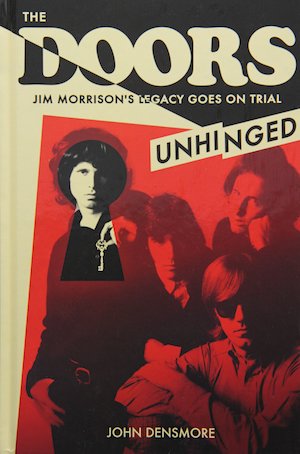
In October 1968, the Buick Motor Company paid the American rock ‘n’ roll group the Doors $75,000 to use the song “Light My Fire” in a commercial for a new luxury car, the Opel. For drummer John Densmore, keyboardist Ray Manzarek, and guitarist Robby Krieger, the deal was simply a way of getting paid for their song. But the group had previously agreed that every decision the Doors made was to be done unanimously, and each of its four members, including Dionysian front man Jim Morrison, had 100 percent veto power. When Buick came knocking, Morrison was out of the country, so the other three went forward with the commercial. When Morrison returned and found out, he was so angry that he threatened to smash an Opel with a sledgehammer on television if the commercial continued airing. For Morrison, the Door’s artistic integrity was at stake. He died in 1971, but his reaction to the commercial resonated with Densmore profoundly. So much so that it became the basis for waging legal action to stop Krieger and Manzarek when they tried to relaunch the group without him, and without Morrison, in 2002 as the Doors of the 21st Century. In his latest book, The Doors Unhinged: Jim Morrison’s Legacy Goes On Trial (CreateSpace.), Densmore chronicles the courtroom proceedings, and his subsequent victory, while justifying his actions against his former bandmates to honor Morrison’s vision.
Chad Radford: Why did you feel compelled to write The Doors Unhinged?
John Densmore: Several years ago, the Doors were knocked off of their hinges because the guitar player and the keyboard player thought they could continue without Jim. The Doors without Jim Morrison is like the Stones without Mick, or the Police without Sting. No. No. No. So I rallied Jim’s estate and we entered a legal struggle to stop them. At the time, some fans—the hardcore ones, certainly—said “What!? They’re suing the other guys?! Then it was ‘Ugh! … The other guys are countersuing for $40 million?! Oh my God, this is a train wreck.” If you read the book, you get that our goal was to preserve the Doors’ legacy, and to keep the original band and its intent intact. That’s why I wrote it. I want that story out there for those that are interested.
The word that keeps coming up around this case is “integrity …”
Jim Morrison—when he gave us that great line about “Come on Buick light my fire,” he said, “Great! I’ll smash one on television with a sledgehammer!” When he said that, he sledgehammered his feelings into my brain. I can’t get that out of my head, and the underlying thing that the book is all about is integrity. What’s interesting is that the song “Light My Fire” was primarily written by Robby. Jim wrote a couple of lines—”Our love becomes a funeral pyre.” But he went ballistic when he saw the commercial, so what does that say? He cared about the whole catalog and the meaning of the whole band. He’s dead; he’s my ancestor, and I’m going to honor him as much as I can.
Your perspective is from a very pure, circa 1965-67 kind of ideology.
That’s really smart, because when people talk about the ’60s, they really do mean ’65-’67. After that, 1968, ’69, ’70, that’s when people started getting burned out, and went from using street psychedelics to cocaine. Yuck.
Point being, you’ve carried that ideology into 2013, an era when a lot of bands would trip over themselves to have a song used in a commercial.
If you’re trying to pay the rent, the music industry is tough, man. If you have to use your songs to hawk stuff, do it. But if things get going for you, think about what Tom Waits said about selling your songs: “You’re turning your lyrics into a jingle, which means, you’re saying whatever you’re saying with your lyrics, plus you won’t be happy without this product!” And it’s true, when you sell your songs you’re selling your audience. It changes the meaning of your songs. I understand that in the beginning you have to do what you have to do to get going. But the Doors were in a different situation. People often ask, why not play Robin Hood, take the money and donate it to charity, or something, but turning a song into a commodity like that violates the sacred exchange that takes place between the artist and the listener.
Also, let me just say, a lot of people like to pooh-pooh the ’60s, and they did burn out toward the end. But it really was an incredible renaissance. The seeds of integrity, civil rights, the peace movement, feminism, and all these things were planted in the ’60s. These are big seeds! Maybe it’ll take 50 or 100 years for them to flourish, but they were planted. So keep your water cans out. Those seeds are going to grow into big beautiful trees that break up sidewalks.
Did you worry about being perceived as the villain when you took Ray and Robby to court?
In the beginning, yes, I did. Ray and Robby are great musicians, and I want them to be out there playing music, but let’s get the name straight, and it is straight now: Manzarek–Krieger, founding members of the Doors. Go see them play, they’re great. But I’m not there because Jim’s not there. Why would I play these songs without him, when I played them with him? At the beginning of the whole Doors of the 21st Century thing, people would ask, “Why aren’t you playing with them?” Truth is, a long time ago Jim said, “We’re all together in this. I don’t know how to write a song, or play a chord on any instrument. We’re going to share everything, equally. Everything! It was a beautiful pact. And you know, the Beatles are John, Paul, George, and Ringo. The Doors are Jim, Ray, Robby, and John—not Ray, Robby, Ian, Tom, Fred, Stewart, and whoever the hell else. That’s no slight on those guys, they’re fine musicians, but Ian is not Jim, and that was not the Doors.
That kind of pact—four equal shares, each with 100 percent veto power—was unprecedented at the time, correct?
It was completely unheard of in musical and in popular culture, but it made us all feel empowered to give 200 percent into those songs.
John Densmore. Photo by Scott Mitchell.
In the end, were you also putting yourself on trial by writing this book?
Yeah. Just bringing all of this up—money is such a volatile subject. It makes us crazy, and people have criticized me: “Obviously you’re just hanging out with rich socialists …” You can’t please everybody, but it affects you a little. The great thing about the Internet is that it unites us as a global village, but it gives a prominent voice to the fringe crazies. But yes, I really did feel like I was taking myself to task.
Are you willing to make amends with Ray and Robby now that the case is settled, and they’re not calling themselves the Doors of the 21st Century?
Yeah, and the road to recovery is open. I sent them the last chapter a few weeks ago, and want to make sure they get them. It’s a hard pill to swallow, but how could I not love Ray and Robby? We created this thing that’s bigger than all of us in a garage in Venice. They will forever be my musical brothers. Maybe we’ll hang again, and maybe we’ll make music again one day. Not playing Doors songs, but maybe a benefit, like Pink Floyd did a few years ago. That would be a nice, altruistic reunion.
Until then, you’re on the road with the book.
Yes, and I’m excited to come to Criminal, because I feel like one! The Doors were banned from Atlanta—oh my God. After Jim died, we tried to continue for a while, and it was kind of stupid. Anyway, we did a couple albums and were touring with one called Other Voices. We wound up on the phone with the mayor of Atlanta [Sam Massell] saying, “I don’t want no obscene Doors in my town!” Because of what went down with Jim in Miami. I said, “Our singer has passed and things are somewhat different …” He said, “I don’t care, the Doors are not playing in my town!” So we were banned from Atlanta, unceremoniously. This must have been 1973, give or take. So it’s an appropriately named venue for me. Hopefully I’ll be better received this time.
A version of this interview originally appeared in Creative Loafing on April 30, 2013.
If you have enjoyed reading this article, please consider making a donation to RadATL.
While nursing his morning coffee in his Tribeca apartment, Lyle Owerko‘s voice perks up over the phone as he recounts the chain of events that led to the creation of his first photography book, The Boombox Project. Subtitled, “The Machines, the Music, and the Urban Underground,” the book is more than just a collection of photos that fetishize the so-called “ghetto blasters” or “ghetto briefcases,” a term Spike Lee dismisses for its racist connotations in the book’s forward. At its core, The Boombox Project is both an oral history and an anthropological study. In the late 1970s and early ’80s, hip-hop, punk, and new wave were all at a flash point. The one thing that tied them all together was the ever-present but often-overlooked icon of the times—the boombox.
Owerko’s boombox series shows off the sleek designs and battle scars of this once ubiquitous machine. In the book, he juxtaposes his crisp color photos, which are set against a stark white backdrop, with a collection of historical images that illustrate the boombox’s cultural significance. Owerko likens its role to a “sonic campfire” around which people would gather to laugh, dance, tell stories, and exchange ideas.
To accentuate the reverential photos, Owerko conducted interviews with a cross-section of voices from the times: DJs, producers, and several generations of New York City hip-hop artists, including Fab 5 Freddy, LL Cool J, DJ Spooky, and Adam Yauch, aka MCA, of the Beastie Boys.
But before Owerko becomes too engrossed in tales of nostalgia, urban Americana, and his own passion for these antiquated pieces of stereo machinery, he relates the dark tale that ultimately helped fuel The Boombox Project. In late summer 2001, Owerko returned to New York for a photo assignment after a six-week stint in Africa. Visible from his living room, Owerko had always thought of the World Trade Center as the metaphorical tree in his front yard. “I could look at the towers and tell what the weather was going to be like by how much of them that I could see,” he says.
On the morning of Sept. 11, 2001, he was up early, jet-lagged, and still functioning on Africa time when he heard the first plane slam into a tower. He hadn’t yet unpacked his camera bag, so he grabbed his gear and raced toward the buildings to see what was happening. “I composed a shot that showed one tower that was still virgin and untouched next to the other tower that had this gaping hole in the side of it,” Owerko recalls. “I put the sun behind myself and composed these two shots of the tower with the sun in the perfect lighting position, and that put me in the perfect place to catch the second plane hitting.”The image he captured of the second plane hitting the World Trade Center appeared on the Sept. 13, 2001, cover of TIME magazine, just 48 hours after the attack. In 2005, the American Society of Magazine Editors ranked it as one of the 40 most important magazine covers of the last 40 years.
Accolades aside, witnessing such death and destruction was traumatic for Owerko. But in the years following the 9/11 attacks, when the War on Terror was in full swing, the idea for The Boombox Project began to grow. “When everyone else was showing the worst side of mankind, I thought why not try to find something that really shows the best of mankind?” Owerko says.
The project was initially conceived as a series of 40 to 50 portraits of boomboxes, with a plan to have someone write an introduction, which Owerko hoped would lead to a book deal. But as the photos materialized, he began to see the boom box as a larger metaphor for free speech, empowerment, innovation of youth culture, and the powerful effects of pop culture on the voices of many generations.
Throughout the book, Owerko combines vivid color photography of various boom box designs, with portraits of dancers, rappers, and rock musicians, ranging from LL Cool J and the Beastie Boys to Bruce Springsteen and the Clash to shape a coherent and surprising narrative of the machine’s history and legacy.
In addition to its social, political and historical contexts, the book traces the equally intriguing evolution of boombox aesthetics.
“I was falling in love with the objects, and I wanted to celebrate the fact that they were beat up,” he says. “At the time of the photos we were really just being bombarded with so much militaristic imagery, that when I was designing the images, the boomboxes took on sort of a militaristic look themselves, and they had lived through an embattlement of the times—the late ’70s and early ’80s—that was a really tough time in America’s history.”
Owerko claims to own somewhere in the neighborhood of 50 boom boxes, many of which will be on display with the traveling exhibit accompanying the book tour. The artist bubbles with childlike enthusiasm when he talks about some of his favorite makes and models. “My favorite is the Sharp GF-9696,” Owerko says. “That one and the Rising 20/20, which was the first mint vintage one that I found.”
The boombox gracing the book’s cover now resides in London’s Victoria and Albert Museum as part of its permanent collection. “It’s a great-looking box with the crash bars on it,” he adds. “It looks mean.”
“Boomboxes are a kind of hidden archaeology for me,” says experimental hip-hop/trip-hop turntablist/producer DJ Spooky, who contributes to the book’s oral history. “I had forgotten how influential they are until I saw Lyle’s book. I don’t have a particular, specific boombox favorite. I just live through the memories that Lyle’s book brings back.”
A version of this story was first published by CL, Atlanta. June 21, 2011, when the Owerko’s show appeared at Jackson Fine Art Gallery.
If you have enjoyed this article, please consider making a donation to RadATL.
























 Rad/ATL