A conversation with Mike Patton of the Middle Class, Eddie and the Subtitles, and Gebidan

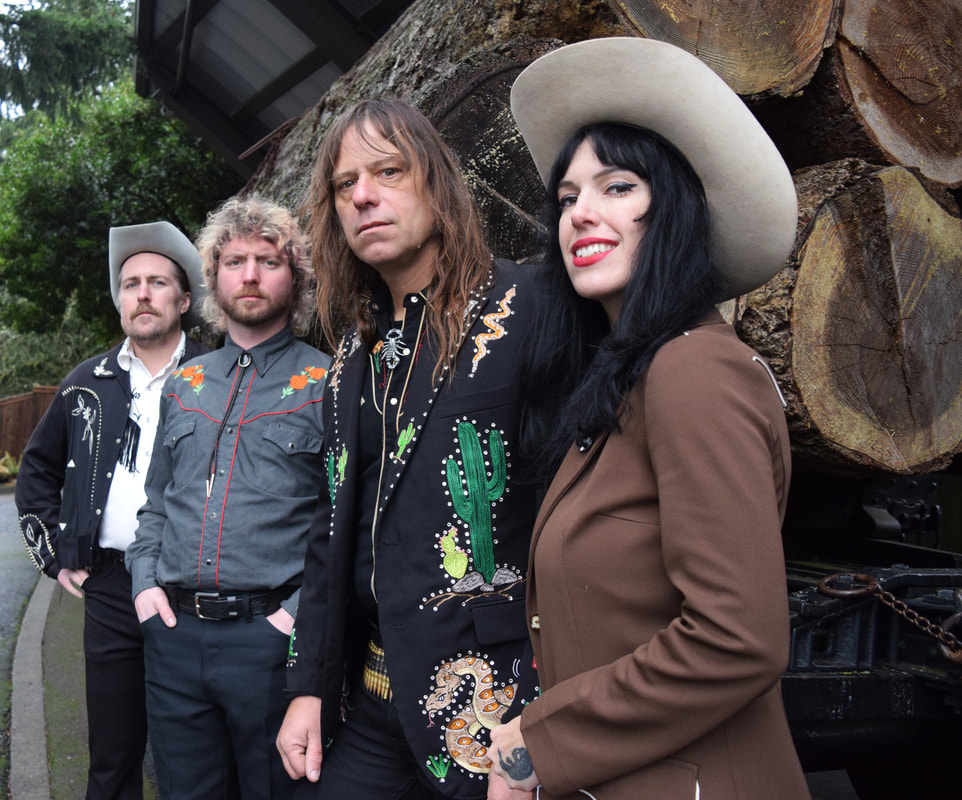
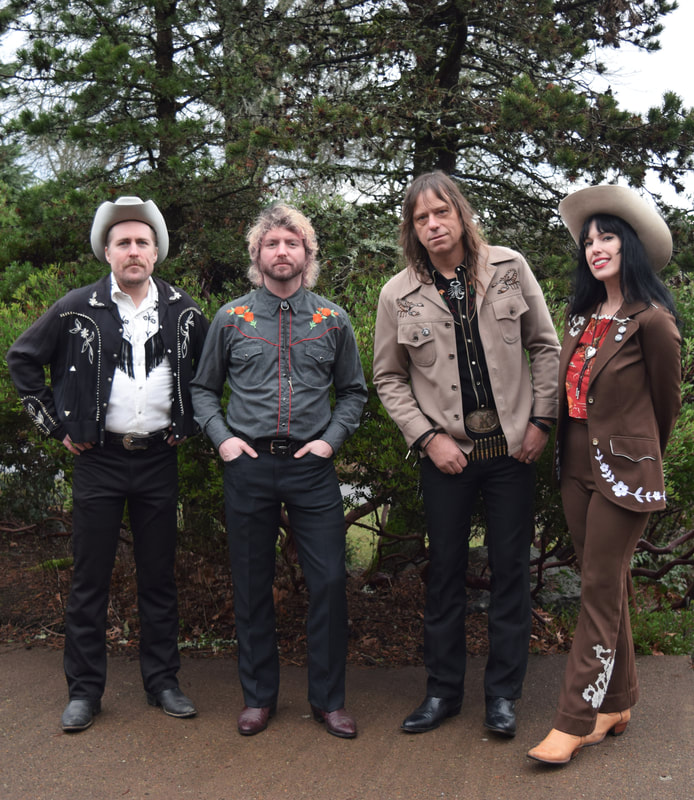
Gebidan is (from left) Geoff Knott, Daniel Whitman, Dennis Doherty, and Mike Patton.
Photo by Amanda Corbett.


Entropy is the way of all things losing order as they move forward through time, evolving into something different every step of the way. It’s a concept that hangs heavily on Mike Patton’s mind while reliving his nearly 50 years of history playing music with Southern California’s hardcore and post-punk bands the Middle Class, Eddie & the Subtitles, Trotsky Icepick, Cathedral of Tears, and most recently singing and playing bass with Athens, GA’s Gebidan. The band’s name evokes the old English word for “endure” or “abide,” and there are layers of unspoken context to absorb inside the group’s debut album, titled Entropy, which kicks off with an opening number of the same name.

“That was our first song and it really describes the universal condition, I believe,” Patton says.

Since August 2023, Patton, along with guitar player and vocalist Geoff Knott, guitarist Dennis Doherty, drummer Daniel Whitman, and occasional keyboard player Drew Costa have amassed a body of songs that pull from Patton’s past while finding new meaning in the present. Press play on songs such as “Something Somewhere,” “Million Stars,” and “Achilles,” and hues of melancholy and psychedelia are corralled into bursts of alternative rock imbued with a spectral Southern allure—sometimes the writing is quite abstract, other times stories unfold as if they’re being told in real-time.

The latter number, “Achilles,” relives a night of fleeing from the famed 1979 Elks Lodge Hall riot. When a show featuring performances by X, the Alley Cats, the Plugz, the Go-Gos, the Zeros, and the Wipers was shut down by police, Patton’s former Middle Class bandmate Jeff Atta and his girlfriend Dorothy were in attendance and were severely beaten. The song chronicles a desperate attempt to get them to a hospital. The getaway car was being driven by famed LA punk producer and provocateur Geza X (the Germs, Dead Kennedys, Black Flag, Redd Kross), and the story goes sideways.

On the eve of releasing Entropy, Patton took a few minutes to talk about his past, his present, and Gebidan’s future in music.

Geoff Knott and I started playing together a few years ago. We’re both transplants to Georgia. Geoff is from Albuquerque. I didn’t know anybody here so I put my profile on some website where musicians connect. He was the only guy that reached out so we started playing together. The full incarnation of the group has been together since August 2023.

During the pandemic, my wife’s parents were living here. Her dad’s health is declining and she was feeling the need to come out here. I got laid off right toward the end of the pandemic. I said, “If you want to go now is the time.” We’ve been here since 2021.

[Laughs] I knew those guys back in the day, but I’ve been not going to shows for a long time. I hadn’t seen Mike in like 15 years. I wasn’t sure if he would recognize me, but we reconnected right away. I was friends with the Minutemen back in the day; everybody was. They were real cool working-class guys from Pedro. We were-working class guys from Orange County. We had stuff in common.

I produced that. 

Yeah, I produced that. I was managing them at the time. This guy Eddie Joseph that I played with in Eddie and the Subtitles would kind of let me do whatever I wanted to do. One day I said I wanted to produce one of our singles, called “American Society.” I kind of turned it on its head, and slowed it way down. I took over the vocals and turned it into an anthem. It came out good! Eddie was managing the Adolescents at the time, and Frontier Records had just signed them. Eddie was getting ready to take them into the studio and I said, “I want to produce the Adolescents.” Eddie said okay! Then a bunch of shit happened and he was out of the project. I took over managing the Adolescents for a while, and that’s when we went into the studio to record the Blue album. I was fortunate to get to produce such a great album. 

Yeah, they brought a melodic sensibility that hadn’t been there before. Rikk Agnew; I mean, those are powerful, good songs, and they were so different than what anybody else was doing.

I didn’t sing on the record. There’s one song where I was talking to them over the mic. It was “L.A. Girl” and I say “L.A. Girl, take 1,” or something like that. They wanted to keep it in there. That’s the only time my voice is on the record. I was still doing Middle Class at the time. The Subtitles had broken up. When the Eddie empire fell apart he had been managing and booking a lot of the local bands. When he bailed I took over the Eddie empire for a while. All of those bands, like the Adolescents, were just kids. They didn’t know what was going on, and they were lightning in a bottle. Everything was happening fast for them. I was just trying to help them out because they were kids! They were nice and smart and good.

I was kind of an elder statesman or something in Orange County. The Middle Class had released “Out of Vogue” and we were the first Orange County band to play L.A. and get accepted. We had a certain status in Orange County with all those bands. The Adolescents came up about a year after we started playing on the scene. I think that’s when Orange County really started happening. 

The guys who wrote the book—and then made the film—American Hardcore determined that. It’s always between us and the Bad Brains. They were in Washington D.C. We were in Orange County. We didn’t know each other existed. For what it’s worth, Middle Class gets the crown because “Out of Vogue” came out first. We were the first ones to release a record. We were inspired by the Damned and the Sex Pistols and had gone to see the Ramones. We were the classic punk ethos, people who didn’t know how to play their instruments.

We made up for our lack of musical ability with energy. We rehearsed five days a week for maybe six months before we got our first show. We didn’t realize it but we’d become this blazing fast band. We were trying to be the Ramones but we were way faster than the Ramones! When we first saw them at the Roxy in ‘76 we thought they were absolutely blistering. Then when we played our first show in L.A. at Larchmont Hall with the Germs and the Bags and the Controllers, the original punk scene was pretty much established. Everybody knew each other so a lot of the bills were getting kind of stale. 

Hector Penalosa from the Zeros got us our first show. None of us drank. We were these normal-looking kids from Orange County. Then we got up and just roared on stage. Everybody immediately glommed onto us. We opened for everybody for the next three months. We played with the Screamers a bunch of times. We always played with the Germs. We were the opening band for everybody because we were different. So we got to be locked into the Hollywood scene really quickly from that first show.

The Middle Class

We were received really well when we first started playing. Everybody thought we were cute because we didn’t drink and we didn’t smoke and we wore thrift store suits—jackets and ties. We looked really straight and we were pretty young at the time. But then we were just roaring. The dichotomy between how we presented ourselves, who we were, and what we were playing really worked at that moment. 

Hollywood accepted us immediately. The “Out Of Vogue” single was supposed to be on Danger House Records. All the good punk bands were on Danger House. Black Randy talked this guy Billy Star into putting up the money to record it. We went into Stevie Wonder’s studio and had like two and a half hours of studio time. We did two takes and that was all.

Then the fact that there was an in crowd and an out crowd revealed itself. Danger House didn’t want us. The guy who put up the money was stuck with the record so he released it on Joke Records because he was mad at Black Randy for telling him Danger House was gonna release it. 

We were well established on the scene and were headlining or playing second bill on all of our shows. Then the dividing lines were apparent. Punk wasn’t supposed to be like that, everybody’s equal. It didn’t matter where you came from. There were no stars. That wasn’t true. So that single came out right at the time when it was becoming obvious that the philosophy we thought punk rock was, really wasn’t.

“Out Of Vogue” came out when the high schools opened up and all the kids started coming to the show. I’ll give you my two-bit interpretation of what happened: 

Originally, the punk bands were into glam, glitter, Bowie, and all of that stuff. They were musicians before punk rock. They were already musicians with the ability to play their instruments and play songs. Then people like us hear that music and get a feel for what the punk ethos was: There’s no such thing as talent. Anybody can do it. So that’s what we did. By the time we got a show, we were really tight.

We weren’t proficient with our instruments, we just put it all into energy. That translated into speed. So by the time we got up and played all of our songs were like a minute-and-a-half. We didn’t think anything of it, we were just following our noses. But everybody reacted to it, and they liked it.

That was when they were still pogoing at the clubs. Slamming wasn’t going on yet. Pits weren’t happening yet. As the music became more available all of these high school kids and junior high school kids in Orange County, Long Beach, and all of the surrounding areas started finding out about punk rock, but they didn’t have a background. We had a background. I knew about surrealism and Dada and I knew about the Situationists—the cultural touchstones that punk rock was drawing from. But these kids that were listening to it didn’t have any of that background. They didn’t get any of the context. They just saw and heard what was being put out there and they reacted to it. They showed up to the scene and chased a lot of the original punks away because they didn’t get the fact that all the violence was just for show. It was an inside joke and everybody understood it. As soon as those kids came in their only understanding of punk rock was what was being presented to them by the style, the fashion, and the music. They came in expecting a completely different thing. So all of a sudden they came in and saw Black Flag and Circle Jerks and when that happened we were a pretty big band. Those kids wanted to hear “Out Of Vogue,” and that was fine. It’s good to draw a crowd, but we didn’t like the violence.

We were playing a show at a club called The Fleetwood which was just a pit in Long Beach. It was an empty warehouse—concrete walls and floors. We were playing “Out Of Vogue” when this guy came in to check out the punks. He was a regular stoner, long-haired guy. He’s watching us play and these kids from one of the high schools just beat the guy up for the duration of the song. When the song was over they had to call paramedics and haul the guy away. He was hurt. Jeff Atta, the singer, said we’re never playing that song again. And we turned away! That’s what the hardcore punks wanted to hear so they eventually stopped coming to our shows. 


We started doing stuff more like the second single, “A Blueprint For Joy,” and then the Homeland album which is completely different from “Out Of Vogue.” The Circle Jerks and Black Flag were playing music to those people, and so they became really big. We went into the background, but we get credit for starting it, which is cool. So the people who know about the Middle Class are really into the Middle Class. They’re the people who know the minutiae of the scene. Most people haven’t heard of the Middle Class, but they have heard of the Adolescents, Black Flag, Henry Rollins, and Keith Morris. We were their contemporaries but we turned away from it because we did not dig the violence. 

The first time I heard punk was the first time I heard something that spoke directly to me. I was always like a stranger in a strange land, not fitting in, being an alien in my environment. Suddenly, I hear this music and it’s speaking directly to me.

The Middle Class found this community that accepted us, celebrated our music, and came to our shows. At first, there were no divisions. There was no person that’s too cool to talk to … None of that. I was no longer this isolated guy just existing in this world where I didn’t belong.

We might have played one or two shows together but we didn’t hang out much. They were a Fullerton band. They would be at parties, so I knew those guys. We weren’t tight but they were on the scene and I certainly knew about the band.

They were proto-Fullerton. They were pretty early, and when the Fullerton scene was getting started I didn’t even know it existed. I didn’t know about Fullerton and Huntington Beach until Al from Flipside Magazine asked me to write an article. Occasionally, I wrote articles for Flipside. He wanted me to write about the Orange County scene. I said, “What scene?” I didn’t know! He put me in contact with a couple of people. One in Fullerton and one in HB. They told me about parties that were going on so I went and saw the Crowd and China White might have been playing.

In Fullerton, I saw Agent Orange and Sexually Frustrated, and proto Social Distortion when they were called the Dustbin. They were playing at house parties, and these bands were all just kids. That’s how I got to know them. The first band from Orange County that I was the most impressed with was Agent Orange, and that was when Steve Soto was still in the band. 

That band was doing something distinctive and tight. They were really good. It wasn’t too long after that Mike Palm kicked Steve Soto out of the band because Steve wanted to contribute musically. Mike wanted to be in charge of all of that. Then Steve ended up getting involved with Rikk and Tony and the Adolescents started. 

Orange County is a gigantic suburb that was very conservative. It was home base for the John Birch Society and a bastion of conservatism in liberal California. The first person I heard say “behind the orange curtain” was Eddie Joseph. He said it to me as we were talking about how you’ve got this image of the suburbs: Everything is all manicured lawns, everything is cookie-cutter. Everything looks nice, but look just below the surface and everything is terrible.

These kids had no place to go, and unless you were a jock or were into Led Zeppelin, you weren’t a stoner, and you weren’t a surfer you had no tribe. You were an outlier. That angst and tension about living in that environment is like living in Disneyland but you can’t go on any of the rides. You just have to stand in the lines. That generated a lot of creative energy. 

That’s what the Adolescents songs are all about anyway, looking around and realizing that everything you have been told is not true. I don’t have a bright future to look forward to. Everything kind of sucks. My dad’s an alcoholic. Whatever is going on you realize that the world your parents tried to protect you from or explain away is real. The stories are not, and when you realize that, you’re feeling pretty isolated. To me, that is where that punk primal scream came from. The beats probably had the same thing. The hippies kind of had something similar.

The strange thing is it felt for a while like something big was about to change. It felt like something was happening all over the country. There were these pockets of music popping up. Then nothing changed. We used to look down our noses at the hippies but they experienced the same thing. So did the beats; this youthful recognition that the world is not what we were led to believe it is. When you realize that the first logical reaction is anger and rejection.

The nice thing about punk rock, when I got into it, it was wide open. It got regimented once the skinheads came in and the high schools opened up. Before that, there were all kinds of different bands. Everything was allowed. Some bands were more popular than others, but you could have a band like the Eyes that did a song about going to Disneyland. Blow up “Disneyland.” And you had the Germs and the Controllers playing with them. Everybody accepted it. It was this creative free space where you were encouraged to pick up an instrument and start doing it.

To go from being an isolated loner just trying to not get too much attention because bad things happen when you get too much attention, to all of a sudden there’s this tribe of people who are celebrating what you’re doing … They get it and they’re friendly. The most extreme punks, the most-extreme looking people, you go talk to them, they’re pretty mild-mannered. I remember we played a show in San Diego with the Germs and the Bags. We went down early and half of the bands were going to Tijuana, and the other half of the bands were gonna go to San Diego Zoo. 

I went to the zoo. Black Randy was going down to Tijuana with the others, and I did not want to be with those guys. They were crazy. So I was getting picked up by Pat from the Bags and Darby from the Germs. They stopped at my house in Santa Ana, and I remember my mom knocked on my bedroom door and said, “Hey, Mike, your friends are here.” I came out of my room and my dad was giving Darby a cup of coffee because that’s what my dad did. He was a Navy guy. Everybody got coffee. We always had hot coffee. Coming out into the living room and seeing these two Hollywood punks sitting on the couch was the most bizarre thing in the world, but that was cool.

Same thing with the Minutemen. They lived in military housing. Their dads were actively serving. My dad was retired, but we got all our healthcare and our groceries from the base. We didn’t fit in with normal California society. My parents had us when they were older; my dad was an Okie.
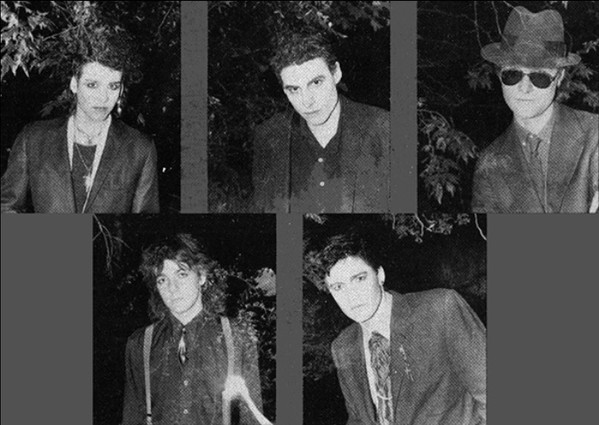
Cathedral of Tears

MTV was happening and Jack was watching Duran Duran and all of those bands. He wanted to capture that in a more sophisticated way. I saw him at a show and he asked if I wanted to play bass. So I went over there and it was cool. It was interesting being in a band with Jack. He gave me complete freedom to do what I did. There were two iterations of the band. At one point he kicked everybody out of the band aside from me and got all new players. I’m not sure how long that band lasted, maybe a year and a half, something like that. We did one release. One thing I will say about Jack: He has always been very cool to me. He even sought me out at one point to tell me that the label needed my contact information because they were holding onto money from that release for me. He didn’t need to do that, and I appreciated that.

Being in a band with him, I watched a lot of ugly stuff go on. Jack wasn’t always the kindest person to his fans, but he was always absolutely great with me.

For 14 years I was the Director of Transportation and then Executive Director of Maintenance Operations and Transportation for the Capistrano Unified School District in South Orange County.

I had two small kids. I was on tour with Trotsky Icepick supporting the album Carpetbomb the Riff, which was the only one that I wrote my parts for the songs.

Somebody threatened my wife at the time and she basically gave me an ultimatum. I had to leave the tour to come home and make sure that everything was ok. I joined the group back on tour and finished up. She gave me the: “Either you leave the band or this isn’t going to work.” I had kids and I wanted to do the right thing. For a very long time, I didn’t play. While I was at the school district I would meet people and play with them, jam with them. But we were never trying to be in a formal band. I was focused on my responsibilities. We would work on songs. A couple of times we’d have an album’s worth of material. I’d say, “Let’s go play a show!” But it never happened. That happened two or three times. I kept grinding away.

Then Mike Atta got cancer. He got better and changed his mind and wanted to play again. So we got back together and I was working at the school district.

The Middle Class getting back together ruined my career [laughs]. I was tapping into something extremely important to me, and I missed it. Now I was experiencing it again! At the first reunion for the Middle Class, I talked to this German couple that had flown in just to see us. We were way more popular than we were when we were playing originally.

So then I would go back to the school district and deal with this political nonsense of being a director and having 500 employees. I was good with the employees. It was my superiors. I was successful when I wanted to make it work. When I lost the desire to put up with these idiots my career stopped after a while. I eventually left the school district. I kept working for a while. The Middle Class played for six-seven-eight months. Mike’s cancer came back. We played periodically, and then he died.

I talked with Jeff Atta. I knew what he wanted but I would never do a tribute band. He didn’t want to carry on the band. I said, “I may play some of the songs, but I’ll never put together the Middle Class with a bunch of guys.” Our drummer Matt Simon wanted to do the Subtitles again. I was excited and I threw myself into that. But it turned out that he didn’t really want to be a band. He just wanted to hang out and party and play music. That wasn’t going anywhere. Then the pandemic hit and we moved to Georgia.

Gebidan photo by Geoff Knott

Most of the songs that we’re doing are songs that I’ve come up with over the years when I was working with a 4-track or started working with a computer. There are all of these ideas that I was able to regurgitate and Geoff was able to revise them. We wrote some songs together as well. It’s very different from the Middle Class, but it’s muscular. It’s serious. Everything I’m singing about means something to me.

I would like to tour and I’d like to go play LA. I’d like to re-engage. So far, people seem to respond to the music and I’m just going forward with it. I want to do it as long as I can.

With the Middle Class, it was this new thing. We just wanted to get on it. We figured it out together and we had a lot of initial success. Everybody embraced us. That was gratifying and I learned that it can work and people do respond to it. All of that punk ethos of just do it is true. If you do it with confidence and sincerity people are going to respond.

The Subtitles taught me that I can change things: take one thing and turn it into something else. “American Society” was a punk song and we turned it into an anthem. That was really freaking cool. Eventually, we turned into this weird acid jam band and that was cool as long as I was committed to the joke we were able to pull it off. As soon as it stopped being fun it was a house of cards.

Trotsky Icepick was my friends from 100 Flowers. They had a record and a tour. They reached out to me and I was available. They were really good guys. I always liked them. And so I did that tour with them. Then they lost their drummer. I brought this guy Skippy in and we wrote Carpetbomb the Riff and did another tour. I would have kept playing with them but I had to bail out.

When I moved out here I met Geoff. We’re coming at the music from different places—he’s kind of a jazz guy. I was pushing him to find more people. He found Dennis and Dan. Now we have a lot of songs in various states of disrepair, and we have a set that sounds good.

I know it’s kind of stupid to be 66 years old and start a rock band, but what’s cool is I’ve got the time! Why not? What else am I going to do?

There is certainly an interesting perspective that comes with doing it at this point in one’s life. For me, there’s something of depth there that people—if they hear it—it will likely mean something to them. The most fulfilling thing for me is when someone that I don’t know tells me how meaningful something that I did was to them.

I communicated with them. We shared a common experience. The human experience is communal; we all react to the same things. We’re all different, but the bottom line is that we are also all very similar. When people can relate to your experiences hopefully they feel less alone. We all feel isolated but we have more in common than we realize. That might sound pompous [laughs].

It’s cool to have participated in that. It was way more meaningful than we realized to way more people than we ever would have thought.

I wouldn’t have been able to do Gebidan in California because there’s an expectation on me in California. I’m so tied to the Middle Class and the Subtitles that when I played music with people (for the most part) it wouldn’t work. I didn’t want to play punk rock anymore. Punk is an attitude, and it’s a seriousness, but that style of music is of a time and I’m past that. I wanted to do something that had some beauty to it or be more than that. Hopefully, people can relate to it. So far so good.

Entropy by Gebidan is available on Bandcamp now.

If you have enjoyed reading this review, please consider donating to RadATL. Venmo to @Chad-Radford-6 or click on the PayPal link below.

Donate with PayPal

Lynx Deluxe pays homage to Drivin’ N Cryin’ and Kevn Kinney’s ‘Great American Bubble Factory’


Drivin’ N Cryin’ and Lynx Deluxe’s roots are deeply intertwined, reaching back nearly to the beginning of both groups.

Naturally, Lynx Deluxe’s rendition of “(Whatever Happened to) The Great American Bubble Factory?”—the latest single to arrive from the 100-song Let’s Go Dancing: Said the Firefly to the Hurricane, A Compilation Celebrating the Songs of Kevn Kinney—is filled with nods to both groups’ shared past. Their cover of the songs also casts new light on the glorious nuances of Kinney’s songwriting, illuminating just how emotionally powerful an instrument he possesses.

In the summer of 1981, Drivin’ N Cryin’s bass player Tim Nielsen and drummer Paul Lenz started playing music together as the rhythm section for Atlanta pub rock/punk outfit the Nightporters. The group, which also included singer and guitar player Andy Browne, carved a path through Georgia’s burgeoning underground punk and new wave scenes, sharing stages with legendary acts such as the Clash, REM, and the Replacements.

The Nightporters infused unabashed angst and joy in equal measures into their three-minute, three-chord songs with titles such as “Mona Lisa,” “Dreamin,’” and “West of Eden,” detailing their teenage worldview—yes, some of them were still in high school at the time. Browne was only 15 years old when the group started.

LYNX DELUXE: Photo by Kelly Thompson

Fast-forward some 42 years later: Browne fronts the baroque alternative rock songwriting machine that is Lynx Deluxe. Backed by a lineup featuring bass player Lucy Theodora, drummer Brad Mattson, keyboard player Billy Fields, and guitar player Jeff Dean, the group’s take on “The Great American Bubble Factory” is a stylish and bucolic affair. Their cover pays homage to Kinney’s original number while reflecting on how industry outsourcing has affected the American economy and changed the landscape and middle class American culture as a whole.

“The Great American Bubble Factory” embraces a sense of nostalgia for a happier time and place in America, when daily life seemed simpler and more prosperous.

Kinney makes a cameo appearance in the song, playing harmonica, and Nielsen plays mandolin, making it the only song on the comp. to feature Drivin’ N Cryin’s two longest standing players. 

Lynx Deluxe renders “The Great American Bubble Factory” even more precarious than the original, pushing the narrative forward by expanding upon Kinney’s lyrics in deeply personal ways.

In the second verse, Browne sings, “Did some time for a crime went a little loco / Slaved for two bits a day praying for a furlough.”

As Browne explains, it’s all a true story. 

“I was in jail for 80 days, because I went a little loco,” Browne says. “The prescription oxycontin I was on for eight years due to a severe back injury left my dopamine and serotonin levels not so balanced for about a year and half. I was not exactly in the right state of mind, and was going through a very difficult time. While I was in there I was trying to get in the kitchen to work and make like .50¢ to $1 a day,” he adds. “But they wouldn’t let me do it.”

Later, Browne blends yet another homage into the song, this time giving a nod to “Union Sundown” from Bob Dylan’s 1981 LP Infidels. “Her dress reads Mozambique / This flashlights from Taiwan / These boots are from the Far East / Boxed and shipped from Amazon / The car parts come from China / Fenders made in Mexico,” he sings before calling back to the original number’s refrain, “If you can make it here, why you build it there?”

This new vision of “The Great American Bubble Factory” unfolds with an even greater sense of unwavering determination.

“We’re not much of a cover band,” Browne goes on to say. “When we pick a song to cover, we have to rewrite it a bit and make it our own.”

Artwork by Anna Jensen

Songs for this living tribute project are amassing over the next 10 months. Previously released singles can be found here.

The first physical installment is available on vinyl now. Check it all out via TastyGoodyRecords.com.

If you have enjoyed reading this review, please consider making a donation to RadATL. Venmo to @Chad-Radford-6 or click on the Paypal link below.

Donate with PayPal

Gold Sparkle Band’s enduring legacy

GOLD SPARKLE BAND: Live at the Silver Ceiling circa 1997. Photo by Steve Pomberg

Gold Sparkle Band, one of the most influential and far-reaching ensembles to emerge from Atlanta’s underground music scene of the early ’90s, is returning to headline an evening at Eyedrum Art & Music Gallery on Saturday, October 14. The group’s deft compositions, improvisations, and live performances defined a sophisticated era for Atlanta’s underground music scene, alongside contemporaries such as Smoke, Cat Power, and the Rock*A*Teens. Decades later, the energy the group has wielded since 1994 still resonates within the more adventurous realms of the city’s outsider music and arts scenes. 

This show marks the first in a series of events geared toward raising awareness for Eyedrum’s two-night 25th anniversary party happening the weekend of Nov. 11 and 12.

Since August of 1998, two of Gold Sparkle Band’s co-founding members, alto saxophone and reeds player Charles Waters and percussionist Andrew Barker have resided in New York City, where they remain musically active under different iterations of the group’s moniker—mostly as the Gold Sparkle Trio.

For the evening of their Eyedrum performance, Waters and Barker are returning to play two full sets with fellow GSB co-founder and trumpet player Roger Ruzow and longtime bass player Chris Riggenbach.

Other co-founding members, bass players Andrew Burnes and Joe Jamerson are no longer performing with the group. Saxophonist and flautist Rob Mallard, who was also a founding member of GSB, died in 2018.

Gold Sparkle Band. Photo by Thomas Tulis

“Charles and I still communicate pretty much every day,” Ruzow says. “He sends me new music that he’s working on all of the time—any genre that you can imagine. I send him new material pretty much every day as well. We have been talking about getting together to play another show down here for quite some time. When Randy Castello and Will Lawless from Eyedrym contacted us about playing their anniversary, it felt as though the time was right.”

For this show, Waters, Barker, Ruzow, and  Riggenbach will perform the first set as a quartet. After that, they’ll lead a second set performing as the Gold Sparkle Big Band, an expanded version of the group that will include tenor sax player Ben Davis (Purkinje Shift, Edgewood Sax Trio, Teardrinker Salts), oboe player Robbie Hunsinger, Jason Casanova (4th Ward Afro Klezmer Orchestra) playing euphonium, flautist Anne Richardson, and pianist Chris Case—nine players total.

“Stylistically speaking, what sets these two performances apart is the extremely high caliber of musicians that are joining in for the large ensemble performance,” Ruzow says. “They will make it an absolute blow out no matter what the hell we decide on playing.”

Throughout the years, improvisation based around deconstructing traditional musical forms while straddling the avant-garde and solid grooves to create an evocative atmosphere has remained at the heart of GSB’s sound. Gold Sparkle Band has long wielded the talents of a world-class jazz unit. Each number is built upon a structured composition—mostly written by Waters—that’s used as a vehicle to drive the melody and the musical ideas that are brought to the fore, while also creating a form and context for the music. Improvisation launches from there, and the music can glide along in a linear, blues-based progression, or it can go full-on primal scream. It all depends on the moment in which the music is created.


The group has collaborated with likeminded musicians ranging from free jazz double bassist and Cecil Taylor cohort William Parker to Chattanooga’s the Shaking Ray Levis. The group’s New York-based members have even collaborated with lauded Chicago free jazz veteran Ken Vandermark for the 2004 CD, Brooklyn Cantos.


The music often sidles up to a simmering middle ground, easing in at first, then skittering to life with muscular, horn-punctuated grooves that barrel through numbers such as “Zodiac Attack” from the Fugue & Flowers album, and “People’s Republic”  from Brooklyn Cantos.

Songs from releases such as 1995’s Earth Mover, 1997’s Downsizing, and 1999’s Nu-Soul Zodiac build on an ethos that resembles something of a punk rock aesthetic, although far beit from anything that can be easily categorized.

“Punk is a good touchstone, but what we’re creating is more like a contemplated combustion,” Ruzow says. “In previous years, when we were experimenting with punk aesthetics, it was all about us learning to command a particular energy and direction. Now, we have a slightly better understanding of that energy and how to turn it into something that we drive, rather than it driving us,” he adds. “It incorporates aspects from each of our lives, which are all very different, but connected by a compulsion to play music.”

Gold Sparkle Band playing the Jump Fest at Eyedrum in 2002. Photo by Thomas Tulis

Waters adds: “All of us come from sone kinda analog punk background. Our first bassist Andrew Burnes—he was a superstar and super vital in my process of becoming a ‘composer’—has his hands in the middle of all you describe. Our frequent guitatist Jer Wilms, now back in Atlanta, who worked in a million ensembles and then brought his genius to the Nuzion Big Band, is amazing. We are a band of collaborators and saboteurs, poets, ghosts, and some special sauce that jazz mostly doesn’t have. That is because we are a BAND! We’re a fucking band, and we play each others mistakes, we love each other—sometimes each others others and many in between. Gold Sparkle is a band and thats why we rock and have a future.”

During GSB’s mid-to-late ’90s Atlanta heyday the group could be seen on most nights tearing up stages everywhere from Homage Cafe and Dottie’s to the Moreland Ave. Tavern, the Point, Cotton Club, and Frijoleros. Gold Sparkle Band even shared the stage at the Highlander with John Zorn’s Masada—an ensemble playing compositions inspired by radical Jewish culture. “It was a life-changing experience,” says Ruzow, who now leads the 4th Ward Afro Klezmer Orchestra.

All of the aforementioned venues are long gone—relics of an everychanging cityscape that no longer exists.

The Star Bar, MJQ, and Eyedrum were also regular haunts for the group. But as Waters says, the group still has a future.

For this show, the group will delve into material from their early aughts albums including 2002’s Thunder Reminded Me and Fugues & Flowers.

“During our whole trajectory in New York City, which is semi taking for granted, me and Barker have worked a million gigs and we still love doing it,” Waters says. “Barker leads his trips, and I play my wacky garden chamber music. We just keep on with it.”

Throughout the ‘90s, GSB emerged as a Southern counterpart to the post-rock, indie rock, and free jazz sounds created by Midwestern acts such as Slint, Tortoise, and the Vandermark 5. In a single musical moment, the group’s live performances would unfurl with all the flare of a conventional jazz outfit before drifting into psychedelic clusters of skronk and wail. Each number intimating a cerebral sense of immediacy that defined an innovative and iconoclastic era of Atlanta’s underground music scene, and dovetailed with what was happening with the world at large. 

That sound and vision remains as potent as potent as ever, and the future remains wide open.

On Oct. 12, two days before playing Eyedrum, Gold Sparkle Band’s members are hosting a workshop from 6-8 p.m., discussing a hands-on approach to live improvisational musical styles.

Donate with PayPal

Tav Falco and Panther Burns return!

TAV FALCO PANTHER BURNS (L to R): Walter Brunetti, Mario Monterosso, Giuseppe Sangirardi, and Tav Falco. Photo by Jamie Harmon

Singer, guitar slinger, filmmaker, and creative provocateur Tav Falco began his career in a Memphis cotton loft on the banks of the Mississippi River circa 1979, when he chain sawed a guitar into pieces. It was an act of performance art that has resonated across the globe ever since, taking shape amid a cabaret of the Southern rockabilly,  rock ‘n’ roll, and the avant-garde. Over the years, Falco’s notoriously outsider musical outfit Panther Burns has included everyone from Big Star singer and guitarist Alex Chilton to Minutemen and fIREHOSE bass player Mike Watt, and Nick Cave and the Bad Seeds drummer Toby Dammit.

These days, Falco calls Bangkok home. In recent years, Panther Burns’ lineup has solidified around a powerful trio of Italian players, including guitar player Mario Monterosso, bass player Giuseppe Sangirardi, and percussionist Walter Brunetti.


On Tuesday, October 3, Tav Falco’s Panther Burns plays Smith’s Olde Bar, supporting the group’s latest album, Nashville Sessions: Live at Bridgestone Arena Studios. Monterosso, Sangirardi, and Brunetti set the night in motion with an instrumental set of cinematic surf and rockabilly numbers. Savannah-based post-punk outfit Twisty Cats performs as well.

$15 (advance). $20 (door). In the Music Room at Smith’s Olde Bar.

While making his way from Paris to the United States., Falco took a few minutes to answer a few questions about his lifetime of cross-cultural voyages and gaining a deeper understanding of his origins.

Chad, delighted to speak with you again. After much travail, delays due to hardware and equipment issues, interventions of concert tours, and diversions with female interests, I have finished the complete Urania Trilogy of intrigue films. From February through August, I managed to chain myself to the editing bench, flogging it day and night. With the remote collaboration of Steff Galvan, an emerging photographer in Vienna, who proofed my edits and offered invaluable aesthetic suggestions, we brought this feature movie to its inevitable conclusion. I say inevitable because there is much of Fate involved – its long, reaching arm overriding any one’s efforts who dares create a narrative flow from nothing more than fragments and shards of a filmic idea.

The film begins on the banks of the Arkansas River, then swiftly decamps to the merry/sinister capital of old Vienna, onward to the alpine lake region of Austria on the mystic Traunsee – the Lake of Dreams. The final dénouement plays out in a hotel room on the Grand Canal of Venice. It seemed like those ghostlike fragments sitting in their film cans decomposed – as if they hardly existed. On the screen, the retrieved images appeared thin and spectral. Once I began to assemble those fragments into a kind of Orphic flow, the movie suddenly began to live… and to breathe. It is alive, I thought. And it was and is alive with a life of its own. A pale Frankenstein that once again exposed to light, took form and gesture larger than Fate. I began to realize that I was merely the servant of this film. I became its priest at the altar serving its rights of creation. The film has its own destiny and rituals to be honored. Each scene has a secret that had to be discovered lurking within the black and white tonalities, gestures, and movements. Inside each scene is an intelligence hidden and buried that I had to find. A riddle that only an oracle or a muse could unravel.

Soon I became an animal chained to the keyboard. I tutored myself technically, but no film theory or scholarly method could offer guidance. As Werner Herzog wrote, “Film is not the Art of scholars, but of illiterates.” I excavated this movie from chaos, from extinction. Now that the trauma of it is over – the trauma of revelation, I realize I’ve conjured a film that is living and breathing, yet it is a dead thing. That is the nature of anything photographic. Once the living image is captured, it is frozen in time. It dies. That is the dichotomy of film. Motion pictures are a living dead thing.

One can contextualize film, or any expression, and call it Art. But if it is contextualized again and again, context swallows art and eventually excretes it. Then what you are left with is excrement. Let’s not make art of my movie. It is a lyrical ribbon of images that lives and dies on the screen telling its own story on its own, however imperfect terms. My cabal of musical alchemists have created themes to serve this commanding filmic ghost that stalks across the screen like a corsair hurling deception, vengeance, and betrayal at the audience – while seducing the viewers’ senses with a vital elegance.

My intent is not to achieve a more mysterious version of myself. Either someone is mysterious, or they are not. Yet I am an enigma, even to myself. Somethings are meant to be a mystery. Why tamper with that, and shine flashlights up every nook and cranny of the human psyche attempting to make logical that which is ineffable? I don’t know what I am doing, and I don’t want to know. That I learned from Fellini. As I’ve said before, I have only one song to sing whether intoxicated within the imbroglio of film, or intoning music before the microphone, or writing with a pencil. The new live album of the Panther Burns stage show is a manifestation of that one song – that lone, subjective eye.

TAV FALCO: Photo by Jamie Harmon

Like most of what we do, the project came about through a process of association. Over time we’ve been invited to appear on a number of SiriusXM Radio shows in their studios at Rockefeller Plaza when we were passing through New York. Outlaw Country was the most recent show where our incendiary impulses were recorded for their honky tonk, hillbilly listeners. Before that, it was truckers’ radio show. I asked if they were sure they wanted an esoteric band like Panther Burns for that road gang radio broadcasting. The programmers said, yup. We know who you are. Jeremy Tepper, the erudite producer of Outlaw Country, recorded us in Nashville for a Halloween special. When we heard the mixes, we sent them to our label ORG Music in LA who became stoked to release the broadcast as an LP.

The very same Panther Burns band of Italians will be on tour as appeared on our previous album Cabaret Of Daggers and on the new Nashville live album: Mario Monterosso, electric guitar; Giuseppe Sangirardi, electric bass; Walter Brunetti, drums, cow bell, and tambourine.

“The Ballad Of The Rue De La Lune” is a kind of true romance story I never seem to tire of hearing. Probably the more meaningful of any on the record.

Mario Monterosso has the mind and ears of a producer and an arranger. He has the soul of a volcano, and the poetic depth of the Gulf of Tirania in his guitar playing. He saw me on stage in Catania as a teenager. Mario is far more than a brilliant musician, and he understands my vision. What more can you ask for?

Cross-cultural voyages firstly open a deeper understanding of where one comes from, where one has grown up. When one lives day to day in another culture different from the last, the senses also deepen. Perception of languages deepen. Language itself becomes abstractly wonderous – how sounds and utterances become attached to meaning; how each culture has divined its own languages, meanings, rituals, and of course, its music. It is true that music is a universal language; and even though it has elaborated harmonic structures, it is an abstract one. Another abstract mystery. From this vantage, I know Memphis better now than when I had lived there for 17 years. After a certain age it is not possible to fully adopt another culture; I will always be an American living wherever – I cannot change that nor intend to. Also, I have learned that contrary to what becomes instilled in the minds of many, i.e., borders, flags, war paint, and propaganda, betray cultural identity rather than protect it. —Tav Falco, Paris 2023

Donate with PayPal

Long-lost Hex Error tape unearthed

HEX ERROR: David Lane (from left), Jason Hatcher, and Greg Stevens.

On June 19, 2003, bass player David Lane, drummer Greg Stevens, and singer and guitar player Jason Hatcher of Hex Error went into Zero Return Studios with Rob del Bueno, aka Coco the Electronic Monkey Wizard of Man? Or Astro-Man?.

The plan was to cut the instrumental tracks for six new songs the group had been working on since releasing their self-titled debut CD in 2001. Vocals were to be recorded during another session later on down the line. The rising noise rock three-piece was slashing its way through the local scene, playing shows at venues such as Lenny’s and the Earl, and landing spots at the day-long Corndogorama indie rock festival.

Alas, this fatal afternoon at Zero Return, now dubbed Maze Studios, was Hex Error’s last studio session. Hatcher, Stevens, and Lane broke up before vocals were recorded and the three never looked back.

Since then, Lane has long served as singer and guitar player with the band Skin Jobs, who released their debut album Def Bods in 2021. Stevens has spent time playing with various bands, and currently plays in the groups Uneven Lanes with Benjamin, as well as Total Peace Band. Lane and Stevens also currently play in the post-punk outfit Scratch Offs.

Hatcher died on February 20, 2022.

While doing some housekeeping during the pandemic, del Bueno discovered a 2-inch reel of the sessions and passed it along to Stevens.

The recordings offering a stark and compelling glimpse at what was a quickly evolving musical outfit. The  crushing grooves that drive the opening number, “Death From Above,” and the dissonant energy of “Greed” capture a mastery of songwriting dynamics. “Social Leprosy” and the wide-eyed “Time” show off instincts that move far beyond the nascent, teeth-gnashing dirges of their self-titled 2001 debut. The instrumental recordings as they are rendered here capture Hex Error in gloriously muscular and sophisticated form.

Stevens took a few minutes to talk more about the recording.

Greg Stevens: The tapes had been in storage at Zero Return until the pandemic. During that time, Rob del Bueno let me know he had come across this 2-inch reel of tape from our final recording session. Jason passed away a year or so ago, so we figured it would be a fitting memorial to him to release this EP 20 years after the initial recording.

The initial recording wasn’t altered in any way. We had completed all of the basic tracking at the session on 6/29/03. That said, we broke up before we could complete the vocals, so these are instrumental tracks only. Given that Jason had passed, there wasn’t an opportunity to add vocals to anything. So we ended up putting the finishing touches on it, as is. We worked with David Barbe for the mixing of the 2-inch tape out at Chase Park in Athens and Carl Saff for the mastering.

David Lane and I have been playing music together off and on for the past 20 years. It has been interesting releasing these tracks from 20 years ago while at the same time we are putting the finishing touches on the upcoming Scratch Offs record.  So from that perspective it’s interesting to see how much we have both grown as musicians over the past couple of decades. We’re really proud of how far we took the Hex Error sound all those years ago, and we’re excited about exploring different sonic territories with Scratch Offs.

The opening track, “Death from Above,” really highlights what we could have accomplished had we not called it a day. We had started working within longer song structures and more intricate polyrhythms. That one was a crowd favorite, whether we were playing in Atlanta or out on the road.

All of these songs had lyrics. We performed all of them live back in the day. So, yes, lost to the sands of time.

Not at this time. We decided to self-release this digitally mainly for archival purposes. But if a label was so inclined, we’d definitely be into it.

We just got the final master back from Carl Saff a couple of days ago. We’re aiming for a digital release in the next couple months, before we do our next batch of shows. We’re playing with Bass Drum of Death and Small at the Earl on September 7, and then headed to Florida for some dates shortly after that.  So it would be good for people to have a frame of reference aside from the live experience. Right now, the consensus is to call the record Tidal Wave.

Donate with PayPal

‘Atlanta Record Stores’ reviews are in: What are the critics saying?

The reviews are in, “Atlanta Record Stores: An Oral History” is a bonafide hit! Check out a list of interviews, reviews, and more. … And click below to get a signed copy of the book delivered to your door.

“‘Atlanta Record Stores: An Oral History,’ is a collection of first-person accounts exploring how vinyl has survived new technology from 8 tracks to CDs to streaming and why the industry continues to thrive.” “New book ‘Atlanta Record Stores: An Oral History’ explores how vinyl has survived over decades” by Kim Drobes for WABE/NPR’s City Lights

“The new book ‘Atlanta Record Stores: An Oral History’ shares stories of the influence these stores have had over the past half-century.”“Record stores offer ‘singular take’ on a city’s history” by Peter Biello for Georgia Public Broadcasting/NPR’s All Things Considered

“While Atlanta often operates on the premise that anything not mega-famous must be outdated and worth mercy-killing for profit, Radford’s book is a reminder that—to paraphrase Faulkner—the past isn’t even past. The city’s counterculture is a DIY torch passed to each generation.” “A new history of Atlanta and Athens record stores meets the subcultural moment” by John Ruch for Saporta Report

“Chad Radford joins Rhythm and Resistance to discuss his new book, Atlanta Record Stores: An Oral History” — An interview with Christopher Hollis 

“Rather than a straight narrative, Radford let the owners, employees past and present, musicians, and shoppers tell the stories of the record stores in a series of oral histories. It’s a breezy, funny, nostalgic read.” — “New book chronicles the history of Atlanta’s record stores” with Collin Kelly for Rough Draft

Press play on a fun and candid conversation about the book with Tom Cheshire and Renée Yaworsky for Cosmos Creative TV’s “Burn It Down!”

More reviews are coming soon!

Click below to purchase a signed copy of Atlanta Record Stores: An Oral History. $25 (postage paid).

Send payment via Venmo to @Chad-Radford-6 or click below to pay via Paypal.

Donate with PayPal

Atlanta Record Stores: An Oral History

Why write a book about Atlanta record stores? The truth is that you get a singularly unique perspective on a city’s history, its culture, and its personality when viewed through the lens of a record store’s front window. I have often said that if you want to understand a society or a culture, just take a look at its pop culture, and music has always remained right there on the frontlines.

Atlanta is world-renowned as a hip-hop mecca, but a rich underground rock scene has been thriving here for decades. The hub of that world is the city’s record stores. Featuring decades-old institutions to shops that existed just long enough to leave an impact, Atlanta Record Stores is a rock-centric take on a hip-hop town, unfurling the secret history of music underdogs—outliers living among outliers—telling their stories in their native tongue. From Jarboe of SWANS to William DuVall of Alice in Chains and Neon Christ to Kelly Hogan, Gentleman Jesse Smith, Atlanta Braves organist Matthew Kaminski, and those surly characters behind the counter at Wuxtry, Wax ‘n’ Facts, Criminal, Ella Guru, Fantasyland, and more, all were drawn by the irresistible lure of vinyl records—all found their communities and their own identities, leaving an indelible mark on the culture of Atlanta.

Click below to purchase a signed copy of Atlanta Record Stores: An Oral History. $25 (postage paid).

Send payment via Venmo to @Chad-Radford-6 or click below to pay via Paypal.

Donate with PayPal

Another way to rebel: Mr. Clit and the Pink Cigarettes

Photo courtesy Mr. Clit and the Pink Cigarettes

By David Sherman

Mr. Clit and the Pink Cigarettes have been a locomotive punk rock freak-out on the national DIY circuit since their 2010 inception in Indianapolis. In that time, The Pink Cigarettes have been defined by their love of all things DIY, their jubilant, unrepentant creativity, and the ferocity by which it is all held together.

Born out of a high school friendship, bassist Abby Hart and guitarist Davey Gravey originally formed a horror punk band going by the name Room 21, a reference to The Misfits’ song “Horror Hotel.” When that band ended in 2010, the friends readied their next project to play an already scheduled Halloween show. Ayesha Clarissa then joined and learned drums for the project. While the band started as a five-piece, two members quickly exited, and the trio of Clarissa, Gravey, and Hart continued to write, driven by their desire to share their music and play shows.


“Our reason for naming [the band] as flamboyantly as it is, is because we had been listening to The Mystic Knights of the Oingo Boingo, and we thought about having just a whole troupe of people playing when we were writing the songs and that’s kind of like, where the crazy name came from,” says Hart. “Our friends would always be like, ‘Hey, let’s have a party, but… let’s make it formal.’ And then as we got more into the band, we wanted to show our inspirations aesthetically for the band, so like a ‘60s, ‘50s [-era] John Waters ‘Pee-Wee’s Playhouse.’ We wanted it to be colorful and fun.” Gravey notes, “We were watching all the John Waters movies when we recorded the first stuff that we were making.” Hart adds, “And [Richard Elfman’s film] ‘Forbidden Zone.’ We chose the name because it could be a band that was in a John Waters movie. He’d be like, ‘Yes, you can be in my movie, that’s a name that fits!’”

Live, Mr. Clit and the Pink Cigarettes are an utter spectacle. The musicians throw themselves about on stage in a thrall, somehow keeping the propulsive backbeat in the pocket as Hart and Gravey alternate singing into a single microphone at center stage. The performance is immediately captivating. Driven by the force of Clarissa’s percussion, the melodies of the songs are carried by the alternating vocals of Gravey and Hart, when they aren’t screaming at the top of their lungs. The band’s sound is akin to Pixies driving too fast for conditions, or a version of The Gories that grooves until they actually, truly bite you on the shoulder when you aren’t looking.

Key to the ongoing success of the band is their DIY mentality and love of DIY culture. Hart explains, “I care if a band is good. But, I care way less if a band is good if they’re shitty people. I would rather play a show where maybe it doesn’t make full sense but everyone is on the same page about community, and DIY.” Adds Gravey, “So much of this whole thing is friends, making connections…”

Hart continues, “The bands that aren’t signed to giant labels, and even some that are signed to smaller labels, we’re all using the same contacts, we’re all in this together, I guess. And it makes it way easier when everyone’s on the same page. We all just like doing this, whether it’s successful that night or not.”

Clarissa concludes, “Being in a band gives us an excuse to do all of the different parts of it. It gives us an excuse to make a video, it gives us an excuse to make a design for a T-shirt. It gives us an excuse to dress up, it gives us an excuse to paint your instrument or your new pedal. It gives us an excuse to do things that are fun.”

The band is now looking forward to the release of a new full-length, as well as a split 7-inch with NightFreak from Chicago, both on What’s for Breakfast? Records.

Mr. Clit and the Pink Cigarettes play Boggs Social & Supply on April 18 with Television Sick, Loony, and The Vaginas. $10 (adv). $15 (door). 7:30 p.m.

David Sherman plays bass in Naw and is the saxophonist with Bad Leavers. He’s also a promoter at Jabroni Productions who booked this show.

If you have enjoyed reading this post, please consider making a donation to RadATL.

Donate with PayPal

Catching up with Jenny Don’t and the Spurs

THE SPURS: Christopher March (from left), Buddy Weeks, Kelly Halliburton, and Jenny Connor.

Jenny Don’t and the Spurs are making their way across the country, playing songs from their brand new album, Lovesick Crawl, out now via Augusta, GA’s Missing Fink Records. Before hitting the road, the Portland, OR-based group’s founding members Jenny Connors and Kelly Halliburton took some time out of their day to talk about the Cramps, Dead Moon, Wipers, and the songs that make up Lovesick Crawl.

Catch Jenny Don’t and the Spurs when they play the Earl on Feb. 23, and Fink Fest in Savannah on Feb. 24.

Let’s talk about what you had in mind when you settled on the song and album title, Lovesick Crawl. It’s the word “crawl” that really grabs my attention.

Jenny Connors: We were listening to a lot of music by the Cramps. The cover art for the album is by Stephen Blickenstaff, who did the cover art for the Cramps’ Bad Music For Bad People, which is a really cool coincidence. We’d talked about doing something in the style of the Cramps, but nothing turned out sounding like the Cramps as it evolved. It’s essentially about being in love with someone—being infatuated—and you can imagine yourself crawling across the floor just to get their attention.

The song originally had an intro that was similar to the Cramps’ “Human Fly,” but we nixed that along the way. Then Johnny from Missing Fink Records approached us about releasing the record.

Kelly Halliburton: Stephen does a lot of the artwork for Missing Fink. Johnny contacted us less than six months before the record came out. We did the recording sessions in February 2022, and finished songwriting six months before that. The idea to channel the Cramps came to us before we knew that Johnny was working with Stephen so much. It added yet another layer to the strange coincidences surrounding this record.


How did the two of you meet and start making music together?

Jenny: I started stalking Kelly around 2008, until I finally whittled him down to date me. I was up front for a Pierced Arrows show and thought it was great. The drummer was super hot and I wanted to hang out with him, so I wrote to him on Myspace. That puts a date on it!

Kelly Halliburton and Jenny Connors

Kelly: Our relationship as a couple pre-dates the Spurs by about three-four years. It took a while because I was touring a lot with Pierced Arrows. The singer and guitar player Fred Cole started getting sick around 2012 or ‘13 so the band slowed down and eventually ground to a halt. Jenny and I had talked about doing something together. It wasn’t until Pierced Arrows wasn’t really a thing anymore that we had time to make it happen. Eventually all of our other bands broke up and this was the last one standing.

Jenny: Kelly and I have a pretty big age gap between us. I was just about to turn 22 when we met. He’s 16 years older than me and said, “I don’t want to date a 22 year-old.” But I said “Come on, I’m serious!” And here we are. We got married last year.

When we were talking about doing stuff together, Sam Henry and I started gigging around town playing a bunch of songs that I already had, which I used on the first album. Sam became the drummer for the Spurs.

Kelly: At first it was me and Jenny. I had an acoustic bass and she had an acoustic guitar. We wanted to keep it really stripped down, and not rely on anyone so that we could do this at any time, whether it’s on a street corner, in our backyard, wherever. It was purely acoustic and we sounded terrible. Something was missing. We didn’t have a ton of experience playing acoustically. All of our previous bands played amplified punk and garage rock. We wanted to keep it stripped down, but we asked Sam to play a snare with some brushes to keep time. Eventually there was a bass drum, then a high hat, and before we knew it, it was this loud, amplified thing with a full drum kit and electric instruments.

Jenny: Then we thought, “You know what’s really missing are guitar solos.”

Sam Henry was the original drummer for the classic Portland punk band Wipers.

Kelly: He played on the first three Wipers singles and the first album, Is This Real? They started in ‘77-‘78. He quit the Wipers in ‘80-‘81. I love everything [Wipers singer/guitarist] Greg Sage has done, but not everyone does. For most people, all you need are the first three LPs: Is This Real, Youth of America, and Over the Edge.

Sam quit the Wipers and joined Napalm Beach, which is kind of funny. Sam doesn’t play on the Wipers album Land of the Lost, but their singer and guitar player Chris Newman drew the dinosaur artwork, which is the weirdest cover, but they were all weirdos [laughs].

Jenny: When we were on tour, a lot of people would come up and say, “No way, Sam Henry from Napalm Death!” [laughs].

I was hanging around a record shop with a few older guys when the Wipers ‘96 album The Herd came out. They said, “Uh, this is gonna suck!” But I took the promo CD home, and even though it wasn’t cool to like The Herd, I loved it. The guitar playing is cosmic.

Kelly: Greg never deviated from his formula, so it’s not like anything on that record is all that different. He slowed it down, but it’s still dreamy, twangy, reverb-drenched guitar. He got more into the whole alien abduction thing. That album art has a fence around the world. That stuff follows Greg’s obsession with alien abduction. From what I understand, he firmly believes that he’s been abducted by aliens. If you look closely, that’s sort of a theme that runs throughout a lot of his stuff. 

I’ll never hear “Alien Boy” the same way again.

[Laughs].

Sam died in February 2022, but he plays on Lovesick Crawl.

Jenny: Yes, Lovesick Crawl features the last recordings that he made. At the end of our January 2022 tour, he wasn’t feeling well. We were heading to Seattle to record. His doctor said, “You need some rest,” so Sam told us he couldn’t make it. A lot went into scheduling, though, so we planned to wing it and go anyway. He heard that we didn’t cancel so he changed his mind and came with us.

We finished the recordings and were supposed to have a show in Everett, but he was in really poor shape. We canceled the show and took him to the hospital, which was the beginning of the end for him, unfortunately.

Kelly: He was diagnosed with terminal cancer, I want to say the day after the recording session ended. They gave him three months to live but he didn’t make it three weeks. 

Jenny: Obviously, no one saw what was coming. We were at the end of a tour. He was older and everyone feels like shit after a tour. The doctor said, “Maybe you drank too much on tour,” which he hadn’t. But he did great during those recording sessions. He didn’t complain. He felt uncomfortable, and every day it was getting a little worse. Something was seriously wrong. In the end, it makes these recordings extra special for us.

Is there a song on the record where his performance stands out?

Jenny: The session as a whole stands out for me. But “Lost Myself” stands out because I think about when we were writing the song. He would say, “How about we try this,” or “I’m going to hit the drum like this.” I have a lot of memories associated with that song.

Kelly: It’s hard not to think about how difficult it must’ve been for him to get through those sessions. There are a couple of songs from earlier sessions: His drums are great on “Right From the Start.” We recorded that song not too long after we wrote it. Later, we did the session where the album version came from. There’s the single version and the version on Lovesick Crawl. The later version was recorded after we’d played it for a while.

Jenny: “Black Cadillac” is a good example of his ability to go all out, or scale it back. He’s mainly playing snare and the rim and clicking the drum sticks together, and adds dynamics throughout that.

Not a lot of players can entertain without playing the whole kit. They get bored. There’s a video of Sam playing that, and there’s never a dull moment.

It’s kind of a beautiful thing that he did what he loved doing till the end. 

Kelly: If we’d gone to Seattle without Sam we wouldn’t be able to listen to these songs. The fact that he rallied and did it is a testimony to his dedication. He was 64 and he had a ball every time we played. He was an amazing person to be in a band with. There will never be another Sam Henry.

Jenny: After he passed away, Kelly, our guitar player Christopher, and I asked, “What does this mean for us as a band?” Collectively, we acknowledged that Sam dedicated the last 10 years of his life to this band, and wouldn’t want us to end at this point. We were all on the same page, and having that camaraderie helped with the grieving process.

Kelly: Sam was such a gregarious personality, and such an outgoing, loving person. He was a good counterpoint to someone like me who’s kind of a crab and wants to be alone most of the time [laughs]. He made friends with people all over the world. Everywhere we went there were people who knew and loved Sam. So everywhere we take this stuff when we’re out on the road it’s cathartic for people who loved and cared about him. We see a lot of teary eyes out front. There are a lot of people who are connected with Sam through this music. 

A lot of what we’re doing now is for Sam. Why stop now? What’s the point in creating something that he cared so much about and letting it fizzle out. 

It has to be rough for your new drummer fitting in as you move forward.

Kelly: Sam’s shoes are impossible to fill. It would be unfair for us to have those expectations for anyone. Also, the band is more than a working relationship. We knew Sam before the band existed. It worked better than any other band that we’ve been in. For someone else to jump in, that has to be hard and we respect that. 

Jenny Don’t and the Spurs

Jenny: For a new player, the songs have to fall into the structure they’ve been written in. But obviously if they bring other inspiration to it, it’s the band’s responsibility to respect everyone’s talents individually. Even though it’s called Jenny Don’t and the Spurs, we’re all equals.

Kelly: The band that came before Pierced Arrows was Dead Moon, which had an almost cult-like status. I stepped into an environment that was probably a lot like what anyone who’s playing with us is stepping into. The guy that I replaced with Fred and Toody was Andrew Loomis, who is universally loved. Everywhere we went for the first few years everyone was looking at me saying, “You’re not Andrew.”

Fred and Toody went out of their way to reassure me that I didn’t have to try to be like Andrew. I didn’t have to try to make my drumming style like his. Obviously I wasn’t going to do that anyway, but it felt good to be reassured. I want to extend that kind of welcoming courtesy to anyone who’s stepping into this band.

I joined Dead Moon in about 2007. They were on tour in the fall of 2006. They did a really long European tour and that was pretty much the end. They were all getting sick of each other. Initially Fred and Toody wanted to take a break, but Fred was always so restless. It didn’t take them long to form a new band. They called me out of the blue in March of 2007—maybe three months after Dead Moon played their last show.

I didn’t even play drums. I’m barely a bass player, but they wouldn’t take no for an answer. With so many expectations, it was terrifying at first. Not only am I not a good drummer, I’m also stepping into this kind of high profile situation where I’m in front of all of these Andrew Loomis-Dead Moon fans.

People were brutal about it. I was at a bar in Portland shortly after Pierced Arrows got going. There were fliers wheat-pasted on the bathroom wall. There was a Pierced Arrows flier with a photo of us and someone had drawn an arrow pointing at my head and wrote, “Worst drummer in Portland” [laughs].

Honestly, I couldn’t argue, but that was the level of hostility that I faced in that band. People warmed up after a while. It was also funny, because people invented a feud between Andrew and I—like Andrew was pissed because I took his spot. But Andrew and I would get together and laugh about it. He was as sick of Fred and Toody as they were of him.

Jenny: Another layer to all of these weird coincidences that lined up to where we are now: When I moved to Portland in 2008, I randomly moved into a house where Andrew hung out a lot. He introduced me to Sam, and then we started playing together. Small world! I didn’t know anything about Dead Moon and Wipers before I moved to the big city of Portland from Acme, Washington.

Kelly: In a bizarre, round-about sort of way, the existence of this band owes something to Andrew Loomis, which is awesome.

You have a new drummer now?

Jenny: His name is Buddy Weeks and we’re enjoying his presence in the band. Hopefully, if he still likes all of us after this tour, we’ll have a long relationship together.

Kelly: Playing together is one thing, but we love being on tour. Luckily he’s had a lot of touring experience. That’s almost as important as being able to play, because it ain’t easy. Putting four people in a tin can and carting them around the country for six months out of the year … There are only so many masochistic personalities that can endure that.

Jenny: You’ve gotta be able to play well and you have to be a good hang. You have to be funny. You have to be able to connect on some things outside of music a little bit, so you enjoy each other’s time together. There’s one hour of playing and 23 hours of being around each other.

Kelly: Christopher March has been playing guitar with us for almost six years. We’ve got him wearing a lot of hats. He’ll have the lap steel set up on stage, then he’ll play a baritone guitar for a couple of songs. We don’t have him literally juggling on stage yet, but we’ll incorporate that at some point, just to make his life that much more difficult [laughs].

There are moments throughout Lovesick Crawl that remind me of Hank Williams Senior’s recordings. It’s also rooted in punk rock mingling with country music—stripped down and rough-and-tumble. You roll with the mistakes.

Jenny: We enjoy it more when it’s stripped down and not super polished. We like music that’s a little rough around the edges.

Kelly: That’s certainly the music that I’m drawn to. I still own every piece of music that Discharge ever pressed to vinyl. A lot of people say that punk and country music are coming from these disparate places, but I’m not so sure their worlds are all that different.

Jenny: If the crowd is really entertaining and you mess up while you’re jumping around on stage … Entertaining is a lot more fun than worrying about perfection.

Kelly: Dead Moon was genius in their own way. No one in the band was a virtuoso musician. It was a lot more emotive than technically flawless. That resonated with people a lot more than these bands that really try to be total shredders. There’s a place for that, but there’s also a place for raw, emotive expression that comes from a different place than musical virtuosity.

That’s what attracted me to music in the first place. When I heard Black Flag for the first time I thought, this is it!

Kelly: Exactly, it doesn’t get more raw than “Nervous Breakdown.” It’s just a few minutes of raw aggression and teenage frustration. That set the template for a lot of things that are still important to me now, and I’m in my 50s!

Some of my earliest studio experiences, going back to when I was 19 years old, the drummer for Poison Idea, Steve Hanford, “The Slayer Hippy,” was a renowned producer. He did a bunch of studio work with some of my old punk bands. I learned a lot about recording while working with him. One of the things he would put into practice was if you can’t do it in a couple of takes, just ditch it and move on. Maybe come back to it in a couple of takes, maybe not. He always felt that the energy would dissipate if you ran it into the ground. I don’t know if it’s true that Poison Idea did that, but he always maintained that Poison Ideas stuff was done in one or two takes. That’s kind of our approach.

Jenny: The magic will go away if you do a solo 50 times. When I do a vocal I’ll do it three times. One warmup and two runs through it. It’s how I sound and it’s not gonna sound better if I keep doing it. On any recording you can listen and think about how you should have done something differently. When you’re in the studio you can do something over and over, but you learn to be ok with imperfections. This isn’t for us. It’s for the listeners, and they’ll make it their own.”

Jenny Don’t and the Spurs play the Earl on Thurs., Feb. 23, with Andrea and Mud and the Resonant Rogues. $15. 7:30 p.m. (doors). 8 p.m. (show).

Jenny Don’t and the Spurs also play Fink Fest at the Lodge of Sorrows in Savannah on Fri., Feb. 24, with Los Rumtones, the Creature Preachers, and Electric Frankenstein. $20. 7 p.m.

If you have enjoyed reading this post, please consider making a donation to RadATL.

Donate with PayPal

Thousandaire: Operating under ideal conditions

THOUSANDAIRE: Andrew Wiggins (from left), Tom Bruno, and Chad LeBlanc.
Photo by Mike White of Deadly Designs

Ideal Conditions is an indie rock album that’s rife with layers of sonic textures, all distilled to a point of perfection, or at least Andrew Wiggins’ vision of what perfection should be for Thousandaire’s sound. “I think it all comes back to consistency,” he says over the phone while traveling from Baltimore to Philadelphia to play a show just a few days before releasing Ideal Conditions, the group’s second full-length recording.

It’s the definitive statement so far of Thousandaire’s musical DNA and the vocational drive that Wiggins has spent a lifetime honing, while maintaining control over every aspect of the music.

Wiggins is the vocalist, guitar player, and principal songwriter for Thousandaire. He is also the majordomo overseeing all creative and technical facets of the band in pretty much every situation imaginable.

In conversation, he offers a recent revelation that he’s had about leading the group, which includes bass player Chad LeBlanc and drummer Tom Bruno, while traveling up the East Coast and Mid-Atlantic states for this latest round of touring.

“We play the same, we sound the same, and we have the same amount of fun no matter what,” he says. “We’ve played in front of a hundred people and we’ve played in front of five people on this tour. We’ve played with everything mic’d up, and we’ve played with the most minimal set up, from a vocal PA in a tiny dive bar to setting up in a record store with a portable PA, and we’ve played with the same intensity. Despite these variables, it sounds just as good in any situation. That is very intentional for us,” he adds. “I have worked really hard to make that, and I didn’t want the record to be any different.”

Of course, Wiggins is pulling from decades of experience that encapsulate everything from playing and touring with a range of bands, including math rock outfit Blame Game and noisy post-punk groups HAWKS and Wymyns Prysyn. He has also spent time composing noise with his solo project Caesium Mine. Wiggins has also spent years doing live sound and mixing touring bands in venues including the Earl and 529. He also spends most of his days building fuzz pedals and repairing vintage guitars and amps at his self-run Moreland Magnetics business. “All of that experience goes into making this worthwhile for the 30 minutes we’re playing music,” he says.

Press play on Ideal Conditions and the opening number “No Good” channels an intense live band vibe, taking cues from like minded ‘90s rock acts such as Silkworm, Chavez, Dinosaur Jr., and the Meat Puppets. Asymmetrical guitar solos and fugue-like moments in rhythm take shape amid songs such as “Promise” and “Coward,” and in an older number, titled “Sgt. Billy.” Throughout each one of these numbers, extended compositions blend layered walls of sound and lyrics that are often contemplative, self-conscious, and always heartfelt.

Even at their most melodic and briskly paced moments, Thousandaire’s songs feel haunted and disquieted. Much of the inspiration behind the group’s self-titled 2020 debut album was sparked by Wiggins embracing a freshly sober lifestyle after years of consumption. Ideal Conditions reaches beyond the previous album’s blueprint as Wiggins tightens his focus on the art of crafting the music itself.


Thousandaire was probably the best creative outlet for me to get out a lot of what I was feeling at the time, whether that was intentional or not,” he says. “I don’t need to get really personal in my songs. I have a therapist,” he laughs. “I don’t really need to use music as therapy, and all of my lyrics are hypothetical. But it is a vibe that I can’t really avoid. On the new record, there’s a little bit less of that. Time has put some distance between me and those feelings.”

In more recent years, lyrics have moved closer to the forefront of Wiggins’ mind as he has continued writing songs. The strength of the sound, the songs, the performances that keep him truly and naturally motivated.

“I used to get really frustrated about writing lyrics until one day, I was talking about it with our old drummer Adam Weisberg, after he’d moved to New York,” Wiggins recalls. “Both of us are fans of Cass McCombs, and Adam said, ‘I bet that dude gets out of bed every morning and writes lyrics all day long, whereas you get up and make fuzz pedals all day. So don’t worry about it so much, you’ve got other stuff going,” Wiggins laughs.

The raw and serrated tones and distortion of songs such as “Bar Song,” “Your Gold Teeth III,” and Ideal Conditions’ title track are instantly arresting, drawing strength from each one of their respectively visceral and emotionally stirring melodies.

“I listen to a lot of records, and I think what’s best for what I want is both consistency and intimacy,” he says. “We recorded this record as live as possible, and I want to put the listener in the room with these songs, instead of putting the listener in a balcony seat in a huge 2000-person arena where there’s a symphony that has all kinds of bells and whistles going on. There’s something to be said about those kinds of records, but it’s just not Thousandaires’ vibe.”

Wiggins owns all of the gear the band uses. He’s worked closely with drummer Bruno and bass player LeBlanc to customize each of their instruments’ singularly abrasive snarls.

Damon Moon at Standard Electric Recorders in Avondale Estates also worked closely with Wiggins to summon and recreate the sounds that Wiggins had stuck in his head, and to carve them out into real-world songs.

In this process, it’s the ability to adapt that sets Thousandaire apart. 

“It’s the way we set up the equipment, the way everything sounds, the way we interact with whoever is doing sound. To me, it’s all about eliminating variables and stuff that you can’t control. If you get used to not having all the bells and whistles, like if all we did was play Terminal West where we have a huge production and a top line sound system, and then go play some record store, dive bar, or something where everything isn’t necessarily up to spec. If you can’t play your songs the same way that you play them on a big stage, then you fail.”

This extends to capturing the group’s sound on vinyl, or in the case of their latest offering, it’s on cassette. And what you hear is the culmination of Thousandaire playing under ideal conditions. 

This story appears in the January 2023 issue of Record Plug Magazine.

If you have enjoyed reading this post, please consider making a donation to RadATL.

Donate with PayPal