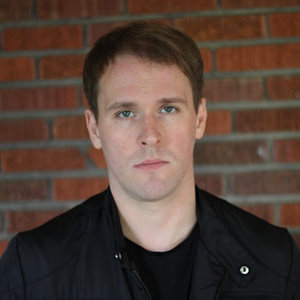
Star Bar promoter and Post-Apocalyptic Malone show host Bryan Malone talks live streams, new skills, and moving forward amid the pandemic

Photo courtesy Bryan G. Malone

Bryan Malone, the long-standing Star Bar promoter and guitar player with Atlanta rockers the Forty-Fives and Bad Spell hosts a weekly live streaming variety show from his home in Pendleton Manor.

Every Thursday night at 8 p.m. Eastern Time, Malone takes a different approach to live streaming performances, ranging from Kinks and Ramones-themed rock ‘n’ roll dance parties to root beer float appreciation nights. On August 13, Malone is hosting a Garden Party—virtually, of course—with the Post-Apocalyptic Malone Show and Pet Showcase. Send in a photo of your favorite pet and receive a post-apocalyptic shout out. This week’s setlist also features Malone performing songs by Ricky Nelson, Buddy Holly, Bobby Darin, the Beatles, and more.

In the meantime, Malone took a few minutes to talk about how the show comes together each week, the state of the Star Bar, and the power of live music—even when it’s pre-recorded.

What prompted you to start hosting your own live streaming performances?

Well, I didn’t really have any money coming in. The Star Bar closed down on New Year’s Eve, and I found myself out of work. I had a feeling it was coming, so I was prepared to take a few months off. But when it happened I didn’t know there was going to be a pandemic. By the time March rolled around and things started getting serious I looked at the calendar and thought, “man, this could go on for a long time.” I had never done anything even remotely like a live stream, much less ever really even played a solo show live. So this was a big step for me. I felt cornered, and I had to do something to make some kind of money. I noticed that other people were doing shows online. I watched several of them and thought maybe I’ll give this a shot and see if I can pull it off.

Do you feel like you’re pulling it off? 

There are varying degrees of success with everybody, but I try to make my shows a little different: I don’t just play music. I have little segments, I tell dumb jokes, show videos, and do all kinds of different stuff. Of course, it’s always based on the music, but I try to make it as close to a variety show as possible.

What kind of a software do you use to toggle between each part?

It’s an OBS—online broadcasting software—and I think it’s originally meant for gamers, so people can play video games online with each other. When I started doing this the sound was terrible. It had this fishbowl sound, and there was no way to control it. You can’t monitor it because you’re live-streaming. There is no playback, so you’re putting yourself out there without a net. It took me two or three shows to realize I’ve got to fix this. So I started working with software and it started sounding better. It’s an ongoing struggle. 

I started watching Kimono My House live streams, and Kenosha Kid, Cicada Rhythm, and Adron did a really well-produced live streaming variety show …

Adron is great anyway, but one of the things that helps her so much is that her performances are quiet. She plays very subtly, and it’s soft, which is conducive to this kind of setup. The louder you get the more problems you run into—at least that’s how it’s been for me.

What have you learned that helps overcome the problems you encounter when presenting loud music? 

Each week is different. I started running my stuff through an 8-track, and I started using microphones and the OBS software, trying to balance it all out. It’s a wild ride. I’ve definitely gotten better at it. At first it was pretty rough, and I didn’t know what was happening.

But using a microphone makes a huge difference. I thought I would be able to do it by just sitting in front of my computer with an acoustic guitar. I was used to playing in clubs, and playing on stage. So I was really going for it and belting it out, and I was overloading the little mic on the computer. There was no way to control it, and even though I kept trying to adjust my personal volume it was just crazy.

Success varies from week to week. I put a lot of work into the show, and try to make each one different—I try to make each one an event. Quickly, I realized that I can’t play the same set every week, or no one’s going to come back. So every week I learn an entirely new set (for the most part). I usually do 10-to-12 songs and I mix it up with a lot of originals, and a lot of covers. I’m learning all this new material, and it’s been really good for me as a musician, regardless of circumstances, because I’m forced to learn new material every week.

I’ll do theme nights: I did a Kinks night where I played all Kinks songs, or I did a Ramones night and played all Ramones stuff. Or I’ll do a night where I play songs by one of my bands, like an all Bad Spell night, or something like that. Some nights it’s just a free-for-all. I’ll play songs by the Who, and I’ll take requests. People will say “I want to hear this song, not that song,” So I’ll write all this stuff down and say “let me learn it,” or  “I already know that one and I’ll play it!” 

I picked Thursdays because I was watching Kimono My House and I noticed a lot of people playing on weekends. So I thought, “Everyone’s just sitting around anyway, so a weeknight might be better.” I picked Thursday. Then I kinda fell into that slot. After a while people were kind of expecting me to come on and play every Thursday night, so I stuck with it.

How has the response been?

I usually get a pretty good response. One of the fun things about it is you have a lot of friends who log on, so it’s kind of like a little chat room. People start talking: “I love this song,” or “Hey, how are you?” People are socializing inside this little bubble. I realized that pretty quickly. So I started making it as interactive as possible, and engaging in conversation with people. That makes it a whole lot of fun.

How do you promote your live streams? Do you put up fliers in Little Five Points or are you relying on Facebook?

I do everything online. I promote it through Facebook, and I’ll promote it on Instagram, and that’s about it so far. Sometimes I’ll make a little promo video—a short thing that I can share. I am doing it mostly on Facebook, but I’m going to start doing a YouTube live stream as well.

I recently did an afternoon pop-up show with Kimono My House. I didn’t really announce that one, I just set up my phone and went live, like, “Hey, I’m going to play a bunch of stuff, whatever comes to mind!” I took requests and whatnot.

Trying to navigate the Facebook algorithm is maddening.

I know! They make it as complicated as possible. And it always seems like once you start figuring it out they change it. You’re constantly chasing that ball, trying to figure out what’s going on.

Are your live streams available afterward, or is it still like you have to be here now kind of set up?

You don’t have to be there; they’re still available on Facebook. After the show, I will put them up on YouTube for my family—my dad doesn’t watch stuff on Facebook. He watches YouTube on his TV. So, I’ll do some of that but it is a lot more fun when you’re watching it live. That’s when you’re getting interaction with all the other people who are watching. That’s one element that you will miss when you’re watching the replay. 

You run the Star Bar’s “Almost Live From Little 5 Points” live streams as well.

Yeah, we do them on some Sunday nights. We can’t book any live shows right now due to social distancing measures, and there aren’t going to be any live shows in a sweaty, windowless bar for quite a while—maybe next year. So people send me tapes—I use the word tapes because I’m an old guy—or videos of them performing a song. Then I put them all together and have Ted Weldon host. Then I transmit that as a live show. Even though it’s prerecorded, I put it all together and broadcast live. That’s why it’s Almost Live From Little Five …

Each song has its introduction and then the song plays. I’ll have like 10 or 12 different videos ready and throughout the program I put them together and transmit them live.

Is this a new skill for you?

Oh yeah, absolutely. This is all brand new for me. I’ve never done anything like this before. I have definitely learned a lot in the way of editing videos, putting stuff together, and live streaming. It’s something that I never thought I would ever do. But it’s like that old saying about necessity goes … I had to do something, and this is a lot of fun! I’m like a lot of people, and a lot of people miss live music. They miss seeing people perform, and so I think this is a pretty good thing for everybody.

I recently attended Gallery 992’s Sunday night jazz session, which they’re now doing outside, in a vacant lot across the street. It was a profound experience; I didn’t realize how much I missed, and needed to engage with live music!

There really is no substitute for watching musicians perform in front of you. That’s something that cannot be replaced. The live stream is the closest that I have been able to come to that. And that’s one of the things I love about the live streams—especially when I do my stream. It is live! I am playing in real time, so you get the bumps and bruises that come with it, man. It’s something that happens when you’re learning 10 new songs every week. You learn that some songs work better than others.

I think that is what people crave—spontaneity.

It’s a lot of fun, and it has allowed me to reconnect with people whom I haven’t seen in a while. I’ll have people watching from all over the country—people from everywhere tuning in, and I’m like, “Hey there’s my buddy from San Francisco, or there’s so and so from New York!” It really has been a lot of fun.

How is the Star Bar coming along?

They’ve done a lot of work on the bar, and it looks really good. The upstairs is closed, but they are open downstairs. They’re doing patio service, so you can get a drink and sit outside. You can go into the lounge downstairs, which has been redone. They moved the bar—you know when you come in through the back door and go around the corner, that bar was right up to the door. They’ve moved that back a little bit, so it doesn’t cause a bottleneck right there anymore. They have a couple of pinball machines in there now, and they have a couple of booths in the back, so it’s starting to look like its own little bar down there, which is nice.

Tune in to the Post-Apocalyptic Malone show via Facebook every Thursday night at 8 p.m. Eastern Time.

Mathis Hunter reflects on the inspiration behind his latest single and video, ‘Don’t Be Long’

Mathis Hunter. Photo by Brigitte Choudhary.

With the arrival of his fourth and latest LP, Mood Lighting, Mathis Hunter checked in to talk about collaborating with Brigitte Choudhary on the album’s second video, “Don’t Be Long.” This latest offering finds the singer, multi-instrumentalist, and longtime Atlanta music denizen offering a more direct—albeit multi-hued—take on his psychedelic songwriting. Hunter took a few minutes to talk about the music, the inspiration behind the song’s visuals, and what he has in store for the future.

The color palette of the “Don’t Be Long” video perfectly matches the album’s cover art. What did you have in mind when you were putting this all together?

Brigitte Choudhary, a recent Atlanta transplant from Miami, shot and directed the video.  We didn’t have much of a plan together when we went into it, other than we had scouted the empty field and I think we both knew it would match the color palette and theme of the song. We also came up with the idea of a green screen video of me playing bass and drums. I played all the instruments on this particular song besides the lap steel, so we thought the green screen would get across the home recording vibe. Once she started editing, we realized we had undershot footage, so we ended up going back and just making shapes and patterns out of things like the foam soundproofing in the studio. We both thought they looked cool, and they definitely helped tie all the shots together and soften the cuts. Those shots ended up being the glue.

We left some things in the field and went back two days later to look for them, and the entire field had been mowed, so the timing of that shot was uncanny. It was also very windy the day of shooting and there’s a really interesting shot where you can see the shadow of a cloud blow across the field in like five seconds.

There is no intended narrative, but all of this paints a picture of what the song is about.

While I was working on the album, I was reading a book by Pema Chodron, called When Things Fall Apart, and trying to get comfortable with the idea that not all chapters go exactly how you want them to, and that it’s all part of the ride. She hits on this idea that our minds seem almost pre-programmed to try and come to a conclusion, to search for definitive answers and a solid ground to stand on, and the reality of it is, that just doesn’t exist. Things are always in a constant state of change, and nothing is permanent on a micro or macro level. I found some solace in that idea and a lot of those sentiments influenced some of the lyrics on the record.

During this same time, the lap steel and other guitar player in the band, Andy Morrison, was trying to cheer me up. He was on some sort of rant about how different it is to raise kids versus being young and single, having a career, etc. The point was that there’s all kinds of variations in what can be going on in your life, and he stated, “it’s all just mood lighting”—a background more or less—to the overarching story of your life. It hit me that it was a fairly zen sentiment whether he meant it to be or not, almost mirroring what Pema was saying about everything is just in a constant state of change, and not to get too attached to whether it was good or bad. That’s where I got the title for the song, and then eventually thought that phrase summed up the overall mood of the record quite well.

It’s so strange that I was working through these types of themes on a personal level, and now just a year later, our entire society seems to be going through an unraveling and great change. In the short run it’s always challenging, but in the long run it seems almost certain something better will emerge.

The chorus of the song is: “If you’re looking back, I got your back. If you’re headed out, please don’t be long.”

It’s the kind of song in which you’re speaking to a person who will never actually hear what you’re saying, but you just have to say it anyway. At the very least, speak or sing it out into the void, clear the energy.


Bringing urgency to such melancholy lyrics is no easy chore. This is a melancholy album, but I’d say it’s more of a moving on album rather than a break up album.

It’s definitely a “getting used to disruption in your life” themed album; change is the only constant. It’s sort of an unfolding of the initial uncomfortableness of that idea, and learning to move on. Honestly, it was helpful to be able to work through a lot of the emotions by writing.

I have always honed in on the psychedelic qualities in your songwriting. With “Don’t Be Long” you’ve paired that with visuals that are even more abstract—long crossfades …

But at the same time, I’ve always done these images that are abstract and this is the first video where you can actually clearly see me playing the song (laughs).  In fact, I deliberately went with a photograph for the album cover instead of the usual fantasy fare I gravitate towards to hopefully convey that there was something a little more direct musically and lyrically with this album.  There’s a lot less swords and sorcery psychedelia on this one than some of the previous records, although I’m sure I’ll get back to those types of themes (laughs).

What’s next for you?

Since no one knows how long it will be till anyone can play shows again, we decided to record a live set in our practice space/studio, Alpha Centauri. Brigitte also filmed these performances which is cool because as you mentioned earlier her color palette is really in line with the sounds we make. We should start getting these up on the Youtube channel soon.

Mathis Hunter’s Mood Lighting is available now via Leylines/Chunklet Industries.

Algiers’ guitarist Lee Tesche talks Blake Butler, 17 hours at Ryan’s Steakhouse, and ‘There Is No Year’

ALGIERS: Lee Tesche, second from right. Photo courtesy Matador.

Nobody writes like Blake Butler. The Marietta-based author and editor has spent over a decade sharpening a stylishly grotesque approach to storytelling that draws comparisons to everyone from Dennis Cooper to Williams S. Burroughs. His words and ideas twist and turn inward, dissecting themselves, and revealing layers of depth and multiple meanings that linger in the mind long after the page is turned. With his latest novel, Alice Knott (Riverhead Books), Butler weaves an hypnotic and wildly inventive story about the destructive act of finding meaning in art, and navigating a world that grows more corrupt by the minute.

On Thursday, July 30, at 8 p.m. (EST), Butler will join Atlanta Music writer Chad Radford and A Cappella Books for a discussion of his new book and more. The conversation is free to attend via Zoom. Click here to join the event.

In January, post-punk outfit Algiers released their third album, There Is No Year via Matador Records. The album takes its name from Butler’s dystopia third novel. Before Butler’s talk, Algiers guitar player Lee Tesche took a few minutes to talk about Butler’s influence on the group.


Chad Radford: This year, Algiers released a new album that takes its title from Blake Butler’s 2011 novel, There Is No Year.

Blake Butler. Photo by Molly Brodak.

Lee Tesche: Yes. I met Blake in probably 1997, or maybe it ’98. … Someone recently posted a handbill from the DIY show listings back in the ‘90s on the Old School Atlanta Musicians Facebook group. The handbill had a listing for the first show that Blake and I played together. I was in F-64 and Blake was in Manhattan. It was at Sprockets, which was a bike shop in Roswell that hosted DIY shows for about a year. That was kind of when we met—we met through music and playing in bands in the late ‘90s. We went to different high schools, but it was through that show that we got to know each other. We’ve known each other for a really long time now, and, funny enough, There Is No Year is not the first album that I’ve done that had a Blake reference in the title. The first Lyonnais record, Want For Wish For Nowhere, is also named after a chapter in Blake’s book Scorch Atlas. 

I had no idea.

The title for Algiers record There Is No Year, happened in a more roundabout way: it was suggested by my bandmates, whom I think didn’t realize that either. It made me laugh, and I said, ‘okay, cool. That’ll be my second Blake-related record!’

I remember seeing Blake play with the band Sleep Therapy at MJQ, probably 15 years ago, back when MJQ still did shows in the big room.

Blake is an awesome individual, and I’m curious to hear how he’s doing these days, and to hear him talk about the new book. I’ve been living in Florida since the pandemic started, and I haven’t seen much of anyone. But the new book is on my list.

I am a slow reader, and have found that with Blake’s books I need to read some lines, or sometimes entire chapters, twice just to make sure I fully comprehend what he’s saying.

I am the exact same way, and I read Blake even more slowly than usual, because he does so much with language. I’ll pour over every single word—more than I do with anything else that I read—to the point where I’ll do that too, read sentences and passages over and over again, just to make sure I’m pulling the full meaning that he was trying to get across.

Blake has a way of honing in on an idea, even if it’s a passing thought, a character trait, or a description; he’ll say it one way and then say it again in four different sentences in four different ways. It’s like he’s doing loops around his ideas and the details he wants to convey. I’ve never encountered anyone who writes like this.

Yeah, and after I had reached out to him to let him know that we were calling the record There Is No Year, and hopefully get his blessing, I thought it would make sense to have him write the bio for the record—to send out for press. He was into it, and he was happy to write the bio. He’s written a ton of music reviews, but he kind of hinted that there are several people out there who’d be a lot better, and who have more experience in writing bios. But I was like, ‘No! This is super appropriate for this album!’ And so he wrote his first draft of the bio in the language of that book. I thought it was brilliant. But Matador and the publishing people took one look at it and said “no … Absolutely not. We can’t send this out to writers!” I thought it was such a clever way to go about writing a bio for a record that’s named after his book. And it was just really clever stuff. 

Are there overlapping themes between the book and Algiers’ album?

I read the book when it came out in 2011. I remember both Farbod Kokabi, who designed the album’s cover art, and I read the book at same time, and it took both of us like three or four months to finish it. We went through it really slowly, and it felt like an accomplishment when we both finished.

Alice Knott

Our bass player Ryan Mahan has always been a huge fan of Blake’s work as well. When we were finishing the record, Ryan was reading Franklin [James Fisher]’s song lyrics. Frank had just been pulling from his own literary tradition—actually, I think Frank and Blake went to highschool together in Marietta in the late ‘90s. Anyway, when Ryan was reading Frank’s stuff it reminded him of the spirit of Blake’s writing, particularly in that  book. Thematically, it was dealing with much of the same subject matter. Ryan suggested the titles as a kind of tribute to Blake, and a nod to some of the overlapping similarities that we saw, and it stuck.

Now it’s such an amazingly prophetic thing to have taken for the title of a record that came out within the first weeks of 2020. Many people have thought it was an original concept on our end, or something like that, and have reached out to ask about the title. It always goes back to Blake.

He’s an incredible writer. He’s written countless record reviews for Allmusic. He’s written a lot of nonfiction kind of essays as well, which are brilliant. He used to have that Vice column that I would read regularly, which I always thought was clever and brilliant. Many, many moons ago—back when doing these kind of Jackass-like stunts seemed like a cool thing to do—myself, Blake, Farbod, and our friend Tom Bruno went to a Ryan’s Steakhouse and tried to eat from open till close on the $3.99 or $4.99 buffet admission. Blake wrote an incredible essay about our 17 hours eating at the Ryan Steakhouse. I’ve always been a fan of his nonfiction writing, too, because it reads in a different way than all of his fiction stuff. He’s such a master of language in that sense. He’s a great communicator, but he can also convey ideas with words and meaning in interesting ways.

On Thursday, July 30, at 8 p.m. (EST), Butler will join Atlanta Music writer Chad Radford and A Cappella Books for a discussion of his new novel, Alice Knott, and more.

The conversation is free to attend via Zoom. Click here to join the event.

Q&A: Matt Kilpatrick talks classic death metal and Cemetery Filth’s debut album, ‘Dominion’

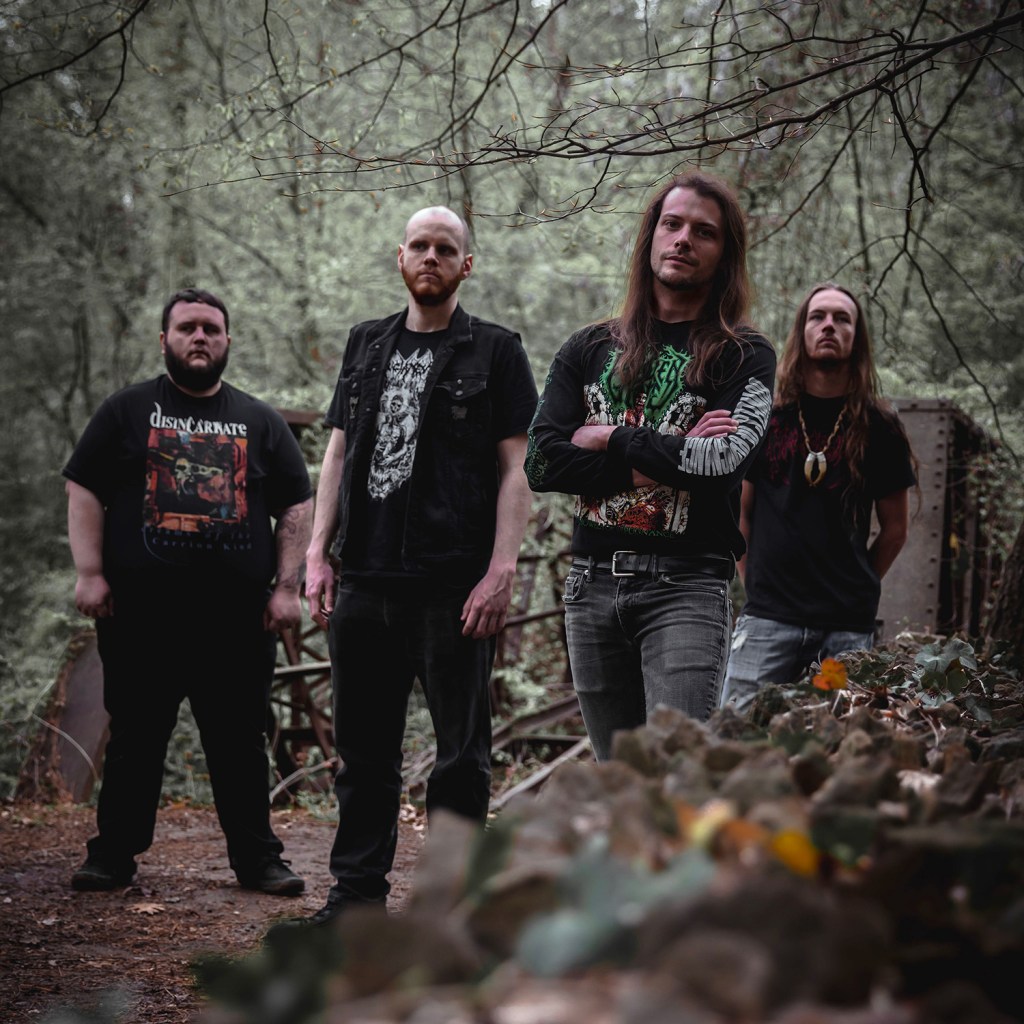
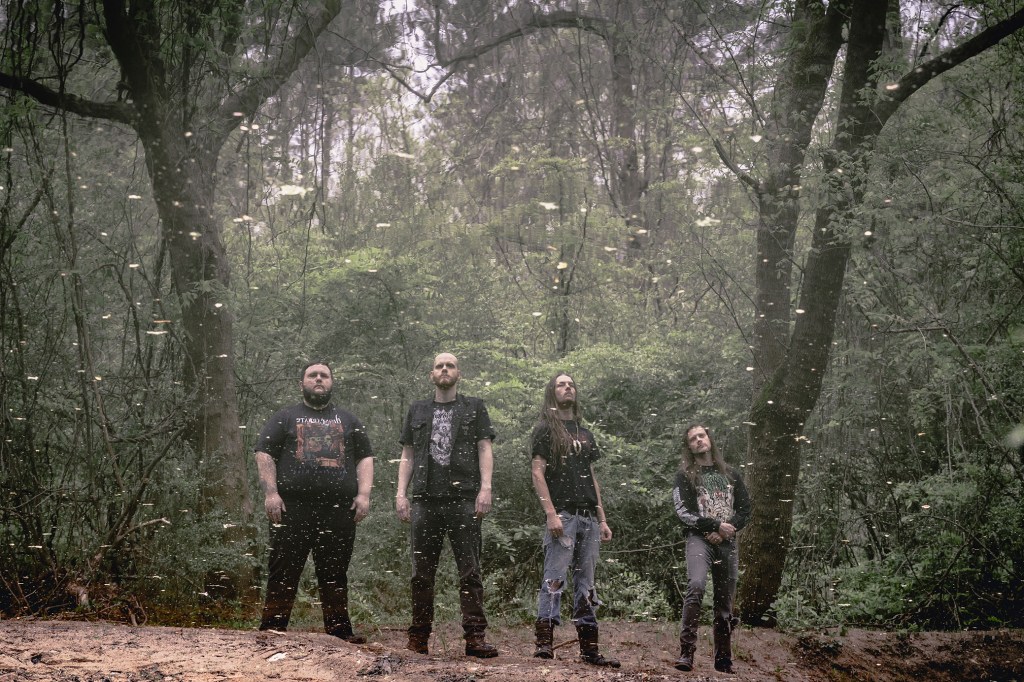
‘TIL DEATH: Cemetery Filth is Ryan Guinn (left), Chris McDonald, Matt Kilpatrick, and Devin Kelley. Photo by David Parham


Since 2014, Cemetery Filth’s singer and guitarist Matt Kilpatrick and guitarist Ryan Guinn have methodically built the foundation for a classic death metal assault on the senses. The group’s debut album, Dominion, explodes with lightning-fast guitar riffs and solos, rapid-fire drumming, and demonic growls with enough chilling fury to light a path from your turntable to your grave—just in time to hear the coffin lid slam shut. With a current lineup featuring bass player and backing vocalist Devin Kelley and drummer Chris McDonald, Cemetery Filth channels nonstop intensity into songs with titles such as “Paralytic Scourge,” “Festering Vacuity,” and “Devoured By Dread.” Dominion materialized April 13 digitally and on CD and cassette via the Athens-based metal label Unspeakable Axe Records. In June, vinyl copies appeared bearing the mark of Atlanta’s Boris Records. With LPs in hand, Kilpatrick took some time for a deep dive into the making of the album’s dark ruminations on death metal.

Chad Radford: Oftentimes, the greatest songwriting is crafted to be open-ended so it can mean different things to different people. Dominion, means sovereignty or control. It also means the territory of a sovereign or government. Both definitions light up my brain with ideas, particularly following the recent social and political upheaval we’re experiencing. But these songs predate what’s happening now. Was it important for you to create an album that has timeless qualities?

Matt Kilpatrick: It’s always been important to us for our music to not seem like a product from a particular time—which may sound completely hypocritical to some people considering we get lumped into the “old school” death metal category. Truth be told, we just prefer and write death metal that hasn’t strayed too far away from the core elements of the genre. We aren’t trying to sound like the bands from the ’90s for any reason other than that those releases are still some of the most viciously brilliant albums in the genre.

But we write what moves us, and I think to all of us, we wanted to make music that honored our influences, whether they’re old or new, and deliver a product where you can feel our passion for the music—like our influences, and the pioneers of the genre did.

The lyrics for the title track are a bit of a metaphor for death metal as an artform. It’s my disgust at the current trends in death metal, and the over-abundance of musicians from other music scenes suddenly discovering death metal, and trend-hopping and flooding the internet with boring, uninspired new projects that sell more T-shirts than they do actual music.

Dominion only welcomes he who lets the old ways brew; rotting ways require an obsession beyond sanity; with time’s passing, you’re forgotten leave us in ataraxy.” These lines in particular are me emphatically stating that this is not a form of music you can listen to for a week, several months, or even several years, and be able to write your own version of the style. Death metal has so much going on within it. And it is my firm belief that you have to have a sickly obsession with it, for many years, to really understand how to create death metal that has the same energy and conviction as the gods that formed the genre’s classics.

That said, to those reading, please note that my use of the pronoun “he” by no means infers that only men can write death metal. That was something I wish I had realized and changed before publishing the music and lyrics. Some of my favorite bands, and favorite musicians in modern death metal are women, both cis and trans. I apologize to anyone it could possibly offend or turn off. Today’s current events only emphasize how important it is for us as a band to show support and love to all metal fans—no matter their walk of life.

I’ve always loved lyrical content that can be read and applied in different ways. Chuck Schuldiner of Death was known for wrapping life lessons into his lyrics, but carefully crafting them in a way that could be heard differently to different people. I think he got that train of thought from lyricists like Ronnie James Dio, who was arguably metal’s greatest metaphorical writer. While some of my lyrics may be more direct, I am heavily inspired by both of these men and the idea of using metaphors that can ring true through time.

Tell me about the concepts at work behind Dominion?

I would probably say the only single unifying theme on this album is just “DEATH METAL.” That’s why the lyrical concept behind “Dominion” kind of became the perfect subject for the album’s title track. The rest of the songs on the album deal with a wide array of lyrical concepts: 
—“Subduction” is just a death metallized fictional tale based on the geologic process of plate tectonics recycling the earth and essentially “re-starting” ecosystems and life as a whole.  
—“Exhumed Visions” is a tale about finding strength within yourself, remembering your goals, re-embracing them, and moving forward as the person you want to be.
—Songs like “Paralytic Scourge,” “Aeons in Dis,” “Churning of the Shallows, and “Devoured By Dread” all tell tales of cosmic horror. There are metaphors deeper in a few of those if you look for them.
—“Festering Vacuity” may be the most reality-focused lyrics on the album aside from the title track. It’s about our blatant disgust for a world where ignorance is valued over knowledge, and the toxic trend that follows when you have people of power championing ignorance to their already dumb sheep.

You are credited with writing the lyrics on Dominion. Are you the sole-songwriter? Do you write the musical arrangements as well?

I’m actually not the sole songwriter and consistent member. My fellow guitarist in the band, Ryan Guinn, has been with me since the very beginning, and is also the other prominent songwriter in the group. We both bring our ideas together and form the songs into what they are. Our bassist Devin Kelley, has been with us almost as long, and he also got to contribute a couple of riffs to songs. Both of these guys would help me arrange the riffs into actual song structures, and then we’d bring them to Chris McDonald, our drummer, to complete them.

CEMETERY FILTH. Photo by David Parham

Dominion was six years in the making. How did time unfold for this record, and how did the music evolve as you moved forward?

To be quite honest, most of the music on the album was written in the 14 months before recording. The oldest song on the record is “Devoured By Dread,” which was originally released on our 7-inch split with Australia’s Sewercide. We didn’t intend to re-record any old songs, but our drummer Chris threw out the idea of doing that one since it had changed a bit since the original recording.

We’ve always been a band that’s been split up between at least three states, and before we got Chris in the band, it was always very difficult to get everyone in the same room and working as a focused group to complete songs. We loved our old drummer very much, but at the time he couldn’t commit like we needed him to. Things never progressed while he was in the band. We’d get like one or two new songs done a year at most, and that’s pitiful. I’m not going to lie—a lot of that was personal disdain. It’s hard for me to “create” and get excited about a project if it seems doomed from the get-go.

It was extremely hard to put work into a project that seemed to keep tripping over itself. I think getting this line-up together finally gave me the confidence I needed in the project to write passionately again.

One of the dedications in Dominion’s liner notes goes to Morbid Angel guitarist Richard Brunelle. Do you think of Morbid Angel’s early take on death metal—Brunelle’s style in particular—as strong influences on Cemetery Filth?

Richard’s guitar playing was very instrumental in the creation of those amazing early Morbid Angel records. I don’t think a lot of people realize how important he was in the writing of both Abominations of Desolation and Altars of Madness.

Something about the vicious, barely controlled chaos of those records is so damn intoxicating still to this day, and in my opinion, without Richard on those records, they wouldn’t come close to the perfection that they are.

Though Death is my favorite band of all time, Morbid’s Altars is what I consider to be my favorite record ever released, and what I consider to be the world’s purest offering of ripping death metal. I’d say the insanity of that record has always been something Cemetery Filth has tried to match. We had once talked about covering “Suffocation” from it, but our drummer laughed and said we probably shouldn’t, because most of those songs are so insane that they are just barely held together. It’s really very astonishing how poignant that music still is to this day, over 30 years later.

Brunelle’s death was particularly hard for Ryan and I. We did not know him personally, but a very good friend of our band did, and was actually working with Richard on getting him back to playing music, and actually had started a death metal project with him. At the time, he was playing a horrible guitar that apparently couldn’t stay in tune when they played.

Ryan had an extra B.C. Rich Warlock guitar that he had been wanting to sell, and I sparked the idea of letting me, and our friend who worked with Richard, throw him some money so that all three of us could “donate” the guitar to Richard, who often played a Warlock during his days with Morbid Angel.

He was blown away when he received it, and couldn’t believe some guys he never even met would do that for him. He never saw himself as anybody special, but he was.
It was really hard to hear that he passed, but we like to think we gave him something that brought some refreshing inspiration to him in his last few months on Earth. And we certainly hope he realized how much he was loved by the metal scene. 

The album is also dedicated to Michael Stewart and Bud Lancaster.

Both of these men were really close friends of the band, treasured members of the Southern / Atlanta-scene, especially to our drummer Chris.

Michael Stewart was the founding guitarist of Chris’s longest-running band, Ectovoid. He was a super talented dude, but more than that, just a great friend and passionate metal-head—and one of Chris’s closest friends in particular. He tragically passed away in 2016 due to an epileptic attack that went terribly wrong. He loved Cemetery Filth and we were honored to play the memorial show that Chris helped set up in his memory a few years ago. I really wish we could have seen what Stew would have gone on to do musically.

Bud Lancaster was another very close friend of Chris’s from Birmingham. I got to know Bud because he kind of became Ectovoid’s roadie and merch guy over the years. He was the sweetest, kindest dude. But like a lot of people these days, he suffered from terrible depression… and in late 2017, he decided he was ready to move on to the next world.
I honestly did not have enough time hanging with Bud or Stew, but I loved both of those guys a lot. There are just some people you instantly bond with. Bud and Stew were that for many people, and were cherished by the metal community here in the South. I hate that we lost both of them, and so close together. We all miss them terribly. I’m positive that they would be completely STOKED on our album and especially that their best-buddy Chris was a part of it… so it only made sense to make sure it was dedicated in their memory.

Dominion chugs along by creating an ambience, or a mood, or a moment in rhythm and texture. It’s not overly showy; more like Krautrock, or something like that, which is a deeply affective element with this record. Tell me more about the drawn-out instrumental bouts in songs like “Subduction,” “Paralytic Scourge,” and the title track?

Ah, thank you for that—I’m not sure that’s something we are even conscious of! We honestly craft songs according to “feel.” If there’s a part that is longer and more rhythm based, it’s that way just because it felt right to leave it that way. I think having sections where the music can breathe enhances a song. If we had vocals and solos over every riff it seems like the album would be one big blur, and that every track would sound far less unique from each other.

Death metal is a genre based around its instrumentation. The guitar riffs are what carry the song forward—they are the literal skeleton of any song. You can argue the drums are equally as important, but I will guess that most any band would agree that the riffs always come first.

I can’t speak for every death metal band in the world, but we have always crafted drums around the feel of the riffs. Chris McDonald—the drummer—joining the band went so smoothly and efficiently because he is a drummer that hears riffs and can quickly and fluidly apply a wide variety of beats and fills that compliment the riff. He’s literally told me “I’m just following what you guys are doing,” and the efficiency he has in that talent still impresses me to this day.

But really, any good death metal track is an arrangement of riffs that takes the listener on a journey. And like any journey, you have heavily narrated and intense parts, and then you’ll have parts where the story breathes and allows for the next big event in the tale to build up. So I guess if our instrumental sections of songs seem odd at times, they’re done intentionally to allow the next part to have an extra heavy or ripping impact on the listener.

Do you have a favorite song on Dominion, or is there one that resonates with you, maybe more than some of the others?

The favorite song for each of us probably changes often. If I had to choose one that is a particular accomplishment for me, it would be “Festering Vacuity.” It’s the only song I’ve ever written on my own, from beginning to end. That was a big goal of mine for this record, to contribute one song written completely by myself. Not to say that I dislike working with the other guys… I actually think a band’s best material comes from a band that does write together! But I wanted to prove to myself that I could write a full song, and the bizarrely jumpy, almost-manic sounding “Festering Vacuity” was the result.

If you were to sample one song to somebody to give them an idea of the full album, I would probably go back to “Churning of the Shallows” to be honest. That’s why we lead with that song as the big single that announced the release. It’s got a ton of different parts to it, and that’s always been a big part of Cemetery Filth’s writing style. We like our songs to evolve over time instead of following a predictable formula.

Dominion is out now via Unspeakable Axe and Boris Records.

NIVA calls on congress for financial relief for independent music venues

The National Independent Venue Association (NIVA) is calling on congress for financial relief for independent music venues across the the United States. The organization currently includes nearly 2,000 members in all 50 states and Washington, D.C. A recent survey of NIVA members revealed that, without financial assistance, more than 90% of the country’s venues face going out-of-business permanently. As result, NIVA is rallying behind a campaign that’s been dubbed Save Our Stages, and is pulling for the RESTART Act (S. 3814) to be included as part of the next financial relief package.

The bipartisan RESTART (Reviving the Economy Sustainably Towards a Recovery in Twenty-twenty) Act is led by Senators Michael Bennet (D-Colorado) and Todd Young (R-Indiana). If passed, the Act will expand upon the Paycheck Protection Program to work for businesses that have lost revenue while remaining closed as a measure to prevent the spread of COVID-19. Among other benefits, RESTART will also extend the PPP’s eight-week loan forgiveness period to 16 weeks for businesses whose revenue has declined by at least 25%.

Read NIVA’s letter to congress below, and click here to tell your legislators to save independent music venues.

Don’t Sleep unveils first glimpse of debut LP with ‘Refine Me’

There’s an energetic wisdom possessing every word of “Refine Me,” a new single and video from Harrisburg, Penn./Washington D.C. post-hardcore quintet Don’t Sleep. When the group’s frontman Dave Smalley sings, “You can wound but you can never kill me/You want me in a prison/Of your misconception/But I’ll keep breaking free/From your deception,” self-empowerment becomes the message and the means to rise above.

“Refine Me” is more a personal mantra than it is a political rant—part-Sun Tzu, part-Black Flag in its ruminations on gaining strength through facing adversity in life head on. Or as Smalley states: “It is important to be forged and refined by the flames of adversity. Let your enemies make you stronger.”

Smalley’s anthemic whooaaas and guttural voice project a lifetime of experience in hardcore—he sang with the brawny “Boston Crew” outfit DYS, in Washington D.C. He did a stint leading guitarist Brian Baker’s post-Minor Threat group Dag Nasty, and in Los Angeles he fronted the post-Descendents outfit ALL. He also sings with the recently rekindled L.A. hardcore staple Down By Law. Smalley’s presence alone embodies American hardcore’s melodic DNA. In “Refine Me,” his words are imbued with everlasting depth, resilience, and an openness that allows anyone within earshot to connect the dots and find their own meaning.

“One of the label guys suggested these words are important in today’s environment of folks struggling to ensure every person is treated with dignity and respect,” Smalley says. “I wrote the lyrics last year, and it’s really about personal struggle and overcoming that terrible feeling of betrayal, and coming out stronger on the other side. But if it applies to today, and can give someone hope to come through this current moment looking to be stronger and forged by today’s heat, I’m all for it,” he adds. “The best lyrics are the timeless ones, where the words impact the listener as a human being, but also can be applied to our human family as a whole, and apply to the world. Hopefully this song counts.”

In 2017, Don’t Sleep came out of the gate strong with the arrival of a self-titled EP (Unity Worldwide), followed a year later by the Bring The Light 7-inch (Reaper Records). The group hit the ground running with a string of Warped Tour dates, sharing stages with legacy harcore acts such as Sick Of It All, Madball, and Hare Krishna juggernaut Shelter. But after piquing so many ears the group has remained somewhat in the shadows. Of course, in 2018 Smalley was busy putting together Down By Law’s latest album All In (Kung Fu Records). He also released Join The Outsiders (Little Rocket), the debut album from a new group he fronts with Spanish and Argentinian musicians dubbed Dave Smalley & the Bandoleros.

For Don’t Sleep, however, the downtime has been anything but idle. “Refine Me” heralds the September 4 arrival of the group’s debut full-length, Turn The Tide (Mission Two Entertainment). Smalley, alongside bass player Garrett Rothman, drummer Jim Bedorf, and guitarists Tom McGrath and Tony Bavaria have crafted a sound that expands beyond the tropes of classic hardcore with a balance of muscular riffs and angular rhythms over Smalley’s lyrical ruminations.

It’s a fresh take for a group that’s well aware of its hardcore roots, but isn’t willing to stay in one place for too long, or dwell on the past—literally and figuratively speaking. When the group hits its stride here, the music takes shape amid a powerful yet understated blend of visceral hooks and sophisticated instincts—the sound of five players going all in. 

A laundry list of producers and engineers contributed to the album including Carson Slovak and Grant McFarland (August Burns Red), Walter Schreifels (Gorilla Biscuits, Quicksand, Youth of Today), Matt Holmes, and Battery singer Brian McTernan. The result is a sound that Smalley says was “a catharsis and a challenge” fleshing out.  “It’s one I hope will have the same kind of impact for people that classic albums had for me when I was coming up.”

“Refine Me” offers just a glimpse at this new melodic identity the group has honed with Turn The Tide, promising a purgative and empowering blast of songs that are hellbent on a brighter future.

Turn The Tide is out September 4 via Mission Two Entertainment.

Don’t Sleep: Turn The Tide (Mission Two Entertainment)

Turn The Tide tracklist
1. “Don’t Sleep”
2. “No Other Way”
3. “Reflection”
4. “True North”
5. “Abandoned Us”
6. “Prisoners”
7. “We Remain”
8. “Walking In Sinai”
9. “Refine Me”
10. “Foundation”
11. “The Wreckage”
12. “December”

Young Antiques grow up with ‘Another Risk Of The Heart,’ Blake Rainey talks history, chemistry, and writing a love letter to the band

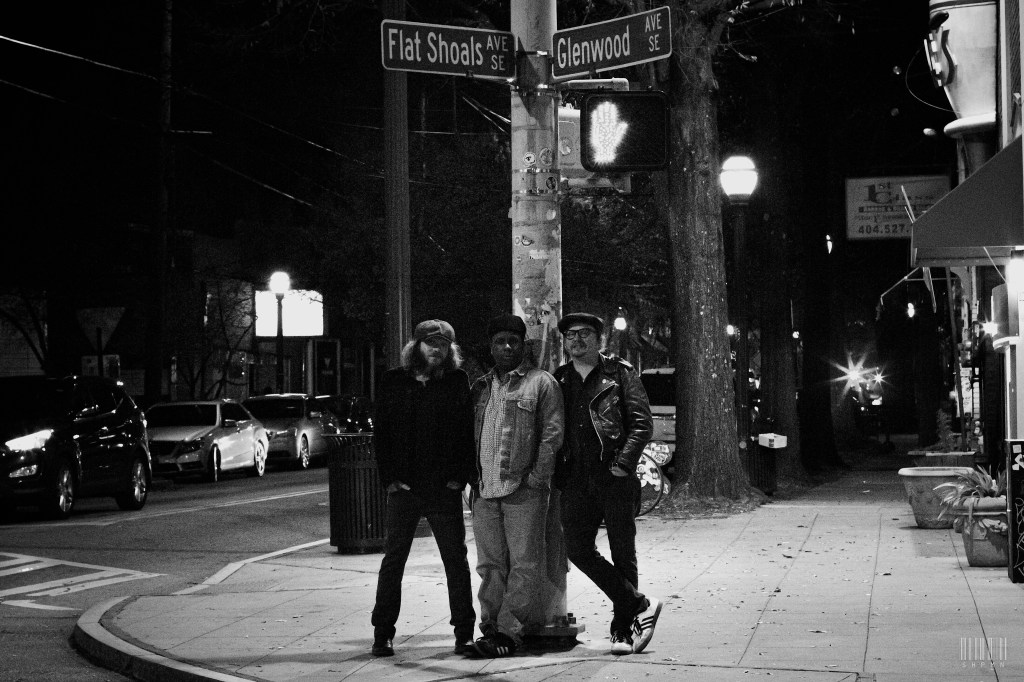
EUCLID CREEPERS: The Young Antiques are Blake Parris (left), John Speaks, and Blake Rainey.
Photo by Jeff Shipman.


Young Antiques are at it again. Longtime friends and songwriting cohorts Blake Rainey and Blake Parris have convened with drummer John Speaks to craft Another Risk Of The Heart (Southern Lovers Recording Company), a new eight-song LP that’s teeming with phantasmal Southern power pop and rock ‘n’ roll storytelling.

Another Risk Of The Heart is the Atlanta trio’s first offering in nearly a decade, and it’s what Rainey calls “a love letter to the band.” Songs with titles such as “Euclid Creeper,” “Armies In The Alley,” and “’92”reaffirm the power and allure of the group’s hook-laden legacy. Guest appearances from Atlanta-rooted voices such as Kelly Hogan, Chris Lopez of the Rock*A*Teens, and Tom Cheshire, expand the group’s repertoire, while keeping each song planted firmly in the Atlanta music mythos. Rainey took a few minutes to talk more about the album.

“Euclid Creeper” feels like a powerful statement coming right out of the gate on this album. What did you have in mind when you wrote the song, and why you put this one front and center?

“Euclid Creeper” is about the band in our early days—roaming around Little Five Points and EAV bars and drinking and partying and “looking for a little light” outside of this neighborhood-rat existence, all of which kind of felt like living in a coal mine at times. It’s also about a return to form and doing this rock ‘n’ roll band again—albeit a little bit differently this time around.

I see Blake Rainey and His Demons’ 2016 LP Helicopter Rose as an homage to your early years spent growing up in rural Georgia, and the new Young Antiques LP, Another Risk Of The Heart, as a nod to your time in the city—Cabbagetown specifically. Are there parallels between these two records?

Personally, the parallel that I see between Helicopter Rose and Another Risk of the Heart is that both mark a turning point in my songwriting, as far as attention to detail and quality goes. I was proud of Rose at the time more than anything else that I had previously done, even though I could see its flaws like most of my albums. When I finished Risk however, and when we got the track listing in order, it was like nothing I’d ever accomplished before. It was quintessential ‘Tiques, in a nutshell, and to me the quality was steady from beginning to end, the band’s performances were much more together this time around, and with Risk I think we really hit on a formula for all of three us—John Speaks, Blake Parris, and myself. And today, we are already starting work on the next album.

When listening to your records, and even now, thinking about the stories and characters in your songs, my mind starts pulling threads about the landscape, neighborhoods, and how you fit into the environment. When you’re crafting songs do you feel particularly inspired by your surroundings?

I do. I can definitely look at something like an old run down building or a dirt road and think about what sound might accompany it. It’s an interesting thing to think about—writing music to describe something visually inspiring—like walking down the sidewalk and seeing a church steeple showing through branches in a winter sky. What does that sound like? Or noticing an old man on a park bench with a sack of beer at 9 a.m. These type of things can definitely help me paint a vivid picture in a song.

Tell me about the title, Another Risk of the Heart, and what it means to you?

On the surface, the title, Another Risk of the Heart, is akin to what Soundtrack To Tear Us Apart (the previous ‘Tiques album) was like: a description of where the band is or was at the moment. The overall theme of this album is a love letter to the band, like, “here we go again…” We’re here, giving this thing another shot. Getting back together, doing what we do best—having fun, making records.

And how about the songwriting that’s on display here; is there one song on the album that resonates with where you are right now?

“Questions” is my favorite song on the album, and with all of the frustration and fear that we have going on with authority figures at this very moment, it definitely resonates to me the most. The opening line is, “Yesterday I woke at dawn/With the police on my lawn/Never had they stayed so long until today.”

Even before the pandemic or the protests, it was the song that somehow brought everything together on the album and kept the pace where it should be. So far, it’s been one of the more overlooked tunes on the record, but I like how it serves a deep cut purpose. It’s also set in a quasi sci-fi future like “Armies In The Alley” is, and it’s a sister song to that one in many ways. There’s an authoritarian bent to both in the lines about showing your papers and your government tattoo and hiding out in cinemas from the authorities and all that. There’s also another cinema reference in “’92,” which is another favorite of mine. It’s a young love song set in 1992 about two high school misfits falling for each other over cigarettes and the cinema and skateboards.

YOUNG ANTIQUES. Photo by Jeff Shipman.

Tell me about “Armies In The Alley.”

That one definitely feels Orwellian. A “lovely liberal in a dress” is new to town and is taken to the boulevard, even though it’s a risky move. The narrator is drawn to her because she is “without that fascist look.” The couple ducks in and out of alleys and the cinema to escape the oppressive authority outside—both literally and figuratively—while smoking and getting lost in film. To me it seems very close to reality or a past reality—just on the edge of science fiction. It also feels a little like what parts of Europe might have been like at times during WWII.

In the past, when writing about Young Antiques, I’ve dropped comparisons to Paul Westerberg and the Replacements. Over time, however, that seems like a pretty one-dimensional comparison. Who are some other songwriters that have influenced your writing and outlook on music?

I’m a big Replacements fan, no doubt, but I’m also a pretty big fan of rock ‘n’ roll and popular music in general. Right now, all I pretty much listen to is American jazz from the 1950s and ’60s. As far as songwriters go, I’m influenced by quite a few: Dylan, Ray Davies, Neil Young, Van Morrison, Jagger/Richards, Lou Reed, Elvis Costello, Strummer/Jones, Tom Waits, Bob Mould … I’m well versed in just about everything those guys have done. I’m leaving out a few, I’m sure.

How did you select the guests who appear on the album? Did you write songs with them in mind and approach them, or was it a more natural process?

John Speaks had been in the Jody Grind with Kelly Hogan and he was also old friends from that same era with Chris Lopez from Rock*A*Teens. Parris and I have known Tom Cheshire for years; he’s an old friend and a bandmate of mine (in the All Night Drug Prowling Wolves). So everyone involved is family in one way or another. I told Speaks, “We need a female singer on Goin’ Home.” He said, “Kelly Hogan.” I was like, perfect! We wanted gang backing vocals on “Euclid Creeper,” so I brought in Tom and Speaks brought in Lopez. I am a big fan of much of Chris’ songwriting, so that was extra special for me.

Chris and Tom came in separately and hung out all night and drank beer and sang their respective parts. It was amazing. Kelly had to do her part remotely in Wisconsin and the first time we heard her performances sent via the internet, we were like “Fuck. This is really good!”

Also, can you tell me what recording with this core lineup of you and Blake Parris teaming up with drummer John Speaks revealed about the songs or the chemistry that you share? I know that you and Blake have been working together since grade school. John, is someone who’s played shows with you, but hasn’t been in the studio with you, at least not for many years.

John is the drummer for the Young Antiques—no question about it. He joined the band in 2001-2003 and we recorded Clockworker with him and toured the Midwest to Chicago and the East Coast to NYC. That was the best time we’d had with any one drummer. When John left, we worked with another drummer, Kevin Charney, for a couple of albums before fizzling out. I moved on with two more solo albums with His Demons (Love Don’t Cross Me and Helicopter Rose). That band consisted of Joe Foy, Eric Young, and Aaron Mason (Nikki Speake and the Phantom Callers). Parris was performing with Volume IV and a variety of other bands around the city at that time. After that, John came into Boutique Guitar Exchange where I was working at the time and basically said, “You wanna get the band back together?” and Parris and I decided a reunion sounded like the right thing to do. So I put down the new solo material I was working on and started writing what would eventually become Another Risk Of The Heart.

I had no idea how comfortable or interesting we would sound when we got together. The time we spent bonding and performing in the early 2000’s has definitely played a big role in our overall chemistry today—plus we’re all better musicians individually at this point in our lives. It was the best decision we could have made.

Another Risk Of The Heart is out now.

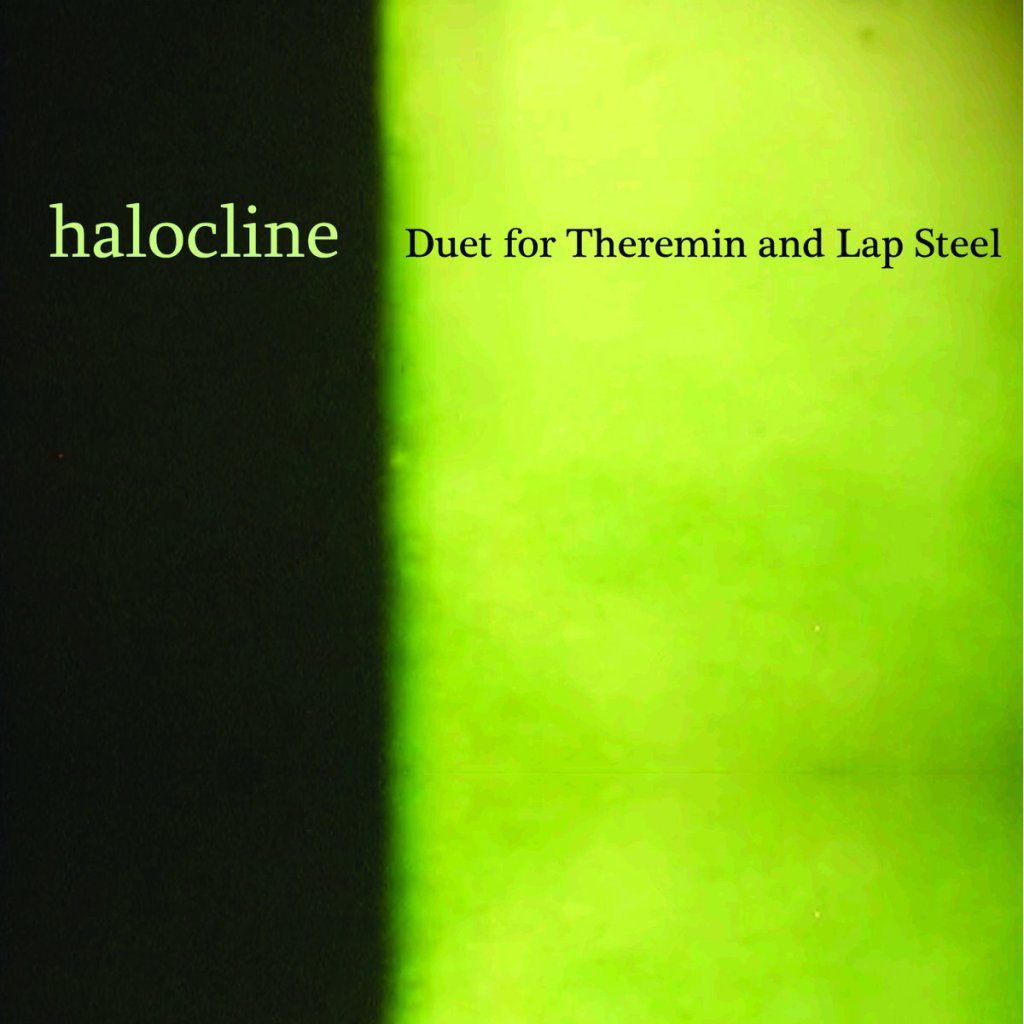
Interview: Duet for Theremin and Lap Steel talk improvisation and collaboration on ‘Halocline’

DUET FOR THEREMIN AND LAP STEEL: Frank Schultz (left) and Scott Burland. Photo courtesy Terry Kearns.


In the visually stunning BBC One documentary series Planet Earth, Sir David Attenborough describes a mesmerizing scene in which underwater caverns play tricks on the eye. “What seems like air … isn’t. It’s just another kind of water,” Attenborough says as he describes a phenomenon called halocline, a point at which freshwater and saltwater clash, like oil and water, maintaining separate densities. It is rich fodder for the imagination, and the title of Duet For Theremin and Lap Steel’s latest album. Theremin player Scott Burland and Lap Steel player Frank Schultz are back with an eight-song masterpiece of haunting, luminous atmosphere.

In the Fall of 2019, a chance meeting—sharing the stage at Louisville, Kentucky’s Kaiju—with vocalist Dane Waters gave rise to a collaboration in which she weaves her voice into songs with titles such as “Maelstrom,” “Swell,” and “Fata Morgana.” The result draws out an unforeseen abstract aquatic theme pulled from the depths of the subconscious, manifesting itself in fluid musical movements.

On the heels of the album’s May 16 release, Burland and Schultz took a few minutes to talk about working with Dane Waters, what the music means to them, and letting the music drive the concept.

Halocline describes what happens when two bodies of water are separated because of different salinities. How does this apply to the record?

Frank Schultz: The music drove the concept, not the concept driving the music. I had been watching a lot of Blue Planet and Planet Earth in the evenings during the time I was starting to put the album together, and the music seemed a perfect fit to the many faces of water. Water is one of those weird things that you can’t live without, sometimes it’s hard to live with, and sometimes it’s a killer. The illusion of a halocline is beautiful, but can be very distracting and deadly.

Scott Burland: Naming albums and song titles has been a challenging—though fun—process for us over the years, and this time the whole concept fell into place once Frank mentioned halocline to me. The music on this album varies from murky to clear, sometimes even in the same song. To me, some of this music sounds like it was recorded underwater. Or lends itself to imagining oneself moving around surrounded by, or completely underwater.

How does this expand upon your body of work and everything that you’ve accomplished with your previous recordings?

FS: I think it is our best body of work so far. It has connections to previous work, but goes in several different directions.

Filmmaker Robbie Land’s video for the title track from DfTaLS’ latest album, Halocline.


What are these different directions in which you see the music going?

FS: As far as a long term direction, who knows. We play, the music comes out, we record it and put some of it out. There is no preconceived notion of a path or direction.

SB: I think it fits nicely into our larger body of work. When 10 came out, I remember feeling like there was a certain maturity in the music. That’s definitely true of Halocline. There are no gimmicks per sé, it’s just the instruments, filtered through our approaches, and voice. It stands on its own and it seems a logical extension to our arc. I’d add that the majority of the album is sonically abstract, though there are moments of familiarity and traditional structure, or at least our version of that.

FS: There are several moments in the album when everything falls into place and still gives me goosebumps. Favorite songs change over time, at least for me. Current faves are “Maelstrom” and “Dissolver,” but I have a crush on all of them.

SB: I’m a big fan of the title track. When I hear it, I think wow, we did that? I don’t have a clear memory of recording it, it was just some random Wednesday, early in 2019. I appreciate that I’m working with someone who I can collaborate on a piece such as this, with no road map, no clear beginning or end and listen back and agree, hey that’s not half bad. “Brinicle” is another favorite, it’s both still and in motion and I have at least a vague memory of recording that one!

What did performing with Dane Waters bring out of DfTaLS?

FS: We met Dane in Louisville when we shared the stage with her in 2019. We were both floored by her performance. Floored enough that the two of us agreed, without any hesitation, that we should meet with her the next day and ask her to be on the album. She said yes! We fleshed out around 18 songs, got them down to nine songs we agreed on, and sent her three of them to record vocals. We ended up using all the songs for which she contributed vocals. Of course, once I received her recordings, it affected how the songs were treated and mixed.

SB: After that Louisville gig, Frank and I were asking ourselves why we didn’t invite her to join us for our set. Second best was asking her to contribute to the record. I think she adds a human quality to the album which isn’t exactly lacking in our previous efforts, but it’s just more in the forefront here. She slipped right into the spirit of the thing, I liked the way her voice reacted harmonically to the theremin and I appreciate the thought that she put into it. We look forward to sharing a stage with her at some unknown point in the future.

DUET FOR THEREMIN AND LAP STEEL: Halocline

Collaborations can often underscore one artist’s vision, or open up to the whole group making room for happy accidents, so to speak. Be it Jeff Crompton’s contributions to “Absinthium” on 10, filmmaker Robbie Land’s visuals, or working with Bill Brovold, the Shaking Ray Levis, and more on your 2011 album, Collaborations. What are the benefits of bringing outside influences into the realm you’ve created with DfTaLS?

FS: Kind of two camps here:  Crompton and Dane recorded their pieces after the fact, so not really anything that influenced our playing. Robbie—we never see his films while we are playing, so not much influence, although we love when it happens, we just feel better knowing it is there, as does the audience. The Collaborations album was the one where we did live recordings with all the folks. So we were all influencing each other. In general, we enjoy collaborating with folks because it tends to bear lovely fruit and furthers our musical relationship and connection with those folks. Improvising with new folks is a chance to open your ears and learn something.

SB: This is the first time we’ve collaborated with someone without being in the same room, so the rules were different. On paper, there’s an immediacy that’s missing but in this case I think Dane nailed it with the vocals, almost as if we had recorded it together. Frank and I know the limitations of DfTaLS and an advantage of bringing someone else in is that the other people don’t necessarily know or even want to know those limits. It offers a fresh perspective, which gives us “permission” to stray from our comfort zone. To say it breaks up the monotony seems a little harsh, but surprise is good and we’ve been doing this long enough that introducing something new and/or unexpected keeps the fire going.

FS: Collaborating is part of our nature.

SB: It seems that we are able to fit into a variety of sonic scenarios, so I would say that collaborations allow us to expand on what DfTaLS is, and a glimpse into what it might become, or could be. Having time these last couple of months to contemplate even my own relationship to music has been eye-opening. Trying to strip everything away and then slowly reintroduce things to see what resonates. It’s a process. It’s hard to imagine my life without DfTaLS, so I am trying to figure out what it really means to me, what it means to Atlanta, to the region, and beyond. So it’s difficult for me to articulate the true nature of DfTaLS. Still working on that.

— Chad Radford

All proceeds from Halocline’s digital sales will be donated to Giving Kitchen and Atlanta Musicians’ Emergency Relief Fund.

The Cheifs: Liner notes for the group’s final 7-inch


I was honored to write the liner notes for the new and final 7-inch by the Cheifs.

Bob Glassley was a man out of time. He was a hardcore sleeper cell who reawakened in 2016 with the uncompromising spirit and forgotten insights of Los Angeles’ early ‘80s punk snarl…in Atlanta. And he arrived like a thief in the night.

James Joyce called me that summer to ask if I remembered or knew anything about an old punk band from California called the Cheifs. He explained to me that he had been tapped to play drums with a new version of the group and wanted to know if I was interested in doing a piece on them for Creative Loafing. It wasn’t long after that we were all gathered around a table at Manuel’s Tavern discussing the legend of the band, and listening to Bob’s stories about his involvement in the early West Coast hardcore punk scene. Absorbing so much Cheifs history and lore was like discovering another great band that had been there all along, albeit buried by the sands of time, now uncovered and brought into full view.

At the end of 1982 in a set of circumstances singular to Bob’s life, he stepped away from punk and playing music altogether. He traded his bass for a computer and never looked back. As a result, his knowledge and familiarity with punk was a perfectly preserved time capsule. It also fostered a beautiful state of arrested development; he knew West Coast punk circa 1978-1982, but nothing beyond that. However, he understood the art of the outsider, the art of being an individual driven by righteousness, and the self-reliance of punk before fashion and hairstyles eclipsed the lifestyle, and before mainstream attention introduced the elements of violence and intolerance that ultimately pulled the scene apart.

Bob’s return to music was a reaction to right-wing influences gaining a stranglehold on America. He took a no-bullshit political stance –– he was outspoken with his opinions, and punk gave him direction and purpose in the shadow of the Trump presidency. But Bob also projected a raw, down-to-earth wisdom, and a forgotten knowledge and etiquette that affected everyone with whom he crossed paths, from his bandmates to the faces in the crowd. While loading out after playing shows at The Earl and 529 in East Atlanta, he connected with homeless people who were asking for spare change. He treated everyone with dignity and respect.

With the new Cheifs lineup in place, the group gigged hard in Atlanta and eventually the Los Angeles area. Bob seemed to know, maybe subconsciously, that he didn’t have much time left on earth. Not wasting any time, the group played and recorded as quickly and as often as possible. Whenever Bob took the stage wearing a “We the People” T-shirt (brandishing an image of the Constitution of the United States), he embraced the audience, reveling in the moment and screaming defiantly into the void of mortality.

On Tuesday, October 17, 2017, Bob unexpectedly died of complications related to liver cancer. He had been diagnosed with the disease a mere two weeks prior. He was 58. The following Saturday the Cheifs were set to play a sold-out show at the Masquerade supporting the Descendents, a big coup for the new lineup. Just four nights after his death, the Descendents opened the show by unleashing the most powerfully cathartic blast of “Everything Sux” the group had ever performed.

During the encore, James, Brad, and Scott joined Milo and Karl on stage for one last send-off, playing four final Cheifs songs as a dedication to Bob, and to all that the new lineup had worked to create.

The four songs captured here are bookends to the Cheifs legacy. Both “1988” and “Heart In Chains” were originally written and performed by Bob’s pre-Cheifs band, Portland, Oregon’s Rubbers. On the B-side, “Alienated” is a new jam that Bob penned. Loosely based on a forgotten early Cheifs song, “Mechanical Man” was partially reconstructed from memory, and hammered into a new form by the current lineup.

The 7” single you now hold in your hands stamps in time the one-year period of intense creativity and rediscovery that Bob and the reignited Cheifs unleashed. The distillation of ’80s punk songwriting and hardcore’s graceful, physical melodies, filtered through a lens of contemporary production, is filled with a new fire and spirit, channeled into a lifetime of fierce, empowering, and truly timeless songs. Fuck cancer. Cheif Out! — Chad Radford

Billy Bragg talks freedom, skiffle, and the enduring power of empathy

Since the arrival of his 1983 debut LP, Life’s A Riot With Spy Vs. Spy, Billy Bragg has carved a singular path through England’s songwriter landscape. With songs such as “A New England,” “Levi Stubbs’ Tears,” and “There Is Power In A Union” Bragg draws equally from Woody Guthrie’s working-class Americana anthems and Joe Strummer’s indomitable punk spirit to flesh out his own distinctly British take on love songs and left-wing politics. His songs are bound by punk’s instincts and intellect, but every melody resonates with warmth and human compassion.

Bragg is also the author of several books, including his two most recent titles, The Three Dimensions of Freedom and Roots, Radicals, and Rockers: How Skiffle Changed the World (Faber & Faber). The Three Dimensions of Freedom functions like a good power-pop song. Bragg strips away any unnecessary verbiage to riff on the nuances and responsibilities that freedom of expression requires in a healthy society: liberty, equality, and, most importantly, accountability. It’s a Pocket-sized counterpart to Roots, Radicals, and Rockers, which offers a deep dive into the phenomenon of skiffle—the U.K.’s proto rockabilly phenomenon—that swept over the U.K. in the wake of World War II.

Although each of these books delve into wholly different realms of writing and research, each one is connected by a subconscious arc that is the need for human expression, from the personal to the political—from Lead Belly writing songs to governors in the 1920s begging for a prison pardon in Roots, Radicals, and Rockers, to exploring how post-Internet perceptions of freedom of speech have evolved in the U.S. and the U.K.

After calling off an Australian tour to help slow the spread of the COVID-19 outbreak, on May 6, Bragg joined me via Zoom for an A Cappella Books-sponsored conversation and audience Q&A. Press play above to view our discussion about the influence of punk rock on Bragg’s music and writing, the idea of separating the art from the artist, and the enduring power of empathy.

A Cappella Books has a limited supply of each book with signed bookplates. Check the shop’s website for details.