Has it really been three long years since the Legendary Pink Dots last commanded an evening of shadowy and psychedelic revelry in Purgatory at the Masquerade?
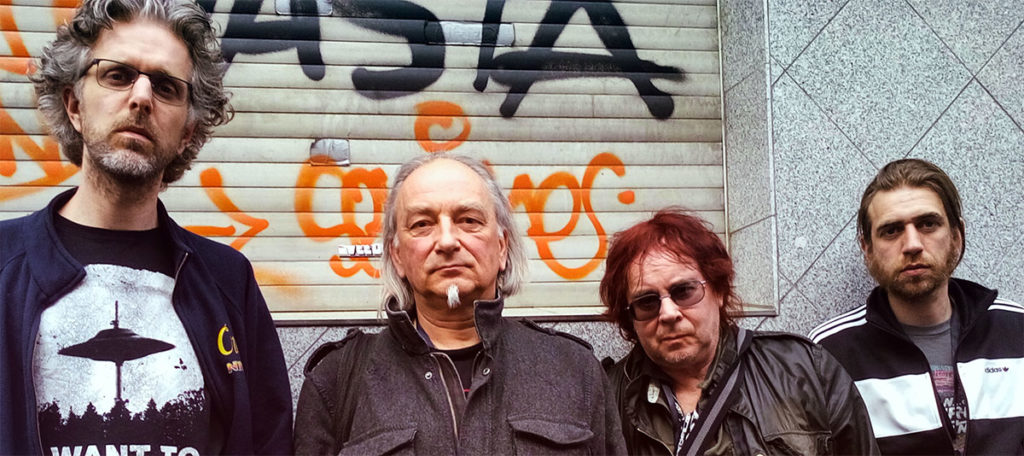
Indeed it has. That performance supporting 2019’s Angel In the Detail can still be felt reverberating throughout the club’s rafters. Since then, there’s been, you know, a global pandemic working in tandem with socio-political absurdity and techno-angst gripping the world. As it all unfolds, LPD vocalist and principal songwriter Edward Ka-Spel has remained steadfast in his rich, kaleidoscopic vision, navigating heaps of new music—namely two solo records dubbed Prints of Darkness and The Great Outdoors, as well as the UK-based outfit’s latest album, The Museum of Human Happiness (Metropolis Records).
This latest offering is cut from a fast-paced blend of Krautrock and industrial-grade psychedelic ambiance bearing song titles such as “There Be Monsters,” “Cruel Britannia,” and “Hands Face Space.” As such, The Museum of Human Happiness is also a pandemic record, a quintessential document that’s tailor-made for coping with the black cloud of the COVID menace which is still lurking out there, somewhere, just beyond the horizon.
Randall Frazier of Orbit Service. Photo by Matthew Condon
For this round of North American shows, Ka-Spel’s long-time cohort, keyboardist Phil “The Silverman” Knight, has bowed out of touring. In his stead, Randall Frazier of Bailey, Colorado’s Orbit Service is pulling a double shift, opening the show and taking on keyboard and electronic duties alongside Ka-Spel, guitar player Erik Drost, and live sound engineer Joep Hendrickx.
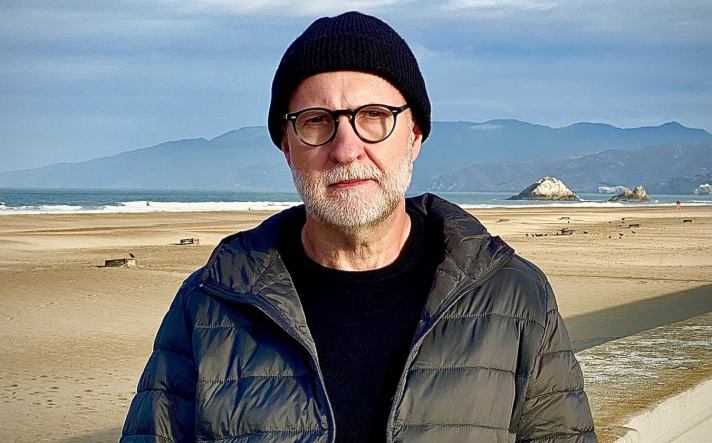
Bob Mould is on the road for this “Solo Electric: Distortion and Blue Hearts Tour.” Before playing at City Winery on October 12, Mould took a few minutes to talk about returning to life in America after spending some time in Berlin, experiencing socio-political deja vu, and to reflect on his years with Sugar and Hüsker Dü.
Your current tour is titled the “Solo Electric: Distortion and Blue Hearts,” which sounds pretty straight forward. Are you playing a pretty comprehensive setlist?
Blue Hearts was the fifth album for Merge Records that was recorded with the same rhythm section—Jason Narducy on bass and Jon Wurster on drums—and with the same engineer, Beau Sorenson. Blue Hearts came out in September 2020. Obviously nobody was touring at that point.
In October of 2020, the Distortion box sets started coming out on Demon Records in the UK. It was a 30-year career retrospective that took from the first solo album, Workbook, all the way through Sunshine Rock, which was the fourth solo album with Merge. In the fall of 2021, myself, Jon, and Jason did a pretty quick North American tour. Since then, I’ve mostly been doing solo electric stuff, touching on everything from Hüsker Dü and Sugar and the solo albums up to Blue Hearts.
The expense of touring is pretty high right now, and tours are still getting canceled left and right because people are getting sick. So for the time being, the solo electric thing is the easiest way for me to tour.
Most of the press that Blue Hearts has received hangs on it being about your return to the States after living in Berlin for a few years, and getting an eyeful of how much things had changed in a very short time.
The first half of Blue Hearts feels like a return to Hüsker Dü songwriting form.
Yeah, I felt like the fall of 2019 was a lot like the fall of 1983. The country was pretty unhinged, and sadly it seems to have gotten worse.
Staying in the fall of 2019, I’d been spending a lot of time in Germany. I was aware of what was happening in America, but when you come back to the US and you’re surrounded by 24-hour news cycles, and just all of the insanity that is America when things get like this, it felt very similar to my state of mind and my state of being, and how I saw the world back in 1983. It made me think about what I was doing back then, what the environment was like at the time. Most importantly, I was thinking about how I approached my work and the messages at that time, and how little resources a band like Hüsker Dü had in 1983.
The songs on Blue Hearts are more influenced by the reflection of those times and how it seemed like it was deja vu all over again.
The songwriting was pretty direct, pretty political, pretty economical. The record is pretty fast and furious, so it got me thinking about how limited resources in 1983 led me to write and record—making it brief. Not dragging it out, not hiring an orchestra from Prague. Just the three of us in a room banging this stuff out?
So 1983 was the Ronald Reagan era and 2020 was the Trump era. What differentiates these times?
Social media.
Through the ‘80s, we saw the ascent of Reagan, the Hollywood celebrity but, unlike Trump, Reagan was the governor of California. He had knowledge of how the political system worked. But televangelism was huge then—the moral majority. It was the beginning of HIV/AIDS, the cutting of mental health services in cities. That specific … Tony Fauci at NIH. It’s frightening to me some of the callbacks, whether it’s COVID or evangelicals, and all the sway that they hold over the Republican party. These are all things that I’ve seen before. It didn’t go well last time, and we’ve lost a million people to COVID in America.
At my advanced age, I did not think I would have to go through this yet one more time.
Did these songs come out of you pretty quickly?
Yeah. When I settled back in at the end of 2019, it did not take a lot of effort to look around and write what I know, write what I see. The song “American Crisis” had been kicking around for a couple years. That was the first track anybody heard off the album, but I actually wrote the music and the words for that in Berlin. Those lyrics took five minutes to write. There’s nothing sophisticated about it at all.
The remainder of the record; some of the music had been written in Berlin, but a lot of the words, and most of the music was written pretty quickly at the end of 2019. I went out and did about three weeks of solo touring at the beginning of 2020, tried out a bunch of the songs, and then we recorded the album in February of 2020, and had it wrapped up by the middle of March. That was when everything shut down.
“American Crisis” is the first song that you wrote for this album?
Yeah, that’s the North Star of the record. I had that one already put together in Berlin, probably later in 2018, and I just sort of followed the motif. The rest of the stuff came pretty easily.
“Next Generation” sounds like classic Bob Mold to me. Of course, I see what sets it apart from some of your other eras of songwriting.In terms of the strength of the song, though, I want to place it alongside something like Hüsker Dü’s “Sorry Somehow,” or maybe even “Hoover Dam” by Sugar. When you’re putting demos together, do you have a sense of when you’ve got a hit on your hands?
To me, that one falls closer to the mid-to-late ‘80s stuff I was writing. As a writer, I sort of look at it and go, “Oh, that would’ve been a Flip Your Wig song.”
When I’m working on stuff, I sort of know. I mean, I have x number of ways and x number of styles in which I write. I sort of know when a song is coming in that first 15 minutes if it’s going to either be a type A or a type X song. Then, it’s just a matter of wrapping it up and tucking in all the corners. I’ve got different styles of pop songs, punk songs, folk songs, songs with strings, songs that lean more on keyboards.
It’s sort of like, you get a couple free throws, you’ve rehearsed your free throws. You know how many dribbles you have, and where you’re gonna toss the ball.
Does it feel like there’s an uptick in interest in your songwriting right now?
I think people are still interested in what I do, both the work that I’ve done and the work I’m doing now. There are a lot of people that won’t be there in the future when another album comes out. In terms of politically charged punk music right now, a lot of the things that are coming out of the UK—a band like Idles being the main one that most people know, or Fontaines DC and stuff like that.
I’ve been a bit surprised that art in America hasn’t been as reactive as I thought it would be. Perhaps I’m not seeing it. Maybe it’s further underground than where I hang out, but for music specifically, it feels like more stuff has come out of the UK lately that is addressing the socio-political divisions we’re going through.
Maybe it’s because I’m in Georgia, but Mercyland recently released their long lost record, We Never Lost A Single Game. That’s been the subject of many conversations recently, and I’ve had more people talk with me about Sugar and Hüsker Dü this year than maybe ever before. Maybe that’s because people are talking about Mercyland’s record, which brings Sugar, Bob Mould, and Hüsker Dü into the conversation. Also, September was the 30th anniversary of Copper Blue.
That’s right! Hopefully I get to spend some time with David [Barbe] while I’m in town.
I think Copper Blue is just such a very disciplined, but really exciting pop record. I’m always happy that people have good things to say about it, and that every now and then it takes on a new life.
It’s tight and concise in ways that were very different from Hüsker Dü.
Oh … Hüsker Do was like a bunch of planes trying to take off the same way all at once. That was a completely different beast. Hüsker Dü was so loose and constantly rushing forward in the tempo. That was what people loved about that band. For me, discipline came my way when I started working with my recently deceased colleague Anton Fier, who played drums on both Workbook and Black Sheets of Rain. Working with Anton was where I learned how to study things. He was an amazing drummer. He was a real stickler for time and keeping things pretty strict. Sugar was the next iteration of the rhythm section, and we brought that discipline to the studio. Live, sugar was pretty wild.
What really set Hüsker Dü apart from many of the other bands of the era, like Black Flag, T.S.O.L., X, etc. was the savage tone of the guitar.
It was. And with Hüsker, with Sugar, and with Jon and Jason, it’s the power trio. The guitar tone has to cover a lot of ground and fill in a lot of spaces. That’s something that Pete Townsend had to do with the Who, and something Hendrix had to do. It’s a certain style of playing where you have to be a really good rhythm player, but also be able to sneak lead guitar in there as well, and as you said, it was a unique tone that was necessary given that it was the only guitar. The tone that I’ll be using on these solo shows is not very far away from that tone. So calling it the Distortion and Blue Hearts tour is a pretty literal description of what’s on tour right now.
If you have enjoyed reading this interview, please consider making a donation to RadATL.
Bob Mould is on the road again for the Solo Electric: Distortion and Blue Hearts tour, playing songs by Hüsker Dü, Sugar, and from his latest album, Blue Hearts.
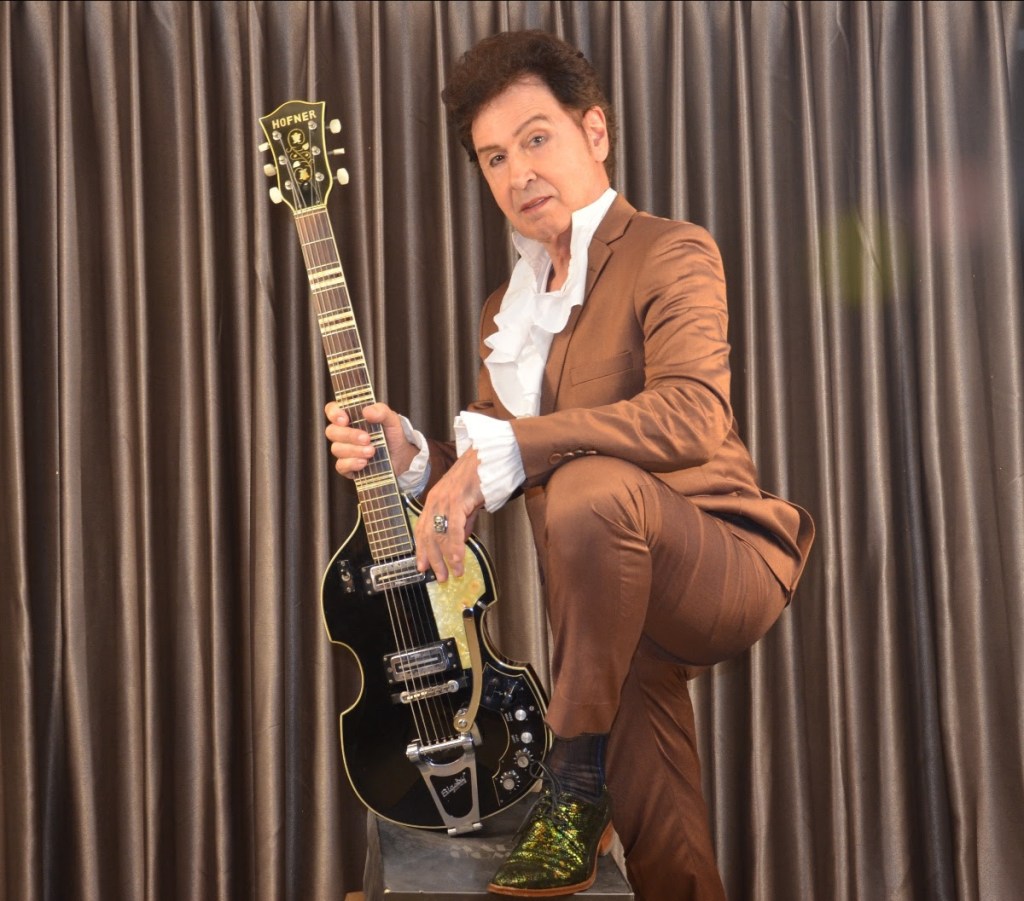
Tav Falco and Giuseppe Sangirardi. Photo courtesy Prime Mover Media.
Tav Falco is something of a renaissance man. The singer, guitar slinger, author, and provocateur began his extraordinary career in a cotton loft on the banks of the Mississippi River in 1979. It was there that he chain sawed a guitar into pieces during a performance art act. Since then, his notoriously outsider musical outfit Panther Burns has included everyone from Big Star singer and guitarist Alex Chilton to Minutemen and fIREHOSE bass player Mike Watt and Nick Cave and the Bad Seeds drummer Toby Dammit.
These days, Falco calls Bangkok, Thailand his home. For Panther Burns 2022 U.S. tour, the group’s lineup is rounded out by bass player Giuseppe Sangirardi, guitar player Mario Monterosso, and drummer Walter Brunetti.
Over the decades, the Arkansas-born auteur has mastered a singularly primitive motif. Blues rhythms carry his less-than-pitch-perfect singing, creating an off-center momentum in which songs feel as though they could tumble apart at any moment. But he always reins them in, creating a marvelous avant-garde tension on the stage. In recent years, his sound has expanded to incorporate elements of cabaret and tango performances, which underscore his latest five-song EP, Club Car Zodiac.
Before his cabaret-infused blend of Memphis rock ‘n’ roll takes over the the Earl for an evening of music and mystery, Falco took a few minutes to talk about how the new EP came together.
Panther Burns are back on the road after surviving the global pandemic!
Yes, and these are the first shows that we have played since the height of the pandemic, when we played a contagion-controlled event at the Il Castello Della Spizzichina in Italy, and that was July 31, 2021. Now, we’re out supporting our Club Car Zodiac EP, which came out for Record Store Day’s Black Friday, and it’s a highly personal recording.
What makes this such a personal recording for you?
I wrote three of the songs, “Dance Me to the River,” “Tango Primavera,” and “La Brigantessa,” which I sing in English. I wrote “La Brigantessa” for a cabaret artist in Rome, Adèl Tirant. I saw her perform with La Conventicola degli Ultramoderni. When I met her I was so impressed with her that I wrote this song for her. In Italian, “La Brigantessa” translates as “a lady thief.” We got to know one another and she sings the chorus of the song that you hear on the recording. I am so very happy with how that recording turned out, and I hope people will listen to it.
The lineup on the record also includes Mike Watt playing some bass. You also have Didi Wray playing guitar. Were you all in a room playing and recording together or were these songs done remotely?
Mike Watt initiated this recording during lockdown. He said, “Let’s do a couple of songs and put out a single.” I thought, why not? So we recorded the entire record remotely. When I got into it I wasn’t happy with the vocals I was getting. So I ordered a large diaphragm microphone, and once that came the vocals started happening for me—and my software. So I said, “This is sounding pretty good, I’m gonna do some more songs for this record. I wrote one, called “COVID Rebel Girl.” It was highly electrified, but that one did not make it onto the record because everyone but Mike Watt thought my playing on the song was just way too bizarre.
So it’s just five songs, but it’s a rather dense recording. Didi Wray is a tango surf guitarist from Argentina. She plays on “Dance Me to the River.” That is a very personal song; lockdown was a very lonely period for me, and I delved into my interior life. I brought out a lot of what was floating around in the dark waters of my unconscious. That song is set in Paris, on the banks of the Seine. It’s a personal statement about separation, betrayal, unrequited love, a sense of loss, bewilderment, and general confusion. It was the end of a period of my life that had gone on for quite some time—the shattering of a relationship—and I wanted to treat it artistically. Doing that was a kind of catharsis.
Then there is “House of the Rising Sun.”
Yes, and that is a song that I have always wanted to do. In fact, most vocalists attempt their version of it at one time or another throughout their career. I thought it was time for me to do my own version. I did ok with it. I’m not unhappy with that track.
“Tango Primavera,” is the last song on the EP, and it’s a rewrite of an Ettore Petrolini recording from the 1930s, the cabaret artist from Rome.
Petrolini has a song called “Tango Roman,” which means Roman tango. I heard it performed in Rome by Maria Freitas in the cabaret La Conventicola degli Ultramoderni.
Maria performed that in the same cabaret that Adèl Tirant performs in and Mirkaccio Dettori plays the piano.
I had done a small show there with Panther Burns, and I became enchanted with this cabaret in the San Lorenzo district, which is the working class district of Rome, where Pier Paolo Pasolini lives.
I went back to Rome after the tour and said, “I would like to perform here.” They asked, “What would you like to do?” I said, “I would like to sing and dance with a dancing cane and a Matta Low hat—the straw hat, like French singer, actor Maurice Chevalier wore.
So I started working on some songs and rehearsing, and I came across “C’est mon Gigolo,” in French, by the 1930s cabaret artist Damia. So I got an English translation from some radio people in Paris, and I put together an arrangement in French and English that I brought to the cabaret. We do it in three languages now: French, English, and Mirkaccio sings it in Italian. It is the original gigolo song, not the one that Louis Prima had a hit with in the ‘50s by grafting together the original song with “I Ain’t Got Nobody.” I’m not interested in that. I’m interested in the original, which is a very dark and expressionistic song. It’s an admonition to the gigolo of what will happen in the end.
I also brought in the Irving Berlin number “Puttin’ On The Ritz,” which has some racial overtones in today’s world. But that’s the song. I sing it, and anybody who’s heard it won’t deny that tune. And I do “Brazil,” which I do with Panther Burns, and “St. Louis Blues,” the W.C. Handy number that I recorded on Behind the Magnolia Curtain. After this tour, I will return to Rome and continue doing that under the adopted persona, L’Ultimo Gigolo, the Last Gigolo. That is my character, and I’ll bring it to America in 2023, probably as a Cabaret of Daggers, musical theater piece. We’re developing that in Memphis, with Mario Monterosso who will be the producer, as he has been the producer for my last four albums, and the lead guitar player and arranger in Panther Burns and on Tav Falco solo records.
Mario has a new record out called Take It Away on Org music. It’s a record of instrumentals from which he’ll be playing six tunes in Atlanta, prefacing the Panther Burns performance. Don’t miss that! It’s really outstanding what Mario is doing with these instrumentals.
Yes, I took the photograph that appears on the front cover of that book.
That photograph came up in our conversation. Robert said that you gave him some advice about writing, filmmaking, and anything else, and that was to just jump in and do it.
I think he’s talking about what I learned from William Eggleston. I was learning photography from William, and I asked, “How do you do this, Bill?” He said, you just have to jump in the middle and work your way out. That’s what Robert’s referencing, and that is true.
It’s good to prepare. Technique is important. Learn your instrument and learn your craft: If you are an actor you learn your body and your voice, but that will take you so far. You can learn from a mentor. You can learn in a school. You can be self-taught. You can start from the beginning of an itinerary that’s going to take you to a certain level of ability and control. Or you can just jump in the middle and figure it all out. That’s the way I did photography. That’s the way I did music and theater, and to an extent, film. It may not be the best way, but it’s one way.
In doing that you learn to rely on and to draw from intuitive sources rather than a dogmatic plan of some kind. Only now, after all this time, am I looking at music theory. I’ve started to study that because, Chad, I do not know a note from a molecule, at least not until recently.
Now I have an understanding of the concepts that go all the way back to the classic modes of music and poetry. It’s exciting, but I don’t know if it will help me as a musician or as an artist. It may help me on an intellectual level of some kind, and maybe on a subliminal secondary level. But I don’t see it having any direct effect on what I do. It might help me choose the chords that are more pleasing without having to do trial and error all the time, which is how I normally do it.
I want to communicate with musicians, and I want to do so in the language that I understand. And I want to have a better understanding of musical structure and dynamics in terms of notation, frequency, vibration, and how the musical scale and tonal parameters of music are understood. I’m making progress, but putting it into practice is not so easy.
Singer, guitarist, author, and all-around renaissance man Tav Falco brings his legendary, cabaret-infused Memphis rock ‘n’ roll outfit Panther Burns to The Earl for an evening of music and mystery.
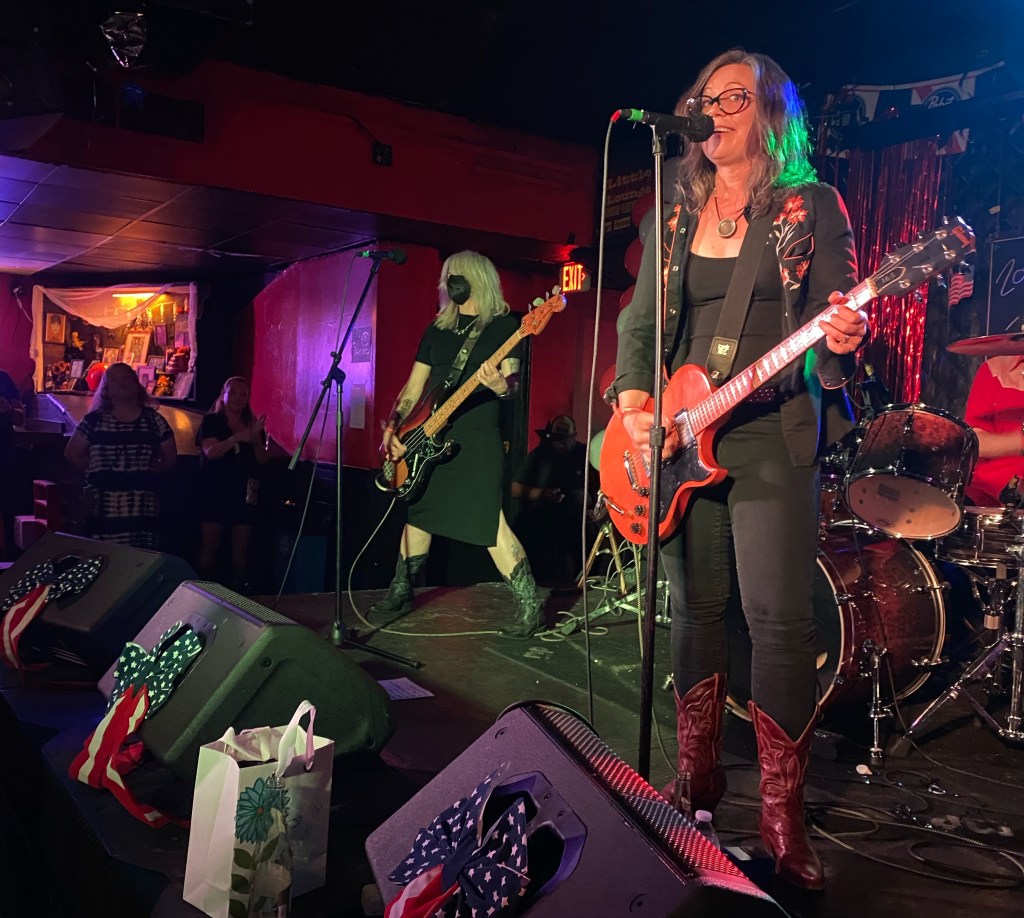
DON’T TREAD ON ME: Catfight! Jennifer Leavey (from left), Stacy Kerber, and Katy Graves. Photo by Rose Riot.
Since 1995, Catfight! has delivered sweet and salty rock ‘n’ roll anthems, driven by three-chord charges in which their playfulness is matched only by their pedal-to-the-metal energy.
“We were never quite garage enough to be a full-on garage rock band, and we were never punk enough to be a full punk band, but we could go between the two pretty seamlessly,” says Catfight!’s bass player Katy Graves. “We fit right in playing Bubbapalooza at The Star Bar and we fit in playing Drive-in Invasion at Starlight Drive-in.”
Now, Graves, along with singer and guitarist Jennifer Leavey, and current drummer Stacy Kerber (previously of Mota-Litas), are experiencing renewed energy fueling Catfight!’s ramshackle garage-punk anthems.
Take Catfight!’s car trilogy: The songs “Blue Truck,” “My Mustang,” and “Backseat Baby” from their 1996 album, Kitty Glitter—all three have long been crowd favorites. The latter number, “Backseat Baby,” emerged as a response to a song called “Top Daddy (In A GTO),” a full-throttle psychobilly ode to a classic car and its seductive powers written by New York-based rockabilly trio Jack Black (not to be confused with the actor of the same name).
Over the years, the two groups developed a friendship after playing more than a few shows together in New York and Atlanta. Catfight!’s response is a ready, willing, and not-so-subtle reply that greatly eclipses the metaphors in Jack Black’s song in fierce and melodic high-pitched tirades.
Of course, there’s more nuance to many of Catfight!’s signature tongue-in-cheek lyrics, as other songs traverse a variety of topics ranging from more exploits with boys and fast cars to defending women’s rights.
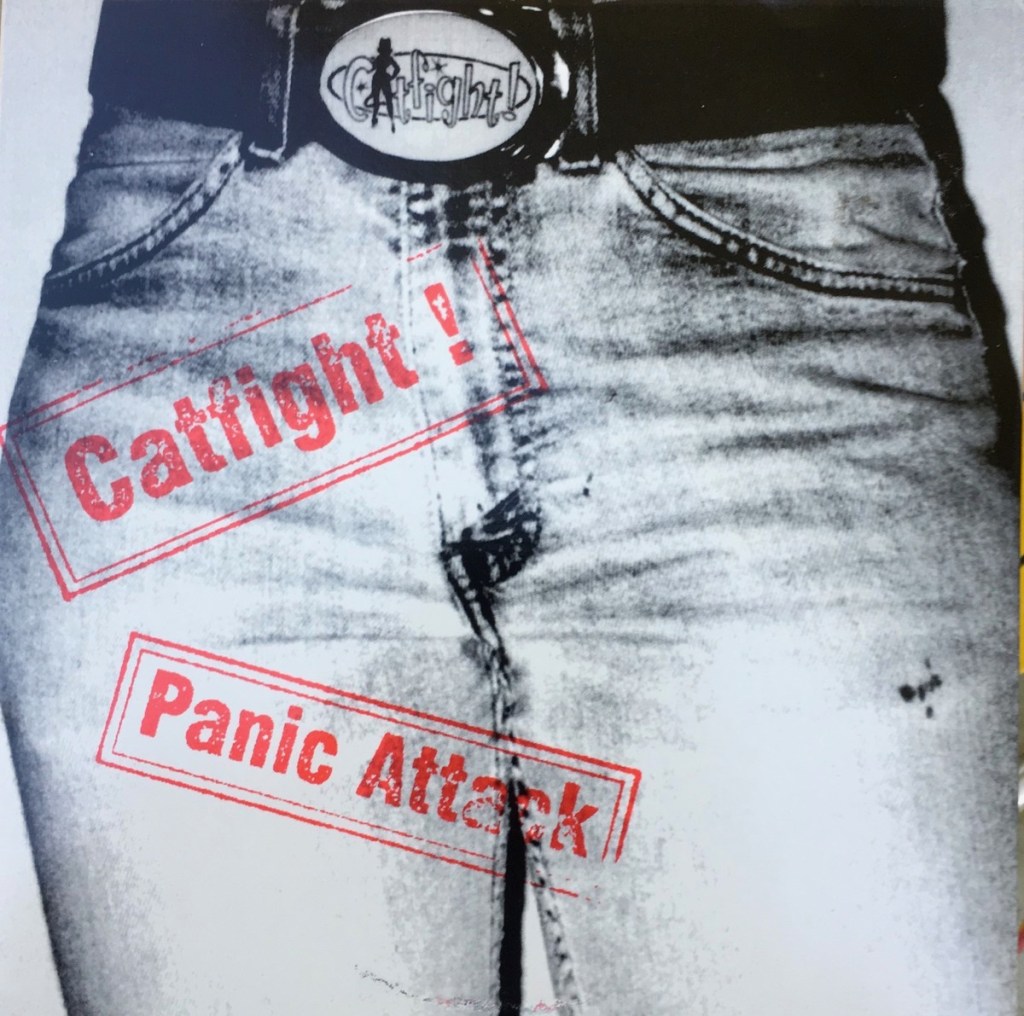
“There is irony in the lyrics,” Leavey says. For more on this, look no further than the cover art for Catfight!’s “Panic Attack” 7-inch, which answers the question: “What would the Rolling Stones’ Sticky Fingers LP cover look like without a bulge in the jeans?”
According to Leavey, “Some people take it straight, and don’t see the irony in what we do, which is frustrating.” Graves adds, “That’s when we get comments—like one night in Savannah, a guy came up after the show and said, ‘Y’all were great, but you would be much better if you were playing naked!’”
“We never had it that bad in the Mota-Litas, but we had a strong lesbian following, partially because we were signed to Amy Ray’s label, Daemon Records,” Kerber says. “We played with some pretty amazing people, like the Butchies and the Breeders.”
Leavey continues: “In 2001, we played Ladyfest at CBGB’s, and it was a genuine feminist gathering. I remember halfway through our set, saying, ‘All of our songs are about boys and cars,’” she laughs. “At the same festival we saw Tribe 8, and the drummer played topless. Talk about a true political statement! They had to cover all of the windows! … Here we are playing songs about boys and cars, but they are angry songs about boys and cars.”
The seeds for the group were planted in the early ’90s, when Leavey, who had been writing and performing songs steeped in the aesthetics of riot grrrl awareness and the underground grunge scene of the era in the band Bite, teamed up with Graves and drummer Ann Ciovacco who both played in Doll Squad. After releasing two 7-inches and two full-lengths, Kitty Glitter and 2000’s Frustrated, Catfight! scored a couple of minor hits.
The A-side from their 1995 7-inch, “Mamie Van Doren,” written by Graves, was picked up by Little Steven’s “Underground Garage” on Sirius/ XM, and named one of “the coolest songs in the world.” The song remains in rotation, and since “Underground Garage” is offered on airplanes, publishing payments have continued rolling in. The song also appears on the compilation CD, Little Steven’s Underground Garage Presents The Coolest Songs In The World! Vol. 4.
“I got to speak with Mamie over the phone, because Little Steven gave her my contact,” Graves says. “I got to tell her how great she was, and she sent me a bunch of signed 8x10s. She said, ‘My son Perry and I will listen to the song and we’ll just laugh!’ That was great to hear!”
Another song, the title track from Frustrated, penned by Leavey, appeared in a season 6 episode of The WB’s Dawson’s Creek.
“One of us will come in with song ideas,” Leavey says. “We’ll contribute our individual parts, but whoever writes the lyrics and the melody gets the songwriting credit.”
Ciovacco left Catfight! in 2000, and drummer Susanne Gibboney joined soon after.
In 2004, the group paired up with the Helgas for a split CD, titled Splitsville.
In 2005, Catfight! was tapped to create theme music for director Jay Edwards’ monster movie Stomp! Shout! Scream! about an all-girl band in the 1960s being tormented by a skunk ape — Florida’s version of Bigfoot.
In January 2020, Catfight! released a new single, “Majority Rules” (recorded with Gibboney on drums). The song brought an end to a decade- long writing hiatus, boasting lyrics such as: “Girl I want to see you get elected, girl I want to see you get the votes. You’re the one who’s writing the bills, taking care of business up on Capitol Hill. And when they try to
take our rights, you know I want to hear you say no!”
The song’s three- minute, 30-second blast revives Catfight!’s familiar rock ‘n’ roll strut, now with Kerber on drums.
“What I love about these ladies isn’t necessarily a political thing, but they’re bringing communities together—[Jennifer] designed T-shirts when she was locked in a room because of COVID, and is now selling them for a cause,” Kerber says about the Catfight! shirts being sold with 100% of the proceeds donated to Planned Parenthood and NARAL. “There’s a lot of good mojo in what she’s doing.”
While contemplating Catfight!’s nearly 30-year legacy, Leavey offers that one of the most important lessons that she’s learned over the years is to have fun. Reeling through memories of playing raucous live shows, while also recalling stories of witnessing divorces, pregnancies, and earning her PhD in Immunology and Molecular Pathogenesis from Emory University, she says it’s important to always keep in mind why she’s making music in the first place.
Photo courtesy of Catfight!
“If you’re always thinking carefully about what’s going on around you, it’s easy to write music,” Leavey says. “When you get bogged down in life, and stop seeing what’s going on around you as an inspiration, writing music is difficult. It’s been nice getting to a place where we can talk and craft a new way of looking at things, and turn it into a song.”
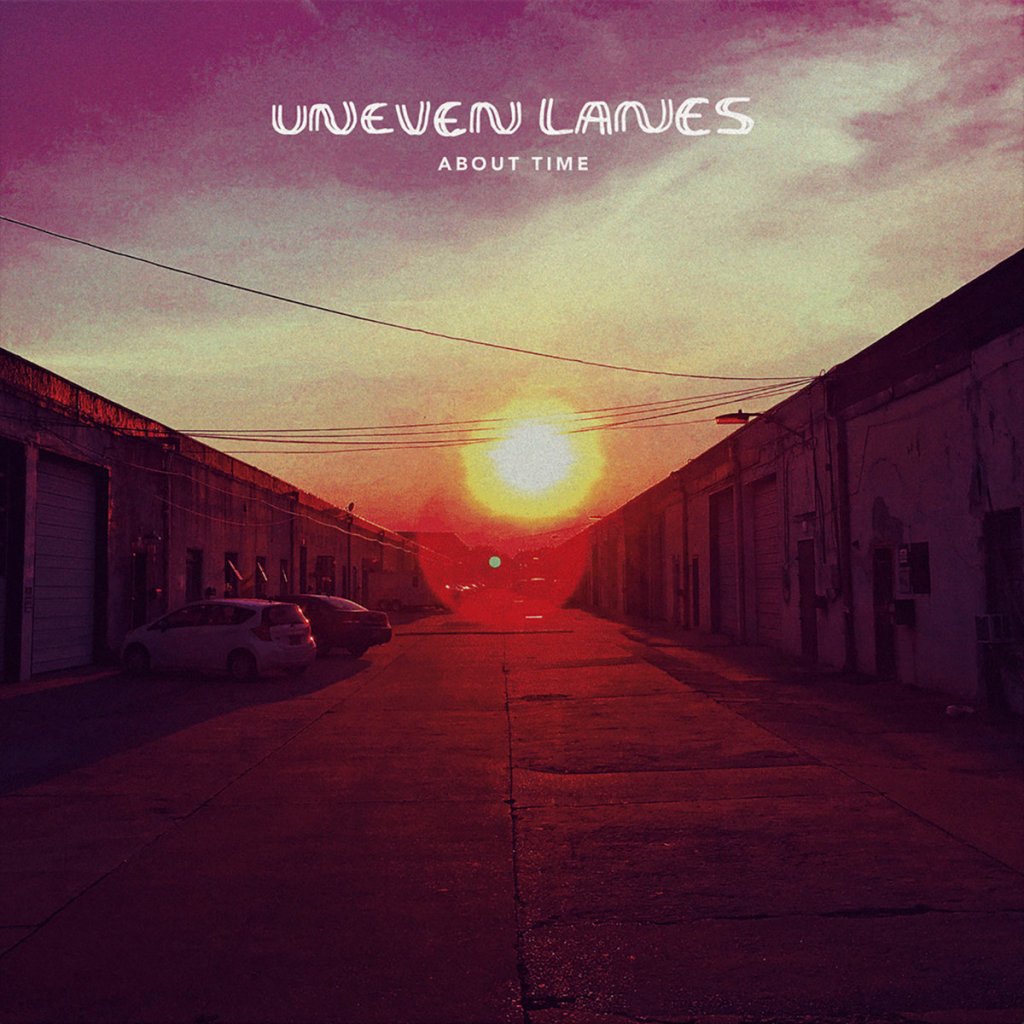
Uneven Lanes‘ debut LP, About Time, gathers up three years of songs that have amassed in the margins after Lloyd Benjamin’s time spent playing guitar and singing with various punk and indie rock outfits, including All Night Drug Prowling Wolves, Affection, and more. He’s also currently playing with Scratch Offs and Air Rights.
Each of the album’s lo-fi, salt-of-the-earth numbers are rich in melody and distortion, capturing the essence of a new, post-pandemic Americana that recalls the fractured indie rock sensibilities and songwriting of Guided By Voices, Pavement, and R. Stevie Moore.
Benjamin wrote, played, and recorded everything heard throughout on the album.
Live, the lineup is filled out by Greg Stevens on drums and Tony Kerr on bass, performing Sun., Oct. 2 for Elmyr’s 25th Anniversary party, on Sat., Nov. 5 at Sarbez! in Saint Augustine, and on Thurs., Dec. 8 at Whitewater Tavern in Little Rock, the latter of which is Benjamin’s hometown, and the base of operations for the record’s label, Max Recordings.
BONUS! The LP comes packed with a full-color 16-page booklet featuring artwork by Benjamin. Get your ears, your eyes, and your hands on one.
If you have enjoyed reading this post, please consider making a donation to RadATL.
WREST is Jack Wright (left), Evan Lipson, and Ben Bennett.
WREST is a free-improvisational jazz and noise outfit featuring alto and soprano saxophone player Jack Wright. Since the late 1970s, Wright has traversed the physical and psychological outer limits of improvisational music. The late, great, Birmingham, Alabama guitarist Davey Williams once called him the “Johnny Appleseed of free improv.”
The collective is rounded out by bass player Evan Lipson and percussionist Ben Bennett. It’s the first round of shows the trio has played together in over seven years. For this show, they’re joined by dancer and movement artist Lucifer.
Someone somewhere once described WREST as sounding akin to two dinosaurs having sexual intercourse in a dumpster, or something like that, which is pretty close to the mark. Skronk, rattle, and roll, y’all!
A few locally-based improv. ensembles are performing as well: Priscilla Smith & Friend of Sunk Nameless and No Tomorrow are on the bill. Thread is an improv outfit left by Jared Pepper of Visitors, Memory Locks, and Apparition Trio. Guitarist Sam Wilson of Fuiste and Plastique will lead an improv ensemble as well.








 Rad/ATL