
Imperial Triumphant’s 2023 Spirit of Ecstasy Tour feat. Cloak and Couch Slut comes to Bogg’s Social and Supply on Saturday, February 4. $15 (adv). $20 (door). 8 p.m.
If you have enjoyed reading this post, please consider making a donation to RadATL.

Imperial Triumphant’s 2023 Spirit of Ecstasy Tour feat. Cloak and Couch Slut comes to Bogg’s Social and Supply on Saturday, February 4. $15 (adv). $20 (door). 8 p.m.
If you have enjoyed reading this post, please consider making a donation to RadATL.
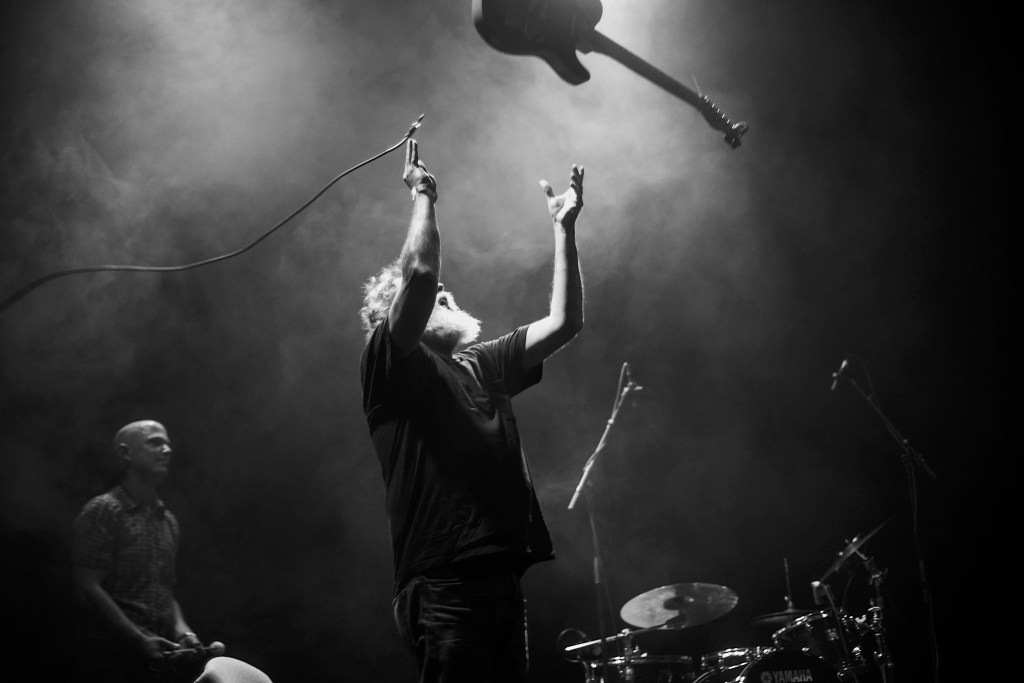
Fresh off of releasing his brilliant 2022 album Music For Four Guitars (Palilalia), punk-blues and no wave-inspired improv guitarist Bill Orcutt returns to play a solo set at Eyedrum Art & Music Gallery on Sunday, February 19.
Opening act(s) to be determined in the new year. $15 (adv). $18 (door). 7 p.m. (all ages).
If you have enjoyed reading this post, please consider making a donation to RadATL.

What at first feels like irony quickly fades as Upchuck’s vocalist and frontwoman KT and guitar player Mikey, laugh while explaining how spending time on the road with Melbourne’s garage punk provocateurs Amyl & the Sniffers instilled in them a sense of discipline.
“It’s true,” Mikey says. “We learned a lot from them in terms of professionalism and staying on point just by watching how they put on shows from the business end of things. We learned what it’s like playing bigger venues, how production goes, and how important it is that we show up on time.”
KT agrees, adding, “It really is a whole different game. You have to make some serious decisions if you’re going to keep stepping it up. How far do you want to take this? I learned there’s a balance between how lit do you want to get each night before you go on stage and how much do you want to deliver. I learned that there can be a natural, kinetic energy between peeps when you are on tour together, and that we can learn from each other.”
Both Mikey and KT’s voices collide, clipping each other out during a Zoom interview. Shaky connections stutter, freeze, and leap back to life—Mikey is in his car, holding his phone in his lap while driving home after a day spent working on the set of a new Exorcist film. KT keeps her phone in her hand while wandering in and out of darkened rooms in her home. For brief, fleeting moments the image of her face emerges from the glowing contrasts of the computer screen only to disappear again back into the inky darkness for the duration of our conversation. But she never misses a beat while talking, cracking herself up, laughing at her own answers, despite her sincerity. Then, a chime and another voice joins the Zoom, second guitar player Hoff announces his presence, by explaining that he’s dialing into our Zoom chat from work. “I’m listening, and I’ll might have some input here and there, but I’m running up and down stairs,” he says.
Chaos rules Upchuck—at least when viewed from the outside—following the example of their outrageous Aussie compatriots Amyl and the Sniffers, who’s early single “Some Mutts (Can’t Be Muzzled)” barked the song’s title as a primordial battle cry. Later, the same group closed out their second and most recent album, 2021’s Comfort To Me, with a song titled “Snakes,” in which singer Amy Taylor declares in her banshee howl, “Worked at the IGA, now I’mma famous cunt.”
For now, though, Upchuck’s members still punch a clock. All of this comes into perspective when parsing out the group’s hard, fast rise amid Atlanta’s disjointed, pre-pandemic local music scene.
The group came out of the gate strong in 2018, packing out DIY venues such as the Bakery’s original Warner Street location near the Adair Park and Oakland City neighborhoods, and the Drunken Unicorn on Ponce de Leon Avenue, with wall-to-wall mosh pits that sent bodies flying through the air like missiles.
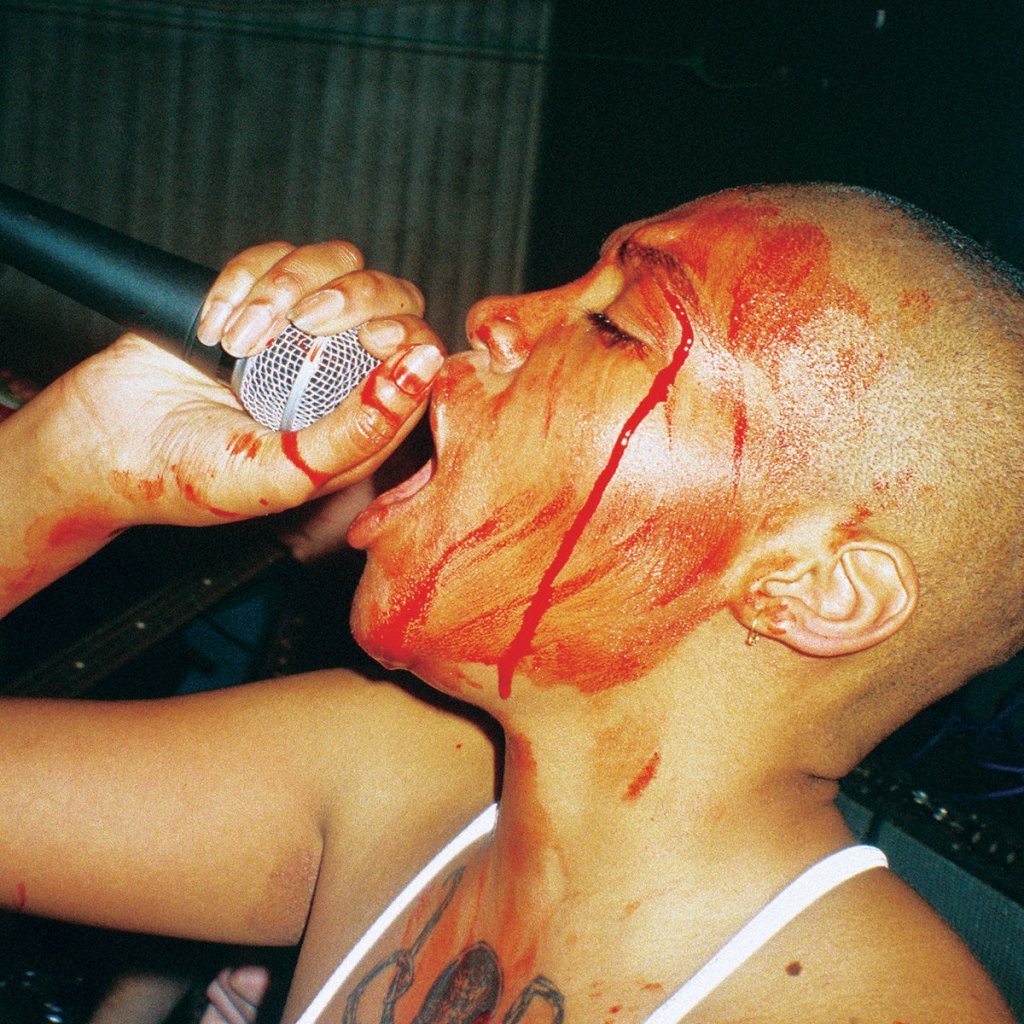
On September 30, 2022, Upchuck unveiled its debut album Sense Yourself via the Brooklyn-based indie label Famous Class Records.
The album was two years in the making, and arrived bearing a vibrant image of KT, screaming into a microphone with blood oozing down the sides of her face and hands. It is an instantly arresting image, captured by photographer Nathan Davenport, and shot only seconds apart from Marlon Garcia’s image on the cover of the group’s “Upchuck” b/w “In Your Mind” 7-inch single. It’s a pic that has become synonymous with the group’s fun and feral energy. The whirlwind of fury kicked up during their live shows as the group tore through early songs bearing titles such as “Shakin,’” “Wage of War,” and Upchuck’s fiery self-titled anthem captured the attention of everyone from the local hardcore scene to dispassionate indie rockers and beer-swilling college kids from all walks of life.
Sense Yourself is an album that’s teeming with the sounds of swaggering danger and youthful abandon, all embodying a deeply ingrained sense of innocence. It’s a celebration of intensity that reaches a fever pitch while traversing a shared, collective experience for listeners, a seemingly insurmountable task in the modern era.
Other songs such as “Boss Up,” “In Your Mind,” “Our Skin,” and “Facecard” coalesce around a forward-leaning momentum that has kept the group forging confidently ahead this year, all the while bolstering the spirit of Atlanta’s young, underground rock music scene onto the national and international radar. If ever there was a candidate for Atlanta’s 2022 album of the year, Sense Yourself is it, its thunderous rhythms reaching larger crowds from coast to coast nearly every day since it arrived. The album’s searing energy is matched only by its bounding urgency fueled by equal parts contempt for a broken society and camaraderie within the band’s ranks.
“These boys are my family, and Mikey is literally like my big bro,” KT laughs. “We all love each other unconditionally, and my POV is that this will never change. Someone would literally have to do something crazy to bring that to an end, but that will never happen because we’re all cool beings and we value each other so much.”
Aesthetically speaking, there is no realm that Upchuck does not touch. KT (Kaila Thompson), Mikey (“Spuzz Dangus”), Hoff, bass player Armando Arrieta, and drummer Chris Salado’ songs are driven by a defiantly creative blend of post-punk, hip-hop, and indie rock energy that’s channeled through a haze of distortion.
They prefer to identify themselves only by their first names, and to the ire of promoters around the country, the group’s social media presence is kept to a bare minimum. Upchuck has no Facebook page. No Twitter, and no Tik Tok. Just an Instagram account that allows them to project just enough about themselves to remain compelling to those who are genuinely interested in the music, and their numbers are growing.
“The songs are always changing when we play them live,” Mikey says. “Maybe it’s that the rhythm is different, or we’ll cut it short in a certain way. Change up the lyrics. Even the old songs we change up to keep things fresh—keep things from getting boring.”
KT continues his thought, adding that the changes are always unspoken. “Communication with us all has literally come down to just a look. We’ll all look at each other, and it’s like, ‘Aight, I know exactly what you’re saying.’ We all know what to do.”
“Hoff adds that he and Mikey have been jamming together since pre-Upchuck days, and developed the group’s shared musical instincts together. “We practiced the songs that we had for six months before we even played a show with them, so we kind of already know what to anticipate when we go into a song.”
This kind of interaction between band members during practice is one thing, but expounding upon that in front of a crowd of hundreds of people or more is something different. But it’s an instinct that the group’s members have continuously honed. “I feel like if that kind of energy and communication doesn’t happen during practice, it definitely won’t happen on stage.”
That energy translates across the board. “Perdido,” is sung entirely in Spanish by drummer Chris, and builds energy around the phrase: “Hago lo que quiero”—”I do what I want.”
The album’s title track also carries the explosive energy to a new level. The quick intro catches audiences off guard, as the rooms they play visibly come alive based on the riff alone. “That’s definitely by design,” Hoff says.

One of the album’s more introspective numbers, “Facecard,” finds KT taking on the superficiality of modern America: “The trifling yuppie fuck, comes out beyond the cut to try and low ball, low ball,” KT sings.
“It’s always on the setlist and it’s definitely a breather for me,” she adds. “It’s also one of those tracks where people hear the riff and start reacting immediately.”
The connection with Amyl and the Sniffers was born in July of 2019. The group was coming to the States and had booked a show at The Earl. Upchuck’s manager Randy Castello of the Tight Bros. Network seized the opportunity to lobby for them to open the show. He sent over a link to Upchuck’s demo tape on Bandcamp. “Amy Taylor responded almost immediately,” Castello says. “She was like, ‘Yes, definitely add them to the show!’”
Afterward, Taylor and her bandmates approached Upchuck, asking them if they wanted to play just a few more shows together. “It actually turned out to be a lot more shows together,” Mikey says,” and we both played the biggest show that either of our bands have played to date, at Brooklyn Steel in May.”
The show pushed the 1,800-capacity venue nearly to the breaking point, and opened up a whole new audience for Upchuck.
As 2023 approaches, the group is preparing to record its sophomore album for Famous Class. While the exact details as to where and with whom they’re recording remain a closely guarded secret for the time being, they’re heading to California in February to capture it all on tape.
“We’re definitely gonna keep working with Famous Class, regardless,” Hoff says. “Cyrus [Lubin] at Famous Class has given us so much creative freedom and trust, and aside from a few minor tweaks here and there, doesn’t mess with what we do at all.”
Mikey adds, “The songs that we’re recording are songs that we’ve been playing pretty much just as long as everything that’s on the first record, so the two should fit together really well.”
Teetering on the axis of punk, hip-hop, and indie rock, a sense of discovery, and the power of youthful energy, the new music contained within these songs—either live and in the moment or on record—is intoxicating to the end.
If you have enjoyed reading this post, please consider making a donation to RadATL.
This story also appears in the December issue of Record Plug Magazine.

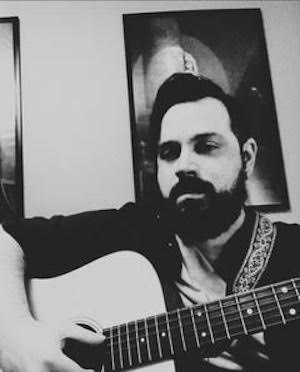
In Greek mythology, dryads appear as tree-dwelling spirits who lure men to their deaths by seducing them into a shadowy realm of the unknown, sometimes replacing them with a doppelgänger—a sinister look alike. It’s a dark and mysterious tale that’s been repurposed in everything from David Lynch’s surreal T.V. saga “Twin Peaks” to Jordan Peele’s paranoid horror film Us. It’s a puzzling metaphor about there being more to the natural world than meets the eye. It’s also a bewitching entry point into The Book of Flowers’ debut cassette tape, Pastels.
Press play on the opening three numbers, “Foxfire & Clover,” “The Housewitch,” and “The Dryad,” and dreamlike imagery takes shape amid swathes of murky country crooning, mellotrons, and British folk-style songwriting.
“I was thinking a lot about impressionist painting and things that use a lot of pastels,” says songwriter James Andrew Ford. “I wanted the songs to have a pastoral feeling to them, with a kind of a dark feeling as well, like watching the sun set over an empty field.”
Ford is a co-founder of Atlanta’s industrial, EBM, and dark wave label DKA Records. The lingering earthly and ethereal tones that he conjures in the songs on Pastels are a far cry from the digital crunch and urgency of much of the label’s output, including that of his own former project Tifaret. But from the soft dissonance of the cover art’s pink and green colors to the balance of electronic and organic textures over Krautrock rhythms of “The White Dress” and “Watch the Stars,” Ford’s shift in style emerges quite naturally.
“During the latter part of Tifaret, I was banging my head against the wall because I was having a lot of issues trying to do a full-length,” Ford says. “I was trying to figure out how to do something that felt satisfying and cohesive, but wasn’t just eight tracks of Front 242 or whatever. How do you create a sad song using synthesizers that doesn’t just sound like old synth pop? How did somebody like Trent Reznor or Depeche Mode get around the monotony of synthesizers?” he asks. “Well, In Depeche Mode, Martin Gore wrote a lot of songs on an acoustic guitar. Trent Reznor writes everything on a piano, or at least he used to. So I thought maybe I need to start writing on acoustic guitar.”
But Ford had never played acoustic before. He hadn’t played an electric guitar in nearly a decade. So he spent much of the pandemic learning how to play an acoustic guitar. The process was a period of discovery, planting the seeds for the songs on Pastels.
“It basically taught me how to have a song there before you have any music,” he says. “With Tifaret, I always wrote the lyrics last. So I was trying to cram in syllables, melody lines, and whatever else into what was already there. Versus if you start with an acoustic guitar, you’ve got your melody, you’ve got your lines written out. You don’t have to cram everything in.”

Previously, Ford was a religious studies major at Georgia State University. With The Book of Flowers he took a deep dive into British folklore. The first two songs to emerge were “Golden Lily” and “Housewitch,” both illustrate a reciprocal harmony that finds his slow and sweeping baritone voice shape the guitar tones, while the natural resonance of the acoustic guitar guides his rich, warm voice.
The lyrics call an epic range of images to mind, from rustic to quite horrific, in one musical motion.
In “The Dryad” he sings: “There in the bed she laid me to rest and slit my throat with a willow rod. She threw me to the raven. She threw me to the hound. She cleaned my skull for her god.”
“With that song, I always thought that I was basically writing an old fashioned murder ballad, but with the positions reversed.”
It’s a scene of pagan carnage that could have been pulled straight from films such as Robin Hardy’s “The Wickerman” or Ari Aster’s “Midsommar”—channeled through a palette of dark and apocalyptic musical inflections ranging from influences such as Current 93 and Nick Cave and the Bad Seeds. It’s quiet, it’s intense, and it’s not for the faint of heart, despite the music’s idyllic presence.
A version of this story originally appeared in the November issue of Record Plug Magazine.
If you have enjoyed reading this article, please consider making a donation to RadATL.

On Friday, November 18, visual artist Anna Jensen and Kevn Kinney of Drivin N Cryin host the “Trail of Seasons” art opening at 378 Gallery in Candler Park. Kevn will close out Friday evening with a live solo acoustic performance in the basement.
On Saturday November 19, Athens post-punk luminaries Current Rage celebrate the record release party for Propeller Sound Recordings’ 40th anniversary reissue of the group’s Seven Songs 12-inch. The album was remastered by Jason Nesmith from Pylon Reenactment Society at Chase Park Transduction.
Current Rage’s lineup for the evening features original members guitarist John Moore, singer and percussionist Pat Kirkland, and drummer Paul Lenz performing with bass player Bryan Lilje and singer and guitar player Aaron “Oliver” Bewley. The latter is the son of Current Rage’s original guitar player Chris Bewley who died in 2018.
Jensen and Kinney’s painting will be on display through Nov. 20—just three days—and limited edition prints will be available throughout the weekend.
Friday. Free. 1-10 p.m. Saturday night. $10. Music starts at 8 p.m. 378 Gallery, 378 Clifton Rd NE. 404-530-9277.
If you have enjoyed reading this post, please consider making a donation to RadATL.

LPDs: Randall Frazier (from left), Erik Drost, and Edward Ka-Spel. Photo by Joep Hendrikx.
As memories of the COVID-19 pandemic and quarantine-time behaviors become a distant bad memory, the era has left impressions on the collective subconscious that are both subtle and monumental. This is where one finds The Museum of Human Happiness, the latest offering from London-based psychedelic musical explorers the Legendary Pink Dots.
Since August of 1980, the group’s enigmatic leader and vocalist Edward Ka-Spel has released a seemingly endless chain of albums, cassettes, and CDs with the Pink Dots, with various side projects, and under his own name. After more than 40 years in the group, Ka-Spel’s longtime friend, keyboard player, and co-founding member of the Dots Phil “The Silverman” Knight has retired from touring. But the show must go on. In the Silverman’s stead, keyboard player Randall Frazier of Bailey, CO’s Orbit Service has stepped into the fold. Ka-Spel checked in just as rehearsals were beginning for the group’s first trek in the brave new world with its newly configured lineup to tackle what he says is the most complicated set he’s ever performed.
The last time I saw the Legendary Pink Dots play live was in November 2019 for the Angel In the Detail tour. Was that the last time you played in the States?
Yes, we played a European leg of that same tour that finished on February the 29, 2020. That was when the pandemic really broke out everywhere. That was the last time we played live. To be honest it’s been a bit nerve-wracking coming back after nearly three years. It was a long and lonely stretch. I am happy to be playing shows, but it’s a real challenge.
What have the days been like for you leading up to playing live again?
Oh, frenetic. Today was absolutely frenetic. I got up at around 7:30 a.m., and the rest of the guys went into Denver to arrange for keyboard stands, and to get some mailers. I’ve got a lot of stuff to send out to people. Basically, I’ve brought all of the stuff with me from Europe so I can mail it out while I’m here.
While the guys were out picking up things I worked on the setlist and developed keyboard parts and collages.
I have also been going through songs in my head. Lyrically, this is the most complicated set I have ever had. I didn’t realize how intense the lyrics were in some of these songs. Some of them move quite fast from the start, like runaway horses. If you drop a word suddenly you’re lost. You have to keep up with it. It’s nice to have a challenge, though, and it is a big challenge. We’re playing a lot of new songs. It’s what we’re feeling right now, so it makes sense. There are a couple of older ones in there as well, but just what we really wanted to play.
You have the lineup in place: Erik Drost is playing guitar, Joep Hendrikx is handling some live engineering and effects, and Randall Frazier is on synths, samples, and some vocals. But no Silverman this time around?
Phil is basically retired. Neither one of us are Spring chickens anymore, and, in a sense, Phil felt that it was time to hang up his keyboard. It’s a bit sad. I understand it, but I can’t do that myself.
What else would you do?
That’s exactly it! “What else would you do?” There are days when I feel a bit fatigued, but then I think about someone like Marshall Allen [leader of the Sun Ra Arkestra]. If he has the energy to do it at 98, surely, with 30 years to spare, I should be able to deliver.
This is the first Legendary Pink Dots tour without Silverman that I am aware of. Having gone through the process with him for so long, I imagine you’re sort of like each other’s support system on stage.
It’s true. It will be kind of strange being on tour without him. We have known each other for decades. We used to share hotel rooms after shows. But in some ways, I saw it coming. He wasn’t so involved in the last album, for instance. It was clear to me that he was withdrawing. It was also very hard with the pandemic raging on. He lives alone, so it was much harder for him than it was for someone like me. We were all absolutely tied to where we lived because there was nowhere to travel anyway.
I have family around me, and I had tremendous support from my wife who was always behind me. I tried to persuade him to keep going. I also asked: “What else will you do?” But he was ready to retire, and he has that right.
Are you playing the older songs differently now?
Oh yeah! But that would be the case even if he was still in the band. The songs have to grow and fit with how we feel at the time we play them. Otherwise it feels a little like karaoke, and karaoke doesn’t really fit with us.
There is always room for improvisation in your live sets.
We plan a set because it’s good to have this base, a rock that we can sit on, lean on. But we’ll decorate that rock more as we go, and find new little corners of the rock that weren’t apparent when we began. And this is a very complicated rock for this tour.
I once asked Marshall Allen about the improvisational element in his music. He described it as making music on a spiral. It’s constantly moving around and influenced by “the spirits of the day” that he encounters along the way. That’s a poignant way to explain how these songs—you know them when you hear them—are played a little differently each time.
That’s how it should be. It shouldn’t just be a “Let’s repeat the album as it is.” The album is just a starting point for the songs.
Is it the pace of the songs that makes them challenging?
The pace and the lyrics are quite complex. You have to run with the whole thing. Every song tells a story, and you have to keep up with it. Sometimes you might forget something, or have one little word dropped, and the whole thing’s off. Until it’s a part of me—it will always be a part of me— where I can just flip it out without looking at any kind of prompt, then I’ll know that I can at least relax, just a little bit.
You have released a lot of records over the years. Do you have a mental map of what’s on the records or is it just too much to retain?
There are so many records. I can’t keep up. It’s like you find a place when you’re on a tour, which is right for that moment. To dig deeper into history would complicate that moment a little too much.
Not too long ago I started writing a concert announcement for your Atlanta show and I had to stop to think about it: The Museum of Human Happiness is the proper new record. But so many releases have appeared on Bandcamp since then—both Legendary Pink Dots and your solo recordings. I think of it all as Edward Ka-spel’s music, but I lose the priority and the order sometimes.
It has something to do with the way the album was written. There were many songs in the pot when I started it. It was my wife who said, “You really want to zoom in on the songs that would create The Museum of Human Happiness. The absolute cream on the Milk. It was the same time as my solo album, Prints of Darkness. So a lot of what didn’t fit Human Happiness made it onto Prints of Darkness.
Since then, the pandemic has gone on, and I needed to keep writing and recording. It keeps you on your toes. There have been quite a few hours of that since then, and of course, there’s a new Chemical Playschool. Then there’s what I call the quarantine releases, and the 3 2s and a zero releases. There were four of those this year: Conspiracy of Pylons, The Concrete Diaries, Tales From The Trenches, and 100 Seconds To Midnight. It has all moved on since Prints are Darkness.
On the subject of The Museum of Human Happiness, do you think of it as a pandemic album? Is it a comment on social media?
It’s a place from a sad, dystopian future that I thought of. What will it be like when we literally have to live underground, and there will be reminders of what was on the surface. There’ll be this museum with all these things that reflect what was. Many songs are about the Pandemic. “Hands, Face Space,” “Coronation Street.” It’s a very British album. “Cruel Britannia” speaks for itself. I don’t like the way things are going in the UK at the moment. All of this right wing politics just sucks, to be honest.
Things aren’t a lot different in the U.S. at the moment.
I don’t understand what’s happened to the anglo-saxons. It’s like we’ve completely lost the plot. I don’t understand this kind of exclusion of whole swathes of human beings. The selfishness and the absolute hate that go along with it; why is it being stirred up by people who should know better?
I’m very fond of “Cruel Britannia” and “Nightingale.” Those two are very much like what I was going through during the pandemic. Nightingales were actually these strange hospital warehouse type things that were set up in the UK during the pandemic. It was obvious what they were. They literally were filled with hundreds of beds with ventilators next to them. But they never actually used them as far as I know. But they set them up all over the country. They don’t exist anymore. If they used them, they only used them very briefly. But it was obvious what they were—the end of the line. It’s like they expected things to get much much worse.
The lyrics aren’t about that exactly. The lyrics are about someone who’s subjected to a medical experiment.
What was the first song that you wrote for the record?
Probably “This Is the Museum.” It actually came from my daughter Alice. She came up with the idea. I think she wrote a poem called “The Museum of Happiness,” and I said wow, “The Museum of Happiness.” Do you mind if I use that, Alice?” She said of course you can use it! It’s really nice. I added the “Human” in there. Then I wrote the song, “This Is the Museum.” She really liked it and she wrote another poem which is a little bit based on my poem. It was really kind of nice. But yeah, she inspired that.
That’s why she gets a songwriting credit on the album.
Oh yeah, she’s credited on the album. When she said that, I just suddenly had the whole picture of this place, this museum, like a very modern underground.
Sometimes someone can just say something and you get this whole picture. It’s like a seed that just explodes and suddenly there’s a whole story and scenario there that you have to realize. And you have to capture it before it disappears. You dare not wait, because if you wait it’ll be gone.
I can imagine that after not having done it for so long, it has to be a rush.
Totally. And that’s just the rehearsals. To actually do it in front of people will be another thing. I’m also nervous about it, I can’t deny it.
Do you often get nervous before you play shows?
Yeah, I’d say so. It’s odd. When we’re performing, we all obsess over the little mistakes that could be made. Mistakes that, in reality, nobody hears. In the past, for example, when we’d play a song using physical sequences, they all started speeding up. So what do you do? You speed up with it! Still, nobody noticed. But how could you not notice that?
You can call it improvisation!
Yeah, really! That’s a moment when we’ve all gotta think of something to do, right in this split second.
Randall Frazier has stepped into the Legendary Pink Dots. He’s performing the duties that Phil has traditionally handled?
Sort of. We want Randall to be Randall, and to do what he feels is right for the songs. Not simply reach for a line that’s already there, but to take his own lines and his own parts because then the music becomes his as well.
He’s also a sound engineer. Actually, in this touring party there are three sound engineers in the group. So if something goes amuck, there should be a solution in there somewhere, and they’ll find it.
Way back in the ‘90s, Orbit Service was a much larger band with more members. They opened for the Legendary Pink Dots in Denver at the Bluebird Theater. Since then, we’ve played on records together and done a few tours together. To me, Randall is family, and he has been for a long time. Now he’s on the front line as well.
If you have enjoyed reading this interview, please consider making a donation to RadATL.
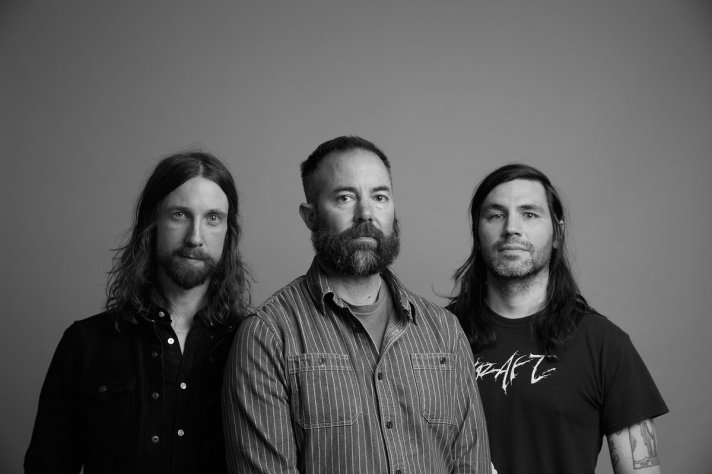
Photo courtesy Russian Circles
Atlanta has always provided the quintessentially weird and William Faulkner-esque Southern experience that Russian Circles’ guitar player Mike Sullivan hopes for every time the group passes through town on tour.
“I do and I don’t remember Russian Circles’ first show in Atlanta,” Sullivan says of the Chicago post-metal trio’s initial stops in town, supporting their 2006 debut album, Enter.
“We always played at the Drunken Unicorn back then,”he says. “I remember at one of those early shows that we played, Brent Hinds from Mastodon rolled up pretty early in the evening. He was riding a small BMX bike and he was tripping on mushrooms. That is exactly what you want from Atlanta,” he laughs. “And that was before any of us even knew Brent! He was there to say hi to someone else who happened to be there for the show that night.”
It’s fitting, then, that just over a decade later, Russian Circles’ musical trajectory carried the group from tearing up the stage for a sweat-soaked circle pit at the Drunken Unicorn to performing under the majestic stars of The Fox Theater, opening for Mastodon in 2017.
On October 29, Russian Circles return to Atlanta, this time playing a show at Terminal West supporting the group’s eighth and most recent full-length album, Gnosis (Sargent House Records).
Drop a needle into the record’s swirling orange vinyl grooves, and songs with titles such as “Tupilak,” “Conduit,” and the album’s title track weave together a rapturous opening salvo that is as heavy as it is pure.
Each song rises and falls with screaming, oceanic riffs and gut-pummeling rhythms in an ever-growing compositional sophistication that places the group on a tier that’s far beyond the post-metal continuum.
The guitars, drums, and bass swarm and move in ominous motions, as though they were guided by a hidden hand reaching out from somewhere deep within their collective subconscious. But as Sullivan asserts, these songs are among the group’s most meticulously arranged yet.
Throughout the album’s later songs— “Vlastimil,” “Ó Braonáin,” “Betrayal,” and “Bloom”—buzzing textures coalesce around massive and doom-laden imagery, painting a portrait of a society in decay.
The bleak beauty and the darkness that binds each song together eclipses all of Russian Circles’ previous offerings, delivering a record that is as furious as it is inquisitive, conjuring a mysterious aura of spiritual anxiety that takes shape as a singular work of understated impressionism.
The title itself, Gnosis, is the Greek word for knowledge, which often appears in religious texts denoting a deeper understanding of the universe that is arrived at only through direct engagement with the divine.
“And what is the divine?” Sullivan asks while pushing the conversation closer toward the album’s unrequited mystical angst. “What if we got it all wrong?” He asks. “What if we misinterpreted elements of faith and spirituality? What if we misinterpreted the Bible? What if we’re taking away the wrong message?”
In the end, there are no answers waiting to reveal themselves within the album’s monstrous roar and crushing rhythms, only a profound sense of reckoning with the unknown.
“That’s something that’s personal, and it’s different for each person, but it’s all tied to this idea of spiritual knowledge,” Sullivan says.
Russian Circles’ co-founding members, Sullivan and drummer Dave Turncrantz have been friends since growing up together in St. Louis.
According to lore, they’re both lifelong hockey fans, and they took the name for the band from an ice hockey practice drill.
Turncrantz is a former drummer with fellow St. Louisan heavy rockers Riddle of Steel.
Bass player Brian Cook is also from St. Louis. He has performed in These Arms Are Snakes, Botch, and played bass in Sullivan’s previous instrumental math rock outfit Dakota/Dakota. Cook joined Russian Circles in 2009, replacing original bass player Colin DeKuiper.
Over the years, Russian Circles has undergone a tremendous creative evolution that balances the lilting strings and metallic aggression that forms the backdrop for 2011’s album, Empros. For 2013’s album Memorial, the group enlisted the voice of gothic-folk vocalist and songwriter Chelsea Wolfe, who expands the group’s dynamic with her voice on the album’s self-titled closing track.
Written and recorded during the 2020 COVID-19 pandemic, the songs on Gnosis turn inward, capturing a singularly troubled time for the group, and for the rest of the world.
Quarantine orders kept each of the group’s members behind closed doors, creating an environment in which no one was playing music or writing together at all: No practicing, no jamming, no happy accidents, and no opportunity for mutual organic growth. So rather than building songs out of ideas and fragments that were captured live and in the moment, fully formed demos were written and recorded in Sullivan, Cook, and Turncrantz’s respective isolation. Later, they shared their songs with each other and paired the material down to create a stylistically physical and visceral release.
“Gnosis was 100-percent written in our own worlds,” Sullivan says. “It was like, you construct a song on a blank grid, and parts are added, which is a way more immersive experience, as far as presenting a full arrangement: Here are additional guitars. Here’s how it will transition to the next part. It’s a completely different and more controlled approach for us. Before, it was kind of like, we would get together and just hope that something good would happen, which is kind of terrifying,” he laughs. “The songs on our first album, Enter, were just me and Dave jamming together in a room. Now, whenever we get together, we know what we’re working on. There are plenty of ideas to choose from. And if we don’t wanna work on one, there are even other ideas we can start hammering away at yet.”
The bass and drums for Gnosis were tracked at Electrical Audio in Chicago by Kurt Ballou, who also recorded the guitar and synth parts at God City Studio in Salem, Massachusetts. Ballou also engineered and mixed the album at God City.
Gnosis is the third record that Russian Circles has made with Ballou, following 2016’s Guidance and 2019’s Blood Year. It’s also the second album for which the group divided its time between Electrical Audio and God City.
“God’s City is great because we go there and Kurt has the home field advantage,” Sullivan says. “There are so many pedals, and so many different toys to play with, and different amps. As a guitar player, I’ll never complain about heading over to God City. It makes the record way more diverse sounding, just knowing all of the gizmos that he has to play with there. Kurt is also really familiar with Electrical Audio, and he just knows what to do instinctively, and he knows how to manipulate all the rack gear and everything,” Sullivan adds. “He has preferences for mics and compressors, and a lot of it goes off of Dave’s performances and tuning and Kurt excelling at what he does. What those two came up with is the best drum tone we could have captured.”
One of the more compelling moments of Gnosis, takes shape minutes into the album’s title track. The guitar kicks in on a delayed stereo effect, revealing wholly new dynamics and greater depths in the album’s sonic dimensions. It’s an effect that’s mirrored in the album’s closing number, “Bloom,” and was also used in the song “Campaign,” which opens Russian Circles’ 2008 album, Station (Suicide Squeeze).
“It’s interesting when you start utilizing stereo manipulation,” Sullivan says. “It opens up the field just a bit more. Just now, we were jamming during practice, and Dave had in his ear monitors so that he could hear himself playing. All of the drums were in mono whereas the guitar was stereo panned. Ideally, you wouldn’t want mono drums by any means, but having it there opened up the guitars. When some things are in stereo and some things are mono, it makes the mix deeper. The instruments hit your ear differently, and in a really exciting way.”
Back in 2008, when the group recorded the album Station, their engineer at the time, Matt Bayles, as Sullivan recalls, said ‘Let’s utilize some stereo action here,’ which is how the technique became a part of the group’s repertoire.
“That was the first time we did that, I was like, ‘Wow, this is like a little bit of stereo magic. This is awesome,” Sullivan says. “Now, we’re starting to consider how that technique is something we should be doing live, making the most of it, and not just reserving it for records.”
Part of Russian Circles appeal lies in its style and how the group adapts its brand of instrumental dirges to a more traditional songwriting style, as they do with “Vlastimil,” where the group expands upon its already colossal sound, while reinventing its own musical techniques.
The chemistry between the band’s members and Ballou is clearly on display throughout the album. His approach to production and engineering dovetails with the tension that builds throughout Gnosis’ serrated and gargantuan epics.
As such, the nature of their working relationship positions Ballou as something of a fourth member of the group. His presence has become key to Russian Circles’ creative evolution and success.
“If you find people that you have chemistry with, that’s a huge gift,” Sullivan says. “Do not throw that away.”
Together, their work has yielded a late body of work that is greater than the sum of Russian Circles’ parts, even though those parts are quite impressive, summoning a sense of the divine on their own terms as they illustrate the complexity of the group’s songs and history.
This story originally appeared in the October print issue of Record Plug Magazine.
If you have enjoyed reading this post, please consider making a donation to RadATL.

THIS SHOW HAS BEEN POSTPONED: Keep your eyes peeled for a rescheduled date to be announced soon.
Off! and Zulu play Terminal West on Wednesday, November 2. $22 (advance). $25 (day of show). 7 p.m.
With a new lineup in place and functioning like a well-oiled machine, OFF! is back on the road supporting the group’s first album in eight years, Free LSD (Fat Possum Records).
With Free LSD, Circle Jerks’ frontman Keith Morris, guitar player Dimitri Coats, bass player and Atlanta expat Autry Fulbright II (…And You Will Know Us By The Trail of the Dead), and drummer Justin Brown (Herbie Hancock, Thundercat) have crafted a vibrant and essential art-punk rumination on the end times.
Earlier this year, I spoke with Keith Morris while he was passing through town with the Circle Jerks. This is what he had to say about the new album:
“We listened to a lot of Throbbing Gristle, Hunting Lodge, Can, Einstürzende Neubauten, Herbie Hancock’s Head Hunters, Miles Davis. We spent time with a character named Enid Snarb who was in Bastard Noise and Man Is the Bastard. He turned us on to some of George Harrison’s work after he visited India.
Our engineer mixer guy worked with Kyuss and he mixed over half of Spiritualized’s Ladies and Gentlemen We’re Floating In Space. We went to a lot of different places, rather than the Bad Brains, Blue Öyster Cult, and Stiff Little Fingers.
Autry Fulbright is playing bass, and he co-manages Thundercat. Our drummer Justin Brown plays drums with Thundercat, so now we’ve got a jazz drummer playing rock, and you’ll hear it. There are times when he’s all over the place, and we really have to pay attention to what he’s doing to play what we’re playing.
If your mind is free enough, and you’re able to see all of the different colors that we’re using, you’ll get it. There’ll be a lot of people that don’t, but we have no control over that.”
Read the full interview with Keith Morris.
If you have enjoyed reading this post, please consider making a donation to RadATL.
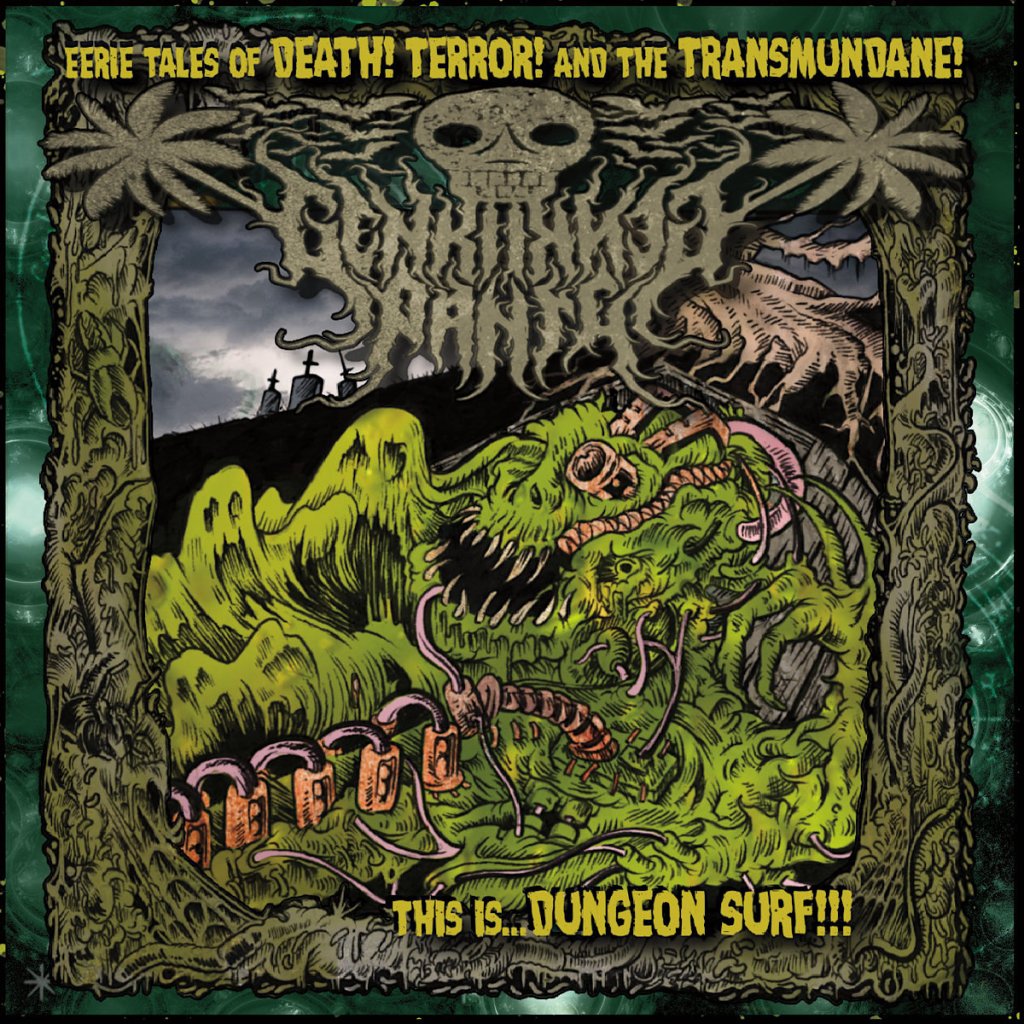
Anyone who’s paying attention knows that Genki Genki Panic cranks out new music at an alarming pace. It can be overwhelming to newcomers, but the group’s latest proper full-length, This Is...Dungeon Surf!!!, distills the spirit of a full-throttle genre-bending haunted-house and surf-punk saga into 17 spooktacular cuts. What sets apart these Georgia-by-way-of-Tennessee misfits from run-of-the-mill Tommy Bahama shorts-wearing surf parrots is an increasingly twisted descent into the outsider fringes of the grotesque. These howlies prefer the eerie light of the full moon to the warm California sun, making their wide-eyed instrumentals all the more engaging. Songs such as “Ghouls On Film,” “Radon Chong,” and “Smells Like Teen Sewage” show off a reverence for the classic reverb and kerrang of the Ventures, Dick Dale, and the Trashmen as much as the creepy underworld soundscapes of Vic Mizzy and Danny Elfman. There’s also an undeniable sense of humor being telegraphed in those over-the-top songs’ titles. “Massive Severed Laphog In A Paper Bag” leads the firebrand charge with delay effects layered over tons of reverb, so much so that it actually sounds like the song is splashing out of the speakers. Other tunes, such as “Terror Vision” and “How Do You Like Your Hyperspace Maggots, Michael?” are utterly gritty and nasty—in the most appealing way those adjectives can be used. “Drac’d Raw Dot Com” and “Smells Like Teenage Sewage” carry the distortion of 8-bit dungeon synth sounds to horrific depths; a nod to which comes through in the album’s title, Dungeon Surf. One, possibly two songs willfully violate the rules with vocals, depending on how you’re listening to the album. The Bandcamp tracklist is different from what’s on Spotify, and the CD features seven songs that aren’t on the LP. “I Was A Teenage Were-chud” tells a wicked tale of heavy breathing and depravity in the graveyard under the pale moonlight, embracing the monster-movie nightmares that the group invokes from the cover art to the ghastly tongue-in-cheek song titles. Hainters gonna haint, but this is the essential GGP release so far.
If you have enjoyed reading this review, please consider making a donation to RadATL.
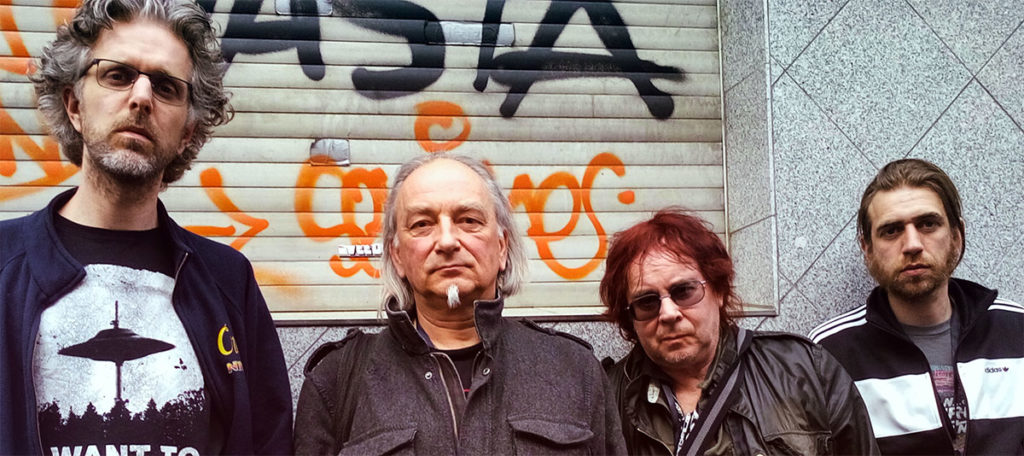
Has it really been three long years since the Legendary Pink Dots last commanded an evening of shadowy and psychedelic revelry in Purgatory at the Masquerade?
Indeed it has. That performance supporting 2019’s Angel In the Detail can still be felt reverberating throughout the club’s rafters. Since then, there’s been, you know, a global pandemic working in tandem with socio-political absurdity and techno-angst gripping the world. As it all unfolds, LPD vocalist and principal songwriter Edward Ka-Spel has remained steadfast in his rich, kaleidoscopic vision, navigating heaps of new music—namely two solo records dubbed Prints of Darkness and The Great Outdoors, as well as the UK-based outfit’s latest album, The Museum of Human Happiness (Metropolis Records).
This latest offering is cut from a fast-paced blend of Krautrock and industrial-grade psychedelic ambiance bearing song titles such as “There Be Monsters,” “Cruel Britannia,” and “Hands Face Space.” As such, The Museum of Human Happiness is also a pandemic record, a quintessential document that’s tailor-made for coping with the black cloud of the COVID menace which is still lurking out there, somewhere, just beyond the horizon.

For this round of North American shows, Ka-Spel’s long-time cohort, keyboardist Phil “The Silverman” Knight, has bowed out of touring. In his stead, Randall Frazier of Bailey, Colorado’s Orbit Service is pulling a double shift, opening the show and taking on keyboard and electronic duties alongside Ka-Spel, guitar player Erik Drost, and live sound engineer Joep Hendrickx.
$22.50. (advance). 7 p.m. Friday, November 4. The Masquerade (Purgatory).
If you have enjoyed reading this post, please consider making a donation to RadATL.
 Rad/ATL