Friday, August 7—Tenor and sopranino saxophone composer and improviser Larry Ochs and Aram Shelton have joined forces to release a new collaborative offering, titled Continental Drift (Clean Feed). For this release, Ochs, a Bay Area artist who’s been breaking new musical ground since the 1970s with Rova Saxophone Quartet, and Chicago-based composer and alto saxophonist Shelton go track for track leading drummer Kjell Nordeson and bass players Mark Dresser and Scott Walton—Nordeson plays on tracks 1-3 and 5-7, and Dresser hits on 4 and 8—through an undulating terrain of sax solos and drawn-out of rhythmic bouts, channeling tension, anxiety, and elation into a swirl of worldly skronk and nuanced free jazz.
Over the next 24 hours, Bandcamp is waiving fees, giving 100% of the day’s proceeds to the artists. Until midnight Pacific Time Ochs is donating all proceeds from Continental Drift’s Bandcamp sales to Stacey Abrams’ Fair Fight campaign to combat voter suppression.
As Ochs says in an email, “Everyone has the right to vote. And this time around everyone should be encouraged to do just that. The protests will be for naught if Moscow Mitch is still running the Senate in 2021.”
Upcoming shows
Mathis Hunter reflects on the inspiration behind his latest single and video, ‘Don’t Be Long’

With the arrival of his fourth and latest LP, Mood Lighting, Mathis Hunter checked in to talk about collaborating with Brigitte Choudhary on the album’s second video, “Don’t Be Long.” This latest offering finds the singer, multi-instrumentalist, and longtime Atlanta music denizen offering a more direct—albeit multi-hued—take on his psychedelic songwriting. Hunter took a few minutes to talk about the music, the inspiration behind the song’s visuals, and what he has in store for the future.
The color palette of the “Don’t Be Long” video perfectly matches the album’s cover art. What did you have in mind when you were putting this all together?
Brigitte Choudhary, a recent Atlanta transplant from Miami, shot and directed the video. We didn’t have much of a plan together when we went into it, other than we had scouted the empty field and I think we both knew it would match the color palette and theme of the song. We also came up with the idea of a green screen video of me playing bass and drums. I played all the instruments on this particular song besides the lap steel, so we thought the green screen would get across the home recording vibe. Once she started editing, we realized we had undershot footage, so we ended up going back and just making shapes and patterns out of things like the foam soundproofing in the studio. We both thought they looked cool, and they definitely helped tie all the shots together and soften the cuts. Those shots ended up being the glue.
We left some things in the field and went back two days later to look for them, and the entire field had been mowed, so the timing of that shot was uncanny. It was also very windy the day of shooting and there’s a really interesting shot where you can see the shadow of a cloud blow across the field in like five seconds.
There is no intended narrative, but all of this paints a picture of what the song is about.
While I was working on the album, I was reading a book by Pema Chodron, called When Things Fall Apart, and trying to get comfortable with the idea that not all chapters go exactly how you want them to, and that it’s all part of the ride. She hits on this idea that our minds seem almost pre-programmed to try and come to a conclusion, to search for definitive answers and a solid ground to stand on, and the reality of it is, that just doesn’t exist. Things are always in a constant state of change, and nothing is permanent on a micro or macro level. I found some solace in that idea and a lot of those sentiments influenced some of the lyrics on the record.
During this same time, the lap steel and other guitar player in the band, Andy Morrison, was trying to cheer me up. He was on some sort of rant about how different it is to raise kids versus being young and single, having a career, etc. The point was that there’s all kinds of variations in what can be going on in your life, and he stated, “it’s all just mood lighting”—a background more or less—to the overarching story of your life. It hit me that it was a fairly zen sentiment whether he meant it to be or not, almost mirroring what Pema was saying about everything is just in a constant state of change, and not to get too attached to whether it was good or bad. That’s where I got the title for the song, and then eventually thought that phrase summed up the overall mood of the record quite well.
It’s so strange that I was working through these types of themes on a personal level, and now just a year later, our entire society seems to be going through an unraveling and great change. In the short run it’s always challenging, but in the long run it seems almost certain something better will emerge.
The chorus of the song is: “If you’re looking back, I got your back. If you’re headed out, please don’t be long.”
It’s the kind of song in which you’re speaking to a person who will never actually hear what you’re saying, but you just have to say it anyway. At the very least, speak or sing it out into the void, clear the energy.
Bringing urgency to such melancholy lyrics is no easy chore. This is a melancholy album, but I’d say it’s more of a moving on album rather than a break up album.
It’s definitely a “getting used to disruption in your life” themed album; change is the only constant. It’s sort of an unfolding of the initial uncomfortableness of that idea, and learning to move on. Honestly, it was helpful to be able to work through a lot of the emotions by writing.
I have always honed in on the psychedelic qualities in your songwriting. With “Don’t Be Long” you’ve paired that with visuals that are even more abstract—long crossfades …
But at the same time, I’ve always done these images that are abstract and this is the first video where you can actually clearly see me playing the song (laughs). In fact, I deliberately went with a photograph for the album cover instead of the usual fantasy fare I gravitate towards to hopefully convey that there was something a little more direct musically and lyrically with this album. There’s a lot less swords and sorcery psychedelia on this one than some of the previous records, although I’m sure I’ll get back to those types of themes (laughs).
What’s next for you?
Since no one knows how long it will be till anyone can play shows again, we decided to record a live set in our practice space/studio, Alpha Centauri. Brigitte also filmed these performances which is cool because as you mentioned earlier her color palette is really in line with the sounds we make. We should start getting these up on the Youtube channel soon.
Mathis Hunter’s Mood Lighting is available now via Leylines/Chunklet Industries.
The Almost Live From Little Five Star Bar Sunday Night Special & Grand Old Quarantine Music Show, Sunday, August 2

Ka-pow! It’s Sunday, August 2, time for another installment of the Almost Live From Little Five Star Bar Sunday Night Special & Grand Old Quarantine Music Show, with your host the Honorable Ted Weldon.
This week’s lineup features performances by the almighty Fiend Without A Face, the Young Antiques, Anna Kramer, the Pinx, Rodney Henry (of Glenmont Popes), Billy Rat, Bryan Malone, Patagonia Kids, Andrea & Mud, Tom Cheshire & Brian Kincheloe (of West End Motel), the Cocktail Minute with Sen. Artie Mondello, the return of Clete Thoughts, and more.
Live streaming from the Star Bar’s Facebook page and via Youtube at 7 p.m.
Algiers’ guitarist Lee Tesche talks Blake Butler, 17 hours at Ryan’s Steakhouse, and ‘There Is No Year’

Nobody writes like Blake Butler. The Marietta-based author and editor has spent over a decade sharpening a stylishly grotesque approach to storytelling that draws comparisons to everyone from Dennis Cooper to Williams S. Burroughs. His words and ideas twist and turn inward, dissecting themselves, and revealing layers of depth and multiple meanings that linger in the mind long after the page is turned. With his latest novel, Alice Knott (Riverhead Books), Butler weaves an hypnotic and wildly inventive story about the destructive act of finding meaning in art, and navigating a world that grows more corrupt by the minute.
On Thursday, July 30, at 8 p.m. (EST), Butler will join Atlanta Music writer Chad Radford and A Cappella Books for a discussion of his new book and more. The conversation is free to attend via Zoom. Click here to join the event.
In January, post-punk outfit Algiers released their third album, There Is No Year via Matador Records. The album takes its name from Butler’s dystopia third novel. Before Butler’s talk, Algiers guitar player Lee Tesche took a few minutes to talk about Butler’s influence on the group.
Chad Radford: This year, Algiers released a new album that takes its title from Blake Butler’s 2011 novel, There Is No Year.
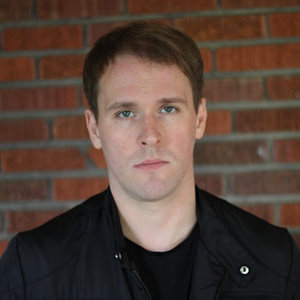
Lee Tesche: Yes. I met Blake in probably 1997, or maybe it ’98. … Someone recently posted a handbill from the DIY show listings back in the ‘90s on the Old School Atlanta Musicians Facebook group. The handbill had a listing for the first show that Blake and I played together. I was in F-64 and Blake was in Manhattan. It was at Sprockets, which was a bike shop in Roswell that hosted DIY shows for about a year. That was kind of when we met—we met through music and playing in bands in the late ‘90s. We went to different high schools, but it was through that show that we got to know each other. We’ve known each other for a really long time now, and, funny enough, There Is No Year is not the first album that I’ve done that had a Blake reference in the title. The first Lyonnais record, Want For Wish For Nowhere, is also named after a chapter in Blake’s book Scorch Atlas.
I had no idea.
The title for Algiers record There Is No Year, happened in a more roundabout way: it was suggested by my bandmates, whom I think didn’t realize that either. It made me laugh, and I said, ‘okay, cool. That’ll be my second Blake-related record!’
I remember seeing Blake play with the band Sleep Therapy at MJQ, probably 15 years ago, back when MJQ still did shows in the big room.
Blake is an awesome individual, and I’m curious to hear how he’s doing these days, and to hear him talk about the new book. I’ve been living in Florida since the pandemic started, and I haven’t seen much of anyone. But the new book is on my list.
I am a slow reader, and have found that with Blake’s books I need to read some lines, or sometimes entire chapters, twice just to make sure I fully comprehend what he’s saying.
I am the exact same way, and I read Blake even more slowly than usual, because he does so much with language. I’ll pour over every single word—more than I do with anything else that I read—to the point where I’ll do that too, read sentences and passages over and over again, just to make sure I’m pulling the full meaning that he was trying to get across.
Blake has a way of honing in on an idea, even if it’s a passing thought, a character trait, or a description; he’ll say it one way and then say it again in four different sentences in four different ways. It’s like he’s doing loops around his ideas and the details he wants to convey. I’ve never encountered anyone who writes like this.
Yeah, and after I had reached out to him to let him know that we were calling the record There Is No Year, and hopefully get his blessing, I thought it would make sense to have him write the bio for the record—to send out for press. He was into it, and he was happy to write the bio. He’s written a ton of music reviews, but he kind of hinted that there are several people out there who’d be a lot better, and who have more experience in writing bios. But I was like, ‘No! This is super appropriate for this album!’ And so he wrote his first draft of the bio in the language of that book. I thought it was brilliant. But Matador and the publishing people took one look at it and said “no … Absolutely not. We can’t send this out to writers!” I thought it was such a clever way to go about writing a bio for a record that’s named after his book. And it was just really clever stuff.
Are there overlapping themes between the book and Algiers’ album?
I read the book when it came out in 2011. I remember both Farbod Kokabi, who designed the album’s cover art, and I read the book at same time, and it took both of us like three or four months to finish it. We went through it really slowly, and it felt like an accomplishment when we both finished.

Our bass player Ryan Mahan has always been a huge fan of Blake’s work as well. When we were finishing the record, Ryan was reading Franklin [James Fisher]’s song lyrics. Frank had just been pulling from his own literary tradition—actually, I think Frank and Blake went to highschool together in Marietta in the late ‘90s. Anyway, when Ryan was reading Frank’s stuff it reminded him of the spirit of Blake’s writing, particularly in that book. Thematically, it was dealing with much of the same subject matter. Ryan suggested the titles as a kind of tribute to Blake, and a nod to some of the overlapping similarities that we saw, and it stuck.
Now it’s such an amazingly prophetic thing to have taken for the title of a record that came out within the first weeks of 2020. Many people have thought it was an original concept on our end, or something like that, and have reached out to ask about the title. It always goes back to Blake.
He’s an incredible writer. He’s written countless record reviews for Allmusic. He’s written a lot of nonfiction kind of essays as well, which are brilliant. He used to have that Vice column that I would read regularly, which I always thought was clever and brilliant. Many, many moons ago—back when doing these kind of Jackass-like stunts seemed like a cool thing to do—myself, Blake, Farbod, and our friend Tom Bruno went to a Ryan’s Steakhouse and tried to eat from open till close on the $3.99 or $4.99 buffet admission. Blake wrote an incredible essay about our 17 hours eating at the Ryan Steakhouse. I’ve always been a fan of his nonfiction writing, too, because it reads in a different way than all of his fiction stuff. He’s such a master of language in that sense. He’s a great communicator, but he can also convey ideas with words and meaning in interesting ways.
On Thursday, July 30, at 8 p.m. (EST), Butler will join Atlanta Music writer Chad Radford and A Cappella Books for a discussion of his new novel, Alice Knott, and more.
The conversation is free to attend via Zoom. Click here to join the event.
Blake Butler discusses his latest book, ‘Alice Knott,’ and more Thursday, July 30
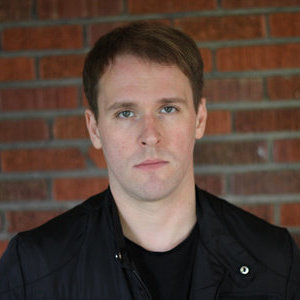
In the beginning, Blake Butler’s words hit the page the way Jackson Pollock thrust paint onto canvas. The Marietta-based author’s 2011 breakthrough novel, There Is No Year, unfurls in a multi-hued splatter of chaos in expansion, drawing comparisons to everyone from William S. Burroughs to Dennis Cooper.
Since then, Butler has continually honed his singularly baroque style and voice. His latest novel, Alice Knott (Riverhead Books), is a hypnotic and wildly inventive story about the destructive act of finding meaning in art, and navigating a world that grows more corrupt by the minute.
On Thursday, July 30, at 8 p.m. (EST), Butler will join Atlanta Music writer Chad Radford and A Cappella Books for a discussion of his acclaimed new novel and more.
The conversation is free to attend via Zoom. Click here to join the event.

Russell Gunn and the Royal Krunk Jazz Orkestra live from the Rialto Saturday, July 25

Composer and trumpet player Russell Gunn leads the Afro-futuristic jazz big band the Royal Krunk Jazz Orkestra, featuring Dionne Farris, for a live-streaming performance at the Rialto Center for the Arts on Saturday, July 25. Music starts at 10 p.m.
Talking Heads percussionist Chris Frántz on his new book, ‘Remain In Love’

Chris Frántz is best known as a songwriter, producer, and founding member of Talking Heads and Tom Tom Club. His sprawling and stylish drumming played a key role in pushing post-punk and new wave inflections beyond the commonly held notions of what constitutes rock ‘n’ roll, while always remaining at least three steps ahead of his contemporaries.
In a new memoir titled Remain In Love: Talking Heads, Tom Tom Club, and Tina (St. Martin’s Press), Frántz offers a look inside his storied life, recalling tales of meeting Talking Heads singer and guitarist David Byrne while studying at Rhode Island School of Design in the ‘70s, and shaping new facets of creativity in popular music alongside his wife and bass player Tina Weymouth.
On Wednesday, July 22 at 8 p.m. (Eastern), A Cappella Books hosts Frántz in a Zoom conversation with yours truly. We’ll discuss everything from reconciling art and live music on stage and scoring hits with Talking Heads songs such as “Psycho Killer” and “Burning Down the House” and Tom Tom Club’s “Genius Of Love” and “Wordy Rappinghood” to life in the modern world.
Our interview will be followed by an online Q&A session with everyone who tunes in. Tickets are limited to 100 guests. Pre-order a signed copy of Remain in Love via A Cappella Books to receive your private invitation via email. Signed copies of the book will arrive via shipping or local delivery (where applicable) shortly after the interview.
Head over to A Cappella Books to pre-order Remain In Love: Talking Heads, Tom Tom Club, Tina.

Steve Shelley and Steve Shepherd’s ‘DJ For A Day’ set Tuesday, July 21

Tune in on Tuesday, July 21, as Sonic Youth drummer and Vampire Blues label owner Steve Shelley joins British record connoisseur and music promoter Steve Shepherd for a Gimme Country “DJ For A Day” set at 1 p.m. (EST).
Say hello during their live text-chat during their set.
Kevn Kinney’s ‘Free Parking’ live on Facebook returns Friday, July 24

On Friday, July 24, Kevn Kinney of Drivin N Cryin returns with a kick-grass edition of his monthly “Free Parking” live-streaming solo performances on Facebook. Kevn will play some Drivin N Cryin classics and deep cuts along with some newer numbers he’s written. He’ll tell stories, tell jokes, and he might even offer up a few cover tunes.
It’s a pay-what-you’d-like affair. Tune in from 8-11 p.m.
In the meantime, press play below to hear Chad Radford’s April 2019 podcast interview in which Kinney talks about reconnecting with Drivin N Cryin’s first LP, the group’s most recent album, Live the Love Beautiful, and looking within himself to find true happiness.
Record review: ‘Danzig Sings Elvis’

Aside from the two installments of his demonic classical song cycle, Black Aria I and II, Glenn Danzig has released only two recordings outside of the group context—not with the band Danzig, but as Glenn Danzig. In 1981, he reclaimed the Misfits’ “Who Killed Marilyn?” and “Spook City U.S.A” for a 7-inch single on his own Plan 9 Records. In 2020, he rolled out the disarmingly gentle Danzig Sings Elvis LP for Cleopatra Records, featuring 14 deep cuts from the catalog of the King of Kings.
When viewed as bookends of a nearly 40-year stretch of his career, both of these offerings illuminate a more mysterious, and a more human side of Danzig’s voice, presence, and persona.
The Misfits took their name from director John Huston’s 1961 film of the same name. When it comes to Elvis Presley’s influence, every punk kid in America recognized it the first time they dropped a needle on the Misfits’ 1982 LP Walk Among Us and heard that rockabilly werewolf howl unleashed in “I Turned into a Martian,” Vampira,” and “Night of the Living Dead.”
The film, The Misfits, was the last feature-length movie in which Marilyn Monroe starred before her untimely death—the culmination of depression and work-related exhaustion from trying to beat the public’s perceptions about her, chronic insomnia, and consuming prescription drugs upon drugs and alcohol.
Elvis left the building under similar circumstances. Both Presley and Monroe were such larger than life stars that their deaths have been surrounded by decades of speculation, rumor, and conspiracy theories.
This dark history and mythology is subconsciously transmitted when Danzig eases into the first lines of “Is It So Strange,” the opening number from Danzig Sings Elvis. His voice reveals subtle depth as he drops the Danzig facade that he has honed since the 1970s. There’s a sensitive, passionate human behind his barrel-chested bark, and he’s more of a multi-dimensional character than we’ve been led to believe.

Danzig’s voice has softened over the years. The full-throttle yowl of “Mother,” “Her Black Wings,” “Dirty Black Summer,” “Kiss the Skull,” and “On A Wicked Night” has settled into a husky range. Here, a layer of reverb over his singing draws out honesty, frailty, and a pensive atmosphere in the album’s first single, a touching and ethereal rendition of “Always On My Mind” b/w “Loving Arms (alternative vocal).” Danzig’s spare guitar rhythms and percussion are brought to a fine point by Prong and longtime Danzig guitarist Tommy Victor’s leads, which underscore a self-styled and uncompromised elegance in re-imagining these tunes.
This can be a difficult pill to swallow for anyone waiting for the punk-metal hammer to drop. After all, there are live bootleg recordings floating around capturing the Misfits tearing into “Blue Christmas” in the early ‘80s. Danzig even called down the thunder with a ripping cover of “Trouble” for 1993’s Thrall: Demonsweatlive EP. So there’s a bit of a precedent for expectation to rock when it comes to this terrain. But Danzig Sings Elvis is a more introspective listen that embraces these songs’ original forms.
The album is executed with such matter-of-fact passion, and the songs are so deeply felt that it almost comes across as a novelty—at first. But Danzig’s interpretations perfectly combine his own soulful baritone with Presley’s drawn-out phrasing in songs such as “First in Line,” “Girl of My Best Friend,” and “Like a Baby.” So much so that it’s impossible to take in this record as anything other than a sincere homage, and a much needed break from the hard rock and heavy metal of latter era Danzig albums.
There is no mistaking the fact that Danzig is one of the greatest songwriters to rise above punk, hardcore, and metal, and his voice remains unmatched. If he has anything in common with Elvis Presley—and indeed Marilyn Monroe—it is an ability to find strength in being bold. What sets him apart, however, is a basic tenet of old school punk rock: Don’t give a damn about what anybody else makes of you. You’re not like the others. And when the rest of the herd cannibalizes itself, that’s when you thrive.
This is the message my antenna tuned into as a 13-year-old kid nodding along to “I Turned into a Martian.” It’s in the lyrics: “I walk down city streets on an unsuspecting human world. Inhuman in your midst, this world is mine to own, ’cause, well, I turned into a Martian. I can’t even recall my name!”
It’s a sentiment that resonates, albeit with a bit more resolve when he sings Elvis’ words as well: “And when you hear my name, you’ll say I’m from a strange world. But is it so strange to be in love with you?”
Nowhere on the album does this newly found energy burst with greater reverence than “Pocketful of Rainbows.” The song’s minimal arrangement, channeled through Danzig’s stylishly murky production, captures a glowing tension that feels as though the song could burst open at any moment. But the piano, percussion, and tremolo on the guitar sustain a vibe of hope and buoyancy.
Rare is the artist who can redefine their character so deep into a decades-long career. With Danzig Sings Elvis, the voice and the man behind so much horror business with the Misfits, Samhain, and Danzig breaks the public’s perceptions about him, and breathes new life into his legacy. — Chad Radford
If you have enjoyed reading this review, please consider making a donation to RadTL.

 Rad/ATL