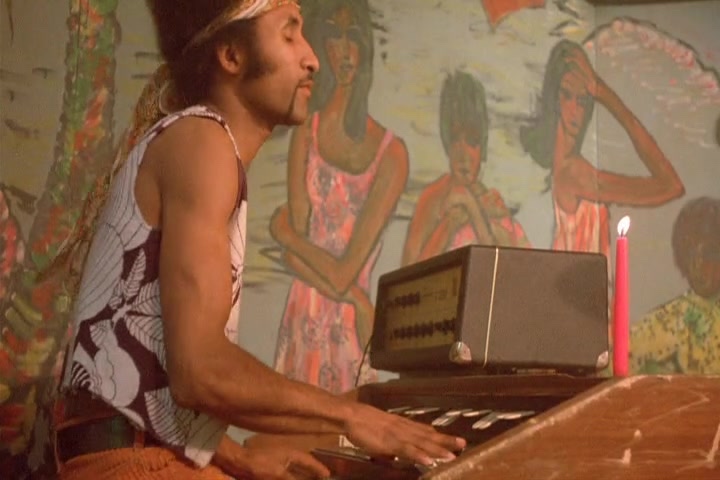
In the secret history of ska, rocksteady, bluebeat, and reggae music, few names carry such bedrock mystique as Monty Neysmith. In the fall of 1965, he moved from his home near Kingston, Jamaica to the U.K. to study law at Lincoln’s College London. But rather than sticking with the curriculum, he fell in with his cousin Roy Ellis and a band called the Bees, playing American soul and R&B hits by the likes of James Brown, Wilson Pickett, and Otis Redding. He bought a Vox organ, and what was supposed to be just a weekend gig playing with the Bees turned into an every-night affair. After a few lineup changes, and a one-off gig in a Jamaican club, everything changed.
“We used to play songs like “My Girl” and Ben E. King’s “Stand By Me.” But for the gig at the Jamaican club we added in a couple of Skatalites songs,” Neysmtih says. “Roy blew them on the trombone, and I remember doing a few vocal songs as well. When we finished the first one the place went wild. Finished the second one: Wilder. The guy who ran the club was named Charlie, and he said, “Why don’t you guys play more ska, man?”
Over time, ska became an increasingly bigger part of the Bees’ repertoire, which landed them on the road backing up the legendary Prince Buster, and an honest-to-goodness hit backing Eddy Grant of the Equals (and later of “Electric Avenue” fame) for the 1967 single, “Train Tour To Rainbow City.”
It was Grant who prompted the group to change its name to the Pyramids. Later, to work around contractual obligations, they spelled the name backwards, and gave it a twist to roll off the tongue with a little more ease — Symarip. Skinhead Moonstomp was another alias as well, which culminated in the 1969 underground classic LP that captures a day in the life of working class London.
While the Beatles, the Rolling Stones, and the Who were ascending to pop greatness in the U.K., Symarip literally brought boots to the dancefloor, as the city’s skinhead subculture rallied to the tune of Neysmith’s clarion call: “I want all you skinheads to get up on your feet. Put your braces together and your boots on your feet, and give me some of that old moonstompin.’”
It was a cultural mashup of the times — the same year that astronaut Neil Armstrong left that first dusty boot print on the moon, Neysmith and Co. were commanding audiences to scuff up dancehall floors with songs such as the oompah-laced “Skinhead Jamboree,” the breezy “Skinhead Girl,” and a swinging version of Lee Hazlewood and Nancy Sinatra’s “These Boots Are Made for Walking.”
Despite the good natured and celebratory vibe of the music, semantics in the post-Geraldo Rivera world of tabloid journalism have aligned the term “skinhead” with right-wing hooligans. But this corrupt definition of the music, scene, and culture could not be further from the ethics of the community that rallied around Symarip’s shows.
“I have to explain it to people everywhere — in America, in Jamaica — whenever they hear ‘Skinhead Girl’ or ‘Skinhead Moonstomp,’ they start asking,” Neysmith says. “I say listen, you have to understand that the skinheads you hear about are false skinheads. They are bone heads who just stole the style. Real skinheads love Jamaican culture and they love Jamaican music. It was the real skinheads — the working class — who kept Jamaican music alive for all these years. It’s just a culture and a way of life,” he goes on to say. “It’s much bigger now than it was when we made the Skinhead Moonstomp record. For example, last year and the year before I played at a concert called “The Great Skinhead Reunion” in Brighton. Skinheads from Germany, Spain, Italy, France, the UK, and all over the world came for the whole weekend. These are authentic, diehard fans. Most of them dress the part: a lot of boots, tattoos, low haircuts, the girls come out with their curls. Nobody is there to start fights. They’re there for the music — Jamaican music, Northern soul music, from Northern England and all that. I love the skins, man. They’ve kept me alive!”
Over the years, Neysmith has continued performing under various names such as Zubaba, which landed a part in Sidney Poitier’s 1973 film, titled A Warm December. More recently Neysmith has continued performing with an on-going version of the original group that’s now dubbed Symarip Pyramids featuring Neysmith along with original members Michael Thomas and Frank Pitter. Since the late ‘80s and early ‘90s Neysmith has called Atlanta home, where he continues writing and performing under the name Monty Montgomery.
On February 28, Neysmith headlines the 2020 Winter Weekender festival at the Earl. He’ll be joined on stage by a coterie of Atlanta musicians including guitar player Rob Kincheloe, drummer Michael Griffeth, and members of the Southern Ska Syndicate including bass player Jay Wallace, guitar player Lester Dragstedt, tenor saxophonist Brett Rakestraw, trombone player Andy Hawley, trumpet player, Chad Paulin, and keyboard player Billy Fields.
The group is performing the album Skinhead Moonstomp start to finish, along with a few solo numbers and a new Symarip Pyramids song, titled “War On Mars.” And when he delivers the line, “Martians are trying to steal our ska,” he pushes the music and the culture one boot print further, to the moon and beyond.
Friday, February 28. $20. 8 p.m. (doors). Monty Neysmith with members of the Southern Ska Syndicate. DJs Darren Reggae, Rico Rejoie, and Yaya Birg also perform. The Earl, 488 Flat Shoals Ave. S.E. www.badearl.com.



 Rad/ATL