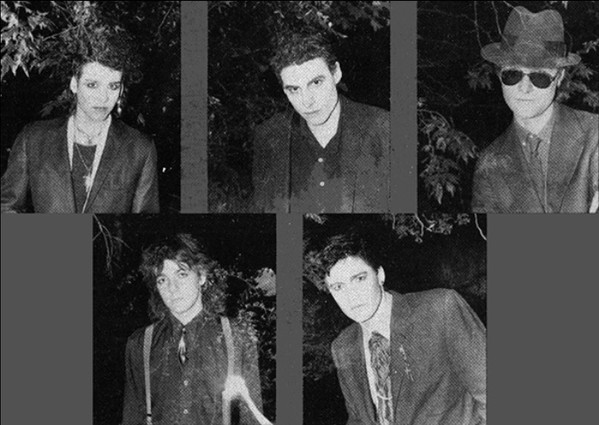
Gebidan is (from left) Geoff Knott, Daniel Whitman, Dennis Doherty, and Mike Patton. Photo by Amanda Corbett.
Entropy is the way of all things losing order as they move forward through time, evolving into something different every step of the way. It’s a concept that hangs heavily on Mike Patton’s mind while reliving his nearly 50 years of history playing music with Southern California’s hardcore and post-punk bands the Middle Class, Eddie & the Subtitles, Trotsky Icepick, Cathedral of Tears, and most recently singing and playing bass with Athens, GA’s Gebidan. The band’s name evokes the old English word for “endure” or “abide,” and there are layers of unspoken context to absorb inside the group’s debut album, titled Entropy, which kicks off with an opening number of the same name.
“That was our first song and it really describes the universal condition, I believe,” Patton says.
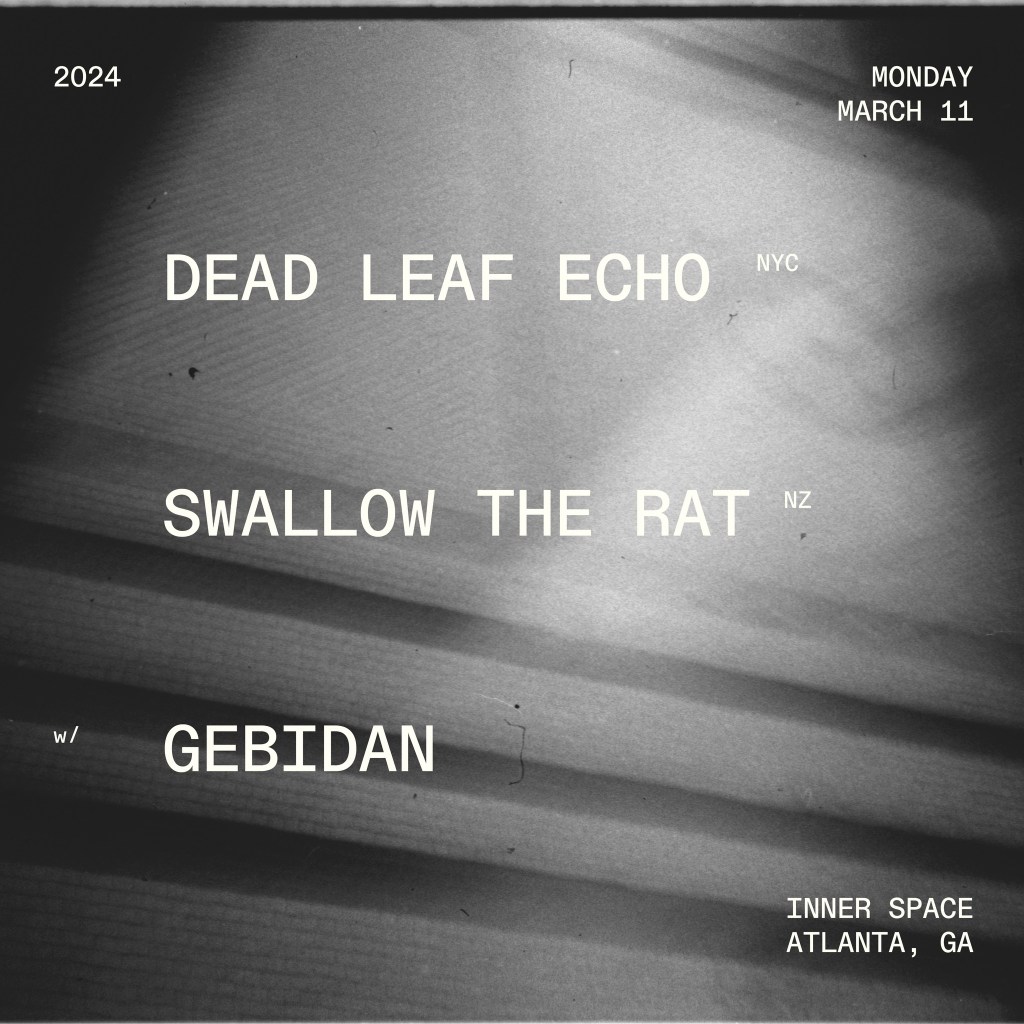
Since August 2023, Patton, along with guitar player and vocalist Geoff Knott, guitarist Dennis Doherty, drummer Daniel Whitman, and occasional keyboard player Drew Costa have amassed a body of songs that pull from Patton’s past while finding new meaning in the present. Press play on songs such as “Something Somewhere,” “Million Stars,” and “Achilles,” and hues of melancholy and psychedelia are corralled into bursts of alternative rock imbued with a spectral Southern allure—sometimes the writing is quite abstract, other times stories unfold as if they’re being told in real-time.
The latter number, “Achilles,” relives a night of fleeing from the famed 1979 Elks Lodge Hall riot. When a show featuring performances by X, the Alley Cats, the Plugz, the Go-Gos, the Zeros, and the Wipers was shut down by police, Patton’s former Middle Class bandmate Jeff Atta and his girlfriend Dorothy were in attendance and were severely beaten. The song chronicles a desperate attempt to get them to a hospital. The getaway car was being driven by famed LA punk producer and provocateur Geza X (the Germs, Dead Kennedys, Black Flag, Redd Kross), and the story goes sideways.
On the eve of releasing Entropy, Patton took a few minutes to talk about his past, his present, and Gebidan’s future in music.
Let’s begin by talking about how Gebidan got started.
Geoff Knott and I started playing together a few years ago. We’re both transplants to Georgia. Geoff is from Albuquerque. I didn’t know anybody here so I put my profile on some website where musicians connect. He was the only guy that reached out so we started playing together. The full incarnation of the group has been together since August 2023.
How did you wind up in Bogart, Georgia?
During the pandemic, my wife’s parents were living here. Her dad’s health is declining and she was feeling the need to come out here. I got laid off right toward the end of the pandemic. I said, “If you want to go now is the time.” We’ve been here since 2021.
I was at Bogg’s Social and Supply the first time MSSV played there. After the show, I was waiting in line to say hello to Mike Watt. You were in front of me. I remember you said, “I’m not sure if you remember me. My name’s Mike and I was in the Middle Class and …” Before you could finish your sentence Watt looked at me and sang the words to “Out of Vogue,” and said “Yeah, I remember you, Mike! I remember when the Minutemen played with you in San Diego!” It took a minute to process what I had witnessed.
[Laughs] I knew those guys back in the day, but I’ve been not going to shows for a long time. I hadn’t seen Mike in like 15 years. I wasn’t sure if he would recognize me, but we reconnected right away. I was friends with the Minutemen back in the day; everybody was. They were real cool working-class guys from Pedro. We were-working class guys from Orange County. We had stuff in common.
When I looked up your Discogs page I found your name on an impressive list of records: There’s the Minutemen’s “Joy” 7-inch.
I produced that.
Your name is also on the Adolescents Blue album.
Yeah, I produced that. I was managing them at the time. This guy Eddie Joseph that I played with in Eddie and the Subtitles would kind of let me do whatever I wanted to do. One day I said I wanted to produce one of our singles, called “American Society.” I kind of turned it on its head, and slowed it way down. I took over the vocals and turned it into an anthem. It came out good! Eddie was managing the Adolescents at the time, and Frontier Records had just signed them. Eddie was getting ready to take them into the studio and I said, “I want to produce the Adolescents.” Eddie said okay! Then a bunch of shit happened and he was out of the project. I took over managing the Adolescents for a while, and that’s when we went into the studio to record the Blue album. I was fortunate to get to produce such a great album.
That’s not hyperbole. It’s a game-changing record.
Yeah, they brought a melodic sensibility that hadn’t been there before. Rikk Agnew; I mean, those are powerful, good songs, and they were so different than what anybody else was doing.
Discogs says you do backing vocals on the Blue record.
I didn’t sing on the record. There’s one song where I was talking to them over the mic. It was “L.A. Girl” and I say “L.A. Girl, take 1,” or something like that. They wanted to keep it in there. That’s the only time my voice is on the record. I was still doing Middle Class at the time. The Subtitles had broken up. When the Eddie empire fell apart he had been managing and booking a lot of the local bands. When he bailed I took over the Eddie empire for a while. All of those bands, like the Adolescents, were just kids. They didn’t know what was going on, and they were lightning in a bottle. Everything was happening fast for them. I was just trying to help them out because they were kids! They were nice and smart and good.
I was kind of an elder statesman or something in Orange County. The Middle Class had released “Out of Vogue” and we were the first Orange County band to play L.A. and get accepted. We had a certain status in Orange County with all those bands. The Adolescents came up about a year after we started playing on the scene. I think that’s when Orange County really started happening.
The Middle Class is often hailed as the first hardcore band ever.
The guys who wrote the book—and then made the film—American Hardcore determined that. It’s always between us and the Bad Brains. They were in Washington D.C. We were in Orange County. We didn’t know each other existed. For what it’s worth, Middle Class gets the crown because “Out of Vogue” came out first. We were the first ones to release a record. We were inspired by the Damned and the Sex Pistols and had gone to see the Ramones. We were the classic punk ethos, people who didn’t know how to play their instruments.
We made up for our lack of musical ability with energy. We rehearsed five days a week for maybe six months before we got our first show. We didn’t realize it but we’d become this blazing fast band. We were trying to be the Ramones but we were way faster than the Ramones! When we first saw them at the Roxy in ‘76 we thought they were absolutely blistering. Then when we played our first show in L.A. at Larchmont Hall with the Germs and the Bags and the Controllers, the original punk scene was pretty much established. Everybody knew each other so a lot of the bills were getting kind of stale.
Hector Penalosa from the Zeros got us our first show. None of us drank. We were these normal-looking kids from Orange County. Then we got up and just roared on stage. Everybody immediately glommed onto us. We opened for everybody for the next three months. We played with the Screamers a bunch of times. We always played with the Germs. We were the opening band for everybody because we were different. So we got to be locked into the Hollywood scene really quickly from that first show.
The Middle Class
How was the Middle class received?
We were received really well when we first started playing. Everybody thought we were cute because we didn’t drink and we didn’t smoke and we wore thrift store suits—jackets and ties. We looked really straight and we were pretty young at the time. But then we were just roaring. The dichotomy between how we presented ourselves, who we were, and what we were playing really worked at that moment.
Hollywood accepted us immediately. The “Out Of Vogue” single was supposed to be on Danger House Records. All the good punk bands were on Danger House. Black Randy talked this guy Billy Star into putting up the money to record it. We went into Stevie Wonder’s studio and had like two and a half hours of studio time. We did two takes and that was all.
Then the fact that there was an in crowd and an out crowd revealed itself. Danger House didn’t want us. The guy who put up the money was stuck with the record so he released it on Joke Records because he was mad at Black Randy for telling him Danger House was gonna release it.
We were well established on the scene and were headlining or playing second bill on all of our shows. Then the dividing lines were apparent. Punk wasn’t supposed to be like that, everybody’s equal. It didn’t matter where you came from. There were no stars. That wasn’t true. So that single came out right at the time when it was becoming obvious that the philosophy we thought punk rock was, really wasn’t.
“Out Of Vogue” came out when the high schools opened up and all the kids started coming to the show. I’ll give you my two-bit interpretation of what happened:
Originally, the punk bands were into glam, glitter, Bowie, and all of that stuff. They were musicians before punk rock. They were already musicians with the ability to play their instruments and play songs. Then people like us hear that music and get a feel for what the punk ethos was: There’s no such thing as talent. Anybody can do it. So that’s what we did. By the time we got a show, we were really tight.
We weren’t proficient with our instruments, we just put it all into energy. That translated into speed. So by the time we got up and played all of our songs were like a minute-and-a-half. We didn’t think anything of it, we were just following our noses. But everybody reacted to it, and they liked it.
That was when they were still pogoing at the clubs. Slamming wasn’t going on yet. Pits weren’t happening yet. As the music became more available all of these high school kids and junior high school kids in Orange County, Long Beach, and all of the surrounding areas started finding out about punk rock, but they didn’t have a background. We had a background. I knew about surrealism and Dada and I knew about the Situationists—the cultural touchstones that punk rock was drawing from. But these kids that were listening to it didn’t have any of that background. They didn’t get any of the context. They just saw and heard what was being put out there and they reacted to it. They showed up to the scene and chased a lot of the original punks away because they didn’t get the fact that all the violence was just for show. It was an inside joke and everybody understood it. As soon as those kids came in their only understanding of punk rock was what was being presented to them by the style, the fashion, and the music. They came in expecting a completely different thing. So all of a sudden they came in and saw Black Flag and Circle Jerks and when that happened we were a pretty big band. Those kids wanted to hear “Out Of Vogue,” and that was fine. It’s good to draw a crowd, but we didn’t like the violence.
We were playing a show at a club called The Fleetwood which was just a pit in Long Beach. It was an empty warehouse—concrete walls and floors. We were playing “Out Of Vogue” when this guy came in to check out the punks. He was a regular stoner, long-haired guy. He’s watching us play and these kids from one of the high schools just beat the guy up for the duration of the song. When the song was over they had to call paramedics and haul the guy away. He was hurt. Jeff Atta, the singer, said we’re never playing that song again. And we turned away! That’s what the hardcore punks wanted to hear so they eventually stopped coming to our shows.
We started doing stuff more like the second single, “A Blueprint For Joy,” and then the Homeland album which is completely different from “Out Of Vogue.” The Circle Jerks and Black Flag were playing music to those people, and so they became really big. We went into the background, but we get credit for starting it, which is cool. So the people who know about the Middle Class are really into the Middle Class. They’re the people who know the minutiae of the scene. Most people haven’t heard of the Middle Class, but they have heard of the Adolescents, Black Flag, Henry Rollins, and Keith Morris. We were their contemporaries but we turned away from it because we did not dig the violence.
To me, all of that music was empowering and positive. Punk and hardcore gave me the confidence to be comfortable with myself and to ‘rise above’ the jocks and the people who wanted to fight.
The first time I heard punk was the first time I heard something that spoke directly to me. I was always like a stranger in a strange land, not fitting in, being an alien in my environment. Suddenly, I hear this music and it’s speaking directly to me.
The Middle Class found this community that accepted us, celebrated our music, and came to our shows. At first, there were no divisions. There was no person that’s too cool to talk to … None of that. I was no longer this isolated guy just existing in this world where I didn’t belong.
I want to ask you about a couple of different bands: When viewed through the lens of time and distance, and my taste, there are a few bands from Orange County that pique my interest. I’ll start with the Mechanics:
We might have played one or two shows together but we didn’t hang out much. They were a Fullerton band. They would be at parties, so I knew those guys. We weren’t tight but they were on the scene and I certainly knew about the band.
I think of them as one of the early—if not the first—punk bands from Fullerton.
They were proto-Fullerton. They were pretty early, and when the Fullerton scene was getting started I didn’t even know it existed. I didn’t know about Fullerton and Huntington Beach until Al from FlipsideMagazine asked me to write an article. Occasionally, I wrote articles for Flipside. He wanted me to write about the Orange County scene. I said, “What scene?” I didn’t know! He put me in contact with a couple of people. One in Fullerton and one in HB. They told me about parties that were going on so I went and saw the Crowd and China White might have been playing.
In Fullerton, I saw Agent Orange and Sexually Frustrated, and proto Social Distortion when they were called the Dustbin. They were playing at house parties, and these bands were all just kids. That’s how I got to know them. The first band from Orange County that I was the most impressed with was Agent Orange, and that was when Steve Soto was still in the band.
Agent Orange is another band I wanted to bring up.
That band was doing something distinctive and tight. They were really good. It wasn’t too long after that Mike Palm kicked Steve Soto out of the band because Steve wanted to contribute musically. Mike wanted to be in charge of all of that. Then Steve ended up getting involved with Rikk and Tony and the Adolescents started.
Agent Orange tours regularly. For the last two or three shows that I’ve seen the drummer was Sandy Hanson from the Mechanics. He was also with the Adolescents for Brats In Battalions and Balboa Fun*Zone. What was going on back then that gave rise to so many great bands?
Orange County is a gigantic suburb that was very conservative. It was home base for the John Birch Society and a bastion of conservatism in liberal California. The first person I heard say “behind the orange curtain” was Eddie Joseph. He said it to me as we were talking about how you’ve got this image of the suburbs: Everything is all manicured lawns, everything is cookie-cutter. Everything looks nice, but look just below the surface and everything is terrible.
These kids had no place to go, and unless you were a jock or were into Led Zeppelin, you weren’t a stoner, and you weren’t a surfer you had no tribe. You were an outlier. That angst and tension about living in that environment is like living in Disneyland but you can’t go on any of the rides. You just have to stand in the lines. That generated a lot of creative energy.
That’s what the Adolescents songs are all about anyway, looking around and realizing that everything you have been told is not true. I don’t have a bright future to look forward to. Everything kind of sucks. My dad’s an alcoholic. Whatever is going on you realize that the world your parents tried to protect you from or explain away is real. The stories are not, and when you realize that, you’re feeling pretty isolated. To me, that is where that punk primal scream came from. The beats probably had the same thing. The hippies kind of had something similar.
All of those elements are still there.
The strange thing is it felt for a while like something big was about to change. It felt like something was happening all over the country. There were these pockets of music popping up. Then nothing changed. We used to look down our noses at the hippies but they experienced the same thing. So did the beats; this youthful recognition that the world is not what we were led to believe it is. When you realize that the first logical reaction is anger and rejection.
The nice thing about punk rock, when I got into it, it was wide open. It got regimented once the skinheads came in and the high schools opened up. Before that, there were all kinds of different bands. Everything was allowed. Some bands were more popular than others, but you could have a band like the Eyes that did a song about going to Disneyland. Blow up “Disneyland.” And you had the Germs and the Controllers playing with them. Everybody accepted it. It was this creative free space where you were encouraged to pick up an instrument and start doing it.
To go from being an isolated loner just trying to not get too much attention because bad things happen when you get too much attention, to all of a sudden there’s this tribe of people who are celebrating what you’re doing … They get it and they’re friendly. The most extreme punks, the most-extreme looking people, you go talk to them, they’re pretty mild-mannered. I remember we played a show in San Diego with the Germs and the Bags. We went down early and half of the bands were going to Tijuana, and the other half of the bands were gonna go to San Diego Zoo.
I went to the zoo. Black Randy was going down to Tijuana with the others, and I did not want to be with those guys. They were crazy. So I was getting picked up by Pat from the Bags and Darby from the Germs. They stopped at my house in Santa Ana, and I remember my mom knocked on my bedroom door and said, “Hey, Mike, your friends are here.” I came out of my room and my dad was giving Darby a cup of coffee because that’s what my dad did. He was a Navy guy. Everybody got coffee. We always had hot coffee. Coming out into the living room and seeing these two Hollywood punks sitting on the couch was the most bizarre thing in the world, but that was cool.
I’ve talked with Jack Grisham from TSOL a bit over the years. His dad was a military man too, and he has similar stories. It sounds like a lot of people in the music scene lived at Jack’s house with his parents over the years.
Same thing with the Minutemen. They lived in military housing. Their dads were actively serving. My dad was retired, but we got all our healthcare and our groceries from the base. We didn’t fit in with normal California society. My parents had us when they were older; my dad was an Okie.
Cathedral of Tears
Can we talk about the band you were in with Jack from TSOL, Cathedral of Tears?
MTV was happening and Jack was watching Duran Duran and all of those bands. He wanted to capture that in a more sophisticated way. I saw him at a show and he asked if I wanted to play bass. So I went over there and it was cool. It was interesting being in a band with Jack. He gave me complete freedom to do what I did. There were two iterations of the band. At one point he kicked everybody out of the band aside from me and got all new players. I’m not sure how long that band lasted, maybe a year and a half, something like that. We did one release. One thing I will say about Jack: He has always been very cool to me. He even sought me out at one point to tell me that the label needed my contact information because they were holding onto money from that release for me. He didn’t need to do that, and I appreciated that.
Being in a band with him, I watched a lot of ugly stuff go on. Jack wasn’t always the kindest person to his fans, but he was always absolutely great with me.
At some point, you stepped away from playing music altogether.
For 14 years I was the Director of Transportation and then Executive Director of Maintenance Operations and Transportation for the Capistrano Unified School District in South Orange County.
I had two small kids. I was on tour with Trotsky Icepick supporting the album Carpetbomb the Riff, which was the only one that I wrote my parts for the songs.
Somebody threatened my wife at the time and she basically gave me an ultimatum. I had to leave the tour to come home and make sure that everything was ok. I joined the group back on tour and finished up. She gave me the: “Either you leave the band or this isn’t going to work.” I had kids and I wanted to do the right thing. For a very long time, I didn’t play. While I was at the school district I would meet people and play with them, jam with them. But we were never trying to be in a formal band. I was focused on my responsibilities. We would work on songs. A couple of times we’d have an album’s worth of material. I’d say, “Let’s go play a show!” But it never happened. That happened two or three times. I kept grinding away.
Then Mike Atta got cancer. He got better and changed his mind and wanted to play again. So we got back together and I was working at the school district.
The Middle Class getting back together ruined my career [laughs]. I was tapping into something extremely important to me, and I missed it. Now I was experiencing it again! At the first reunion for the Middle Class, I talked to this German couple that had flown in just to see us. We were way more popular than we were when we were playing originally.
So then I would go back to the school district and deal with this political nonsense of being a director and having 500 employees. I was good with the employees. It was my superiors. I was successful when I wanted to make it work. When I lost the desire to put up with these idiots my career stopped after a while. I eventually left the school district. I kept working for a while. The Middle Class played for six-seven-eight months. Mike’s cancer came back. We played periodically, and then he died.
I talked with Jeff Atta. I knew what he wanted but I would never do a tribute band. He didn’t want to carry on the band. I said, “I may play some of the songs, but I’ll never put together the Middle Class with a bunch of guys.” Our drummer Matt Simon wanted to do the Subtitles again. I was excited and I threw myself into that. But it turned out that he didn’t really want to be a band. He just wanted to hang out and party and play music. That wasn’t going anywhere. Then the pandemic hit and we moved to Georgia.
Gebidan photo by Geoff Knott
Which brings us to Gebidan.
Most of the songs that we’re doing are songs that I’ve come up with over the years when I was working with a 4-track or started working with a computer. There are all of these ideas that I was able to regurgitate and Geoff was able to revise them. We wrote some songs together as well. It’s very different from the Middle Class, but it’s muscular. It’s serious. Everything I’m singing about means something to me.
I would like to tour and I’d like to go play LA. I’d like to re-engage. So far, people seem to respond to the music and I’m just going forward with it. I want to do it as long as I can.
Are you approaching Gebidan differently from how you approached your previous groups?
With the Middle Class, it was this new thing. We just wanted to get on it. We figured it out together and we had a lot of initial success. Everybody embraced us. That was gratifying and I learned that it can work and people do respond to it. All of that punk ethos of just do it is true. If you do it with confidence and sincerity people are going to respond.
The Subtitles taught me that I can change things: take one thing and turn it into something else. “American Society” was a punk song and we turned it into an anthem. That was really freaking cool. Eventually, we turned into this weird acid jam band and that was cool as long as I was committed to the joke we were able to pull it off. As soon as it stopped being fun it was a house of cards.
Trotsky Icepick was my friends from 100 Flowers. They had a record and a tour. They reached out to me and I was available. They were really good guys. I always liked them. And so I did that tour with them. Then they lost their drummer. I brought this guy Skippy in and we wrote Carpetbomb the Riff and did another tour. I would have kept playing with them but I had to bail out.
When I moved out here I met Geoff. We’re coming at the music from different places—he’s kind of a jazz guy. I was pushing him to find more people. He found Dennis and Dan. Now we have a lot of songs in various states of disrepair, and we have a set that sounds good.
I know it’s kind of stupid to be 66 years old and start a rock band, but what’s cool is I’ve got the time! Why not? What else am I going to do?
Someone with your history and experience needs to keep putting your songs and ideas out there and sort of course correct underground history and culture. It’s good to remind people of what role music played in our lives before it became something to skip through on Spotify.
There is certainly an interesting perspective that comes with doing it at this point in one’s life. For me, there’s something of depth there that people—if they hear it—it will likely mean something to them. The most fulfilling thing for me is when someone that I don’t know tells me how meaningful something that I did was to them.
I communicated with them. We shared a common experience. The human experience is communal; we all react to the same things. We’re all different, but the bottom line is that we are also all very similar. When people can relate to your experiences hopefully they feel less alone. We all feel isolated but we have more in common than we realize. That might sound pompous [laughs].
This music is something that transcends time and space. We are having this conversation in Atlanta, GA in 2024. You started your musical legacy in Los Angeles—on the other side of the country—in 1978, and the music is still affecting people.
It’s cool to have participated in that. It was way more meaningful than we realized to way more people than we ever would have thought.
I wouldn’t have been able to do Gebidan in California because there’s an expectation on me in California. I’m so tied to the Middle Class and the Subtitles that when I played music with people (for the most part) it wouldn’t work. I didn’t want to play punk rock anymore. Punk is an attitude, and it’s a seriousness, but that style of music is of a time and I’m past that. I wanted to do something that had some beauty to it or be more than that. Hopefully, people can relate to it. So far so good.
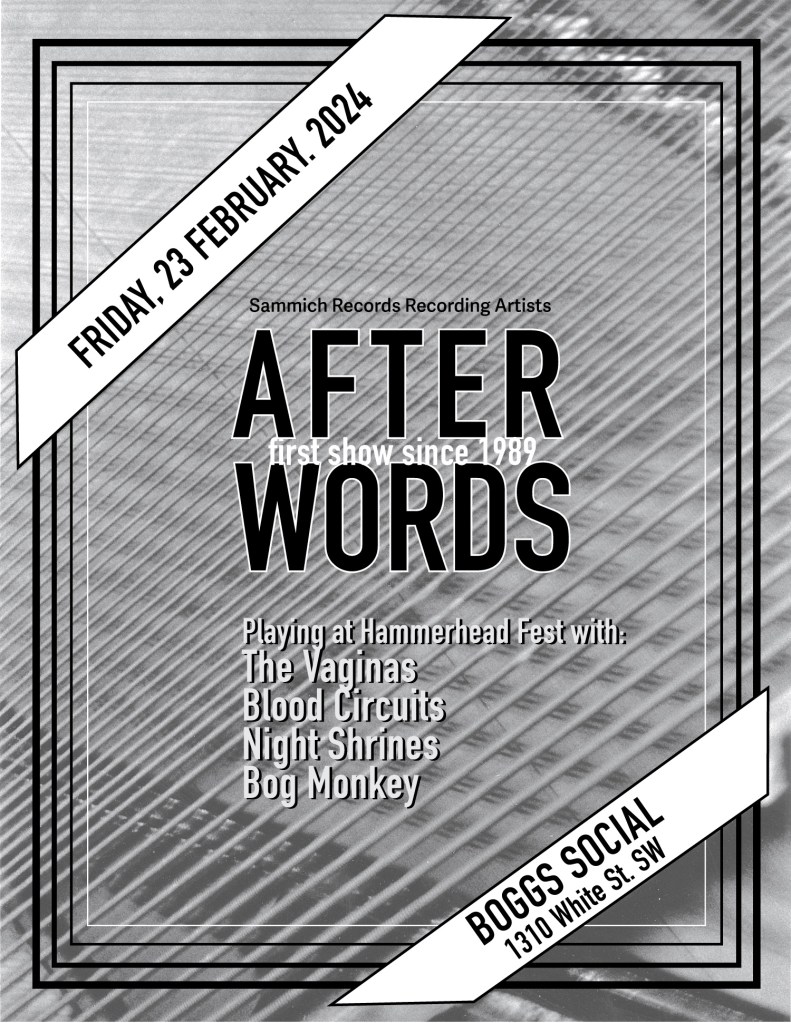
Friday, February 23: Night One The Vaginas, Blood Circuits, Night Shrines, After Words (playing their first show since 1989), and Bog Monkey. $15. Doors open at 7 p.m.
Cemetery Filth
Saturday, February 24: Night Two Cemetery Filth, Day Old Man, Shehehe, Breaux!, Los Ojos Muertos, Blind Oath (OK), and Billy Hangfire $15. Doors open at 7 p.m.
If you have enjoyed reading this post, please consider making a donation to RadATL. Venmo to @Chad-Radford-6 or click on the Paypal link below.
Jeremy Wilms has spent much of his professional life working as an auxiliary player—a sideman to a cast of musical innovators both revered and obscure. While discussing highlights from throughout his career he connects the dots from Atlanta’s early ‘90s free jazz outfit the Gold Sparkle Band to pop megastar Beyoncé; New York’s free jazz icon Ornette Coleman to Duluth, GA’s late ‘80s hardcore scene (he was in the acoustic punk outfit No Marching Orders alongside Act of Faith vocalist Robbie Fuller). Wilms even arranged the strings and brass heard in “A Few Words For the Firing Squad,” the closing number from Run the Jewels’ latest album, RTJ 4.
The more collaborators he mentions the more impressive the list becomes. From suppertime jazz to skronking and wailing, Wilms has achieved about as much as is possible in his role. With his latest album, The Fighter (Cart/Horse Records), Wilms reaches for a deeper plain of existential songwriting that comes from within.
“In the past, I never felt secure as a strong songwriter,” Wilms says. “It was easier to learn stuff on guitar, bass, piano, even drums, and work as a musician right away than it was to get out there and sing or front any kind of act. As I was writing a lot of these songs, I realized that I was reconciling leaving the working musician lifestyle behind.”
In 1995, Wilms graduated from Georgia State University with a Bachelor’s degree in music. Soon after, he moved to New York to earn his Masters at CUNY Queens College. In New York, he studied under renowned pianist, composer, and educator Kenny Werner.
“I studied off-and-on with him for about a year,” Wilms says. “At the time, I was playing pretty heady jazz stuff and was writing new music. Probably the most important lesson I got from him came when he said to me, ‘There are plenty of jazz guitarists. You don’t need to play jazz guitar. What’s your thing, man? What do you do?’ More than any technical thing that I learned from him, that was the crux of what I got out of studying with Kenny Werner, and I spent a lot of money getting that out of him!”
While in New York, Wilms found work playing alongside everyone from Martín Perna’s afrobeat ensemble Antibalas, and even played bass in the Broadway production of Fela!, based on the songs of Nigerian composer and political activist Fela Kuti. He also did a stint playing with jazz drummer Chico Hamilton, and the electronic funk band Chin Chin who released music on El-P’s Def Jux label.
When the pandemic hit in 2020, life in New York became untenable. A few of Wilms’ neighbors succumbed to early variants of COVID-19. Around that same time, the city placed massive body storage freezers within blocks of his home.
He moved back to Atlanta to escape the seemingly apocalyptic conditions. With the move came a desire to avoid returning to a life of balancing live gigs five nights a week between long stints on tour. In time, as he continued writing music, new songs bearing titles such as “All the Roads,” “Born To Die,” and “Stopping On A Dime,” began taking shape.
“All the Roads” kicks off The Fighter, laying out a blueprint for the album’s rich melodies and sparse acoustic folk stylings. The Fighter takes shape as a focused and refined effort when placed next to previous releases such as Layers: Compositions from 2010-2012 and 2013’s Dancer Pants.
“It’s happened to me only a few times in life, but I dreamed the last chorus of ‘All The Roads,’” Wilms says. “I woke up singing the last chorus, the words, and the melody in my head. Immediately I got up and figured it out on my piano.”
Jeremy Wilms
Wilms continued writing the song in his head while breaking up the monotony of his pandemic days by taking long walks alone, sometimes for hours.
“All The Roads” builds around a theme of spending a lifetime making decisions aimed at achieving one singular goal but still feeling lost. “But then you reach a point where you come back around and figure out that you’ve had what you’ve needed all along,” Wilms says.
The third song on The Fighter, “Hey My,” is a sparse and droning organ, acoustic guitar, and mandolin piece that fleshes out the album’s psychedelic essence. It also illustrates the chemistry in the studio between Wilms and co-producer Kyle Spence working at RJS studio in Athens.
The song came about after both Wilms and Spence spent time discussing the songs’ arrangements and zeroing in on the sounds they wanted.
The bright, upfront songs are the perfect showcase for Wilms’ voice. Other musicians joined in as well. Drummer Bo Bedingfield, bass player Nick Robbins, and backing vocalist Julia Haltigan all contribute to the remarkable care and depth that went into crafting The Fighter’s majestic aura.
“Hey My” and another song titled “Props”—the latter featuring ethereal trombone sounds courtesy of Smoota—are tonal pillars for a conceptual arc that revealed itself as the album came together.
“I’m not trying to jump through hoops or check off someone else’s boxes,” Wilms says. “As long as I can pull it together and keep doing that, who knows? Maybe next year it’ll be a total noise record. It might not be a singer-songwriter thing. Whatever it is, as long as I can do it without having to be someone else for other people, I will keep at it.”
A version of this story originally appeared in the January 2024 issue of Record Plug Magazine.
If you have enjoyed reading this review, please consider making a donation to RadATL. Venmo to @Chad-Radford-6 or click on the Paypal link below.
Since March of 2018, Loud Humans have amassed a steadily growing arsenal of bittersweet indie rock tunes, based mostly around the songwriting of singer and guitar player Jimmy Ether.
The trio, rounded about by underground rock scene vets Ether (the Ether Family Presents, Spiral, and Monkey Boy) alongside bass player Dain Johnson (the Plastic Plan), and drummer Kip Thomas (Fiddlehead, Freemasonry, Chocolate Kiss, Haricot Vert, and more) has fleshed out a florid lo-fi charge by pressing pretty and folksy chord progressions through a wall of sound. Case in point: “Charm Offensive.”
“I use a few alternate tunings in the vein of Joni Mitchell, Nick Drake, or Jimmy Page’s acoustic riffs, and we fuzz them out,” Ether says.
“Charm Offensive” offers the first look at Loud Human’s forthcoming EP, which remains a work in progress. The title of the EP is yet to be determined, and “Charm Offensive,” as it appears here, is a raw early mix—the group playing live in the studio with a vocal overdub.
“The new EP is kind of a part 2 to our see, lioning. EP,” Ether adds.
Here, his voice carries a bold and unpolished presence as he careens through dynamic, energetic lyrics that are driven home by a sense of urgency that’s reminiscent of Guided By Voices’ vocalist Robert Pollard.
Johnson and Thomas’s rhythms move at the speed of post-punk and indie rock a la Sebadoh, Mission of Burma, fIREHOSE, and the Wipers.
In the interest of full disclosure, Thomas is the publisher of Record Plug Magazine, the DIY music rag that keeps this writer’s voice in the mix.
All three members of Loud Humans also play in the band Victory Hands alongside Shawn Christopher, crafting a darker, heavier noise rock dirge.
Both Loud Humans’ see, lioning. EP and the forthcoming EP are tentatively slated to appear as flip sides of a 12-inch release that’s due out later in 2024. The proper digital release will most likely arrive in May.
MESSER CHUPS: Oleg “Gitaracula” Fomchenkov and Svetlana “Zombierella” Nagaeva.
On Thursday, January 18, Messer Chups come all the way from St. Petersburg Russia to mark their Atlanta debut appearance at the Star Bar. The group, centered around the creative nexus of guitar player Oleg “Gitaracula” Fomchenkov and bass player Svetlana “Zombierella” Nagaeva, conjure a sultry surf rock flow that’s steeped in equal parts cosmic radiation and classic monster movie ambiance.
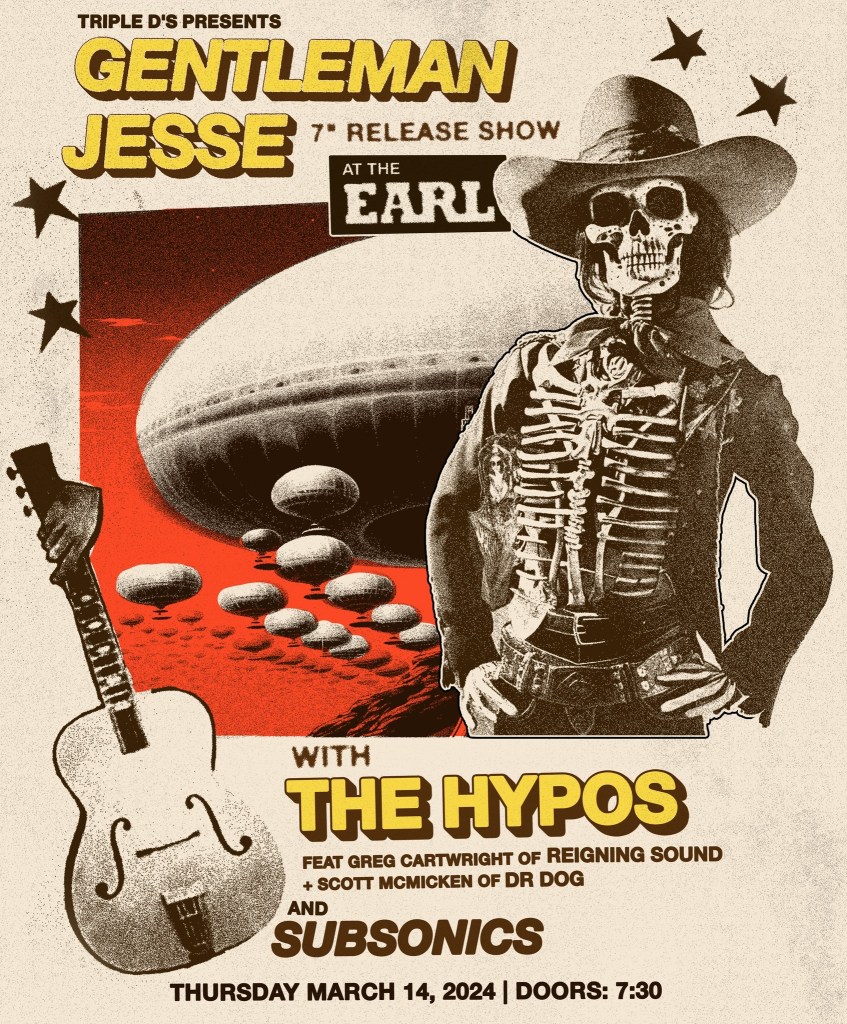
Gentleman Jesse Smith headlines the 7-inch release party for the “Where Time Stands Still” b/w “Return of the Mack” single due out in February 2024. This single is no. 12 in the ongoing Drunk Dial series, and features contributions from Greg King of GG King and Carbonas fame, as well as Ryan Bell of Bukkake Boys, Ryan Dinosaur, Scavenger of Death, et al.
For those who are unfamiliar, the Drunk Dial series invites artists to get drunk and write and record one original song and one cover of a classic tune in the same session. Both numbers will be released as a 7-inch. “Where Time Stands Still” is the Gentleman Jesse original. “Return of the Mack” is a cover of Mark Morrison’s song which appears on the 1996 album Return of the Mack.Pre-order the single here.
The Hypos
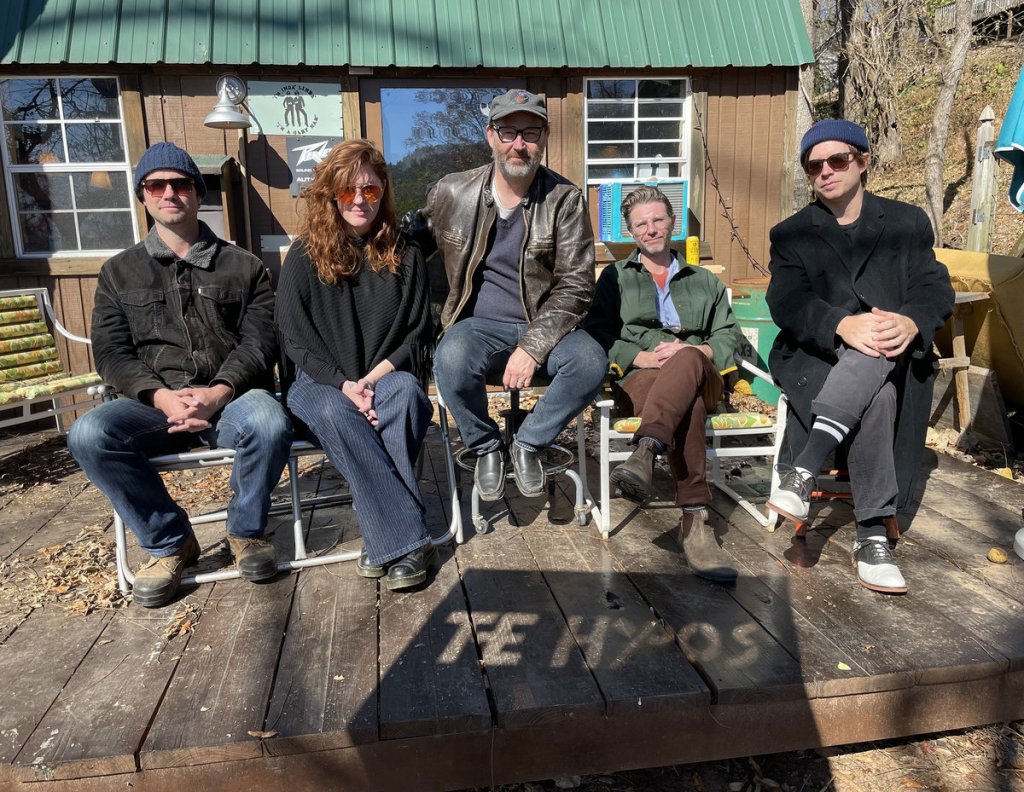
The Hypos, a new collaboration featuring veteran songwriters Greg Cartwright (Reigning Sound) and Scott McMicken (Dr. Dog), joined by some of Memphis and Asheville’s finest players (Evan Martin, Kevin Williams, and Krista Wroten) also perform. The almighty Subsonics open the show.
The Electric Nature, Magic Tuber Stringband (NC), Mute Sphere, and Magicicada play Magic Lantern in East Point on Thursday, April 11. Majid Araim will be performing a sound installation piece between sets. $15 (suggested donation, no one will be turned away at the door). 8 p.m. 2171 Star Mist Dr. SW Atlanta 30311.
If you have enjoyed reading this post, please consider making a donation to RadATL. Venmo to @Chad-Radford-6 or click on the Paypal link below.









 Rad/ATL