MESSER CHUPS: Oleg “Gitaracula” Fomchenkov and Svetlana “Zombierella” Nagaeva.
On Thursday, January 18, Messer Chups come all the way from St. Petersburg Russia to mark their Atlanta debut appearance at the Star Bar. The group, centered around the creative nexus of guitar player Oleg “Gitaracula” Fomchenkov and bass player Svetlana “Zombierella” Nagaeva, conjure a sultry surf rock flow that’s steeped in equal parts cosmic radiation and classic monster movie ambiance.
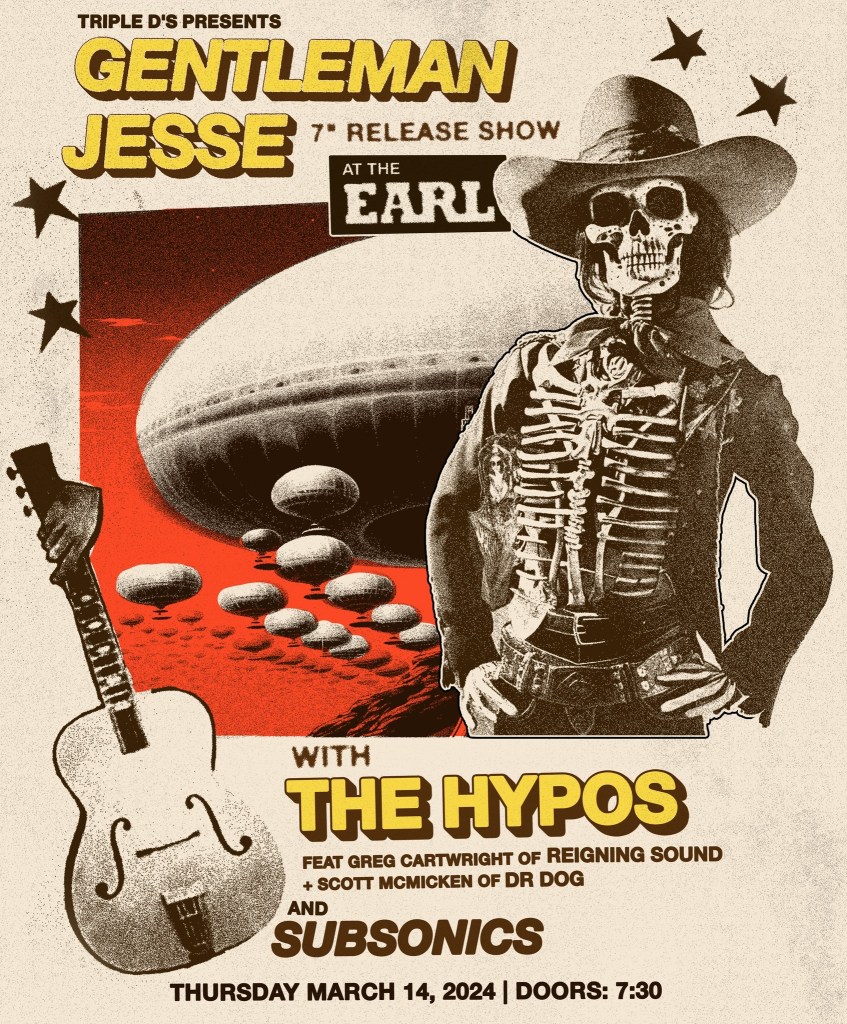
Gentleman Jesse Smith headlines the 7-inch release party for the “Where Time Stands Still” b/w “Return of the Mack” single due out in February 2024. This single is no. 12 in the ongoing Drunk Dial series, and features contributions from Greg King of GG King and Carbonas fame, as well as Ryan Bell of Bukkake Boys, Ryan Dinosaur, Scavenger of Death, et al.
For those who are unfamiliar, the Drunk Dial series invites artists to get drunk and write and record one original song and one cover of a classic tune in the same session. Both numbers will be released as a 7-inch. “Where Time Stands Still” is the Gentleman Jesse original. “Return of the Mack” is a cover of Mark Morrison’s song which appears on the 1996 album Return of the Mack.Pre-order the single here.
The Hypos
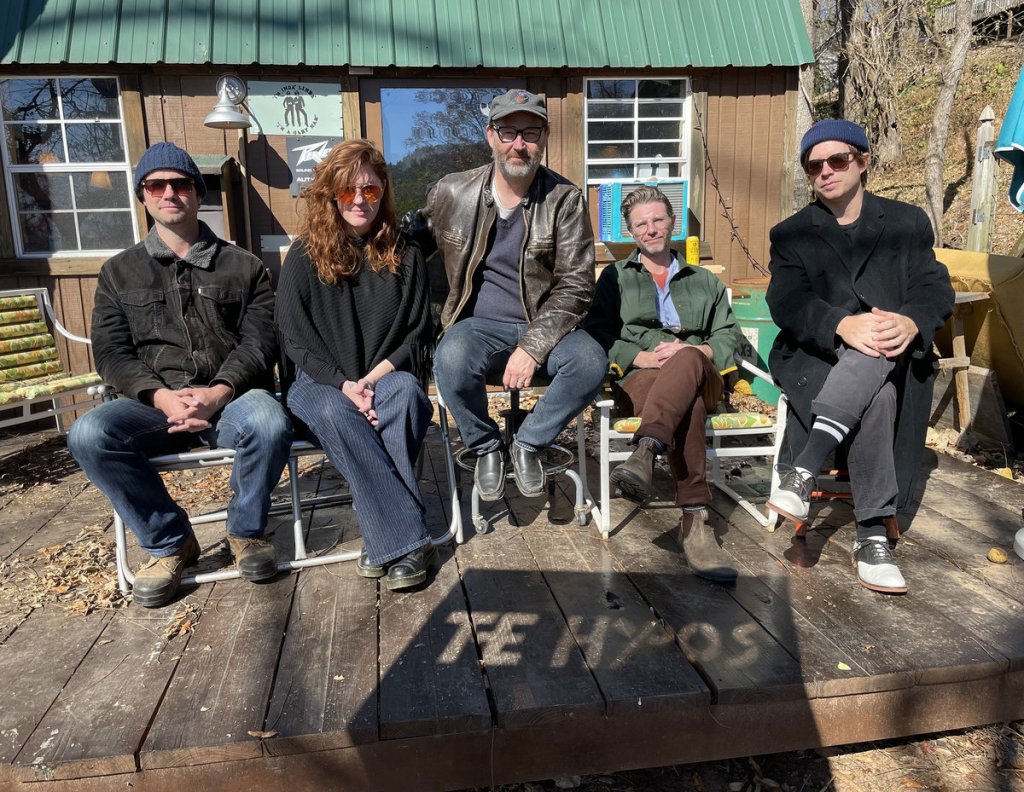
The Hypos, a new collaboration featuring veteran songwriters Greg Cartwright (Reigning Sound) and Scott McMicken (Dr. Dog), joined by some of Memphis and Asheville’s finest players (Evan Martin, Kevin Williams, and Krista Wroten) also perform. The almighty Subsonics open the show.
The Electric Nature, Magic Tuber Stringband (NC), Mute Sphere, and Magicicada play Magic Lantern in East Point on Thursday, April 11. Majid Araim will be performing a sound installation piece between sets. $15 (suggested donation, no one will be turned away at the door). 8 p.m. 2171 Star Mist Dr. SW Atlanta 30311.
If you have enjoyed reading this post, please consider making a donation to RadATL. Venmo to @Chad-Radford-6 or click on the Paypal link below.
King Buzzo, the singer, guitar player, and frontman of the almighty Melvins joins composer and Ahleuchatistas and Mr. Bungle bass player Trevor Dunn for the long-awaited “King Dunn” acoustic summer tour.
Over the years, Buzz and Dunn have worked on several projects including Fantômas, the Melvins Lite 2012 album Freak Puke, and the 2022 LP titled Gift Of Sacrifice. Their most recently released collaborations arrived in 2022 as two four-song EPs titled Invention Of Hysteria(Amphetamine Reptile Records) and I’m Afraid Of Everything(Riverworm Records). In April 2024, they released another EP titled Eat The Spray (AmRep). These songs materialized as pandemic restrictions were lifting, which is to say they haven’t had much time for touring with this material together until now.
For those who are unfamiliar, Buzz and Dunn’s paired-down offerings do not yield the full-bore sonic onslaught of distortion and wild rhythms that one gets from a Melvins or Mr. Bungle record. There are no drums. However, when playing one-on-one they craft a spacious atmosphere that ranges from cinematic to downright haunting, summoning a dark ambiance from the natural resonance of their respective voices and stringed instruments. Each song delivers an ominous traipse of psychological and physical tension by subtle but no less affecting means.
Photo courtesy J.D. Pinkus
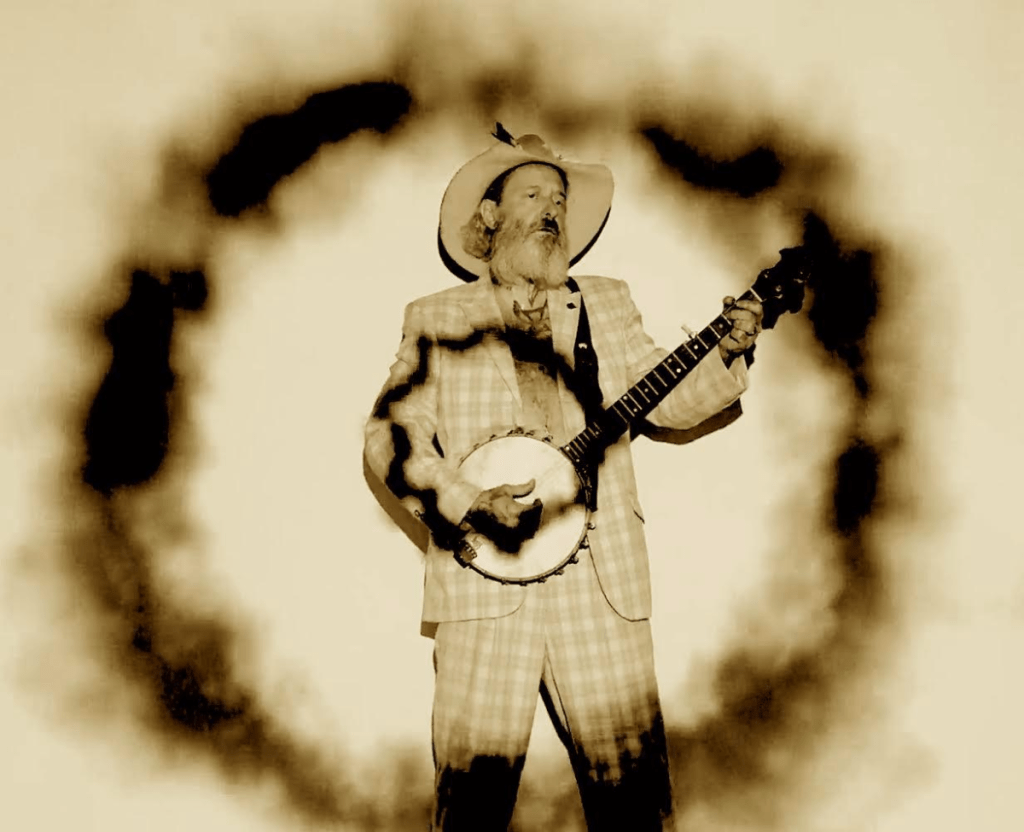
J.D. Pinkus of the Butthole Surfers, Daddy Longhead, sometimes the Melvins, and more lands in the middle slot commanding a set of cosmic banjo strumming from the deranged outer limits. It’s all set to a beautifully hallucinatory visual display. Press play below to check out a couple of cuts from Pinkus’ latest offering, Grow A Pear!
Void Manes photo by Buzz Osborne
Atlanta-based abstract electronic project Void Manes sets the night in motion with a dazzling array of modular synths and analogue gear wrapped in a galaxy of multi-colored cables. The one-man outfit explores dreamtime and nightmare soundscapes, striking a balance between atmospheric noise and melody; drones and sub-bass swells that rise and fall in fugue-like moments of rhythms, sonic impressionism, and chaos.
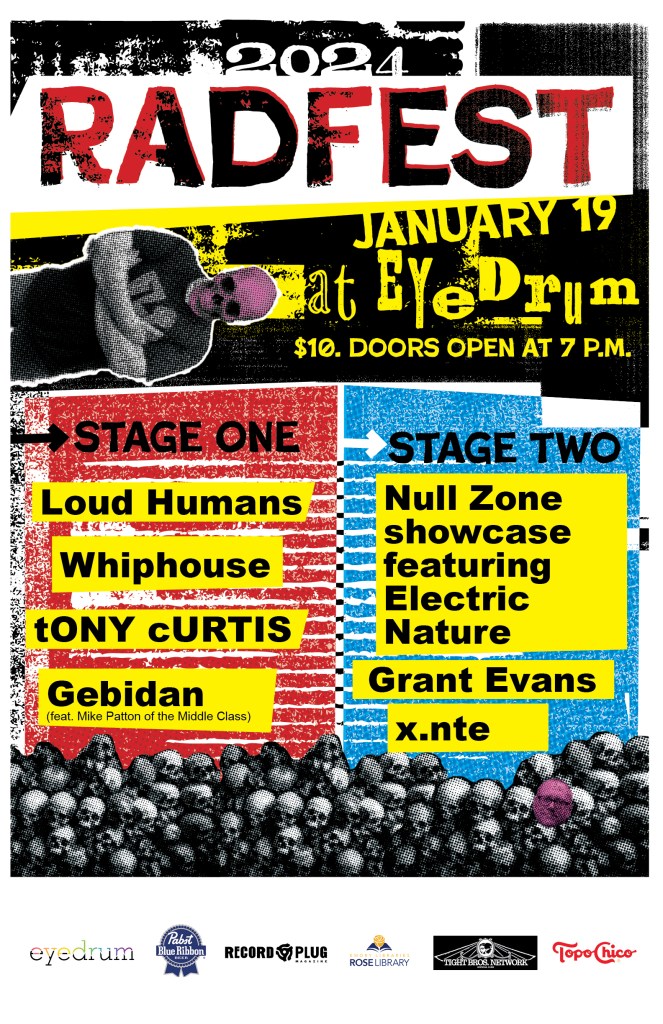
Radfest is back after a three-year Global pandemic hiatus! RadATL’s founder celebrates one more year around the sun, this time at Eyedrum Art & Music Gallery on Friday, January 19.
This year’s show features performances by seven post-punk, post-hardcore, and pure noise greats spread across two stages.
Photo courtesy x.nte
Athens-based cassette label \\NULL|ZØNE// gets the party started with a showcase of Georgia-bred noise acts including x.nte, Grant Evans (of Quiet Nights), and label boss Michael Potter’s own project The Electric Nature. Each act is cranking our short, powerful sets that challenge the traditional notions of what music is, and what it can be. Potter has been on the frontier of this scene for a long time, and it’s been far too long since his last Atlanta appearance, so it’s great to have him back.
Gebidan photo by Geoff Knott
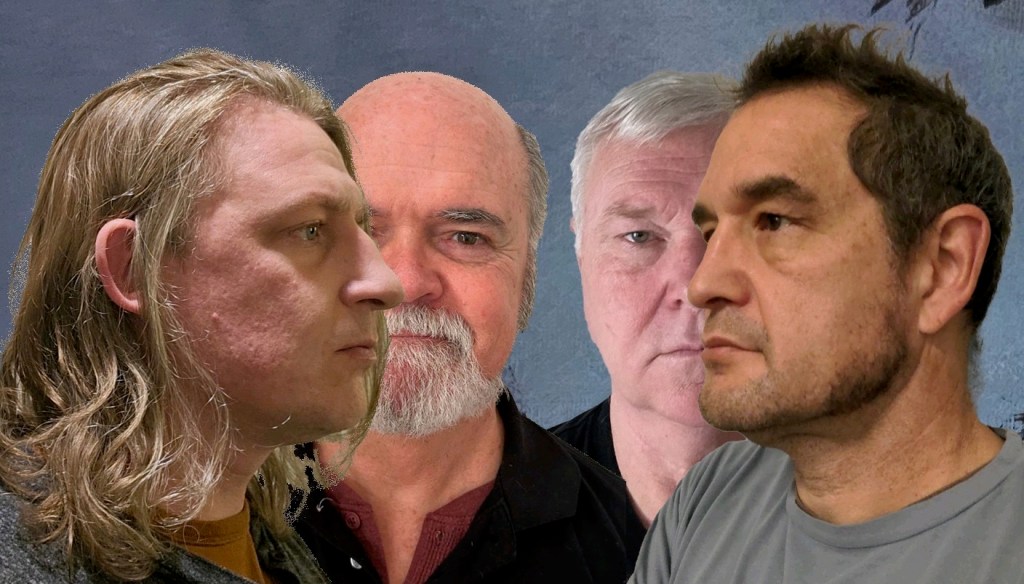
Gebidan marks its live debut. The recently founded four-piece features Mike Patton of Orange County’s late ‘70s hardcore outfit Middle Class. The group is often hailed as the first North American hardcore act EVER. Patton’s musical resume also includes time spent playing with Jack from TSOL in the band Cathedral of Tears. He was also in Eddie And The Subtitles, and Trotsky Icepick. But really, check out his credentials on Discogs to see that he worked as a producer and backup vocalist on the Adolescents’ self-titled “blue album.” He also produced the Minutemen’s “Joy” single, along with a handful of other Minutemen releases.
Patton lives in Georgia these days and is singing and playing bass with the new outfit. Gebidan’s first recordings find the group embracing a more abstract, psychedelic take on indie and alternative rock songwriting. Great stuff!
tONY cURTIS photo by Ellen McGrail
WREK 91.1 FM’s “Destroy All Music” co-host and bass player Tony Gordon teams up with guitarist Curtis Stephens for tONY cURTIS. Together, they create a scrapping, smoldering grind of earth rattling textures. Gordon (also of FREEBASS, Zandosis, and Charlie Parker fame) is well aware of the power of subtlety, especially when it’s blasted at maximum volume. The 11 numbers that make up their latest release tc2 lull the ears and the brain into a meditative state by commanding a deeper level of ecstatic listening. Beyond rhythm, beyond melody, and beyond the drone lie the pure sonic textures of steel strings, and they are teeming with abstract beauty and limitless possibilities for the imagination.
Photo courtesy Whiphouse
Whiphouse brings a high-energy and death-afflicted punk dirge to the stage. It’s one of my favorite new bands to emerge from these parts in quite some time. Lots of homies in this group! Michael Keenan, Mike Bison-Beavers, Debbie Beat, Stanley Jackson, and one of my favorite former interns Kelly Stroup! It’s just an awesome assemblage of people tearing up on stage the only way they know how.
Loud Humans
Loud Humans close out the show. More info. coming soon.
This is an ALL AGES SHOW! Doors open at 7 p.m. $10 gets you in. Fri., Jan. 19. 515 Ralph David Abernathy Blvd. Park in the lot across the street if the side street and front lot are full.
Thanks to this year’s sponsors! Eyedrum, Topo Chico, Pabst Blue Ribbon, Emory University’s Stuart A. Rose Manuscript, Archives, and Rare Book Library, Record Plug Magazine, The Tight Bros. Network, and to Dain Johnson who created this year’s magnificent flyer.
If you have enjoyed reading this review, please consider making a donation to RadATL. Venmo to @Chad-Radford-6 or click on the Paypal link below.
“Atlanta Love Letter” is the debut single from Bon Allinson and the Harm, a recently formed outfit fronted by singer and guitar player Bon Allinson.
Since 2007, Allinson has blazed a path through the local music scene playing with outfits such as Ominous Castle, Abby Gogo, More, and A Drug Called Tradition—each group plumbing the depths of psychedelic indie rock, shoegaze fury, noise, and bliss. “Atlanta Love Letter” is a statement of change for Allinson. While there’s still plenty of delay pedal and not-so-subtle nods to his fiery past, the songwriting builds on a natural evolution while looking back on a life spent traversing Moreland Ave., where ghosts are lined up at every crosswalk.
“Atlanta Love Letter” is a somber number that finds Allinson embracing a stripped down singer-songwriter approach.
“I wrote the song when I started working at Aurora Coffee, and I started seeing people I had forgotten about,” Allinson says. “I was excited about landing the job and was excited to be working with James Oh. We started telling stories—James has a great memory. I had some rough years living here, and got out on the other side of that,” he goes on to say. “This song was really coming from a place of gratitude, while being aware of where I came from and where I was.”
The song was recorded by Mathis Hunter at Alpha Centauri. For this first offering, bass player James Oh (formerly of the N.E.C.) and lap steel player Josh Tarica round out the lineup, although full band recordings are in the works.
The music is slow and direct, serving as a dreamlike backdrop for Allinson’s autobiographical reflections.
More songs from a forthcoming full-length, to be titled Now I know What A Ghost Is, will materialize soon. Allinson says there are some more rocking numbers in the works as well. In the meantime, press play below and let the history and the apparitions sink in.
If you have enjoyed reading this review, please consider making a donation to RadATL. Venmo to @Chad-Radford-6 or click on the Paypal link below.
For this show, the group will feature de Man singing and playing guitar alongside guitar player Eric Amata, drummer Mark Carbone, keyboard and accordion player Nathan Green, bass player Daniel Winn, and contributions from Brianna Lynn McGeehan.
McGeehan is also opening the show, playing material from her forthcoming solo record that de Man says is “more Ameri’tronica than Americana.”
Chad Radford: Twenty years have gone by since you released the first No River City album, This Is Our North Dakota.
Drew de Man: That’s right! There were ultimately two No River City albums and a 7-inch. The other album was called Wolves and Fishes. For this show we’re focusing on This Is Our North Dakota. It came out in 2003 and, honestly, I was hesitant to get the band back together. Even for just one reunion show.
I went back and forth about it without talking to anyone most of the year. Then a couple months ago I thought, let’s see what people think. It turns out everybody wanted to do it. It’s kinda last minute. I wish I’d spent more time preparing, and if I’d had a stronger sense of it, I probably would’ve picked a single and paid somebody to promote it. I wish I had acted more quickly on that, but such is life. I’ve always done things by the seat of my pants and have never been the best planner—and it shows.
Why hesitate over resurrecting the group?
The band started in 2001—in fits and starts—before it really got rolling. About a year later, we released our first 7-inch. At the time, it was me and Terri Onstad, and we just did it as a duo with occasional band members joining us, and it traveled well. We got quite far with it, and we had a great critical reception. It was a wonderful surprise to get written about by Magnet Magazine, No Depression, and places like that. But then she and I split up after logging lots of miles and having all the problems that you can have with bandmates.
Then I put the band back together with a proper rhythm section, and that went on for a few years. We broke up and I didn’t think anybody was particularly happy with me. I went through a long journey over the years. I moved to Portland, but I didn’t stop playing music. I left No River City behind me with a lot of resentments and disappointment and self-recrimination. I was a mess toward the end of that run in 2007. Suffering incredibly—alcohol, drugs, and undiagnosed mental illness. For years I built up in my mind how much everybody hated me. But it turns out that wasn’t the case.
When you revisit the older material now are there new dimensions to the music that you didn’t realize before?
Yeah, very much so. The main takeaway for me is that back in those days I started writing songs because I wanted to play music. Songwriting was attractive to me. I’ve always been a writer, but I was never sure how to go about doing it, or what kind of material to make except I knew that I loved folk music, country, and Americana. So I went that way and wrote a bunch of songs, just a lot of inventions and stories and narratives. Some were grounded in reality. Others were fictional narratives and ideas. You write what you can write and you get where you get with it.
Revisiting them years later, I realize that I was telling my story in all caps the whole time, and not realizing there’s stuff about drinking and sobriety. There’s stuff that describes my struggle with mental illness perfectly—even though I had no clue that’s what I was going through—and perspectives and notions about life and my worldview. You examine these things and understand them differently. Looking back, I was really just truth telling without realizing it.
Does that energize you to play the songs differently now?
After I moved to Portland, I went through a lot of different experiences of making music. I went to school for music therapy. That’s where I met my wife. I played in other peoples’ bands and worked with a bunch of other songwriters. I came to discover that what I really believe—and this is the metaphysical or spiritual dimension of songwriting—is that they’re living creatures that you brought to life. Some of them, more so than others.
Keep them alive or not? I guess I have enough sentimentality or attachment to, or love and respect for the things that I brought to life to keep them alive. If people don’t sing songs, they die. But it’s difficult to sing these songs now because I’m a better songwriter now. I’m a different person now. With many songwriters, when you hear your old writing you cringe. But everybody tells me they’re great songs, so I take it in stride.
Does it feel like the right thing to breathe new life into them?
Yeah, and it feels right to honor the art that I made. We got national airplay out of these songs!
We broke up before the internet really changed music. YouTube was hardly a thing. We had MySpace in 2007! Now, the massive tidal wave of music that comes around every year just kind of expunges any musical history unless you get big.
I picked up the ball too late to do some things with the music. I’ve thought about a vinyl release, and I’ve thought about going through and finding outtakes or alternative versions of songs—at least one song—from that record that we recorded, but didn’t include. But I don’t really have a plan at the moment. If it happens, it’ll happen next year.
What songs are you really sinking into again?
There are a few of them that tell their stories in their own way. In terms of ones that resonate positively with me there’s a songs called “Corrinne” that’s kind of a lovelorn ballad about trying to find a person and reunite with her. She’s living on the West Coast so it’s kind of a quest to find her and rekindle what you had. That in and of itself is like telling a story that I did, and later it sort of came true.
The cool thing about that one is that when we perform it I’m actually gonna play pedal steel. That’s particularly cool for me because I’ve loved that instrument since I was a kid. But I was always daunted by the thought of trying to learn it. I spent a lot of my time when I was making these alt. country records and playing around thinking that I would have somebody else play it occasionally. I never was able to find someone who would be a permanent pedal steel player, and now I understand why. It’s hard to get your money’s worth out of being in somebody’s band. A lot of us are older guys who’ve spent a decade or two learning the instrument.
Getting back to “Corrinne,” I did not play the pedal steel part on the album because it was just kind of a mystical fetish item to me. A guy in Nashville where we recorded the record played a pedal steel part. In the intervening years, I picked up the instrument and spent a lot of time touring on the West Coast with various people, playing pedal steel. Now, I’m a pedal steel player. It would only be fitting for me to play that one on the steel. Brie’s gonna play the acoustic guitar part, and I’ll play steel on that. That’s one way to turn it around and make it especially gratifying for me. To me, there’s real magic in that.
Tell me about Brianna’s new album, which you described to me as “Ameri’tronica.”
She and I both agree, we love Americana and folk music, and it’s totally in our wheelhouse. But she’s less interested in it these days. So am I, although I could turn around and go make another Americana record next year, if the feeling struck me. But I’m gonna honor her position and branch out. For years I have said to myself every time I wanted to make a record, “Why don’t I just buy some gear, learn to use it, and make my own records?” And I’m like, whoa, it’s very daunting. It’ll probably take me years to figure it out. So I’ll just pay somebody for studio time. That ends up being an impediment to learning how to do it yourself.
We reached the point where I was said, “If we’re gonna do this, it’s gonna be very experimental and exploratory, so let’s get some gear.”
It’s really exciting, after years of making acoustic music and folk music and rock ‘n’ roll, sitting with a MIDI controller and working on electronic beats of samples and stuff. We want to go in many different directions with it, focusing particularly on beats that are danceable and engaging for people. So it has elements of—I hesitate to say EDM because of the connotations that has, at least for me—electronic beats. Bri is playing a lot of electric guitar on it, and she’s not gonna play any acoustic guitar. That’s bold! But she has a wonderful voice. She’s one of the best singers I’ve ever worked with or known. So it’s song centric and it’s centered around her voice. We’re not planning to have me sing, even though we do a lot perfect harmony together, that’s not gonna be a feature. It’s really gonna focus on weird sounds and a pastiche, cut-up approach. Disparate elements, juxtapositions of sounds, and a mix of acoustic and electronic instruments.
It’s a very different approach for us in every sense of the word.
In the summer of 1981, Drivin’ N Cryin’s bass player Tim Nielsen and drummer Paul Lenz started playing music together as the rhythm section for Atlanta pub rock/punk outfit the Nightporters. The group, which also included singer and guitar player Andy Browne, carved a path through Georgia’s burgeoning underground punk and new wave scenes, sharing stages with legendary acts such as the Clash, REM, and the Replacements.
The Nightporters infused unabashed angst and joy in equal measures into their three-minute, three-chord songs with titles such as “Mona Lisa,” “Dreamin,’” and “West of Eden,” detailing their teenage worldview—yes, some of them were still in high school at the time. Browne was only 15 years old when the group started.
LYNX DELUXE: Photo by Kelly Thompson
Fast-forward some 42 years later: Browne fronts the baroque alternative rock songwriting machine that is Lynx Deluxe. Backed by a lineup featuring bass player Lucy Theodora, drummer Brad Mattson, keyboard player Billy Fields, and guitar player Jeff Dean, the group’s take on “The Great American Bubble Factory” is a stylish and bucolic affair. Their cover pays homage to Kinney’s original number while reflecting on how industry outsourcing has affected the American economy and changed the landscape and middle class American culture as a whole.
“The Great American Bubble Factory” embraces a sense of nostalgia for a happier time and place in America, when daily life seemed simpler and more prosperous.
Kinney makes a cameo appearance in the song, playing harmonica, and Nielsen plays mandolin, making it the only song on the comp. to feature Drivin’ N Cryin’s two longest standing players.
Lynx Deluxe renders “The Great American Bubble Factory” even more precarious than the original, pushing the narrative forward by expanding upon Kinney’s lyrics in deeply personal ways.
In the second verse, Browne sings, “Did some time for a crime went a little loco / Slaved for two bits a day praying for a furlough.”
As Browne explains, it’s all a true story.
“I was in jail for 80 days, because I went a little loco,” Browne says. “The prescription oxycontin I was on for eight years due to a severe back injury left my dopamine and serotonin levels not so balanced for about a year and half. I was not exactly in the right state of mind, and was going through a very difficult time. While I was in there I was trying to get in the kitchen to work and make like .50¢ to $1 a day,” he adds. “But they wouldn’t let me do it.”
Later, Browne blends yet another homage into the song, this time giving a nod to “Union Sundown” from Bob Dylan’s 1981 LP Infidels. “Her dress reads Mozambique / This flashlights from Taiwan / These boots are from the Far East / Boxed and shipped from Amazon / The car parts come from China / Fenders made in Mexico,” he sings before calling back to the original number’s refrain, “If you can make it here, why you build it there?”
This new vision of “The Great American Bubble Factory” unfolds with an even greater sense of unwavering determination.
“We’re not much of a cover band,” Browne goes on to say. “When we pick a song to cover, we have to rewrite it a bit and make it our own.”
Artwork by Anna Jensen
Songs for this living tribute project are amassing over the next 10 months. Previously released singles can be found here.
The first physical installment is available on vinyl now. Check it all out via TastyGoodyRecords.com.
If you have enjoyed reading this review, please consider making a donation to RadATL. Venmo to @Chad-Radford-6 or click on the Paypal link below.
All three bands on stage this evening feature longtime friends who cut their teeth in a more civilized era of hardcore, post-hardcore, and indie rock—the ‘90s. Now, they’re elder statesmen of the scene, raising the bar high while fusing furious rock, noise, and angular riffs without pretense. It’s called experience, kids.
Photo courtesy of Blood Circuits
SCRATCH OFFS: Photo by Steve Pomberg
If you have enjoyed reading this review, please consider making a donation to RadATL. Venmo to @Chad-Radford-6 or click on the Paypal link below.










 Rad/ATL