Atlanta expat Adron is returning to play her first hometown show since losing her home and nearly everything she owned to the the Eaton Fire in Los Angeles in January.
The singer-songwriter is, perhaps, best known for blending Brazilian Tropicália with otherworldly melodies and a voice that is playfully dreamlike and sophisticated on albums such as 2011’s Organismo and 2018’s Water Music.
Since the fire, picking up the pieces of her life has been “insane and somewhat horrifying,” Adron says. Along with her home in Altadena, she lost a lifetime’s worth of art, letters, her beloved aquariums, and relics from her years growing up in Atlanta. It’s the kind of loss that would scramble anyone’s sense of identity. “It’s like losing my whole story,” she offers.
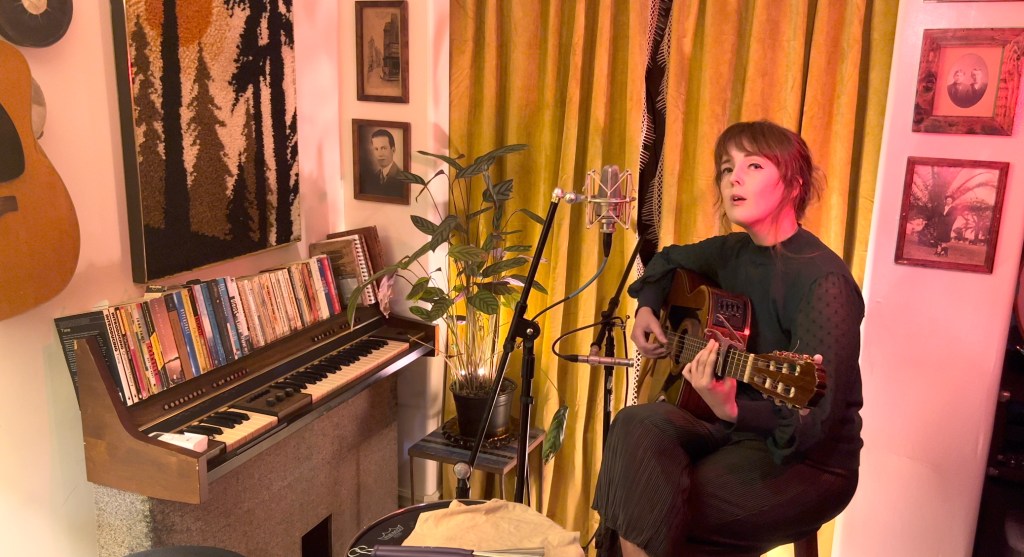
Adron in the home studio that was lost in the fire. Photo by Robin MacMillan
Adron also lost a home studio (pictured above) that she’d spent long hours building out and fine tuning to perfection with her partner Robin MacMillan.
In the wake of so much wreckage, Atlanta was there for her. Countless friends and fans helped her get back on her feet. Now, she’s stepping back on stage—not just to perform, but to say thank you and to reconnect with the city where she will forever be linked.
Experiencing such great loss has sharpened her connection to Atlanta and to the songs she’s written. “This show will be kind of a big deal for me,” she says. “It’s a test of faith, performing for this audience that’s done so much for me when I feel so diminished. But my music is good as hell—better than ever, even—and it’s crucial that I prove it to all of us, especially myself.”
Raw and slowly burning tension runs through TVAD’s latest single, “The Island Song,” which takes shape as a stark meditation on the damage that mankind’s obsession with religion has inflicted upon the world.
With TVAD (Television After Death) recently paring down to a two-piece lineup, principal songwriter Dizzy Damoe—who prefers to not use his Christian-born name—handles guitar, synth, and vocal duties while working alongside bass player John Holloway.
Damoe is currently a member of Alanta’s purveyors of blackened doom and death metal Withered, and is a former member of sludge metal and post-hardcore acts Leechmilk, Sons of Tonatiuh, the Love Drunks, and Canopy. Holloway first made an impression in the bands Tabula Rasa and Of Legend.
“The Island Song” conjures an eerie atmosphere, built upon minor-key melodies and mechanical rhythms that recall the bleak romanticism of early Wax Trax Records releases, threaded through with brittle textures of post-punk and dark wave. Damoe’s guitar oscillates between shimmering ambience and sharp, metallic jabs, while Holloway’s bass carves out a grim undercurrent, grounding the song’s sprawling pace.
Cut from lyrics such as “They hunt, looking for a reason. The wolf, still eats all season. A child, may go hungry. But pray, and seek out your vision,” the song stares down organized religion with an unflinching eye. It’s tone is neither preachy nor dogmatic, but there are no minced words. Damoe delivers each line with a weary conviction, as though bearing witness to the long arc of history’s spiritual missteps. “The Island Song” doesn’t offer solutions, just stark reflection.
It’s a bold move — a track that walks a fine line between sonic exploration and thematic clarity. And for TVAD, it sets the stage for something bigger. If this is the first glimpse into the group’s forthcoming body of work, it’s clear they’re not pulling any punches.
TVAD’s next show is booked at 529 on June 12, which is Damoe’s birthday. A few more shows throughout the summer will be announced soon. Until then, press play on “The Island Song.”
If you have enjoyed reading this post, please consider donating to RadATL. Venmo to @Chad-Radford-6 or click on the PayPal link below.
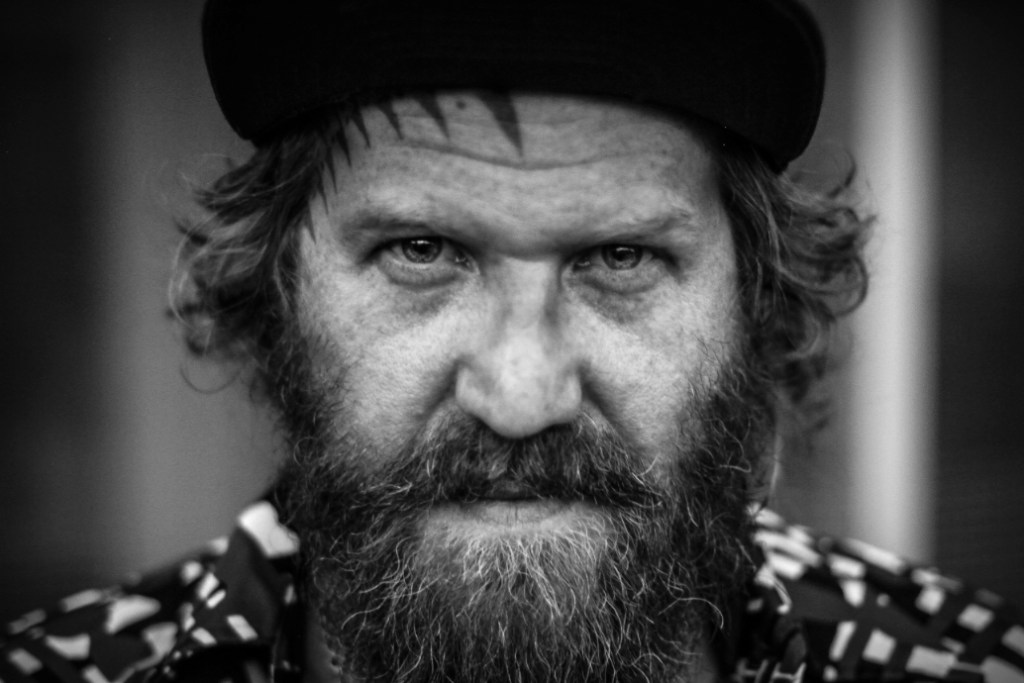
The great Brent Hinds—former Mastodon guitar player and mastermind behind such prolific acts as West End Motel (featuring the songwriting talents of Tom Cheshire of the Rent Boy, All Night Drug Prowling Wolves, and TCB), Fiend Without A Face, and Dirty B & the Boys—takes over the Garden Club at Wild Heaven for an evening of Southern fried surf punk, country, and monster movie rock ‘n’ roll. This show brings a veritable sampler of Hinds’ various projects from throughout the years together on one stage for a night of beauty and depravity that’s not for the faint of heart.
86: Max Koshewa (from left), Ken Schenck, and Mac McNeilly. Photo by Mary Alexander.
Chunklet Industries is dusting off a crucial piece of Atlanta’s post-punk and new wave past with an online reissue of 86’s first two singles. The trio—featuring Mac McNeilly (before his seismic drumming found a home in the Jesus Lizard), Ken Schenck’s jagged guitar lines, and Max Koshewa’s brooding bass—captured a restless energy that redefined the city’s underground music scene in the early ’80s.
“Useless” and “Behind My Back” were recorded at Southern Sound in Knoxville, Tenn. in July of 1983. “Youth Culture” and “Inside” were laid down a year later 1984. Both singles were originally released via Knoxville’s short-lived indie label OHP Records. Placed together here, both singles channel the urgency of the era while hinting at the band’s singular presence in Atlanta.
Audio restoration duties for this new issue fell to Jason NeSmith at Chase Park Transduction, where the songs were delicately digitized from the original vinyl 7-inches. NeSmith applied subtle de-clicking and EQ adjustments, preserving the grit and urgency of the recordings while amplifying their visceral punch.
86: Max Koshewa (from left), Ken Schenck, and Mac McNeilly. Photo by Mary Alexander.
While 86 is often remembered as the band that gave McNeilly his start, these singles cement the group’s place as a vital force in Atlanta’s music history. And this is only the beginning: Chunklet reportedly has a trove of unreleased recordings from the 86 archives queued up for release later this year.
If you have enjoyed reading this post, please consider donating to RadATL. Venmo to @Chad-Radford-6 or click on the PayPal link below.
Tucker Riggleman & the Cheap Dates. Photo by Corbin Lanker
The current lineup of Tucker Riggleman & the Cheap Dates calls a sprawling stretch of Appalachian terrain home. Drummer M. Tivis Clark hails from Lexington, KY. Bass player Mason Fanning lives in Morgantown, WV, and singer and guitar player Tucker Riggleman resides in nearby Fairmont, WV. With their latest album, Restless Spirit (WarHen Records), the group weaves a haunting blend of country grit and punk energy with a Southern-gothic ambiance. The raw honesty that binds songs such as “Shotgun,” “Bucket and the Boot,” and the album’s title track strikes a balance between traditional and contemporary regional sounds, turning the solitude of mountain living into a call for connection and resilience.
Restless Spirit was produced by Grammy-nominated Duane Lundy, who has worked with everyone from Kevn Kinney of Drivin N Cryin and Sturgill Simpson to Michael McDonald, Bela Fleck, and dozens of other artists. Together, Lundy and the Cheap Dates capture an electrifying blend of alt-country and indie rock.
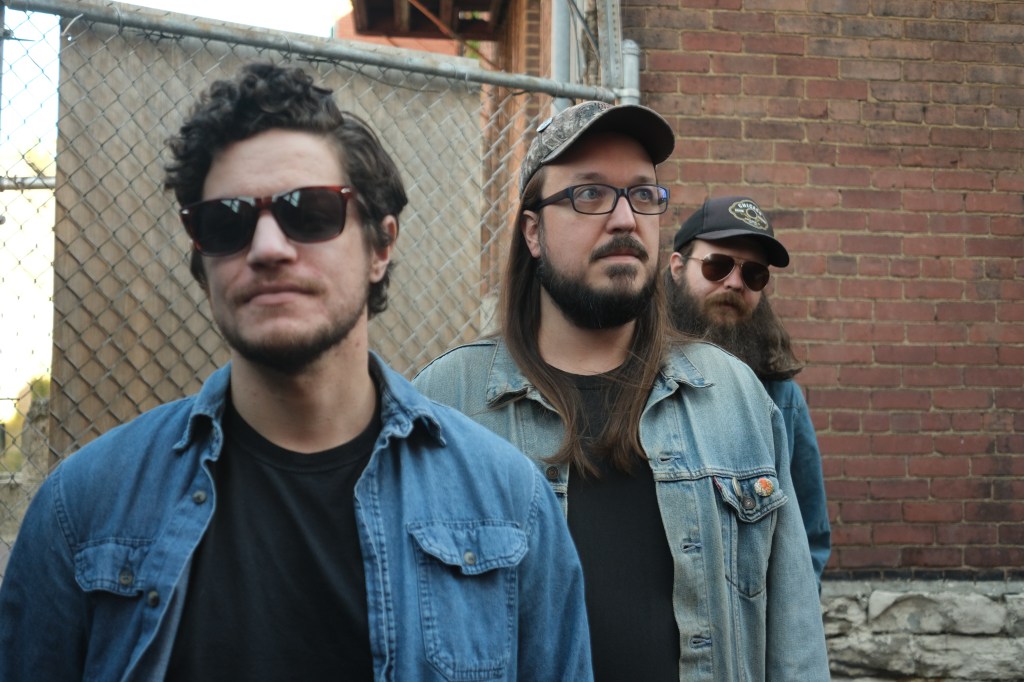
Atlanta-based Americana punks Reconciler, Birmingham’s the Williamson Brothers (feat. Blake and Adam Williamson of Lee Baines & the Glory Fires), and Former Sinners of the Future (a new band featuring mixed media artist Jeremy Ray) also perform.
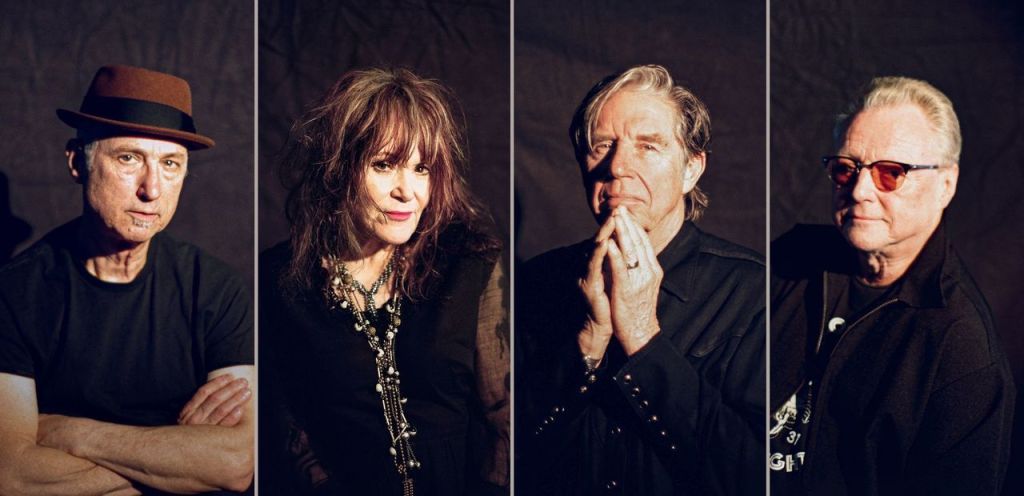
SMOKE & FICTION: From left, DJ Bonebrake, Exene Cervenka, John Doe, and Billy Zoom of the band X. Photo by Gilbert Trejo
X takes the stage at Variety Playhouse this Sunday, October 27, as part of the group’s farewell tour, supporting their latest—and final—album, Smoke & Fiction. It’s the culmination of a long legacy in red-blooded American punk and rock ‘n’ roll, featuring the original lineup of singer Exene Cervenka, singer and bass player John Doe, guitar player Billy Zoom, and drummer DJ Bonebrake. Since forming in the summer of ‘77, X has stood as the cornerstone of Los Angeles’ first-wave punk scene. Now, 47 years later, the group is taking one last bow.
Smoke & Fiction’s June 2024 release arrived with news that the band was hanging it up for good. The album is stacked with themes of finality and reflection woven throughout singles such as “Big Black X,” which nods to their early days as punk upstarts, to other songs such as “Sweet ’til the Bitter End” and “Ruby Church,” which revisit the romantic tensions that have always simmered in X’s greatest hits.
Smoke & Fiction finds X pushing their sound into the beyond and back, with deeper, darker textures, tones, and arrangements.
Zoom’s rock ‘n’ roll twang and raw punk edges, coupled with Bonebrake’s tight rhythms, ground the album, but it’s Doe and Cervenka’s balance of dissonance and harmony—urgent, commanding, and yearning—that brings it all back home. If this really is the end, X is bowing out with the same fire and fierce integrity that made the group a legend in the first place.
The strange case of Melts’ long-lost album Salicoutinäw begins in the winter of 1994. Drummer Andrew Barker, bass player Jo Jameson, and the group’s singer, guitar player, and principal songwriter Theo X had made the long haul from Atlanta to the snow-covered landscape of Minneapolis to record their full-length debut. After releasing the “667” b/w “Crusser” 7-inch single a year earlier on the Greensboro, NC label, 227 Records, the group was primed to cut the LP with 227. The label’s owner Jay Boone did the footwork, made the connections, and lined up a few days of studio time with engineer Tim McLaughlin at Amphetamine Reptile Recording Studios.
A few years earlier, the New York City-based noise rock outfit Helmet had become the subject of a major label bidding war. Ultimately, Helmet moved away from their home at AmRep to the more mainstream auspices of Interscope Records, to release their 1992 classic album Meantime. As a result of so many major labels clamoring to sign Helmet, AmRep Studios had become a well-funded, well-outfitted resource. Along the way, engineer Tim “Mac,” who also played bass with Minneapolis’ noise punk provocateurs Halo of Flies, had become a respected studio hand.
“Some of the members of the bands Today is the Day, Mickey Finn, and Godplow had all spoken positively with us about recording with Tim Mac,” X says. The Melts frontman prefers using his pseudonym when discussing the band. “We were excited to work with someone who was well-versed in the language of recording loud and noisy music.”
After all, it was the early ‘90s. Nirvana was ascending to new commercial heights after releasing 1991’s breakthrough album Nevermind. The word “grunge” was splashed across newspaper and magazine pages worldwide, culminating in a clearly defined but increasingly clichéd sound and fashion trend—the grunge look.
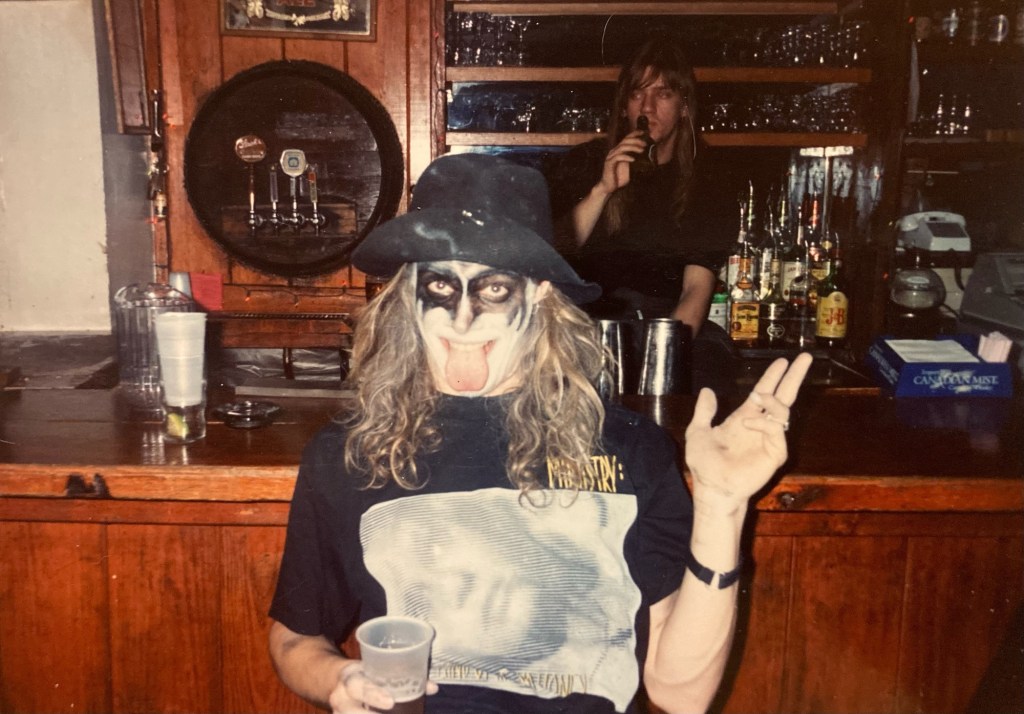
Theo X at the L5P Pub circa 1991. Photo courtesy of Melts.
But beyond the mainstream’s myopic vision, an underground noise rock scene flourished, culminating in an era of sludgy, antagonistic, and guitar-heavy bands such as Cows, Unsane, Hammerhead, the Jesus Lizard, Skin Yard, Cherubs, Melvins, and more churning out raw rhythms and distortion that moved at the speed of molten lava.
The sheer sonic intensity of Melts’ thunderous rhythms wrapped in a penchant for debauched antics drew a wild, sometimes confrontational element out of the audiences who’d come to their shows.
Barker laughs when he recalls narrowly avoiding a scuffle one night when Melts shared the stage at Dottie’s with Cat Power and King Kill 33.
“We played the show and this guy got right up in my face,” Barker says. “He wanted to fight me or have me come back to his friend’s house so we could have a drum competition. He wanted to show that he was a better drummer than me. At first, I thought he was joking but it got a little intense until Jo stepped in and talked him down.”
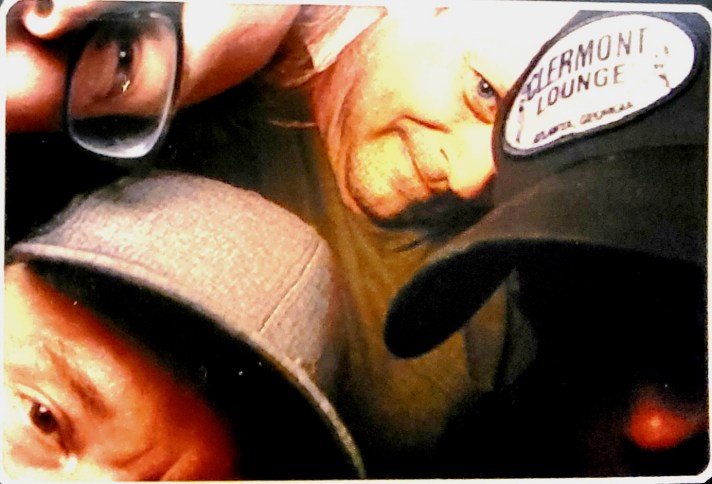
On another night, Melts were kicked out of the Clermont Lounge for getting naked on stage and lighting a 500-count roll of Black Cat firecrackers during their set.
“The style of music we were playing wasn’t much of a genre yet,” X says. “We had a lot of good samaritans coming to us along the way telling us we were tuning our guitars wrong. The songs we recorded for the album are tuned in B. It’s low, and sound guys would come along and say things like, ‘Hey buddy, let me help you with that guitar so we can get it tuned the right way.”
In conversation, Jameson casually mentions the name Ernie Dale, pausing only for a second as X laughs. The former soundman for Little 5 Points’ fabled former music dive The Point, was well known for not putting up with foolishness of any kind.
“Ernie is great, but if you had something that Ernie deemed to be a bad sound, he wanted to mentor you out of it,” Jameson says. “He couldn’t believe that we were intentionally making these sounds.”
Jo Jameson of Melts. Photo by Jenn Brown
Stories like these, coupled with the down-tuned guitars, heart-pounding drums, and the wide-eyed crawl of songs like “Grape,” “Jackdaw,” and “Cotton Hol” earned Melts a reputation as Atlanta’s answer to sludge metal pioneers the Melvins. But the 14 songs on Salicoutinäw stamp in time a singularly creative and distinctly Southern group that defied expectations, rather than simply adhered to trends.
When promo CDs of Salicoutinäw were mailed to college radio stations the album quickly gained traction. Salicoutinäw even broke the CMJ LOUD 100 chart in 1994. But when a pressing plant failed to deliver the first pressing of finished CDs that had already been paid for, the high cost of working in the music industry in the ‘90s added up too quickly, and 227 Records went out of business. The promo CDs, featuring a primitive, last-minute cover illustration, had a greater reach than the finished product.
By the band’s estimation, maybe 100 copies of a later second pressing of the CD made it into the public’s hands. But it was too little too late. The group received boxes of CDs with the proper cover art, but any distribution 227 Records could’ve offered was long gone, and any steam the group had built up went with it.
“I was blown away by Melts the first time I saw them,” Boone says. “I also adored them as individuals—still do! That’s why I have no animosity or was ever bitter about the shortcomings of the record. I still believe they could’ve done very well, but like so many things in life, shoulda, coulda, woulda isn’t worth dwelling on too much.”
With Melts, the 227 situation was only slightly better than the fate of their Athens labelmates Harvey Milk whose self-titled, Bob Weston-recorded debut album was shelved altogether. That album finally saw the light of day in 2010 when Hydra Head pressed it to vinyl.
Melts’s debut album has remained in obscurity ever since.
“It derailed me,” Jameson says. “The tedium of working on a record—putting so much time and energy into it—and waiting for it to arrive was frustrating. Ultimately, Theo and I parted ways over it. I was pushing for us to rehearse and to play more shows. I was all of 24 years old and was a booger-eating moron. I had no idea how many roles [Theo] juggled with everything from negotiating the release to playing the music. As we’ve discussed in the last couple of years, we misunderstood what each other said,” he goes on to say. “I had quit the band in his eyes. I didn’t intend for that to happen, but whatever I said drew a line in the sand. He had so many responsibilities with this band. I was shortsighted about it. But we’re adults now, and 30 years later, I see it.”
Not long after Salicoutinäw’s botched release the lineup dissolved. Jameson and Barker joined alternative country and Americana singer and songwriter Kelly Hogan’s band to release her debut album, The Whistle Only Dogs Can Hear. Jameson also did a stint playing with Archers of Loaf frontman Eric Bachmann in the band Crooked Fingers.
Photo courtesy Andrew Barker.
Barker continued playing drums with the outsider jazz ensemble Gold Sparkle Band. He still regularly performs and collaborates with various artists around New York City.
From there, X kept Melts moving forward with new members over the years. In 2003 he moved to Fort Collins, CO where he started working with the psychedelic Americana outfit Little Darlings.
Now, 30 years later, a self-released double LP pressing of Salicoutinäw has rekindled the group’s true power and allure, pushing the music and the English language into mysterious new realms of the imagination, while planting the band firmly in the present.
Jameson and X started playing music together in 1984 under the name Saboteur. They were high school kids by day, but their nights were spent practicing in X’s parents’ basement in Smyrna, crafting a hybrid of quasi-hair metal and thrash punk. By 1988, the band name morphed into Sabotortoise while they landed gigs at Atlanta’s storied downtown venue The Metroplex, opening up for nationally touring acts including LA Guns, Faster Pussycat, and Humble Pie.
Back then, X went by the moniker Ted Sunshine–different bands get different pseudonyms.
Melts was christened in 1990 when X and original drummer Tim Jordan recorded and released a cassette tape of early material titled As Noisy As We Want To Be.
Jo Jameson (from left), Theo X, and Tim Jordan of Melts. Photo by Steve Gaiolini.
Over the years, various members cycled through the group. In 1991, filmmaker Chad Rullman who later directed Mastodon’s “March of the Fire Ants” and “Iron Tusk” videos played bass in Melts. A year later, Jimmy Bower of NOLA sludge band EyeHateGod played bass for a stint.
Jameson’s initial run with Melts started in 1992 and lasted through Salicoutinäw. In 2021 he was welcomed back into the group. Original drummer Tim Jordan also returned to the lineup.
Since his early teenage years, X’s writing style with lyrics and band names has remained somewhat impenetrable. Everything from changing the first band’s name to Sabotortoise to an album titled Salicoutinäw to belting out songs titled “Vaccua 8 #3,” “Lessie,” and “Crusser,” X sculpts a jumble of words, letters, and numbers smashed together creating a wholly new mode of communication.
While pointing to the words on the album’s original cover, which is fully restored for the vinyl release, he explains them as though they are a Rosetta Stone to understanding his mashed-up style.
“On the cover you have ‘Sao’, like the Tao, and ‘sow’ like a mother pig,” X says. “You’ve got ‘Sally’ and then you’ve got cooties! And then chicken coop,” he says before phonetically singing, “Just like the white-winged dove sings a song, sounds like a chicken/Baby coop/Chicken coop. I borrow a lot of lyrics from Michael Jackson, George Michael, Madonna, and Stevie Nicks,” he goes on to say, “but I run them through a semantic discombobulator that turns them into some fresh pudding.”
To be sure, X’s lyrics evoke an absurdist’s sense of humor that lies somewhere in the vicinity of Marcel Duchamp’s dada-esque wordplay, Naked Lunch author William S. Burroughs’ cut-and-paste techniques, the Rev. Howard Finster’s primitive folk art, and an ecstatic Southern Baptist speaking in tongues. Still, his dynamics exist in their own avant-garde funhouse of meanings. Salicoutinäw opens with “Weu know t’live must two/ Yer muther sells sunduh the blackiss/ But under won is a vacuum/ Every tin’shy.”
When spelled out, the syntax appears to be nonsense, but it all makes perfect sense to him.
“It’s kind of like, before people were referring to music as emo, this was my version of that,” he laughs. “It certainly seems to have been very therapeutic.”
Jameson chimes in, adding in a deadpan voice: “You’ve just been granted unlimited access to step inside the mind of Theo X. Be careful in there.”
X continues describing his use of language as an amalgamation of emotions, energy, and warped synapses that he channels into Melts songs.
“My brain might have developed in a way that is slightly abnormal or has some sort of organic brain damage,” X says. “I have been around heavy metals, solvents, and thinners—in railroad car quantities—my whole life. Like, 50,000 square feet at a time in the middle of July and August with no ventilation. Also, my academic interests are in language and semantics, especially within religious texts.”
Melts circa 2024: Theo X (from left), Tim Jordan, and Jo Jameson. Photo by Steve Gaiolini
During the COVID-19 pandemic, Jameson found himself listening to songs from Salicoutinäw after so many years. “I thought, ‘I really want to put a needle on these songs. Can we press just one or two copies so that I can have it on vinyl?’”
Pressing up such limited quantities of the record wasn’t feasible, but it started a conversation that brought X, Jameson, and Jordan together to play music. Their reconvening yielded a proper double LP release of Salicoutinäw. But there were hurdles to overcome before they had records in their hands. Chief among them was the artwork.
In the late ‘80s and early ‘90s, the way to store big digital files for personal computers was on a removable 44- or 88-megabyte SyQuest drive. “It was about the size of an old 8-Track tape,” Jameson says.
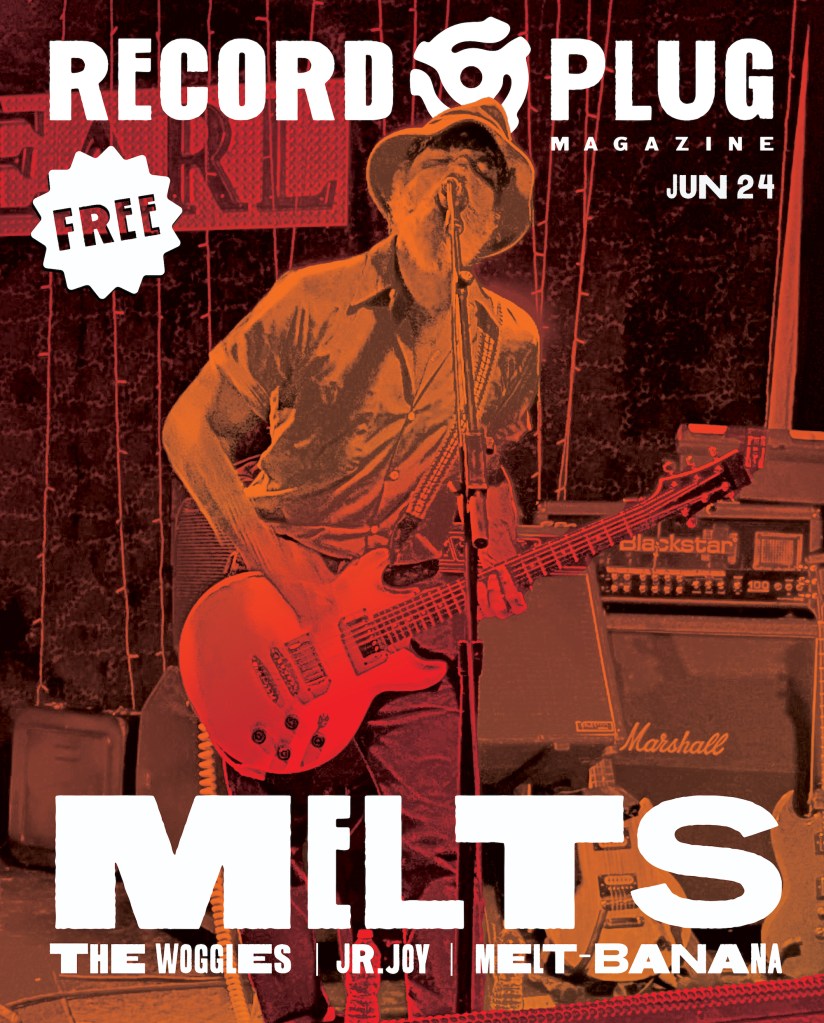
They could be taken to Kinko’s, for example, where layout, design, and scanning were completed. The user would then pay for their time on the computer. The technology is long antiquated. After digging up X’s old SyQuest drive, the group’s friend, Record Plug Magazine’s Creative Director Andrew Quinn connected them with a specialist in California who was able to retrieve the files. After decades of gathering dust, everything was still in working order. Quinn led the efforts in reworking the album’s cover art and the insert, which includes a timeline of the band and everyone who was a part of it.
X, who produced Salicoutinäw made no alterations from the original recordings prior to handing them over to Morphius Records for vinyl production.
A record release party had to be booked. Barker played on the album, but Jordan is the band’s current drummer. X and Jameson delicately approached Jordan to float the idea of bringing Barker down from New York to maybe play three songs for the show. Jordan’s reply: “That sounds amazing! Let him play the whole show, I want to see that! I never saw Metls with Drew playing drums!”
As a historical document, pressing Salicoutinäw on vinyl is a necessary step in correcting the past for Melts. It also gives the group solid ground to move forward once again. They pressed only 200 copies of the LP because “We think we can sell that many and not have them lying around for years,” Jameson says.
While they don’t have new material in the works, there is a tremendous backlog of older Melts songs that have never been recorded, including a follow-up album that X wrote, called Melts Inc., which was named after X watched all the episodes the “Melrose Place” spin-off series “Models Inc.”
“Because the first one failed so catastrophically to meet its audience, we made a pact to work through some of the older rehearsal tapes and live recordings before we say, ‘Let’s write a new song,’” X says. “We’ve been rekindling some of that, and there is a lot of that stuff lying around, so there is more to come.”
It’s difficult to believe that it’s been eight years since the last Corndogorama set up with its summer fair vibes with local music galore—nearly 40 bands and two DJs and fire performers are on deck for this weekend.
The long-standing Atlanta tradition returns this year, taking over Boggs Social & Supply on the Westside with three days of deep-fried good times. … Yes, there will be veggie corndogs for the veggies who walk among us, and the celebrated corndog eating contest goes down Saturday afternoon at 4:10 p.m. Who will eat the most corndogs, and how many can they keep down? This is an endurance test that’s not to be missed.
Saddam Death Cave’s Planned Obsolescence EP proves that the hardcore struggle is real, and life’s daily tormentors grow increasingly difficult to rise above as time passes. The 10-inch record’s collective resume channels decades of Southern punk, hardcore, and alternative rock pedigree: Guitar player Marlow Sanchez is an alumnus of All Night Drug Prowling Wolves, Rent Boys, and Swing Riot. Bass player Brian Colantuno played in Mission To Murder. Guitarist Mike Brennan played in Otophobia and still plays in Primate with Mastodon’s Bill Kelliher. Drummer Keefe Jutice was in the Close. Vocalist Gray Kiser fronted Winston-Salem’s straight-edge crew Line Drive.
With Planned Obsolescence, these statesmen of the scene tighten their focus to hone a classic hardcore charge, fusing experience with razor-sharp riffs and manic rhythms. Kiser’s visceral, powerful voice in the opening number, “The Last Living Mountain” is a fiery rip on rising above repression and the mechanisms of societal control. “The Gods They Made” follows through with a high-speed agit-snarl that hits on an existential level. “Aging Well, Aging Often,” Midlife Christ,” and a breakneck cover of Naked Raygun’s “Rat Patrol” vacillate between moving at a full-throttle pace, and proving that humor goes a long way, as fighting the age-old tyrants—authoritarianism, social control, and complacency—culminates here in 10 blasts of passionate, intelligent hardcore. SDC plays them like they mean it.
NOTE: Since the Planned Obsolescence EP was released, co-founding bass player Colantuno has parted ways with SDC. Ex-Otophobia and 12 oz. drummer and guitar player Elliot Goff has joined the group playing bass.
SDC’s first show with Goff playing bass is at Disorder Vinyl on Sun., June 23. They’re playing Athens at Buvez on Thurs., July 18, and at Boggs Social & Supply with Dayglo Abortions on Wed., Aug. 7.
If you have enjoyed reading this review, please consider donating to RadATL. Venmo to @Chad-Radford-6 or click on the PayPal link below.













 Rad/ATL