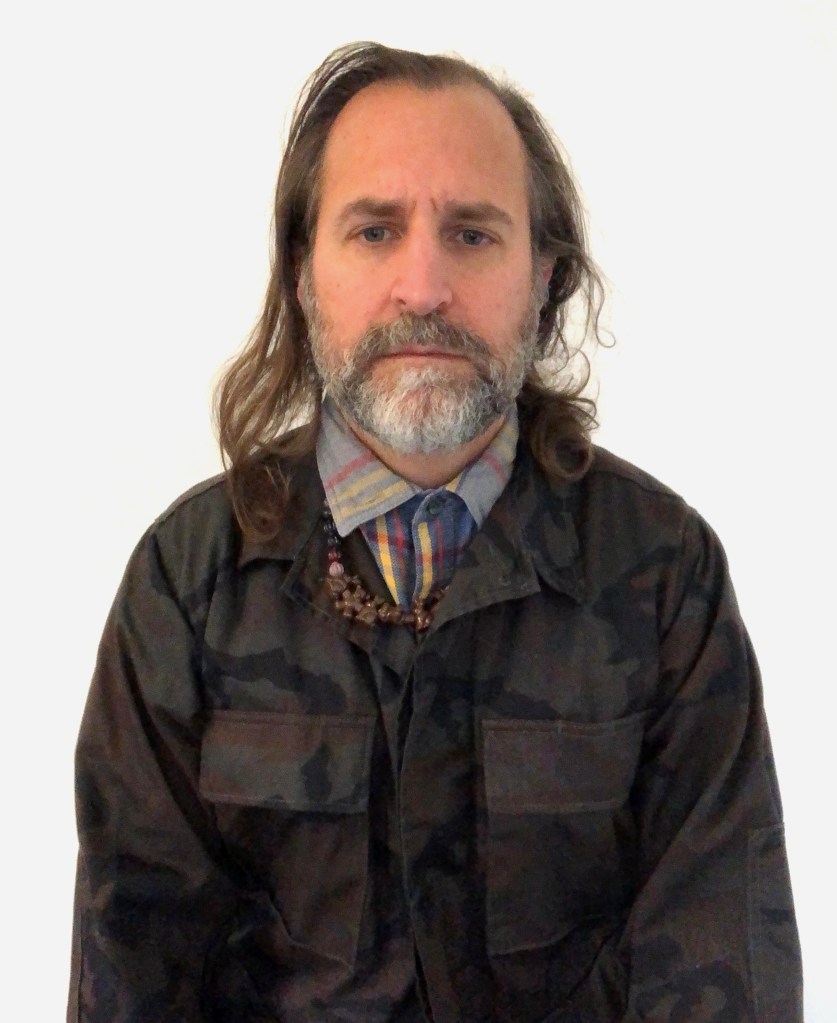
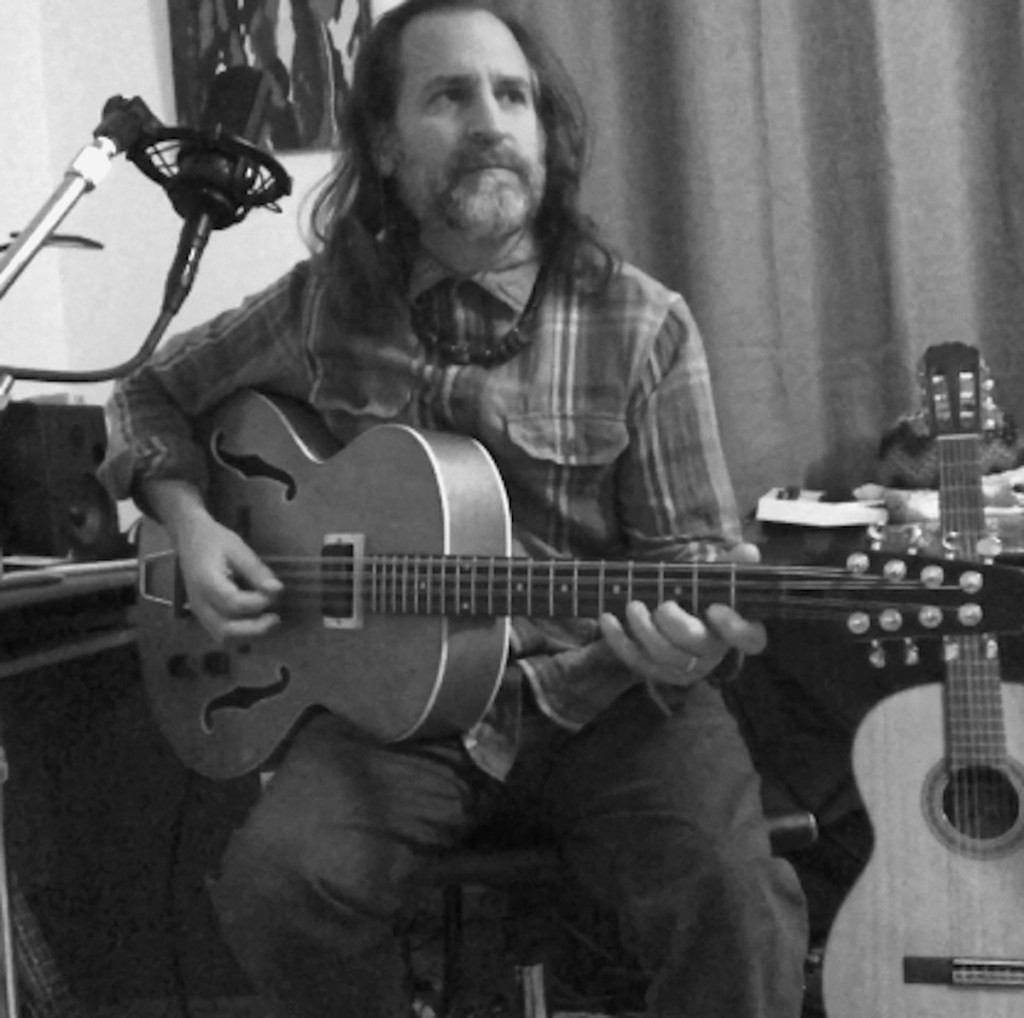
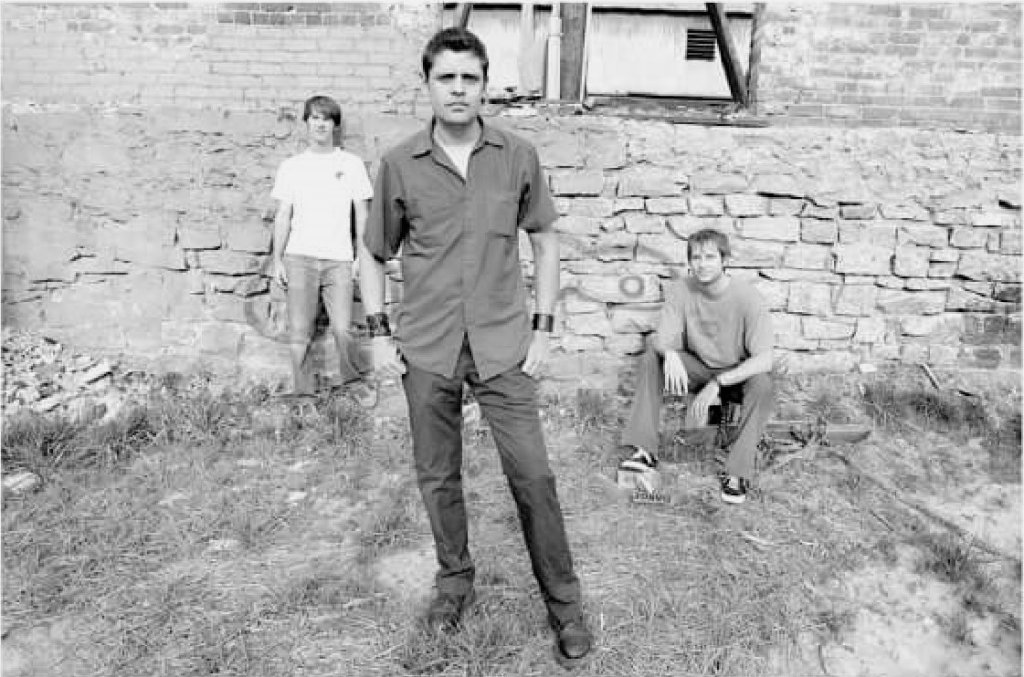
Jeremy Wilms has spent much of his professional life working as an auxiliary player—a sideman to a cast of musical innovators both revered and obscure. While discussing highlights from throughout his career he connects the dots from Atlanta’s early ‘90s free jazz outfit the Gold Sparkle Band to pop megastar Beyoncé; New York’s free jazz icon Ornette Coleman to Duluth, GA’s late ‘80s hardcore scene (he was in the acoustic punk outfit No Marching Orders alongside Act of Faith vocalist Robbie Fuller). Wilms even arranged the strings and brass heard in “A Few Words For the Firing Squad,” the closing number from Run the Jewels’ latest album, RTJ 4.
The more collaborators he mentions the more impressive the list becomes. From suppertime jazz to skronking and wailing, Wilms has achieved about as much as is possible in his role. With his latest album, The Fighter (Cart/Horse Records), Wilms reaches for a deeper plain of existential songwriting that comes from within.
“In the past, I never felt secure as a strong songwriter,” Wilms says. “It was easier to learn stuff on guitar, bass, piano, even drums, and work as a musician right away than it was to get out there and sing or front any kind of act. As I was writing a lot of these songs, I realized that I was reconciling leaving the working musician lifestyle behind.”
In 1995, Wilms graduated from Georgia State University with a Bachelor’s degree in music. Soon after, he moved to New York to earn his Masters at CUNY Queens College. In New York, he studied under renowned pianist, composer, and educator Kenny Werner.
“I studied off-and-on with him for about a year,” Wilms says. “At the time, I was playing pretty heady jazz stuff and was writing new music. Probably the most important lesson I got from him came when he said to me, ‘There are plenty of jazz guitarists. You don’t need to play jazz guitar. What’s your thing, man? What do you do?’ More than any technical thing that I learned from him, that was the crux of what I got out of studying with Kenny Werner, and I spent a lot of money getting that out of him!”
While in New York, Wilms found work playing alongside everyone from Martín Perna’s afrobeat ensemble Antibalas, and even played bass in the Broadway production of Fela!, based on the songs of Nigerian composer and political activist Fela Kuti. He also did a stint playing with jazz drummer Chico Hamilton, and the electronic funk band Chin Chin who released music on El-P’s Def Jux label.
When the pandemic hit in 2020, life in New York became untenable. A few of Wilms’ neighbors succumbed to early variants of COVID-19. Around that same time, the city placed massive body storage freezers within blocks of his home.
He moved back to Atlanta to escape the seemingly apocalyptic conditions. With the move came a desire to avoid returning to a life of balancing live gigs five nights a week between long stints on tour. In time, as he continued writing music, new songs bearing titles such as “All the Roads,” “Born To Die,” and “Stopping On A Dime,” began taking shape.
“All the Roads” kicks off The Fighter, laying out a blueprint for the album’s rich melodies and sparse acoustic folk stylings. The Fighter takes shape as a focused and refined effort when placed next to previous releases such as Layers: Compositions from 2010-2012 and 2013’s Dancer Pants.
“It’s happened to me only a few times in life, but I dreamed the last chorus of ‘All The Roads,’” Wilms says. “I woke up singing the last chorus, the words, and the melody in my head. Immediately I got up and figured it out on my piano.”
Jeremy Wilms
Wilms continued writing the song in his head while breaking up the monotony of his pandemic days by taking long walks alone, sometimes for hours.
“All The Roads” builds around a theme of spending a lifetime making decisions aimed at achieving one singular goal but still feeling lost. “But then you reach a point where you come back around and figure out that you’ve had what you’ve needed all along,” Wilms says.
The third song on The Fighter, “Hey My,” is a sparse and droning organ, acoustic guitar, and mandolin piece that fleshes out the album’s psychedelic essence. It also illustrates the chemistry in the studio between Wilms and co-producer Kyle Spence working at RJS studio in Athens.
The song came about after both Wilms and Spence spent time discussing the songs’ arrangements and zeroing in on the sounds they wanted.
The bright, upfront songs are the perfect showcase for Wilms’ voice. Other musicians joined in as well. Drummer Bo Bedingfield, bass player Nick Robbins, and backing vocalist Julia Haltigan all contribute to the remarkable care and depth that went into crafting The Fighter’s majestic aura.
“Hey My” and another song titled “Props”—the latter featuring ethereal trombone sounds courtesy of Smoota—are tonal pillars for a conceptual arc that revealed itself as the album came together.
“I’m not trying to jump through hoops or check off someone else’s boxes,” Wilms says. “As long as I can pull it together and keep doing that, who knows? Maybe next year it’ll be a total noise record. It might not be a singer-songwriter thing. Whatever it is, as long as I can do it without having to be someone else for other people, I will keep at it.”
A version of this story originally appeared in the January 2024 issue of Record Plug Magazine.
If you have enjoyed reading this review, please consider making a donation to RadATL. Venmo to @Chad-Radford-6 or click on the Paypal link below.
Since March of 2018, Loud Humans have amassed a steadily growing arsenal of bittersweet indie rock tunes, based mostly around the songwriting of singer and guitar player Jimmy Ether.
The trio, rounded about by underground rock scene vets Ether (the Ether Family Presents, Spiral, and Monkey Boy) alongside bass player Dain Johnson (the Plastic Plan), and drummer Kip Thomas (Fiddlehead, Freemasonry, Chocolate Kiss, Haricot Vert, and more) has fleshed out a florid lo-fi charge by pressing pretty and folksy chord progressions through a wall of sound. Case in point: “Charm Offensive.”
“I use a few alternate tunings in the vein of Joni Mitchell, Nick Drake, or Jimmy Page’s acoustic riffs, and we fuzz them out,” Ether says.
“Charm Offensive” offers the first look at Loud Human’s forthcoming EP, which remains a work in progress. The title of the EP is yet to be determined, and “Charm Offensive,” as it appears here, is a raw early mix—the group playing live in the studio with a vocal overdub.
“The new EP is kind of a part 2 to our see, lioning. EP,” Ether adds.
Here, his voice carries a bold and unpolished presence as he careens through dynamic, energetic lyrics that are driven home by a sense of urgency that’s reminiscent of Guided By Voices’ vocalist Robert Pollard.
Johnson and Thomas’s rhythms move at the speed of post-punk and indie rock a la Sebadoh, Mission of Burma, fIREHOSE, and the Wipers.
In the interest of full disclosure, Thomas is the publisher of Record Plug Magazine, the DIY music rag that keeps this writer’s voice in the mix.
All three members of Loud Humans also play in the band Victory Hands alongside Shawn Christopher, crafting a darker, heavier noise rock dirge.
Both Loud Humans’ see, lioning. EP and the forthcoming EP are tentatively slated to appear as flip sides of a 12-inch release that’s due out later in 2024. The proper digital release will most likely arrive in May.
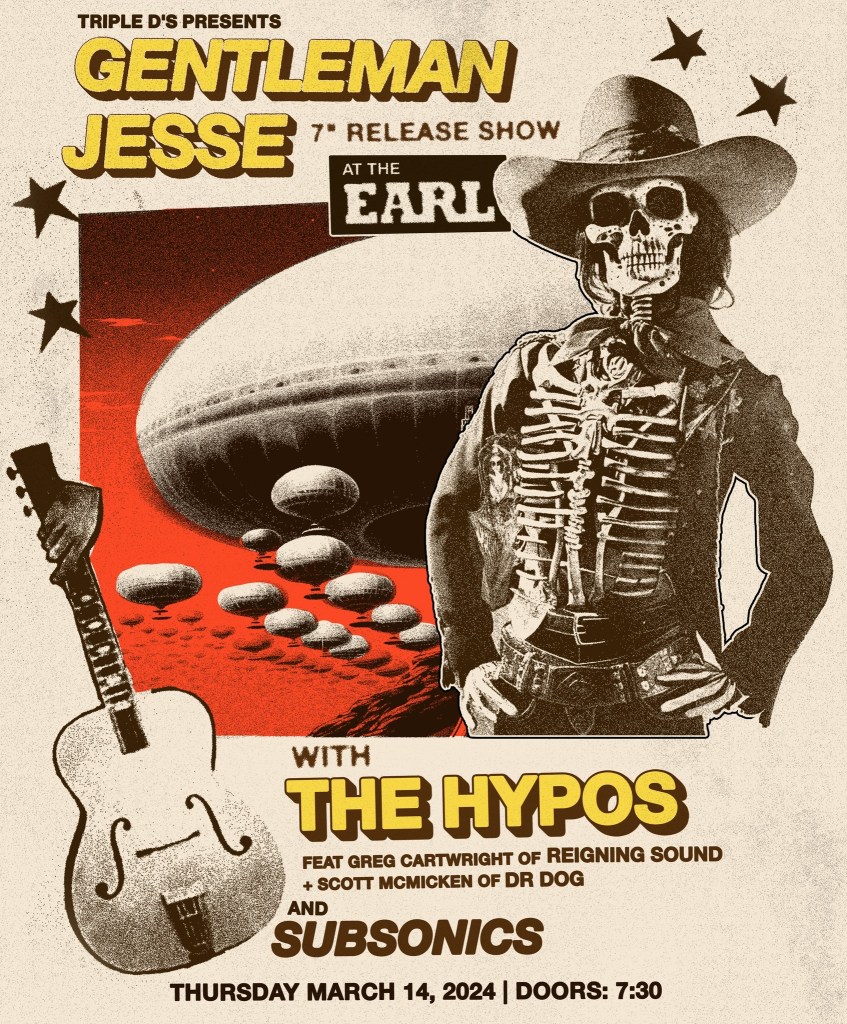
Gentleman Jesse Smith headlines the 7-inch release party for the “Where Time Stands Still” b/w “Return of the Mack” single due out in February 2024. This single is no. 12 in the ongoing Drunk Dial series, and features contributions from Greg King of GG King and Carbonas fame, as well as Ryan Bell of Bukkake Boys, Ryan Dinosaur, Scavenger of Death, et al.
For those who are unfamiliar, the Drunk Dial series invites artists to get drunk and write and record one original song and one cover of a classic tune in the same session. Both numbers will be released as a 7-inch. “Where Time Stands Still” is the Gentleman Jesse original. “Return of the Mack” is a cover of Mark Morrison’s song which appears on the 1996 album Return of the Mack.Pre-order the single here.
The Hypos
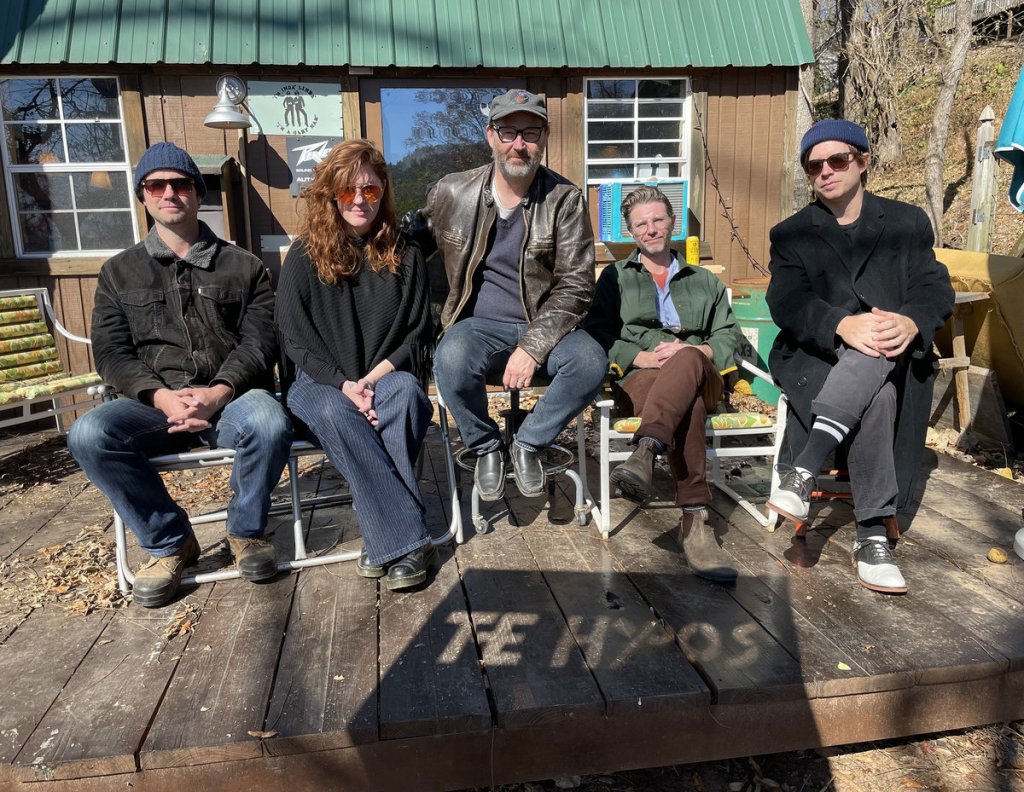
The Hypos, a new collaboration featuring veteran songwriters Greg Cartwright (Reigning Sound) and Scott McMicken (Dr. Dog), joined by some of Memphis and Asheville’s finest players (Evan Martin, Kevin Williams, and Krista Wroten) also perform. The almighty Subsonics open the show.
King Buzzo, the singer, guitar player, and frontman of the almighty Melvins joins composer and Ahleuchatistas and Mr. Bungle bass player Trevor Dunn for the long-awaited “King Dunn” acoustic summer tour.
Over the years, Buzz and Dunn have worked on several projects including Fantômas, the Melvins Lite 2012 album Freak Puke, and the 2022 LP titled Gift Of Sacrifice. Their most recently released collaborations arrived in 2022 as two four-song EPs titled Invention Of Hysteria(Amphetamine Reptile Records) and I’m Afraid Of Everything(Riverworm Records). In April 2024, they released another EP titled Eat The Spray (AmRep). These songs materialized as pandemic restrictions were lifting, which is to say they haven’t had much time for touring with this material together until now.
For those who are unfamiliar, Buzz and Dunn’s paired-down offerings do not yield the full-bore sonic onslaught of distortion and wild rhythms that one gets from a Melvins or Mr. Bungle record. There are no drums. However, when playing one-on-one they craft a spacious atmosphere that ranges from cinematic to downright haunting, summoning a dark ambiance from the natural resonance of their respective voices and stringed instruments. Each song delivers an ominous traipse of psychological and physical tension by subtle but no less affecting means.
Photo courtesy J.D. Pinkus
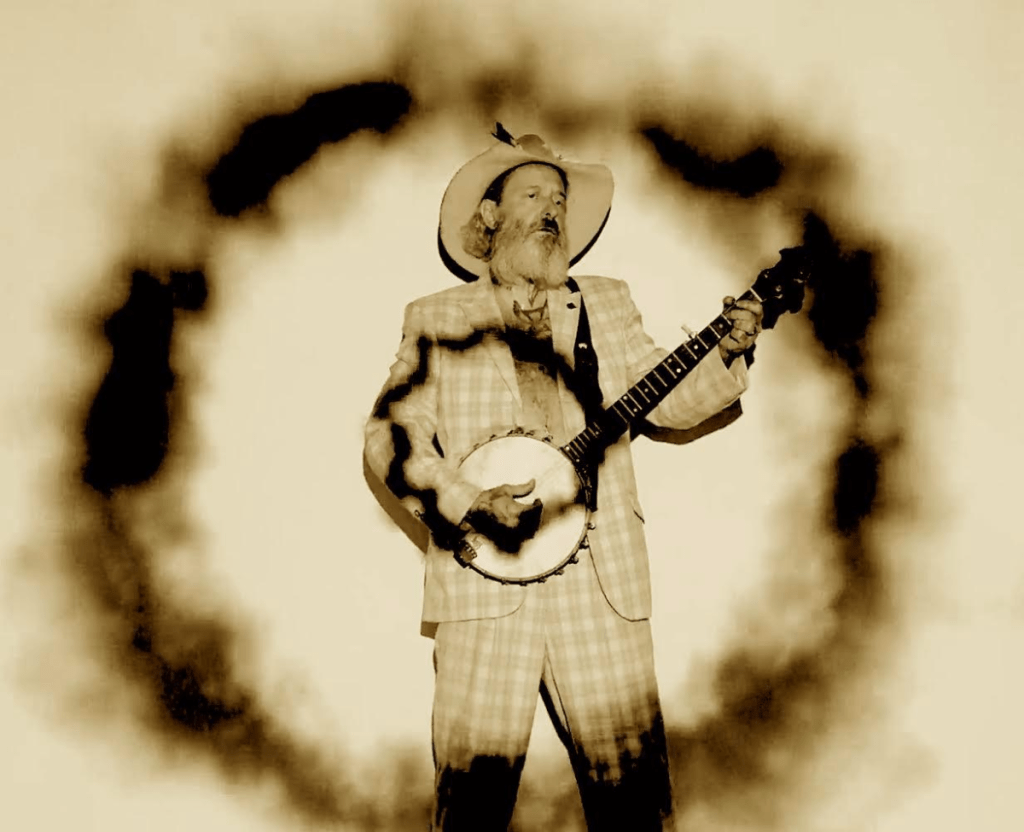
J.D. Pinkus of the Butthole Surfers, Daddy Longhead, sometimes the Melvins, and more lands in the middle slot commanding a set of cosmic banjo strumming from the deranged outer limits. It’s all set to a beautifully hallucinatory visual display. Press play below to check out a couple of cuts from Pinkus’ latest offering, Grow A Pear!
Void Manes photo by Buzz Osborne
Atlanta-based abstract electronic project Void Manes sets the night in motion with a dazzling array of modular synths and analogue gear wrapped in a galaxy of multi-colored cables. The one-man outfit explores dreamtime and nightmare soundscapes, striking a balance between atmospheric noise and melody; drones and sub-bass swells that rise and fall in fugue-like moments of rhythms, sonic impressionism, and chaos.
All three bands on stage this evening feature longtime friends who cut their teeth in a more civilized era of hardcore, post-hardcore, and indie rock—the ‘90s. Now, they’re elder statesmen of the scene, raising the bar high while fusing furious rock, noise, and angular riffs without pretense. It’s called experience, kids.
Photo courtesy of Blood Circuits
SCRATCH OFFS: Photo by Steve Pomberg
If you have enjoyed reading this review, please consider making a donation to RadATL. Venmo to @Chad-Radford-6 or click on the Paypal link below.
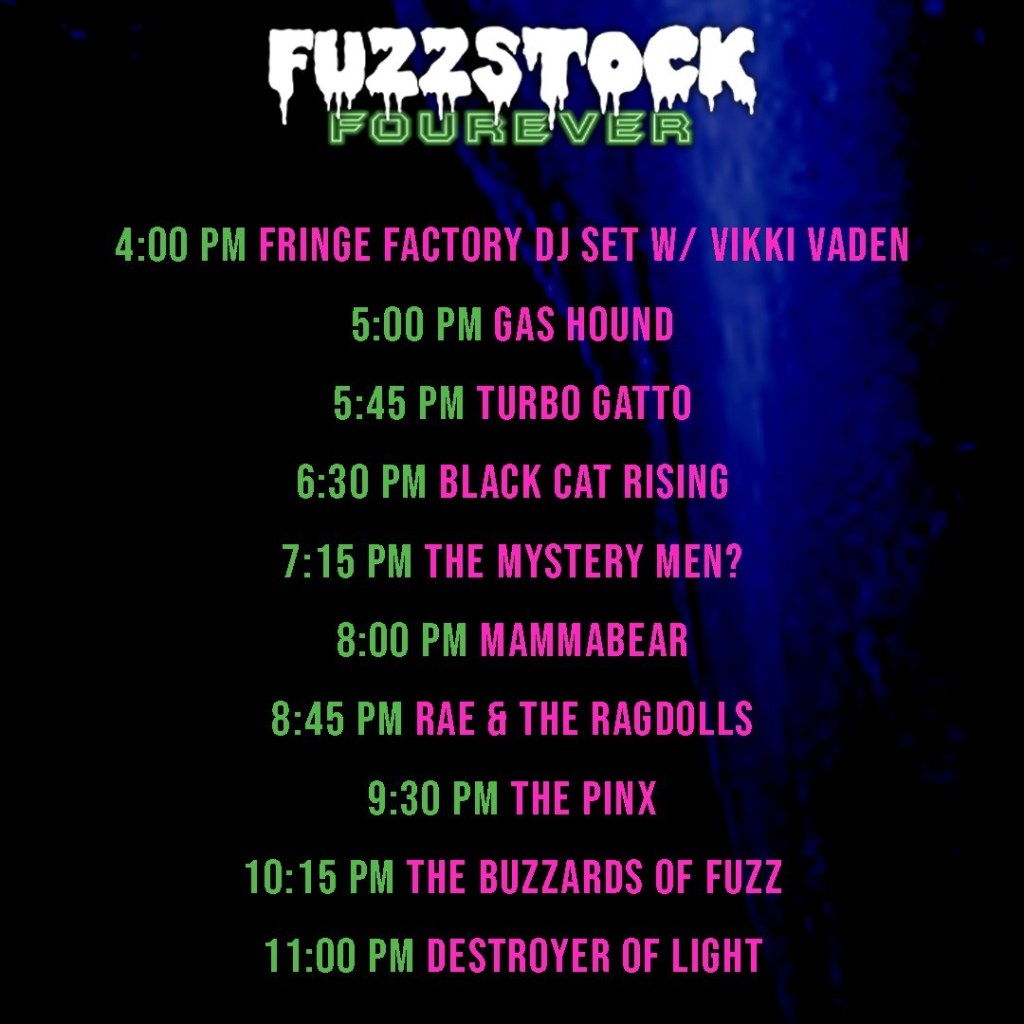
Now in its sixth year—but fostering it’s fourth actual festival thanks to that global pandemic that happened a while back—Fuzzstock is a celebration that blends Atlanta’s local music scene with sounds from the rest of the country. The tie that binds is friendship and a sense of community united by all things fuzz, stoner, and rock ‘n’ roll.
There will be food, a vendor market, and music all day. Festivities kick off at 4 p.m.
Nearly 27 years after the tragic death of Brainiac frontman Tim Taylor brought an end to the group’s meteoric rise, the beloved Dayton, OH post-punk freak out ensemble is returning to stages once again. The group’s Surviving members—guitarist and vocalist John Schmersal, drummer Tyler Trent, and bass player Juan Monasterio—are paying homage to Brainiac’s fallen leader with the addition of guitarist, keyboard player, and vocalist Tim Krug of Dayton-based indie rockers Oh Condor as well as the electronic projects Hexadiode and Halicon.
From 1992–1997, Brainiac twisted the boundaries of indie rock, industrial music clatter and collage, and noise rock to the tune of a mangled Moog synthesizer. The group’s sound was truly revolutionary, as evidenced by their three steller full-lengths 1993’s Smack Bunny Baby, 1994’s Bonsai Superstar, and 1996’s Hissing Prigs in Static Couture.
The group’s final offering, 1997’s Jim O’Rourke-produced Electro-Shock for President EP offered just a hint at the bold and engaging new sounds the group had in store. But Taylor’s death in a single car accident that same year marked the end for Brainiac.
Cincinnati’s drums and cello two-piece Lung opens the show with a set of blackened and apocalyptic post-grunge, post-goth dirges.
HEX ERROR: David Lane (from left), Jason Hatcher, and Greg Stevens.
On June 19, 2003, bass player David Lane, drummer Greg Stevens, and singer and guitar player Jason Hatcher of Hex Error went into Zero Return Studios with Rob del Bueno, aka Coco the Electronic Monkey Wizard of Man? Or Astro-Man?.
The plan was to cut the instrumental tracks for six new songs the group had been working on since releasing their self-titled debut CD in 2001. Vocals were to be recorded during another session later on down the line. The rising noise rock three-piece was slashing its way through the local scene, playing shows at venues such as Lenny’s and the Earl, and landing spots at the day-long Corndogorama indie rock festival.
Alas, this fatal afternoon at Zero Return, now dubbed Maze Studios, was Hex Error’s last studio session. Hatcher, Stevens, and Lane broke up before vocals were recorded and the three never looked back.
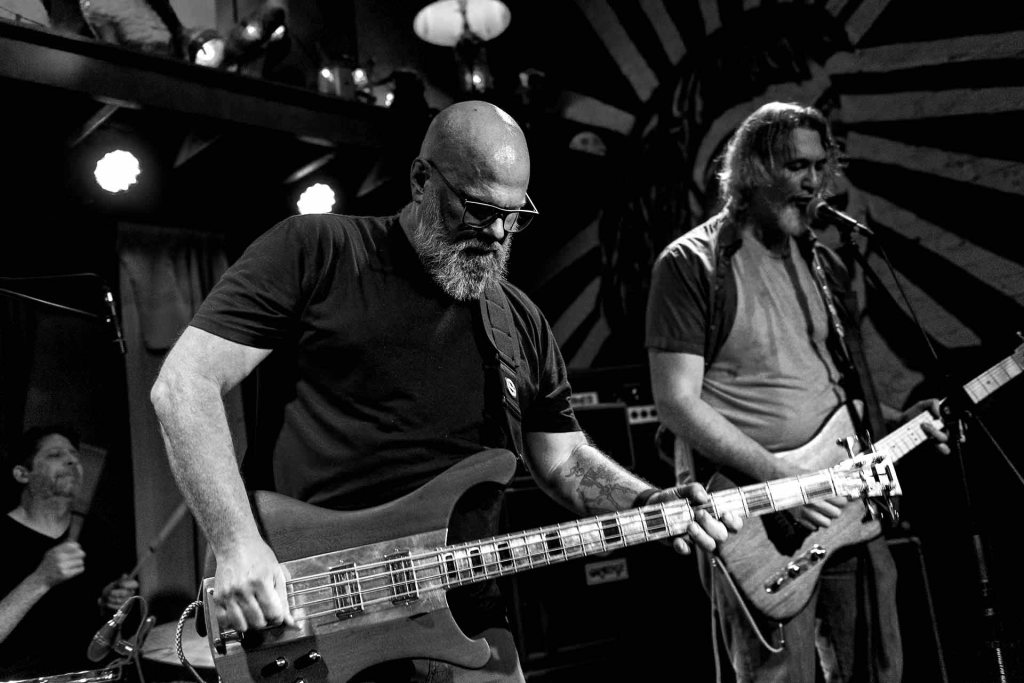
Since then, Lane has long served as singer and guitar player with the band Skin Jobs, who released their debut album Def Bods in 2021. Stevens has spent time playing with various bands, and currently plays in the groups Uneven Lanes with Benjamin, as well as Total Peace Band. Lane and Stevens also currently play in the post-punk outfit Scratch Offs.
Hatcher died on February 20, 2022.
While doing some housekeeping during the pandemic, del Bueno discovered a 2-inch reel of the sessions and passed it along to Stevens.
The recordings offering a stark and compelling glimpse at what was a quickly evolving musical outfit. The crushing grooves that drive the opening number, “Death From Above,” and the dissonant energy of “Greed” capture a mastery of songwriting dynamics. “Social Leprosy” and the wide-eyed “Time” show off instincts that move far beyond the nascent, teeth-gnashing dirges of their self-titled 2001 debut. The instrumental recordings as they are rendered here capture Hex Error in gloriously muscular and sophisticated form.
Stevens took a few minutes to talk more about the recording.
Chad Radford: Where have these tapes been for the last 20 years?
Greg Stevens: The tapes had been in storage at Zero Return until the pandemic. During that time, Rob del Bueno let me know he had come across this 2-inch reel of tape from our final recording session. Jason passed away a year or so ago, so we figured it would be a fitting memorial to him to release this EP 20 years after the initial recording.
Did you alter the recordings in any way?
The initial recording wasn’t altered in any way. We had completed all of the basic tracking at the session on 6/29/03. That said, we broke up before we could complete the vocals, so these are instrumental tracks only. Given that Jason had passed, there wasn’t an opportunity to add vocals to anything. So we ended up putting the finishing touches on it, as is. We worked with David Barbe for the mixing of the 2-inch tape out at Chase Park in Athens and Carl Saff for the mastering.
Have you had any realizations about these songs or the band in general now that you have released this final recording?
David Lane and I have been playing music together off and on for the past 20 years. It has been interesting releasing these tracks from 20 years ago while at the same time we are putting the finishing touches on the upcoming Scratch Offs record. So from that perspective it’s interesting to see how much we have both grown as musicians over the past couple of decades. We’re really proud of how far we took the Hex Error sound all those years ago, and we’re excited about exploring different sonic territories with Scratch Offs.
What’s your favorite song from this session?
The opening track, “Death from Above,” really highlights what we could have accomplished had we not called it a day. We had started working within longer song structures and more intricate polyrhythms. That one was a crowd favorite, whether we were playing in Atlanta or out on the road.
Where there lyrics written and performed with these songs that are now just lost to the sands of time?
All of these songs had lyrics. We performed all of them live back in the day. So, yes, lost to the sands of time.
Any plans for a physical release with this one?
Not at this time. We decided to self-release this digitally mainly for archival purposes. But if a label was so inclined, we’d definitely be into it.
Do you have a release date in mind for the Scratch Offs LP? Does it have a title yet?
We just got the final master back from Carl Saff a couple of days ago. We’re aiming for a digital release in the next couple months, before we do our next batch of shows. We’re playing with Bass Drum of Death and Small at the Earl on September 7, and then headed to Florida for some dates shortly after that. So it would be good for people to have a frame of reference aside from the live experience. Right now, the consensus is to call the record Tidal Wave.
If you have enjoyed reading this interview, please consider making a donation to RadATL. Venmo to @Chad-Radford-6 or click on the Paypal link below.
Cow Punk. It’s more than just a genre of redneck rock ‘n’ roll. It’s a lifestyle, and it’s the title of Dash Rip Rock’s latest album. Since the 1987 arrival of the New Orleans trio’s self-titled debut on 688 Records, singer and guitarist Bill Davis has crafted a blend of Athens, GA-style college rock, fueled by Austin, TX-style country, punk, and rockabilly. The group’s latest release features a spread of revved up new recordings of older numbers from throughout Dash Rip Rock’s catalog. Check out a couple of Status Quo and Gram Parsons covers as well. It’s the definitive cowpunk statement—or at least it’s Dash Rip Rock’s vision of all that cowpunk can be.