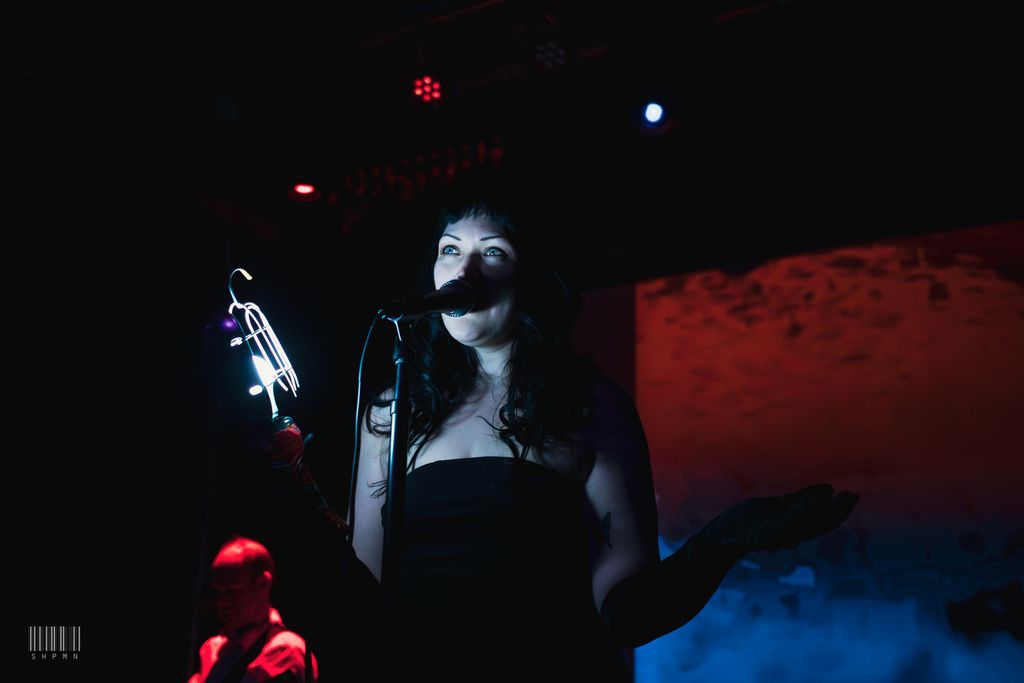
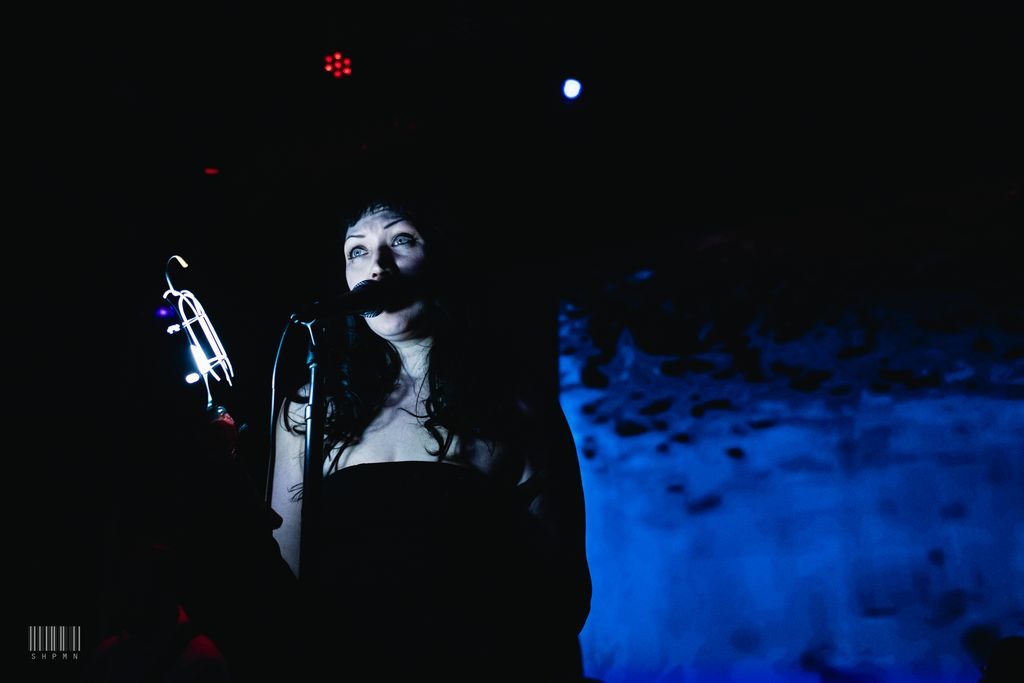
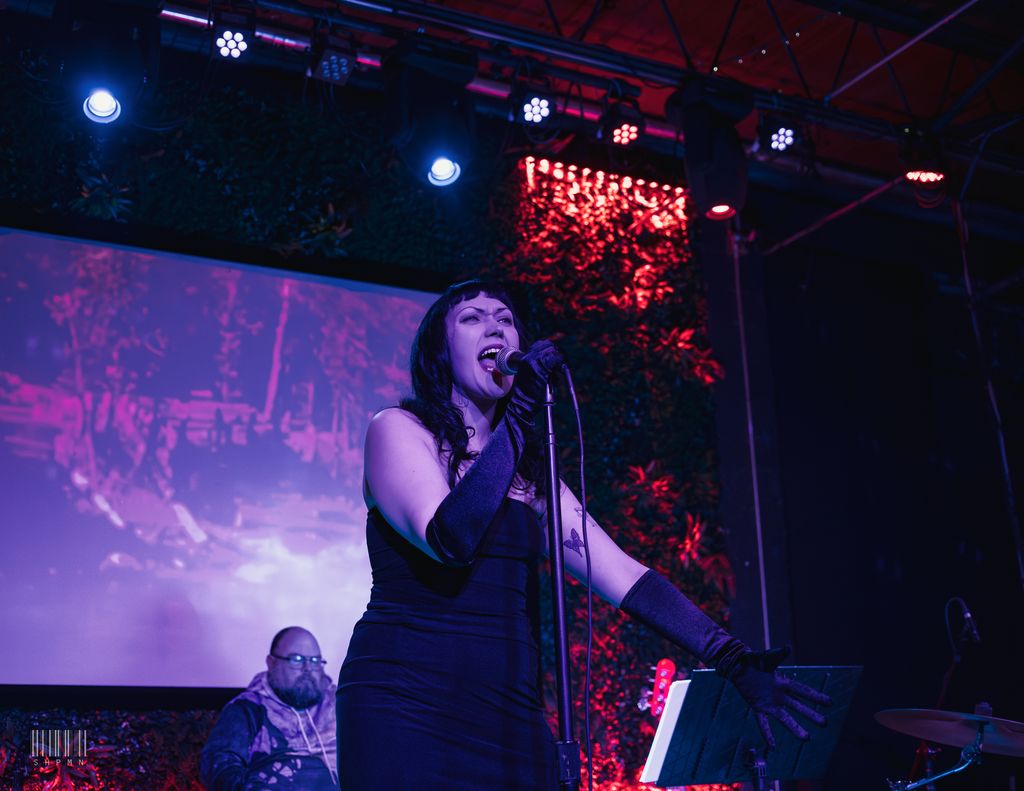
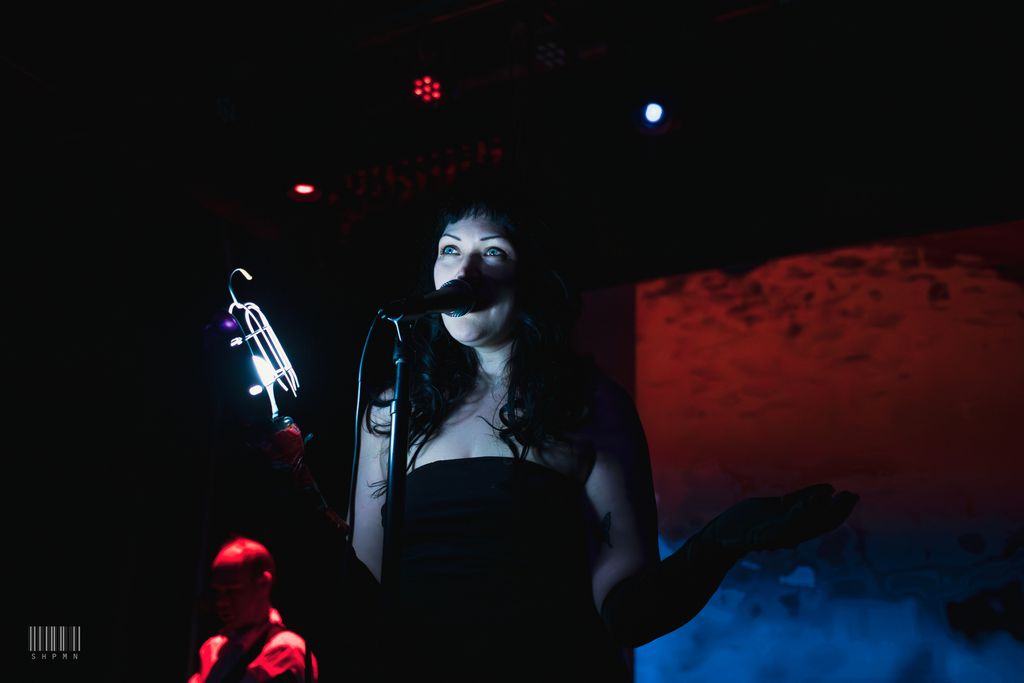
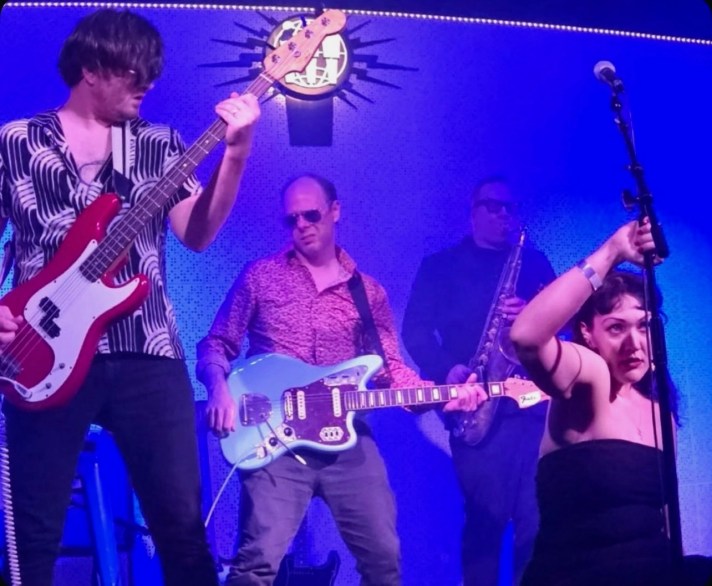
Meghan Dowlen of Club Silencio. Photo by Jeff Shipman.
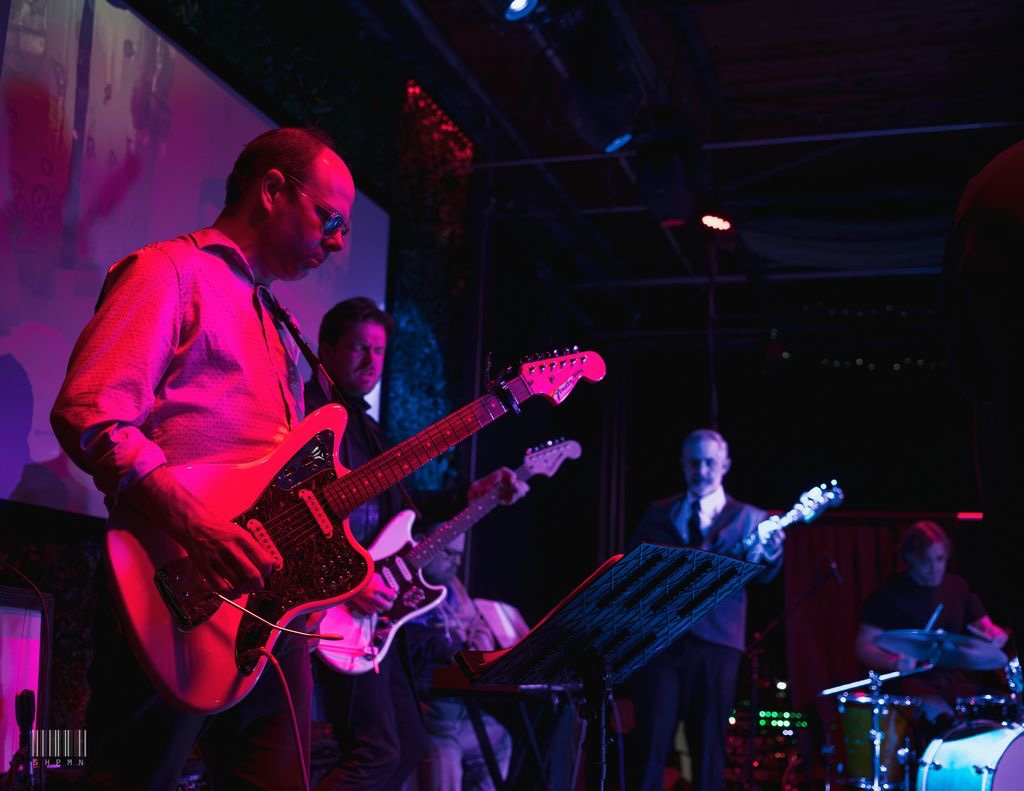
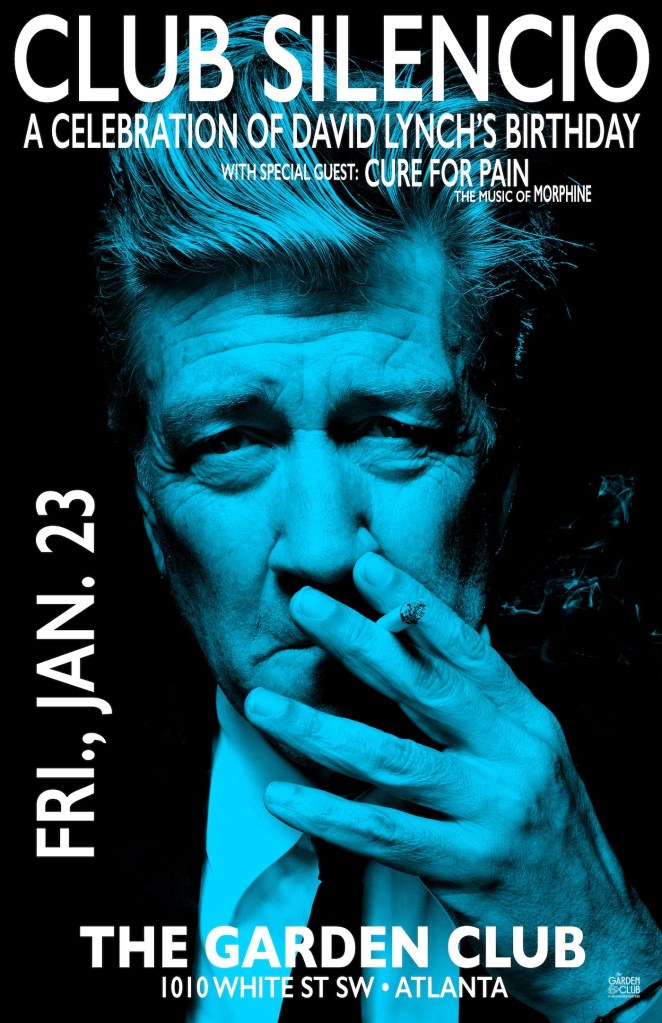
On January 23, The Garden Club at Wild Heaven transformed into a darkened threshold between worlds as Club Silencio paid loving tribute to the music of David Lynch’s films and television series. Billed as a celebration of what would have been Lynch’s 80th birthday, the atmosphere ebbed and flowed with a deep knowledge of just how much this music breathes, trembles, and rumbles.
The night began with a Morphine cover dubbed Cure For Pain, which found saxophone player Ben Davis joined by bass player and vocalist David Railey, and drummer Robbie Nelson paying homage to Cambridge, Mass’ once great low rock trio. The group’s set was a well-balanced counterpart to Club Silencio, crafting an atmosphere that was both fun and foreboding while channeling Morphine’s slow-burning fusion of jazz, blues, and alternative rock in songs such as “You Look Like Rain” (featuring Matt Coleman), “Cure For Pain,” and “Honey White.”
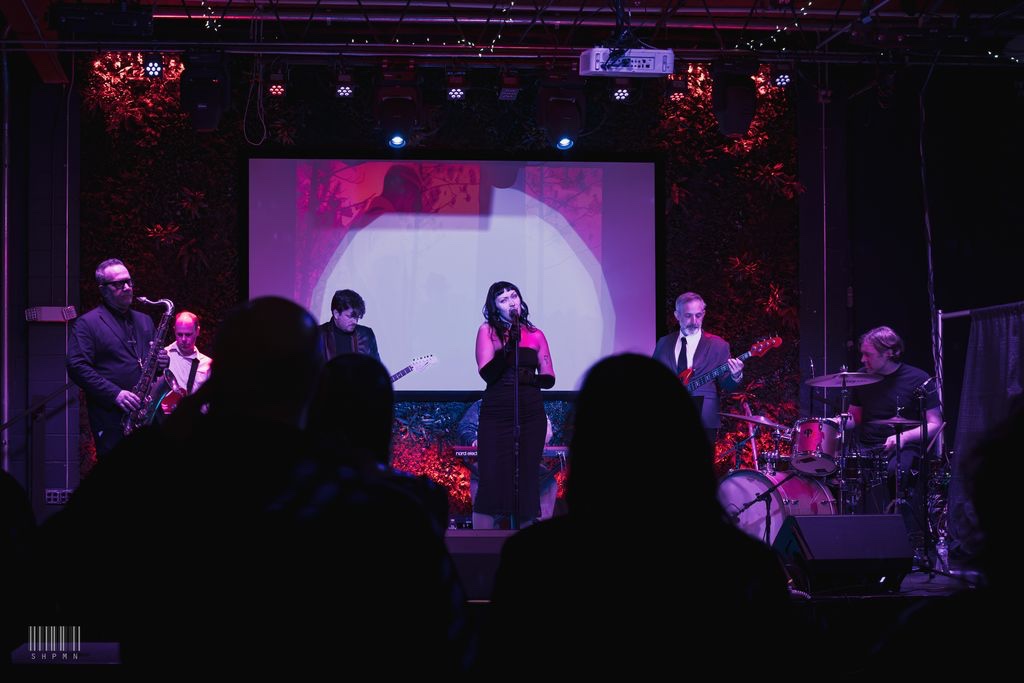
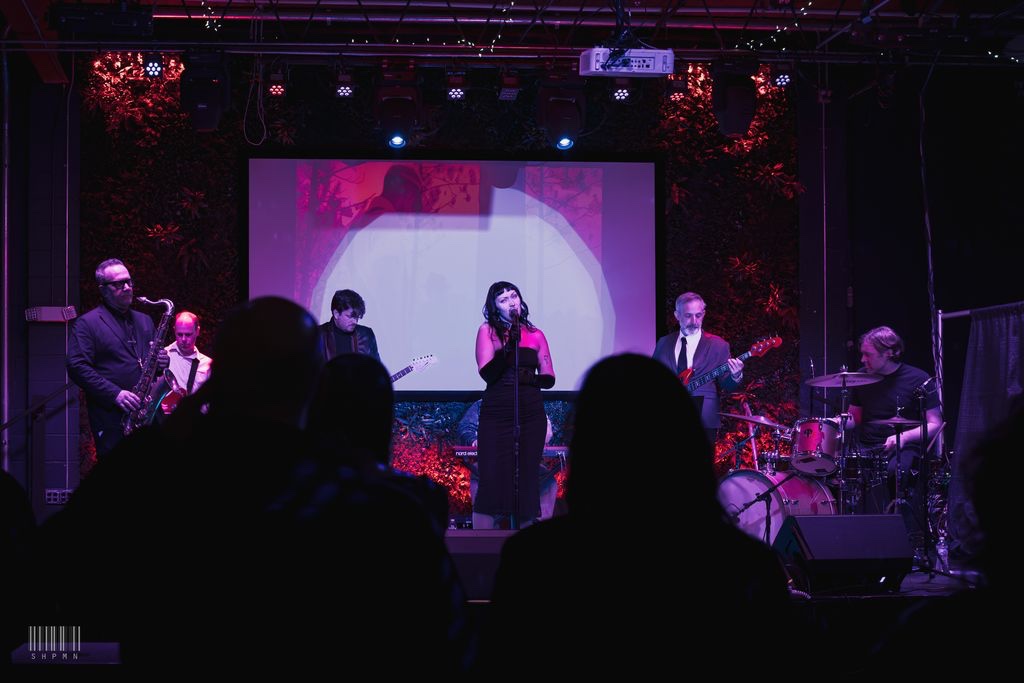
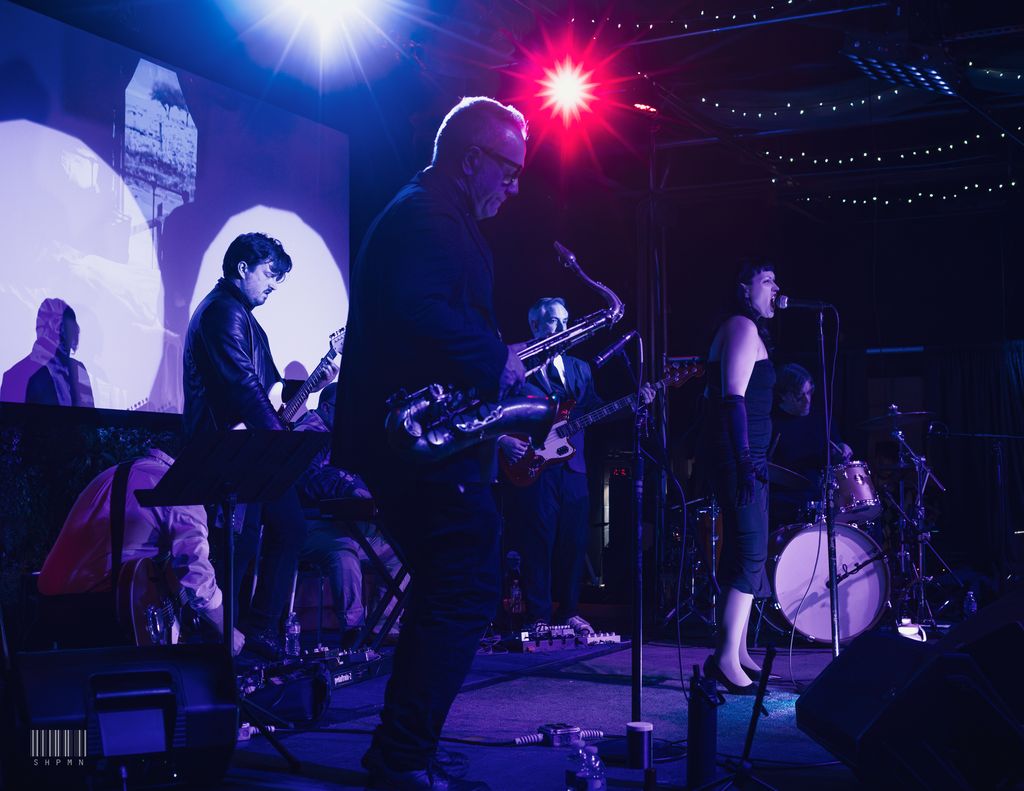
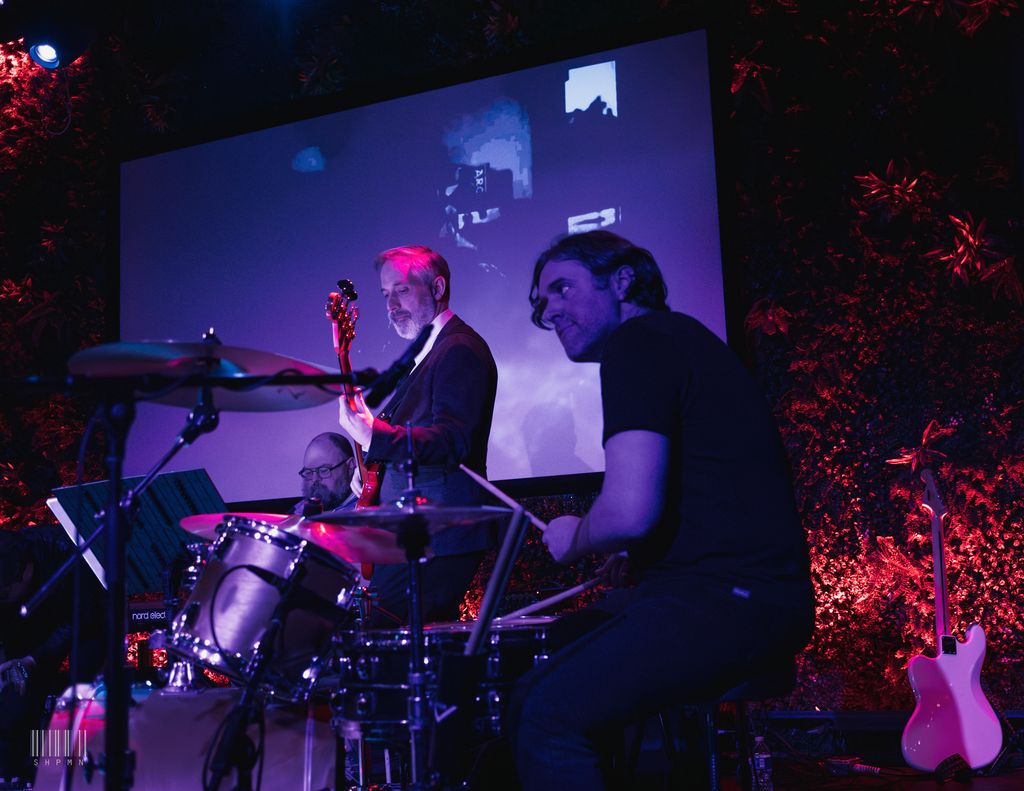
Club Silencio photo by Jeff Shipman.
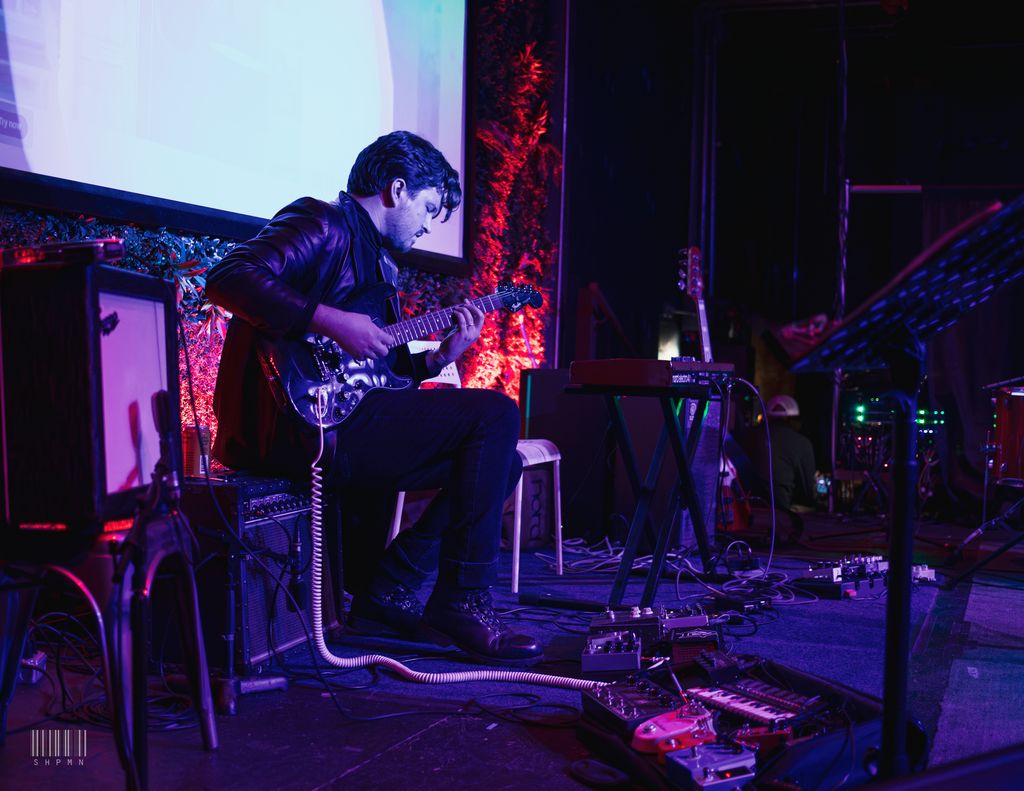
Club Silencio drew from the haunted lullabies and skronking unease of soundtracks from films such as Eraserhead, Blue Velvet, Wild at Heart, Inland Empire, and, of course, Twin Peaks. Vocalist Meghan Dowlen brought a commanding presence to the stage, her voice equal parts torch song and apparition, while the band—Jeffrey Bützer on guitar, TT Mahony playing keys, saxophone player Ben Davis, bass player Matt Steadman, guitarist Henry Jack, and drummer Sean Zearfoss—proved deeply fluent in Lynch’s cinematic language of mood, menace, and overdrive. “The Pink Room” and Julie Cruise’s “Rocking Back Inside My Heart” from Twin Peaks laid the ground for the band to show off some of it’s own flare while taking on the Lynchian hits: “In Heaven (Lady in the Radiator Song)” from Eraserhead, Roy Orbison’s “In Dreams” from Blue Velvet, and Chris Isaak’s “Wicked Game” from “Wild At Heart.”
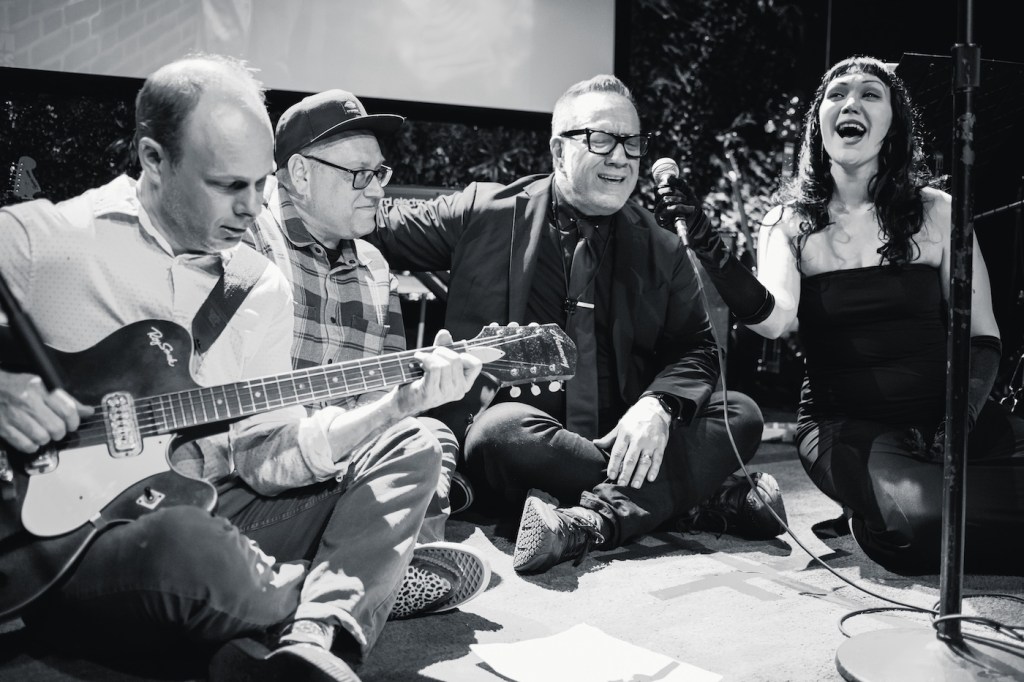
EDITOR’S NOTE: The evening peaked for me when I was unexpectedly invited to sit down on the stage with Bützer, Davis, and Dowlen while they serenaded me with the painfully sincere “Just You” a.k.a. James’ sappy acoustic love song from Twin Peaks. It was just a few days after my birthday, and for as much trash as I talk about James’ character, the situation was hilarious. Davis nailed those exaggerated high notes with a devotion to the bit—trusting the audience to follow his lead, never spelling anything out—pushing past sincerity and into something beautifully, mischievously funny. After all, humor has always been an integral part of Lynch’s films as well.
Lynch once said that “music is a ‘magical’ tool that can convey emotions and moods faster and more directly than film.” Club Silencio understands this instinctively, and honored the notion by trusting atmosphere, feeling, and form above all else.
“Where we’re from, the birds sing a pretty song and there’s always music in the air.” — The Arm
On Friday, January 23, at The Garden Club at Wild Heaven, Club Silencio pulls back the red curtain to revel in the music of David Lynch’s cinematic universe.
For this celebration of what would be Lynch’s 80th birthday, Club Silencio features some of Atlanta’s finest players delving into the moody tones and skronking beauty of sountracks from Eraserhead, Blue Velvet, Wild at Heart, Inland Empire, and of course, Twin Peaks. Finding balance in that precarious space between the tangible world and wandering deep inside the dreamlike qualities of Lynch’s works, each number lingers in the air where silence and space are as important as rhythm, melody, and dissonance—much like the films they accompany.
Lynch was unafraid to examine the outer limits of Americana from every angle, especially when that vision exposed somehting dark lying just beneath the surface. Club Silencio honors the beauty, dread, and strange familiarity that’s baked into Lynch’s vision.
The ensemble includes vocalist Meghan Dowlen, guitar player Jeffrey Bützer, pianist TT Mahony, alto saxophone player Ben Davis, bass player Matt Steadman, and guitar player Henry Jack, and drummer Sean Zearfoss—all of whom are well-versed in conjuring Lynch’s cinematic language of emotion and atmosphere.
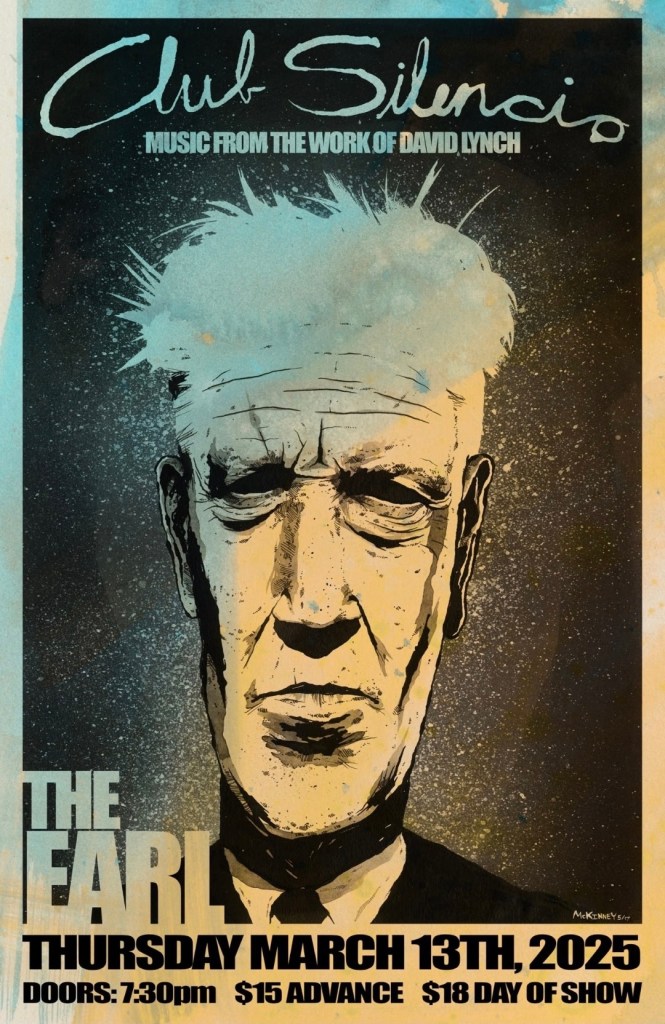
On Thursday, March 13, an ensemble of Atlanta’s finest players are gathering at the Earl to pay homage to the music heard throughout director David Lynch’s films. The cast includes Ben Davis playing tenor saxophone, T.T. Mahony on keys, Jeffrey Bützer playing guitar, Sean Zearfoss on drums, Henry Jack playing bass and baritone guitar, and Meghan Dowlen singing alongside Don Chambers and Compartmentalizationalists.
GOLD SPARKLE BAND: Live at the Silver Ceiling circa 1997. Photo by Steve Pomberg
Gold Sparkle Band, one of the most influential and far-reaching ensembles to emerge from Atlanta’s underground music scene of the early ’90s, is returning to headline an evening at Eyedrum Art & Music Gallery on Saturday, October 14. The group’s deft compositions, improvisations, and live performances defined a sophisticated era for Atlanta’s underground music scene, alongside contemporaries such as Smoke, Cat Power, and the Rock*A*Teens. Decades later, the energy the group has wielded since 1994 still resonates within the more adventurous realms of the city’s outsider music and arts scenes.
This show marks the first in a series of events geared toward raising awareness for Eyedrum’s two-night 25th anniversary party happening the weekend of Nov. 11 and 12.
Since August of 1998, two of Gold Sparkle Band’s co-founding members, alto saxophone and reeds player Charles Waters and percussionist Andrew Barker have resided in New York City, where they remain musically active under different iterations of the group’s moniker—mostly as the Gold Sparkle Trio.
For the evening of their Eyedrum performance, Waters and Barker are returning to play two full sets with fellow GSB co-founder and trumpet player Roger Ruzow and longtime bass player Chris Riggenbach.
Other co-founding members, bass players Andrew Burnes and Joe Jamerson are no longer performing with the group. Saxophonist and flautist Rob Mallard, who was also a founding member of GSB, died in 2018.
Gold Sparkle Band. Photo by Thomas Tulis
“Charles and I still communicate pretty much every day,” Ruzow says. “He sends me new music that he’s working on all of the time—any genre that you can imagine. I send him new material pretty much every day as well. We have been talking about getting together to play another show down here for quite some time. When Randy Castello and Will Lawless from Eyedrym contacted us about playing their anniversary, it felt as though the time was right.”
For this show, Waters, Barker, Ruzow, and Riggenbach will perform the first set as a quartet. After that, they’ll lead a second set performing as the Gold Sparkle Big Band, an expanded version of the group that will include tenor sax player Ben Davis (Purkinje Shift, Edgewood Sax Trio, Teardrinker Salts), oboe player Robbie Hunsinger, Jason Casanova (4th Ward Afro Klezmer Orchestra) playing euphonium, flautist Anne Richardson, and pianist Chris Case—nine players total.
“Stylistically speaking, what sets these two performances apart is the extremely high caliber of musicians that are joining in for the large ensemble performance,” Ruzow says. “They will make it an absolute blow out no matter what the hell we decide on playing.”
Throughout the years, improvisation based around deconstructing traditional musical forms while straddling the avant-garde and solid grooves to create an evocative atmosphere has remained at the heart of GSB’s sound. Gold Sparkle Band has long wielded the talents of a world-class jazz unit. Each number is built upon a structured composition—mostly written by Waters—that’s used as a vehicle to drive the melody and the musical ideas that are brought to the fore, while also creating a form and context for the music. Improvisation launches from there, and the music can glide along in a linear, blues-based progression, or it can go full-on primal scream. It all depends on the moment in which the music is created.
The group has collaborated with likeminded musicians ranging from free jazz double bassist and Cecil Taylor cohort William Parker to Chattanooga’s the Shaking Ray Levis. The group’s New York-based members have even collaborated with lauded Chicago free jazz veteran Ken Vandermark for the 2004 CD, Brooklyn Cantos.
The music often sidles up to a simmering middle ground, easing in at first, then skittering to life with muscular, horn-punctuated grooves that barrel through numbers such as “Zodiac Attack” from the Fugue & Flowers album, and “People’s Republic” from Brooklyn Cantos.
Songs from releases such as 1995’s Earth Mover, 1997’s Downsizing, and 1999’s Nu-Soul Zodiac build on an ethos that resembles something of a punk rock aesthetic, although far beit from anything that can be easily categorized.
“Punk is a good touchstone, but what we’re creating is more like a contemplated combustion,” Ruzow says. “In previous years, when we were experimenting with punk aesthetics, it was all about us learning to command a particular energy and direction. Now, we have a slightly better understanding of that energy and how to turn it into something that we drive, rather than it driving us,” he adds. “It incorporates aspects from each of our lives, which are all very different, but connected by a compulsion to play music.”
Gold Sparkle Band playing the Jump Fest at Eyedrum in 2002. Photo by Thomas Tulis
Waters adds: “All of us come from sone kinda analog punk background. Our first bassist Andrew Burnes—he was a superstar and super vital in my process of becoming a ‘composer’—has his hands in the middle of all you describe. Our frequent guitatist Jer Wilms, now back in Atlanta, who worked in a million ensembles and then brought his genius to the Nuzion Big Band, is amazing. We are a band of collaborators and saboteurs, poets, ghosts, and some special sauce that jazz mostly doesn’t have. That is because we are a BAND! We’re a fucking band, and we play each others mistakes, we love each other—sometimes each others others and many in between. Gold Sparkle is a band and thats why we rock and have a future.”
During GSB’s mid-to-late ’90s Atlanta heyday the group could be seen on most nights tearing up stages everywhere from Homage Cafe and Dottie’s to the Moreland Ave. Tavern, the Point, Cotton Club, and Frijoleros. Gold Sparkle Band even shared the stage at the Highlander with John Zorn’s Masada—an ensemble playing compositions inspired by radical Jewish culture. “It was a life-changing experience,” says Ruzow, who now leads the 4th Ward Afro Klezmer Orchestra.
All of the aforementioned venues are long gone—relics of an everychanging cityscape that no longer exists.
The Star Bar, MJQ, and Eyedrum were also regular haunts for the group. But as Waters says, the group still has a future.
For this show, the group will delve into material from their early aughts albums including 2002’s Thunder Reminded Me and Fugues & Flowers.
“During our whole trajectory in New York City, which is semi taking for granted, me and Barker have worked a million gigs and we still love doing it,” Waters says. “Barker leads his trips, and I play my wacky garden chamber music. We just keep on with it.”
Throughout the ‘90s, GSB emerged as a Southern counterpart to the post-rock, indie rock, and free jazz sounds created by Midwestern acts such as Slint, Tortoise, and the Vandermark 5. In a single musical moment, the group’s live performances would unfurl with all the flare of a conventional jazz outfit before drifting into psychedelic clusters of skronk and wail. Each number intimating a cerebral sense of immediacy that defined an innovative and iconoclastic era of Atlanta’s underground music scene, and dovetailed with what was happening with the world at large.
That sound and vision remains as potent as potent as ever, and the future remains wide open.
On Oct. 12, two days before playing Eyedrum, Gold Sparkle Band’s members are hosting a workshop from 6-8 p.m., discussing a hands-on approach to live improvisational musical styles.
THE EDGEWOOD SAX TRIO: Ben Davis (from left), Jeff Crompton, and Bill Nittler. Photo by Jeff Crompton.
In December of 2022, the passing of baritone saxophonist Bill Nittler left a hole in the heart of Atlanta’s extended musical family.
As a tribute, his former Edgewood Saxophone Trio bandmates Jeff Crompton (alto) and Ben Davis (tenor) have launched a Gofundme campaign to release the group’s second full-length album, Heard.
Over the years, Nittler served as the Education Director for the Atlanta Young Singers youth choir. He also played a vital role performing with various jazz-based ensembles including Kingsized, Greasepaint, Nuzion Big Band, Lie And Swell, the 4th Ward Afro Klezmer Orchestra, Shaking Ray Levis, and more. He performed with Southern Culture on the Skids, and was known for crafting a bustling ska arrangement of Thelonious Monk’s “’Round Midnight” and an avant-garde take on the Butthole Surfers’ already twisted number “Cherub.”
Heard is the follow up to the Edgewood Sax Trio’s 2014 debut, Snake Nation, and marks the group’s final offering, which is expected to arrive this summer.
“I spent hours editing the existing studio material for side one of the LP,” says alto saxophonist and EST co-founder Jeff Crompton. “Some high-quality recordings from a live broadcast on Atlanta radio station WREK provided three of the tracks on side two. The final track is a special one—a live recording from our favorite gig ever: a 2015 concert at Atlanta’s Trinity House. The recordings have been expertly mastered by Chris Griffin of Griffin Mastering.”
Happy New Year! West End Motel kicks off the new year with a new jam, appropriately titled, “New Year’s Day.”
Singer and co-writer Tom Cheshire offers up some intel on the song’s words and meaning:
‘Well New Year’s Eve has always been a celebration of just another year being alive, and this year it rings truer than ever. Yesterday, my friend Rob Kincheloe sent me a text saying ‘Happy New Year, if you’re alive you won.’
With ‘New Year’s Day,’ I wanted to write a love song, with a sense of humor in it, and a sense of hope. We always talk about these New Year’s resolutions but they only seem to last a week or two. That’s why there are lyrics in the verse like ‘I know I’ve made mistakes but this time we’re gonna be great,’ and ‘Talk to me on New Year’s Day, I’ll find a place for us to stay,’ and ‘This year is for me and you, all the things that we’re gonna do.’
I also wanted it to be a nod to ’70s soul. I was channeling Motown and the Jam when I started writing it. But Ben Thrower, who wrote it with me, said without realizing it we were flirting with the sounds of early E Street band.
Either way, I love the way it came out. I love the New Year’s horn riff that Ben Davis plays at the end. I guess it is a celebration of being alive and maybe finding love again.’
“New Year’s Day” is the fourth single from West End Motel’s ongoing campaign to roll out a new single each month till Spring. After that, they’ll turn around the fourth proper West End Motel full-length album.
Check out the previous singles:
If you have enjoyed reading this post, please consider making a donation to RadATL.
West End Motel is playing live from the EARL’s parking lot on Halloween night. Tom Cheshire, Brent Hinds, and Co. will be showing off some newer numbers along with a whole bunch of classic cuts, and more. Tune into the live stream via Instagram at 9 p.m.
West End Motel is back with a new single, titled “New Wave Kid,” a wistful song that frontman Tom Cheshire calls the group’s “positive jam for dark times.”
In the interest of full disclosure, I should say that I released West End Motel’s first 7-inch via Ponce de Leon Records back in 2008; a four-song EP featuring “Oh I’m On My Way” and “There’s Gotta Be More To This Life” b/w “Under My Skin” and “Women Come and Go.”
Really, though, West End Motel is a much different band these days from what it was back then, and it has been for a good long while. In the beginning, Tom Cheshire and Brent Hinds played and recorded as a wooly and red-eyed pair of poets, songwriters, and troubadours suspended in the aspic of Atlanta when the sun goes down—a derelict version of the city that no longer exists.
Will Raines (left), Brent Hinds, and Tom Cheshire. Photo by Josh Groom.
Hinds brought to the project a lifetime of experience playing parties, house shows, and stages large and small in bands such as hardcore outfit Four Hour Fogger, spectral surf rockers Fiend Without A Face, and the almighty Mastodon. Cheshire was the Atlanta by-way-of-Queens, New York statesman of punk rock singing the Rent Boys and All Night Drug Prowling Wolves’ songs about love and brotherhood, penned on whiskey-soaked napkins.
West End Motel, however, was something different. Their weird and tender acoustic songs—as though they were discovering their sound during loose, late-night recording sessions—found both Hinds and Cheshire bearing their hearts and souls in disarmingly unguarded sentiments. The vocal and guitar melodies teemed with beauty, depression, elation, and wisdom gained from hitting rock bottom and pulling yourself back up to face the sun one more time.
Since releasing that original 7-inch, the group has released three albums, toggling between major label offshoots with 2011’s Don’t Shiver, You’re A Winner (Rocket Science Ventures) and 2012’s Only Time Can Tell (Alternative Distribution Alliance) before taking matters into their own hands and self-releasing 2017’s Bad With Names, Good With Faces. The group’s personnel has expanded as well, incorporating Hinds’ Fiend Without A Face cohorts—bass player Stiff Penalty and drummer Troy King, along with a few other players.
As the story goes, “New Wave Kid” was born when Cheshire and Ben Thrower went into Audio Oasis in Bristol, Tennessee with producer Matt Smile. Cheshire sang and Thrower crafted the song’s rhythms and melodies on an acoustic guitar. They sent the song to Jeff Bakos in Atlanta where Stiff Penalty added bass and King added drums. Will Raines added majestic keys from his home in Brooklyn. Then they sent it to West End Sound where Tom Tapley recorded Hinds and Brian Kincheloe’s guitar parts, and Ben Davis’ saxophone and bells.
The result is a sterling trip down memory lane rising from layers of lush pub rock melodies and what is, perhaps, the most evocative vocal delivery of Cheshire’s career.
“New Wave Kid” is a catchy number that’s branded with intoxicating musical motions that crystallize all of West End Motel’s influences—Pogues-esque punk and rock ‘n’ roll, The Band’s roughly-hewn stride, power pop, and blue-eyed soul—into a stylish hybrid that’s tailored to Cheshire’s husky voice, which telegraphs so much of the band’s character.
The song is part of a larger work in progress. The plan is to drop a new single at the beginning of each month for the next six months. After that, they’ll turn around the fourth proper West End Motel full-length album. In the meantime, “New Wave Kid” feels like a watershed moment for the group’s ever-growing movement from ramshackle magic to a deliberate and stylish sound and vision.



 Rad/ATL