After Words at Excelsior Mill (pre-Masquerade). Photo by Sara Epstein.
Between July of 1987 and December of 1989, After Words played a crucial role in pushing Atlanta’s post hardcore scene into new musical terrain. Seminal hardcore band Neon Christ had called it quits a year earlier. In their wake, a new generation of musicians stepped up to carry their influence forward.
In the late ‘80s, After Words co-founding guitar player Brian Nejedly began booking shows while he was still in high school. “When the Metroplex shut down, that was the only all ages venue in town, so I just started looking for places that I could rent out to put on shows,” Nejedly says.
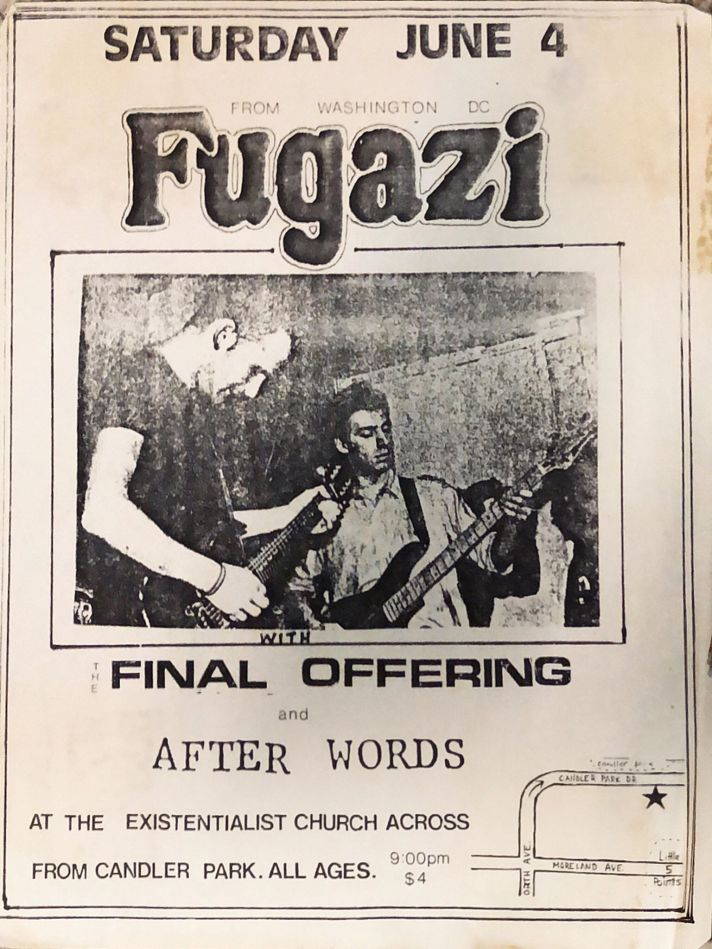
He booked Fugazi’s first Atlanta show at the First Existentialist Congregation in Candler Park. He booked Ignition, Soul Side, 7 Seconds and dozens of other acts. “Once I started booking shows, I realized that a lot of these bands had a list of people and places to call for shows in each town, and I was on that list,” Nejedly says. “For a while, I was the only guy in Atlanta on that list.”
Along the way, Nejedly sent After Words demo tapes out to pretty much every label that was on his radar. “I sent a demo to Cruz Records because we loved the band All,” he says. “We sent tapes to everyone, and Amanda MacKaye at Sammich Records wrote back.”
Amanda, sister of Ian (Dischord Records, Minor Threat, Fugazi, Coriky) and Alec (Ignition, Faith, and Hammered Hulls) MacKaye ran Sammich with Soul Side’s Eli Janney (Girls Against Boys). She offered to release the demo tape, making After Words the only band from outside of D.C. at the time to receive distribution through Dischord.
The label’s approval validated Atlanta as a place where post-hardcore ideas could thrive, and it placed After Words on the same label as Soul Side, Shudder to Think, and Swiz.
Drop a needle on After Words’ record and Nejedly’s jagged guitar carries weight over vocalist Noel Ivey’s cathartic voice, and propulsive rhythms laid down by bass player Craig McQuiston and drummer Kevin Coley. Emotional urgency guides songs such as “Looking Back,” “Ghost Dance,” and “As I See It,” all bearing the intensity of an early emo sound. The songs were never about nihilism or aggression. They were about wrestling with meaning, memory, and self-understanding.
In February 2024, Nejedly revived After Words for a one-off show 35 years after the album’s release. Ivey, McQuiston, and Coley are no longer living in the area. So Nejedly formed a new lineup featuring Geoey Cook (Fiddlehead) on vocals and guitar, James Joyce (Cheifs, Car Vs. Driver, Blood Circuits) on drums, and Justin Gray (3D5SPD) on bass to bring renewed energy to the songs.
In 2024, they locked in on an eight-song setlist—five from the original After Words LP, along with two other older numbers.
The two non-LP songs: “Things They Never Taught You” first appeared on The View: An Atlanta Compilation: 1984-1990, a cassette-only release that captured snapshots of the city’s underground post-hardcore and emo scene. Another song, titled “Without Answers” was documented during a 1989 Live at WREK session.
Earlier this year, the group recorded six songs with Tom Tapley at West End Sound—“Looking Back,” “As I See It,” “Without Answers,” “Third Party,” “Tell Me,” and “Ghost Dance.”
“We’re not doing anything different with the songs,” Nejedly says. “Pretty much keeping it true to the original with only minor changes. ‘Ghost Dance’ will always be my favorite,” he adds. “I think it’s the best song I’ve written and Noel’s lyrics were really good.”
Cook’s voice adds new dimensions to each song, adding depth and interplay. Joyce’s drumming locks into Gray’s bass lines with precision, adding heft, pushing each arrangement even further.
“We recorded it as a live studio session just for ourselves to document us getting together and playing these songs, but it came out so well Echodelick decided to release it,” Joyce says.
A release date for the record remains TBD.
What defined After Words in the beginning, and what continues to define the group now, is its place on the sonic landscape as early hardcore’s influence became diffuse and less severe. After Words proved that Atlanta was producing its own singular voices, capable of standing shoulder to shoulder with their peers in D.C., New York, Chicago, and elsewhere.
For Nejedly, the new recordings are about carving out relevance in the present tense, and honoring what the group built decades ago while refusing to let it calcify. For Cook, Joyce, and Gray, it’s about expanding on a framework that still has room to grow.
“After Words pivoted bands from Atlanta into a different direction in the early ‘90s,” says Joyce. “If you think about Fiddlehead or Freemasonry, Scout, or Car Vs. Driver, or the next wave of bands that followed them, they all changed course because of After Words.”
Moving forward, the group will play sporadic shows, but for now they aren’t writing any new material.
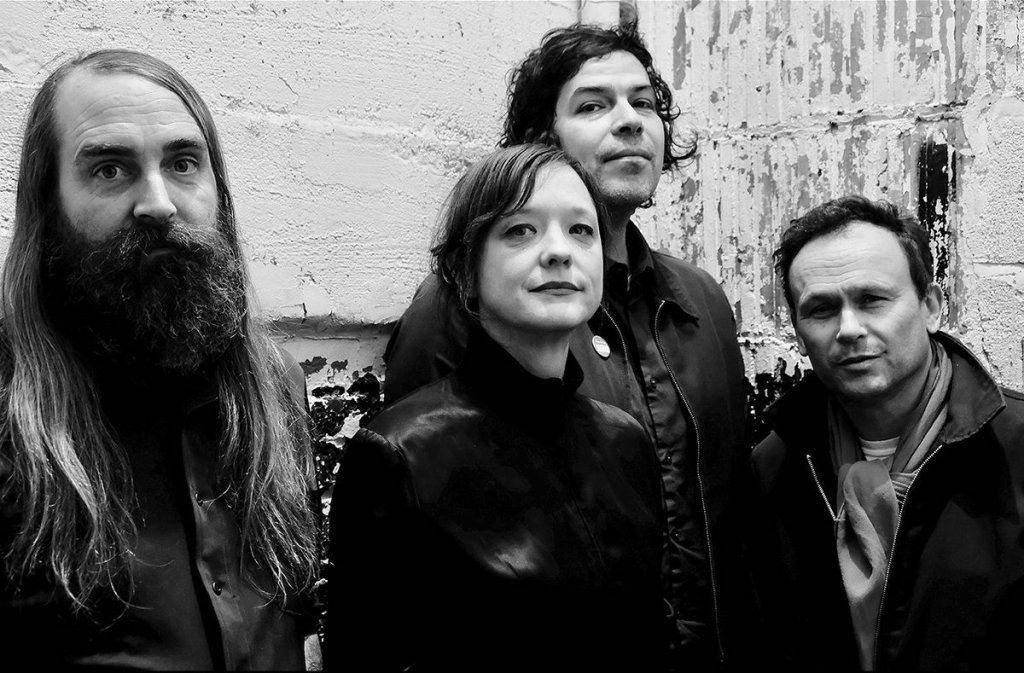
After Words. Photo by Brad Sigal.
If the late ’80s Atlanta scene was about carving out new space, After Words now stands as a reminder that the past can still fuel the present. The songs remain restless, powerful, and full of questions. That sense of questioning remains as vital now as it did when After Words record arrived in 1989.
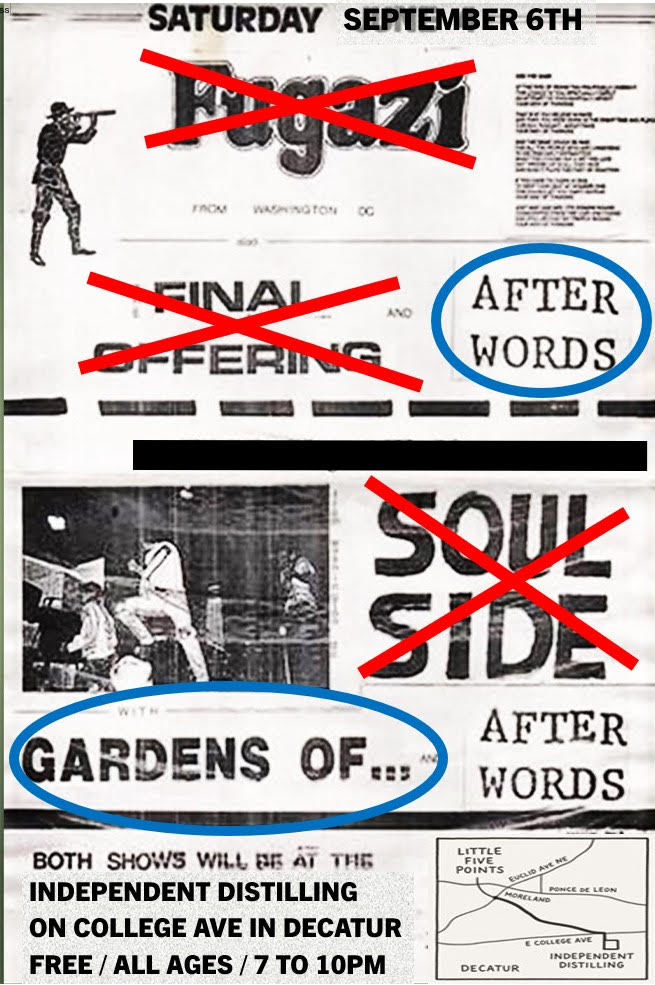
After Words and Gardens Of… play Independent Distilling Company on Sat., Sept. 6.Free. All Ages. 7-10 p.m. 547 E College Ave, Decatur.
Atlanta’s mid-’80s hardcore staple Neon Christ played its final show in February of 1986. One day later, drummer Jimmy Demer, bass player Danny Lankford, and vocalist Randy DuTeau reconvened as Gardens Of… It was a new and ineffable post-punk outfit that thrived in the outer limits of punk and metal’s diffuse influence on underground and popular culture—well before the term “alternative” entered the canon.
“We never called it that,” Demer says. “We listened to a lot of Stooges and Black Sabbath at the time.”
Demer moved to guitar while Lankford remained on bass. Drummers and vocalists came and went. “We had lots of lineup changes and were never that great, but we played with the intensity of people who were sure they were great,” Demer adds.
Gardens Of… recorded one demo tape, but nothing was properly released. The group called it quits in ’89. Still, their presence on the local scene resonated—channeling punk and hardcore’s scorched earth ethos inward, transforming a confrontational sound into equal parts menace, groove, and rock ‘n’ roll. Their jagged, hypnotic sound peeled away the last layers of hardcore orthodoxy.
Now, 36 years later, Gardens Of… is back with a new lineup, new songs, and a more refined disposition.
During their original run, they shared stages with the Rollins Band, Social Distortion, Die Kreuzen, Bl’ast, Suicidal Tendencies, and like minded locals including Sabotortoise (who later became Melts), funk punk band Follow For Now, Mr. Crowes Garden (early Black Crowes), and No Walls featuring their former Neon Christ bandmate William Duvall, later of Alice In Chains. They also played with another DuVall band called the Final Offering, which featured Mike Dean of Corrosion of Conformity.
Gardens Of… also opened for Washington D.C. stalwarts Fugazi’s first Atlanta show at the First Existentialist Congregation in Candler Park, on June 4, 1988, along with After Words. After Words’ self-titled LP was released by Amanda MacKaye and Eli Janney’s Sammich Records in 1989. At the time, After Words were the only band from outside of Washington D.C. to receive distribution through Dischord Records.
“There were a couple dozen people there,” Demer says. “We had no idea what to expect from Fugazi. It was before they had released any music, and of course our minds were blown.”
Fast forward to the COVID era, and Demer was at home writing songs inspired by his early heroes. “It was time to get Gardens Of… together again to play this punk-metal stuff,” Demer says.
Lankford was in, and Brent Addison returned to drums. “He was the best of the four-five drummers we had back in the day,” Demer says. “We brazenly poached him from After Words.”
Vocalist Emily Lawson joined under unusual circumstances. At a karaoke party, Lankford and his wife Shelley heard her singing songs by Nine Inch Nails, Blondie, Prince, Beastie Boys, M.I.A., and the likes. “She sounded good and projected confidence,” Lankford says. “I invited her to sing in my basement—more informal, maybe less intimidating.”
Lawson had never played in a band, but revealed a powerhouse voice in new Gardens Of… numbers such as “Do It For the Kids,” featuring the lyrics: “Do it for believers squatting in abandoned factories / Do it for the cold case / Do it for its own majesty / For DRI and MDC / Do it for the ceremony / Do it for the summer sun / Do it, do it, do it for free.”
It’s a hard reset for a veteran act from a bygone era with nothing to prove. “We’re all better players now,” Demer says. “I had time during the pandemic to broaden my abilities as a guitar player and writer. The songs don’t sound like Dio or Black Flag, but they stand on their own nevertheless.”
James Brandon Lewis (left) and the Messthetics (Anthony Pirog, Joe Lally, and Brendan Canty). Photo by Shervin Lainez.
With their third and latest album, The Messthetics and James Brandon Lewis, Brendan Canty, Joe Lally, Anthony Pirog, and James Brandon Lewis deliver a compelling blend of jazz and post-hardcore inflections, where Lewis’s saxophone intertwines with rhythmic intensity and experimental tones.
Canty and Lally, best known as Fugazi’s drummer and bass player, infuse the album with their trademark energy anchored by deep grooves. Pirog adds layers of sonic texture amid challenging twists and turns.
Before making their way to Atlanta to play The Earl on March 26, Canty, Lally, and Pirog talked about the creative process behind the album, working with Impulse, and the ins and outs of their favorite songs on the album. Lewis was busy playing a show in Zurich.
How did you meet James Brandon Lewis and start playing music with him?
Anthony Pirog: I met James about 10 years ago during a recording session in New York that the drummer William Hooker organized. It was a quintet: William was on drums, Luke Stewart on bass, Jon Irabagon on sax, James on sax, and I was on guitar. It was for an album called Pillars… At The Portal.
James and I liked each other’s sounds. When the recording was over we went out and got something to eat and started talking. He asked me to record a couple of records with him and to do some touring with him in Europe and the US.
When the Messthetics were asked to play Winter Jazzfest in New York in 2019, I thought it would be a good idea to have James sit in with us. He played three songs, and almost every time we’ve been in New York after that he’s sat in with us.
Joe Lally: We had played the Winter Jazzfest, and it just happened. It was hard to understand what happened because it happened while we were playing live. It was great, but then it was over and James was gone. It’s not like we got to hang out and get to know him or spend any time with him. Later, we were back up there for a show at the Bell House and we asked him to play with us.
This time, we had a little more time to assess him joining us. We got to talk about the song that he would join us on, and what we might do backing him up. That little bit allowed us to get a handle on it, and it felt good. Then COVID happened and a bunch of time went by. It was awful and lonely. At the end of it, we were getting out and playing again, and we were doing a show at Union Pool. James asked us if we would contribute a track to the record he was doing at that time.
And that’s the song called “Fear Not” on his album called Eye of I.
Lally: That’s the song! At Winter Jazzfest, we played the electric Miles “Black Satin,” we did Anthony’s tune “Adonis Painter,” and we did “Serpent Tongue.” At Bell House we did “Serpent Tongue” and we did “Once Upon A Time,” which is a Sonny Sharrock piece.
Anthony told us the day before we went up to play New York that James said if we came up the evening before—if we got there early enough—we could record in Brooklyn. So we went up early and recorded that song with him. We didn’t know what he wanted us to do, but Anthony had played that song with him before.
Pirog: I had only played it once before with him in a quartet in Catania when we had our residency over there.
What did James bring out of the Messthetics?
Lally: We get to be more Mess-thetic!
Brendan Canty: We’re Messthastecising [laughs].
Lally: Playing with James has amplified everything that we’ve reached for and everything that we’re capable of doing, and he has helped us reach even farther.
Canty: Playing with James has allowed me to play a little louder, honestly. He also reinforces a lot of the melody lines that Anthony wrote and turns them into these beautiful soaring pieces.
Anthony and James are good at playing with each other and on top of each other in complementary ways where they sound like one instrument. Anthony supplies these beautiful bell-like transient sounds and James has this big warm body. I hope that doesn’t sound too sexy, but it’s true [laughs].
Lally: There’s a simplification going on within us as far as the writing goes. We’re kind of minimalizing everything to allow for creative ways to carve out spaces that allow James and Anthony to fill in. It’s not like it’s easier to write; it’s that it’s more clear.
Canty: There is a certain level of abandon to these songs which is pretty inspiring. I have always felt that while playing with Anthony. One of the great things about playing with him is that we’re playing on stage and suddenly he’s pushing us to go somewhere completely different just to support him on a journey into cacophony.
Some people view Anthonly as a virtuoso, but I also know that he is the ultimate noise artist. I love being pushed into all of these different areas. James does the same. When people show up and play with that level of commitment and that level of ambition in terms of exploring and pushing the room around a little bit it gets exciting quickly. Every moment of the gig I’m playing catch up, and I’m trying to go with them to these places. It’s a blast.
With Joe and I there’s like an ESP in terms of playing together. We just go there with them. It’s a liberating way to play.
How is releasing an album on Impulse different from working with Dischord Records?
Lally: It’s a hard thing to describe because we have spent all of our life at Dischord. This record has barely come out, so we don’t know what it’s like.
Everyone we’re dealing with at Impulse is nice. There’s a big team there. That’s different. Dischord has like five people that make up the label. At the same time, this is the first record I have done where I feel like it’s just going to go away into the world. With my other records, everything else I’m involved with, it’s like my friend has them. They live there. I know where they are, and they’re taken care of. I feel like they’re being protected. This is the first one that’s going out into the world and now it’s gone.
I have a lot of respect for so many of the artists that I love who were and still are on Impulse. Being on a label with Irreversible Entanglements is fantastic!
Canty: Without getting too much into the business side, we’ve been working with a great bunch of people who seem to listen to us and allow us to control every ounce of content that we want to put out into the world. I’ve made all the videos myself. We’ve shot everything. I edited them all.
What happened, Chad is that we made the record first. Then Impulse heard it and got us excited. I sent it to my friend at Impulse and they said “We totally want to put this out.” So the music came first. I said, “Let me talk to everybody about it. I talked with Ian [MacKaye] about it. He said, “This sounds awesome!”
Everybody was excited about it. It’s working out fine so far. As long as we can keep it on our own in terms of how it’s being presented. They haven’t messed with any of the audio bits at all, and we got to do everything we wanted to do with it.
They didn’t say boo to us about it, about the mixes, or about anything we used. We mastered it. We got Bob Weston to cut the lathes, and they’ve been creative about distribution. They’ve worked with us. So far so good.
Lally: Making this decision about stepping away from Dischord is a really weird idea. Even if it’s just for one record it’s a weird idea for me. At the same time, what we’ve made with James is really different. It’s not like the other Messthetics records. Frankly, it all happened so fast! Brendan passed it along to somebody who is now suddenly saying, “Impulse really likes this!” It was hard to try to do anything with anyone other than Impulse because I was thinking of James and Anthony. We had to do this for them. This is too good. This is the music they’ve worked really hard at making. A huge part of it for me was we have to do whatever we can to see if this can work, and it’s been worth it.
Canty: I want to add that in no way do I ever want this to be reflected upon as us being dissatisfied with Dischord.
Lally: Dischord has always been so supportive of us, and still continues to be family. Ian has always been open to his bands trying different things and answering questions. He gave us his blessing. Working with Impulse for this record is just that circumstantial. The opportunity came up and it felt like the right thing to do for Anthony and James. It’s something that happened at that particular moment. I seriously see us recording for Dischord in the future.
You’re also bringing James’ fans to Dischord, and Fugazi and Messthetics fans to Impulse.
Canty: That’s the thing that’s so interesting about all of this, it’s the dialogue that’s coming with it. Everywhere I book a show in Europe or the US, I’m asking, “Is it this kind of show? We were invited to play the Vancouver International Jazz Festival and the Winnipeg Folk Festival, Hillside Festival, Big Ears, Treefort Music Fest, and Primavera. We’re getting rock festivals, jazz festivals, and folk festivals. It truly makes me feel proud that we’re able to play all those things while making music that I think defies categories. … Even if it’s on a jazz label [laughs].
Anthony, you have worked with indie labels like Cuneiform Records and Sonic Mass. What’s it been like working with Impulse?
I can only say positive things. My first record came out on Cuneiform when I was 32 years old. That didn’t seem possible. Then, hooking up with Joe and Brendan and being on records that came out on Dischord never seemed possible. And now this. I feel incredibly lucky that I’ve been able to work with these outlets.
In the six degrees of separation game, you’re connected to everyone from Moor Mother to John and Alice Coltrane to Minor Threat.
Pirog: Yes, and we’re all still processing that.
Joe, do you have a favorite song on the record?
I hesitate to say, but there’s something about the first song, “L’Orso.” It was such a strange thing for us to get a hold of. I remember when Anthony presented the riff to us, I spent the rest of the day being frustrated about not understanding where I was in the riff. Every time I tried to play it, I was just like, “Oh my God, I almost have it, but where am I? What comes next? I was always so lost in it.
The next time we got together to play with Anthony, I was like, “I don’t know, man. I don’t know if this is entertaining to play. When I tried playing it for him, he said, “Wow, you kind of know it. I haven’t even learned it yet.” I felt like I was banging my head against the wall with it. It was just a different type of song for us. It was a hard one for us to get a grip on, and when we finally did it, it felt great.
Canty: “L’Orso” is one of my favorites to play. I always like the songs that feel like they’re pushing things a little farther than we’ve ever done before. And the melody that Anthony came up with for this one is ridiculous in the best possible way.
I love how understated it is, but it has this really tricky melody. Then James and Anthony destroy all the solos. It makes me happy. Beyond that, I like “Three Sisters” as a whole.
Anthony, what’s your favorite song on the record?
Before I talk about that, I want to say that Joe told that story about learning “L’Orso.” That song is really hard to play, and I wanted to throw that in there. I am very proud of that song, and I am very proud every time I get through the melody.
Brendan brought up “Three Sisters.” I believe that’s the first full song we wrote before we started talking with James—after taking a break during COVID.
And it’s funny because when I played that melody I was thinking of James. I was thinking that’s the kind of thing he would play or hear. He was on my mind even before we were having conversations about playing with him.
My favorite track on the record is “Boatly” because we wrote it together. My memory is that Joe had his baseline in the A section. Then we started playing the groove and I came up with the melody over that baseline. Then maybe the next practice or later in that rehearsal I started playing the chords in the B section. Brendan started singing to the chord, and that became the melody of the B section. Then in the outro, we just worked up this chord progression and we played it a little bit, but it was always like, “Ah, when James gets here he’ll start blowing over it”.
When we got through to that section in the studio, it just took off. During rehearsal, we never played it through the full arc of what it could be. It was like, “This will sound great. We’ll just do it in the studio.” That is my favorite moment on the record because of the overall arc of the piece. It goes where James and Brendan take it to when he’s pounding the rhythms out at the peak. I’m proud of that one.
Hammered Hulls play The Earl on Fri., Jan. 20. Alec MacKaye (Faith, Ignition, the Untouchables) fronts a lineup of veteran players that includes guitarist Mark Cisneros (the Make-Up, Kid Congo Powers and the Pink Monkey Birds), bass player Brendan Canty (of Fugazi, the Messthetics, et. al. standing in for Mary Timony), and drummer Chris Wilson (Ted Leo + Pharmacists, Titus Andronicus).
The group is touring behind the October arrival of its debut full-length, Careening (Dischord Records). The album was produced by Minor Threat, Fugazi, and Dischord Records’ co-founder (and Alec’s brother) Ian MacKaye, and was recorded at Don Zientara’s Inner Ear Studio. With Careening, Hammered Hulls carries Washington D.C.’s post-hardcore and post-punk legacies into powerful and direct new musical terrain with the winding rhythms of songs such as “Bog People” and “Rights and Reproduction,” and the slower tempos of “Not Gone” and “Mission Statement.”
Gentleman Jesse Smith also performs, backed by a lineup featuring bass player Chris McNeal, drummer Sean Zearfoss, and Milton Chapman on keys.





 Rad/ATL