Since forming in London in 1980, the Pink Dots have carved out a singular space in the underground—too strange for pop, too melodic for noise, too abstract for goth, and too open-ended to be called industrial music. Led by enigmatic vocalist and founding member Edward Ka-Spel and rounded out by Randall Frazier (synths, samples, and electronics), Erik Drost (guitar), and Joep Hendrikx (live engineering and effects), the LPDs weave together surreal narratives and immersive, cinematic soundscapes that take shape like dispatches from a fever dream.
The group’s catalog spans countless albums, each one a kaleidoscopic swirl of experimental electronics, post-punk texture, avant-garde noise, and darkly poetic meditations on the human condition. On stage, their shows become ritualistic experiences—hypnotic and theatrical, blurring the line between performance and séance.
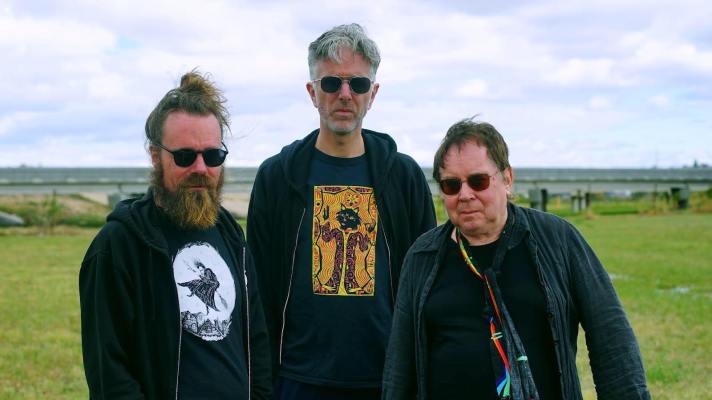
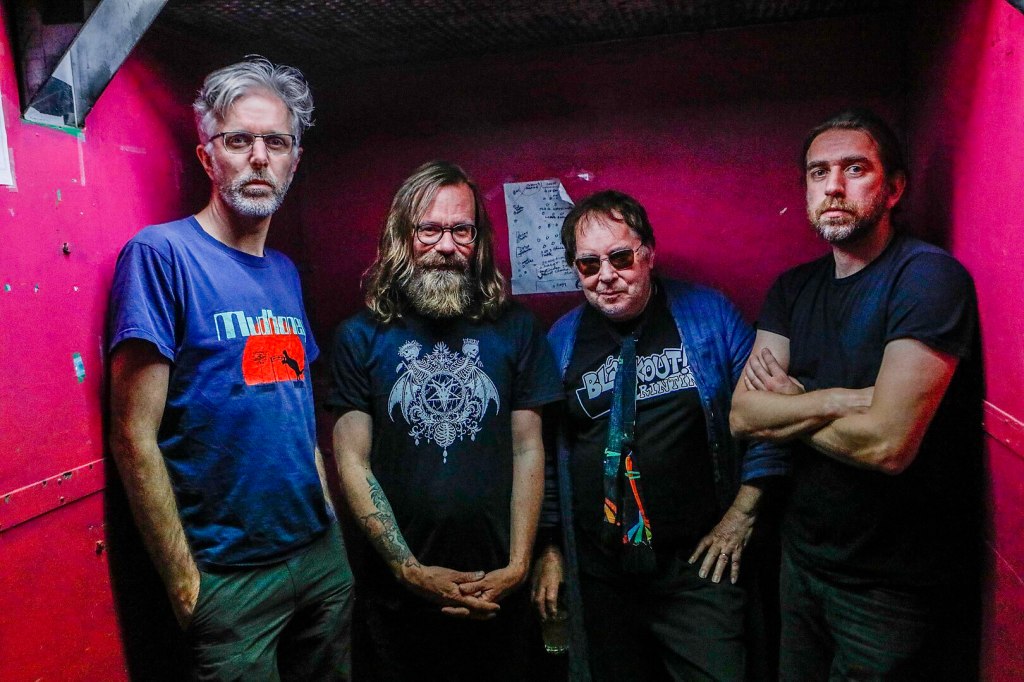
Erik Drost (from left), Randall Frazier, Edward Ka-Spel, and Joep Hendrikx. Photo courtesy the Legendary Pink Dots.
The LPD’s latest album, So Lonely In Heaven (Metropolis Records), finds the group at its most evocative, melancholy, and Orwellian in years, layering haunting synths, spectral melodies, and existential poetry into a deeply human meditation on isolation and transcendence. It’s a reminder that even after 40-plus years, the LPDs are still evolving; still chasing the unknown.
Bologna, Italy-based Orbit Service opens the evening with a set of deep, slow-burning atmospherics and haunted melodies. Featuring Frazier and Drost performing together, the duo builds patient, ethereal songs that hum with existential weight. They are the perfect gateway into the LPDs’ strange and beautiful world. The latest offering, Spirit Guide, leans deeper into cosmic territory, expanding its sound with shimmering drones, meditative textures, and a slow, patient gravity that feels like it’s tuning into another frequency.
For the faithful, this show is a rare chance to step back into the Dots’ orbit. For the uninitiated, it’s an invitation to get lost in one of experimental music’s most enduring and imaginative universes.
There is quiet power that comes from embracing the subtle nuances, the unheard dimensions of sound that arise when crafting analog textures and drones that fall in the gray areas between musical improvisation and composition. Kelsey Wilson, Alexander, and Hot Trash will dive headlong into this kind of delicate intensity at Railroad Earth on Thursday, May 29.
Hot Trash, finds longtime friends and collaborators Bill Taft and Brian Halloran of W8ing4UFOs, pushing further into realms of abstraction. Using heavy effects to draw out the natural tones of cello and guitar, the duo lets the ghosts of Smoke and Hubcap City echo through a loose and highly personal framework that allows for breath and spontaneous combustion. Some songs have lyrics, some do not.
Alexander. Photo courtesy David Shapiro.
Alexander is the stage name used by New Haven, Connecticut guitar player David Shapiro—an understated yet technically dazzling presence whose work bridges the line between American Primitive guitar and a broader, more introspective drone-folk sensibility. Shapiro’s fingerstyle technique is steeped in the traditions of John Fahey and Robbie Basho, yet his voice is his own—attuned to the spectral edges of memory and movement. Shapiro’s performances unfold like meditations with gravity and grace, each note a stone dropped in still water.
Kelsey Wilson
Bringing the evening to a close, Kelsey Wilson crafts immersive, slow-burning soundscapes built from cassette loops, field recordings, and improvisation. Drawing a throughline from William Basinski’s decaying ambiance to the lo-fi texture worship of early Belong and Concern, Wilson’s set promises to be thick with atmosphere—disintegrating, reassembling, and hovering just out of reach.
$10. Thurs., May 29. Music starts at 8 p.m. Railroad Earth, 1467 Old Oxford Rd. N.E.
If you have enjoyed reading this post, please consider donating to RadATL. Venmo to @Chad-Radford-6 or click on the PayPal link below.
Wisconsin-based percussionist and composer Jon Mueller brings a spectacle of rhythm and resonance to Eyedrum on Saturday, March 1, performing “All Colors Present,” a live “Sound + Visual Meditation” set to the works of photographer Tom Lecky.
Mueller is a master of the elemental—his approach to percussion is both physical and deeply hypnotic, an exploration of repetition, texture and atmospheric weight. Over the years, he has worked with avant-garde luminaries such as Z’ev, James Plotkin, Rhys Chatham, Volcano Choir, and Pele, forever pushing the boundaries of what percussion-based music can do. He is currently working on a recording for the formerly Atlanta-based drone, minimalism, and avant-garde label Table of the Elements.
For this performance, Mueller plays two drums, wielding a pulse and a shifting sonic landscape that unfolds to the tune of Lecky’s imagery.
Lecky’s work is a meditation in its own right. His photographs tap into memory, imagination, and perception, often weaving together his own words and images with found materials, forging an abstract narrative that exists in the liminal space between experience and recollection. All Colors Present creates a visual conversation with Mueller’s constantly evolving interplay, resulting in a performance that is as much a ritual as it is a concert, where repetition and movement pull the listener into an immersive space—both grounding and transcendent.
Ipek Eginli. Photo by Steve West.
Ipek Eginli is also performing Saturday night. Eginli is a Turkish-born Atlanta transplant who has established a formidable presence amid the city’s experimental musical enclaves as a pianist, electroacoustic sound artist, and improviser who describes her works as “a process of a creation and a creation of a process.” Her performances build upon elements of electroacoustic improvisation on piano, voice, and modular synthesizers. For this show, Eginli is taking a deep dive into drones, piano, and field recordings.
$10. 8:30-11 p.m. Eyedrum Art & Music Gallery. 515 Ralph David Abernathy SW. Buy tickets here.
If you have enjoyed reading this post, please consider donating to RadATL. Venmo to @Chad-Radford-6 or click on the PayPal link below.
The Electric Nature, Magic Tuber Stringband (NC), Mute Sphere, and Magicicada play Magic Lantern in East Point on Thursday, April 11. Majid Araim will be performing a sound installation piece between sets. $15 (suggested donation, no one will be turned away at the door). 8 p.m. 2171 Star Mist Dr. SW Atlanta 30311.
If you have enjoyed reading this post, please consider making a donation to RadATL. Venmo to @Chad-Radford-6 or click on the Paypal link below.
American primitive guitarist, improvisor, and co-founder of psychedelic drone-folk trio Charalambides, Tom Carter makes a rare solo appearance in the intimate settings of a private home studio in Scottdale. All are welcome. BYOB.
Sat., Dec. 9. Donations of $5-$10 are greatly appreciated. Music starts at 10 p.m. 322 Patterson Ave. Scottdale, GA 30079
If you have enjoyed reading this review, please consider making a donation to RadATL. Venmo to @Chad-Radford-6 or click on the Paypal link below.
Z’ev performing at Eyedrum Art & Music Gallery, May 16, 2007. Photo by Chad Radford
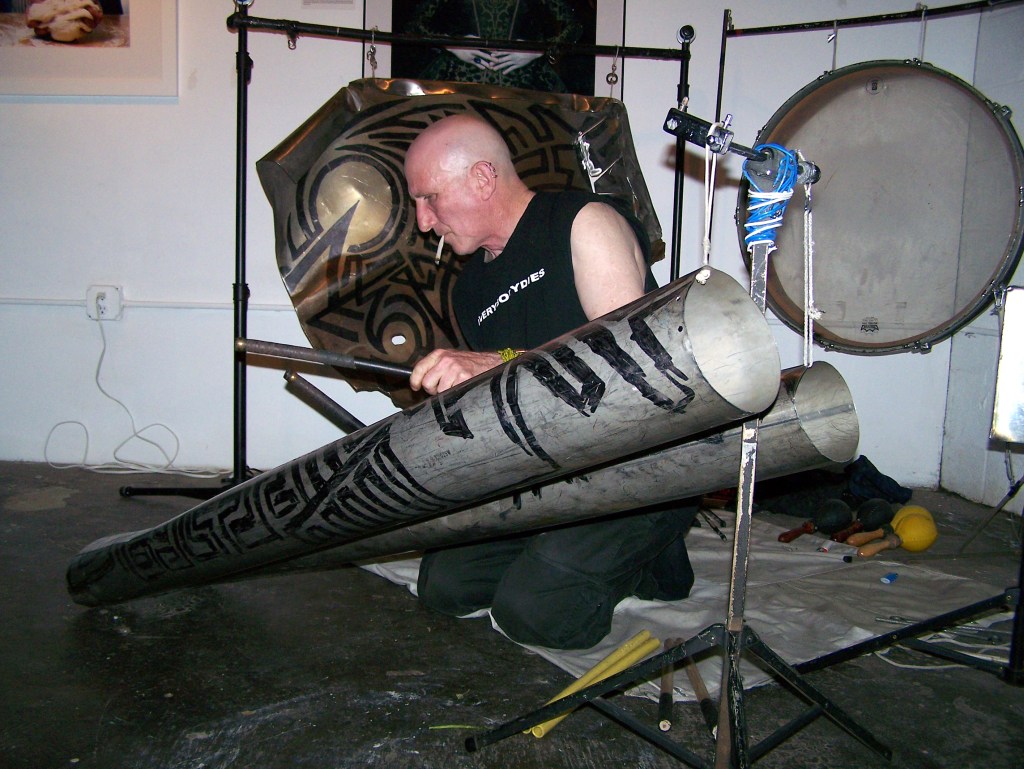
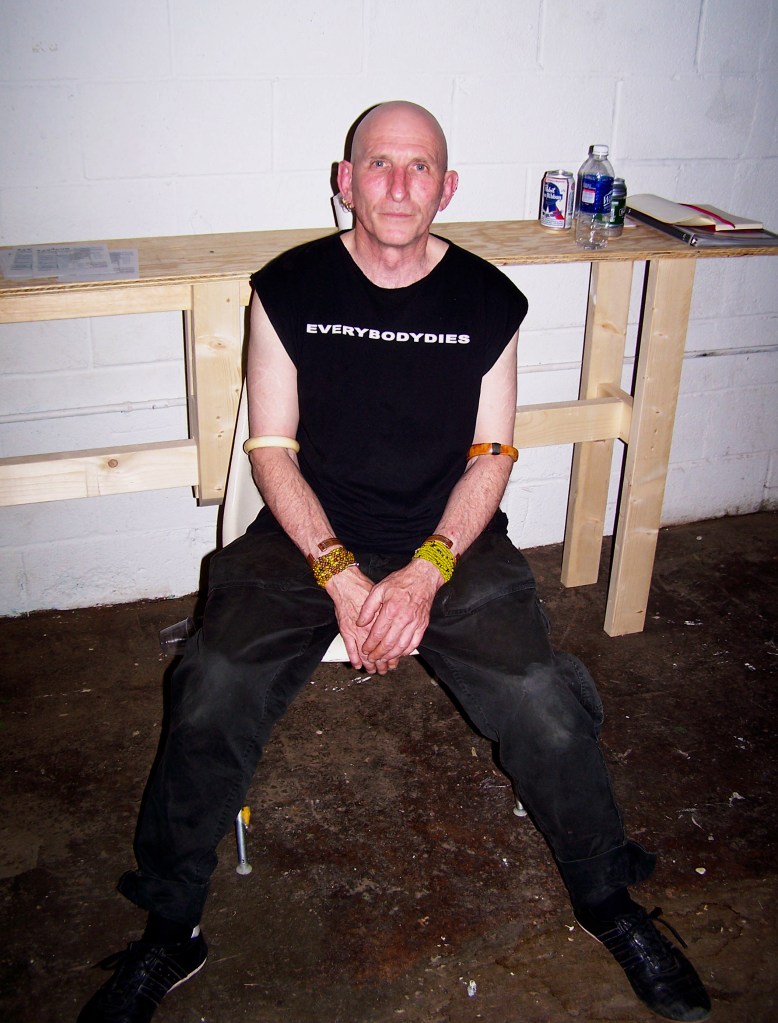
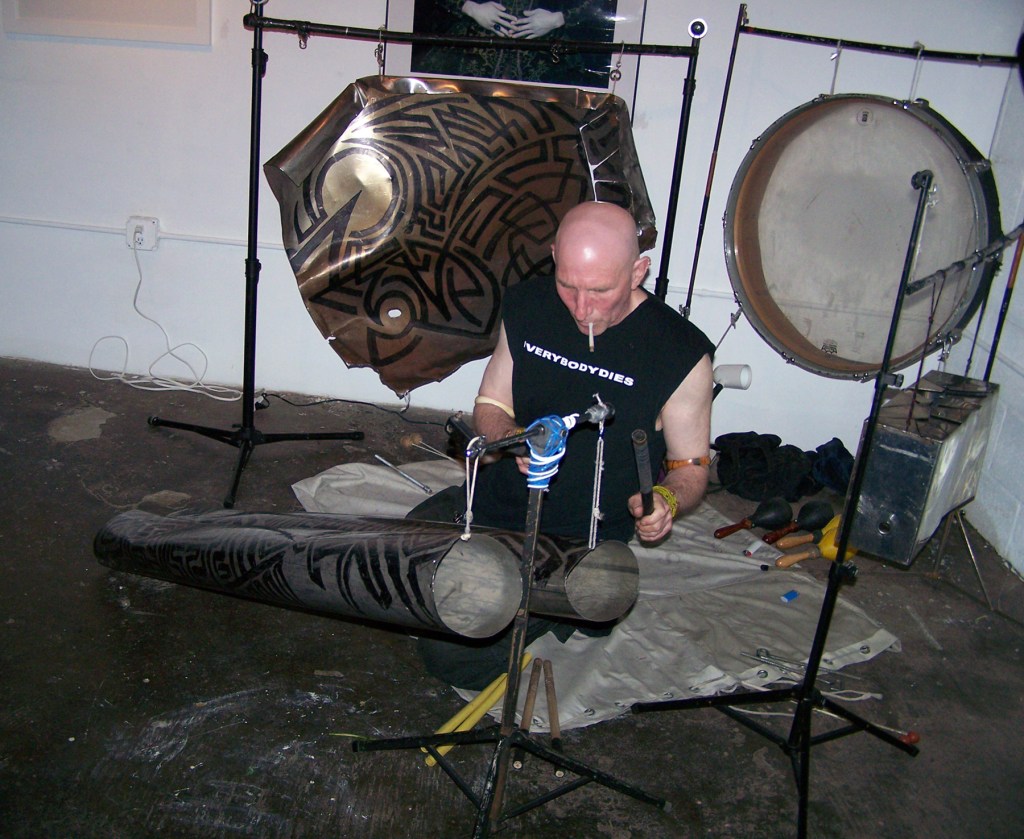
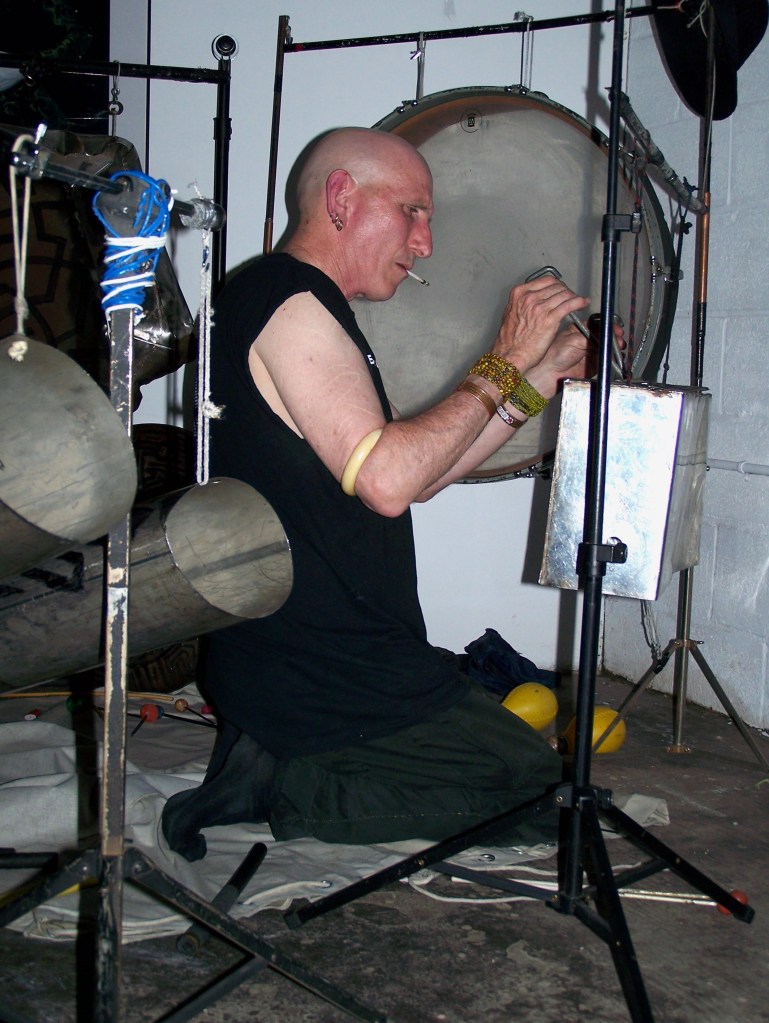
Stark black-and-white photographs of a man with intense focus, hammering at plastic containers, metallic tubes, and hunks of repurposed weapons of war. His head and face clean-shaven, and a cigarette dangling from his lower lip as he kneels—muscles locked—pounding metal rods and mallets on mangled bits of titanium and steel. This vision of percussionist and sound artist Z’ev (born Stefan Joel Weisser) was broadcast from the Bay Area to middle America and beyond in the pages of the Industrial Culture Handbook, published by punk and underground culture journal RE/Search in 1983.
RE/Search placed Z’ev alongside industrial music’s early pioneers Throbbing Gristle, NON, Cabaret Voltaire, and more. But as each of these other acts explored the dark aspects of society in the wake of the industrial revolution with subversive cunning, Z’ev communed with the mystical elements of the natural world. The sounds he created tuned into the deeper resonances of a planet hurtling through space, spinning in alignment with the unseen contours of the universe.
Industrial Culture Handbook
Association with industrial music was never disconcerting for him. “It was just a bunch of people coming from an art background, moving into a proto-punk kind of thing,” Z’ev explained over the phone during an interview in 2007. “My relationship with industrial music had to do with the instruments I was using. They were products of high technological industrialization.”
Z’ev utilized the scraps of industry to draw out both the gargantuan and the meditative qualities of metal, space, and time. He fully embraced the artistic notions of turning swords into plowshares, but most importantly, his performances and compositions honed the power of pure harmonics.
Be it with his earlier “wild style” live performances imbued with an intense physical show of force, or his more aurally-focused compositions that found balance in primitive rhythms and improvisation, Z’ev’s output had more in common with the tonal exploration of composers of massive minimalism such as Tony Conrad and Lustmord, or the techniques of Pauline Oliveros’ Deep Listening Band, rather than the dirge of groups like Einstürzende Neubauten or Test Dept., who utilize similar instrumentation. “I was never interested in people coming to see a violent thing happen, because it wasn’t violent; it was a powerful thing,” he explained.
Recalling reviews of early performances: One bay area journalist wrote that “he manipulates large, metal objects with the look of a concert pianist.” But in New York, a writer called him “a man who personifies violence in sound and vision,” and later asked “why does this remind me of a guy being jerked around by two vicious Doberman Pinschers?”
The latter review didn’t set well. “He’s probably someone who cowers during a thunderstorm,” Z’ev offered with an understated laugh. “Some people revel in a thunderstorm and others get scared. It’s an elemental thing and people’s relationship to them determines if it’s something scary or something to embrace.”
“Salts Of Heavy Metals”
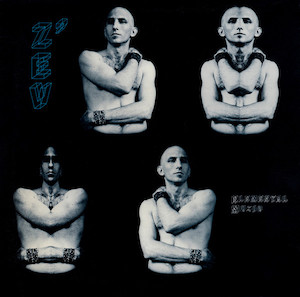
Early Z’ev recordings such as 1981’s Salts Of Heavy Metals (Infidelity Records) and 1982’s Elemental Music (Subterranean Records) summoned the hypnotic qualities of reverberating metal by guiding the clang and bang of his performance to harness the ghostly acoustic feedback swelling between each mallet strike—the rhythmic aural phenomena created by his homemade instruments interacting with the room itself.
Z’ev spent a lifetime studying music, the nature of sound, and spirituality from around the world, including Kabbalah and esoteric systems, and wrote a book titled Rhythmajik: Practical Uses of Number, Rhythm, and Sound. He also worked with the Fluxus Group, and was active in the Downtown Manhattan music scene of the ‘80s and ‘90s, as well as the West Coast’s avant-garde arts and music community, extending from his time attending the California Institute of the Arts.
“Elemental Music”
In 1980, he shared the stage with British goth-punks Bauhaus on their first headlining tour of the U.K. “We always used to hand pick our special guests and would look for unusual, stimulating, and challenging artists,” Bauhaus’ bass player and vocalist David J offered in an email. “We saw a film of Z’ev doing a performance where he was ‘playing the building,’ and also using his collection of plastic containers to great rhythmic effect. At the time, we were getting more rhythmic as a band so it was very complimentary to have him opening for us. I believe that he is something of a shaman.”
Over the years, Z’ev also collaborated with various composers, including live electronic music innovator Carl Stone, multi-instrumentalist Elliott Sharp, guitarist Glenn Branca, pianist Charlemagne Palestine, noise artist Merzbow, Genesis P. Orridge of Psychic T.V., Stephen O’Malley of Sunn O))), percussionist Jon Mueller, and dozens more.
“HYDratioN”
Like many, Mueller discovered Z’ev after reading about him in RE/Search’s Industrial Culture Handbook. “When I read his article in ’87 or ’88, I remember it striking me as someone really living a different kind of life, and as a drummer, it was inspiring—mostly in that his ideas went far beyond drumming.”
A few years later, Mueller booked Z’ev to play a show in Milwaukee, where the two met. Later, Mueller released the Osso Exótico + Z’EV CD via the Crouton label.
“Years later, I shared another bill with him in Milwaukee, as part of the Milwaukee Noise Fest,” Mueller says. “That was a great night. We had dinner and really got to talk instead of just exchanging emails—his were typically brief. His set with the synthetic drum triggers manipulating the Jimi Hendrix video was a new direction for him, and I admired his dedication to finding ways to create.”
Mueller goes on to say: “My perception after meeting him didn’t change much, except realizing the possibilities that exist. Being young reading about someone, especially someone like Z’ev, you never assume that one day you’d meet them, let alone work with them.”
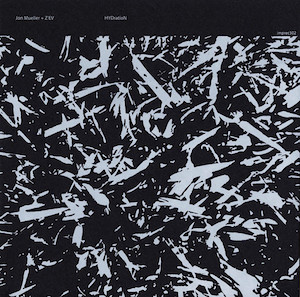
In 2009, Important Records released HYDratioN, a collaboration in which Mueller mailed Z’ev a collection of tracks—drums vibrated with gong and synth recordings, and other small percussion. According to the LPs sleeve, Z’ev “recreated” the source material to an extreme degree. How it was executed, though, remains a mystery. “It’s somewhat unclear what all happened on his end,’” Mueller says. “To me, it sounded different than what I sent him, but he said he ‘basically just mixed it.’”
A now scarce retrospective double CD released in 1991, titled 1968-1990: One Foot In The Grave (Touch), drew renewed interest in Z’ev. Dozens more releases followed, including a 2006 CD for Atlanta’s Blossoming Noise label, titled Symphony #2 – Elementalities.
“Symphony #2 – Elementalities”
But even in the digital era, many of his recordings remain frustratingly difficult to track down. As a result, more people have heard of Z’ev than have experienced his performances.
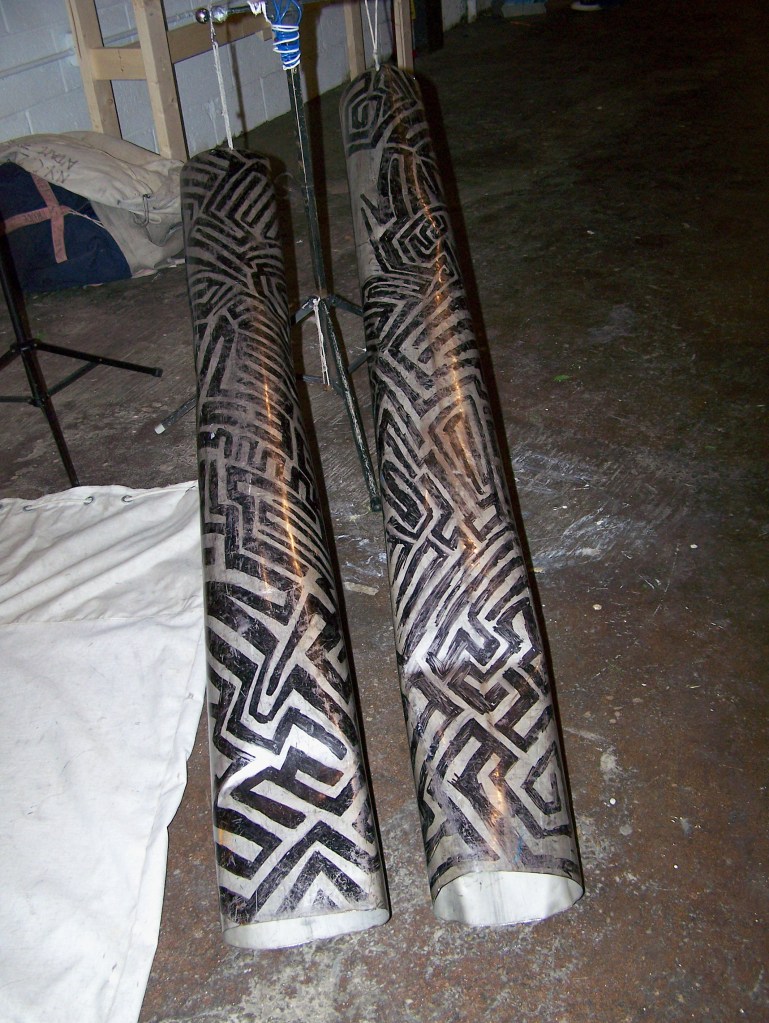
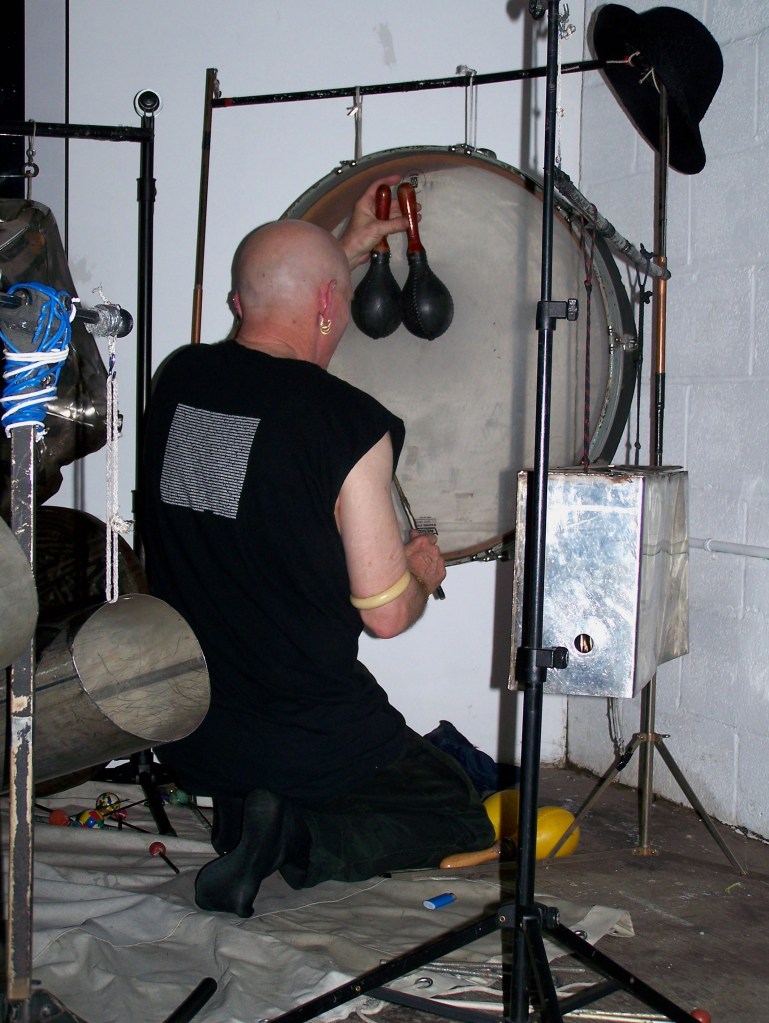
For his 2007 tour—his first proper trek playing shows across the United States—Z’ev’s inventory of instruments included steel sheets and boxes, titanium tubes, a gong made from a patio table bass, and a section from the tank of an 18-wheeler. Each is played with various mallets and maracas that have been altered with ball bearings.
His favorite metal is Titanium, which he discovered at a Bowing scrap yard in Seattle circa 1982 where he acquired surplus materials salvaged from the cooling system of missile silos from Triton submarines. “When the rocket shoots out of the sub you have to cool the interior of the silo or it would melt the submarine,” he adds with childlike enthusiasm. “Titanium can become white hot and maintain structural integrity. The more heat and pressure that’s used to create a metal, creates energy potential. When you hit titanium it amplifies the sonic energy it puts out.”
That sonic energy still rings out with unmatched power.
Z’ev was born on February 8, 1951. He passed away on December 16, 2017. He sustained injuries including a punctured lung and five broken ribs, after surviving a train derailment in Kansas. He was 66 years old.
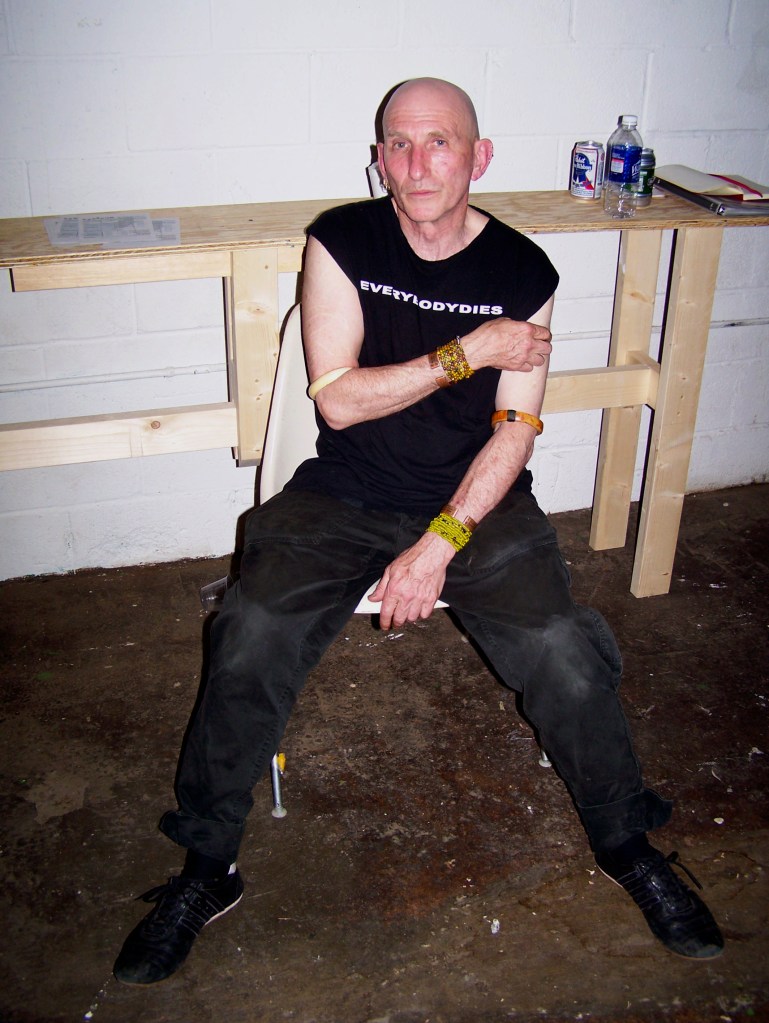
These photos were taken when Z’ev performed at Eyedrum Arts & Music Gallery on May 16, 2007. Mr. Natural, Black Meat, and Sikhara also performed.All photos by Chad Radford.
If you have enjoyed reading this article, please consider making a donation to RadATL.
RadATL has big things in the works with Nicol Eltzroth Rosendorf‘s latest LP, Big Other. The album features four pieces that are bursting at the seams with droning beauty, anxiety, texture, and ambiance. Like author James Joyce’s 1939 modern fiction classic Fennigans Wake, every note and every nuance heard throughout the record contains the gravity of the entirety of the work.
Big Other features contributions from Jarboe (SWANS), Atlanta’s James Joyce (Cheifs, Noot ‘d Noot, Car Vs. Driver), Shannon Mulvaney (Maganpop, Anna Kramer, Clobber), Brian Halloran (Smoke, W8ing4UFOs), Billy Fields (Follow For Now, Dionne Farris, W8ing4UFOs), and Xander Cook, with liner notes by author Blake Butler.
DUET FOR THEREMIN AND LAP STEEL: Frank Schultz (left) and Scott Burland. Photo courtesy Terry Kearns.
In the visually stunning BBC One documentary series Planet Earth, Sir David Attenborough describes a mesmerizing scene in which underwater caverns play tricks on the eye. “What seems like air … isn’t. It’s just another kind of water,” Attenborough says as he describes a phenomenon called halocline, a point at which freshwater and saltwater clash, like oil and water, maintaining separate densities. It is rich fodder for the imagination, and the title of Duet For Theremin and Lap Steel’s latest album. Theremin player Scott Burland and Lap Steel player Frank Schultz are back with an eight-song masterpiece of haunting, luminous atmosphere.
In the Fall of 2019, a chance meeting—sharing the stage at Louisville, Kentucky’s Kaiju—with vocalist Dane Waters gave rise to a collaboration in which she weaves her voice into songs with titles such as “Maelstrom,” “Swell,” and “Fata Morgana.” The result draws out an unforeseen abstract aquatic theme pulled from the depths of the subconscious, manifesting itself in fluid musical movements.
On the heels of the album’s May 16 release, Burland and Schultz took a few minutes to talk about working with Dane Waters, what the music means to them, and letting the music drive the concept.
Halocline describes what happens when two bodies of water are separated because of different salinities. How does this apply to the record?
Frank Schultz: The music drove the concept, not the concept driving the music. I had been watching a lot of Blue Planet and Planet Earth in the evenings during the time I was starting to put the album together, and the music seemed a perfect fit to the many faces of water. Water is one of those weird things that you can’t live without, sometimes it’s hard to live with, and sometimes it’s a killer. The illusion of a halocline is beautiful, but can be very distracting and deadly.
Scott Burland: Naming albums and song titles has been a challenging—though fun—process for us over the years, and this time the whole concept fell into place once Frank mentioned halocline to me. The music on this album varies from murky to clear, sometimes even in the same song. To me, some of this music sounds like it was recorded underwater. Or lends itself to imagining oneself moving around surrounded by, or completely underwater.
How does this expand upon your body of work and everything that you’ve accomplished with your previous recordings?
FS: I think it is our best body of work so far. It has connections to previous work, but goes in several different directions.
Filmmaker Robbie Land’s video for the title track from DfTaLS’ latest album, Halocline.
What are these different directions in which you see the music going?
FS: As far as a long term direction, who knows. We play, the music comes out, we record it and put some of it out. There is no preconceived notion of a path or direction.
SB: I think it fits nicely into our larger body of work. When 10 came out, I remember feeling like there was a certain maturity in the music. That’s definitely true of Halocline. There are no gimmicks per sé, it’s just the instruments, filtered through our approaches, and voice. It stands on its own and it seems a logical extension to our arc. I’d add that the majority of the album is sonically abstract, though there are moments of familiarity and traditional structure, or at least our version of that.
FS: There are several moments in the album when everything falls into place and still gives me goosebumps. Favorite songs change over time, at least for me. Current faves are “Maelstrom” and “Dissolver,” but I have a crush on all of them.
SB: I’m a big fan of the title track. When I hear it, I think wow, we did that? I don’t have a clear memory of recording it, it was just some random Wednesday, early in 2019. I appreciate that I’m working with someone who I can collaborate on a piece such as this, with no road map, no clear beginning or end and listen back and agree, hey that’s not half bad. “Brinicle” is another favorite, it’s both still and in motion and I have at least a vague memory of recording that one!
What did performing with Dane Waters bring out of DfTaLS?
FS: We met Dane in Louisville when we shared the stage with her in 2019. We were both floored by her performance. Floored enough that the two of us agreed, without any hesitation, that we should meet with her the next day and ask her to be on the album. She said yes! We fleshed out around 18 songs, got them down to nine songs we agreed on, and sent her three of them to record vocals. We ended up using all the songs for which she contributed vocals. Of course, once I received her recordings, it affected how the songs were treated and mixed.
SB: After that Louisville gig, Frank and I were asking ourselves why we didn’t invite her to join us for our set. Second best was asking her to contribute to the record. I think she adds a human quality to the album which isn’t exactly lacking in our previous efforts, but it’s just more in the forefront here. She slipped right into the spirit of the thing, I liked the way her voice reacted harmonically to the theremin and I appreciate the thought that she put into it. We look forward to sharing a stage with her at some unknown point in the future.
DUET FOR THEREMIN AND LAP STEEL: Halocline
Collaborations can often underscore one artist’s vision, or open up to the whole group making room for happy accidents, so to speak. Be it Jeff Crompton’s contributions to “Absinthium” on 10, filmmaker Robbie Land’s visuals, or working with Bill Brovold, the Shaking Ray Levis, and more on your 2011 album, Collaborations. What are the benefits of bringing outside influences into the realm you’ve created with DfTaLS?
FS: Kind of two camps here: Crompton and Dane recorded their pieces after the fact, so not really anything that influenced our playing. Robbie—we never see his films while we are playing, so not much influence, although we love when it happens, we just feel better knowing it is there, as does the audience. The Collaborations album was the one where we did live recordings with all the folks. So we were all influencing each other. In general, we enjoy collaborating with folks because it tends to bear lovely fruit and furthers our musical relationship and connection with those folks. Improvising with new folks is a chance to open your ears and learn something.
SB: This is the first time we’ve collaborated with someone without being in the same room, so the rules were different. On paper, there’s an immediacy that’s missing but in this case I think Dane nailed it with the vocals, almost as if we had recorded it together. Frank and I know the limitations of DfTaLS and an advantage of bringing someone else in is that the other people don’t necessarily know or even want to know those limits. It offers a fresh perspective, which gives us “permission” to stray from our comfort zone. To say it breaks up the monotony seems a little harsh, but surprise is good and we’ve been doing this long enough that introducing something new and/or unexpected keeps the fire going.
FS: Collaborating is part of our nature.
SB: It seems that we are able to fit into a variety of sonic scenarios, so I would say that collaborations allow us to expand on what DfTaLS is, and a glimpse into what it might become, or could be. Having time these last couple of months to contemplate even my own relationship to music has been eye-opening. Trying to strip everything away and then slowly reintroduce things to see what resonates. It’s a process. It’s hard to imagine my life without DfTaLS, so I am trying to figure out what it really means to me, what it means to Atlanta, to the region, and beyond. So it’s difficult for me to articulate the true nature of DfTaLS. Still working on that.
W8ing4UFOs are still playing their scheduled shows at the Pilot Light. Stay tuned for more information.
As Knoxville, Tennessee prepares for the Big Ears Festival‘s annual pilgrimage of deep listeners descending upon the Marble City’s music venues March 26-29, more pieces are falling into place every day. Festivities for the 2020 gathering include an ever-growing film series and panel discussions, in addition to a lineup of bold musical innovators celebrating their singularly nuanced sounds. A rich lineup of heavy-hitters is on the calendar for this year, including German free jazz luminary, saxophone and clarinet player Peter Brötzmann, Tortoise guitar player Jeff Parkerand the New Breed, rock ‘n’ roll poet Patti Smith, Tuareg psych rocker Mdou Moctar, drone music architect Phil Niblock, British free jazz and Afrofuturist provocateur Shabaka Hutchings & the Ancestors, and more.
Amid the flurry of artists and activities on this year’s schedule, Atlanta boasts a particularly strong showing:
Mute Sphere, a group featuring former Faun and A Pan Flute guitarist David Gray, cello and fiddle player Ben Shirley, drummer John Gregg, and percussionist and synth player Chris Childs team up with vocalist Monique Osorio, crafting a blend of composed and improvised rock and modern classical sounds. Mute Sphere takes the Pilot Light stage on Thursday, March 26. 8 p.m. It’s free to anyone who can fit through the door, even if you don’t have a Big Ears pass.
The Rev. Fred Lane is currently setting the South ablaze with the arrival of Icepick To the Moon, his first album over 30 years. The album finds the Auburn, Alabama auteur backed by a group known as the Disheveled Monkey Biters, aka the Edgewood Saxophone Trio (Jeff Crompton, Ben Davis, and Bill Nittler). Rev. Fred Lane and the Disheveled Monkey Biters play The Standard on Friday, March 27. 9 p.m.
W8ing4UFOs photo by Karen Haim.
Coded deeply within W8ing4UFOs’ DNA is a dense and secret history of Atlanta music. Singer and guitarist Bill Taft, cellist Brian Halloran, and percussionist Will Fratesi’s time together reaches all the back to Cabbagetown in the early ‘90s, sharing stages with Southern firebrand Benjamin in the band Smoke. Producer, songwriter, and keyboard player Billy Fields is like the angel Virgil of Atlanta music, leading the way out of darkness into the light. His resume boasts a lifetime spent playing music with a variety of acts such as Follow For Now, Seek, Upstream, Lust, Arrested Development, Dionne Farris, and H.R. of Bad Brains’ Human Rights outfit. Alongside guitar player Sean Dunn of Athens’ indie rock outfit Five-Eight and viola player and Radon Recordings co-owner Katie Butler, the group creates a mighty sound steeped in the kind of steel-stringed anti-gospel defiance that can only be forged in the forgotten underbelly of the Southern Piedmont. W8ing4UFOs plays two shows at The Pilot Light — Friday, March 27 at 9 p.m., and Saturday, March 28 at 3 p.m.
Dust-To-Digital co-owner Lance Ledbetter joins Nathan Salsburg, curator of the Alan Lomax Archive, for a listening session and discussion of selected artists, repertoires, and site-specific musical communities, including archival recordings from Ledbetter’s nonprofit organization Music Memory. At Boyd’s Jig & Reel. Sunday, March 29. 2-3 p.m.












 Rad/ATL