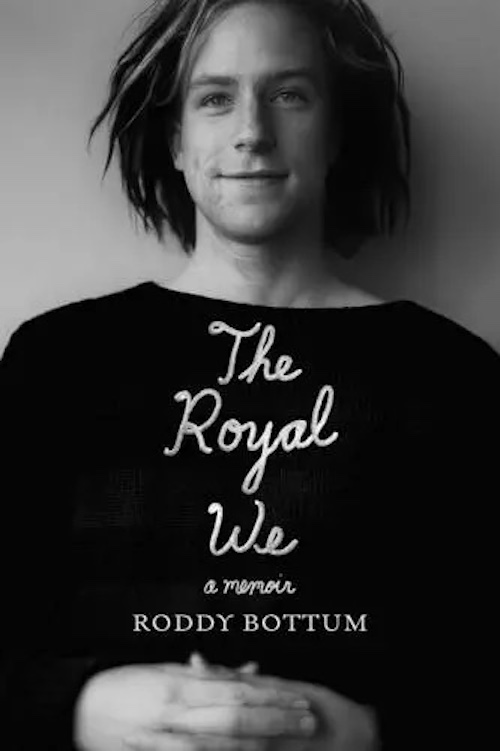
Roddy Bottum has spent much of his life sculpting a soundtrack for cultural upheaval, whether playing keyboards with Faith No More or channeling emotionally resonant pop with Imperial Teen. On Sunday, February 15 at 4 p.m., Bottum brings that same sense of reflection and revelation to Atlanta for a conversation about his new memoir, The Royal We, hosted by Criminal Records and A Cappella Books.
‘The Royal We’ (Akashic Books)
The Royal We is Bottum’s coming-of-age and coming-out story, capturing a city—and a self—on the verge of transformation. Bottum traces his journey from growing up gay in Los Angeles to finding community, purpose, and creative ignition when he moved to the Bay Area. There he co-founded Faith No More, and cranked out era-defining numbers such as “We Care A Lot,” “Epic,” and “Midlife Crisis.”
Bottum’s memoir is far from a standard rock tell-all. While there are brushes with celebrity status—encounters with Kurt Cobain and Courtney Love, the chaos of playing arena-sized shows, and stacks of gold records piling up—the gravity comes from his unflinching accounts of addiction, loss, and survival amid the AIDS crisis. Written with clarity and honesty, The Royal We is a personal reckoning and a cultural document, mapping how resilience is built from within.
Bottum is joined in conversation by yours truly, Atlanta music writer Chad Radford (Atlanta Record Stores: An Oral History). Our talk will be followed by a book signing. It’s ok to bring CDs, LPs, or whatever personal items you’d like to have signed, but definitely pick up the book. Copies will be for sale at the event. It’s the reason he’s here, and it’s a must-read for fans of Faith No More, students of queer cultural history, or anyone drawn to stories of survival and self-invention. The conversation promises an intimate look at an artist—and an era—that reshaped all that alternative rock music could be.
Free to attend. Sunday, February 15 at 4 p.m. Criminal Records, 1154 Euclid Ave NE A, in Little 5 Points.
If you have enjoyed reading this post, please consider donating to RadATL. Venmo to @Chad-Radford-6 or click on the PayPal link below.
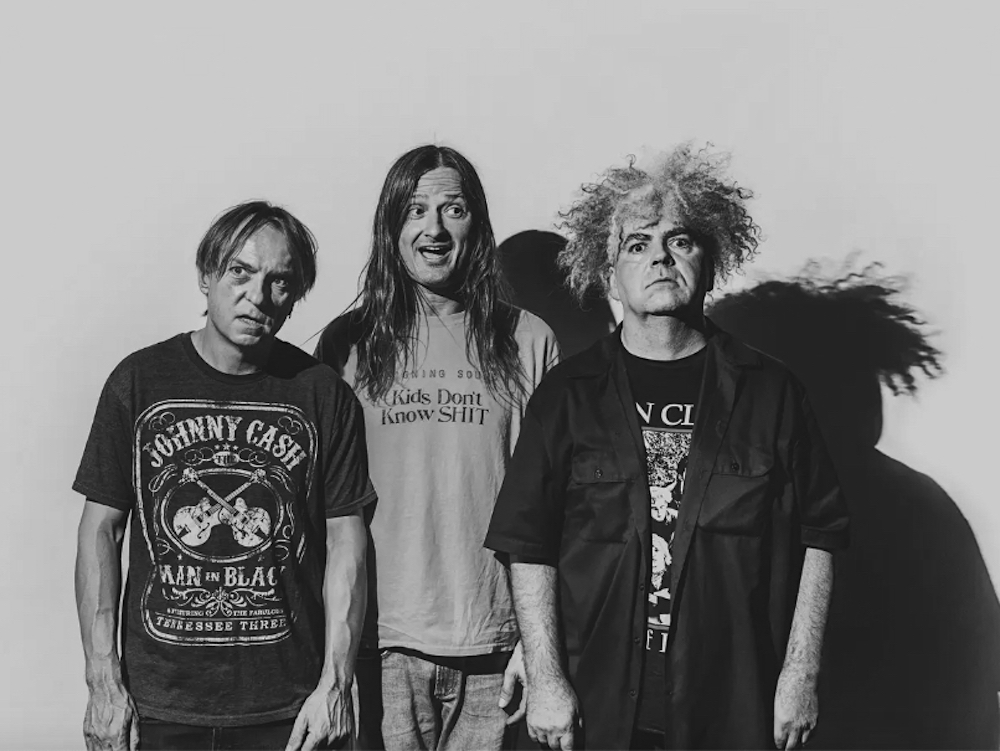
MELVINS (left to right): Steven McDonald, Buzz Osborne, Dale Crover, and Coady Willis. Photo by Toshi Kasai
The Savage Imperial Death March thunders into Georgia when Melvins and Napalm Death co-headline a double dose of doom, noise, and grinding intensity.
On Sunday, April 27, Melvins and Napalm Death come together for a massive display of sound and fury on the Masquerade’s Heaven stage. On Tuesday, April 29, the same bill rolls into Athens’ 40 Watt Club, bringing chaos to the Classic City.
The tour falls on the heels of the February 2025 release of Savage Imperial Death March, a six-song collaborative LP released via Amphetimine Reptile Records. The six-song release is a crushing, howling monster of an album that finds both bands playing together, seamlessly merging Melvins’ sludge-soaked throb and Napalm Death’s relentless grind.
Melvins are also touring behind their latest release, titled Thunderball (Ipecac Recordings). It’s also the group’s most recent full-length released under the Melvins 1983 moniker, featuring Buzz Osborne, Mike Dillard, Ni Maitres, and Atlanta-based abstract electronic project Void Manes.
For this tour, King Buzzo’s riffs steer the ship, backed by the dual-drum assault of Dale Crover and Coady Willis and Steven McDonald’s fuzzed-out basslines. This incarnation of the band reignites the early Melvins aesthetic with renewed purpose and fire.
Meanwhile, Napalm Death continues its decades-long campaign of sonic obliteration, riding high on the aftershocks of 2022’s Resentment is Always Seismic–A Final Throw of Throes. Vocalist Barney Greenway remains a force of nature, while the band’s grindcore assault remains both savage and surgical.
North Carolina sludge lords Dark Sky Burial—a bleak, ambient-industrial project helmed by Napalm Death’s bass player Shane Embury—and Weedeater set the tone for each night’s proceedings.
Patrick Ferguson recalls the instant when a life-affirming revelation hit him while he was lost in his thoughts recently.
The moment struck him while he and his fellow bandmates in Athens’ post-grunge, post-punk, and indie rock outfit Five Eight were sitting around their house, fielding questions from filmmaker and decades-long fan Marc Pilvinsky.
“I remember looking around and thinking, ‘Wow, is it good to be here,” Ferguson says. “It’s great to get old with these guys beside me. It’s amazing to me that anyone cares, but I’m just so glad to be alive and to have these guys as friends. What a journey!”
Ferguson plays drums for Five Eight. The group formed circa 1988, and Ferguson joined shortly after, settling into a current lineup that includes singer, guitar player, and frontman Mike Mantione, guitarist Sean Dunn, and bass player Dan Horowitz. Since then, the group has turned out driving rhythms that punctuate aggressive and melodic songs bearing titles such as “Behead Myself,” “She’s Dropping the Bomb,” and “Weirdo.” Each number is guided by the band members’ personal struggles with mental health, coping with the complexities of human relationships, and overcoming the standards of a flawed music industry.
All of these elements combine in Five Eight, yielding tales of a band that has garnered an intense local following over the years, but mainstream success has remained frustratingly out of reach. Despite a seemingly insurmountable obstacle course that the band has navigated over its 36-year career, the group’s principal players remain disarmingly optimistic.
Pilvinsky lived in Athens between 1991 and 1997. At the time, R.E.M. had already broken worldwide. A new generation of bands were playing in Athens, ranging from the dark sludge and Southern depravity of Harvey Milk and the Martians to the atmospheric pop of Now It’s Overhead, and the rich Americana of Vigilantes of Love. Pilvinsky wrote about music for Athens’ arts and entertainment weekly Flagpole Magazine, and even served as the paper’s Music & Film Editor between 1995 and 1997.
He was immersed in the local music scene. “Over and over, I would see these life-changing shows happening on a Tuesday night at the 40 Watt Club, with 50 other people in the audience,” he says.
There were other clubs putting on shows as well, such as The Shoebox (later called The Atomic Music Hall), and The High Hat Club. Whenever Five Eight played they always sold out the club. Hundreds of people were blown away every time they played.
“The idea that a band could do that and then not go on to have a career as full-time musicians was surprising,” Pilvinsky says.
For him and many others, Five Eight was primed to ascend to the stadium-sized fame of ‘90s alternative rock stardom alongside the likes of Nirvana, Pearl Jam, Wilco, and more.
But it hasn’t happened yet.
“Five Eight’s records are great,” Pilvinsky goes on to say. “Their songs are great. Everything about them is great, and they have an interesting story.”
After leaving Athens, Pilvinsky spent time living in Dallas, TX, and later in Los Angeles, building a career as a film editor. His IMDB page shows credits for his work on behind-the-scenes specials—bonus content accompanying films from Tim Burton’s Alice In Wonderland to Tyler Perry’s Madea Goes To Jail.
In 2013, he returned to Atlanta with his wife and kids, and was looking for a film project to peruse outside of his day job.
Earlier, back in 1994, while he was writing for Flagpole, Pilvinsky had interviewed Five Eight for a story when their album Weirdo was newly released.
“I went to their practice space and interviewed all four of them together, which was a huge mistake,” Pilvinsky says. “I was a pretty green journalist, but they just steamrolled over me. They were probably sick of doing interviews. I couldn’t get a straight answer out of anybody. They were just entertaining themselves with lies, essentially.”
But he never stopped being a fan of their songs. “They kept making better and better records,” Pilvinsky adds. “So I walked away from that thinking, ‘Okay, we’re not gonna be friends, but I love this band and I’ll just enjoy them from afar.”
At some point, Mike Mantione sent Pilvinsky a Facebook friend request. “I thought, there’s absolutely no way he remembers me,” he says. “I was the music editor of Flagpole for two years. This guy doesn’t know who I am.”
In 2014, Five Eight’s Weirdo album from 1994 was being remixed and remastered for a rerelease with five extra songs.
Pilvinsky reached out to say hello, and to say: “Just so you know, I make music videos and short films. If you guys have any video needs, let’s talk!”
First, they created a short, 20-minute documentary about why the Weirdo LP had to be remixed and remastered. At the time of its release, Nirvana’s Nevermind was dominating the music world. Five Eight’s label, Sky Records wanted the album to sound more like Nirvana, so they took a recording that had already been mixed and mastered by Dave Barbe, and did a second remastering job on the finished product, which essentially blew a hole in the middle sound information.
Filming that project led to Pilvinsky working on other short pieces with the group’s members, including a video for the song “Thanksgiving 1915” by Mantione’s other band Bad Ends.
As the longer Weirdo documentary unfolds, the story of Five Eight emerges telling the story of the band’s long and tangled career.
The story begins with frontman Mantione suffering a nervous breakdown, believing that he was the anti-Christ incarnate. This landed him in an in a mental health facility. Despite the doctors’ urgings, Mantione’s mother took him out of the institution. Soon after, he started playing music, which became a means for coping with his situation.
From there, the band’s story is a roller-coaster ride of extreme highs, frustrating lows, missed opportunities, and a revolving lineup.
From there, the band’s story is a rollercoaster ride of extreme highs, frustrating lows, career near misses, and a revolving door for band members.
Drummer Mike Rizzi played played on the Good Nurse and the Black album, He also played drums when the group toured with R.E.M. in 1999.
When Rizzi left the group, Ferguson returned to his place behind the kit.
Guitar player Dunn left the group in ‘98, but rejoined Five Eight during the making of Your God Is Dead To Me Now in 2011.
“I have not been the easiest person to play with and somehow Marc seemed to find a way to make sense of why the band has stuck together,” Mantione says. “I would say we have grown closer in some ways having weathered the 1990 major label frenzy that surrounded the indie college rock scene that we grew up in. I think our optimism, our almost childlike naïveté in the power of music to transform lives is why we’re still at it and I know Marc understands that.”
The documentary is filled with friends and contemporary artists— Bill Berry of R.E.M., Amy Ray of the Indigo Girls, Patterson Hood of Drive-By Truckers, Kevn Kinney of Drivin ’N’ Cryin, Vanessa Briscoe-Hay of Pylon, and producer David Barbe of Mercyland—testifying to the group’s strengths.
There is also a striking sense of humor woven throughout the film.
Participating in the film has sparked more activity for the group, hinting at more to come. There is a new album recorded and ready to be released in 2025. There’s also talk of a best-of album materializing down the line, which would be apropos, as the film could introduce Five Eight to a new audience. It also has the potential to cast new light on a band that’s become a staple of Athens indie rock scene.
“During the insanity of the grunge explosion, Five Eight missed a lot of opportunities, and we talk about that in the film, but somehow all of that now feels like the hand of providence on our shoulder,” Ferguson says. “I am so grateful for the life I have now. I love going to band practice. I love these guys I play music with. We still get to make records and play shows, and yeah, it’s not to stadiums full of people or whatever, but we’re all still alive. None of us are on “Celebrity Rehab,” he adds. “Nobody cares if we’re a little thin on top and thick in the middle. The incredible freedom that’s allowed us is such a gift.”
The Garden Club at Wild Heaven West End is hosting a screening of Weirdo: The Story of Five Eight on Friday, February 14. The band is playing a live set following the film, and Mike Mantione’s mom is leading an audience Q&A.
If you have enjoyed reading this post, please consider donating to RadATL. Venmo to @Chad-Radford-6 or click on the PayPal link below.
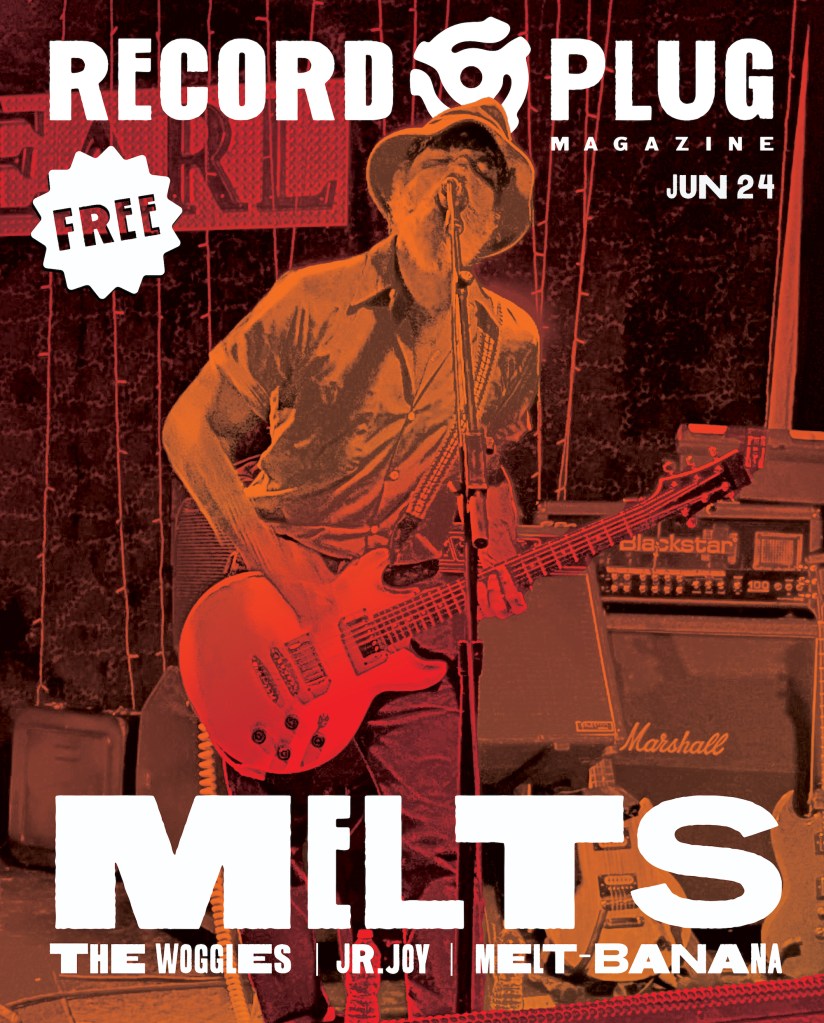
This story originally appeared on the September 2024 issue of Record Plug Magazine.
Photo courtesy The Chunklet Music Preservation Project.
Since forming the The Chunklet Music Preservation Project in 2022, Henry Owings has gathered a massive arsenal of rich and oftentimes overlooked Georgia and Southern musical history from Reconstruction times to the chitlin circuit, college rock, punk, hardcore, hip-hop, and beyond. More than 26,000 postcards, photographs, flyers, newspaper ads, and more have been scanned and added to the Chunklet archive.
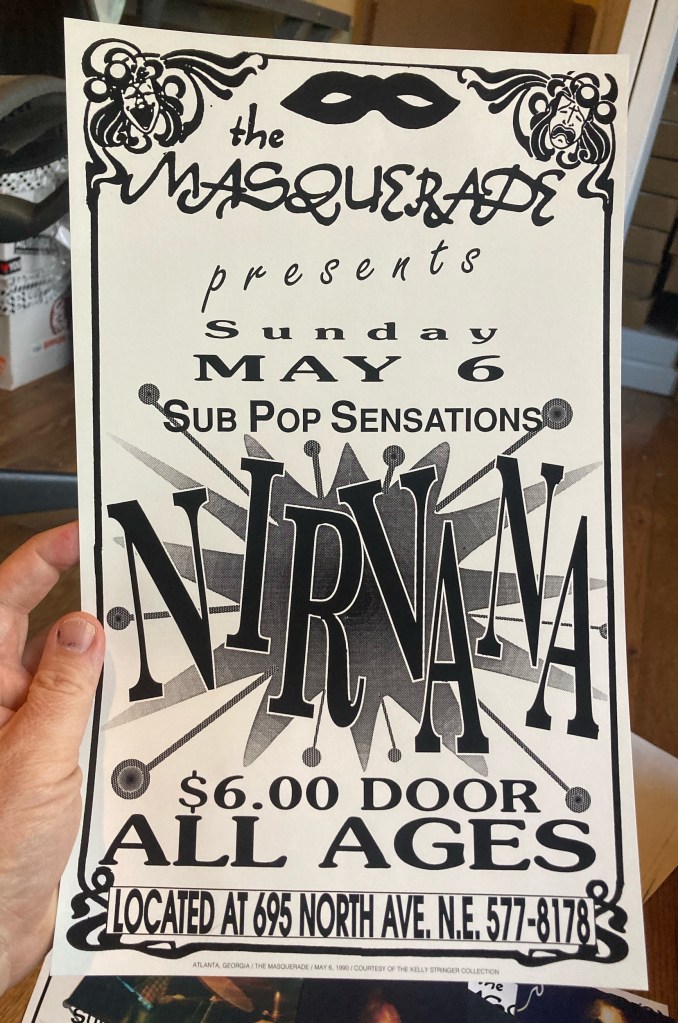
This Saturday, December 21, Ella Guru Records will host an unveiling of a limited-edition postcard set documenting Nirvana’s first Atlanta show on May 6, 1990 in Heaven at the Masquerade. The 12-postcard set offers a snapshot of Kurt Cobain, Krist Novoselic, and Chad Channing’s fiery ascent. This was Nirvana pre-Dave Grohl, performing on one of Atlanta’s most storied stages.
“I’ve been fortunate to scan over 26,000 pieces of primarily Southern ephemera, and when special things come across the scan bed, I tend to take note,” Owings says.
“So I have any one of a number of collections that I’ve been given permission to use: R.E.M. at Piedmont Park ‘82, the B-52’s at Memorial Hall ‘78, Talking Heads at the Agora. But I just thought to myself if I can do this concept with any band it’s Nirvana—or the Beatles, but that’s impossibly rare—and let’s just see how it either comes together or falls apart. I’m curious to see how it does.”
Victoria Nicholson, a Wax ‘n’ Facts alum and music superfan, was at the show with her point-and-shoot camera, capturing eleven ethereal photos of Nirvana from the side of the stage.
Photo courtesy The Chunklet Music Preservation Project.
Heaven in the Masquerade’s original location was around a 1,000-1,300 capacity venue. It is estimated that 150-200 people were in attendance for this show. It was a from the sold-out arenas the band would soon command on the heels of releasing Nevermind.
Kelly Stringer, another attendee that night, had the foresight to snag a flyer off the wall and a small calendar advertising upcoming shows at the Masquerade. Together, these artifacts tell the story of a band on the brink of stardom, performing for a crowd that barely filled the room at the Masquerade’s former North Avenue location.
Owings has restored these relics, compiling them into a machine-numbered edition of 50 postcards with a restored version of the flyer.
Stop by Ella Guru from noon to 3 p.m. and grab a set—along with a margarita or two. All proceeds benefit the Chunklet Music Preservation Project.
The strange case of Melts’ long-lost album Salicoutinäw begins in the winter of 1994. Drummer Andrew Barker, bass player Jo Jameson, and the group’s singer, guitar player, and principal songwriter Theo X had made the long haul from Atlanta to the snow-covered landscape of Minneapolis to record their full-length debut. After releasing the “667” b/w “Crusser” 7-inch single a year earlier on the Greensboro, NC label, 227 Records, the group was primed to cut the LP with 227. The label’s owner Jay Boone did the footwork, made the connections, and lined up a few days of studio time with engineer Tim McLaughlin at Amphetamine Reptile Recording Studios.
A few years earlier, the New York City-based noise rock outfit Helmet had become the subject of a major label bidding war. Ultimately, Helmet moved away from their home at AmRep to the more mainstream auspices of Interscope Records, to release their 1992 classic album Meantime. As a result of so many major labels clamoring to sign Helmet, AmRep Studios had become a well-funded, well-outfitted resource. Along the way, engineer Tim “Mac,” who also played bass with Minneapolis’ noise punk provocateurs Halo of Flies, had become a respected studio hand.
“Some of the members of the bands Today is the Day, Mickey Finn, and Godplow had all spoken positively with us about recording with Tim Mac,” X says. The Melts frontman prefers using his pseudonym when discussing the band. “We were excited to work with someone who was well-versed in the language of recording loud and noisy music.”
After all, it was the early ‘90s. Nirvana was ascending to new commercial heights after releasing 1991’s breakthrough album Nevermind. The word “grunge” was splashed across newspaper and magazine pages worldwide, culminating in a clearly defined but increasingly clichéd sound and fashion trend—the grunge look.
Theo X at the L5P Pub circa 1991. Photo courtesy of Melts.
But beyond the mainstream’s myopic vision, an underground noise rock scene flourished, culminating in an era of sludgy, antagonistic, and guitar-heavy bands such as Cows, Unsane, Hammerhead, the Jesus Lizard, Skin Yard, Cherubs, Melvins, and more churning out raw rhythms and distortion that moved at the speed of molten lava.
The sheer sonic intensity of Melts’ thunderous rhythms wrapped in a penchant for debauched antics drew a wild, sometimes confrontational element out of the audiences who’d come to their shows.
Barker laughs when he recalls narrowly avoiding a scuffle one night when Melts shared the stage at Dottie’s with Cat Power and King Kill 33.
“We played the show and this guy got right up in my face,” Barker says. “He wanted to fight me or have me come back to his friend’s house so we could have a drum competition. He wanted to show that he was a better drummer than me. At first, I thought he was joking but it got a little intense until Jo stepped in and talked him down.”
On another night, Melts were kicked out of the Clermont Lounge for getting naked on stage and lighting a 500-count roll of Black Cat firecrackers during their set.
“The style of music we were playing wasn’t much of a genre yet,” X says. “We had a lot of good samaritans coming to us along the way telling us we were tuning our guitars wrong. The songs we recorded for the album are tuned in B. It’s low, and sound guys would come along and say things like, ‘Hey buddy, let me help you with that guitar so we can get it tuned the right way.”
In conversation, Jameson casually mentions the name Ernie Dale, pausing only for a second as X laughs. The former soundman for Little 5 Points’ fabled former music dive The Point, was well known for not putting up with foolishness of any kind.
“Ernie is great, but if you had something that Ernie deemed to be a bad sound, he wanted to mentor you out of it,” Jameson says. “He couldn’t believe that we were intentionally making these sounds.”
Jo Jameson of Melts. Photo by Jenn Brown
Stories like these, coupled with the down-tuned guitars, heart-pounding drums, and the wide-eyed crawl of songs like “Grape,” “Jackdaw,” and “Cotton Hol” earned Melts a reputation as Atlanta’s answer to sludge metal pioneers the Melvins. But the 14 songs on Salicoutinäw stamp in time a singularly creative and distinctly Southern group that defied expectations, rather than simply adhered to trends.
When promo CDs of Salicoutinäw were mailed to college radio stations the album quickly gained traction. Salicoutinäw even broke the CMJ LOUD 100 chart in 1994. But when a pressing plant failed to deliver the first pressing of finished CDs that had already been paid for, the high cost of working in the music industry in the ‘90s added up too quickly, and 227 Records went out of business. The promo CDs, featuring a primitive, last-minute cover illustration, had a greater reach than the finished product.
By the band’s estimation, maybe 100 copies of a later second pressing of the CD made it into the public’s hands. But it was too little too late. The group received boxes of CDs with the proper cover art, but any distribution 227 Records could’ve offered was long gone, and any steam the group had built up went with it.
“I was blown away by Melts the first time I saw them,” Boone says. “I also adored them as individuals—still do! That’s why I have no animosity or was ever bitter about the shortcomings of the record. I still believe they could’ve done very well, but like so many things in life, shoulda, coulda, woulda isn’t worth dwelling on too much.”
With Melts, the 227 situation was only slightly better than the fate of their Athens labelmates Harvey Milk whose self-titled, Bob Weston-recorded debut album was shelved altogether. That album finally saw the light of day in 2010 when Hydra Head pressed it to vinyl.
Melts’s debut album has remained in obscurity ever since.
“It derailed me,” Jameson says. “The tedium of working on a record—putting so much time and energy into it—and waiting for it to arrive was frustrating. Ultimately, Theo and I parted ways over it. I was pushing for us to rehearse and to play more shows. I was all of 24 years old and was a booger-eating moron. I had no idea how many roles [Theo] juggled with everything from negotiating the release to playing the music. As we’ve discussed in the last couple of years, we misunderstood what each other said,” he goes on to say. “I had quit the band in his eyes. I didn’t intend for that to happen, but whatever I said drew a line in the sand. He had so many responsibilities with this band. I was shortsighted about it. But we’re adults now, and 30 years later, I see it.”
Not long after Salicoutinäw’s botched release the lineup dissolved. Jameson and Barker joined alternative country and Americana singer and songwriter Kelly Hogan’s band to release her debut album, The Whistle Only Dogs Can Hear. Jameson also did a stint playing with Archers of Loaf frontman Eric Bachmann in the band Crooked Fingers.
Photo courtesy Andrew Barker.
Barker continued playing drums with the outsider jazz ensemble Gold Sparkle Band. He still regularly performs and collaborates with various artists around New York City.
From there, X kept Melts moving forward with new members over the years. In 2003 he moved to Fort Collins, CO where he started working with the psychedelic Americana outfit Little Darlings.
Now, 30 years later, a self-released double LP pressing of Salicoutinäw has rekindled the group’s true power and allure, pushing the music and the English language into mysterious new realms of the imagination, while planting the band firmly in the present.
Jameson and X started playing music together in 1984 under the name Saboteur. They were high school kids by day, but their nights were spent practicing in X’s parents’ basement in Smyrna, crafting a hybrid of quasi-hair metal and thrash punk. By 1988, the band name morphed into Sabotortoise while they landed gigs at Atlanta’s storied downtown venue The Metroplex, opening up for nationally touring acts including LA Guns, Faster Pussycat, and Humble Pie.
Back then, X went by the moniker Ted Sunshine–different bands get different pseudonyms.
Melts was christened in 1990 when X and original drummer Tim Jordan recorded and released a cassette tape of early material titled As Noisy As We Want To Be.
Jo Jameson (from left), Theo X, and Tim Jordan of Melts. Photo by Steve Gaiolini.
Over the years, various members cycled through the group. In 1991, filmmaker Chad Rullman who later directed Mastodon’s “March of the Fire Ants” and “Iron Tusk” videos played bass in Melts. A year later, Jimmy Bower of NOLA sludge band EyeHateGod played bass for a stint.
Jameson’s initial run with Melts started in 1992 and lasted through Salicoutinäw. In 2021 he was welcomed back into the group. Original drummer Tim Jordan also returned to the lineup.
Since his early teenage years, X’s writing style with lyrics and band names has remained somewhat impenetrable. Everything from changing the first band’s name to Sabotortoise to an album titled Salicoutinäw to belting out songs titled “Vaccua 8 #3,” “Lessie,” and “Crusser,” X sculpts a jumble of words, letters, and numbers smashed together creating a wholly new mode of communication.
While pointing to the words on the album’s original cover, which is fully restored for the vinyl release, he explains them as though they are a Rosetta Stone to understanding his mashed-up style.
“On the cover you have ‘Sao’, like the Tao, and ‘sow’ like a mother pig,” X says. “You’ve got ‘Sally’ and then you’ve got cooties! And then chicken coop,” he says before phonetically singing, “Just like the white-winged dove sings a song, sounds like a chicken/Baby coop/Chicken coop. I borrow a lot of lyrics from Michael Jackson, George Michael, Madonna, and Stevie Nicks,” he goes on to say, “but I run them through a semantic discombobulator that turns them into some fresh pudding.”
To be sure, X’s lyrics evoke an absurdist’s sense of humor that lies somewhere in the vicinity of Marcel Duchamp’s dada-esque wordplay, Naked Lunch author William S. Burroughs’ cut-and-paste techniques, the Rev. Howard Finster’s primitive folk art, and an ecstatic Southern Baptist speaking in tongues. Still, his dynamics exist in their own avant-garde funhouse of meanings. Salicoutinäw opens with “Weu know t’live must two/ Yer muther sells sunduh the blackiss/ But under won is a vacuum/ Every tin’shy.”
When spelled out, the syntax appears to be nonsense, but it all makes perfect sense to him.
“It’s kind of like, before people were referring to music as emo, this was my version of that,” he laughs. “It certainly seems to have been very therapeutic.”
Jameson chimes in, adding in a deadpan voice: “You’ve just been granted unlimited access to step inside the mind of Theo X. Be careful in there.”
X continues describing his use of language as an amalgamation of emotions, energy, and warped synapses that he channels into Melts songs.
“My brain might have developed in a way that is slightly abnormal or has some sort of organic brain damage,” X says. “I have been around heavy metals, solvents, and thinners—in railroad car quantities—my whole life. Like, 50,000 square feet at a time in the middle of July and August with no ventilation. Also, my academic interests are in language and semantics, especially within religious texts.”
Melts circa 2024: Theo X (from left), Tim Jordan, and Jo Jameson. Photo by Steve Gaiolini
During the COVID-19 pandemic, Jameson found himself listening to songs from Salicoutinäw after so many years. “I thought, ‘I really want to put a needle on these songs. Can we press just one or two copies so that I can have it on vinyl?’”
Pressing up such limited quantities of the record wasn’t feasible, but it started a conversation that brought X, Jameson, and Jordan together to play music. Their reconvening yielded a proper double LP release of Salicoutinäw. But there were hurdles to overcome before they had records in their hands. Chief among them was the artwork.
In the late ‘80s and early ‘90s, the way to store big digital files for personal computers was on a removable 44- or 88-megabyte SyQuest drive. “It was about the size of an old 8-Track tape,” Jameson says.
They could be taken to Kinko’s, for example, where layout, design, and scanning were completed. The user would then pay for their time on the computer. The technology is long antiquated. After digging up X’s old SyQuest drive, the group’s friend, Record Plug Magazine’s Creative Director Andrew Quinn connected them with a specialist in California who was able to retrieve the files. After decades of gathering dust, everything was still in working order. Quinn led the efforts in reworking the album’s cover art and the insert, which includes a timeline of the band and everyone who was a part of it.
X, who produced Salicoutinäw made no alterations from the original recordings prior to handing them over to Morphius Records for vinyl production.
A record release party had to be booked. Barker played on the album, but Jordan is the band’s current drummer. X and Jameson delicately approached Jordan to float the idea of bringing Barker down from New York to maybe play three songs for the show. Jordan’s reply: “That sounds amazing! Let him play the whole show, I want to see that! I never saw Metls with Drew playing drums!”
As a historical document, pressing Salicoutinäw on vinyl is a necessary step in correcting the past for Melts. It also gives the group solid ground to move forward once again. They pressed only 200 copies of the LP because “We think we can sell that many and not have them lying around for years,” Jameson says.
While they don’t have new material in the works, there is a tremendous backlog of older Melts songs that have never been recorded, including a follow-up album that X wrote, called Melts Inc., which was named after X watched all the episodes the “Melrose Place” spin-off series “Models Inc.”
“Because the first one failed so catastrophically to meet its audience, we made a pact to work through some of the older rehearsal tapes and live recordings before we say, ‘Let’s write a new song,’” X says. “We’ve been rekindling some of that, and there is a lot of that stuff lying around, so there is more to come.”
King Buzzo, the singer, guitar player, and frontman of the almighty Melvins joins composer and Ahleuchatistas and Mr. Bungle bass player Trevor Dunn for the long-awaited “King Dunn” acoustic summer tour.
Over the years, Buzz and Dunn have worked on several projects including Fantômas, the Melvins Lite 2012 album Freak Puke, and the 2022 LP titled Gift Of Sacrifice. Their most recently released collaborations arrived in 2022 as two four-song EPs titled Invention Of Hysteria(Amphetamine Reptile Records) and I’m Afraid Of Everything(Riverworm Records). In April 2024, they released another EP titled Eat The Spray (AmRep). These songs materialized as pandemic restrictions were lifting, which is to say they haven’t had much time for touring with this material together until now.
For those who are unfamiliar, Buzz and Dunn’s paired-down offerings do not yield the full-bore sonic onslaught of distortion and wild rhythms that one gets from a Melvins or Mr. Bungle record. There are no drums. However, when playing one-on-one they craft a spacious atmosphere that ranges from cinematic to downright haunting, summoning a dark ambiance from the natural resonance of their respective voices and stringed instruments. Each song delivers an ominous traipse of psychological and physical tension by subtle but no less affecting means.
Photo courtesy J.D. Pinkus
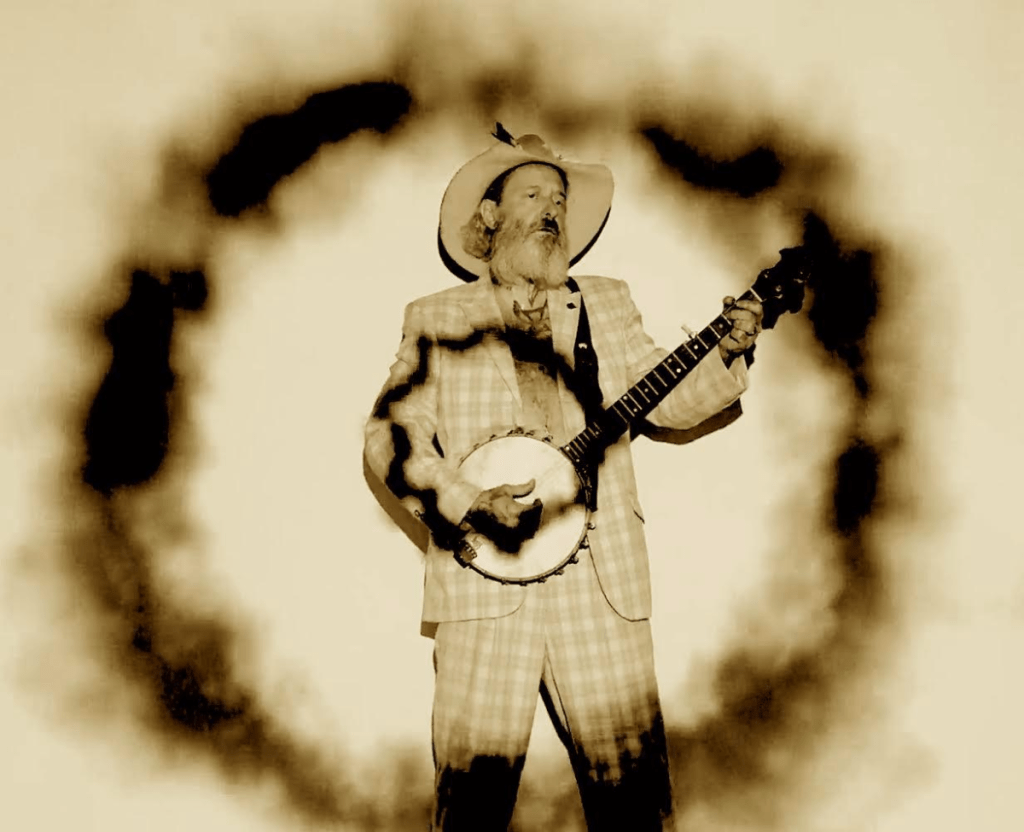
J.D. Pinkus of the Butthole Surfers, Daddy Longhead, sometimes the Melvins, and more lands in the middle slot commanding a set of cosmic banjo strumming from the deranged outer limits. It’s all set to a beautifully hallucinatory visual display. Press play below to check out a couple of cuts from Pinkus’ latest offering, Grow A Pear!
Void Manes photo by Buzz Osborne
Atlanta-based abstract electronic project Void Manes sets the night in motion with a dazzling array of modular synths and analogue gear wrapped in a galaxy of multi-colored cables. The one-man outfit explores dreamtime and nightmare soundscapes, striking a balance between atmospheric noise and melody; drones and sub-bass swells that rise and fall in fugue-like moments of rhythms, sonic impressionism, and chaos.
MELVINS: Dale Crover (left), Steven McDonald, and Buzz Osborne. Photo by Chris Casella.
The monolithic punk-metal speed and molasses dirges of the Melvins establish the group as both forerunners and contemporaries of the Pacific Northwestern musical underground of the early ‘90s. In the modern era, singer and guitarist Buzz Osborne, drummer Dale Crover, and current bass player Steven McDonald have continued pushing the group to creative new heights with 2022’s, Bad Mood Rising, followed by this year’s The Devil You Knew, The Devil You Know, featuring the original versions along with new recordings of the six songs from the Melvins’ debut 7-inch EP.
Now, Melvins have teamed up with Atlanta-based abstract electronic project Void Manes to unleash an homage to British industrial music luminaries Throbbing Gristle, titled Throbbing Jazz Gristle Funk Hits (Amphetamine Reptile Records). It’s an entirely electronic album—a first for the Melvins—featuring TG-inspired improv sessions and covers of songs such as “Sic Sick 60’s,” “Hot On the Heels of Love,” “Hamburger Lady,” and more. The first single is a thickened take on “Discipline 23,” which appears on the CD and on a flexi single that comes tucked inside the LP sleeve.
The video, created by Jesse Nieminen, builds on TG’s subversive late ‘70s mantra on dismantling the mechanisms of social and psychological control amid an era defined by misguided patriotism and technology gone awry. The more things change, the more they stay the same. Here, a minimalist blend of fascist imagery, made hollow under a sheen of maximum color saturation and distortion, pushes the Melvins’ vision of industrial overload to the nth degree. Press play above and get disciplined.
Throbbing Jazz Gristle Funk Hits is the latest in a loose but ongoing trend of paying homage to the confrontational and anti-commercial/pro-good-taste force that prompted British tabloids to label Throbbing Gristle “the wreckers of civilization.” “Heathen Earth” appears on the Melvins’ covers CD titled Everybody Loves Sausages. Head down the Discogs rabbit hole and there are more TG renditions by all parties involved to be discovered and devoured.
“Buzz talks a lot about giving people creative freedom and he’s right on about it,” Nieminen says. “There might be some discussion beforehand or none at all. For ‘Discipline,’ I had an idea, it turned into another, and I put it together. I didn’t ask for suggestions for it. I was free to do whatever I wanted and it was pretty close to what I envisioned from the start.”
Nieminen goes on to say: “We made the A Walk with Love and Death short film together. It was a conversation where we sat and riffed on ideas and edited it together. For Melvins TV they shot green screen in LA and sent stuff for me to do what I wanted,” he adds. “That grew from an idea where I was planning to shoot them in a studio with green screen backdrops and do a single music video in the style of those old German Beat Club episodes. Because of the pandemic it turned into Melvins TV and ballooned into 3.5 episodes.”
In a more recently released video for “Zyklon B Zombie,” Nieminen sets the songs fugue-like bouts of faux tropical rhythms and staccato electronic sounds to waves of billowing and blackened clouds, looped in a tussle of natural beauty rendered exquisitely for the simulacrum. It’s just a taste of what the album holds in store.
March of 2023 marked the 40-year anniversary of the Melvins’ first live performance. The group has spent much of the year celebrating by offering a slew of reissues and new releases, and playing shows around the world. The next Atlanta show is on Wednesday, September 27, at Variety Playhouse, where they’re playing 1991’s sprawling Bullhead LP in its entirety, along with more highlights from throughout the Melvins repertoire.
“We’ve been a band since 1983. We’ve never quit, we’ve never taken a break and stopped being a band, and I have seen people come and go from the highest heights to the lowest lows—death, resurrection, and more death,” Osborne says. “In the art world that I am in, there is a war of attrition; whomever is the last man standing is the winner. So far it’s me, with no end in sight.” READ MORE FROM MY OCTOBER 2022 FLAGPOLE MAGAZINE FEATURE STORY.
Void Manes is performing opening sets at several of the Southern Melvins/Boris shows. Keep your fingers crossed that they tear into some of the Throbbing Jazz … material on stage.
Pre-sale for seated tickets begins Thurs., March 11 at 12 p.m. Eastern. Venue pre-sale begins Wed., March 17 at 10 a.m. Eastern. Tickets go on sale for general public on Fri., March 19 at 10 a.m. Eastern.
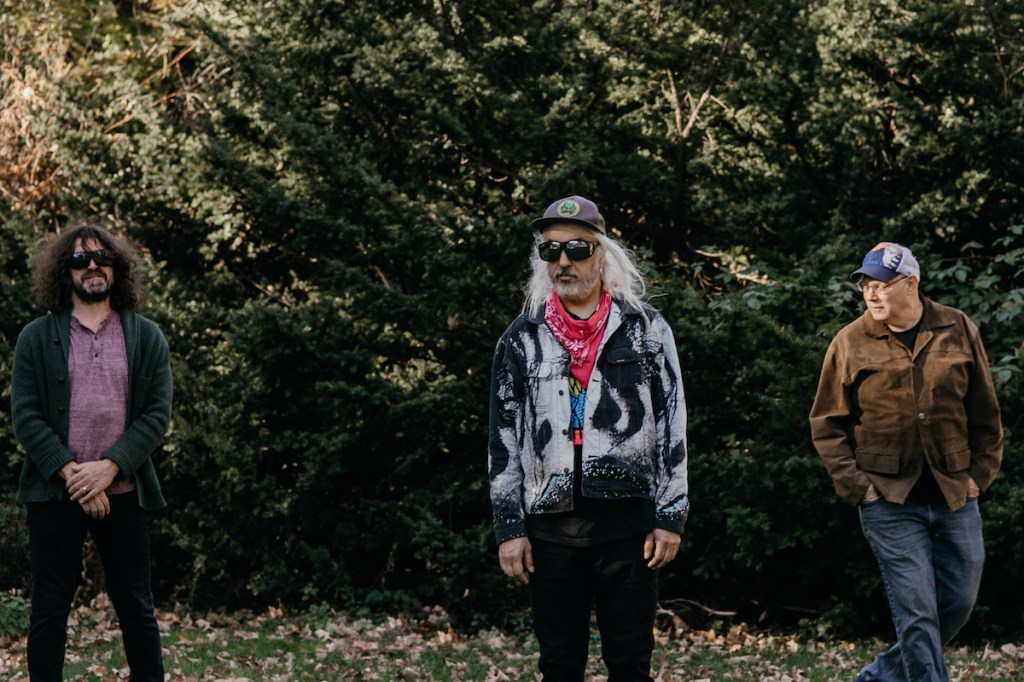
J., Lou, and Murph are back with a new album, titled Sweep It Into Space, due out April 23. Click here to pre-order a copy.
If you have enjoyed reading this article, please consider making a donation to RadATL!









 Rad/ATL