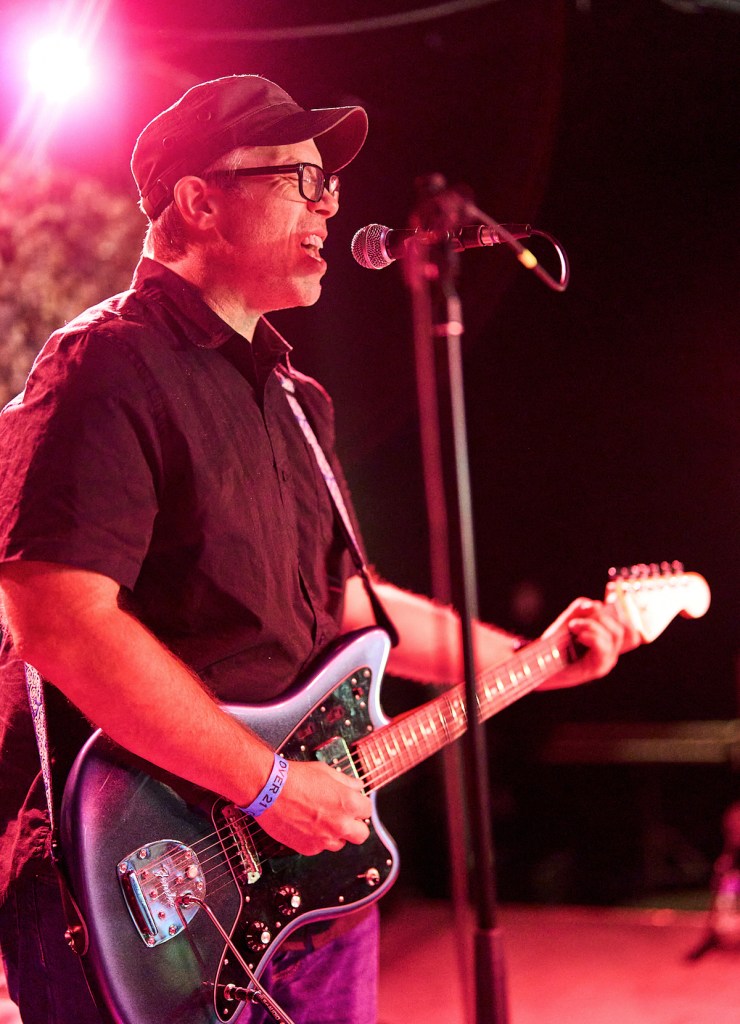
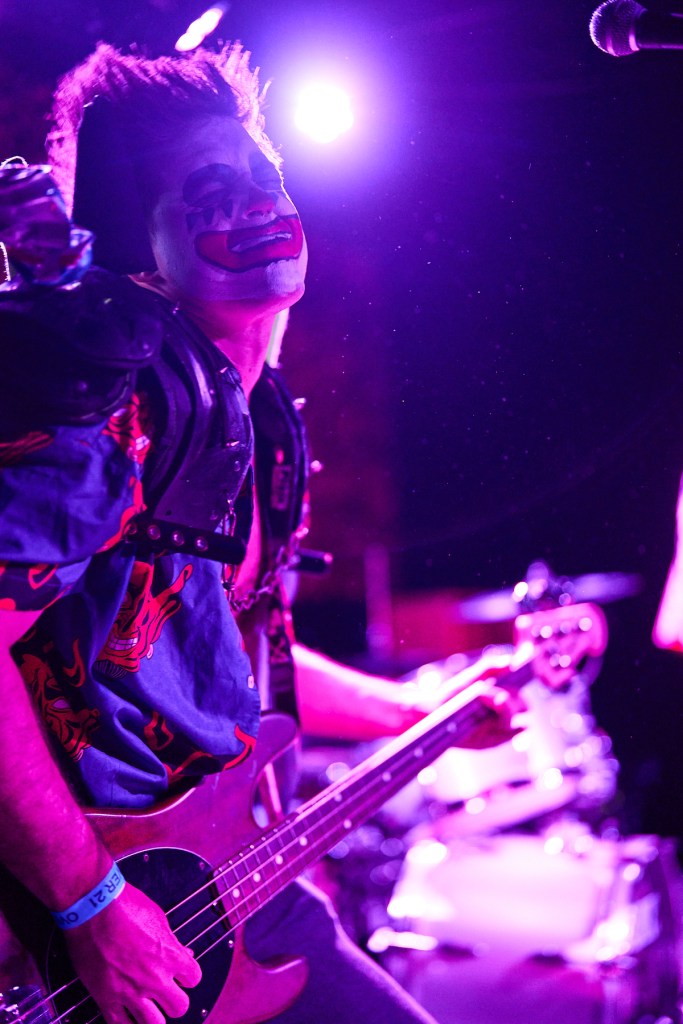
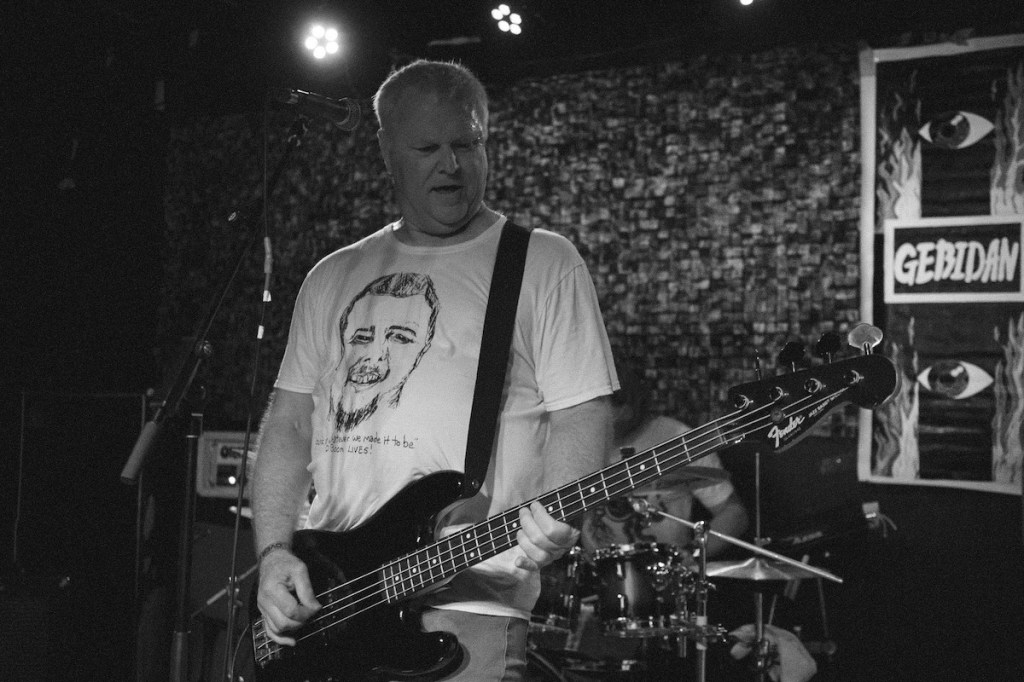
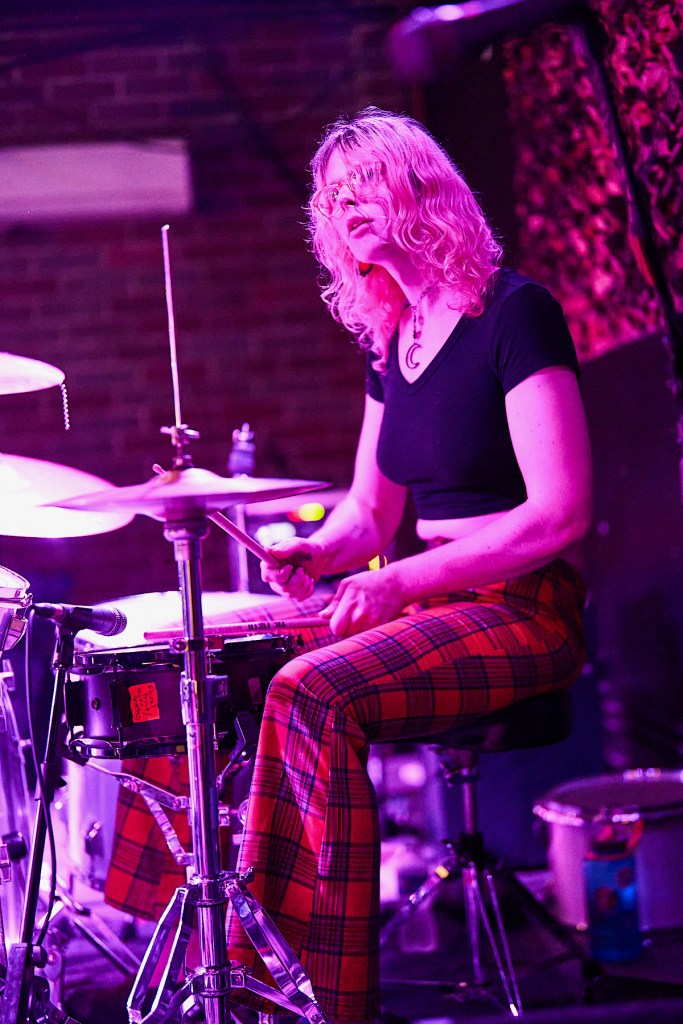
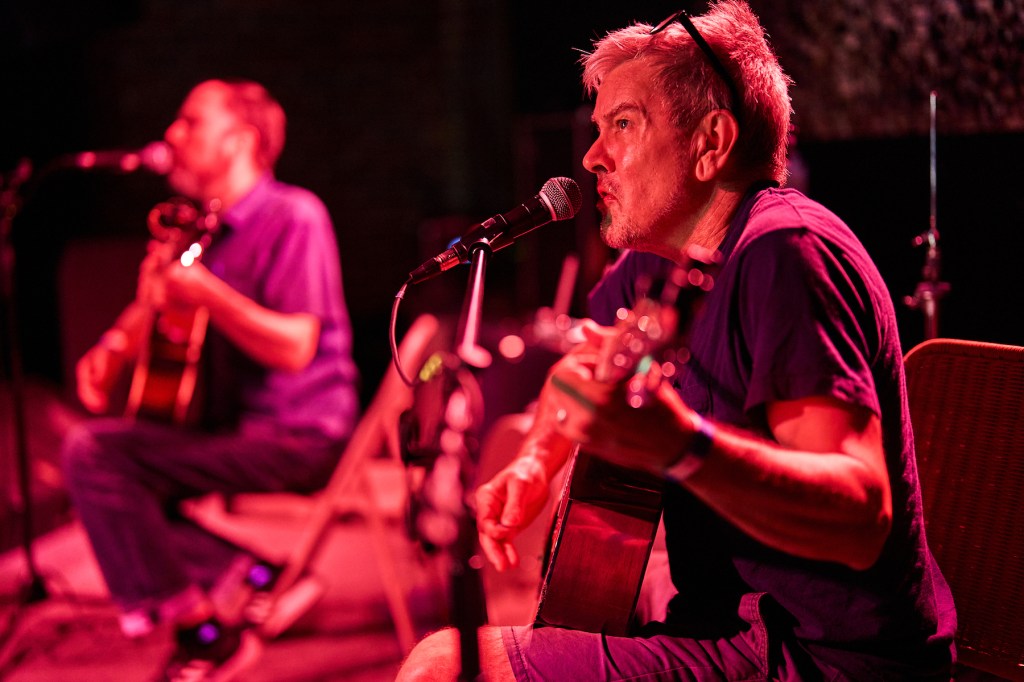
Gringo Star’s ‘Sweethearts’ blends psychedelic grit with a ’50s pop shimmer

Photo courtesy Gringo Star.

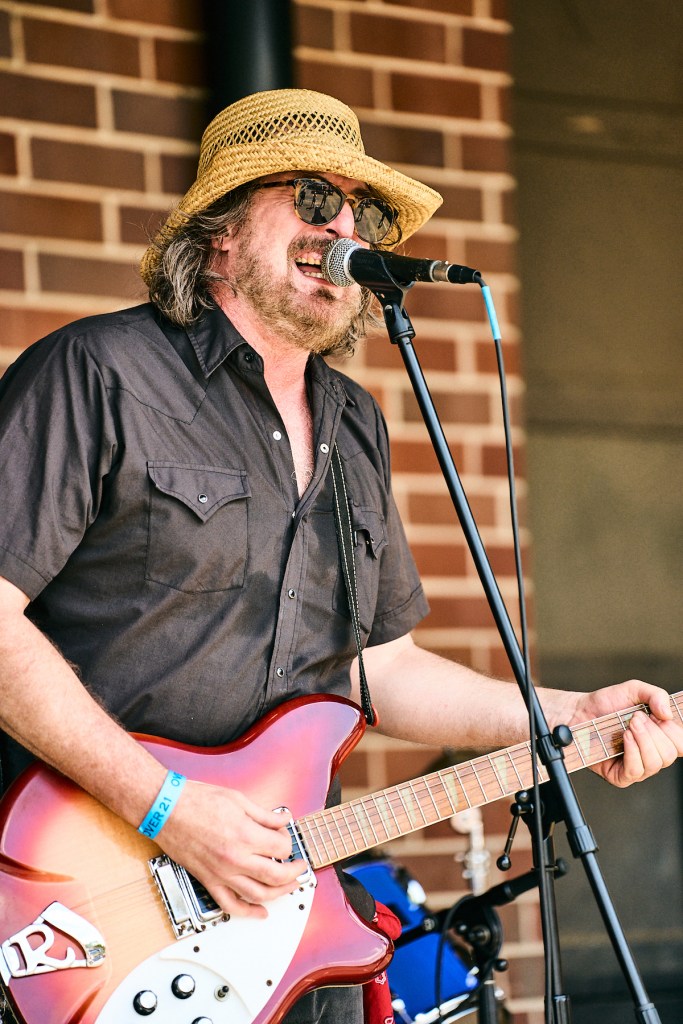
Nicholas and Peter Furgiuele are men of few words. For 23 years the closely-knit Atlanta-born brothers and songwriters have let their music do the talking for them. They first recorded together under the name A Fir-Ju Well in 2002. Years later, in 2007, they rebranded as Gringo Star and have carried on ever since, navigating shifting cultural tides, changing musical trends, and seemingly endless lineup shuffles with the kind of determination that comes from shared musical instincts, experiences, and D.N.A.—call it brotherly love.

Gringo Star’s latest album, Sweethearts, trades indie-rock grit for a 1950’s pop shimmer, weaving together soft-focus textures that imbue their signature blend of garage rock and psychedelia with a new and introspective depth. The album’s first two singles, “Blood Moon” and “I Sleep to Dream,” highlight a musical evolution in progress, each one floating in reverb, harmonies, and instantly familiar melodies wrapped around love stories. The songs shapeshift with dreamlike grace, expanding upon elements of both nostalgia and innovation, carrying the band into new terrain.


“We didn’t set out to make a record with any kind of underlying theme, but all the songs told these love stories, and the sound evolved as we went along,” says singer and guitar player Nicholas Furgiuele. “There is an underlying theme to it all, but I wouldn’t know how to explain it,” he goes on to say while offering that if anyone does hear a coherent concept at work throughout the album, it’s something that wrote itself.

“I have always been into the idea that music is open to interpretation, and what it means to me might mean something completely different to anyone else who’s hearing it and putting it all together in their head,” he adds.

Sweethearts is Gringo Star’s eighth full-length album, and their first with the Grand Rapids-based dizzybird Records. It’s also their second post-pandemic offering, recorded between 2023 and 2024, expanding upon the murky sound and vision of 2023’s On And One And Gone.  Its songs take shape as surreal nods to simpler times in American life, channeling equal parts dreamy reverie and swirling self-reflection, filtered through a lens of vintage melancholy.

“We wanted to make a record that felt good, you know? Something that felt like remembering love,” Furgiuele says. “But at the same time, there’s a sadness in that memory. It’s not all sunny.”

Familial tendencies are also behind Nick and Peter’s penchant for a 1950s sound as well. From the 1940s-1975, their maternal grandfather, Ed “Dr. Jive” Mendel, was a DJ for WGBA-AM in Columbus, GA. He was also a chitlin’ circuit promoter, and record label owner who earned a couple of gold records for a duo he managed, Peggy Scott & Jo Jo Benson. Sam Cooke, Soul Stirrers, Otis Redding, James Brown, Martha and the Vandellas, the Shirelles, Little Stevie wonder, and Jackie Wilson were also among his associates.

“He died before my parents got together so we never knew him,” Nick says. “But my grandma’s photo albums were all filled with pictures of them with James Brown, Jackie Wilson, being around all of this music and all of these images of our grandparents was for sure an influence on what we do with Gringo Star.”


But an aura of peaceful optimism is the album’s guiding light. “Blood Moon” takes shape as a waltzing lullaby where layered vocal harmonies and languid guitars remain suspended in sensual ether. 

One song, “Some Things Don’t Change,” was originally written for Nick and Peter’s first band, the King Street Blues Band, circa 1995 when they were in 9th and 7th grades respectively, while living for several years in Boone, N.C.

The band was named after downtown Boone’s main thoroughfare. “Some Things Don’t Change” was originally penned by their bandmate John Fulkerson, but it had never been properly recorded. For Sweethearts, Nick and Peter took what they remembered of the song, retooled it and wrote some new lyrics here and there.

“I kind of don’t remember what the original song sounded like, and it never really had any kind of arrangements,” Nick says.

The idea to revisit the song came when Nick realized he was unconsciously noodling the bass lines between other songs when the group was on stage. “I don’t know why it got stuck in my head, but it did, and so we gave it a whole new treatment—a whole new life.”

“Some Things Don’t Change,” as it appears on Sweethearts, is now one of the more sophisticated numbers that takes shape amid the tracklist. Still, the album remains deceptively simple, unraveling to reveal miniature worlds thriving inside lush turns of phrases, baroque instrumentation, and emotionally intense shading.

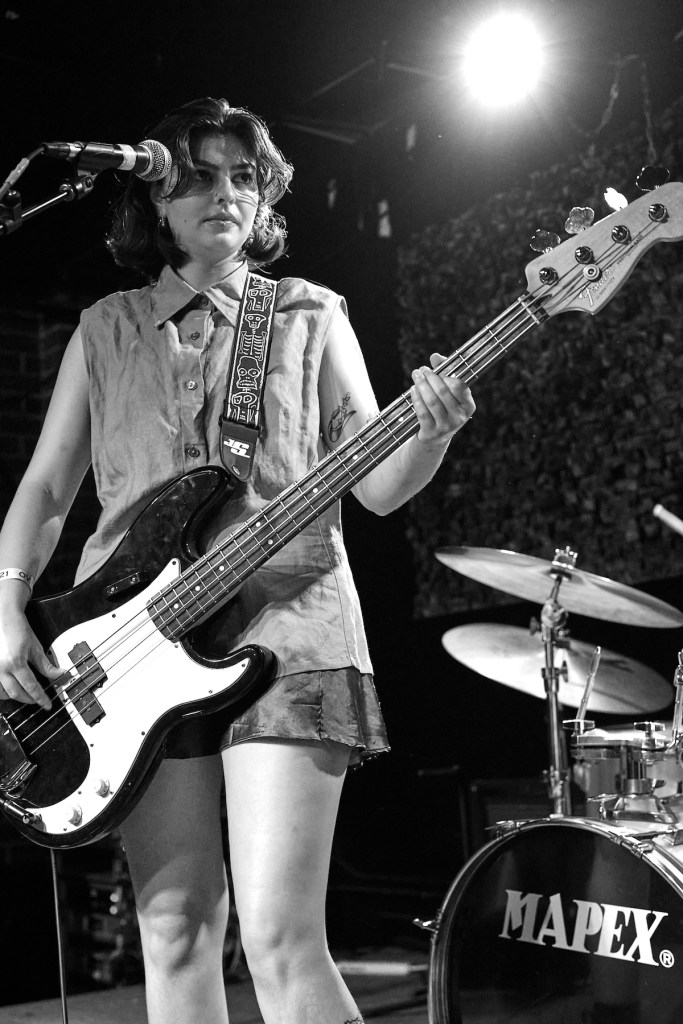
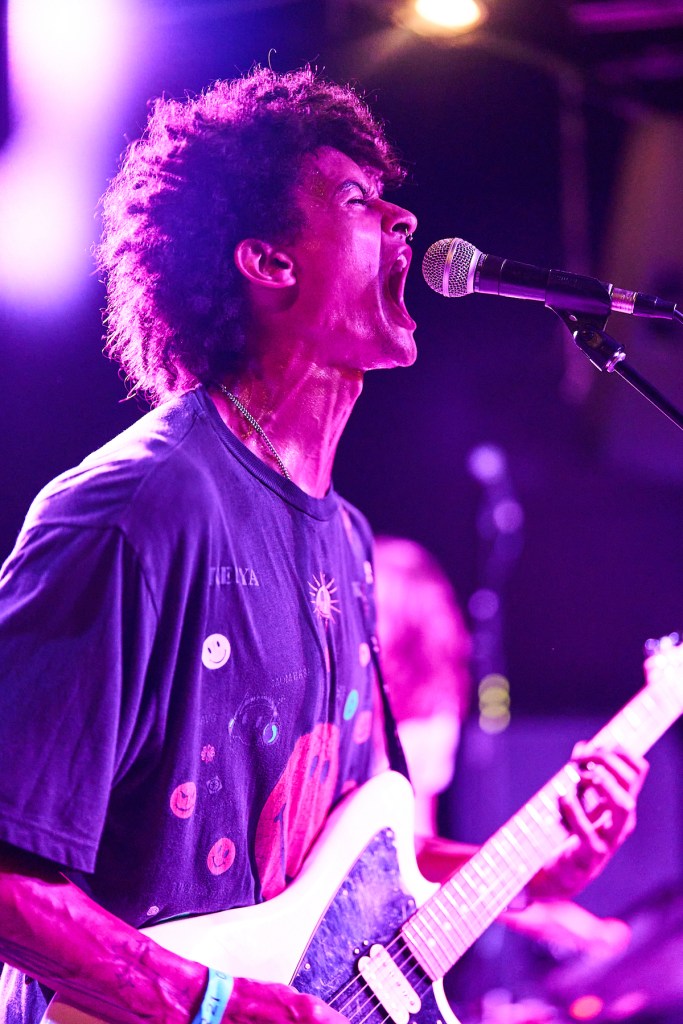
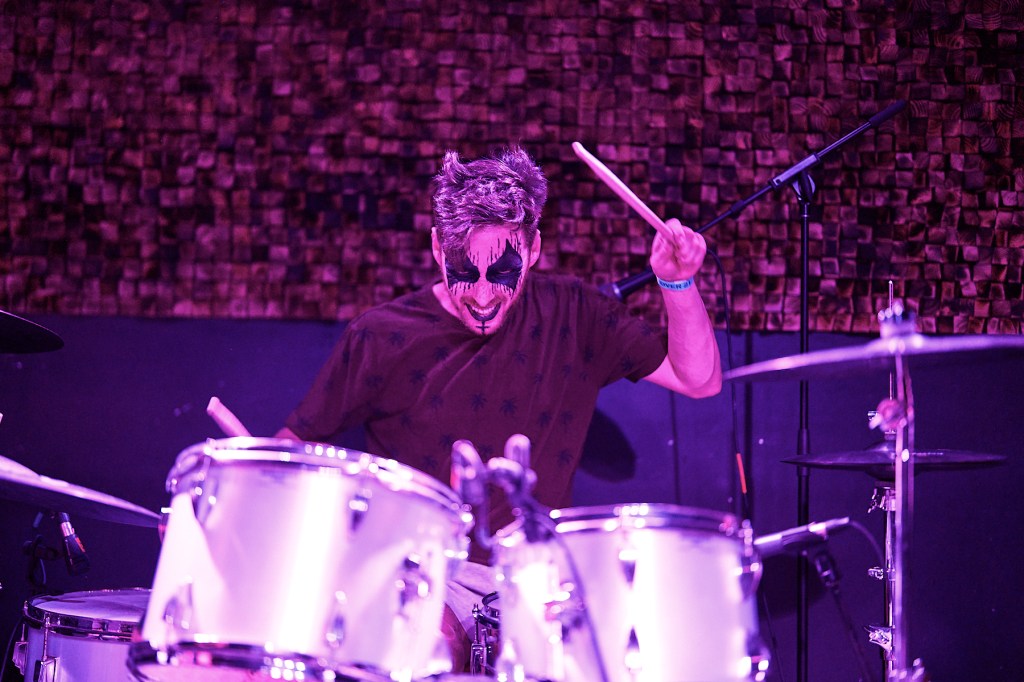
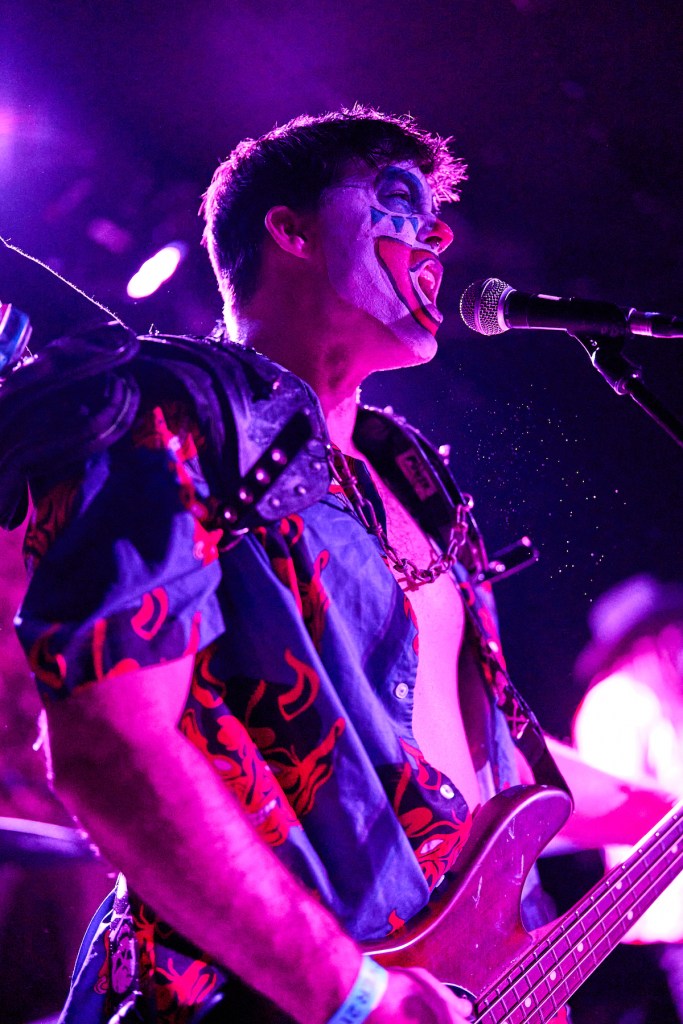
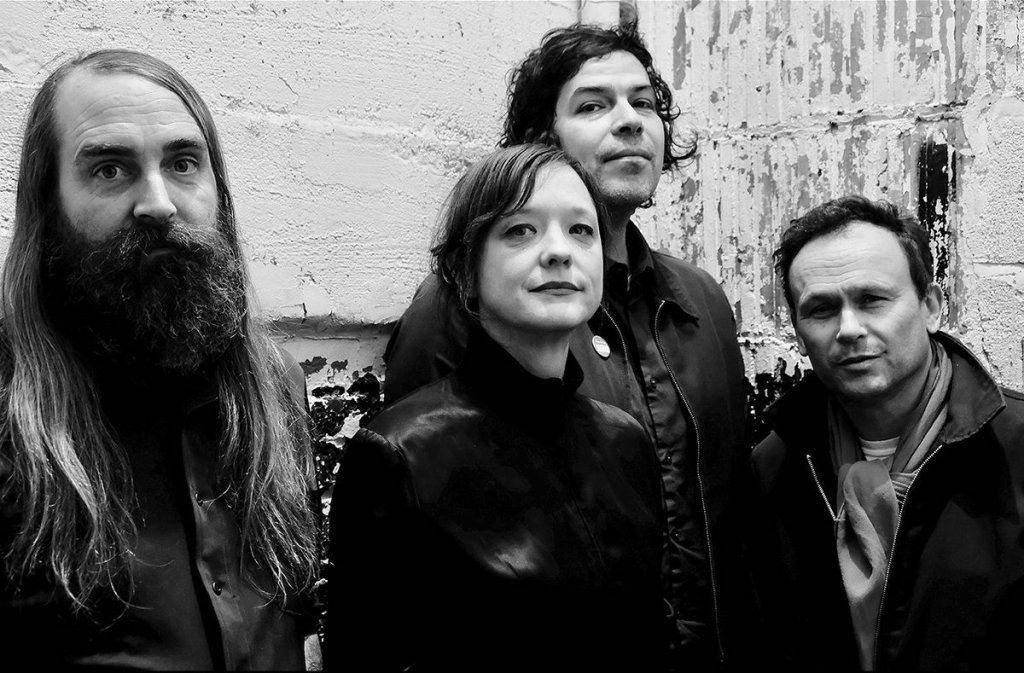
Gringo Star. Photo by Francis Furgiuele.

Since recording Gringo Star’s 2008 debut album, All Y’all, produced by Ben H. Allen III (Animal Collective, Deerhunter, Gnarls Barkley), the group’s body of work has existed outside of easy classification. But they have always been interested in stirring hot-blooded emotional meditation into their work. Nick, working alongside his brother Peter on bass, guitar player and vocalist Josh Longino, and drummer Mario Colangelo the group has carved out a one-of-a-kind cosmic rock sound. Surf-inflected riffs and distant rhythms in the instrumental song “Girl,” and a traipsing cover of Sam the Sham and the Pharaohs’ 1966 hit “Li’l Red Riding Hood” underscore the album’s surreal, dream-like essence.

On stage, instruments get swapped. Roles shift. There’s an elastic energy to the way the group performs—egalitarian and impulsive—and this live dynamic carries over into Sweethearts, careening movements from the janggling  exuberance of “Count the Ways” to the wall-of-sound that binds “A Lonely One.” Each number offers a distinct postcard from a dream-world version of the past. A sense of longing underpins the whole affair—an ache for connection in a time when disconnection is the norm.

“In a world where division has become a rallying cry, we wanted to make something that reminds people of what connects us,” Peter says. “We wanted to get back to that raw emotion—love, heartbreak, joy, sadness. All of it.”

It’s easy to forget, in the churn of modern music, how rare it is for a band to last this long, all the while continuing to evolve. Gringo Star is one of those rare groups that has never stopped pushing forward, even when the rest of the world shut down, and even when doing so meant carving their own path outside of whatever music scene was in vogue at the time.


They’ve toured relentlessly over the years, sharing stages with the Zombies, Cat Power, Weezer guitarist Brian Bell’s band the Relationship, Best Coast, and Shannon and the Clams. Their sound has zigzagged across records like a living document of who they were at a given moment.

But what is, perhaps, most remarkable is the way the band has retained its identity while allowing each record to bloom in its own way, bringing their songs to life, and turning raw ideas into something that is quite cinematic.


Sweethearts sits comfortably out of time, reverent of the past but not beholden to it. The songs invite listeners to slow down, and to feel things deeply.

Nick and Peter may not be chasing any zeitgeist, but they are staying true to a vision that’s lasted nearly three decades without growing stale. With Sweethearts, they’ve added a rich new chapter to an already impressive catalog—one that lingers long after the needle lifts. And maybe that’s the real trick to Gringo Star’s longevity. The group doesn’t just survive. It resonates beyond words.

If you have enjoyed reading this post, please consider donating to RadATL. Venmo to @Chad-Radford-6 or click on the PayPal link below.

Donate with PayPal

A version of this story originally appeared in the May 2025 issue of Record Plug Magazine.

Sonic Life: Scenes from an evening with Thurston Moore at The Tara Theater

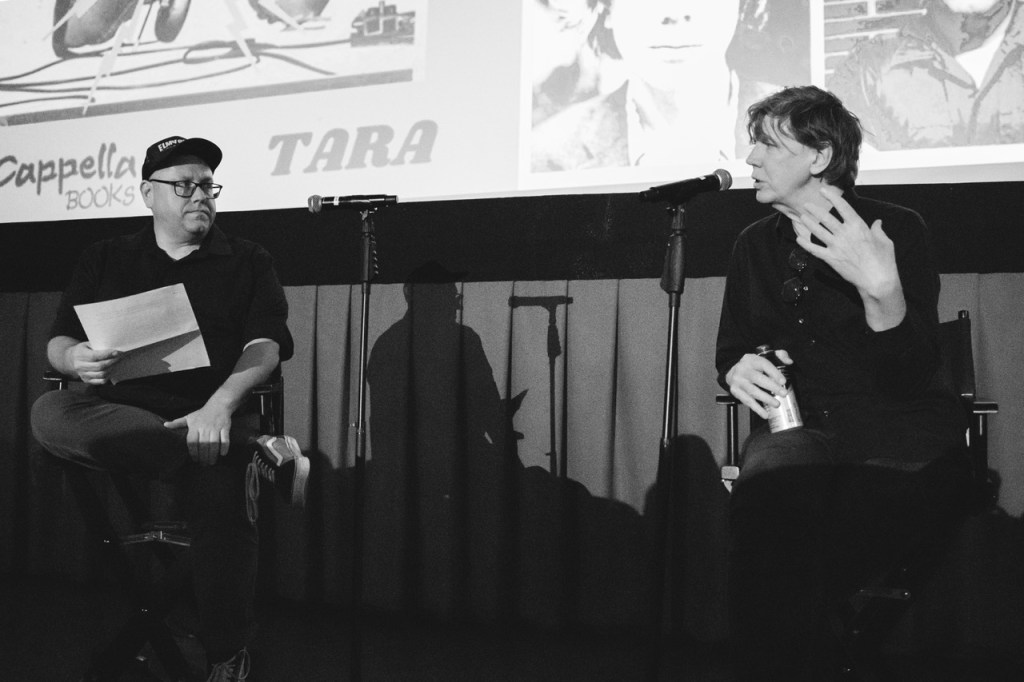
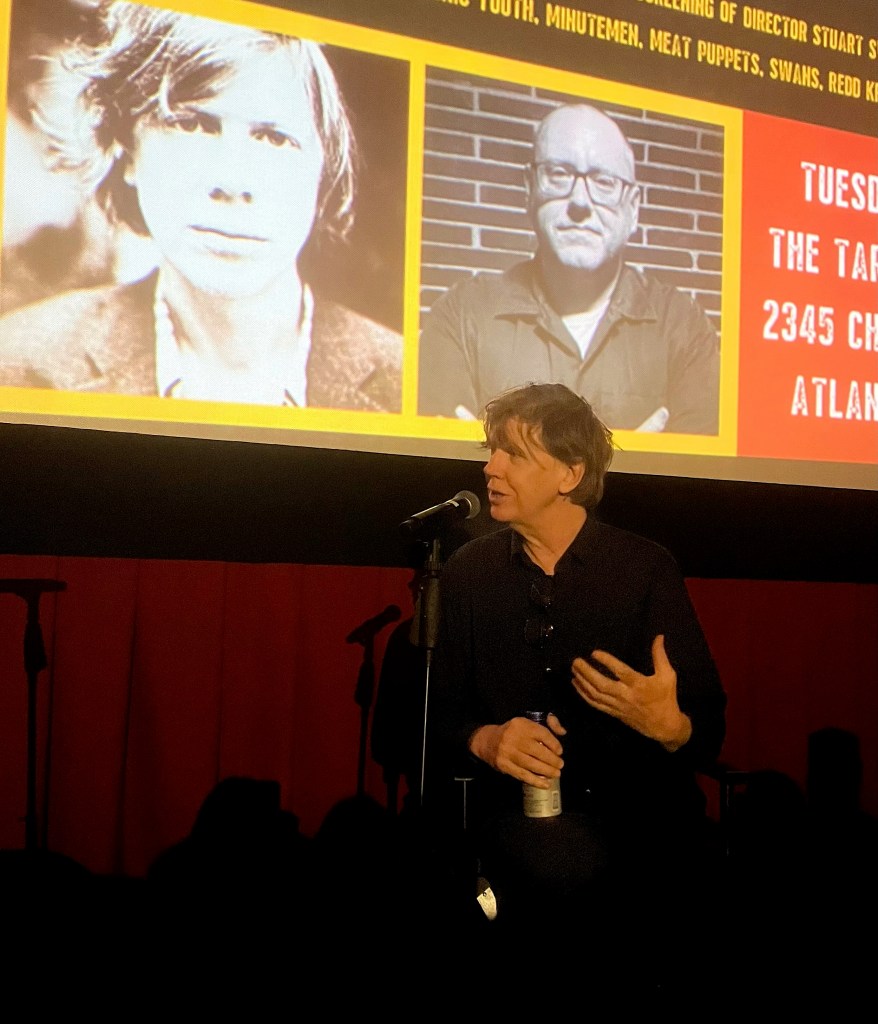
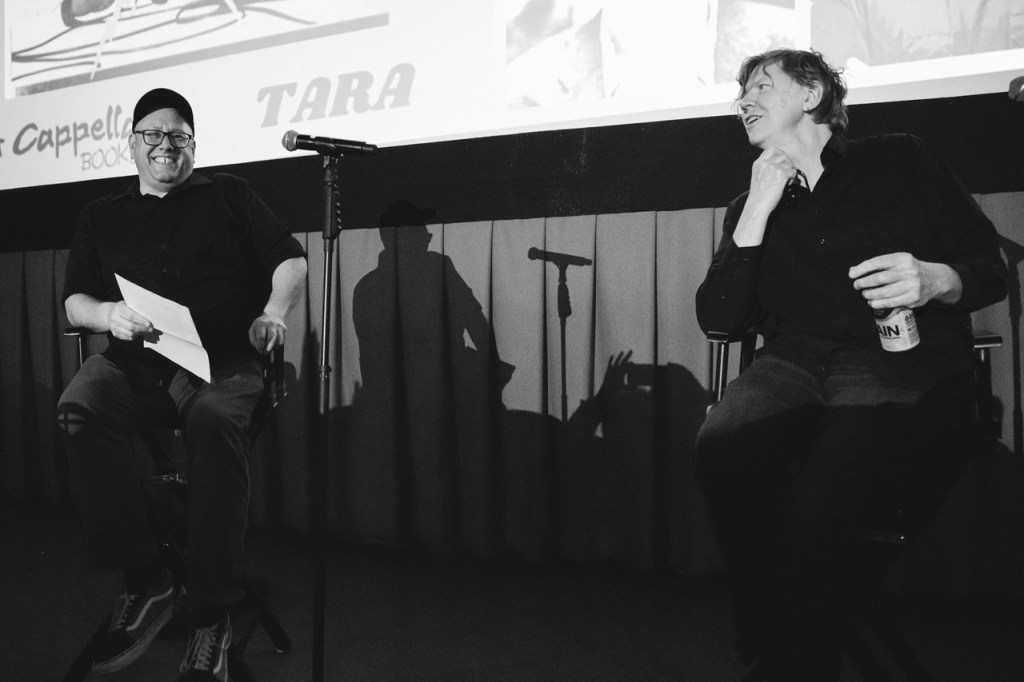
Thurston Moore at the Tara Theater. Photo by Jeff Shipman

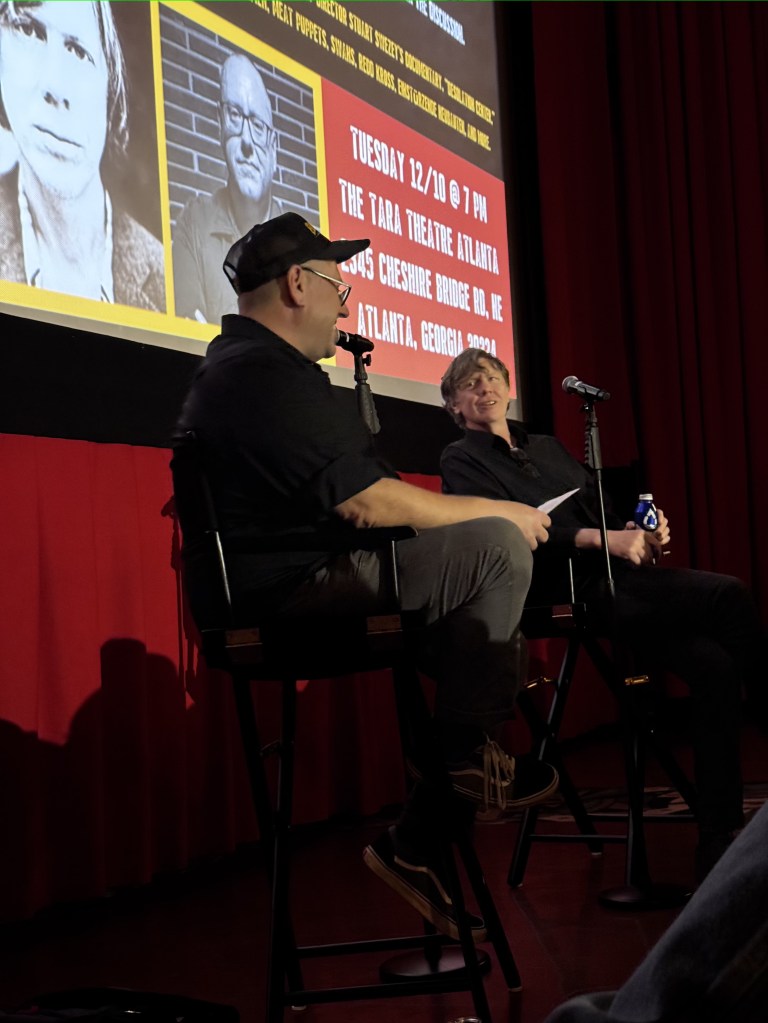
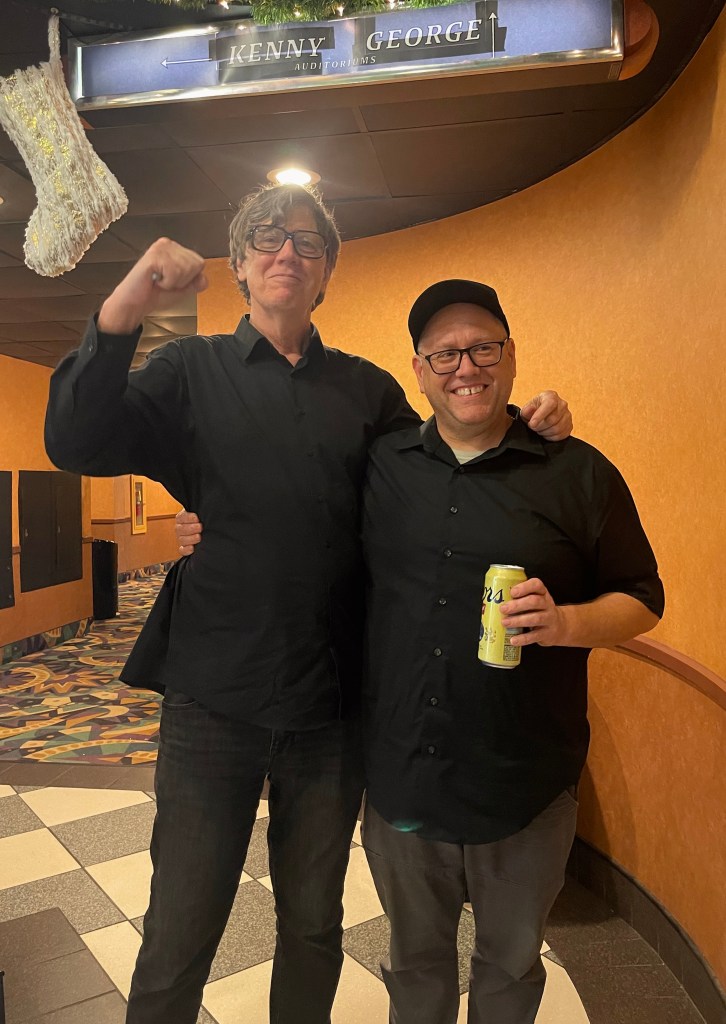
A fun and dynamic evening unfolded at the Tara Theater on Tuesday, December 10, as Thurston Moore appeared in conversation with yours truly, Atlanta music writer Chad Radford. 

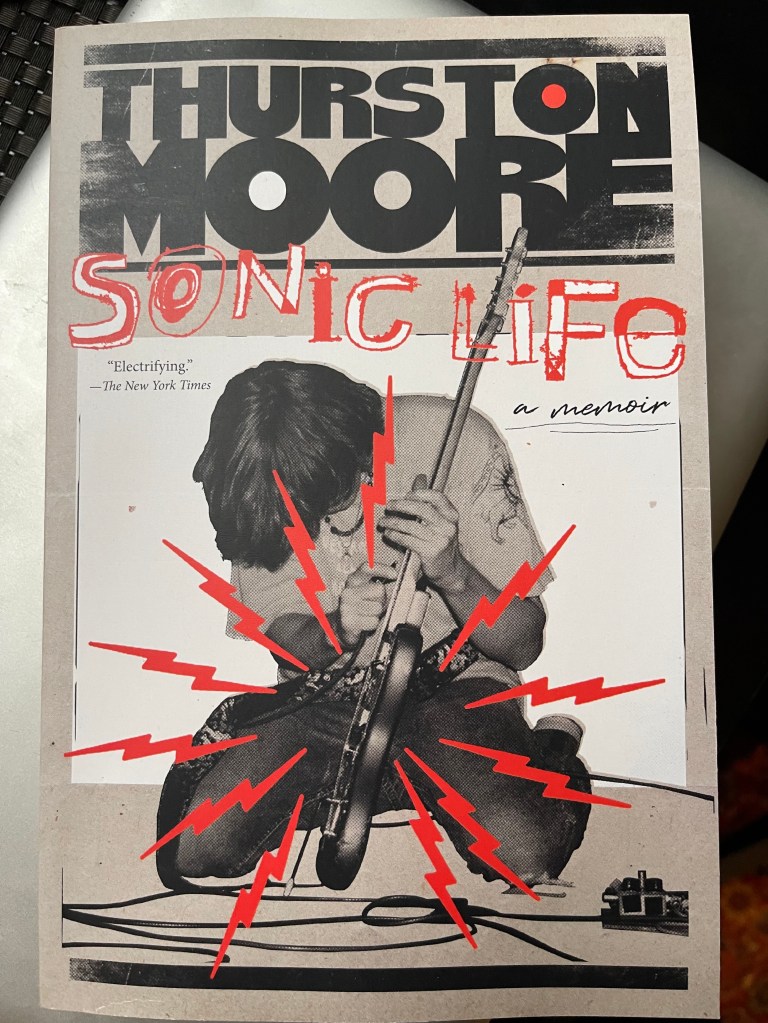
Introduced by Randy Gue, Assistant Director of Collection Development & Curator of Political, Cultural, & Social Movements for Emory University’s Rose Library, and presented by A Cappella Books, the night was anchored by Moore’s 2023 memoir, Sonic Life. He also reflected on a career that reshaped the alternative and underground musical landscapes of the 1980s, ‘90s, and beyond. In a candid exchange, Moore opened up about the forces that inspired Sonic Youth, navigating the post-punk and no wave underbelly of New York City and the ferocious hardcore emanating from Los Angeles in the early 1980s. 

Moore also relived heading out on the road with his Sonic Youth bandmates–Lee Ranaldo, Kim Gordon, and original drummer Bob Bert–for their first out-of-town trek. The “Savage Blunder Tour” carried Sonic Youth and Swans from New York to Atlanta culminating with a deranged performance at the legendary 688 Club. 

Later, Moore revealed how writing Sonic Life freed up his mental space, and paved the way into a new creative chapter. His latest album under his name, Flow Critical Lucidity, stands as a testament to this state of mind, blending his signature dissonant guitar textures, rhythms, and space with introspective clarity.

The conversation ranged from the personal to the esoteric, touching on topics like the divisive Faith/Void split 12-inch on Dischord Records, a perennial argument-starter among D.C.’s hardcore purests. Moore’s infectious enthusiasm for such musical touchstones reminded everyone why he remains a revered cultural figure.

Moore also recounted Sonic Youth’s participation in Stuart Swezey’s legendary Desolation Center concert series, playing the 1985 Gila Monster Jamboree in the Mojave Desert. He described the surreal experience of channeling their avant-garde energy into a setting as raw and untamed as the music itself. This set the stage for the night’s closing event: a screening of “Desolation Center,” the documentary that chronicles Swezey’s revolutionary desert concerts.

The evening offered a rare chance to glimpse into Moore’s world through his own words and to explore the intersections of music, memory, and creative reinvention.

Check out a gallery of images from the evening below.

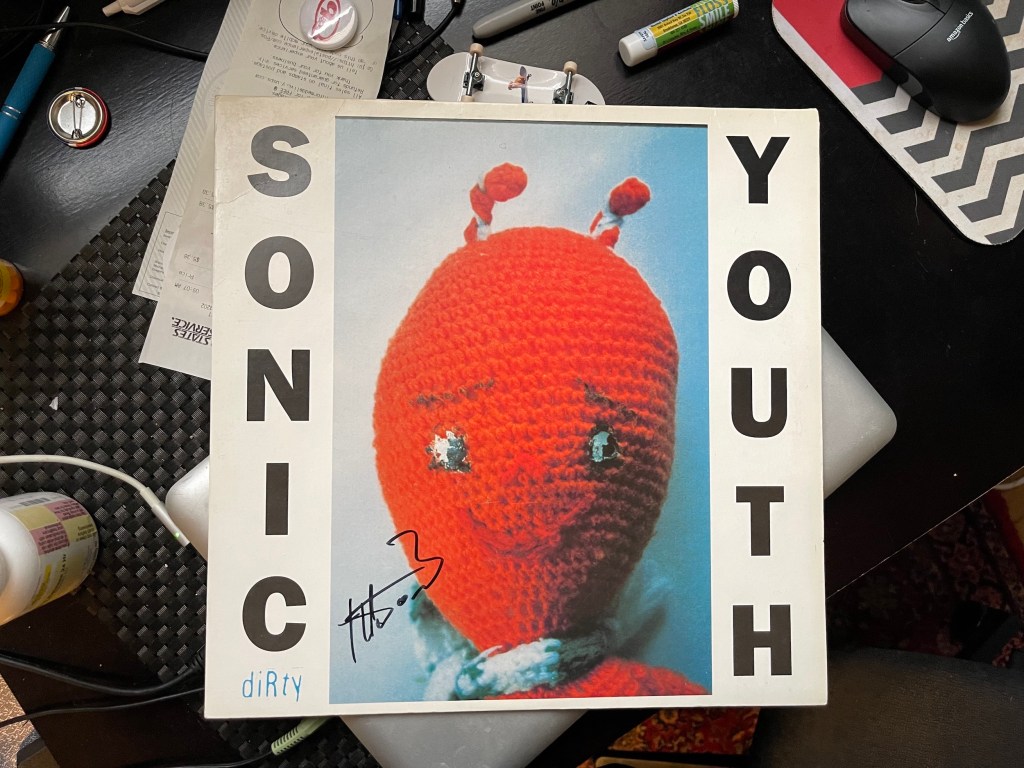
If you missed out, A Cappella Books still has a limited number of signed copies of Sonic Life for sale in the shop.

If you have enjoyed reading this post, please consider donating to RadATL. Venmo to @Chad-Radford-6 or click on the PayPal link below.

Donate with PayPal

An Evening with Thurston Moore at The Tara: ‘Sonic Life’ book talk & ‘Desolation Center’ screening on Tuesday, December 10

Thurston Moore photo by Vera Marmelo

From the founding member of Sonic Youth, a passionate memoir tracing the author’s life and art—from his teen years as a music obsessive in small-town Connecticut, to the formation of his legendary rock group, to 30 years of creation, experimentation, and wonder.

https://www.acappellabooks.com/pages/events/1157/an-evening-with-thurston-moore-at-the-taraA Cappella Books welcomes Thurston Moore to The Tara to discuss his new book, Sonic Life: A Memoir, on Tuesday, December 10, at 7 p.m. Moore will speak with yours truly, Chad Radford, music writer and author of Atlanta Record Stores: An Oral History.

Following the conversation, The Tara will host a screening of director Stuart Swezey’s documentary film, Desolation Center, featuring performances by Sonic Youth, Minutemen, Meat Puppets, Swans, Redd Kross, Einstürzende Neubauten, and more. Moore will introduce the film.

Book Talk Ticket
Includes a signed paperback edition of Sonic Life and admission for the 7 p.m. book talk and signing. ($20 + tax)

Book Talk and Movie Ticket
Includes a signed paperback edition of Sonic Life, admission for the 7 p.m. book talk and signing, and the 8:30 p.m. screening of Desolation Center. ($36 + tax)

Movie Ticket
Admission to the 8:30 p.m. screening of Desolation Center. ($16 + tax)

About the Book
Thurston Moore moved to Manhattan’s East Village in 1978 with a yearning for music. He wanted to be immersed in downtown New York’s sights and sounds—the feral energy of its nightclubs, the angular roar of its bands, the magnetic personalities within its orbit. But more than anything, he wanted to make music—to create indelible sounds that would move, provoke, and inspire.

His dream came to life in 1981 with the formation of Sonic Youth, a band Moore co-founded with Kim Gordon and Lee Ranaldo. Sonic Youth became a fixture in New York’s burgeoning No Wave scene—an avant-garde collision of art and sound, poetry and punk. The band would evolve from critical darlings to commercial heavyweights, headlining festivals around the globe while helping introduce listeners to such artists as Nirvana, Hole, and Pavement and playing alongside such icons as Neil Young and Iggy Pop. Through it all, Moore maintained an unwavering love of music: the new, the unheralded, the challenging, the irresistible.

In the spirit of Just Kids, Sonic Life offers a window into the trajectory of a celebrated artist and a tribute to an era of explosive creativity. It presents a firsthand account of New York in a defining cultural moment, a history of alternative rock as it was birthed and came to dominate airwaves, and a love letter to music, whatever the form. This is a story for anyone who has ever felt touched by sound—who knows the way the right song at the right moment can change the course of a life.

About the Author
Thurston Moore is a founding member of Sonic Youth, a band born in New York in 1981 that spent 30 years at the vanguard of alternative rock, influencing and inspiring such acts as Nirvana, Pavement, the Yeah Yeah Yeahs, My Bloody Valentine, and Beck. The band’s album Daydream Nation was chosen by the Library of Congress for historical preservation in the National Recording Registry in 2006. Moore is involved in publishing and poetry and teaches at the Summer Writing Workshop at Naropa University in Boulder, Colorado. He divides his time between the USA and England.


About the Film
Desolation Center is the previously untold story of a series of early ’80s guerrilla music and art performance happenings in Southern California that are recognized to have inspired Burning Man, Lollapalooza, and Coachella, collective experiences that have become key elements of popular culture in the 21st century. The feature documentary splices interviews and rare performance footage of Sonic Youth, Minutemen, Meat Puppets, Swans, Redd Kross, Einstürzende Neubauten, Survival Research Laboratories, Savage Republic and more, documenting a time when pushing the boundaries of music, art, and performance felt almost like an unspoken obligation.

Directed by Stuart Swezey, the creator and principal organizer of these unique events, Desolation Center demonstrates how the risky, and at times even reckless, actions of a few outsiders can unintentionally lead to seismic cultural shifts. Combining Swezey’s exclusive access to never-before-seen archival video, live audio recordings, and stills woven together with new cinematically shot interviews, verité footage and animated sequences, Desolation Center captures the spirit of the turbulent times from which these events emerged.

If you have enjoyed reading this post, please consider making a donation to RadATL. Venmo to @Chad-Radford-6 or click on the Paypal link below.

Donate with PayPal

A few words from Record Plug Magazine about Corndogorama: The Musical

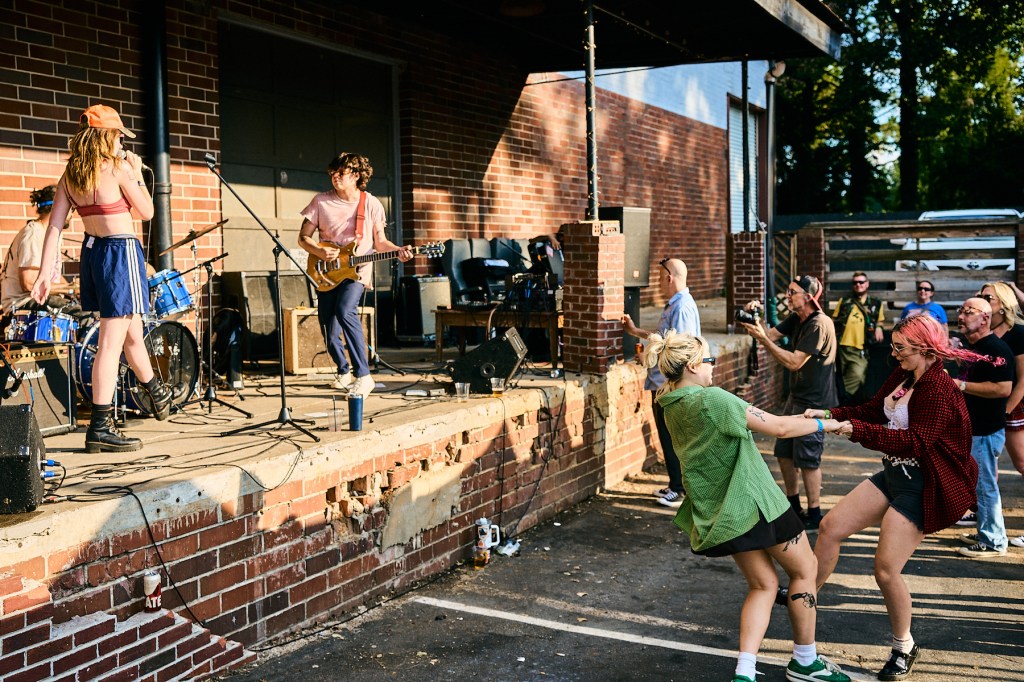
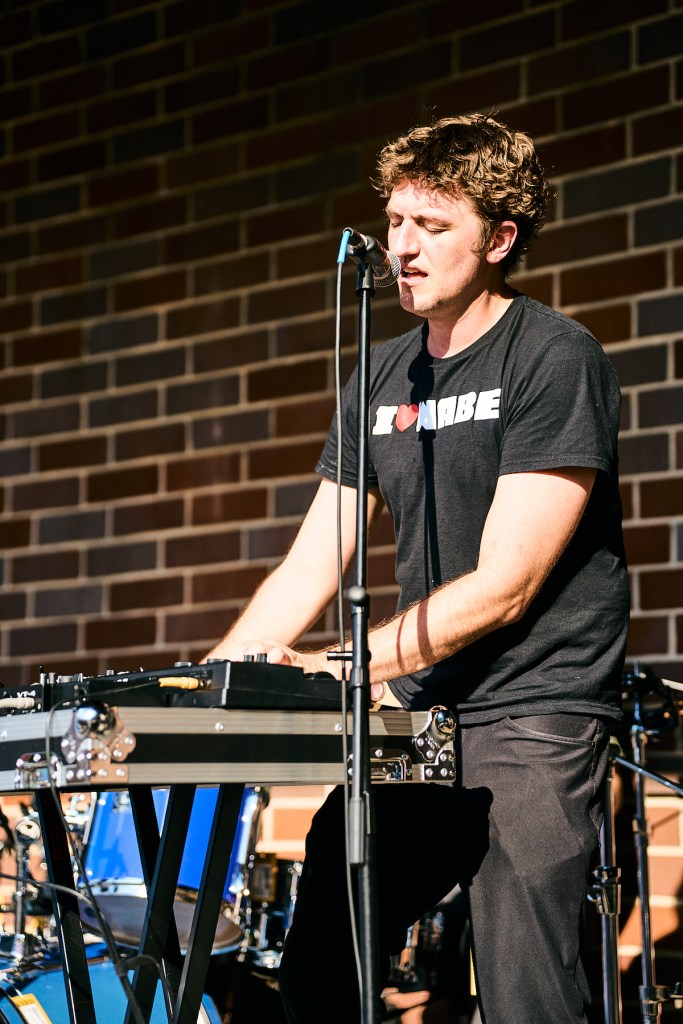
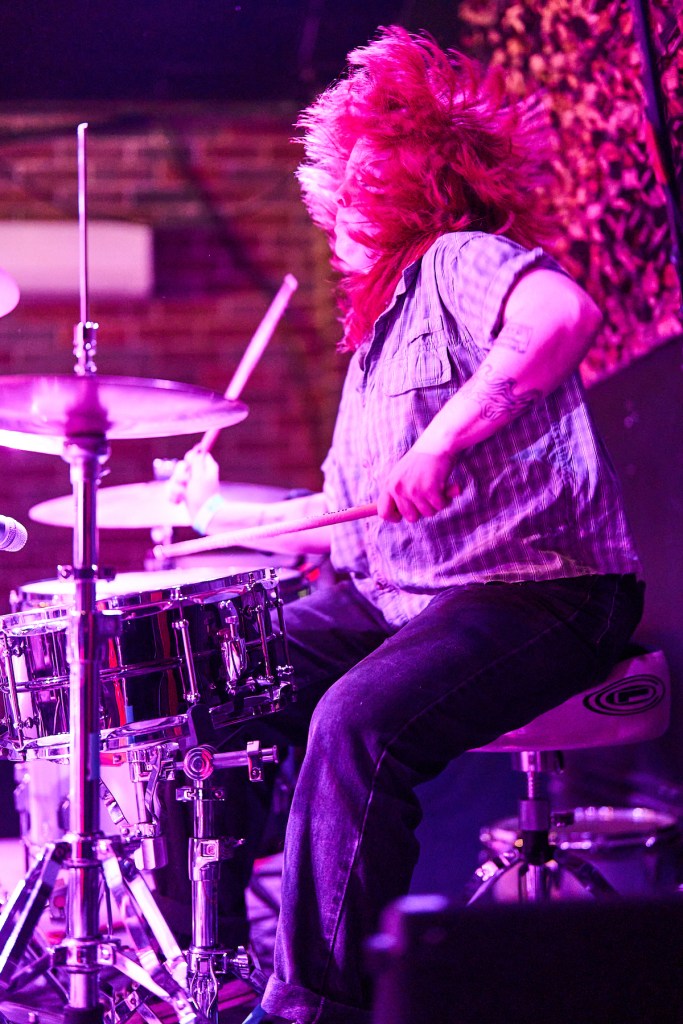
Corndogorama: The Musical. Photo by Sam Feigenbaum

Corndogorama is back! 

It’s been eight years since our friend David Railey—a veritable Vanna White to Atlanta’s indie rock scene—hosted the Corndogorama. The DIY summer music festival is known for its casual community-oriented atmosphere and marathon of local bands on stage.

This year’s resurrection may have seemed like a Record Plug event to the uninitiated. The magazine was a key sponsor and a curator of this year’s lineup, as we sought out and rallied the bands to play all three days—June 21-23, 2024. But make no mistake, Corndogorama is the brainchild of—and the birthday party celebrating—Railey’s decades-long tenure in Atlanta’s music scene. Remember his bands? American Dream? Ancient Chinese Secret? Casionova? Day Mars Ray? Jesus Honey? The list goes on. Corndogorama has endured countless ups and downs since it kicked off at Dottie’s on Memorial Drive way back in 1996.

This year was wrought with an equal number of ups and downs. But hey, we raised $2,515 for Upbeat: The Tigerbeat Foundation for musicians, a non-profit organization dedicated to getting struggling independent musicians back on their feet via an emergency grant program.

Over the years, my [Kip’s] bands (Haricot Vert,  Freemasonry, Chocolate Kiss, Clemente, Victory Hands, et al) have played various benefit shows. Oftentimes I never heard how the numbers turned out, so I wanted everyone to know what their collective efforts raised.

The attendance for Friday was decent, Saturday turned out great, and Sunday was a bust. But that’s okay. Three days in the June heat is a big ask. But the bands played on, and we appreciate every one of you who came out, said hello, and watched the show.

It was three days of musical triumphs and logistical catastrophes: No Corndog eating contest? No vendor tents? No flip-flop parade, no ass-kissing booth? No Topo Chico! That sucked! Oh well. It’s been nearly a decade since the Corndogorama went down, and some skills have to be relearned. We’ll be back next year stronger than ever.

Saturday’s crowd warmed our hearts, and it helped cover the whole weekend’s production costs. I [Kip] personally want to thank Amos, Van, and the whole  A Rippin Production crew for keeping everything running smoothly, despite Saturday’s murderous heat. They put in the work and kept the costs low to raise as much as possible for Upbeat. Thanks are also due to Shane Pringle, Tim Song, and Boggs Social & Supply, who selflessly took no money from the ticket sales. They worked the full weekend, relying on bar sales alone to cover their end. It’s a good thing y’all drank so much.

Shane’s band Bad Spell tore up the outdoor stage on Saturday.

Pabst Blue Ribbon was an excellent sponsor, donating kegs and money, and Music Go Round saved our tails by loaning us the outdoor backline. Topo Chico! Where were you? We waited for you with bated breath and hope in our hearts, but you left us hanging. 

Ups and downs. Maybe we’ll see you next year.

A sincere and exhaustive shout-out goes to all the bands that performed throughout the weekend; those who gave their time and delivered stellar performances reminded us of why we’re in this in the first place. And we know it’s a labor of love to practice even a short set, haul yourselves and your equipment across the city to the venue, put on a show under the squelching summer sun, and then break it all down, load it up, and lug it all back to the practice space.

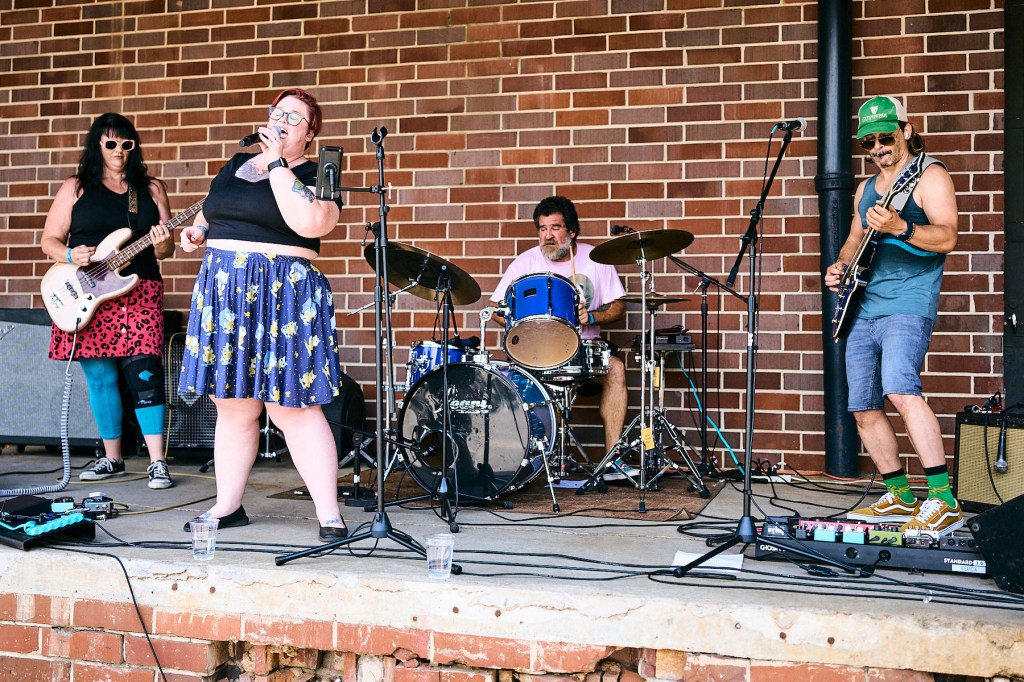
Absolutely 100%, Corndogorama would not have been able to raise a single penny for Upbeat without your time and energy. We’re sending the most sincere thanks to all of you. There were too many bands to name here, but we see you, and we love you. All of you. Thank you for sticking by Corndogorama (see what we did there?). See you next year! Until then, check out Alexa Kravitz and Sam Feigenbaum’s photos from Corndogorama: The Musical. — Kip Thomas (with some help from Chad Radford)

If you have enjoyed reading this review, please consider donating to RadATL. Venmo to @Chad-Radford-6 or click on the PayPal link below.

Donate with PayPal

Song premiere: Loud Humans ‘Charm Offensive’

Loud Humans

Since March of 2018, Loud Humans have amassed a steadily growing arsenal of bittersweet indie rock tunes, based mostly around the songwriting of singer and guitar player Jimmy Ether.

The trio, rounded about by underground rock scene vets Ether (the Ether Family Presents, Spiral, and Monkey Boy) alongside bass player Dain Johnson (the Plastic Plan), and drummer Kip Thomas (Fiddlehead, Freemasonry, Chocolate Kiss, Haricot Vert, and more) has fleshed out a florid lo-fi charge by pressing pretty and folksy chord progressions through a wall of sound. Case in point: “Charm Offensive.”


“I use a few alternate tunings in the vein of Joni Mitchell, Nick Drake, or Jimmy Page’s acoustic riffs, and we fuzz them out,” Ether says.

“Charm Offensive” offers the first look at Loud Human’s forthcoming EP, which remains a work in progress. The title of the EP is yet to be determined, and “Charm Offensive,” as it appears here, is a raw early mix—the group playing live in the studio with a vocal overdub.

“The new EP is kind of a part 2 to our see, lioning. EP,” Ether adds.


Here, his voice carries a bold and unpolished presence as he careens through dynamic, energetic lyrics that are driven home by a sense of urgency that’s reminiscent of Guided By Voices’ vocalist Robert Pollard.

Johnson and Thomas’s rhythms move at the speed of post-punk and indie rock a la Sebadoh, Mission of Burma, fIREHOSE, and the Wipers.

In the interest of full disclosure, Thomas is the publisher of Record Plug Magazine, the DIY music rag that keeps this writer’s voice in the mix.

All three members of Loud Humans also play in the band Victory Hands alongside Shawn Christopher, crafting a darker, heavier noise rock dirge.

Both Loud Humans’ see, lioning. EP and the forthcoming EP are tentatively slated to appear as flip sides of a 12-inch release that’s due out later in 2024. The proper digital release will most likely arrive in May.

In the meantime, press play above and catch their set headlining Radfest at Eyedrum Art & Music Gallery on Friday, January 19.

If you have enjoyed reading this review, please consider making a donation to RadATL. Venmo to @Chad-Radford-6 or click on the Paypal link below.

Donate with PayPal

Saddam Death Cave, Scratch Offs, and Blood Circuits play The Earl on Friday, December 8


Saddam Death Cave, Scratch Offs, and Blood Circuits play The Earl on Fri., Dec. 8. $12 (advance). $14 (day of show).

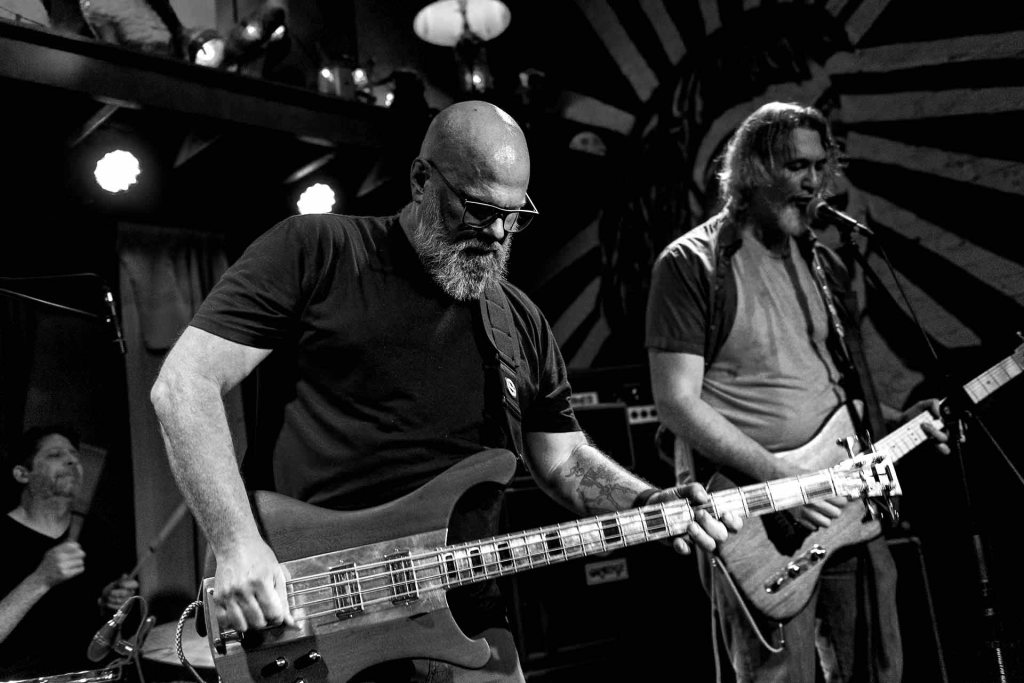
All three bands on stage this evening feature longtime friends who cut their teeth in a more civilized era of hardcore, post-hardcore, and indie rock—the ‘90s. Now, they’re elder statesmen of the scene, raising the bar high while fusing furious rock, noise, and angular riffs without pretense. It’s called experience, kids.

Photo courtesy of Blood Circuits

SCRATCH OFFS: Photo by Steve Pomberg


If you have enjoyed reading this review, please consider making a donation to RadATL. Venmo to @Chad-Radford-6 or click on the Paypal link below.

Donate with PayPal

Thousandaire: Operating under ideal conditions

THOUSANDAIRE: Andrew Wiggins (from left), Tom Bruno, and Chad LeBlanc.
Photo by Mike White of Deadly Designs

Ideal Conditions is an indie rock album that’s rife with layers of sonic textures, all distilled to a point of perfection, or at least Andrew Wiggins’ vision of what perfection should be for Thousandaire’s sound. “I think it all comes back to consistency,” he says over the phone while traveling from Baltimore to Philadelphia to play a show just a few days before releasing Ideal Conditions, the group’s second full-length recording.

It’s the definitive statement so far of Thousandaire’s musical DNA and the vocational drive that Wiggins has spent a lifetime honing, while maintaining control over every aspect of the music.

Wiggins is the vocalist, guitar player, and principal songwriter for Thousandaire. He is also the majordomo overseeing all creative and technical facets of the band in pretty much every situation imaginable.

In conversation, he offers a recent revelation that he’s had about leading the group, which includes bass player Chad LeBlanc and drummer Tom Bruno, while traveling up the East Coast and Mid-Atlantic states for this latest round of touring.

“We play the same, we sound the same, and we have the same amount of fun no matter what,” he says. “We’ve played in front of a hundred people and we’ve played in front of five people on this tour. We’ve played with everything mic’d up, and we’ve played with the most minimal set up, from a vocal PA in a tiny dive bar to setting up in a record store with a portable PA, and we’ve played with the same intensity. Despite these variables, it sounds just as good in any situation. That is very intentional for us,” he adds. “I have worked really hard to make that, and I didn’t want the record to be any different.”

Of course, Wiggins is pulling from decades of experience that encapsulate everything from playing and touring with a range of bands, including math rock outfit Blame Game and noisy post-punk groups HAWKS and Wymyns Prysyn. He has also spent time composing noise with his solo project Caesium Mine. Wiggins has also spent years doing live sound and mixing touring bands in venues including the Earl and 529. He also spends most of his days building fuzz pedals and repairing vintage guitars and amps at his self-run Moreland Magnetics business. “All of that experience goes into making this worthwhile for the 30 minutes we’re playing music,” he says.

Press play on Ideal Conditions and the opening number “No Good” channels an intense live band vibe, taking cues from like minded ‘90s rock acts such as Silkworm, Chavez, Dinosaur Jr., and the Meat Puppets. Asymmetrical guitar solos and fugue-like moments in rhythm take shape amid songs such as “Promise” and “Coward,” and in an older number, titled “Sgt. Billy.” Throughout each one of these numbers, extended compositions blend layered walls of sound and lyrics that are often contemplative, self-conscious, and always heartfelt.

Even at their most melodic and briskly paced moments, Thousandaire’s songs feel haunted and disquieted. Much of the inspiration behind the group’s self-titled 2020 debut album was sparked by Wiggins embracing a freshly sober lifestyle after years of consumption. Ideal Conditions reaches beyond the previous album’s blueprint as Wiggins tightens his focus on the art of crafting the music itself.


Thousandaire was probably the best creative outlet for me to get out a lot of what I was feeling at the time, whether that was intentional or not,” he says. “I don’t need to get really personal in my songs. I have a therapist,” he laughs. “I don’t really need to use music as therapy, and all of my lyrics are hypothetical. But it is a vibe that I can’t really avoid. On the new record, there’s a little bit less of that. Time has put some distance between me and those feelings.”

In more recent years, lyrics have moved closer to the forefront of Wiggins’ mind as he has continued writing songs. The strength of the sound, the songs, the performances that keep him truly and naturally motivated.

“I used to get really frustrated about writing lyrics until one day, I was talking about it with our old drummer Adam Weisberg, after he’d moved to New York,” Wiggins recalls. “Both of us are fans of Cass McCombs, and Adam said, ‘I bet that dude gets out of bed every morning and writes lyrics all day long, whereas you get up and make fuzz pedals all day. So don’t worry about it so much, you’ve got other stuff going,” Wiggins laughs.

The raw and serrated tones and distortion of songs such as “Bar Song,” “Your Gold Teeth III,” and Ideal Conditions’ title track are instantly arresting, drawing strength from each one of their respectively visceral and emotionally stirring melodies.

“I listen to a lot of records, and I think what’s best for what I want is both consistency and intimacy,” he says. “We recorded this record as live as possible, and I want to put the listener in the room with these songs, instead of putting the listener in a balcony seat in a huge 2000-person arena where there’s a symphony that has all kinds of bells and whistles going on. There’s something to be said about those kinds of records, but it’s just not Thousandaires’ vibe.”

Wiggins owns all of the gear the band uses. He’s worked closely with drummer Bruno and bass player LeBlanc to customize each of their instruments’ singularly abrasive snarls.

Damon Moon at Standard Electric Recorders in Avondale Estates also worked closely with Wiggins to summon and recreate the sounds that Wiggins had stuck in his head, and to carve them out into real-world songs.

In this process, it’s the ability to adapt that sets Thousandaire apart. 

“It’s the way we set up the equipment, the way everything sounds, the way we interact with whoever is doing sound. To me, it’s all about eliminating variables and stuff that you can’t control. If you get used to not having all the bells and whistles, like if all we did was play Terminal West where we have a huge production and a top line sound system, and then go play some record store, dive bar, or something where everything isn’t necessarily up to spec. If you can’t play your songs the same way that you play them on a big stage, then you fail.”

This extends to capturing the group’s sound on vinyl, or in the case of their latest offering, it’s on cassette. And what you hear is the culmination of Thousandaire playing under ideal conditions. 

This story appears in the January 2023 issue of Record Plug Magazine.

If you have enjoyed reading this post, please consider making a donation to RadATL.
Donate with PayPal

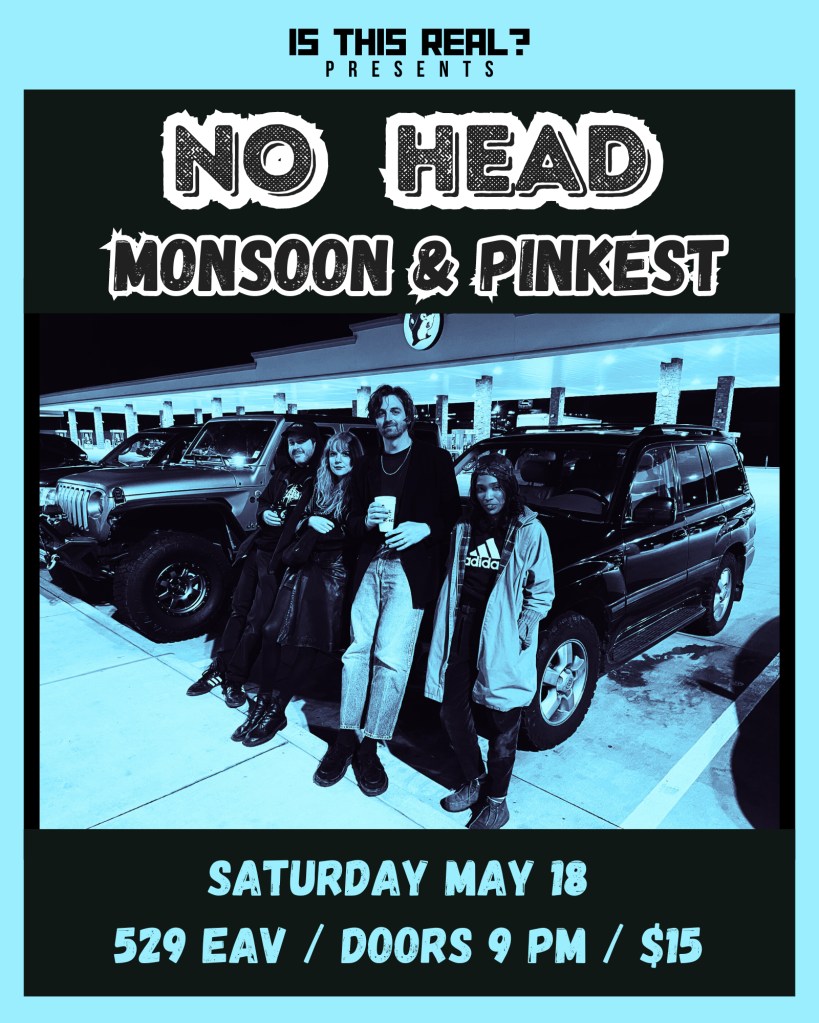
Hammered Hulls, Gentleman Jesse, Clear Channel, and Scratch Offs play The Earl on Fri., Jan. 20

HAMMERED HULLS: Photo by Claire Packer

Hammered Hulls play The Earl on Fri., Jan. 20. Alec MacKaye (Faith, Ignition, the Untouchables) fronts a lineup of veteran players that includes guitarist Mark Cisneros (the Make-Up, Kid Congo Powers and the Pink Monkey Birds), bass player Brendan Canty (of Fugazi, the Messthetics, et. al. standing in for Mary Timony), and drummer Chris Wilson (Ted Leo + Pharmacists, Titus Andronicus).

The group is touring behind the October arrival of its debut full-length, Careening (Dischord Records). The album was produced by Minor Threat, Fugazi, and Dischord Records’ co-founder (and Alec’s brother) Ian MacKaye, and was recorded at Don Zientara’s Inner Ear Studio. With Careening, Hammered Hulls carries Washington D.C.’s post-hardcore and post-punk legacies into powerful and direct new musical terrain with the winding rhythms of songs such as “Bog People” and “Rights and Reproduction,” and the slower tempos of “Not Gone” and “Mission Statement.”

Gentleman Jesse Smith also performs, backed by a lineup featuring bass player Chris McNeal, drummer Sean Zearfoss, and Milton Chapman on keys.

D.C. post-punk quartet Clear Channel and Atlanta’s Scratch Offs also perform. $15 (adv). $17 (at the door). 7:30 p.m. (doors). 8 p.m. (showtime).

If you have enjoyed reading this post, please consider making a donation to RadATL.

Donate with PayPal