An Evening with Thurston Moore at The Tara: ‘Sonic Life’ book talk & ‘Desolation Center’ screening on Tuesday, December 10

Thurston Moore photo by Vera Marmelo

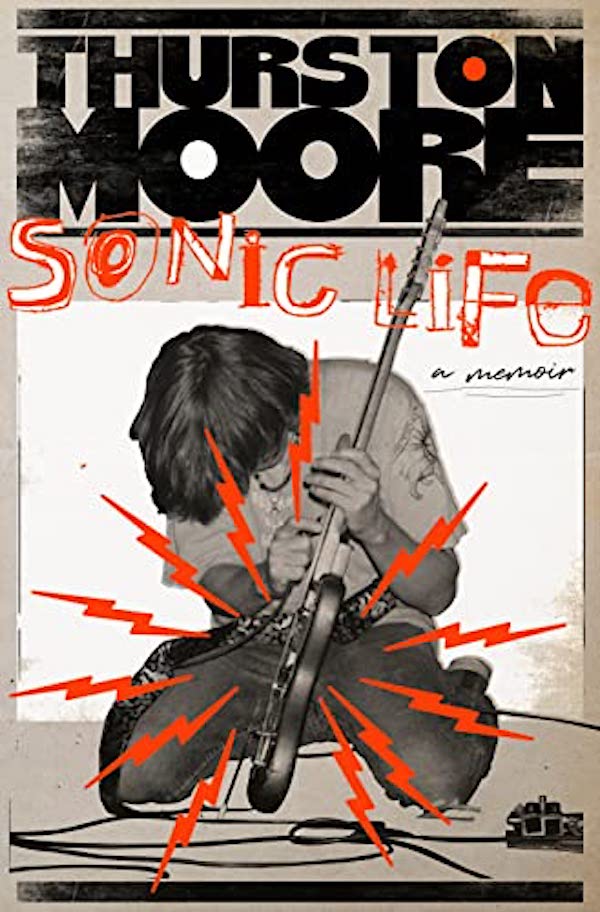
From the founding member of Sonic Youth, a passionate memoir tracing the author’s life and art—from his teen years as a music obsessive in small-town Connecticut, to the formation of his legendary rock group, to 30 years of creation, experimentation, and wonder.

https://www.acappellabooks.com/pages/events/1157/an-evening-with-thurston-moore-at-the-taraA Cappella Books welcomes Thurston Moore to The Tara to discuss his new book, Sonic Life: A Memoir, on Tuesday, December 10, at 7 p.m. Moore will speak with yours truly, Chad Radford, music writer and author of Atlanta Record Stores: An Oral History.

Following the conversation, The Tara will host a screening of director Stuart Swezey’s documentary film, Desolation Center, featuring performances by Sonic Youth, Minutemen, Meat Puppets, Swans, Redd Kross, Einstürzende Neubauten, and more. Moore will introduce the film.

Book Talk Ticket
Includes a signed paperback edition of Sonic Life and admission for the 7 p.m. book talk and signing. ($20 + tax)

Book Talk and Movie Ticket
Includes a signed paperback edition of Sonic Life, admission for the 7 p.m. book talk and signing, and the 8:30 p.m. screening of Desolation Center. ($36 + tax)

Movie Ticket
Admission to the 8:30 p.m. screening of Desolation Center. ($16 + tax)

About the Book
Thurston Moore moved to Manhattan’s East Village in 1978 with a yearning for music. He wanted to be immersed in downtown New York’s sights and sounds—the feral energy of its nightclubs, the angular roar of its bands, the magnetic personalities within its orbit. But more than anything, he wanted to make music—to create indelible sounds that would move, provoke, and inspire.

His dream came to life in 1981 with the formation of Sonic Youth, a band Moore co-founded with Kim Gordon and Lee Ranaldo. Sonic Youth became a fixture in New York’s burgeoning No Wave scene—an avant-garde collision of art and sound, poetry and punk. The band would evolve from critical darlings to commercial heavyweights, headlining festivals around the globe while helping introduce listeners to such artists as Nirvana, Hole, and Pavement and playing alongside such icons as Neil Young and Iggy Pop. Through it all, Moore maintained an unwavering love of music: the new, the unheralded, the challenging, the irresistible.

In the spirit of Just Kids, Sonic Life offers a window into the trajectory of a celebrated artist and a tribute to an era of explosive creativity. It presents a firsthand account of New York in a defining cultural moment, a history of alternative rock as it was birthed and came to dominate airwaves, and a love letter to music, whatever the form. This is a story for anyone who has ever felt touched by sound—who knows the way the right song at the right moment can change the course of a life.

About the Author
Thurston Moore is a founding member of Sonic Youth, a band born in New York in 1981 that spent 30 years at the vanguard of alternative rock, influencing and inspiring such acts as Nirvana, Pavement, the Yeah Yeah Yeahs, My Bloody Valentine, and Beck. The band’s album Daydream Nation was chosen by the Library of Congress for historical preservation in the National Recording Registry in 2006. Moore is involved in publishing and poetry and teaches at the Summer Writing Workshop at Naropa University in Boulder, Colorado. He divides his time between the USA and England.


About the Film
Desolation Center is the previously untold story of a series of early ’80s guerrilla music and art performance happenings in Southern California that are recognized to have inspired Burning Man, Lollapalooza, and Coachella, collective experiences that have become key elements of popular culture in the 21st century. The feature documentary splices interviews and rare performance footage of Sonic Youth, Minutemen, Meat Puppets, Swans, Redd Kross, Einstürzende Neubauten, Survival Research Laboratories, Savage Republic and more, documenting a time when pushing the boundaries of music, art, and performance felt almost like an unspoken obligation.

Directed by Stuart Swezey, the creator and principal organizer of these unique events, Desolation Center demonstrates how the risky, and at times even reckless, actions of a few outsiders can unintentionally lead to seismic cultural shifts. Combining Swezey’s exclusive access to never-before-seen archival video, live audio recordings, and stills woven together with new cinematically shot interviews, verité footage and animated sequences, Desolation Center captures the spirit of the turbulent times from which these events emerged.

If you have enjoyed reading this post, please consider making a donation to RadATL. Venmo to @Chad-Radford-6 or click on the Paypal link below.

Donate with PayPal

CANCELED: An Evening with Thurston Moore at The Plaza Theatre: ‘Sonic Life’ book talk & ‘Desolation Center’ screening on Monday, October 30

Thurston Moore photo by Vera Marmelo

CANCELED: This live appearance has been canceled, but you can hear Thurston Moore’s interview with Chad Radford on 90.1 FM/WABE’s “City Lights” on Monday, October 30 at 11 a.m. and again at 8 p.m.

From the founding member of Sonic Youth, a passionate memoir tracing the author’s life and art—from his teen years as a music obsessive in small-town Connecticut, to the formation of his legendary rock group, to 30 years of creation, experimentation, and wonder.

A Cappella Books welcomes Thurston Moore to The Plaza Theatre to discuss his new book, Sonic Life: A Memoir, on Monday, October 30, at 7 p.m. Moore will speak with your truly, Chad Radford, music journalist and author of Atlanta Record Stores: An Oral History. Moore will also perform a short musical set.

Following the conversation, The Plaza will host a screening of director Stuart Swezey’s documentary, Desolation Center, featuring performances by Sonic Youth, Minutemen, Meat Puppets, Swans, Redd Kross, Einstürzende Neubauten, and more. Moore will introduce the film.

Book Talk Ticket:
Includes a pre-signed copy of Sonic Life + admission for the 7 p.m. book talk. ($35+tax).

Book Talk and Movie Ticket:
Includes a pre-signed copy of Sonic Life + admission for the 7 p.m. book talk, and the 8:30 p.m. screening of Desolation Center. ($45+tax).

Movie Ticket:
Admission to the 8:30 p.m. screening of Desolation Center. ($20 + tax)

About the Book
Thurston Moore moved to Manhattan’s East Village in 1978 with a yearning for music. He wanted to be immersed in downtown New York’s sights and sounds—the feral energy of its nightclubs, the angular roar of its bands, the magnetic personalities within its orbit. But more than anything, he wanted to make music—to create indelible sounds that would move, provoke, and inspire.

His dream came to life in 1981 with the formation of Sonic Youth, a band Moore co-founded with Kim Gordon and Lee Ranaldo. Sonic Youth became a fixture in New York’s burgeoning No Wave scene—an avant-garde collision of art and sound, poetry and punk. The band would evolve from critical darlings to commercial heavyweights, headlining festivals around the globe while helping introduce listeners to such artists as Nirvana, Hole, and Pavement and playing alongside such icons as Neil Young and Iggy Pop. Through it all, Moore maintained an unwavering love of music: the new, the unheralded, the challenging, the irresistible.

In the spirit of Just Kids, Sonic Life offers a window into the trajectory of a celebrated artist and a tribute to an era of explosive creativity. It presents a firsthand account of New York in a defining cultural moment, a history of alternative rock as it was birthed and came to dominate airwaves, and a love letter to music, whatever the form. This is a story for anyone who has ever felt touched by sound—who knows the way the right song at the right moment can change the course of a life.

About the Author
Thurston Moore is a founding member of Sonic Youth, a band born in New York in 1981 that spent 30 years at the vanguard of alternative rock, influencing and inspiring such acts as Nirvana, Pavement, the Yeah Yeah Yeahs, My Bloody Valentine, and Beck. The band’s album Daydream Nation was chosen by the Library of Congress for historical preservation in the National Recording Registry in 2006. Moore is involved in publishing and poetry and teaches at the Summer Writing Workshop at Naropa University in Boulder, Colorado. He divides his time between the USA and England.


About the Film
Desolation Center is the previously untold story of a series of early ’80s guerrilla music and art performance happenings in Southern California that are recognized to have inspired Burning Man, Lollapalooza, and Coachella, collective experiences that have become key elements of popular culture in the 21st century. The feature documentary splices interviews and rare performance footage of Sonic Youth, Minutemen, Meat Puppets, Swans, Redd Kross, Einstürzende Neubauten, Survival Research Laboratories, Savage Republic and more, documenting a time when pushing the boundaries of music, art, and performance felt almost like an unspoken obligation.

Directed by Stuart Swezey, the creator and principal organizer of these unique events, Desolation Center demonstrates how the risky, and at times even reckless, actions of a few outsiders can unintentionally lead to seismic cultural shifts. Combining Swezey’s exclusive access to never-before-seen archival video, live audio recordings, and stills woven together with new cinematically shot interviews, verité footage and animated sequences, Desolation Center captures the spirit of the turbulent times from which these events emerged.

If you have enjoyed reading this post, please consider making a donation to RadATL. Venmo to @Chad-Radford-6 or click on the Paypal link below.
Donate with PayPal

Ministry, the Melvins, and Corrosion of Conformity play the Tabernacle on March 22

Al Jourgensen of Ministry. Photo by Derick Smith.

Ministry is on the road again, celebrating the arrival of the group’s latest album, Moral Hygiene. Uncle Al and Co. will delve into the deep cuts as well. They always do! … And keep your eyes and ears peeled for the group’s nod to John Lewis.

The Melvins and Corrosion of Conformity also perform. | The Tabernacle. Tuesday, March 22. $39-$65. 7 p.m. (doors).

If you have enjoyed reading this article, please consider making a donation to RadATL!

Donate with PayPal

Z’ev: A legacy steeped in the harmonics of time, space, and titanium

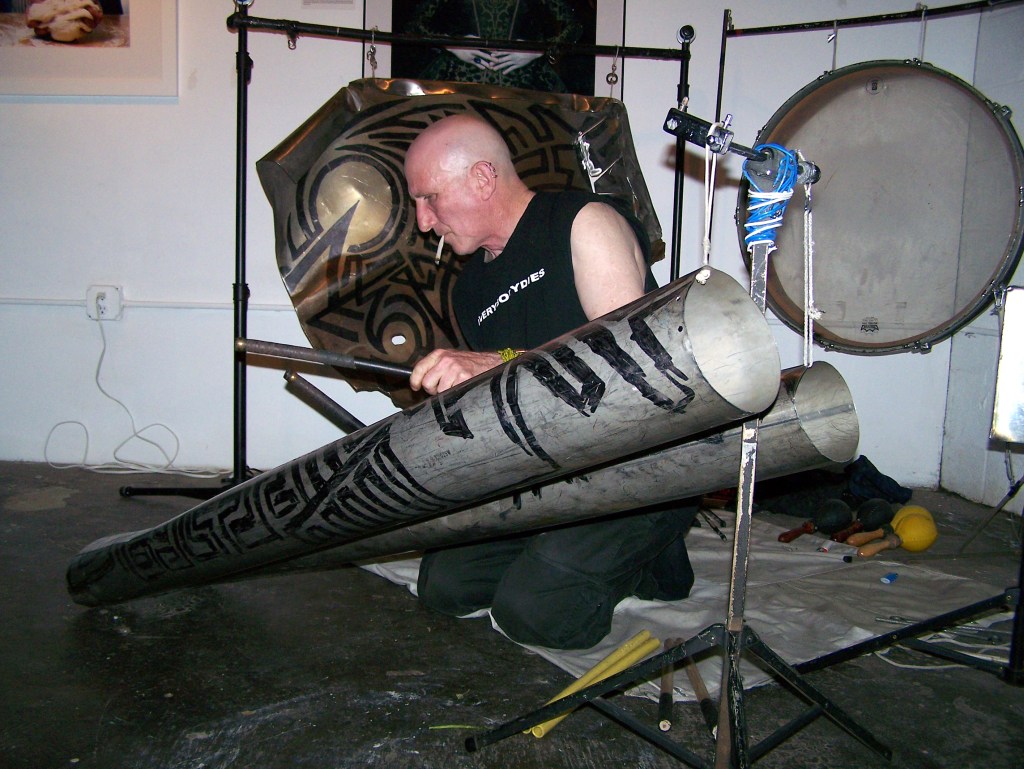
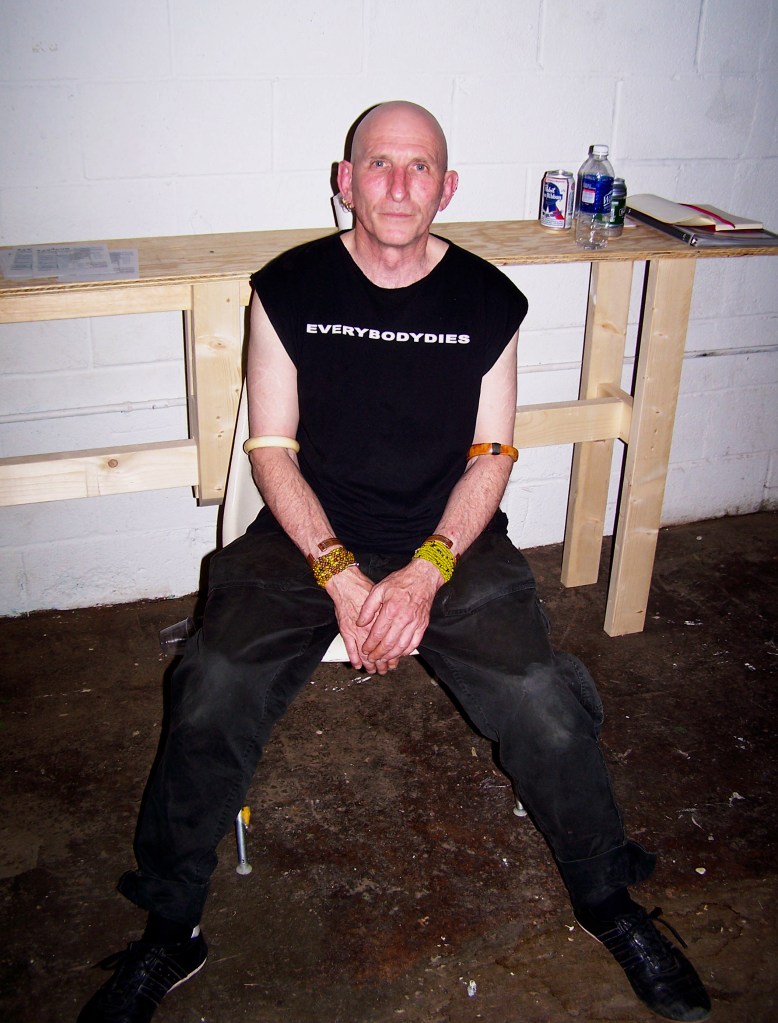
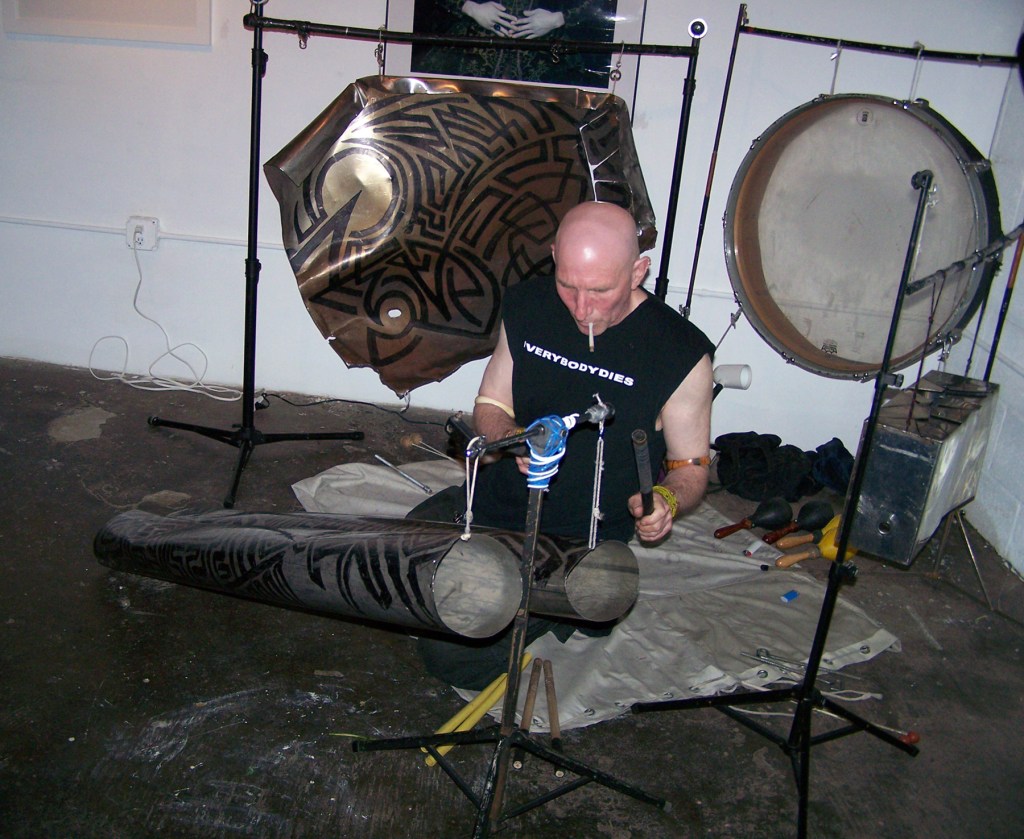
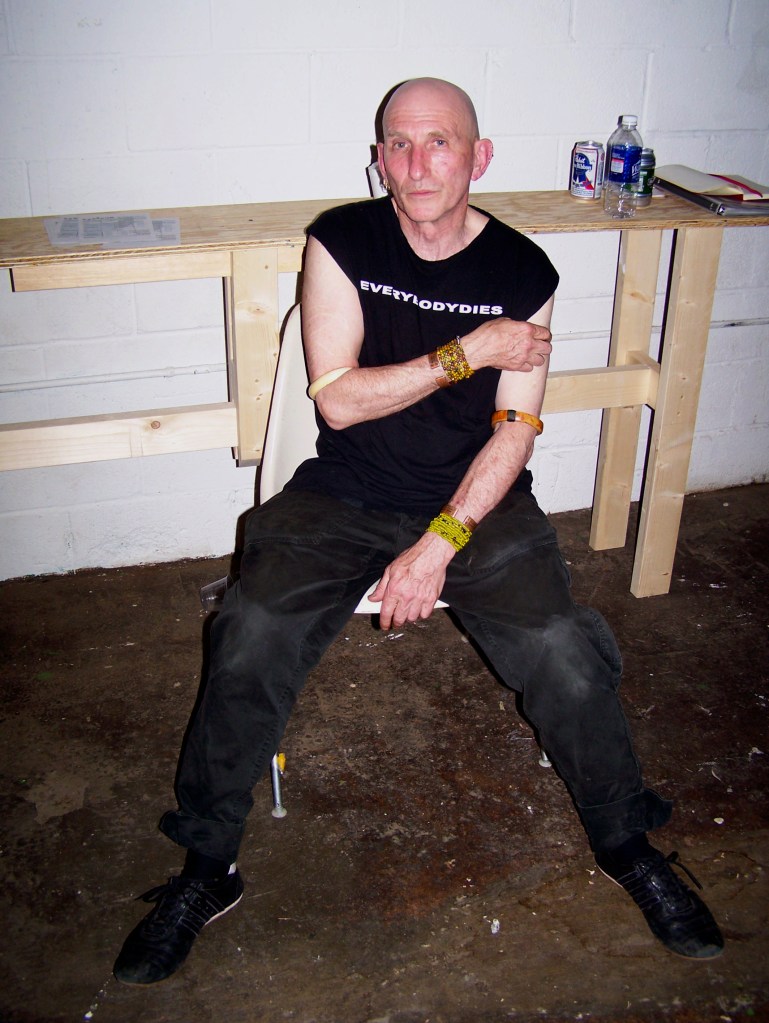
Z’ev performing at Eyedrum Art & Music Gallery, May 16, 2007. Photo by Chad Radford


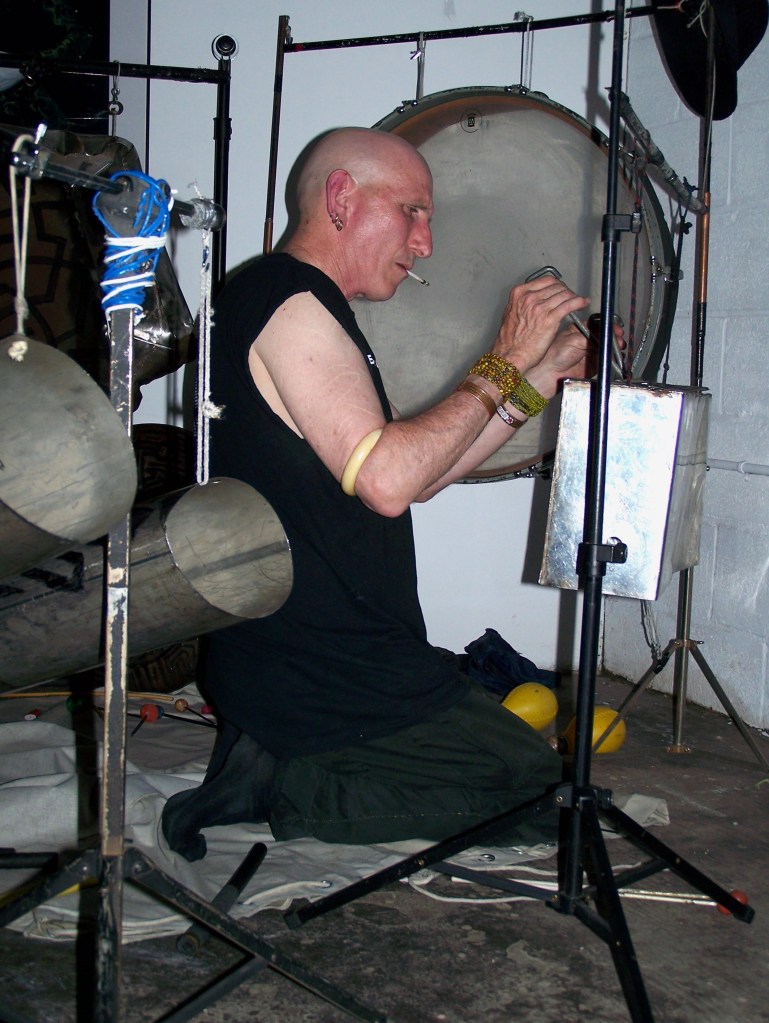
Stark black-and-white photographs of a man with intense focus, hammering at plastic containers, metallic tubes, and hunks of repurposed weapons of war. His head and face clean-shaven, and a cigarette dangling from his lower lip as he kneels—muscles locked—pounding metal rods and mallets on mangled bits of titanium and steel. This vision of percussionist and sound artist Z’ev (born Stefan Joel Weisser) was broadcast from the Bay Area to middle America and beyond in the pages of the Industrial Culture Handbook, published by punk and underground culture journal RE/Search in 1983.

RE/Search placed Z’ev alongside industrial music’s early pioneers Throbbing Gristle, NON, Cabaret Voltaire, and more. But as each of these other acts explored the dark aspects of society in the wake of the industrial revolution with subversive cunning, Z’ev communed with the mystical elements of the natural world. The sounds he created tuned into the deeper resonances of a planet hurtling through space, spinning in alignment with the unseen contours of the universe.

Industrial Culture Handbook

Association with industrial music was never disconcerting for him. “It was just a bunch of people coming from an art background, moving into a proto-punk kind of thing,” Z’ev explained over the phone during an interview in 2007. “My relationship with industrial music had to do with the instruments I was using. They were products of high technological industrialization.”

Z’ev utilized the scraps of industry to draw out both the gargantuan and the meditative qualities of metal, space, and time. He fully embraced the artistic notions of turning swords into plowshares, but most importantly, his performances and compositions honed  the power of pure harmonics.

Be it with his earlier “wild style” live performances imbued with an intense physical show of force, or his more aurally-focused compositions that found balance in primitive rhythms and improvisation, Z’ev’s output had more in common with the tonal exploration of composers of massive minimalism such as Tony Conrad and Lustmord, or the techniques of Pauline Oliveros’ Deep Listening Band, rather than the dirge of groups like Einstürzende Neubauten or Test Dept., who utilize similar instrumentation. “I was never interested in people coming to see a violent thing happen, because it wasn’t violent; it was a powerful thing,” he explained. 

Recalling reviews of early performances: One bay area journalist wrote that “he manipulates large, metal objects with the look of a concert pianist.” But in New York, a writer called him “a man who personifies violence in sound and vision,” and later asked “why does this remind me of a guy being jerked around by two vicious Doberman Pinschers?”

The latter review didn’t set well. “He’s probably someone who cowers during a thunderstorm,” Z’ev offered with an understated laugh. “Some people revel in a thunderstorm and others get scared. It’s an elemental thing and people’s relationship to them determines if it’s something scary or something to embrace.”

“Salts Of Heavy Metals”

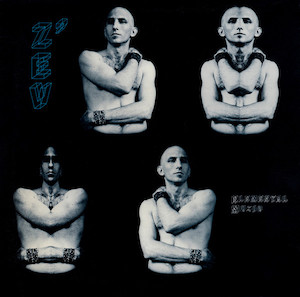
Early Z’ev recordings such as 1981’s Salts Of Heavy Metals (Infidelity Records) and 1982’s Elemental Music (Subterranean Records) summoned the hypnotic qualities of reverberating metal by guiding the clang and bang of his performance to harness the ghostly acoustic feedback swelling between each mallet strike—the rhythmic aural phenomena created by his homemade instruments interacting with the room itself.

Z’ev spent a lifetime studying music, the nature of sound, and spirituality from around the world, including Kabbalah and esoteric systems, and wrote a book titled Rhythmajik: Practical Uses of Number, Rhythm, and Sound. He also worked with the Fluxus Group, and was active in the Downtown Manhattan music scene of the ‘80s and ‘90s, as well as the West Coast’s avant-garde arts and music community, extending from his time attending the California Institute of the Arts.

“Elemental Music”

In 1980, he shared the stage with British goth-punks Bauhaus on their first headlining tour of the U.K. “We always used to hand pick our special guests and would look for unusual, stimulating, and challenging artists,” Bauhaus’ bass player and vocalist David J offered in an email. “We saw a film of Z’ev doing a performance where he was ‘playing the building,’ and also using his collection of plastic containers to great rhythmic effect. At the time, we were getting more rhythmic as a band so it was very complimentary to have him opening for us. I believe that he is something of a shaman.”

Over the years, Z’ev also collaborated with various composers, including live electronic music innovator Carl Stone, multi-instrumentalist Elliott Sharp, guitarist Glenn Branca, pianist Charlemagne Palestine, noise artist Merzbow, Genesis P. Orridge of Psychic T.V., Stephen O’Malley of Sunn O))), percussionist Jon Mueller, and dozens more.

“HYDratioN”

Like many, Mueller discovered Z’ev after reading about him in RE/Search’s Industrial Culture Handbook. “When I read his article in ’87 or ’88, I remember it striking me as someone really living a different kind of life, and as a drummer, it was inspiring—mostly in that his ideas went far beyond drumming.”

A few years later, Mueller booked Z’ev to play a show in Milwaukee, where the two met. Later, Mueller released the Osso Exótico + Z’EV CD via the Crouton label.

“Years later, I shared another bill with him in Milwaukee, as part of the Milwaukee Noise Fest,” Mueller says. “That was a great night. We had dinner and really got to talk instead of just exchanging emails—his were typically brief. His set with the synthetic drum triggers manipulating the Jimi Hendrix video was a new direction for him, and I admired his dedication to finding ways to create.”

Mueller goes on to say: “My perception after meeting him didn’t change much, except realizing the possibilities that exist. Being young reading about someone, especially someone like Z’ev, you never assume that one day you’d meet them, let alone work with them.”

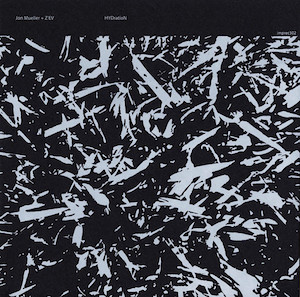
In 2009, Important Records released HYDratioN, a collaboration in which Mueller mailed Z’ev a collection of tracks—drums vibrated with gong and synth recordings, and other small percussion. According to the LPs sleeve, Z’ev “recreated” the source material to an extreme degree. How it was executed, though, remains a mystery. “It’s somewhat unclear what all happened on his end,’” Mueller says. “To me, it sounded different than what I sent him, but he said he ‘basically just mixed it.’”

A now scarce retrospective double CD released in 1991, titled 1968-1990: One Foot In The Grave (Touch), drew renewed interest in Z’ev. Dozens more releases followed, including a 2006 CD for Atlanta’s Blossoming Noise label, titled Symphony #2 – Elementalities.

“Symphony #2 – Elementalities”

But even in the digital era, many of his recordings remain frustratingly difficult to track down. As a result, more people have heard of Z’ev than have experienced his performances.

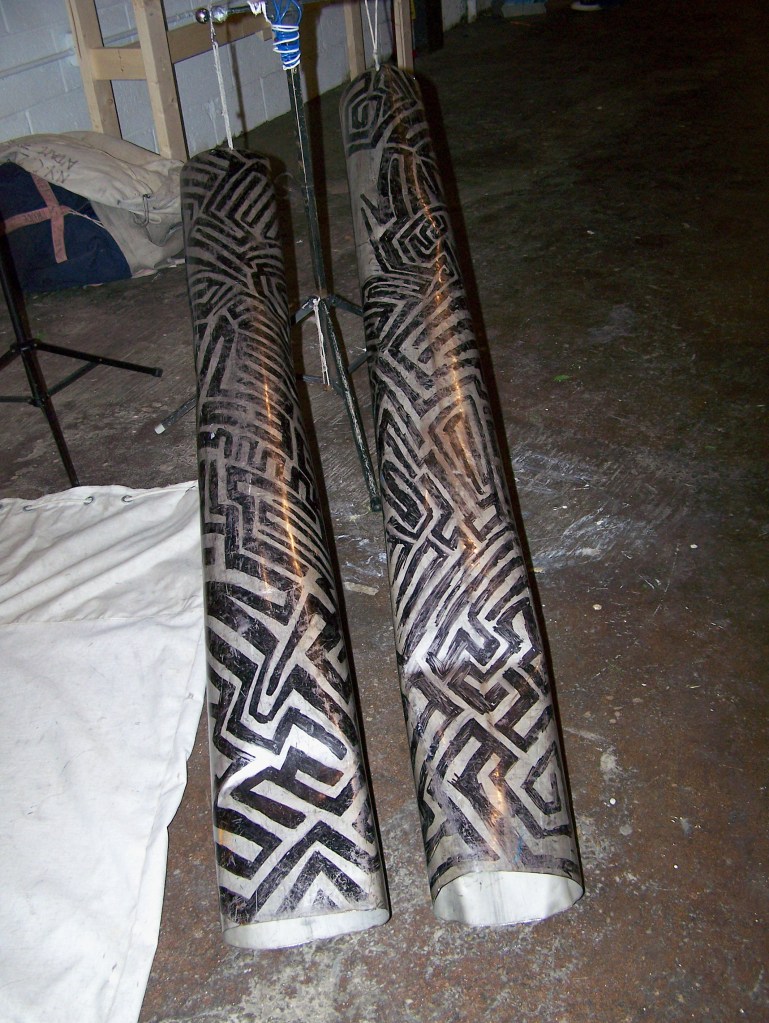
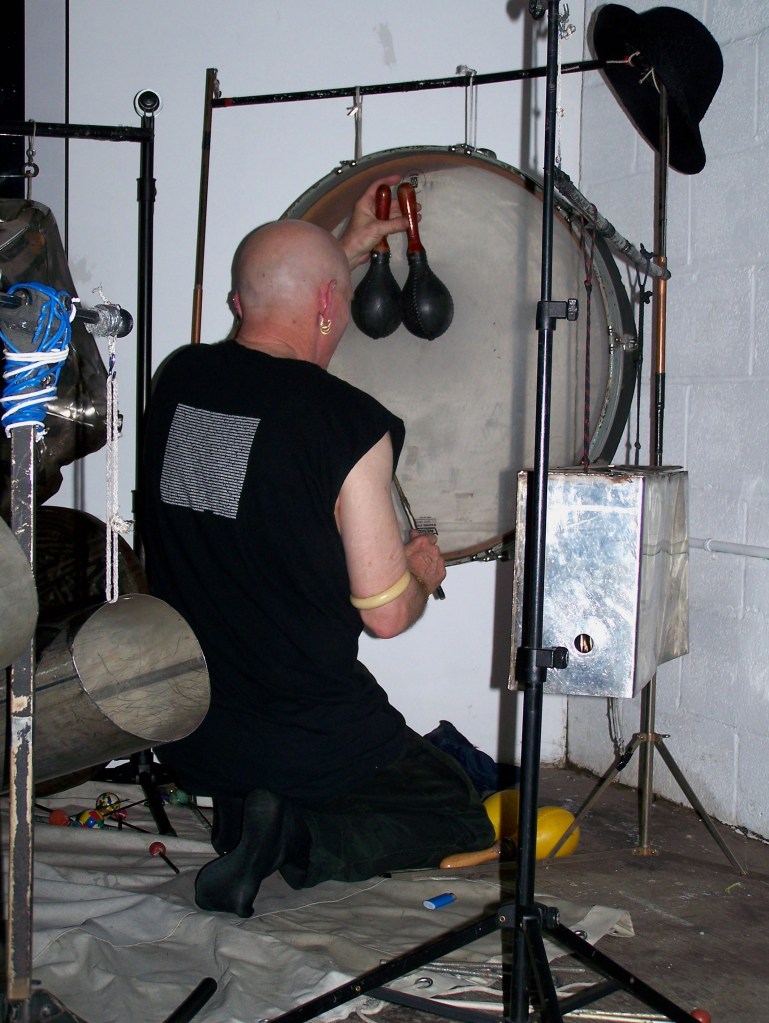
For his 2007 tour—his first proper trek playing shows across the United States—Z’ev’s inventory of instruments included steel sheets and boxes, titanium tubes, a gong made from a patio table bass, and a section from the tank of an 18-wheeler. Each is played with various mallets and maracas that have been altered with ball bearings.

His favorite metal is Titanium, which he discovered at a Bowing scrap yard in Seattle circa 1982 where he acquired surplus materials salvaged from the cooling system of missile silos from Triton submarines. “When the rocket shoots out of the sub you have to cool the interior of the silo or it would melt the submarine,” he adds with childlike enthusiasm. “Titanium can become white hot and maintain structural integrity. The more heat and pressure that’s used to create a metal, creates energy potential. When you hit titanium it amplifies the sonic energy it puts out.”

That sonic energy still rings out with unmatched power.

Z’ev was born on February 8, 1951. He passed away on December 16, 2017. He sustained injuries including a punctured lung and five broken ribs, after surviving a train derailment in Kansas. He was 66 years old.

These photos were taken when Z’ev performed at Eyedrum Arts & Music Gallery on May 16, 2007. Mr. Natural, Black Meat, and Sikhara also performed. All photos by Chad Radford.

If you have enjoyed reading this article, please consider making a donation to RadATL.

Donate with PayPal