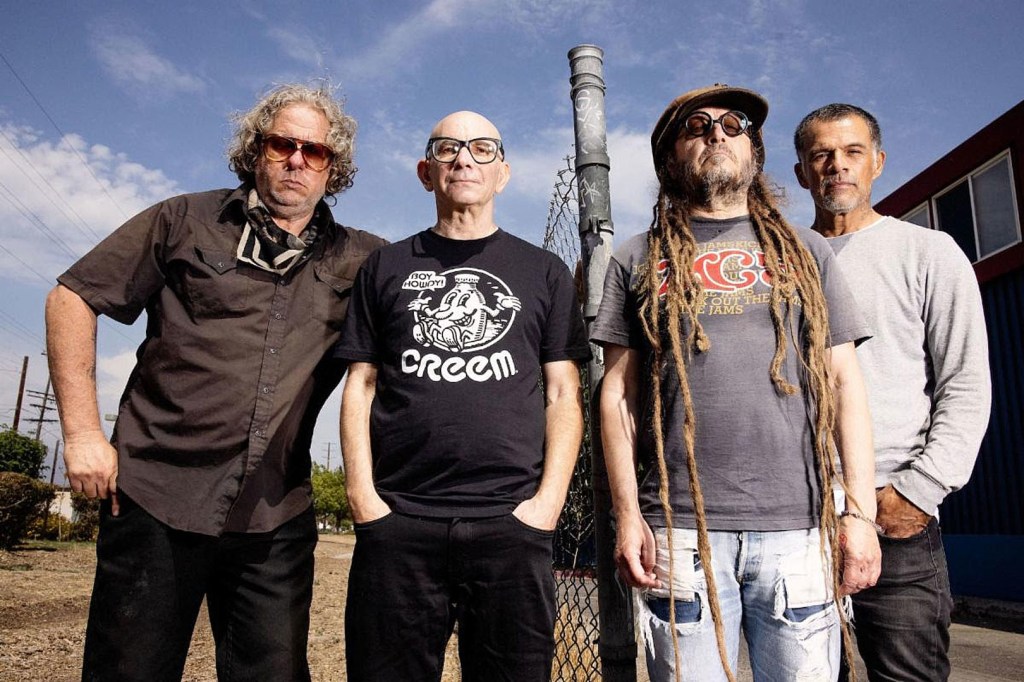
Das Damen plays the Masquerade’s Altar stage this Friday, November 7, bringing a night of post-punk, grunge, and rock ’n’ roll spectacle. The group’s name carries weight among late-’80s and early ‘90s noise-rock aficionados. Das Damen was the rare band that channelled the fuzzed-out psychedelic sprawl of Sonic Youth with the melodic instincts of the Meat Puppets.
Longtime Atlanta showgoers might recall one of their previous local appearances opening for Nirvana at the old Masquerade in October 1990—35 years ago. The following year, Das Damen disbanded, leaving behind a cult legacy of warped riffs and stoned-out, high-volume catharsis. Now, the later lineup is on the road playing a short Southeastern run that doubles as both a reunion and a rebirth.
For this tour, singer and guitar player Jim Walters, drummer Lyle Hysen, bass player David Motamed, and new guitarist Diego Ramirez are pulling from across the group’s entire catalog, revisiting standout moments from albums such as 1987’s Jupiter Eye, ’88s Triskaidekaphobe, and ’89s Mousetrap. They’ll also roll out a previously unreleased song that’s slated for a possible (or not possible) new LP with the working title Nobody Wants This.
After Das Damen’s proper set, the group will back up singer and songwriter Bebe Buell—Playboy Magazine’s November 1974 Playmate of the month, a fixture of NYC’s rock ‘n’ roll scene, and mother of actress Liv Tyler (daughter of Aerosmith frontman Steven Tyler). Buell’s set leans into classic rock ‘n’ roll energy, offering a counterpoint to Das Damen’s heavy grooves.
Since forming in London in 1980, the Pink Dots have carved out a singular space in the underground—too strange for pop, too melodic for noise, too abstract for goth, and too open-ended to be called industrial music. Led by enigmatic vocalist and founding member Edward Ka-Spel and rounded out by Randall Frazier (synths, samples, and electronics), Erik Drost (guitar), and Joep Hendrikx (live engineering and effects), the LPDs weave together surreal narratives and immersive, cinematic soundscapes that take shape like dispatches from a fever dream.
The group’s catalog spans countless albums, each one a kaleidoscopic swirl of experimental electronics, post-punk texture, avant-garde noise, and darkly poetic meditations on the human condition. On stage, their shows become ritualistic experiences—hypnotic and theatrical, blurring the line between performance and séance.
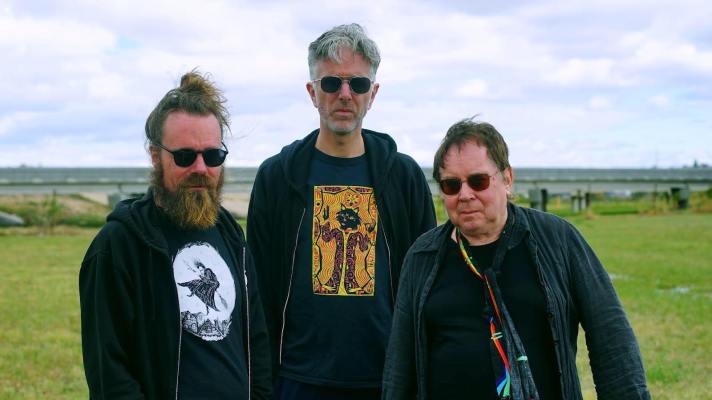
Erik Drost (from left), Randall Frazier, Edward Ka-Spel, and Joep Hendrikx. Photo courtesy the Legendary Pink Dots.
The LPD’s latest album, So Lonely In Heaven (Metropolis Records), finds the group at its most evocative, melancholy, and Orwellian in years, layering haunting synths, spectral melodies, and existential poetry into a deeply human meditation on isolation and transcendence. It’s a reminder that even after 40-plus years, the LPDs are still evolving; still chasing the unknown.
Bologna, Italy-based Orbit Service opens the evening with a set of deep, slow-burning atmospherics and haunted melodies. Featuring Frazier and Drost performing together, the duo builds patient, ethereal songs that hum with existential weight. They are the perfect gateway into the LPDs’ strange and beautiful world. The latest offering, Spirit Guide, leans deeper into cosmic territory, expanding its sound with shimmering drones, meditative textures, and a slow, patient gravity that feels like it’s tuning into another frequency.
For the faithful, this show is a rare chance to step back into the Dots’ orbit. For the uninitiated, it’s an invitation to get lost in one of experimental music’s most enduring and imaginative universes.
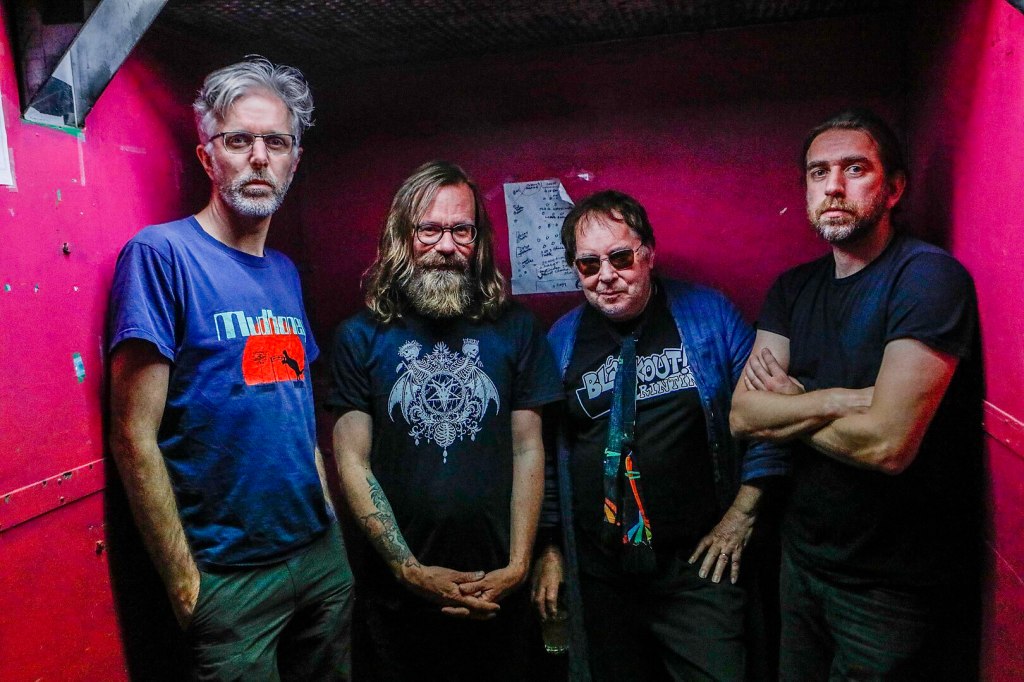
MELVINS (left to right): Steven McDonald, Buzz Osborne, Dale Crover, and Coady Willis. Photo by Toshi Kasai
The Savage Imperial Death March thunders into Georgia when Melvins and Napalm Death co-headline a double dose of doom, noise, and grinding intensity.
On Sunday, April 27, Melvins and Napalm Death come together for a massive display of sound and fury on the Masquerade’s Heaven stage. On Tuesday, April 29, the same bill rolls into Athens’ 40 Watt Club, bringing chaos to the Classic City.
The tour falls on the heels of the February 2025 release of Savage Imperial Death March, a six-song collaborative LP released via Amphetimine Reptile Records. The six-song release is a crushing, howling monster of an album that finds both bands playing together, seamlessly merging Melvins’ sludge-soaked throb and Napalm Death’s relentless grind.
Melvins are also touring behind their latest release, titled Thunderball (Ipecac Recordings). It’s also the group’s most recent full-length released under the Melvins 1983 moniker, featuring Buzz Osborne, Mike Dillard, Ni Maitres, and Atlanta-based abstract electronic project Void Manes.
For this tour, King Buzzo’s riffs steer the ship, backed by the dual-drum assault of Dale Crover and Coady Willis and Steven McDonald’s fuzzed-out basslines. This incarnation of the band reignites the early Melvins aesthetic with renewed purpose and fire.
Meanwhile, Napalm Death continues its decades-long campaign of sonic obliteration, riding high on the aftershocks of 2022’s Resentment is Always Seismic–A Final Throw of Throes. Vocalist Barney Greenway remains a force of nature, while the band’s grindcore assault remains both savage and surgical.
North Carolina sludge lords Dark Sky Burial—a bleak, ambient-industrial project helmed by Napalm Death’s bass player Shane Embury—and Weedeater set the tone for each night’s proceedings.
King Buzzo, the singer, guitar player, and frontman of the almighty Melvins joins composer and Ahleuchatistas and Mr. Bungle bass player Trevor Dunn for the long-awaited “King Dunn” acoustic summer tour.
Over the years, Buzz and Dunn have worked on several projects including Fantômas, the Melvins Lite 2012 album Freak Puke, and the 2022 LP titled Gift Of Sacrifice. Their most recently released collaborations arrived in 2022 as two four-song EPs titled Invention Of Hysteria(Amphetamine Reptile Records) and I’m Afraid Of Everything(Riverworm Records). In April 2024, they released another EP titled Eat The Spray (AmRep). These songs materialized as pandemic restrictions were lifting, which is to say they haven’t had much time for touring with this material together until now.
For those who are unfamiliar, Buzz and Dunn’s paired-down offerings do not yield the full-bore sonic onslaught of distortion and wild rhythms that one gets from a Melvins or Mr. Bungle record. There are no drums. However, when playing one-on-one they craft a spacious atmosphere that ranges from cinematic to downright haunting, summoning a dark ambiance from the natural resonance of their respective voices and stringed instruments. Each song delivers an ominous traipse of psychological and physical tension by subtle but no less affecting means.
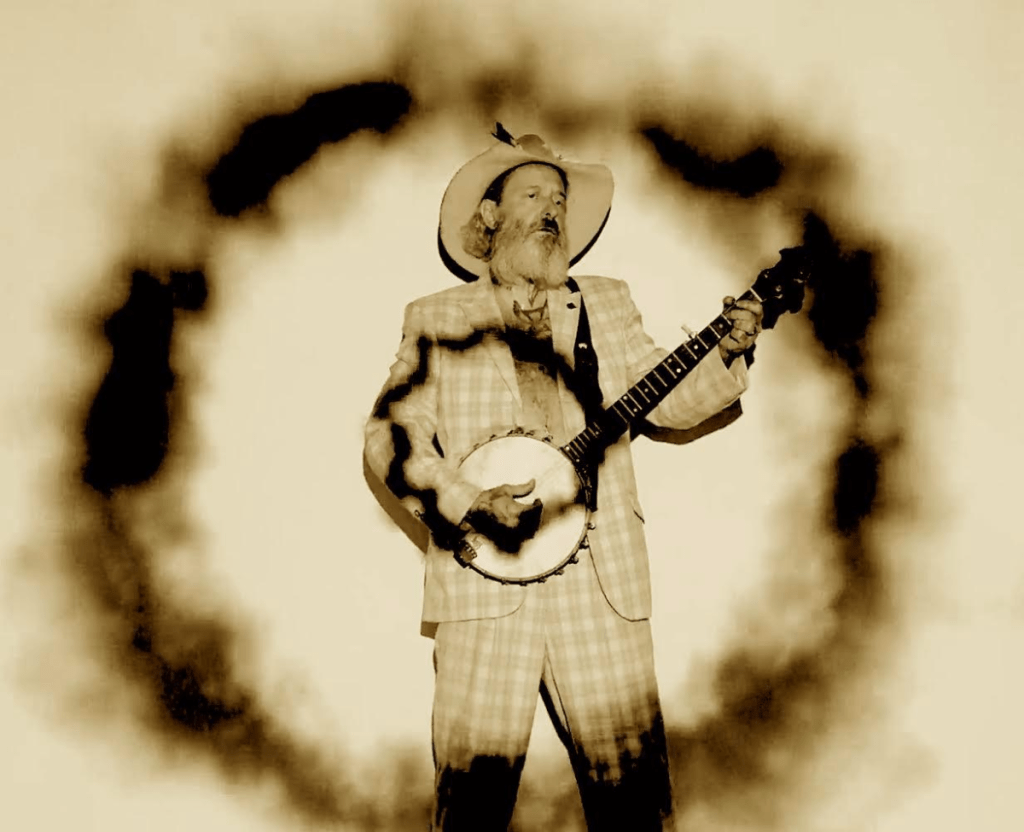
Photo courtesy J.D. Pinkus
J.D. Pinkus of the Butthole Surfers, Daddy Longhead, sometimes the Melvins, and more lands in the middle slot commanding a set of cosmic banjo strumming from the deranged outer limits. It’s all set to a beautifully hallucinatory visual display. Press play below to check out a couple of cuts from Pinkus’ latest offering, Grow A Pear!
Void Manes photo by Buzz Osborne
Atlanta-based abstract electronic project Void Manes sets the night in motion with a dazzling array of modular synths and analogue gear wrapped in a galaxy of multi-colored cables. The one-man outfit explores dreamtime and nightmare soundscapes, striking a balance between atmospheric noise and melody; drones and sub-bass swells that rise and fall in fugue-like moments of rhythms, sonic impressionism, and chaos.
Circle Jerks: Zander Schloss (left), Greg Hetson, Keith Morris, and Joey Castillo. Photo by Atiba Jefferson
Southern California hardcore punk icons Circle Jerks are celebrating the 40th anniversaries of their first two albums, Group Sex and Wild In the Streets — both albums were recently reissued by Trust Records.
On Friday, July 22, the group’s current tour with 7 Seconds and Negative Approach stops at the Masquerade, marking the Circle Jerks first Atlanta show in over 16 years. Before heading out, vocalist Keith Morris took a few minutes to talk about revisiting the songs, drummer Joey Castillo playing them even fast, and what’s in store with his other band, Off!
Chad Radford: Have you had any new realizations about the Circle Jerks songs now that you’re singing them again after so many years?
Sometimes I question some of the lyrics. Why did I write that?
I wrote “Paid Vacation” about Vietnam. When I graduated from high school, I was almost 17 and-a-half. You don’t get drafted until you’re 18. I’d go to parties and at the end of the night the police would be outside questioning all the guys: “How old are you? Have you registered for the draft? I had a handful of friends spend the weekend in jail because they hadn’t registered.
When they filled out your paperwork in jail they automatically registered you for the draft.
I had a few friends that went to Canada. I had a few friends that actually went to Vietnam. I was fortunate because the draft ended maybe six months after I graduated.
One day, my dad said: “You’re not going to Vietnam, are you?” My dad was a staunch Republican. I don’t know if he was “a bomb those fuckers into oblivion” Republican, but he was a Republican on a business level. We didn’t converse much. He was basically telling me, “If I was your age, I wouldn’t register for the draft. I wouldn’t go to Vietnam.” Maybe my dad had the wherewithal to understand what was going on at the time.
It doesn’t matter if it’s a Republican or a Democrat in office. I think there’s a scenario where the incoming president gets pulled aside by all of the military and mighty industrialists who say, “You’re gonna continue doing what your predecessor did, who continued doing what the president before him did, just like the president before him. You’re gonna keep greasing our wheels. You’re gonna keep making us bigger and fatter and even more horrible than what we are right now. If you go against us, we, along with the CIA, will do to you the same thing that we did to JFK.
So, I look at “Paid Vacation” and think to myself, that is still as relevant today as it was when I wrote it.
The last time that you and I spoke was when I was writing a story about Bob Glassley (R.I.P.) who had recently revived his old band the Cheifs, with an all new lineup.
Yes, that’s when they came out here and played some shows. It was great seeing Bob. And that band was great. No one can ever take anything away from them. They had their shit together, musically speaking, and it was totally happening.
You know, Bob apologized to me, and I said, “Bob, it is not necessary.”
Why did he apologize to you?
At one point there was competition between our bands. I know there’s not supposed to be competition amongst us. We’re all supposed to be supportive of each other, unless you’re a dick. We could say it was a friendly competition, but at times it was a competition. And he apologized to me stating: “We were all friends. We were all growing up together. We were all drinking beer together, going to shows, and hanging out. For us to be snobby and say, “We were here before you. We should be playing before the headliners instead of you. And just all of that kind of stuff. … It never mattered to me. We’re just supposed to be alive and excited about it, and we’re supposed to be happy that we’re playing, and we don’t care where we are on the bill.
Just hanging out with Bob was great.
But he apologized and was so cool about the whole thing, and it was totally unnecessary. We were younger, and we were all aggressive and overly excited about some of these things.
What has playing with drummer Joey Castillo brought out of the Circle Jerks?
We wouldn’t be the band that we’re supposed to be if we didn’t have him adding his energy. He wants to play the songs even faster than what we’re playing them, and it’s like, come on Joey! We’re older guys!
Sometimes I find myself trying to catch up with my lyrics, which I don’t mind because it’s like a train coming down the tracks and it’s rambling and shaking and it’s gonna jump the rails. There should be a sense of danger with punk rock. There’s chaos, and that’s good.
Our bass player Zander will say, “This song has to groove, the bass and the kick pedal need to be doing the same thing.” But I’m like, “You figure that out.” I can’t worry about stuff like that. I’m 66 years old, and I’m gonna have points in the set where I need to take a break to catch my breath and have a couple of swigs of water.
Joey brings something that’s much needed, and he loves us! He grew up with us, he’s in South Bay, a couple of cities east of where Greg Hetson grew up in Hawthorne. He knows our songs better than we do.
He asked, “Do you want me to play the song the way that Lucky Lehrer played it on the first album, or do you want me to play it how Kevin Fitzgerald played it? It’s like, wow, thank you for doing your homework.
At this point, you’ve also logged a ton of hours playing shows with Negative Approach on this tour.
Yeah, and the John Brannon scenario: He comes out on stage, and all he wants to do is sandblast your face off, and make your ears bleed. They do an amazing version of Sham 69’s “Borstal Breakout.”
I saw the show at the 40 Watt in Athens — and I’ve seen Negative Approach every chance that I get — his scowl, when he looks at the crowd … Who know what kind of primal rage he’s gonna bring out of the person standing next to you? But at the end of the night, when he is at the merch table, he’s like the nicest guy on the planet.
He’s working class sweetheart. And when they come out on these tours — they’ve also toured with Off! — they, they can’t be a nicer group of guys. They can’t be more appreciative. Their whole outlook is like: We are honored to be able to do this, and it keeps us busy. We’re working and we’re doing something that we wanna do.
What’s the latest with Off!?
Off! is releasing our new album in September. We’ve recorded all of the songs, and for me it sounds amazing. We’re stepping out of our punk rock and hardcore box to do something different that’s gonna make the cavemen of our genre say, “I don’t like this. They’re not supposed to do this.”
Are you taking a more avant-garde approach with the songs?
We listened to a lot of Throbbing Gristle, Hunting Lodge, Can, Einstürzende Neubauten, Herbie Hancock’s Head Hunters, Miles Davis. We spent time with a character named Enid Snarb who was in Bastard Noise and Man Is the Bastard. He turned us on to some of George Harrison’s work after he visited India.
Our engineer mixer guy worked with Kyuss and he mixed over half of Spiritualized’s Ladies and Gentlemen We’re Floating In Space. We went to a lot of different places, rather than the Bad Brains, Blue Öyster Cult, and Stiff Little Fingers.
Autry Fulbright is playing bass, and he co-manages Thundercat. Our drummer Justin Brown plays drums with Thundercat, so now we’ve got a jazz drummer playing rock, and you’ll hear it. There are times when he’s all over the place, and we really have to pay attention to what he’s doing to play what we’re playing.
If your mind is free enough, and you’re able to see all of the different colors that we’re using, you’ll get it. There’ll be a lot of people that don’t, but we have no control over that.
What’s the label experience like now that Circle Jerks are working with Trust Records vs. what you experienced with record labels in the ‘80s?
The scenario with Trust is that we love them. Have you seen the Group Sex reissue?
Yes, I have a copy that came with the zine signed by you and Greg.
They’re willing to go to that length, where a lot of record labels won’t. Their sales pitch was: “We’re willing to bet that your royalties from all of the recorded work with all of those labels is probably so minimal that you could hold it in one hand. We want to change that.” They gave us an advance that was beyond ridiculous for a band of our stature.
They’ve been on time and they’ve done everything. The Wild In the Streets reissue is just as cool as the Group Sex reissue, and that’s one of the reasons why we’re playing shows. It was originally to celebrate the 40th anniversary of Group Sex. Now we’re also celebrating the 40th anniversary of Wild In the Streets.
As for all the labels we were on in the ‘80s, it was all a crapshoot. We weren’t getting hit up by any major labels, and being opportunistic, when somebody makes you an offer you could sit around with your thumb up your ass waiting to hear what the other offers will be. But your thumb could be up your ass for quite a while. We dealt with some really cool people and we dealt with some really horrible people. I could get into details, but I won’t because I don’t believe that any of these labels exist anymore.
Gang of Four drummer Hugo Burnham recalls reading a quote from his former bandmate, guitarist Andy Gill some years ago. Burnham had parted ways with the group in 1982, only to return for a brief stint between 2004 and 2006.
Fast forward to 2012 — Gill and Gang of Four vocalist Jon King announced that they would no longer work together, leaving Gill as the only remaining original member still performing with the iconic Leeds, U.K. post-punk outfit.
During an interview around that time, a writer asked Gill about moving forward with a new lineup. His reply, as Burnham recalls, was that Gang of Four is more than a band, it’s an attitude and it’s about ideas. “I don’t even need to be in the band for it to be Gang of Four,” Gill told the writer.
“I had never really thought about what that meant,” Burnham says.
Gill died suddenly in February of 2020. Since then, the gravity of his words has taken on new depth for Burnham, as he reconnects with the band’s legacy, and its incendiary attitude and ideas.
A recently released box set, titled 77-81 (Matador) makes clear its assertion that despite nearly 40 years spent releasing dozens of albums, Gang of Four turned out its most commanding works between 1977 and 1981. Those first five years encompass the group’s first three albums: Entertainment!, Solid Gold, and Songs of the Free. Throughout each of these albums, Burnham, King, Gill, and bass player Dave Allen — the latter of whom was replaced by Sara Lee for Songs of the Free — crafted terse anthems that sharpen their teeth and claws on everything from Marxist philosophy and the dangers of materialism to the trappings of love and maximum entropy.
Songs bearing titles such as “To Hell With Poverty,” “Not Great Men,” “Damaged Goods,” and “I Love A Man In A Uniform” are propelled by muscular rhythms, avant-garde grooves, and the jagged energy and freedom that their British punk rock forefathers in the Clash and the Sex Pistols had exposed.
Alongside British counterparts such as the band Wire, and American band Mission of Burma, Gang of Four’s first three albums have come to define the post-punk canon.
Following Gill’s death, Burnham and King have reconvened under Gang of Four’s banner to bring the group back to the stage. But who could fill Gill’s shoes playing guitar and bring the songs back to life?
They had their eye on a handful of potential candidates. Marissa Paternoster of New Brunswick, NJ trio Screaming Females was in the running, but the pandemic complicated the group’s early efforts. Then, in the midst of their search for Gang of Four’s next guitar player, Burnham’s friend Patrick Ferguson, a drummer with Athens, GA’s indie rock band 5/8, got in touch.
Ferguson hosts the Crash and Ride podcast, which had recently featured David Pajo as a guest. “Patrick said, ‘My god, I’ve just interviewed David Pajo!’ I hope that David forgives me for this, but I said, ‘Who’s that?’” Burnham laughs. “‘Cause you know, he’s a youngster!”
Pajo’s resume boasts of playing and writing with dozens of seminal early ‘90s indie rock luminaries such as Slint, Papa M, The For Carnation, Tortoise, Stereolab, and dozens of other acts.
“So I started digging and listening, and thought, oh god, this guy is good,” Burnham says.
As a founding member of Slint, Pajo is aligned with the early beginnings of math rock in the ‘90s. Semantics aside, his musical DNA blends quite well with Gang of Four’s rigid, angular songwriting style.
Ferguson introduced them to each other via email. After exchanging a few messages, Pajo recorded videos of himself playing guitar along to three of the group’s signature numbers, “Natural’s Not In It,” “To Hell With Poverty,” and “What We All Want.”
“It was chronically, cripplingly obvious that this was the only choice to make,” Burnham says. “We really didn’t want to have just another boring or predictable old white guy in the band,” he adds. “David is neither boring, nor predictable.”
Pajo instinctively adapted to Gill’s percussive style, and how the guitar parts intertwined with the group’s fast-paced rhythmic presence. “He was digging deep into the recordings, alternate versions, and different live things, trying to get [Andy]’s take on everything,” Burnham says. “I said, great! Learn the songs as [Andy] would play them, but make them your own. We are not a Gang of Four tribute band,” he stresses. “This is Gang of Four, here and now. David is in the band, and it’s as simple as that.”
Burnham, King, and Pajo were in place, but bass player Dave Allen opted out of rejoining the group for a round of North American tour dates.
Former bass player Sara Lee was the obvious choice to complete the lineup. After leaving Gang of Four circa ‘84, Lee had gone on to perform as a member of Robert Fripp’s band the League of Gentlemen, and has played with everyone from Robyn Hitchcock to the Thompson Twins, as well as with Georgia acts, the B-52’s and the Indigo Girls. Her 2000 solo debut, Make It Beautiful, was also released by Ani DiFrancos’ Righteous Babe label.
“When I called Sara, I didn’t quite know how to get to the point. Finally she says, ‘I’ve been sitting here on the phone, waiting for you to ask me if I’ll play!” Burnham laughs.
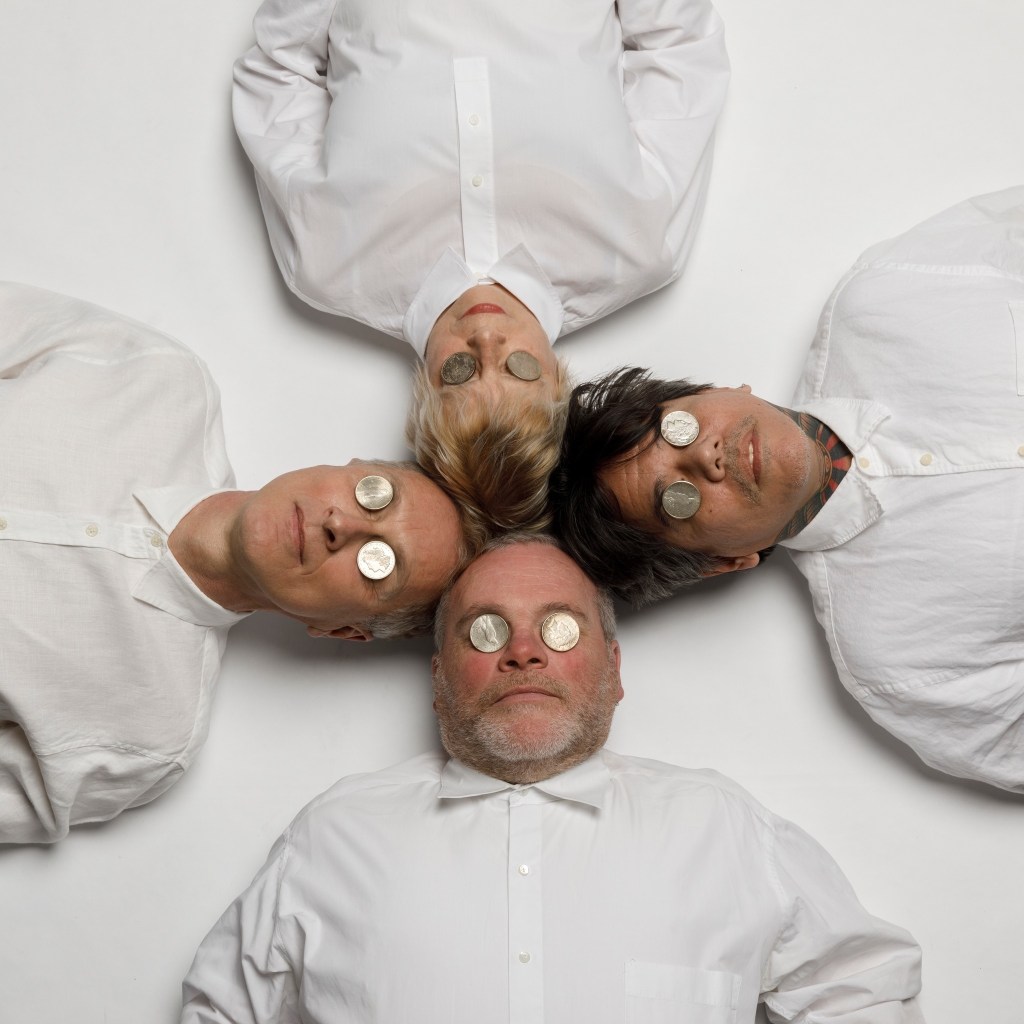
Gang of Four. Clockwise from top left, Jon King, Sara Lee, Hugo Burnham, and David Pajo.
With Lee in place, Gang of Four took on a new configuration, and started breathing new life into the music. On their current tour, the group is sticking mostly to the classic material from those first three albums, but they’ll pull out a few numbers from later albums as well, including “I Parade Myself” from ‘95’s Shrinkwrapped LP. “We’re not being assholic about any of this,” Burnham says, “We’re playing that song because it’s such a great song. But there is such a breadth of stuff that we can dive into from those first three albums, which is more like ‘77-’83.”
The million dollar question: Will Gang of Four record new material with its new lineup? Burnham pauses with a sheepish, tight-lipped smile before joking that for a million dollars he’d record with any lineup. “I hate to hyperbolise, but this has been a lot of fun,” he says. “There is no stress, no anger, no overwhelming control issues. David is a versatile and disciplined player who has done seriously great work leading up to joining us,” he adds. “It would be silly not to make the most of this lineup, even if it’s just for ourselves. We’re not kidding ourselves into thinking that the world is waiting for new stuff — but we’re waiting for it.”
For this run of North American shows, they’re performing songs from Gang of Four’s first three albums, 1979’s Entertainment!, Solid Gold (’81), and Songs of the Free (’82).
Guitarist and co-founding member Andy Gill died in February of 2020, and bass player Dave Allen is sitting out this round of touring.
In the meantime, the group’s lineup features fellow co-founders vocalist Jon King and drummer Hugo Burnham, joined by bass player Sara Lee, who joined Gang of Four’s line up from 1980 to 1984 (circa Songs of the Free), and David Pajo of Slint, Papa M, The For Carnation, Tortoise, et. al., which is awesome.
If you have enjoyed reading this post, please consider making a donation to RadATL.
Southern California hardcore icons the Circle Jerks are on the road again, celebrating the 40th anniversaries of their first two albums, Group Sex and Wild In the Streets, both recently reissued by Trust Records Company.
The show also marks the Circle Jerks’ first show in Atlanta since they played the Masquerade in December of 2006. Were you at that show?
For this tour, drummer Joey Castillo (Danzig, QOTSA, BL’AST!, the Bronx, and more) joins the classic lineup, featuring bass player Zander Schloss, guitar player Greg Hetson, and frontman Keith Morris.
Trust Records also recently reissued 7 Seconds’ 1984 debut LP, The Crew. Both 7 Seconds and Negative Approach (!!!) fill out the bill in Heaven at the Masquerade. Friday, July 22. $32.50 (adv). 7 p.m. (doors).
Photo courtesy 7 Seconds
Negative Approach photo by Chad Radford
If you have enjoyed reading this article, please consider making a donation to RadATL.
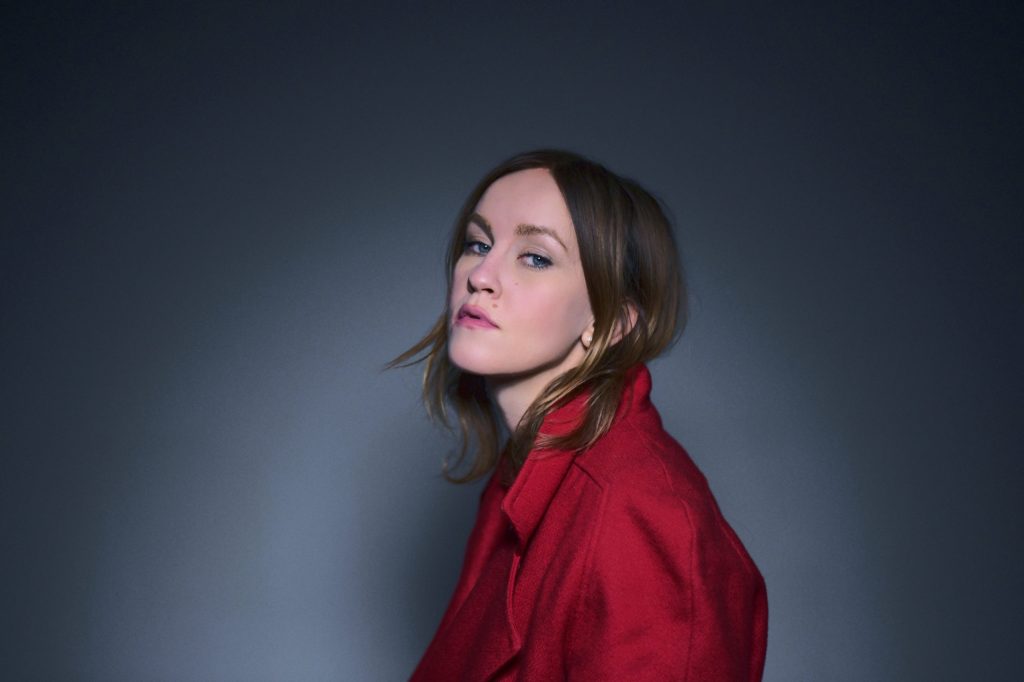
Singer, songwriter, and former Sticklips composer and frontwoman Johanna Warren plays a live-streaming Winter Solstice concert on Sunday, December 20.
The Noonchorus live stream is presented by the Masquerade. Proceeds from ticket sales help keep the venue alive until live music can return. $11. 8 p.m. Eastern. Click here for more information.
In May, Warren’s fifth album, Chaotic Good Arrived via Wax Nine/ Car Park Records. Press play below.











 Rad/ATL