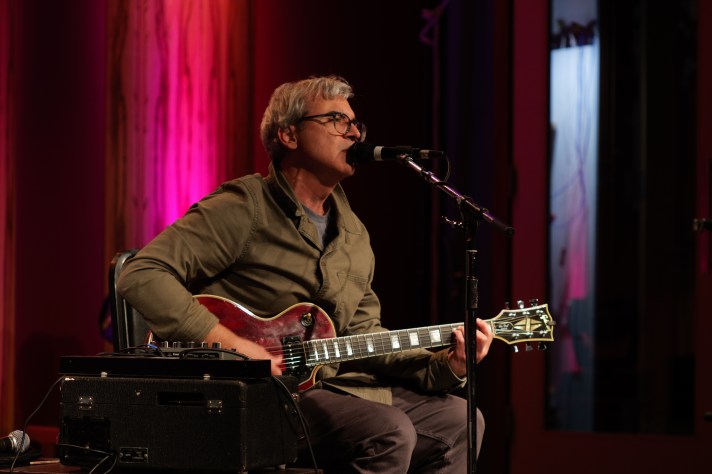
Mike Baggetta embraces the subtleties of sound with Eli Winter and Bill Taft at Railroad Earth on Friday, November 6

Mike Baggetta. Photo by Jojo Smith

For guitarist Mike Baggetta, playing music has always been about exploring the shifting terrain of human interaction. Whether performing alongside bass player Mike Watt and drummer Stephen Hodges in MSSV, with Watt and Tortoise drummer Jon Herndon in Casa Sueño, or with upright bass player Viktor Krauss on the album Lonesome Town, Baggetta gravitates toward unpredictable exchanges that bring music to life. Now, he’s stepping into a different kind of conversation.

The Double Solos tour brings Baggetta and guitarist Eli Winter to Railroad Earth on Friday, November 6, for a show of individual solo performances. W8ing4UFOs singer and guitarist Bill Taft rounds out the bill.

For Baggetta, this run marks his first-ever solo tour, an opportunity to explore the subtleties of his playing without the familiar safety net of a band. His approach celebrates the possibilities of sustained tones, shifting textures, live looping, and sampling, allowing technical skill to serve a broader sense of exploration and the unexpected musical ideas that emerge when sound has room to breathe.

Ahead of Friday night’s Atlanta stop, Baggetta discusses the appeal of playing alone, the creative tension between composition and improvisation, his musical kinship with Winter, and more.

Mike Baggetta, Eli Winter, and Bill Taft play Railroad Earth. Fri., Nov. 6. $20. 8:30 p.m.

What inspired you to step out on your own for this run of shows, and what does playing solo allow you to explore that might not be possible when you’re working with other musicians?

With music, I’m always interested in the interactions with other people. At one time that meant only with the other musicians I was playing with. But as I got to play more it became about what it means to interact with the audience in that kind of relationship with the musicians. Then it became about the people listening. What is it like to put on a show with other people that are helping you put on the show, who aren’t necessarily the audience or a band?

These are things that I love about music: What can music show you about human interactions? It’s an intimate thing that I find gratifying. Over the years of playing, something happens where I’m trying to get to a musical idea. I don’t necessarily mean a series of notes, but a sound or a feeling that happens but it’s fleeting. You think about what that was and how to get that feeling again. One way I found to do that is to work on certain aspects of my music without playing with other people.

I’m not worrying about interacting with other musicians, which brings it to a musical moment. But if I want to spend time thinking about going deeper into something that is just a sound that I want to make, a good way to do that is to do it by yourself. I’ve found that to be a kind of a terrifying thing to play solo because you don’t have anyone else to lean on. But a few years ago, I found an entry point that made me want to explore it further.

What was the entry point?

For me, playing solo isn’t ever going to be about working out my technique, or here’s my blistering new version of “Giant Steps” (laughs). It’s not how I feel my best contribution to music is going to happen as an individual artist.

My friend Tim Lee, who lives in Water Valley, Mississippi, outside of Oxford, had a radio show—kind of a local Oxford version of Prairie Home Companion. They’ll focus on an author, then there’ll be an interview portion, there’s a house band, and they’ll have a guest musical artist.

I was that guest musical artist for one show. They gave me like 12 minutes to play. I was on a trip where I was doing things with other people that were in the locations I was going to. I’d meet up with a band and play and then do another project with somebody somewhere else, then drive to the next gig. I thought, “Maybe I should try this alone, work out a few new tunes, and see what happens.”

I was thinking about the things that I like about my sound and my music that I can get into?

One of those things is my use of live looping and live sampling in an ambient and memory type of way. I’m not an Ed Sheeran type of looper where I’ll lay down the bassline and then fake a horn part on the guitar body, then lay out the chords and then the melody. I actually can’t stand that type of thing. Just get a band at that point. But there is an interesting thing that’s more from a different school of looping that’s informed by like Terry Riley or David Torn or Nels Cline where it’s like grabbing pieces of things that you’ve played and having them spit back at you in different ways that might make you react with those things.

So it’s a little cheat code, like you’re playing with someone. You have things to play against and you don’t necessarily know what it’s gonna put back out for you to react to and inspire you to do something else. Then you get this feedback loop going with that sound. You can hear it in a lot of the records as little ambient guitar noises and stuff like that. That was kind of a way in.

Then slowing down and playing a chord on the guitar and letting it ring out and move the tuning a bit with the tremolo bar—just get into the depth of the subtlety of the things that I’m doing.

I struggled through that for the 10-12 minutes on the radio show. After I was done with it, I thought there’s more to explore there.

Your music occupies an interesting space between composition and improvisation. When you’re playing solo, how much of the performance is mapped out ahead of time and how much do you leave open to whatever happens in the moment?

Right now, none of it. I have a list of songs that I’ll pull from for these shows, but I haven’t put it together yet, and I don’t know how I’ll get from one song to the next. Usually when I play in my bands, I don’t stop between songs and say, “Hey, this next song’s about so-and-so and here we go. Take it away.” Those experiences of playing with bands have always been more about a journey from beginning to end with continuous sound, and getting from one place to another. But I might change it up for this. I might talk about the songs a little more, let people in and have it be more of an intimate thing.

Are you playing things from throughout your records?

I’m doing a couple of songs from records because I like playing them and I don’t really get a chance to play them too much otherwise. Like from the records I did with Jim Keltner and Mike Watt, the first album has a song called “Hospital Song” that I like playing. The second record, the title track is “Everywhere We Go.” I like playing that song. I have those on my list. The Casa Sueño 7-inch, “House of Dreams,” I might do a version of the A side from that because I can do it in a way that’s different than how we do it in the band.

There are a lot of new songs as well. I have six or eight new songs with words that I’m using this tour to try to work out because I haven’t done them too much yet. I’ve done a handful of solo shows over the past year. But things change the more you play it in front of an audience. It’s a good way to get the music in shape for thinking about how somebody might want to record it down the road.

You have worked in different settings, from collaborations with Casa Sueño and MSSV to the new record with Viktor Krauss, Lonesome Town. Does playing solo change the way you think about the guitar and the way that you listen to yourself?

It does because I’m freed from the sort of thing about, “Oh, what did they just play? That’s interesting. How can I answer that? Or, “How can I take that into consideration with what I’m about to play next?” That’s gone. The little sampling thing I do plays a part in that, but it gives me more space to do whatever I want. But as I’m saying that, I’m also conscious of it not turning into something totally self-gratuitous.

I love playing music with other people. It’s scary because what if I don’t have any ideas that night? What if I’m playing and all of a sudden I don’t know what to play? Usually I can lean on the person I’m with like, “Oh, they just played something interesting and now I have an idea.” But if it’s just me and I have no ideas, what do I do?

To answer more directly, it’s about being in the sound that I make and dealing with the subtleties more than I would have time to deal with if I was playing with someone else.

I’m not afraid to play a chord and listen to it for eight or nine seconds before I figure out what happens next. A lot of people, myself included at one point, would be kind of terrified to not be doing something for that long.
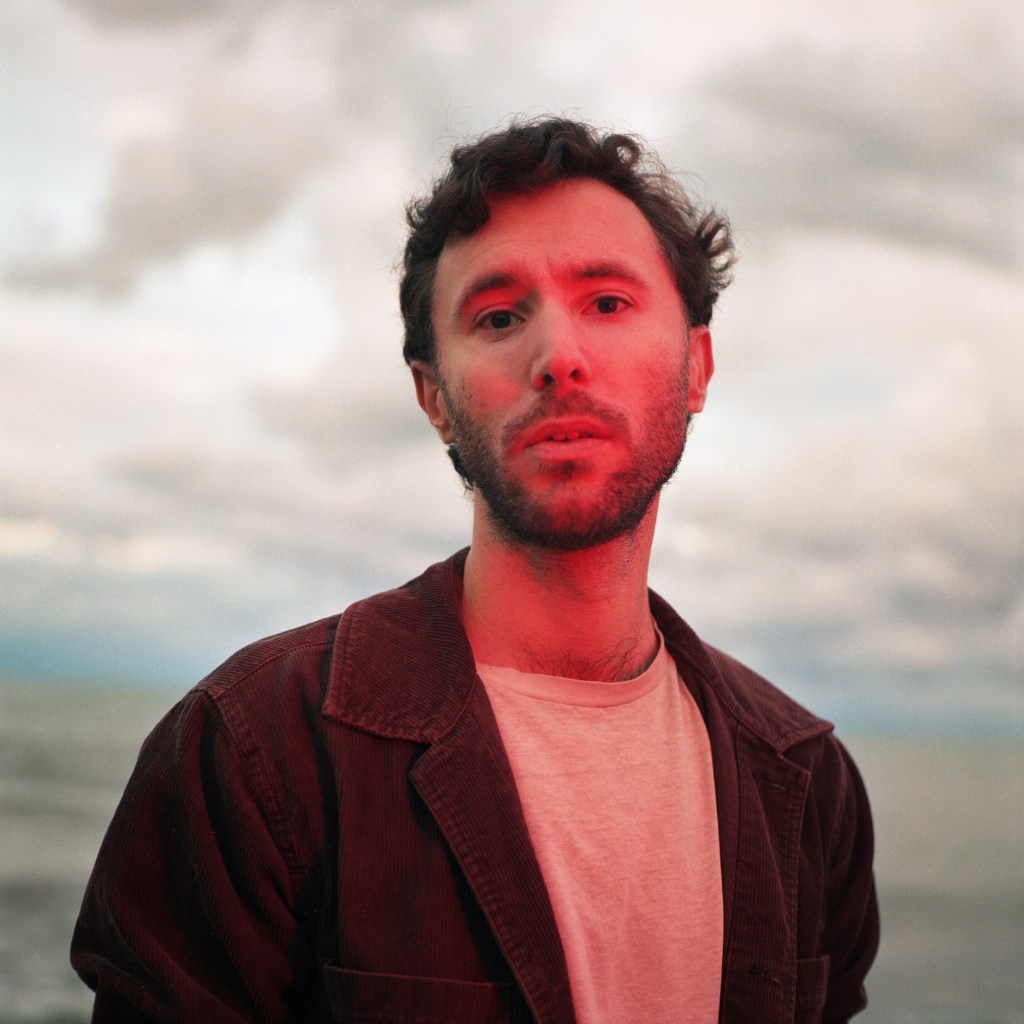
Eli Winter. Photo by Beth Kotz

You’re sharing the bill with Eli Winter and Bill Taft. How does playing alongside other solo musicians create a different kind of conversation between the sets?

That’s something I’ve been thinking about, mostly because Eli and I are doing this whole tour together, the double solos tour, and we’re both ostensibly guitar players. I’ve incorporated a lot more vocals over the last several years, although I think Eli is doing some singing on this tour also. I think we both play in different enough styles, with enough of a different sound and musical aesthetic from one another that it won’t be like, “Here’s another solo guitar!” We play differently and our songs are different. It will be a good mix of people coming out, and a good mix of music. Everybody will hear something different enough to make it interesting. But I have been thinking about that because every place we’re playing is writing back saying, “I don’t know who’s playing first or last, you or Eli!”

We don’t know either yet. We might change it up from night to night depending on what we’re doing or who else is playing.

Bill Taft is such an awesome musician and guitar player that it’s always a little intimidating to go on after him. But it also lights a little fire under me too, because he’s so much fun to listen to, and he’s such an amazing artist. He’s an incredibly creative, inspiring guy. We’re lucky that he’s playing with us.
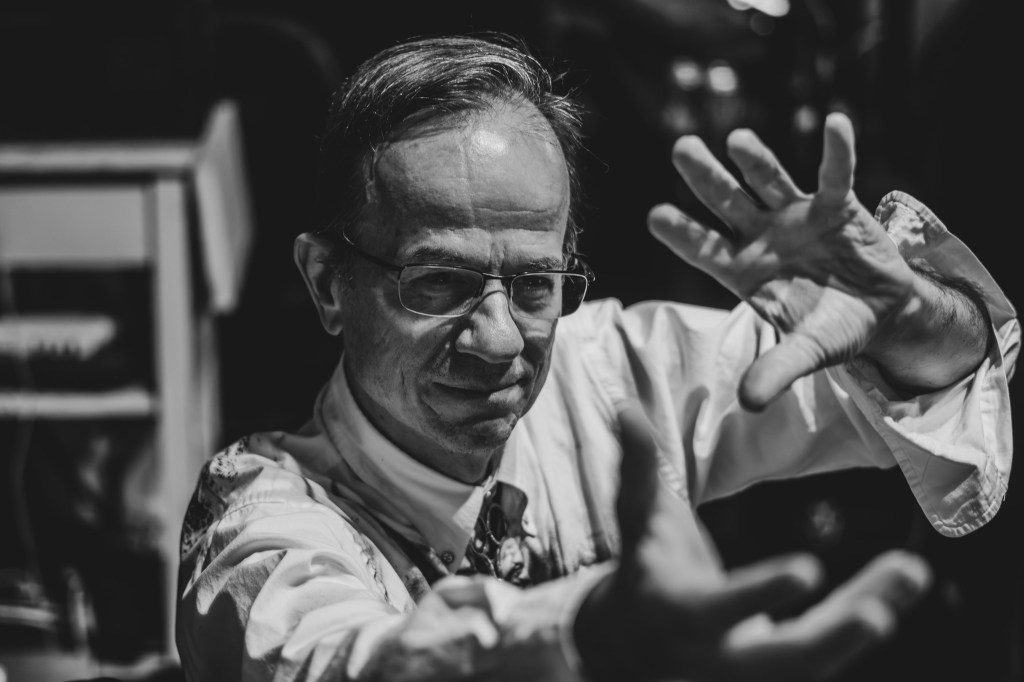
Bill Taft. Photo by Ben Garden

Eli’s awesome. He’s been in Chicago for a long time. He’s on the Three Lobed record label and has a couple albums out for them. When I first met him, he had a lot of that sort of American primitive, modern, interpretive John Fahey but on electric guitar kind of thing happening. He has a great album out with Cameron Knowler called Anticipation. It’s mostly acoustic. I love that album.

He’s branched out into some other things that involve a little more improvisation with people than that genre label might lead someone to believe. He’s a really interesting player who plays very differently from me. We’ve done a couple of shows together over the years—in Chicago and Gainesville. He’s a great guy to hang with.

The last time I saw you play at Railroad Earth was with Peter DiStefano from Porno for Pyros. Will that round of touring yield a record?

We recorded! We were just talking to someone that wants to put it out, and we have to decide what we want to put on the record. That whole tour was improvised music except for a couple of Peter’s songs. The recording is just improvising together for several hours. There’s great stuff there, but sifting through four or five hours of improvised music is an important and necessary step to getting a 45-minute record out of it. After this tour, I’ll have some time to sit down and do my sifting. Peter might be sifting already. We’ll send things back and forth to decide what’s good and what works with everything else. It’s in the works!

How did you meet Peter?

I was on one of the MSSV tours. We ended up in Los Angeles at this great club called Zebulon, which used to be in Brooklyn. I used to hang out there and play when I lived in Brooklyn. But they moved to L.A. so I play there in L.A. now.

It might have been the Human Reaction tour. He’s buddies with Watt, so that’s the real connection. I didn’t know him at all. I remember looking down when I was about to start playing and he’s standing there in the front row, right in front of me, looking at me with his arms folded, wearing his leather jacket. Of course I know who he is, so I’m like, “Okay, time to play” [laughs]. We did the set. Afterwards I knelt down and said, “Hey!” I talked to him briefly and he was super nice.

At the time, he’d been getting into improvised music. Maybe he’d asked Watt about me or Watt told him about me or whatever. So he came to the gig to check it out. He was just really kind and we hit it off. We ended up hanging out and I would go to L.A. for other stuff and we’d get together and play in a duo and hang out. We’d have dinner and talk about music, and we came to be friends. We did that tour a couple years ago. At that point, I was getting more into singing and writing songs like that in whatever my own way is. He was getting more into improvised music. We both saw it as an interesting thing to do where we could learn from each other about these things that we’re exploring a little more, and see what we end up with together. That was kind of the premise of that, which was a really cool thing to do.

Mike Baggetta, Eli Winter, and Bill Taft play Railroad Earth. Fri., Nov. 6. $20. 8:30 p.m.

If you have enjoyed reading this post, please consider donating to RadATL. Venmo to @Chad-Radford-6 or click on the PayPal link below.
Donate with PayPal

RadATL’s Live Music & Events Calendar

A good night in Heaven at the Masquerade. Photo by Elena de Soto

Click here to submit shows and other events for consideration.

Sunday, November 1

— Fabio Frizzi performing the Frizzi2Fulci concert with the F2F band. $34.10 (adv). $44.61 (day of). 6 p.m. (doors). 7 p.m. (show). The Garden Club at Wild Heaven (West End)

Monday, November 2
— Monday Night Creative Music feat. Maya Bennardo and Ben Shirley. 8 p.m. Eyedrum.

Thursday, November 5
— Shady Bug, Strumbrush, Safety Switch, and Nico! $10 (adv). 7 p.m. Eyedrum

Click here for more show listings

Friend Less (feat. Jon Mueller) and Katherine Young play Eyedrum on Thursday, October 1

Jon Mueller of Friend Less
Photo by Mike Norris


On Thursday, October 1, percussionist Jon Mueller brings his Friend Less project to Eyedrum, unveiling material from his two most recent EPs, titled Energy Rippers and Logic of Relics (with Bundy K. Brown and James Plotkin).


Both releases build upon layers of hypnotic rhythms, drones, and acoustic feedback that coalesce, revealing hidden dimensions of sound at every turn.
Mueller studied jazz drumming with Hal Russell and Indian classical singing with La Monte Young and Marian Zazeela—focusing on microtones, sustained vocal tones, and ragas.

Katherine Young
Photo by John Ramspott

Over the years, he has worked with everyone from Bon Iver in the group Volcano Choir and Collections of Colonies of Bees to Olivia Block, Rhys Chatham, Jarboe, and Z’ev.

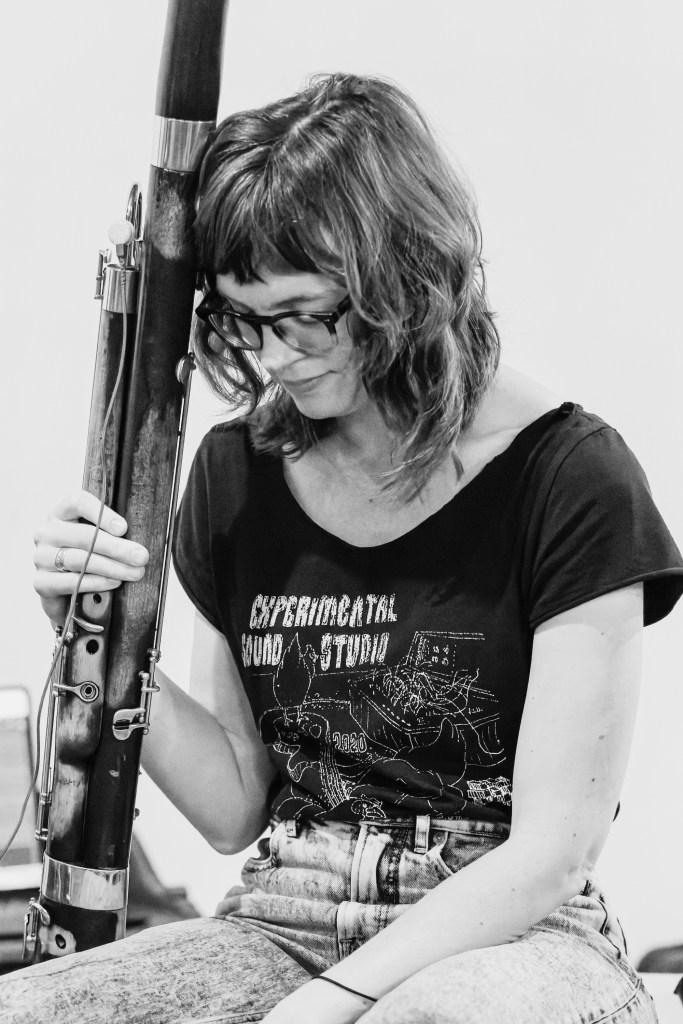
Composer and improvisor Katherine Young opens the show with a solo performance, unveiling new works for bassoon and electronics.

Jon Mueller’s Friend Less plays Eyedrum on Thursday, October 1. Katherine Young also performs. $15. 8 p.m. Eyedrum Art & Music Gallery, 515 Ralph David Abernathy Blvd SW, Suite A3.

If you have enjoyed reading this post, please consider donating to RadATL. Venmo to @Chad-Radford-6 or click on the PayPal link below.

Donate with PayPal

Video Premiere: Sunset Honor Unit’s ‘Let The Wild Ones Run Free’

Sunset Honor Unit. Photo by David Tabor

There’s a famous scene in Alfred Hitchcock’s 1946 film Notorious in which Ingrid Bergman and Cary Grant share a seemingly supernatural kiss. Their movements unfold with ghostly fluidity, suspended somewhere between dream and reality, as though time itself is both sped up and slowed. Sunset Honor Unit’s video for their latest single, “Let the Wild Ones Run Free,” evokes a similarly haunting motion, albeit achieved through an entirely different cinematic language.

The song offers a first look at Sunset Honor Unit’s upcoming album, In the House of the Highest Dead Ends, due out October 2. If the striking visuals on display here are any indication, the group is entering a wholly new era with confidence, creativity, and a willingness to blur the line between the ordinary and the uncanny.

Directed by one of the band’s co-leads Drew Kirby, and shot by filmmaker David Tabor, the video unfolds as an ambitious single-shot take on a night in the life of Sunset Honor Unit. The camera follows the band through twisting basement corridors on a quiet journey, drawing viewers deeper into the song with every turn, as if the walls themselves are shifting around the performers.

Filmed in drummer John Restivo’s basement, the production was assembled entirely in-house with a cast of a half-dozen friends and collaborators.

“Let the Wild Ones Run Free” is a reintroduction to Sunset Honor Unit’s cosmic, alt country, folk pop and psychedelic balladry while expanding upon the group’s sonic identity. Here, the group is spearheaded by singers and guitar players Drew Kirby (CDSM, Mothers) and Jake Chisenhall (Delorean Gray, Floral Portrait). For this latest release, the lineup is filled out by drummer Restivo (CDSM), keyboard player Jason Bronson (Floral Portrait), and bass player Miller May (Misnomer).

More than a simple preview, “Let the Wild Ones Run Free” serves as a statement of intent. Between its mesmerizing single-take visuals and the band’s expanding musical vision, Sunset Honor Unit seems poised to step confidently into its next chapter, embracing the strange, the beautiful, and the uncanny in equal measure.

Sunset Honor Unit headlines an album release party at The Earl on Saturday, October 3, with Spencer Thomas, Flat Tired, and Feltie.

If you have enjoyed reading this post, please consider donating to RadATL. Venmo to @Chad-Radford-6 or click on the PayPal link below.
Donate with PayPal

Anne Richmond Boston reclaims lost time with ‘I Should Be Happy’


Anne Richmond Boston, the Swimming Pool Q’s singer, possesses a voice that threads sweetness with steel. That balance is preserved with crystalline brilliance on her long-shelved second solo album, I Should Be Happy.

The album’s 15 songs were originally recorded in the early ’90s with producer Rob Gal at Atlanta’s Snack ’n’ Shack Studio, but remained unreleased for decades. In November 2025, the album arrived via DB Recs—the labels first release since 1992—proving that numbers such as I Should Be Happy’s title track, “Torn Apart,” and “Who Cares” are timeless. I Should Be Happy is a quiet and powerful reclamation for Boston, that finds grace in the wreckage of these once-abandoned tunes and turns them into something luminous.

The songs have been reshaped and enhanced by David Barbe and Jason Nesmith of Athens’ Chase Park Transduction, both of whom recast the album with a delicate touch and a clean spotlight on Boston’s supple and searching voice. Here, Boston leans into a warm palette with flashes of jangling pop that nod toward R.E.M., particularly in the crisp sway of “Give In.” 

The alchemy that arises between “Carry Me” and “Bottle Of Sleep” is fraught with worry while remaining smart, sophisticated, and smooth, shifting from a troubled ambiance to a confident stride.

Other songs, such as “Torn Apart” and “Gone” carry a lived-in gravity, as their arrangements brush against folk and Americana while maintaining the melodic clarity that defines Boston’s songwriting. Elsewhere, “Dark Room” and “You Planned It” tap into a more electric current, recalling the Swimming Pool Q’s at their most fluid while allowing space for sharper emotional edges. Even the cover songs—“The Wind Cries Mary” and “The Music Weaver” among them—feel like conversations filtered through Boston’s distinct tonal patience.

Tenderness runs underneath it all, perhaps most evident in the spare moments, where piano or acoustic textures give her voice room to hover. It’s here that time becomes the album’s greatest collaborator. What once might have been a promising follow-up to 1990’s The Big House of Time now plays like an album that stands apart—a document of endurance and resolve.

Anne Richmond Boston plays Wax N Facts Records’ 50th anniversary party on Sunday, July 19, with Pylon Reenactment Society, All the Saints, the Swimming Pool Q’s, Uncle Green, Helionaut (w/ Paul Melançon), and Kevin Dunn’s Unresponsive in Malibu. $34.04. 5:30 p.m. (doors). 6:30 p.m. (show). Variety Playhouse.

If you have enjoyed reading this post, please consider donating to RadATL. Venmo to @Chad-Radford-6 or click on the PayPal link below.
Donate with PayPal

David J of Bauhaus and Love and Rockets plays Electron Gardens on Thursday, June 18

David J Haskins. Photo by Milla Reynaud

For more than four decades, bass player, songwriter, poet, and raconteur David J Haskins has occupied a singularly mystical place in underground music. Whether anchoring the shadowy architecture of Bauhaus, shaping the widescreen dream-pop of Love and Rockets, or pursuing a rich and eclectic solo career, David J has always treated performance as something closer to ritual than mere entertainment. On June 18, he returns to Electron Gardens Studio in Avondale Estates for an intimate Summer Solstice celebration. It’s a seasonal companion to the Winter Solstice-themed performance he brought to Electron Gardens last December.

Poet Lisa King opens the show reading works that are steeped in alchemical symbolism, dreamlike themes of transformation, and imagery drawn from woodland creatures, coastal landscapes, and the unseen currents connecting them all. Her words will be accompanied by atmospheric soundscapes created by Penelope Courtney, creating an immersive prelude to the music.

The Hot Place set the music in motion with a stripped down lineup featuring King performing alongside guitar players Jeff Calder and Mike Lynn, playing a few songs from The Language of Birds and the 2022 self-titled LP.

James Hall of Mary My Hope and Pleasure Club joins the bill performing a solo set.

David J will draw from every corner of his catalog, playing older material alongside selections from his latest release,Tracks from the Attic Revisited—10 songs taken from his sprawling 2024 demo anthology, reworked, rewritten, and reinterpreted.

The Revisited album transforms decades-old home recordings into a fully realized collection shaped by four decades of artistic growth. He’ll reel through a few fan favorites that have followed him across decades and continents.

As the evening reaches its conclusion, guests will join David J on stage for a communal finale: James Hall will join in to collaborate on a handful of songs, as will King and Calder from the Hot Place, culminating in what promises to be one of the summer’s most memorable musical gatherings.

David J plays Electron Gardens Studio in Avondale Estates on Thursday, June 18. With Lisa King, James Hall, and the Hot Place. $50. 7 p.m.   

If you have enjoyed reading this post, please consider donating to RadATL. Venmo to @Chad-Radford-6 or click on the PayPal link below.

Donate with PayPal

Setting and Brainwolrds play the Earl on Thursday, May 14

Setting. Photo by Graham Tolbert

The North Carolina Piedmont-based outfit Setting finds three deeply intuitive musicians—Nathan Bowles, Jaime Fennelly, and Joe Westerlund—summoning rhythms and textures from deep within the Appalachian soil.

The group’s collective resume boasts contributions to projects such as Mind Over Mirrors, Califone, Pelt, Sylvan Esso, Black Twig Pickers, Acid Birds, and Jake Xerxes Fussell. In Setting, these disparate histories are distilled into a transportive sound that unfolds like an extrasensory conversation among musicians who know when to push and when to leave space in their music.


The album’s meticulous textures underscore the warmth and flow of a group that moves as a single organic unit, blending synths, banjo, zithers, cassette loops, keyboards, and hand percussion into hypnotic patterns that drift between exploration, minimalism, and ecstatic improvisation. The song “Heard a Bubble” shimmers and expands with a patient glow. “Derring-do” builds on a locomotive pulse that gathers force until it rattles the walls and lifts the roof clean off.

“Gum Bump” swirls like a weather system gathering at the horizon. Its slowly blooming pulse of harmonium, guitar, and percussion draws listeners into a meditative state. Each number builds, illustrating a singular gift for making expansive, transcendent music that blurs the lines between ritual and revelation, culminating in an immersive journey where every rhythmic turn opens onto a new horizon.


Director Morgan Maassen’s video for “What Kind of Fish is a Turtle,” offers a visual accompaniment to the song’s slowly-moving synth waves with striking detail.

For Thursday night’s show, Atlanta guitarist Mason Brown of Maserati makes a rare appearance performing under the name Brainworlds.


With Brainworlds, Brown makes music that feels like a transmission from the outer reaches of the cosmos—propelled by a motorik Krautrock drift. Each song unfolds in hypnotic layers of pulsing rhythms and spiraling synthesizers.

Brown’s immersive soundscapes provide an ideal entry point into the night’s meditative terrain.

$20. 7:30 p.m. (doors). 8 p.m. (show). The Earl. 488 Flat Shoals Ave SE.

If you have enjoyed reading this post, please consider donating to RadATL. Venmo to @Chad-Radford-6 or click on the PayPal link below.

Donate with PayPal

Shane Parish plays Eyedrum’s Monday Night Creative Music Series on May 11

Shane Parish. Photo by Courtney Chappell

On Monday, May 11, Athens-based guitarist, composer, and improviser Shane Parish plays two sets as part of Eyedrum’s Monday Night Creative Music Series.

The first set features Parish performing solo selections from his latest album, Autechre Guitar, a striking collection that recasts the intricate electronic structures of British duo Autechre for acoustic guitar. What seems an unlikely translation becomes, in Parish’s hands, an act of revelation—stripping away circuitry to expose the skeletal beauty of Autechre’s looping, asymmetrical phrasing and shifting repetition, rendering each number with breathtaking precision and warmth.

This kind of imaginative transformation has long defined Parish’s work. Whether fronting Ahleuchatistas or reinterpreting sea shanties on Liverpool, Shane Parish has long balanced Appalachian roots, experimental composition, and a quietly dazzling command of the guitar.

On Repertoire, he turns his attention to a wide-ranging set of compositions—from Alice Coltrane to Kraftwerk—recasting them as intricate solo guitar studies that highlight both his technical virtuosity and instinct for reinvention.

For the second set, Parish reunites with longtime collaborator and multi-instrumentalist Libro (Michael Libramento). Libro joins Parish on drums for an improvisational duo performance, offering another glimpse into the pair’s deeply expressive approach to sound.

Read more about Shane Parish’s latest album in my Flagpole Magazine feature story, “Shane Parish Bridges Wood, Steel and Circuitry with Autechre Guitar.”

$20 (suggested donation). Music 8-10:30 p.m. Eyedrum Art & Music Gallery. 

If you have enjoyed reading this post, please consider donating to RadATL. Venmo to @Chad-Radford-6 or click on the PayPal link below.

Donate with PayPal

The Messthetics and James Brandon Lewis ignite with ‘Deface the Currency’

The Messthetics (from left: Anthony Pirog, Joe Lally, and Brendan Canty) with James Brandon Lewis.
Photo by Pat Graham

The Messthetics and James Brandon Lewis’ latest album, Deface the Currency (Impulse!), captures an increasingly bold and rebellious sound for the ensemble. Drop a needle on the opening number and the barreling rhythms explode with force. Drummer Brendan Canty and bass player Joe Lally have spent a lifetime honing their shared musical instincts in Fugazi. With the Messthetics, guitarist Anthony Pirog and saxophone player James Brandon Lewis elevate their collective efforts to a higher plane of consciousness, communication, and chemistry, distilling punk, hardcore, free jazz, and the avant-garde into a singularly defiant spirit.

Born from long stretches on the road and captured in a blur of first and second takes, Deface The Currency trades polish for immediacy without sacrificing precision. 

Songs such as “30 Years of Knowing,” “Rules of the Game,” and “Serpent Tongue (Slight Return)” lock into grooves that are both grounded and volatile. Each song stretches, collapses, and builds again, veering from tightly coiled funk to an ecstatic squall. Pirog’s guitar fractures and refracts around Lewis’ saxophone, as both move with urgency toward chaos, but always maintain structure.

“Serpent Tongue” is the album’s grand finale, recalling moments from the Messthetics and Lewis’ previous, self-titled album. Here, everything is pushed forward by a brighter fire.

Of course, live and in the moment is when the music truly ignites.

The Messthetics and James Brandon Lewis play The Earl on Monday, April 27. $20. 7:30 p.m. (doors). 8:30 p.m. (show).

If you have enjoyed reading this post, please consider donating to RadATL. Venmo to @Chad-Radford-6 or click on the PayPal link below.

Donate with PayPal

‘Benjamin Smoke’ screening at The Plaza Theatre on Wednesday, March 25


Twenty Six years after directors Jem Cohen and Peter Sillen released the documentary film Benjamin Smoke, the story endures, capturing a ghost in the grain of Atlanta’s underground music and mythology.

Shot throughout the 1990s in Cabbagetown, the film traces the ragged, incandescent life of Benjamin (born Robert Dickerson), a poet, drag performer, and frontman for the bands Smoke and the Opal Foxx Quartet. 

What unfolds is a collage of moments—equal parts beauty and abrasion. Cohen (Fugazi Instrument) and Sillen’s lens drifts through cluttered streets, dimly lit stages, and unhinged conversations, capturing a figure who existed in defiance of permanence. Benjamin’s world is one of contradictions: confrontational yet vulnerable, self-destructive yet searching, rooted in the decaying edges of a city then teetering between neglect and reinvention.

The screening also serves as a reunion of sorts for those who orbited that era. An introduction by Film Love’s Andy Ditzler and Bill Taft (Smoke, Opal Foxx Quartet, Hubcap City, W8ing4UFOS) sets the stage, followed by a post-show discussion featuring Taft along with friends and cohorts Clare Butler, Rosser Shymanski, Laurie Stevens, and Tom Zarrilli.

For anyone who remembers—or longs to understand—Atlanta in the ‘80s and the ‘90s, this event offers a chance to sit with a life lived in fleeting moments, without apology. It’s also a chance to explore the beauty and unease of a scene that refuses to stay buried.

Wednesday, March 25. $16.49 (adult). $13.50 (seniors, children, and military) 7 p.m.

If you have enjoyed reading this post, please consider donating to RadATL. Venmo to@Chad-Radford-6or click on the PayPal link below.

Donate with PayPal