
Composer and trumpet player Russell Gunn leads the Afro-futuristic jazz big band the Royal Krunk Jazz Orkestra, featuring Dionne Farris, for a live-streaming performance at the Rialto Center for the Arts on Saturday, July 25. Music starts at 10 p.m.
Composer and trumpet player Russell Gunn leads the Afro-futuristic jazz big band the Royal Krunk Jazz Orkestra, featuring Dionne Farris, for a live-streaming performance at the Rialto Center for the Arts on Saturday, July 25. Music starts at 10 p.m.

Chris Frántz is best known as a songwriter, producer, and founding member of Talking Heads and Tom Tom Club. His sprawling and stylish drumming played a key role in pushing post-punk and new wave inflections beyond the commonly held notions of what constitutes rock ‘n’ roll, while always remaining at least three steps ahead of his contemporaries.
In a new memoir titled Remain In Love: Talking Heads, Tom Tom Club, and Tina (St. Martin’s Press), Frántz offers a look inside his storied life, recalling tales of meeting Talking Heads singer and guitarist David Byrne while studying at Rhode Island School of Design in the ‘70s, and shaping new facets of creativity in popular music alongside his wife and bass player Tina Weymouth.
On Wednesday, July 22 at 8 p.m. (Eastern), A Cappella Books hosts Frántz in a Zoom conversation with yours truly. We’ll discuss everything from reconciling art and live music on stage and scoring hits with Talking Heads songs such as “Psycho Killer” and “Burning Down the House” and Tom Tom Club’s “Genius Of Love” and “Wordy Rappinghood” to life in the modern world.
Our interview will be followed by an online Q&A session with everyone who tunes in. Tickets are limited to 100 guests. Pre-order a signed copy of Remain in Love via A Cappella Books to receive your private invitation via email. Signed copies of the book will arrive via shipping or local delivery (where applicable) shortly after the interview.
Head over to A Cappella Books to pre-order Remain In Love: Talking Heads, Tom Tom Club, Tina.


Tune in on Tuesday, July 21, as Sonic Youth drummer and Vampire Blues label owner Steve Shelley joins British record connoisseur and music promoter Steve Shepherd for a Gimme Country “DJ For A Day” set at 1 p.m. (EST).
Say hello during their live text-chat during their set.
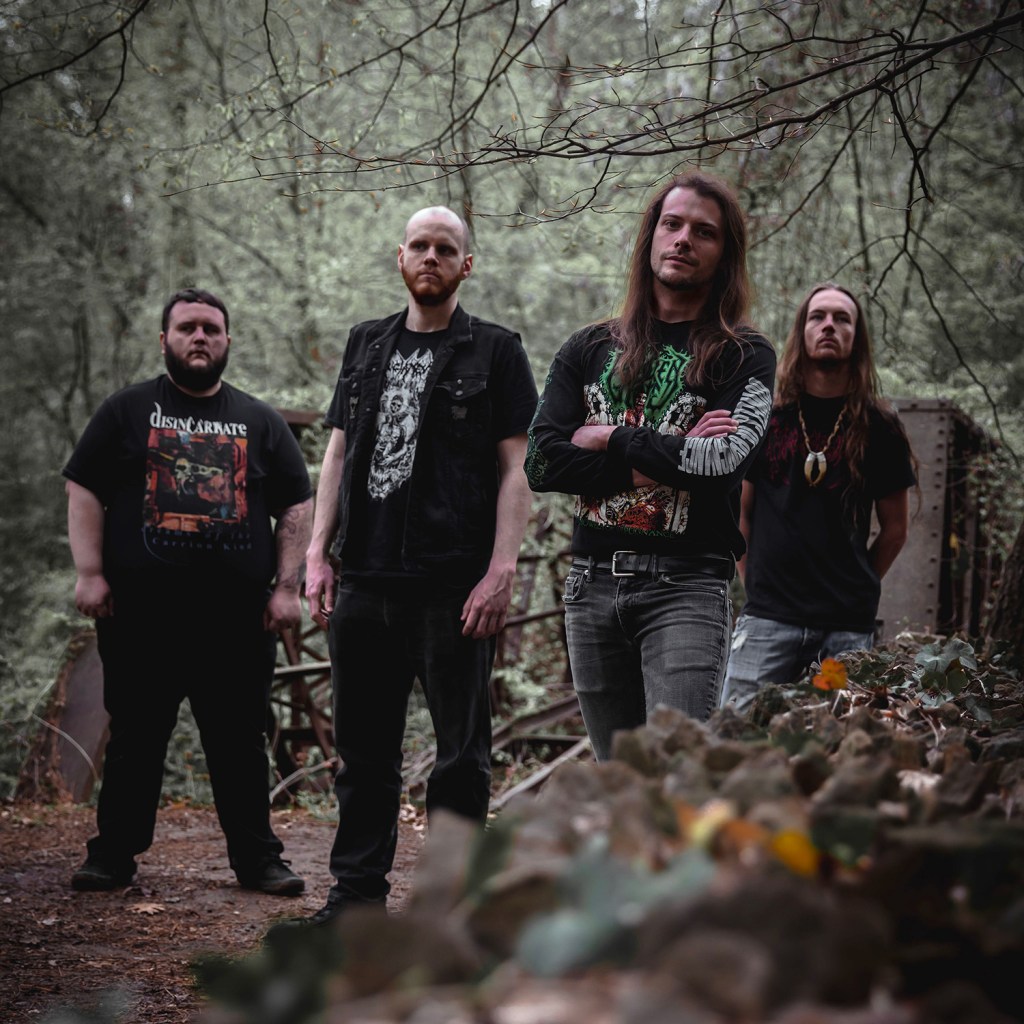
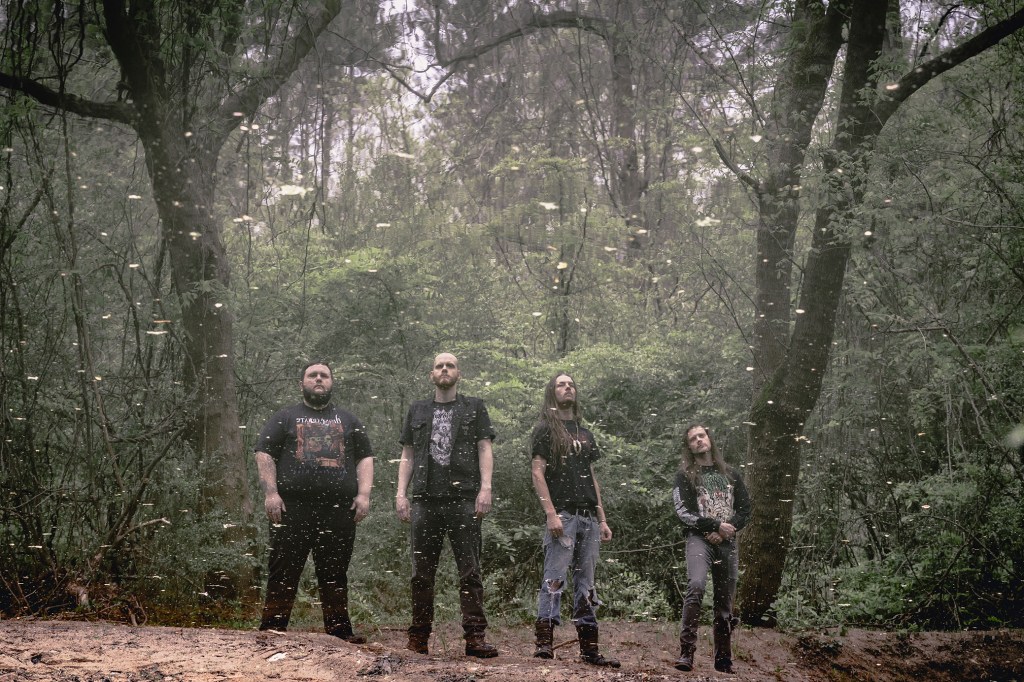
Since 2014, Cemetery Filth’s singer and guitarist Matt Kilpatrick and guitarist Ryan Guinn have methodically built the foundation for a classic death metal assault on the senses. The group’s debut album, Dominion, explodes with lightning-fast guitar riffs and solos, rapid-fire drumming, and demonic growls with enough chilling fury to light a path from your turntable to your grave—just in time to hear the coffin lid slam shut. With a current lineup featuring bass player and backing vocalist Devin Kelley and drummer Chris McDonald, Cemetery Filth channels nonstop intensity into songs with titles such as “Paralytic Scourge,” “Festering Vacuity,” and “Devoured By Dread.” Dominion materialized April 13 digitally and on CD and cassette via the Athens-based metal label Unspeakable Axe Records. In June, vinyl copies appeared bearing the mark of Atlanta’s Boris Records. With LPs in hand, Kilpatrick took some time for a deep dive into the making of the album’s dark ruminations on death metal.
Chad Radford: Oftentimes, the greatest songwriting is crafted to be open-ended so it can mean different things to different people. Dominion, means sovereignty or control. It also means the territory of a sovereign or government. Both definitions light up my brain with ideas, particularly following the recent social and political upheaval we’re experiencing. But these songs predate what’s happening now. Was it important for you to create an album that has timeless qualities?
Matt Kilpatrick: It’s always been important to us for our music to not seem like a product from a particular time—which may sound completely hypocritical to some people considering we get lumped into the “old school” death metal category. Truth be told, we just prefer and write death metal that hasn’t strayed too far away from the core elements of the genre. We aren’t trying to sound like the bands from the ’90s for any reason other than that those releases are still some of the most viciously brilliant albums in the genre.
But we write what moves us, and I think to all of us, we wanted to make music that honored our influences, whether they’re old or new, and deliver a product where you can feel our passion for the music—like our influences, and the pioneers of the genre did.
The lyrics for the title track are a bit of a metaphor for death metal as an artform. It’s my disgust at the current trends in death metal, and the over-abundance of musicians from other music scenes suddenly discovering death metal, and trend-hopping and flooding the internet with boring, uninspired new projects that sell more T-shirts than they do actual music.
“Dominion only welcomes he who lets the old ways brew; rotting ways require an obsession beyond sanity; with time’s passing, you’re forgotten leave us in ataraxy.” These lines in particular are me emphatically stating that this is not a form of music you can listen to for a week, several months, or even several years, and be able to write your own version of the style. Death metal has so much going on within it. And it is my firm belief that you have to have a sickly obsession with it, for many years, to really understand how to create death metal that has the same energy and conviction as the gods that formed the genre’s classics.
That said, to those reading, please note that my use of the pronoun “he” by no means infers that only men can write death metal. That was something I wish I had realized and changed before publishing the music and lyrics. Some of my favorite bands, and favorite musicians in modern death metal are women, both cis and trans. I apologize to anyone it could possibly offend or turn off. Today’s current events only emphasize how important it is for us as a band to show support and love to all metal fans—no matter their walk of life.
I’ve always loved lyrical content that can be read and applied in different ways. Chuck Schuldiner of Death was known for wrapping life lessons into his lyrics, but carefully crafting them in a way that could be heard differently to different people. I think he got that train of thought from lyricists like Ronnie James Dio, who was arguably metal’s greatest metaphorical writer. While some of my lyrics may be more direct, I am heavily inspired by both of these men and the idea of using metaphors that can ring true through time.
Tell me about the concepts at work behind Dominion?
I would probably say the only single unifying theme on this album is just “DEATH METAL.” That’s why the lyrical concept behind “Dominion” kind of became the perfect subject for the album’s title track. The rest of the songs on the album deal with a wide array of lyrical concepts:
—“Subduction” is just a death metallized fictional tale based on the geologic process of plate tectonics recycling the earth and essentially “re-starting” ecosystems and life as a whole.
—“Exhumed Visions” is a tale about finding strength within yourself, remembering your goals, re-embracing them, and moving forward as the person you want to be.
—Songs like “Paralytic Scourge,” “Aeons in Dis,” “Churning of the Shallows, and “Devoured By Dread” all tell tales of cosmic horror. There are metaphors deeper in a few of those if you look for them.
—“Festering Vacuity” may be the most reality-focused lyrics on the album aside from the title track. It’s about our blatant disgust for a world where ignorance is valued over knowledge, and the toxic trend that follows when you have people of power championing ignorance to their already dumb sheep.
You are credited with writing the lyrics on Dominion. Are you the sole-songwriter? Do you write the musical arrangements as well?
I’m actually not the sole songwriter and consistent member. My fellow guitarist in the band, Ryan Guinn, has been with me since the very beginning, and is also the other prominent songwriter in the group. We both bring our ideas together and form the songs into what they are. Our bassist Devin Kelley, has been with us almost as long, and he also got to contribute a couple of riffs to songs. Both of these guys would help me arrange the riffs into actual song structures, and then we’d bring them to Chris McDonald, our drummer, to complete them.
Dominion was six years in the making. How did time unfold for this record, and how did the music evolve as you moved forward?
To be quite honest, most of the music on the album was written in the 14 months before recording. The oldest song on the record is “Devoured By Dread,” which was originally released on our 7-inch split with Australia’s Sewercide. We didn’t intend to re-record any old songs, but our drummer Chris threw out the idea of doing that one since it had changed a bit since the original recording.
We’ve always been a band that’s been split up between at least three states, and before we got Chris in the band, it was always very difficult to get everyone in the same room and working as a focused group to complete songs. We loved our old drummer very much, but at the time he couldn’t commit like we needed him to. Things never progressed while he was in the band. We’d get like one or two new songs done a year at most, and that’s pitiful. I’m not going to lie—a lot of that was personal disdain. It’s hard for me to “create” and get excited about a project if it seems doomed from the get-go.
It was extremely hard to put work into a project that seemed to keep tripping over itself. I think getting this line-up together finally gave me the confidence I needed in the project to write passionately again.
One of the dedications in Dominion’s liner notes goes to Morbid Angel guitarist Richard Brunelle. Do you think of Morbid Angel’s early take on death metal—Brunelle’s style in particular—as strong influences on Cemetery Filth?
Richard’s guitar playing was very instrumental in the creation of those amazing early Morbid Angel records. I don’t think a lot of people realize how important he was in the writing of both Abominations of Desolation and Altars of Madness.
Something about the vicious, barely controlled chaos of those records is so damn intoxicating still to this day, and in my opinion, without Richard on those records, they wouldn’t come close to the perfection that they are.
Though Death is my favorite band of all time, Morbid’s Altars is what I consider to be my favorite record ever released, and what I consider to be the world’s purest offering of ripping death metal. I’d say the insanity of that record has always been something Cemetery Filth has tried to match. We had once talked about covering “Suffocation” from it, but our drummer laughed and said we probably shouldn’t, because most of those songs are so insane that they are just barely held together. It’s really very astonishing how poignant that music still is to this day, over 30 years later.
Brunelle’s death was particularly hard for Ryan and I. We did not know him personally, but a very good friend of our band did, and was actually working with Richard on getting him back to playing music, and actually had started a death metal project with him. At the time, he was playing a horrible guitar that apparently couldn’t stay in tune when they played.
Ryan had an extra B.C. Rich Warlock guitar that he had been wanting to sell, and I sparked the idea of letting me, and our friend who worked with Richard, throw him some money so that all three of us could “donate” the guitar to Richard, who often played a Warlock during his days with Morbid Angel.
He was blown away when he received it, and couldn’t believe some guys he never even met would do that for him. He never saw himself as anybody special, but he was.
It was really hard to hear that he passed, but we like to think we gave him something that brought some refreshing inspiration to him in his last few months on Earth. And we certainly hope he realized how much he was loved by the metal scene.
The album is also dedicated to Michael Stewart and Bud Lancaster.
Both of these men were really close friends of the band, treasured members of the Southern / Atlanta-scene, especially to our drummer Chris.
Michael Stewart was the founding guitarist of Chris’s longest-running band, Ectovoid. He was a super talented dude, but more than that, just a great friend and passionate metal-head—and one of Chris’s closest friends in particular. He tragically passed away in 2016 due to an epileptic attack that went terribly wrong. He loved Cemetery Filth and we were honored to play the memorial show that Chris helped set up in his memory a few years ago. I really wish we could have seen what Stew would have gone on to do musically.
Bud Lancaster was another very close friend of Chris’s from Birmingham. I got to know Bud because he kind of became Ectovoid’s roadie and merch guy over the years. He was the sweetest, kindest dude. But like a lot of people these days, he suffered from terrible depression… and in late 2017, he decided he was ready to move on to the next world.
I honestly did not have enough time hanging with Bud or Stew, but I loved both of those guys a lot. There are just some people you instantly bond with. Bud and Stew were that for many people, and were cherished by the metal community here in the South. I hate that we lost both of them, and so close together. We all miss them terribly. I’m positive that they would be completely STOKED on our album and especially that their best-buddy Chris was a part of it… so it only made sense to make sure it was dedicated in their memory.
Dominion chugs along by creating an ambience, or a mood, or a moment in rhythm and texture. It’s not overly showy; more like Krautrock, or something like that, which is a deeply affective element with this record. Tell me more about the drawn-out instrumental bouts in songs like “Subduction,” “Paralytic Scourge,” and the title track?
Ah, thank you for that—I’m not sure that’s something we are even conscious of! We honestly craft songs according to “feel.” If there’s a part that is longer and more rhythm based, it’s that way just because it felt right to leave it that way. I think having sections where the music can breathe enhances a song. If we had vocals and solos over every riff it seems like the album would be one big blur, and that every track would sound far less unique from each other.
Death metal is a genre based around its instrumentation. The guitar riffs are what carry the song forward—they are the literal skeleton of any song. You can argue the drums are equally as important, but I will guess that most any band would agree that the riffs always come first.
I can’t speak for every death metal band in the world, but we have always crafted drums around the feel of the riffs. Chris McDonald—the drummer—joining the band went so smoothly and efficiently because he is a drummer that hears riffs and can quickly and fluidly apply a wide variety of beats and fills that compliment the riff. He’s literally told me “I’m just following what you guys are doing,” and the efficiency he has in that talent still impresses me to this day.
But really, any good death metal track is an arrangement of riffs that takes the listener on a journey. And like any journey, you have heavily narrated and intense parts, and then you’ll have parts where the story breathes and allows for the next big event in the tale to build up. So I guess if our instrumental sections of songs seem odd at times, they’re done intentionally to allow the next part to have an extra heavy or ripping impact on the listener.
Do you have a favorite song on Dominion, or is there one that resonates with you, maybe more than some of the others?
The favorite song for each of us probably changes often. If I had to choose one that is a particular accomplishment for me, it would be “Festering Vacuity.” It’s the only song I’ve ever written on my own, from beginning to end. That was a big goal of mine for this record, to contribute one song written completely by myself. Not to say that I dislike working with the other guys… I actually think a band’s best material comes from a band that does write together! But I wanted to prove to myself that I could write a full song, and the bizarrely jumpy, almost-manic sounding “Festering Vacuity” was the result.
If you were to sample one song to somebody to give them an idea of the full album, I would probably go back to “Churning of the Shallows” to be honest. That’s why we lead with that song as the big single that announced the release. It’s got a ton of different parts to it, and that’s always been a big part of Cemetery Filth’s writing style. We like our songs to evolve over time instead of following a predictable formula.
Dominion is out now via Unspeakable Axe and Boris Records.

Before Atlanta shut down over the COVID-19 pandemic, Wire played a show at Variety Playhouse on March 7, 2020. It was a Saturday night, and it was the last show I was lucky enough to catch before statewide shelter-in-place orders became too urgent to ignore.
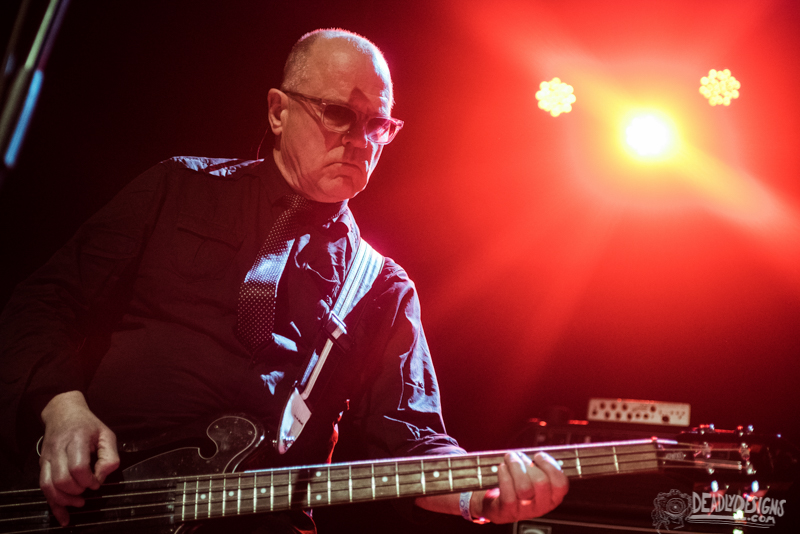
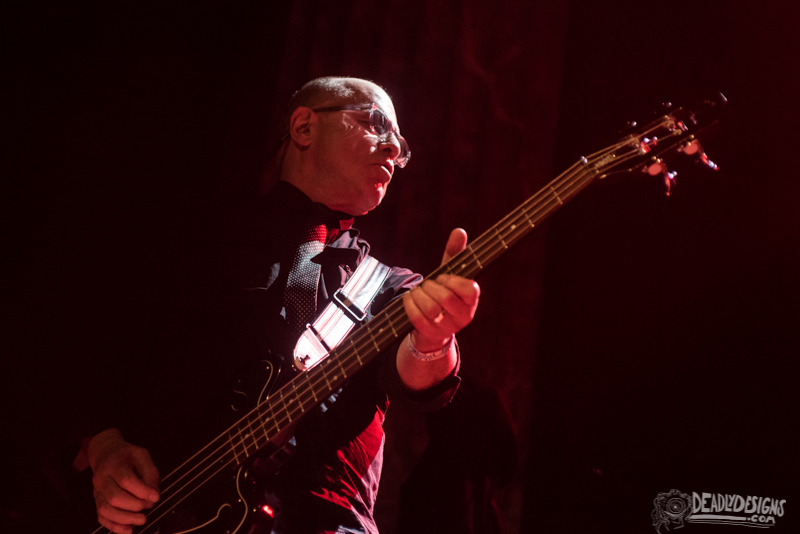
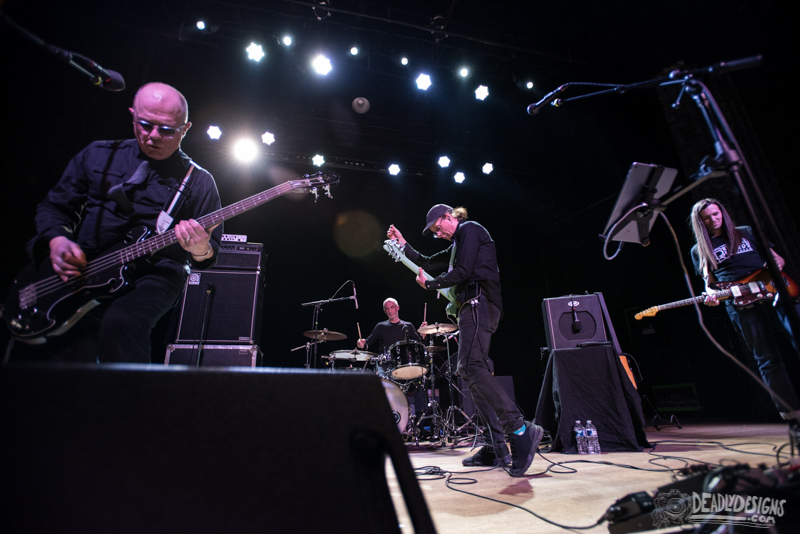
It had been a few years since the British post-punk legends last made an appearance in Little 5 Points. For this show, co-founding members singer and bass player Colin Newman, guitarist and vocalist Graham Lewis, and drummer Robert Grey, along with guitarist Matthew Simms—the latter of whom has been a member of Wire since 2010—were playing shows on the heels of releasing their most recent album at the time, Mind Hive.
Striking a balance between intimacy and intellect—punk reflexes and avant-garde instincts—lies at the core of Wire’s singularly introspective brand of art rock in the post-aughts. There’s a tactile energy between Newman and Lewis’ words and the drawn-out musical atmosphere that billows around them. Channeling this for the Variety Playhouse’s mostly full 1,000-seat room is no simple feat. But on March 7, Wire reached deep with a 19-song set underscoring the strengths of Mind Hive, while breathing new life into a handful of classic numbers as well.
Perhaps one of the most stunning moments of the night’s performance—aside from “Oklahoma” being an absolute barnburner—was the spacious reinvention of “Over Theirs.” The song, which originally appeared on Wire’s 1987 LP The Ideal Copy, is a barbed and paranoid lurker, cut from the digital textures and sparse rhythms of an era when synthesizers were still a new thing for a foundational British punk band to push forward. At Variety Playhouse, “Over Theirs” went to a dark, muscular, and more cavernous place than its Reagan/Thatcher-era origins, showing off wholly new depth and nuance in the song’s menacing nature. When placed alongside both older and newer numbers such as “Be Like Them,” “German Shepherds,” and “Ex-Lion Tamer” the song unfolded like a cautionary anthem for the darkness that still lies ahead.
Mind Hive has been a solid contender for album of the year, at least in my book. That is, until yet another Wire album arrived in June, titled 10:20. The new album is a collection of upgraded rarities, distilling Wire’s post-2010s stylistic growth into an exquisite and wholly new offering that’s bursting with self-references that reach all the way back to 1978’s Chairs Missing LP. More on that later, but sure enough, the freshly reinvented “Over Theirs” appears on the B-side in all of its ominous glory.
Photographer Mike White of Deadly Designs was there, too, and captured these images from the show.






Setlist
“The Offer”
“Be Like Them”
“1st Fast”
“Cactused”
“Morning Bell”
“Question of Degree”
“Over Theirs”
“German Shepherds”
“I Should Have Known Better”
“Patterns of Behaviour”
“Primed and Ready”
“Ex Lion Tamer”
“It’s a Boy”
“French Film Blurred”
“Oklahoma”
“Hung”
Encore:
“Outdoor Miner”
“Former Airline”
“A Touching Display”

On Friday, July 10, Kevn Kinney of Drivin N Cryin plays “Free Parking: Stay-cation,” the latest installment of his live-streaming solo performances on Facebook. Kevn will play some Drivin N Cryin classics and deep cuts along with some newer numbers he’s written. He’ll tell stories, tell jokes, and he might even offer up a few cover tunes. It’s a pay-what-you’d-like affair. Tune in from 8-11 p.m.
In the meantime, press play below to hear Chad Radford’s April 2019 podcast interview in which Kinney talks about reconnecting with Drivin N Cryin’s first LP, the group’s most recent album, Live the Love Beautiful, and looking within himself to find true happiness.
The National Independent Venue Association (NIVA) is calling on congress for financial relief for independent music venues across the the United States. The organization currently includes nearly 2,000 members in all 50 states and Washington, D.C. A recent survey of NIVA members revealed that, without financial assistance, more than 90% of the country’s venues face going out-of-business permanently. As result, NIVA is rallying behind a campaign that’s been dubbed Save Our Stages, and is pulling for the RESTART Act (S. 3814) to be included as part of the next financial relief package.
The bipartisan RESTART (Reviving the Economy Sustainably Towards a Recovery in Twenty-twenty) Act is led by Senators Michael Bennet (D-Colorado) and Todd Young (R-Indiana). If passed, the Act will expand upon the Paycheck Protection Program to work for businesses that have lost revenue while remaining closed as a measure to prevent the spread of COVID-19. Among other benefits, RESTART will also extend the PPP’s eight-week loan forgiveness period to 16 weeks for businesses whose revenue has declined by at least 25%.
Read NIVA’s letter to congress below, and click here to tell your legislators to save independent music venues.

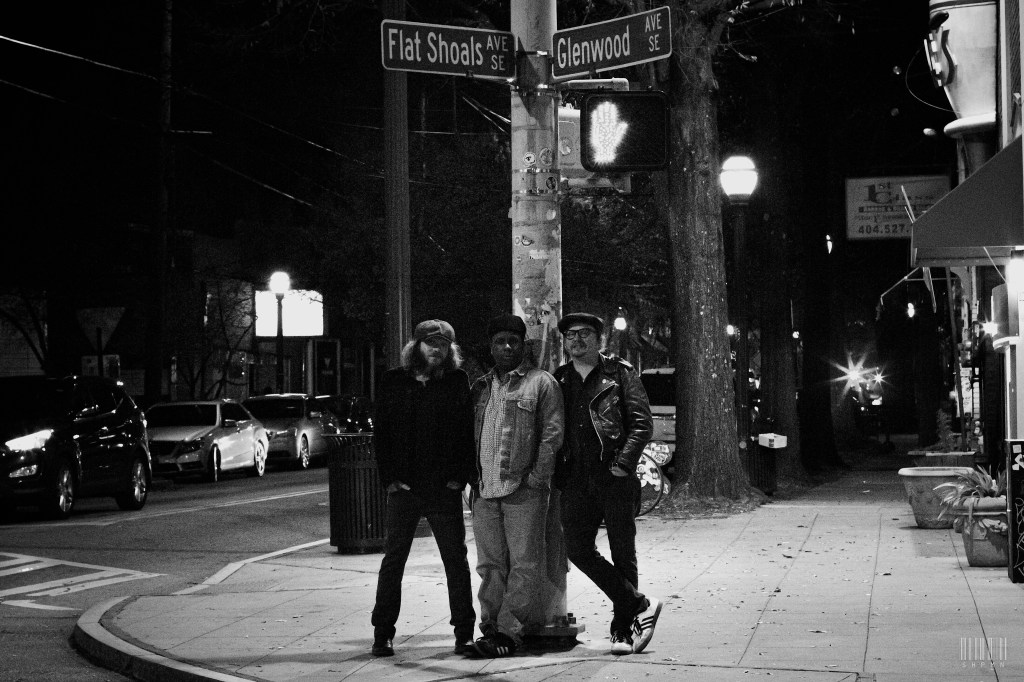
Young Antiques are at it again. Longtime friends and songwriting cohorts Blake Rainey and Blake Parris have convened with drummer John Speaks to craft Another Risk Of The Heart (Southern Lovers Recording Company), a new eight-song LP that’s teeming with phantasmal Southern power pop and rock ‘n’ roll storytelling.
Another Risk Of The Heart is the Atlanta trio’s first offering in nearly a decade, and it’s what Rainey calls “a love letter to the band.” Songs with titles such as “Euclid Creeper,” “Armies In The Alley,” and “’92”reaffirm the power and allure of the group’s hook-laden legacy. Guest appearances from Atlanta-rooted voices such as Kelly Hogan, Chris Lopez of the Rock*A*Teens, and Tom Cheshire, expand the group’s repertoire, while keeping each song planted firmly in the Atlanta music mythos. Rainey took a few minutes to talk more about the album.
“Euclid Creeper” feels like a powerful statement coming right out of the gate on this album. What did you have in mind when you wrote the song, and why you put this one front and center?
“Euclid Creeper” is about the band in our early days—roaming around Little Five Points and EAV bars and drinking and partying and “looking for a little light” outside of this neighborhood-rat existence, all of which kind of felt like living in a coal mine at times. It’s also about a return to form and doing this rock ‘n’ roll band again—albeit a little bit differently this time around.
I see Blake Rainey and His Demons’ 2016 LP Helicopter Rose as an homage to your early years spent growing up in rural Georgia, and the new Young Antiques LP, Another Risk Of The Heart, as a nod to your time in the city—Cabbagetown specifically. Are there parallels between these two records?
Personally, the parallel that I see between Helicopter Rose and Another Risk of the Heart is that both mark a turning point in my songwriting, as far as attention to detail and quality goes. I was proud of Rose at the time more than anything else that I had previously done, even though I could see its flaws like most of my albums. When I finished Risk however, and when we got the track listing in order, it was like nothing I’d ever accomplished before. It was quintessential ‘Tiques, in a nutshell, and to me the quality was steady from beginning to end, the band’s performances were much more together this time around, and with Risk I think we really hit on a formula for all of three us—John Speaks, Blake Parris, and myself. And today, we are already starting work on the next album.
When listening to your records, and even now, thinking about the stories and characters in your songs, my mind starts pulling threads about the landscape, neighborhoods, and how you fit into the environment. When you’re crafting songs do you feel particularly inspired by your surroundings?
I do. I can definitely look at something like an old run down building or a dirt road and think about what sound might accompany it. It’s an interesting thing to think about—writing music to describe something visually inspiring—like walking down the sidewalk and seeing a church steeple showing through branches in a winter sky. What does that sound like? Or noticing an old man on a park bench with a sack of beer at 9 a.m. These type of things can definitely help me paint a vivid picture in a song.
Tell me about the title, Another Risk of the Heart, and what it means to you?
On the surface, the title, Another Risk of the Heart, is akin to what Soundtrack To Tear Us Apart (the previous ‘Tiques album) was like: a description of where the band is or was at the moment. The overall theme of this album is a love letter to the band, like, “here we go again…” We’re here, giving this thing another shot. Getting back together, doing what we do best—having fun, making records.
And how about the songwriting that’s on display here; is there one song on the album that resonates with where you are right now?
“Questions” is my favorite song on the album, and with all of the frustration and fear that we have going on with authority figures at this very moment, it definitely resonates to me the most. The opening line is, “Yesterday I woke at dawn/With the police on my lawn/Never had they stayed so long until today.”
Even before the pandemic or the protests, it was the song that somehow brought everything together on the album and kept the pace where it should be. So far, it’s been one of the more overlooked tunes on the record, but I like how it serves a deep cut purpose. It’s also set in a quasi sci-fi future like “Armies In The Alley” is, and it’s a sister song to that one in many ways. There’s an authoritarian bent to both in the lines about showing your papers and your government tattoo and hiding out in cinemas from the authorities and all that. There’s also another cinema reference in “’92,” which is another favorite of mine. It’s a young love song set in 1992 about two high school misfits falling for each other over cigarettes and the cinema and skateboards.
Tell me about “Armies In The Alley.”
That one definitely feels Orwellian. A “lovely liberal in a dress” is new to town and is taken to the boulevard, even though it’s a risky move. The narrator is drawn to her because she is “without that fascist look.” The couple ducks in and out of alleys and the cinema to escape the oppressive authority outside—both literally and figuratively—while smoking and getting lost in film. To me it seems very close to reality or a past reality—just on the edge of science fiction. It also feels a little like what parts of Europe might have been like at times during WWII.
In the past, when writing about Young Antiques, I’ve dropped comparisons to Paul Westerberg and the Replacements. Over time, however, that seems like a pretty one-dimensional comparison. Who are some other songwriters that have influenced your writing and outlook on music?
I’m a big Replacements fan, no doubt, but I’m also a pretty big fan of rock ‘n’ roll and popular music in general. Right now, all I pretty much listen to is American jazz from the 1950s and ’60s. As far as songwriters go, I’m influenced by quite a few: Dylan, Ray Davies, Neil Young, Van Morrison, Jagger/Richards, Lou Reed, Elvis Costello, Strummer/Jones, Tom Waits, Bob Mould … I’m well versed in just about everything those guys have done. I’m leaving out a few, I’m sure.
How did you select the guests who appear on the album? Did you write songs with them in mind and approach them, or was it a more natural process?
John Speaks had been in the Jody Grind with Kelly Hogan and he was also old friends from that same era with Chris Lopez from Rock*A*Teens. Parris and I have known Tom Cheshire for years; he’s an old friend and a bandmate of mine (in the All Night Drug Prowling Wolves). So everyone involved is family in one way or another. I told Speaks, “We need a female singer on Goin’ Home.” He said, “Kelly Hogan.” I was like, perfect! We wanted gang backing vocals on “Euclid Creeper,” so I brought in Tom and Speaks brought in Lopez. I am a big fan of much of Chris’ songwriting, so that was extra special for me.
Chris and Tom came in separately and hung out all night and drank beer and sang their respective parts. It was amazing. Kelly had to do her part remotely in Wisconsin and the first time we heard her performances sent via the internet, we were like “Fuck. This is really good!”
Also, can you tell me what recording with this core lineup of you and Blake Parris teaming up with drummer John Speaks revealed about the songs or the chemistry that you share? I know that you and Blake have been working together since grade school. John, is someone who’s played shows with you, but hasn’t been in the studio with you, at least not for many years.
John is the drummer for the Young Antiques—no question about it. He joined the band in 2001-2003 and we recorded Clockworker with him and toured the Midwest to Chicago and the East Coast to NYC. That was the best time we’d had with any one drummer. When John left, we worked with another drummer, Kevin Charney, for a couple of albums before fizzling out. I moved on with two more solo albums with His Demons (Love Don’t Cross Me and Helicopter Rose). That band consisted of Joe Foy, Eric Young, and Aaron Mason (Nikki Speake and the Phantom Callers). Parris was performing with Volume IV and a variety of other bands around the city at that time. After that, John came into Boutique Guitar Exchange where I was working at the time and basically said, “You wanna get the band back together?” and Parris and I decided a reunion sounded like the right thing to do. So I put down the new solo material I was working on and started writing what would eventually become Another Risk Of The Heart.
I had no idea how comfortable or interesting we would sound when we got together. The time we spent bonding and performing in the early 2000’s has definitely played a big role in our overall chemistry today—plus we’re all better musicians individually at this point in our lives. It was the best decision we could have made.
Another Risk Of The Heart is out now.

Speaking truth to power has been standard operating procedure for Public Enemy since the group released its 1987 debut single, featuring classic cuts “You’re Gonna Get Yours,” “Rebel Without A Pause,” and “Miuzi Weighs A Ton.” Coming out of the gate strong amid the Reagan era, spouting Black outrage and ultra-political lyrical brilliance: “From a rebel it’s final on black vinyl / Soul, rock ‘n’ roll comin’ like a rhino,” Public Enemy made civil disobedience their calling card—their vocation.
Now, some 33 years later, the United States’ presidential administration goose-steps deeper into an Orwellian nightmare every day. The seemingly endless COVID-19 pandemic has killed nearly double the number of Americans who died as a result of the VietNam War. The streets in every major city are alive with fiery protests over police brutality. “The Terrordome” has come to your home.
The group’s co-founding vocalists, frontman Chuck D and hype man Flavor Flav, backed by powerhouse DJ Lord have risen again from the smoke and ash of so much turmoil with “State of the Union (STFU),” a new song and video that jump-starts Public Enemy’s timeless charge. When Chuck D raps, “History’s a mystery if y’all ain’t learning / End this clown show for real a state bozo / Nazi cult 45 Gestapo,” his intentions are made blisteringly clear. Now is the time to fight harder than ever against the forces of racism, tyranny, and oppression. “The rest of the planet is on our side,” Chuck says. “But it’s not enough to talk about change. You have to show up and demand change. Folks gotta vote like their lives depend on it, ’cause [they do].”
Invoking the power of the voting booth is an unexpected move in an era where the electoral system appears to have been hijacked; everyone from Russian President Vladimir Putin to Georgia Governor Brian Kemp have thrown wrenches into the gears at the poll booth. But the system is good and worth fighting for. It’s how laws are passed, and without it the Republic is lost. “Better rock that vote or vote for hell,” Chuck D raps as the song plays out.
Chuck and Flavor’s matter-of-fact delivery is particularly haunting in “State of the Union.” There is no joy when Flavor Flav delivers his repeating mantra: “State of the union, shut the fuck up / Sorry Ass mother fucker, stay away from me.” Chuck’s counter rhyme, “Vote this joke out or die trying,” is a no BS assessment from the weary but empowered outfit. The energy is propelled forward by DJ Lord’s spectral boom-bap rhythms and DJ Premiere’s bold, old school production. The cumulative experience and wisdom of Public Enemy’s decades-long legacy of navigating media pitfalls and broadcasting righteous sedition rings loud and clear under the hue of DJ Premiere’s modern sheen.
“State of the Union (STFU)” bears the marks of a more experienced outfit following P.E.’s 1980s peak when the group led the charge to “Fight the Power” in the streets of Brooklyn’s Bed-Stuy neighborhood, alongside hundreds—thousands of outraged New Yorkers. The instinct is there, sharper and more focused. Public Enemy has persevered in darkness amid eras of great change in the past. But when it comes to unfucking the world in this lifetime, the greatest obstacles lie ahead. STFU! Press play and let it ride.

On Friday, June 12, Kevn Kinney of Drivin N Cryin plays “Free Parking” episode 4, the latest installment of his live-streaming solo set on Facebook. Kevn will play some Drivin N Cryin classics and deep cuts along with some newer numbers he’s written. He’ll tell stories, tell jokes, and he might even offer up a few cover tunes. It’s a pay-what-you’d-like affair. Tune in from 8-11 p.m.
In the meantime, press play below to hear Chad Radford’s April 2019 podcast interview in which Kinney talks about reconnecting with Drivin N Cryin’s first LP, the group’s most recent album, Live the Love Beautiful, and looking within himself to find true happiness.

