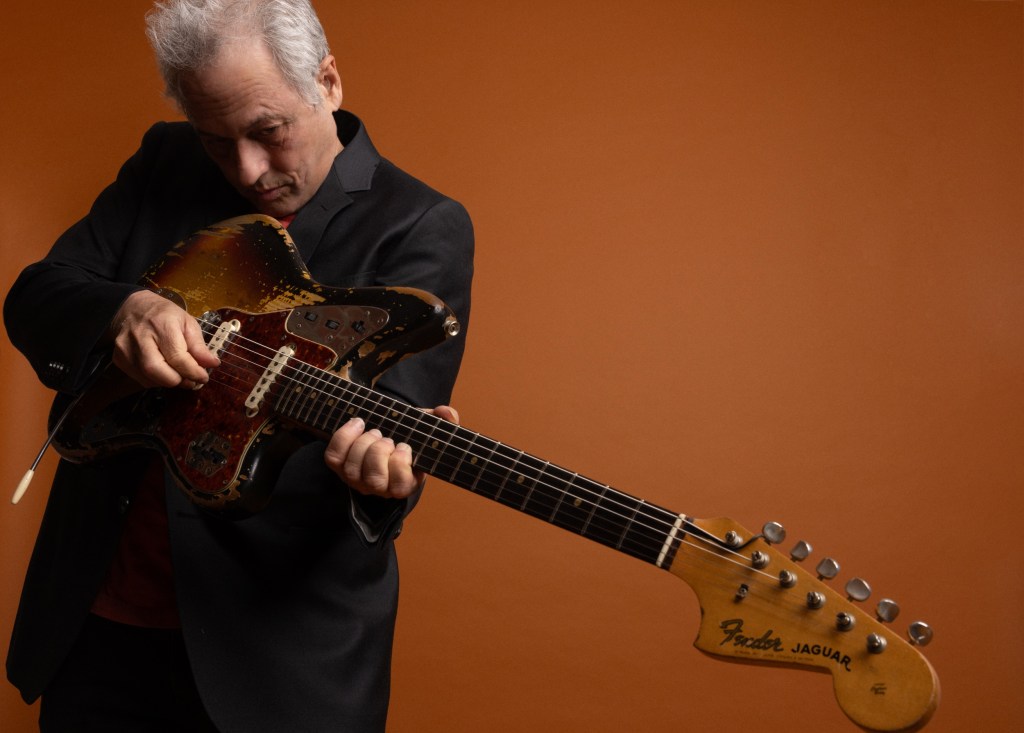
Marc Ribot is a shape-shifting guitar player whose style dissolves the boundaries between genres as quickly as it defines them. When Ribot takes the stage at the Garden Club on Friday, March 20, expect nothing less than a musical séance performed on six strings.
Ribot’s solo work stretches across a body of stark, deeply personal recordings, ranging from interpretations like Plays the Works of Frantz Casseus to the haunted drift of Silent Movies, and his latest release, 2025’s Map of A Blue City.
Ribot’s live sets rarely settle into anything so fixed. Rather, they unfold in real time: fragments of melody, bursts of free improvisation, and ghostly echoes of everything from Haitian classical music to downtown New York noise. It’s a language that Ribot has spent decades refining alongside collaborators like Tom Waits, Elvis Costello, Robert Plant, and John Zorn, helping shape records that are as strange as they are timeless.
That restless spirit traces back to Ribot’s early days studying under Frantz Casseus and cutting his teeth in New York’s late-’70s underground before surfacing as a defining voice in projects like John Lurie’s the Lounge Lizards. Since then, he’s become a connective thread between worlds, jumping from avant-garde jazz to roots music, film scores, and beyond.
On Friday night, Ribot will perform solo on acoustic and electric guitar, stripping everything down to instinct and possibility. It’s an all-seated, first-come affair—fitting for a night that rewards close listening. With Ribot, the only certainty is that nothing will unfold quite the way you expect, and that’s exactly the point.
If you ever caught an earful of “Destroy All Music” on WREK-FM in the 1980s, flipped through the dog-eared pages of LowLife Magazine, or caught Glen Thrasher behind the counter at A Cappella Books, you already know: Glen didn’t just participate in Atlanta’s underground—he defined a large part of it, for a long time.
Thrasher passed away Saturday morning, May 3, leaving behind a secret legacy that pulses through every DIY show, noise set, and scribbled flyer that still dares to push Atlanta’s arts scene off the rails and into uncharted territory.
He was 66 years old.
In the early 1980s, Glen and co-host Ellen McGrail transformed “Destroy All Music” into a beacon of chaos and possibility over Georgia Tech’s 91.1 FM airwaves. No wave, free jazz, tape hiss, post-punk, and basement weirdness—nothing was too far out. The show carved space for unclassifiable sounds and stood as a lifeline for seekers and soundheads. McGrail and her partner Tony Gordon still co-host the show every Wednesday from 9-10 p.m., proliferating a testament to Thrasher’s curatorial nerve.
The Destroy All Music festivals that Glen and Ellen created gave a stage to the likes of Dirt, Lisa Suckdog, Freedom Puff, Col. Bruce Hampton, Tom Smith’s Peach of Immortality, Cake (Tracy Terrill), and Chattanooga’s Shaking Ray Levis—local and regional acts who existed outside the realm of mainstream music and culture.
LowLife Magazine issue no. 17.
From 1984 to 1992, Thrasher published LowLife, a Xeroxed, cut-and-paste document of Atlanta’s disreputable brilliance. It was more than a zine—it was a transmission from the city’s cultural underbelly. Fiction, comics, mail art, anti-authoritarian rants, interviews with skronk warriors and tape-traders—LowLife captured the friction and fire of a city in flux. Issue # 17 featured Magic Bone’s Debbey Richardson’s quiet smile on the cover, which is forever etched into the collective memory of anyone who ever scoured a punk distro table at any record show or zine fest.
Thrasher also played a role in the creation of Cat Power, playing drums behind Chan Marshall in the earliest iterations of the project. Glen once relayed that while playing music with Chan, they booked their first show, but did not yet have a name for the band. He called Chan who was working the cash register at Felini’s Pizza in Little 5 Points. Glen said, “We need to have a name, tell me something now or I’ll just make it up.” The customer waiting in line to order a slice of pizza was wearing a Cat Power Diesel trucker cap. She said to Glen, “Cat Power,” and the name stuck.
Thrasher later drifted north to New York in the ’90s before returning to Atlanta where he continued writing and working at A Cappella Books. Through it all, his compass never strayed from the outside path, and his critical wit never waivered.
I worked at A Cappella Books with Glen for years, where we spent long hours behind the counter, talking about politics, books, the music of Pere Ubu, Sonic Youth, the Dog Faced Hermans, Cecil Taylor, Mary Timony, and too many others to recall. He had an encyclopedic knowledge. He could be an intellectual antagonist in one moment, and a warm and engaging companion in the next. It was all in the interest of honest debate and raging against a cultural slide into right-wing politics and modern technology dulling our collective senses. “Why be any other way,” he once laughed, and it made him a true friend and mentor.
He didn’t just know where to find the good stuff—he was the good stuff. His year-end lists were impenetrably comprehensive: a treasure map for the eternally curious. I can’t count how many records, zines, or strange new ideas I encountered because Glen had the foresight—or the infectious enthusiasm—to share them.
Glen Thrasher was a beacon, a connector, a beautiful noise in a world that too often chooses silence. Atlanta’s underground has lost one of its true architects, but his work, his spirit, and his sonic fingerprints remain etched in the grooves of every misfit creation that follows.
Rest in power, Glen. The signal carries on.
If you have enjoyed reading this post, please consider donating to RadATL. Venmo to @Chad-Radford-6 or click on the PayPal link below.
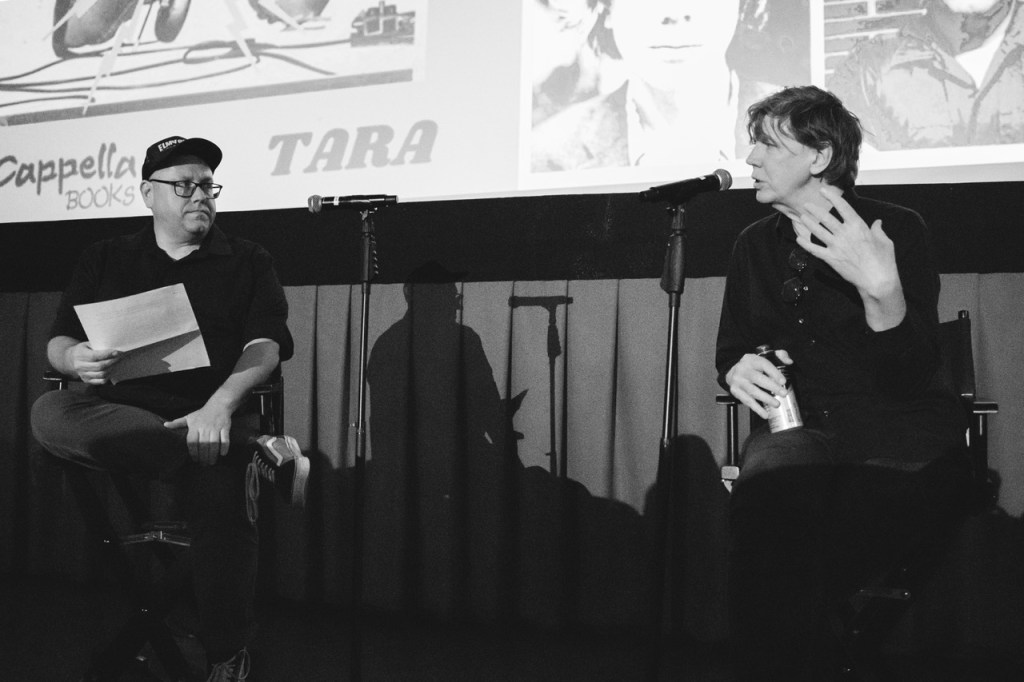
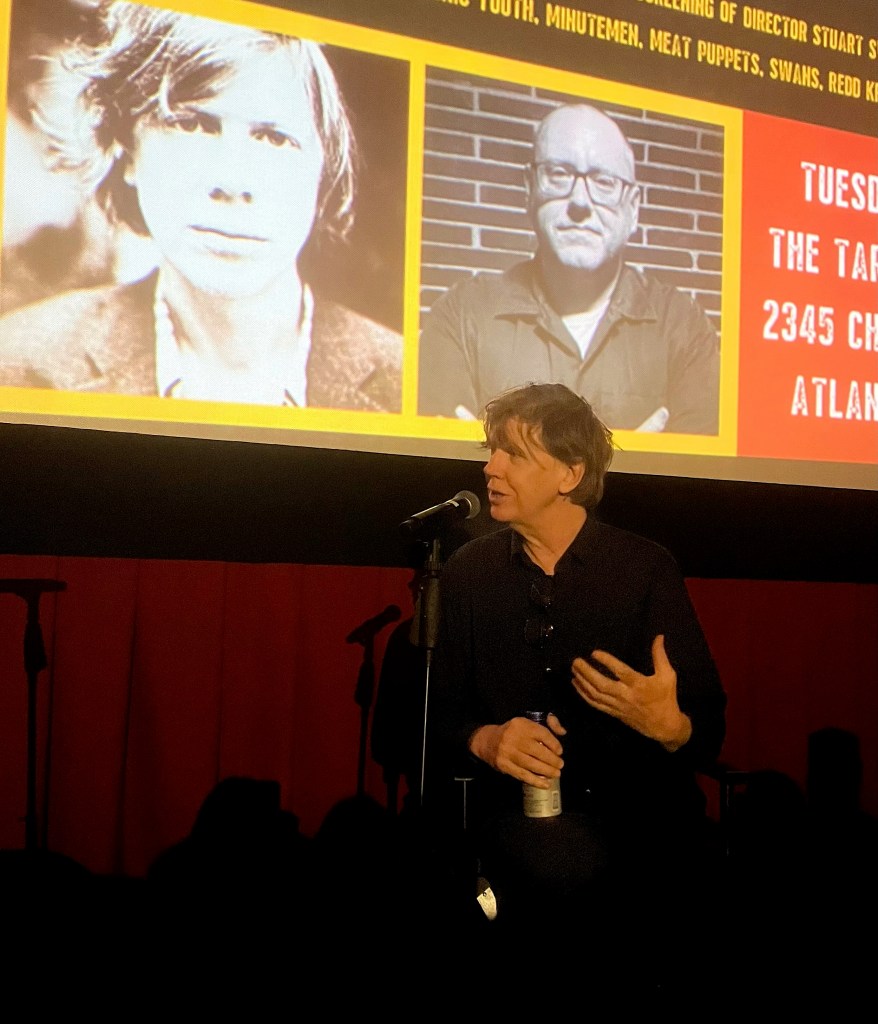
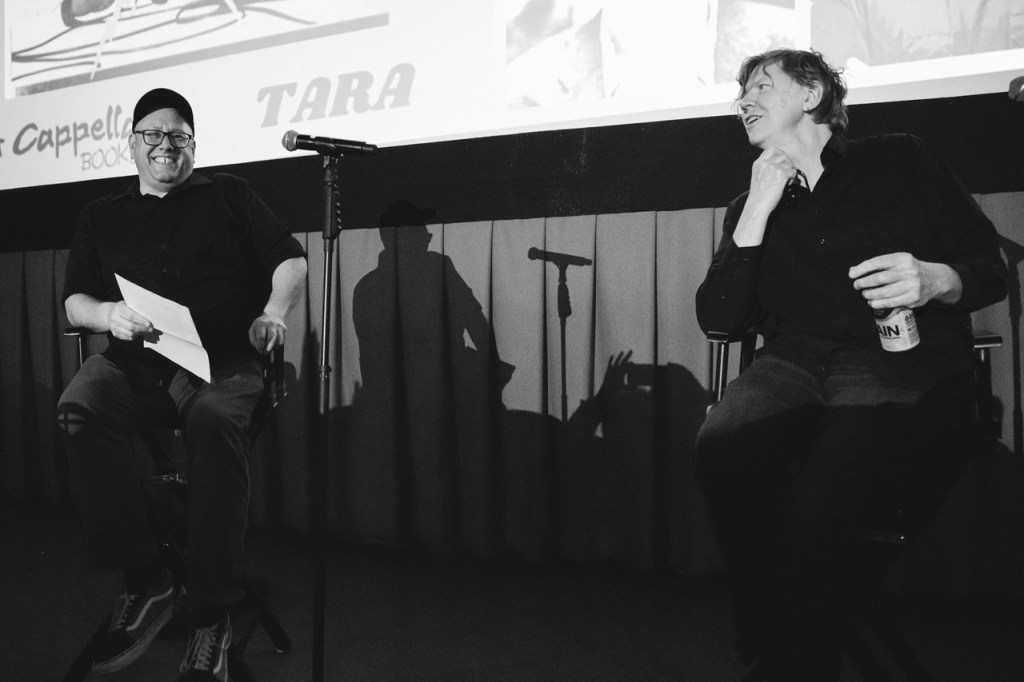
Thurston Moore at the Tara Theater. Photo by Jeff Shipman
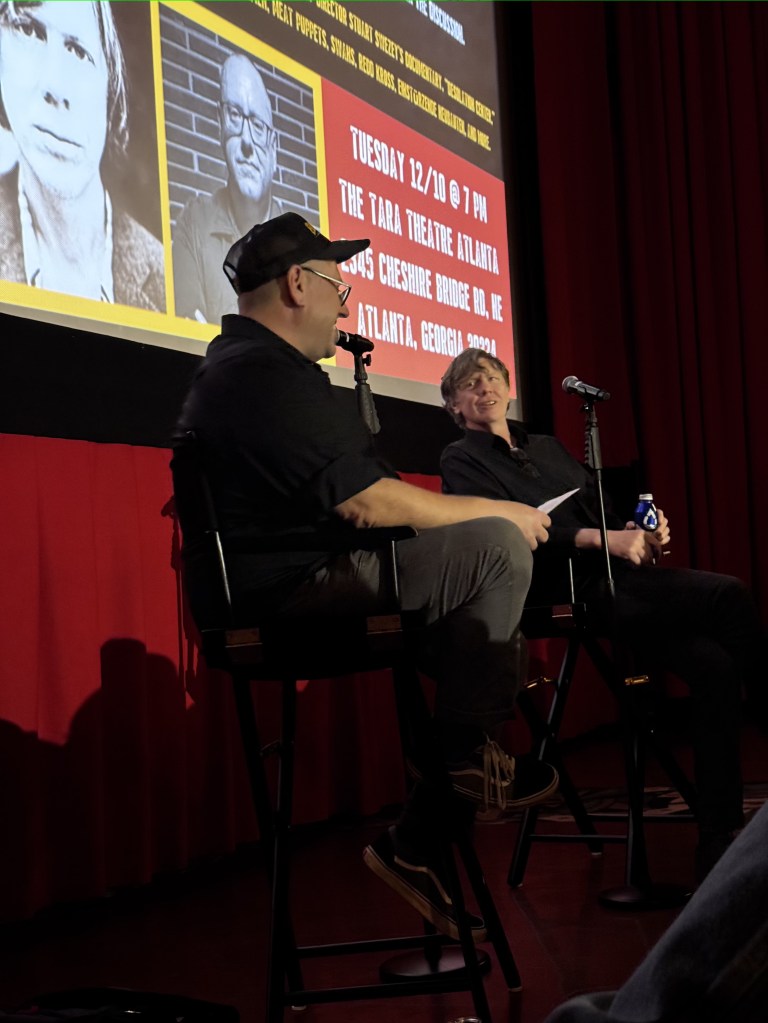
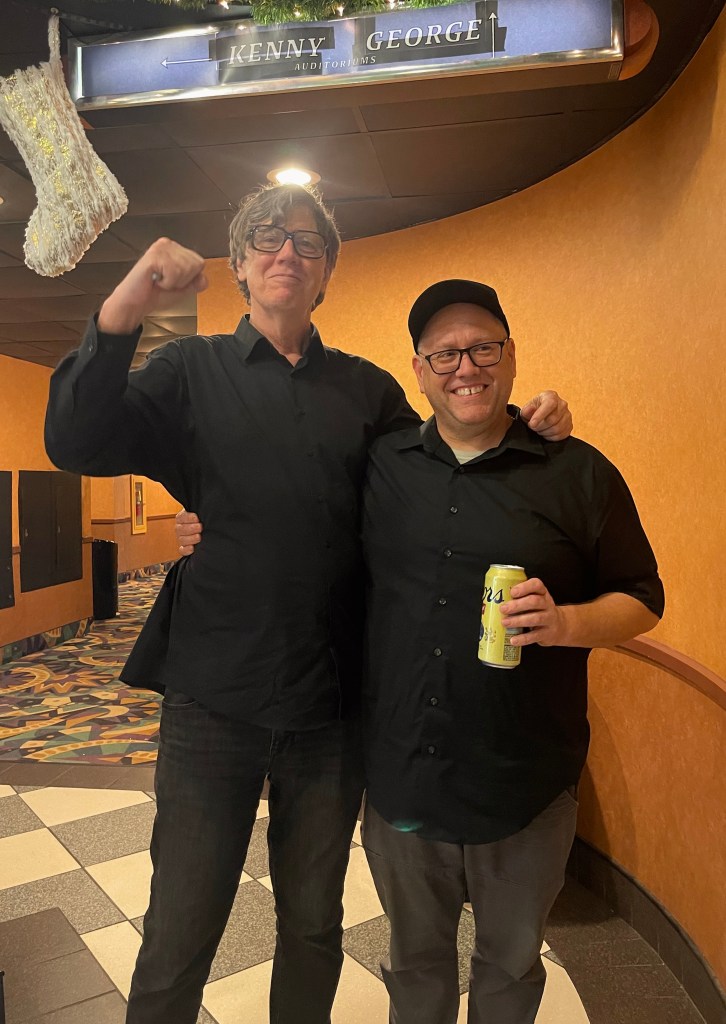
A fun and dynamic evening unfolded at the Tara Theater on Tuesday, December 10, as Thurston Moore appeared in conversation with yours truly, Atlanta music writer Chad Radford.
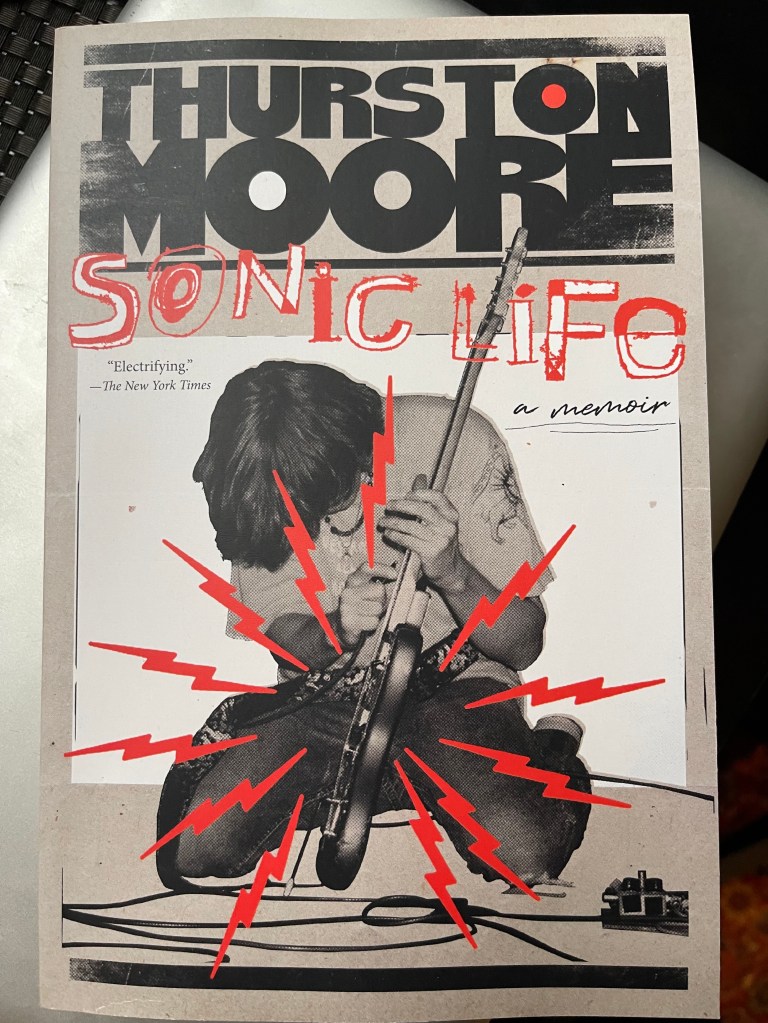
Introduced by Randy Gue, Assistant Director of Collection Development & Curator of Political, Cultural, & Social Movements for Emory University’s Rose Library, and presented by A Cappella Books, the night was anchored by Moore’s 2023 memoir, Sonic Life. He also reflected on a career that reshaped the alternative and underground musical landscapes of the 1980s, ‘90s, and beyond. In a candid exchange, Moore opened up about the forces that inspired Sonic Youth, navigating the post-punk and no wave underbelly of New York City and the ferocious hardcore emanating from Los Angeles in the early 1980s.
Moore also relived heading out on the road with his Sonic Youth bandmates–Lee Ranaldo, Kim Gordon, and original drummer Bob Bert–for their first out-of-town trek. The “Savage Blunder Tour” carried Sonic Youth and Swans from New York to Atlanta culminating with a deranged performance at the legendary 688 Club.
Later, Moore revealed how writing Sonic Life freed up his mental space, and paved the way into a new creative chapter. His latest album under his name, Flow Critical Lucidity, stands as a testament to this state of mind, blending his signature dissonant guitar textures, rhythms, and space with introspective clarity.
The conversation ranged from the personal to the esoteric, touching on topics like the divisive Faith/Void split 12-inch on Dischord Records, a perennial argument-starter among D.C.’s hardcore purests. Moore’s infectious enthusiasm for such musical touchstones reminded everyone why he remains a revered cultural figure.
Moore also recounted Sonic Youth’s participation in Stuart Swezey’s legendary Desolation Center concert series, playing the 1985 Gila Monster Jamboree in the Mojave Desert. He described the surreal experience of channeling their avant-garde energy into a setting as raw and untamed as the music itself. This set the stage for the night’s closing event: a screening of “Desolation Center,” the documentary that chronicles Swezey’s revolutionary desert concerts.
The evening offered a rare chance to glimpse into Moore’s world through his own words and to explore the intersections of music, memory, and creative reinvention.
Check out a gallery of images from the evening below.
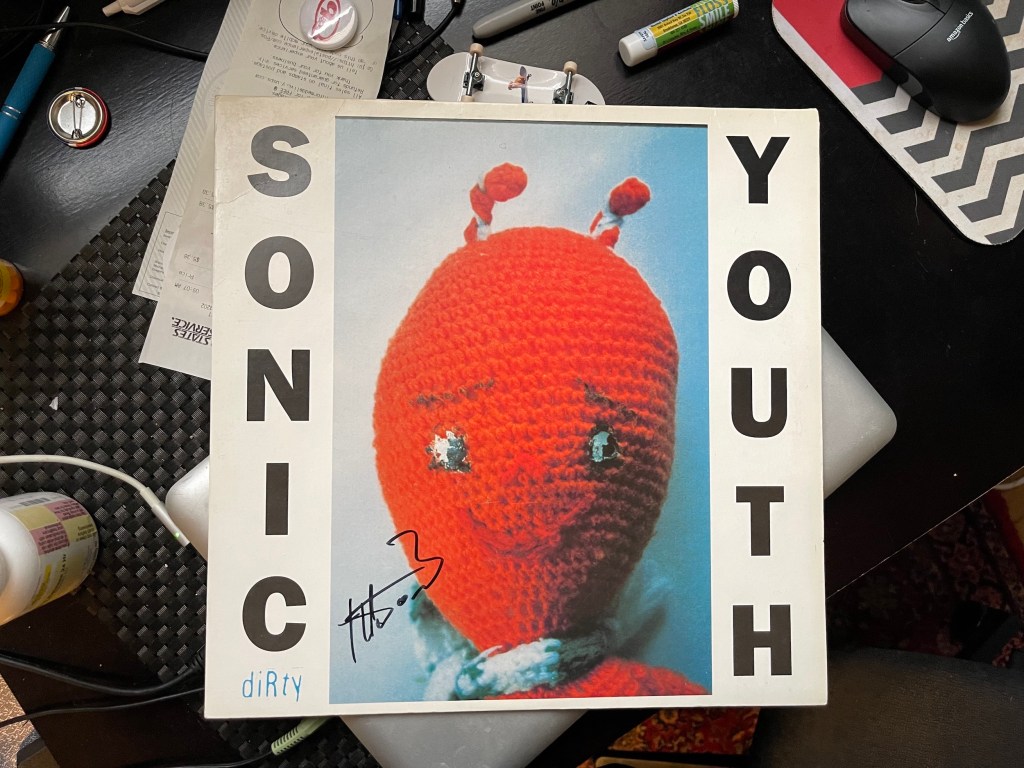
Thurston Moore. Photo by Jeff ShipmanPhoto by Jeff ShipmanPhoto by Jeff ShipmanPhoto by Jeff ShipmanRandy Gue. Photo by Jeff ShipmanSonic LifeSonic LifeSonic LifeThurston Moore photo by Laura HuntChad Radford (left) and Thurston Moore. Photo by Jeff ShipmanThurston Moore and Chad Radford. Photo by Todd PloharskiThurston Moore. Photo by Jeff ShipmanChad Radford (left) and Thurston Moore. Photo by Todd PloharskiThurston Moore. Photo by Jeff ShipmanThurston Moore with his dogs Apollo and Vinkenoog. Photo by Jeff Shipman Chad Radford (left) and Thurston Moore. Photo by Jeff ShipmanPhoto by Todd PloharskiChad Radford (left) and Thurston Moore. Photo by Jeff ShipmanThurston Moore (left) and Chad Radford. Photo by Kristin Anderson“Dirty!” Photo by Chad Radford
If you have enjoyed reading this post, please consider donating to RadATL. Venmo to @Chad-Radford-6 or click on the PayPal link below.
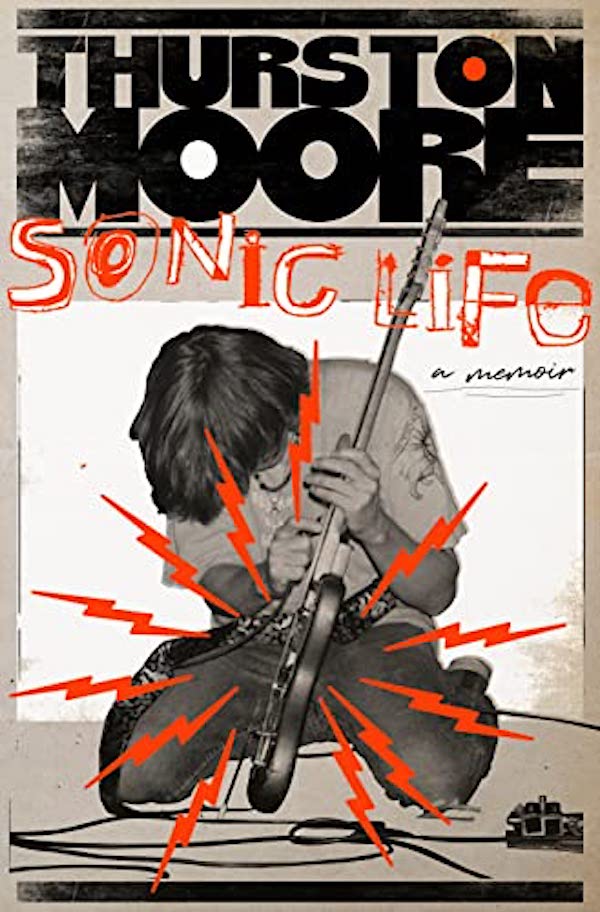
From the founding member of Sonic Youth, a passionate memoir tracing the author’s life and art—from his teen years as a music obsessive in small-town Connecticut, to the formation of his legendary rock group, to 30 years of creation, experimentation, and wonder.
Following the conversation, The Tara will host a screening of director Stuart Swezey’s documentary film, Desolation Center, featuring performances by Sonic Youth, Minutemen, Meat Puppets, Swans, Redd Kross, Einstürzende Neubauten, and more. Moore will introduce the film.
A note on the THREE types of tickets available for this event:
Book Talk Ticket Includes a signed paperback edition of Sonic Life and admission for the 7 p.m. book talk and signing. ($20 + tax)
Book Talk and Movie Ticket Includes a signed paperback edition of Sonic Life, admission for the 7 p.m. book talk and signing, and the 8:30 p.m. screening of Desolation Center. ($36 + tax)
Movie Ticket Admission to the 8:30 p.m. screening of Desolation Center. ($16 + tax)
About the Book Thurston Moore moved to Manhattan’s East Village in 1978 with a yearning for music. He wanted to be immersed in downtown New York’s sights and sounds—the feral energy of its nightclubs, the angular roar of its bands, the magnetic personalities within its orbit. But more than anything, he wanted to make music—to create indelible sounds that would move, provoke, and inspire.
His dream came to life in 1981 with the formation of Sonic Youth, a band Moore co-founded with Kim Gordon and Lee Ranaldo. Sonic Youth became a fixture in New York’s burgeoning No Wave scene—an avant-garde collision of art and sound, poetry and punk. The band would evolve from critical darlings to commercial heavyweights, headlining festivals around the globe while helping introduce listeners to such artists as Nirvana, Hole, and Pavement and playing alongside such icons as Neil Young and Iggy Pop. Through it all, Moore maintained an unwavering love of music: the new, the unheralded, the challenging, the irresistible.
In the spirit of Just Kids, Sonic Life offers a window into the trajectory of a celebrated artist and a tribute to an era of explosive creativity. It presents a firsthand account of New York in a defining cultural moment, a history of alternative rock as it was birthed and came to dominate airwaves, and a love letter to music, whatever the form. This is a story for anyone who has ever felt touched by sound—who knows the way the right song at the right moment can change the course of a life.
About the Author Thurston Moore is a founding member of Sonic Youth, a band born in New York in 1981 that spent 30 years at the vanguard of alternative rock, influencing and inspiring such acts as Nirvana, Pavement, the Yeah Yeah Yeahs, My Bloody Valentine, and Beck. The band’s album Daydream Nation was chosen by the Library of Congress for historical preservation in the National Recording Registry in 2006. Moore is involved in publishing and poetry and teaches at the Summer Writing Workshop at Naropa University in Boulder, Colorado. He divides his time between the USA and England.
About the Film Desolation Center is the previously untold story of a series of early ’80s guerrilla music and art performance happenings in Southern California that are recognized to have inspired Burning Man, Lollapalooza, and Coachella, collective experiences that have become key elements of popular culture in the 21st century. The feature documentary splices interviews and rare performance footage of Sonic Youth, Minutemen, Meat Puppets, Swans, Redd Kross, Einstürzende Neubauten, Survival Research Laboratories, Savage Republic and more, documenting a time when pushing the boundaries of music, art, and performance felt almost like an unspoken obligation.
Directed by Stuart Swezey, the creator and principal organizer of these unique events, Desolation Center demonstrates how the risky, and at times even reckless, actions of a few outsiders can unintentionally lead to seismic cultural shifts. Combining Swezey’s exclusive access to never-before-seen archival video, live audio recordings, and stills woven together with new cinematically shot interviews, verité footage and animated sequences, Desolation Center captures the spirit of the turbulent times from which these events emerged.
If you have enjoyed reading this post, please consider making a donation to RadATL. Venmo to @Chad-Radford-6 or click on the Paypal link below.
The Electric Nature, Magic Tuber Stringband (NC), Mute Sphere, and Magicicada play Magic Lantern in East Point on Thursday, April 11. Majid Araim will be performing a sound installation piece between sets. $15 (suggested donation, no one will be turned away at the door). 8 p.m. 2171 Star Mist Dr. SW Atlanta 30311.
If you have enjoyed reading this post, please consider making a donation to RadATL. Venmo to @Chad-Radford-6 or click on the Paypal link below.
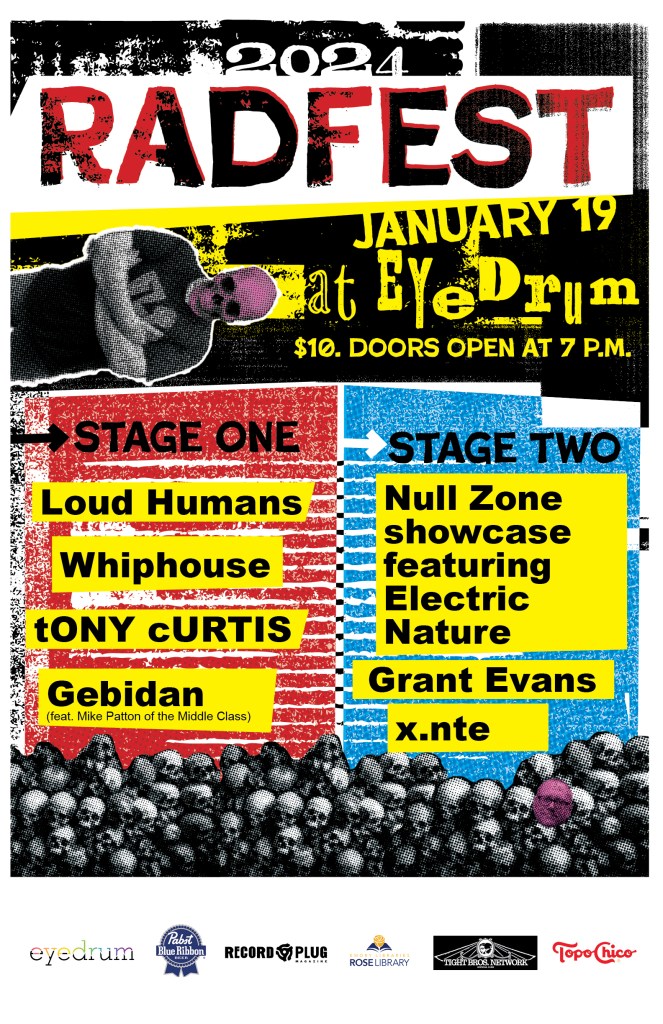
Radfest is back after a three-year Global pandemic hiatus! RadATL’s founder celebrates one more year around the sun, this time at Eyedrum Art & Music Gallery on Friday, January 19.
This year’s show features performances by seven post-punk, post-hardcore, and pure noise greats spread across two stages.
Photo courtesy x.nte
Athens-based cassette label \\NULL|ZØNE// gets the party started with a showcase of Georgia-bred noise acts including x.nte, Grant Evans (of Quiet Nights), and label boss Michael Potter’s own project The Electric Nature. Each act is cranking our short, powerful sets that challenge the traditional notions of what music is, and what it can be. Potter has been on the frontier of this scene for a long time, and it’s been far too long since his last Atlanta appearance, so it’s great to have him back.
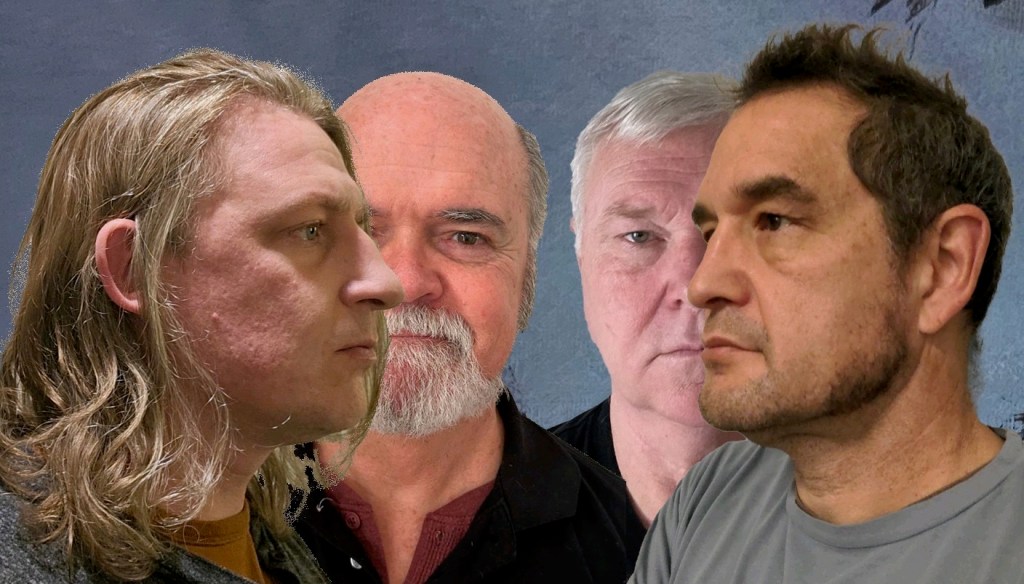
Gebidan photo by Geoff Knott
Gebidan marks its live debut. The recently founded four-piece features Mike Patton of Orange County’s late ‘70s hardcore outfit Middle Class. The group is often hailed as the first North American hardcore act EVER. Patton’s musical resume also includes time spent playing with Jack from TSOL in the band Cathedral of Tears. He was also in Eddie And The Subtitles, and Trotsky Icepick. But really, check out his credentials on Discogs to see that he worked as a producer and backup vocalist on the Adolescents’ self-titled “blue album.” He also produced the Minutemen’s “Joy” single, along with a handful of other Minutemen releases.
Patton lives in Georgia these days and is singing and playing bass with the new outfit. Gebidan’s first recordings find the group embracing a more abstract, psychedelic take on indie and alternative rock songwriting. Great stuff!
tONY cURTIS photo by Ellen McGrail
WREK 91.1 FM’s “Destroy All Music” co-host and bass player Tony Gordon teams up with guitarist Curtis Stephens for tONY cURTIS. Together, they create a scrapping, smoldering grind of earth rattling textures. Gordon (also of FREEBASS, Zandosis, and Charlie Parker fame) is well aware of the power of subtlety, especially when it’s blasted at maximum volume. The 11 numbers that make up their latest release tc2 lull the ears and the brain into a meditative state by commanding a deeper level of ecstatic listening. Beyond rhythm, beyond melody, and beyond the drone lie the pure sonic textures of steel strings, and they are teeming with abstract beauty and limitless possibilities for the imagination.
Photo courtesy Whiphouse
Whiphouse brings a high-energy and death-afflicted punk dirge to the stage. It’s one of my favorite new bands to emerge from these parts in quite some time. Lots of homies in this group! Michael Keenan, Mike Bison-Beavers, Debbie Beat, Stanley Jackson, and one of my favorite former interns Kelly Stroup! It’s just an awesome assemblage of people tearing up on stage the only way they know how.
Loud Humans
Loud Humans close out the show. More info. coming soon.
This is an ALL AGES SHOW! Doors open at 7 p.m. $10 gets you in. Fri., Jan. 19. 515 Ralph David Abernathy Blvd. Park in the lot across the street if the side street and front lot are full.
Thanks to this year’s sponsors! Eyedrum, Topo Chico, Pabst Blue Ribbon, Emory University’s Stuart A. Rose Manuscript, Archives, and Rare Book Library, Record Plug Magazine, The Tight Bros. Network, and to Dain Johnson who created this year’s magnificent flyer.
If you have enjoyed reading this review, please consider making a donation to RadATL. Venmo to @Chad-Radford-6 or click on the Paypal link below.
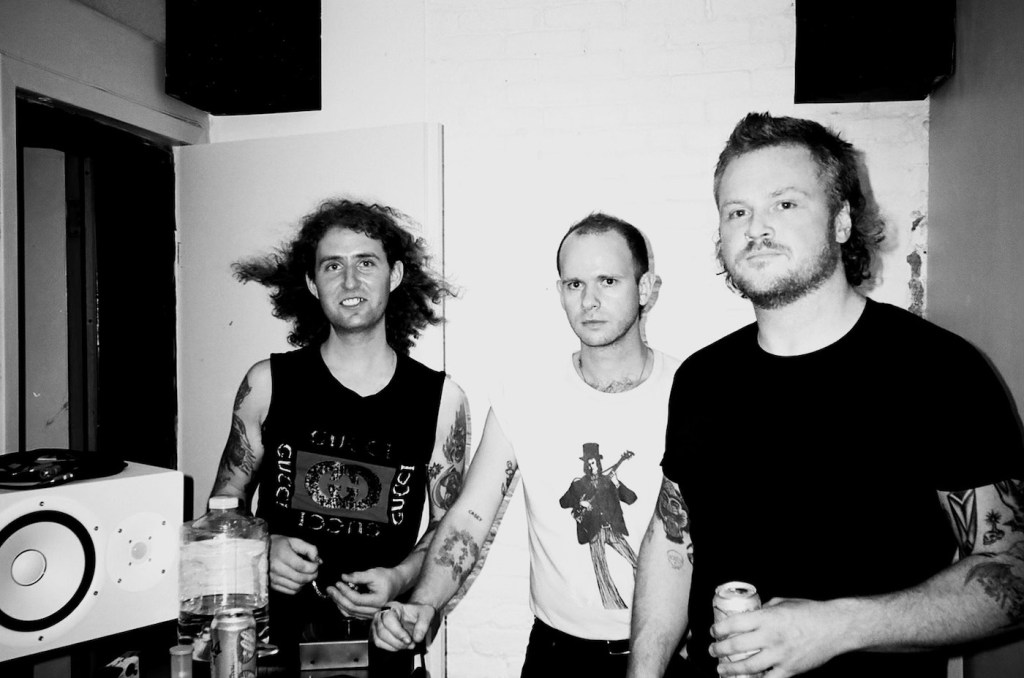
PYREX! Left to right: Arbon Elrich, Joe Hardwick, and Steven Fisher. Photo by Michelle Kinney.
Brooklyn’s Pyrex joins Die Slaughterhaus Records’ new wave of grimey post-punk adversaries with the “Struck Down” b/w “Staying Alive” 7-inch.
Both numbers plunge the group into menacing depths of real-world dejection while revealing a dark sense of humor. Atlanta expat. guitar player and vocalist Joe Hardwick, bass player Arbon Elrich, and drummer Steven Fisher summon bludgeoning intensity with “Struck Down.”
On the flipside, a perfectly nasty cover of the Bee Gees’ disco-era classic “Staying Alive” feels like a Killed By Death deep cut that was captured at a construction site—grounded in dense rhythm and noise—as Hardwick’s distorted growl finds new meaning in the lyrics, “Life goin’ nowhere, somebody help me.”
NOTE: The digital versions of these songs, mastered by Graham Tavel, sound notably crisp when compared to the spacious and deeply textured vinyl renderings that are courtesy of Ryan Bell.
If you have enjoyed reading this review, please consider making a donation to RadATL. Venmo to @Chad-Radford-6 or click on the Paypal link below.
A version of this review first appeared in the November issue ofRecord Plug Magazine. Grab a print copy at your nearest record store, coffee shop, pizza place, or music venue.
CANCELED: This live appearance has been canceled, but you can hear Thurston Moore’s interview with Chad Radford on 90.1 FM/WABE’s “City Lights” on Monday, October 30 at 11 a.m. and again at 8 p.m.
From the founding member of Sonic Youth, a passionate memoir tracing the author’s life and art—from his teen years as a music obsessive in small-town Connecticut, to the formation of his legendary rock group, to 30 years of creation, experimentation, and wonder.
A Cappella Books welcomes Thurston Moore to The Plaza Theatre to discuss his new book, Sonic Life: A Memoir, on Monday, October 30, at 7 p.m. Moore will speak with your truly, Chad Radford, music journalist and author of Atlanta Record Stores: An Oral History. Moore will also perform a short musical set.
Following the conversation, The Plaza will host a screening of director Stuart Swezey’s documentary, Desolation Center, featuring performances by Sonic Youth, Minutemen, Meat Puppets, Swans, Redd Kross, Einstürzende Neubauten, and more. Moore will introduce the film.
A note on the THREE types of tickets available for this event:
Book Talk Ticket: Includes a pre-signed copy of Sonic Life + admission for the 7 p.m. book talk. ($35+tax).
Book Talk and Movie Ticket: Includes a pre-signed copy of Sonic Life + admission for the 7 p.m. book talk, and the 8:30 p.m. screening of Desolation Center. ($45+tax).
Movie Ticket: Admission to the 8:30 p.m. screening of Desolation Center. ($20 + tax)
About the Book Thurston Moore moved to Manhattan’s East Village in 1978 with a yearning for music. He wanted to be immersed in downtown New York’s sights and sounds—the feral energy of its nightclubs, the angular roar of its bands, the magnetic personalities within its orbit. But more than anything, he wanted to make music—to create indelible sounds that would move, provoke, and inspire.
His dream came to life in 1981 with the formation of Sonic Youth, a band Moore co-founded with Kim Gordon and Lee Ranaldo. Sonic Youth became a fixture in New York’s burgeoning No Wave scene—an avant-garde collision of art and sound, poetry and punk. The band would evolve from critical darlings to commercial heavyweights, headlining festivals around the globe while helping introduce listeners to such artists as Nirvana, Hole, and Pavement and playing alongside such icons as Neil Young and Iggy Pop. Through it all, Moore maintained an unwavering love of music: the new, the unheralded, the challenging, the irresistible.
In the spirit of Just Kids, Sonic Life offers a window into the trajectory of a celebrated artist and a tribute to an era of explosive creativity. It presents a firsthand account of New York in a defining cultural moment, a history of alternative rock as it was birthed and came to dominate airwaves, and a love letter to music, whatever the form. This is a story for anyone who has ever felt touched by sound—who knows the way the right song at the right moment can change the course of a life.
About the Author Thurston Moore is a founding member of Sonic Youth, a band born in New York in 1981 that spent 30 years at the vanguard of alternative rock, influencing and inspiring such acts as Nirvana, Pavement, the Yeah Yeah Yeahs, My Bloody Valentine, and Beck. The band’s album Daydream Nation was chosen by the Library of Congress for historical preservation in the National Recording Registry in 2006. Moore is involved in publishing and poetry and teaches at the Summer Writing Workshop at Naropa University in Boulder, Colorado. He divides his time between the USA and England.
About the Film Desolation Center is the previously untold story of a series of early ’80s guerrilla music and art performance happenings in Southern California that are recognized to have inspired Burning Man, Lollapalooza, and Coachella, collective experiences that have become key elements of popular culture in the 21st century. The feature documentary splices interviews and rare performance footage of Sonic Youth, Minutemen, Meat Puppets, Swans, Redd Kross, Einstürzende Neubauten, Survival Research Laboratories, Savage Republic and more, documenting a time when pushing the boundaries of music, art, and performance felt almost like an unspoken obligation.
Directed by Stuart Swezey, the creator and principal organizer of these unique events, Desolation Center demonstrates how the risky, and at times even reckless, actions of a few outsiders can unintentionally lead to seismic cultural shifts. Combining Swezey’s exclusive access to never-before-seen archival video, live audio recordings, and stills woven together with new cinematically shot interviews, verité footage and animated sequences, Desolation Center captures the spirit of the turbulent times from which these events emerged.
If you have enjoyed reading this post, please consider making a donation to RadATL. Venmo to @Chad-Radford-6 or click on the Paypal link below.
Crazy Doberman makes a triumphant return to Atlanta on Mon., Dec. 6.
This time around the the Midwest / East Coast-based free-improvisation outfit performs as a seven-piece, wielding an industrial-grade skronk, drone, and clatter.























 Rad/ATL