Live review: Tomahawk, Melvins, and Void Manes at Buckhead Theatre

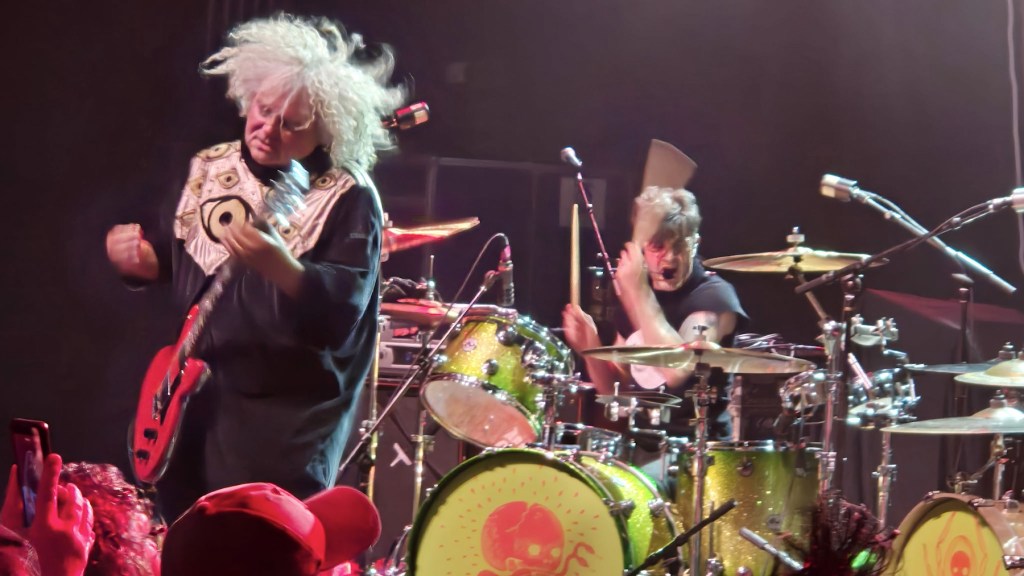
King Buzzo (left) and Coady Willis of the Melvins at Buckhead Theatre June 24.
Photo by Chris Campbell

On Friday, June 24, Void Manes, the Melvins, and Tomahawk played to a sold-out Buckhead Theatre. The night, it seems, was ordained by the gods of volume. Buckhead Theatre has a way of underscoring booming loud bands; its cavernous room naturally amplifies low end, allowing every kick drum, bass note, and down-tuned guitar chord to reach full bloom without dissolving into mud. Within seconds of the Melvins taking the stage, it was clear that this was an ideal setting for an evening built on bombastic riffs and fearless experimentation.
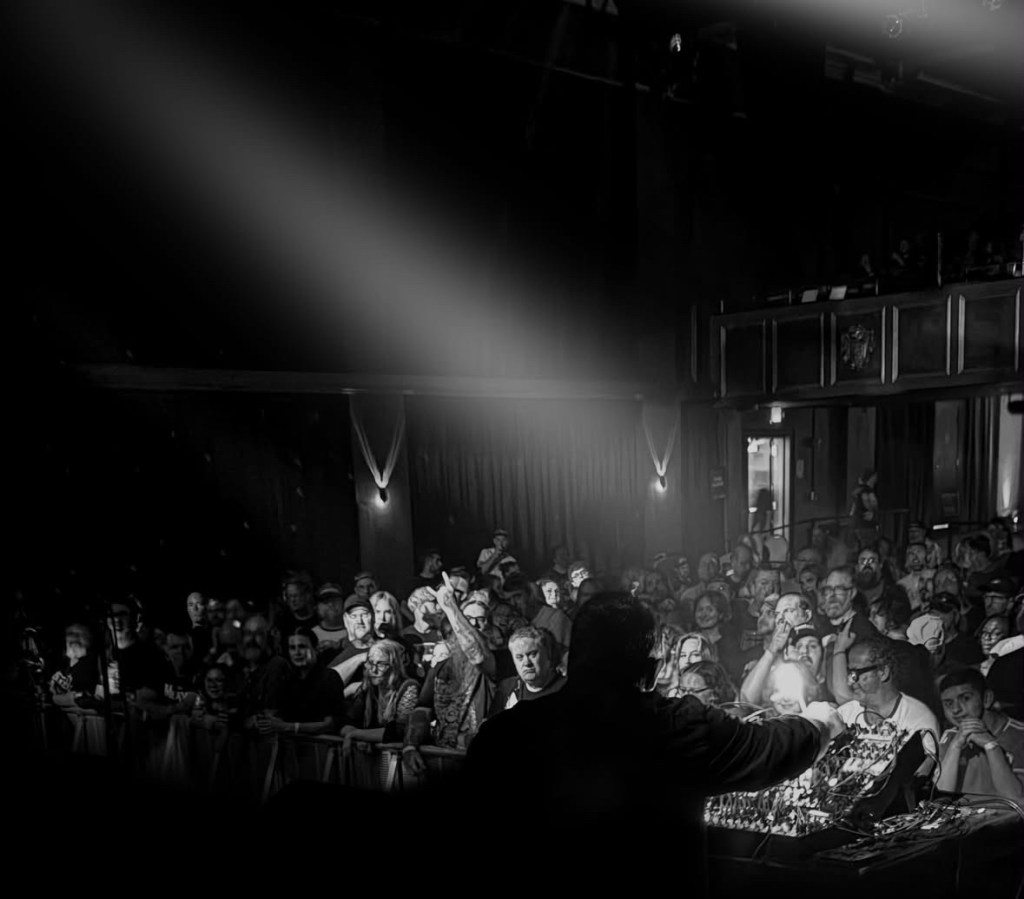
Void Manes. Photo by King Buzzo

Void Manes took the stage shortly after the doors opened at 6:30 p.m., obscured behind a maze of modular synths that glowed like a distant galaxy suspended in a balance of total darkness on the stage, and a dizzying show of lights from above. The one-man electronic project conjured a world of jagged rhythms, sub-bass swells, and truncated melodies that came into view just long enough to reveal themselves before getting swallowed up by waves of dissonance and a mechanical pulse. A complex blend of electronic noise filled the room with an intensity that pulled the growing crowd toward the stage. With every passing moment, Void Mane’s bold motions and abstract nuances established a deep emotional sonic baseline and a palate cleanser for the onslaught of heavy guitar riffage that was soon to come.
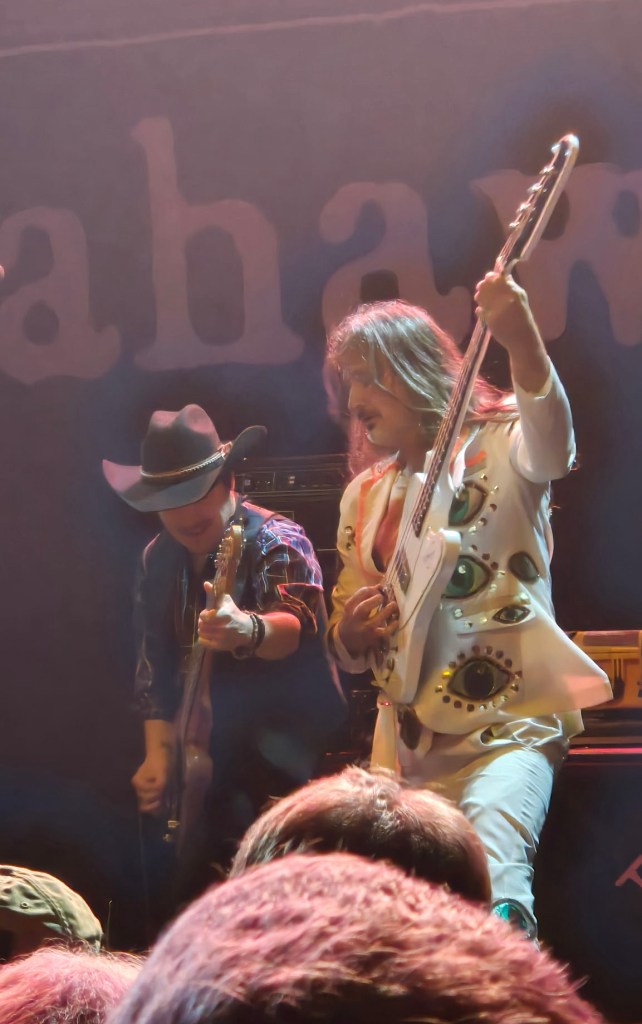
The Melvins: Trevor Dunn (left) and Steven McDonald. Photo by Chris Campbell

More than four decades into their career, the Melvins persist as a stylishly heavy and uncompromising institution. On stage, guitarist and vocalist Buzz Osborne (King Buzzo), drummers Dale Crover and Coady Willis, and bass player and vocalist Steven McDonald (Redd Kross) locked in with wicked chemistry. Their set bounced between more recent numbers such as the pummeling “Working the Ditch” and “Never Say You’re Sorry,” while longtime staples “Civilized Worm,” “A History of Bad Men,” “Honey Bucket,” and “Night Goat” reminded everyone why the Melvins remain a towering influence on generations of post-punk, metal, and noise rock.
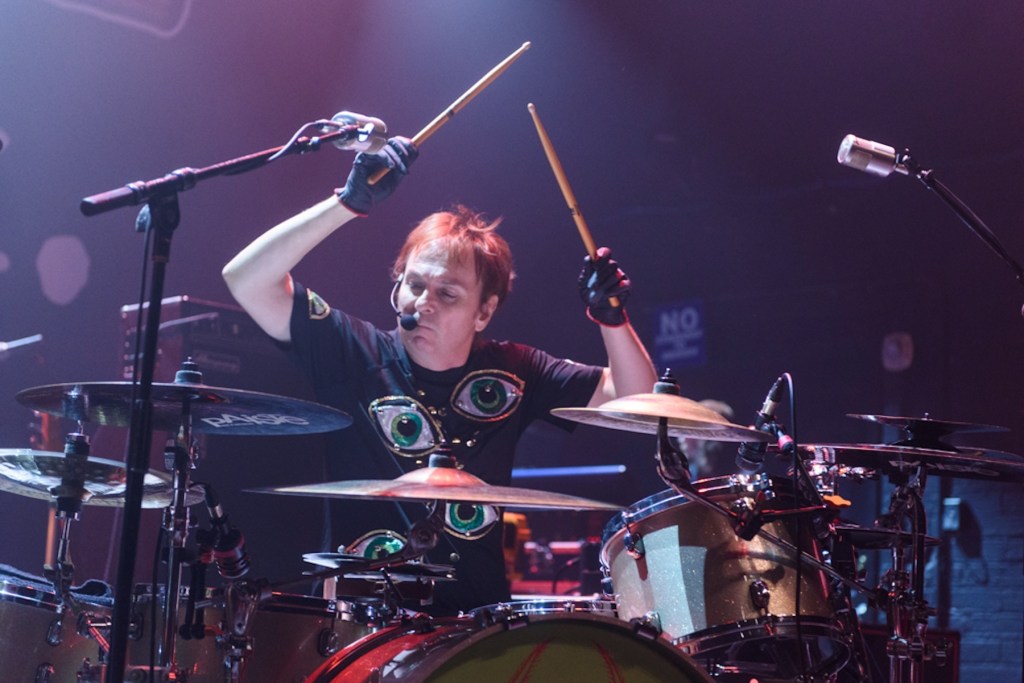
Dale Crover of the Melvins. Photo by Mike White of Deadly Designs

Their positively warped take on the Rolling Stones’ “Sway” proved no song is safe once it passes through the Melvins’ peculiar gravitational pull.
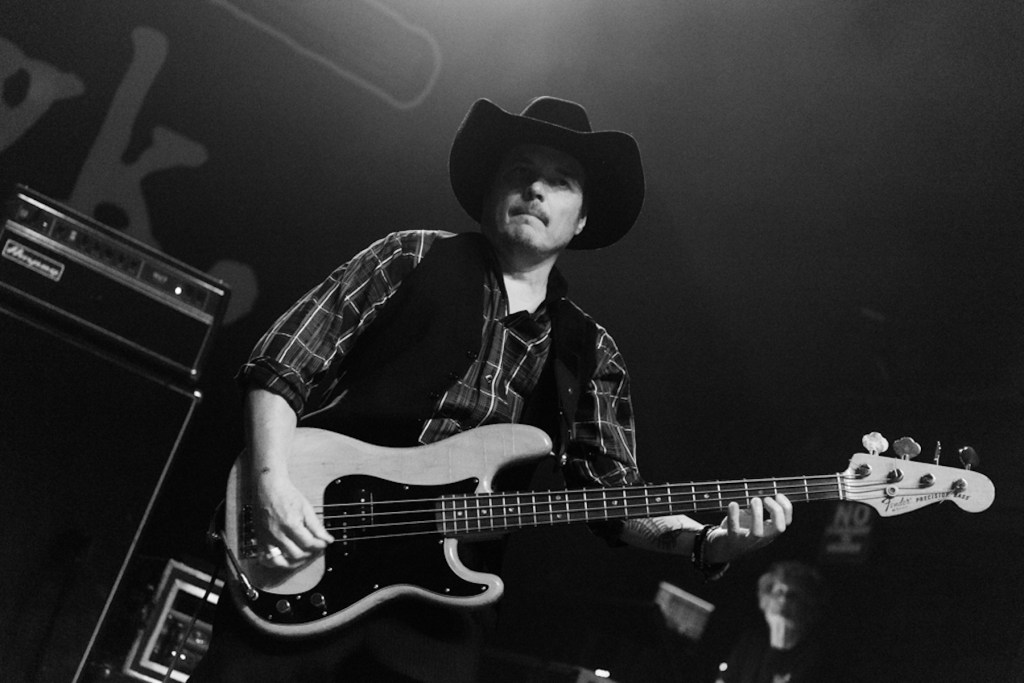
Trevor Dunn of Tomahawk. Photo by Mike White of Deadly Designs

Trevor Dunn joined in on a second bass for “Night Goat.” The Melvins Lite, Mr. Bungle, and Tomahawk MVP made their finale hit even harder—his cowboy hat serving as an unspoken homage to the late great Birthday Party bassist Tracy Pew.
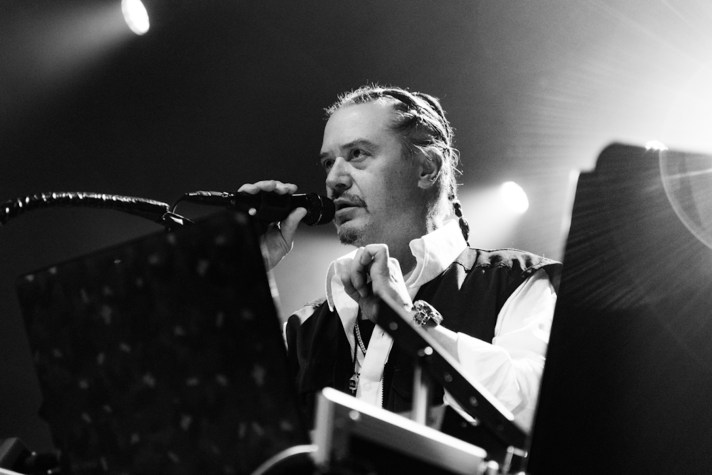
Mike Patton of Tomahawk. Photo by Mike White of Deadly Designs

Back on the road after a 13-year touring break, Tomahawk sounded refreshingly sharp. Mike Patton (Faith No More, Mr. Bungle, Fantômas) remains one of the most magnetic vocalists of the 21st century, alternating between deadpan restraint, demonic absurdity, and explosive vocal acrobatics in a single musical phrase. Standing behind a laptop, a Kaoss Pad, and an array of electronic gear, Patton demonstrated that his voice can go anywhere, effortlessly navigating an extraordinary range of sounds that no machine could replicate.

Guitarist Duane Denison’s (the Jesus Lizard) razor-wire riffs cut through Dunn’s muscular bass lines while drummer John Stanier (Battles, ex-Helmet) anchored everything with his unmistakable combination of precision and brute force.
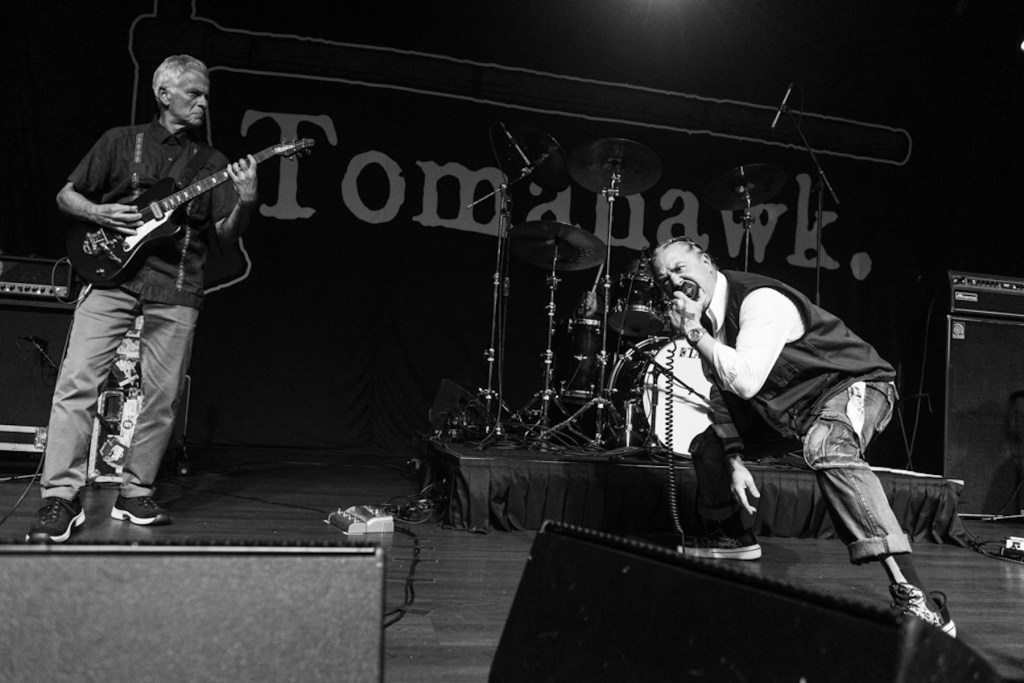
Duane Denison (left) and Mike Patton of Tomahawk. Photo by Mike White of Deadly Designs

Tomahawk threaded songs like “Business Casual” and “Doomsday Fatigue” from 2021’s Tonic Immobility alongside crowd-pleasers such as “Flashback,” “Capt. Midnight,” and “Point and Click.” Their closing stretch was especially rewarding, with a run through George Jones’ “Just One More” giving way to an encore featuring “God Hates a Coward,” a twangy rendition of Duane Eddy’s “Stalkin,'” and the crushing one-two punch of “Sidewinder” and “Totem.”

By night’s end, the crowd had witnessed three acts approaching heavy music from distinctly different—complimentary—angles, each arriving at a wildly different destination. Void Manes mapped the outer reaches of the imagination through currents of noise and electricity. The Melvins bent gravity around riffs that have only grown heavier with time, while Tomahawk landed with twisted, surgical precision.
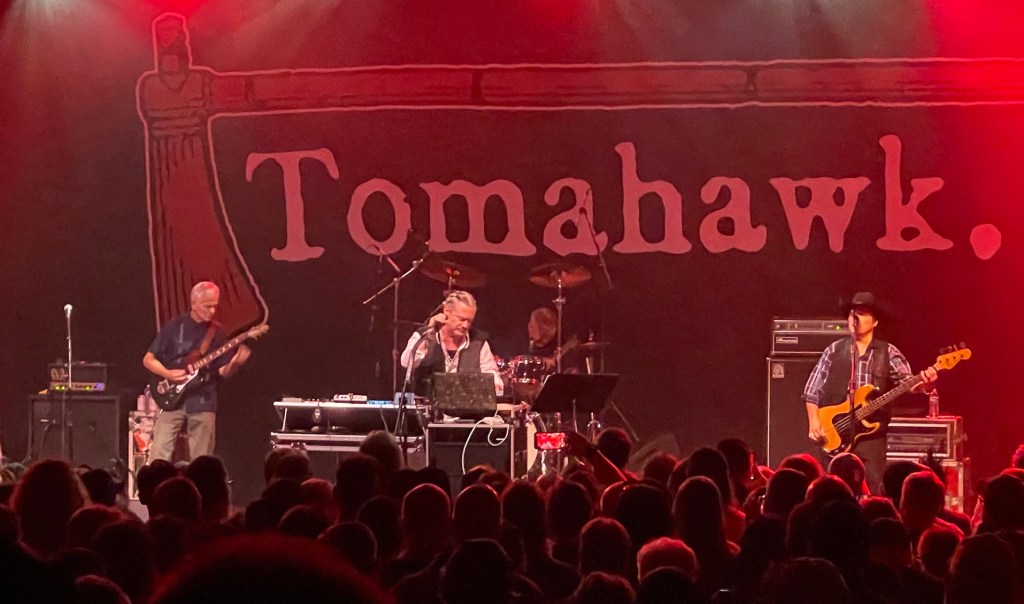
Tomahawk. Photo by Chad Radford

If you have enjoyed reading this post, please consider donating to RadATL. Venmo to @Chad-Radford-6 or click on the PayPal link below.

Donate with PayPal

Melvins, Napalm Death, Weedeater, and Dark Sky Burial play the Masquerade on Sunday, April 27

MELVINS (left to right): Steven McDonald, Buzz Osborne, Dale Crover, and Coady Willis. Photo by Toshi Kasai

The Savage Imperial Death March thunders into Georgia when Melvins and Napalm Death co-headline a double dose of doom, noise, and grinding intensity.

On Sunday, April 27, Melvins and Napalm Death come together for a massive display of sound and fury on the Masquerade’s Heaven stage. On Tuesday, April 29, the same bill rolls into Athens’ 40 Watt Club, bringing chaos to the Classic City.

The tour falls on the heels of the February 2025 release of Savage Imperial Death March, a six-song collaborative LP released via Amphetimine Reptile Records. The six-song release is a crushing, howling monster of an album that finds both bands playing together, seamlessly merging Melvins’ sludge-soaked throb and Napalm Death’s relentless grind.

Melvins are also touring behind their latest release, titled Thunderball (Ipecac Recordings). It’s also the group’s most recent full-length released under the Melvins 1983 moniker, featuring Buzz Osborne, Mike Dillard, Ni Maitres, and Atlanta-based abstract electronic project Void Manes.

For this tour, King Buzzo’s riffs steer the ship, backed by the dual-drum assault of Dale Crover and Coady Willis and Steven McDonald’s fuzzed-out basslines. This incarnation of the band reignites the early Melvins aesthetic with renewed purpose and fire.

Meanwhile, Napalm Death continues its decades-long campaign of sonic obliteration, riding high on the aftershocks of 2022’s Resentment is Always Seismic–A Final Throw of Throes. Vocalist Barney Greenway remains a force of nature, while the band’s grindcore assault remains both savage and surgical.

North Carolina sludge lords Dark Sky Burial—a bleak, ambient-industrial project helmed by Napalm Death’s bass player Shane Embury—and Weedeater set the tone for each night’s proceedings.

$32.50 (advance). 6:30 p.m. (doors) at the Masquerade. This is an all-ages show.

$35. 6 p.m. (doors) at 40 Watt. Under 18 with parent or legal guardian.

If you have enjoyed reading this post, please consider donating to RadATL. Venmo to @Chad-Radford-6 or click on the PayPal link below.

Donate with PayPal

86’s first two 7-inches restored and reissued

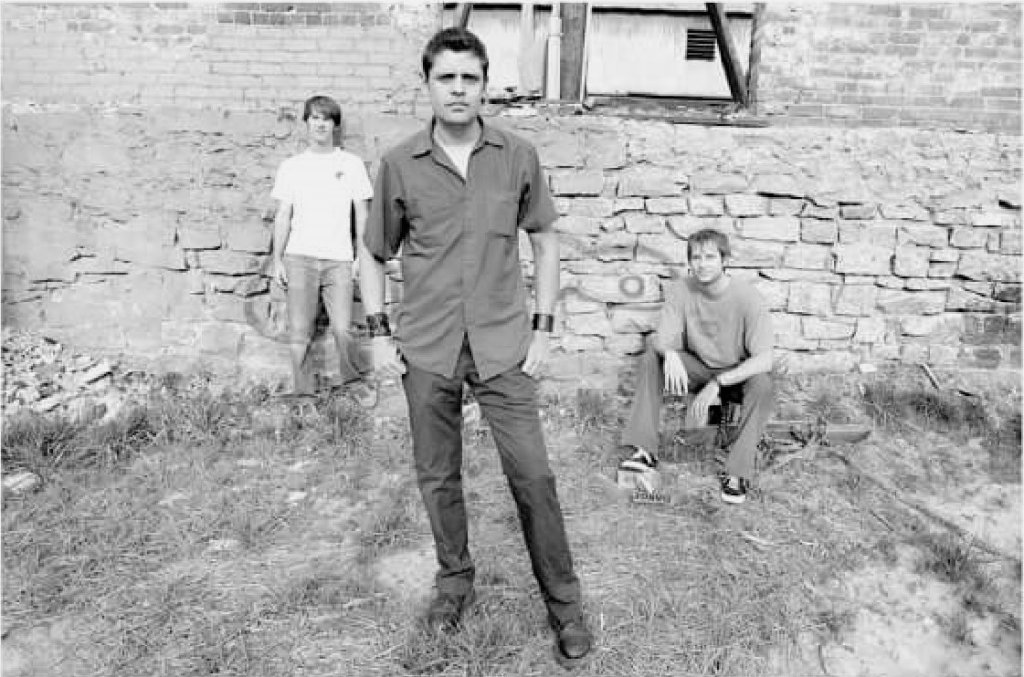
86: Max Koshewa (from left), Ken Schenck, and Mac McNeilly. Photo by Mary Alexander.

Chunklet Industries is dusting off a crucial piece of Atlanta’s post-punk and new wave past with an online reissue of 86’s first two singles. The trio—featuring Mac McNeilly (before his seismic drumming found a home in the Jesus Lizard), Ken Schenck’s jagged guitar lines, and Max Koshewa’s brooding bass—captured a restless energy that redefined the city’s underground music scene in the early ’80s.

“Useless” and “Behind My Back” were recorded at Southern Sound in Knoxville, Tenn. in July of 1983. “Youth Culture” and “Inside” were laid down a year later 1984. Both singles were originally released via Knoxville’s short-lived indie label OHP Records. Placed together here, both singles channel the urgency of the era while hinting at the band’s singular presence in Atlanta.

Audio restoration duties for this new issue fell to Jason NeSmith at Chase Park Transduction, where the songs were delicately digitized from the original vinyl 7-inches. NeSmith applied subtle de-clicking and EQ adjustments, preserving the grit and urgency of the recordings while amplifying their visceral punch.

86: Max Koshewa (from left), Ken Schenck, and Mac McNeilly. Photo by Mary Alexander.

While 86 is often remembered as the band that gave McNeilly his start, these singles cement the group’s place as a vital force in Atlanta’s music history. And this is only the beginning: Chunklet reportedly has a trove of unreleased recordings from the 86 archives queued up for release later this year.

If you have enjoyed reading this post, please consider donating to RadATL. Venmo to @Chad-Radford-6 or click on the PayPal link below.

Donate with PayPal

Long-lost Hex Error tape unearthed

HEX ERROR: David Lane (from left), Jason Hatcher, and Greg Stevens.

On June 19, 2003, bass player David Lane, drummer Greg Stevens, and singer and guitar player Jason Hatcher of Hex Error went into Zero Return Studios with Rob del Bueno, aka Coco the Electronic Monkey Wizard of Man? Or Astro-Man?.

The plan was to cut the instrumental tracks for six new songs the group had been working on since releasing their self-titled debut CD in 2001. Vocals were to be recorded during another session later on down the line. The rising noise rock three-piece was slashing its way through the local scene, playing shows at venues such as Lenny’s and the Earl, and landing spots at the day-long Corndogorama indie rock festival.

Alas, this fatal afternoon at Zero Return, now dubbed Maze Studios, was Hex Error’s last studio session. Hatcher, Stevens, and Lane broke up before vocals were recorded and the three never looked back.

Since then, Lane has long served as singer and guitar player with the band Skin Jobs, who released their debut album Def Bods in 2021. Stevens has spent time playing with various bands, and currently plays in the groups Uneven Lanes with Benjamin, as well as Total Peace Band. Lane and Stevens also currently play in the post-punk outfit Scratch Offs.

Hatcher died on February 20, 2022.

While doing some housekeeping during the pandemic, del Bueno discovered a 2-inch reel of the sessions and passed it along to Stevens.

The recordings offering a stark and compelling glimpse at what was a quickly evolving musical outfit. The  crushing grooves that drive the opening number, “Death From Above,” and the dissonant energy of “Greed” capture a mastery of songwriting dynamics. “Social Leprosy” and the wide-eyed “Time” show off instincts that move far beyond the nascent, teeth-gnashing dirges of their self-titled 2001 debut. The instrumental recordings as they are rendered here capture Hex Error in gloriously muscular and sophisticated form.

Stevens took a few minutes to talk more about the recording.

Greg Stevens: The tapes had been in storage at Zero Return until the pandemic. During that time, Rob del Bueno let me know he had come across this 2-inch reel of tape from our final recording session. Jason passed away a year or so ago, so we figured it would be a fitting memorial to him to release this EP 20 years after the initial recording.

The initial recording wasn’t altered in any way. We had completed all of the basic tracking at the session on 6/29/03. That said, we broke up before we could complete the vocals, so these are instrumental tracks only. Given that Jason had passed, there wasn’t an opportunity to add vocals to anything. So we ended up putting the finishing touches on it, as is. We worked with David Barbe for the mixing of the 2-inch tape out at Chase Park in Athens and Carl Saff for the mastering.

David Lane and I have been playing music together off and on for the past 20 years. It has been interesting releasing these tracks from 20 years ago while at the same time we are putting the finishing touches on the upcoming Scratch Offs record.  So from that perspective it’s interesting to see how much we have both grown as musicians over the past couple of decades. We’re really proud of how far we took the Hex Error sound all those years ago, and we’re excited about exploring different sonic territories with Scratch Offs.

The opening track, “Death from Above,” really highlights what we could have accomplished had we not called it a day. We had started working within longer song structures and more intricate polyrhythms. That one was a crowd favorite, whether we were playing in Atlanta or out on the road.

All of these songs had lyrics. We performed all of them live back in the day. So, yes, lost to the sands of time.

Not at this time. We decided to self-release this digitally mainly for archival purposes. But if a label was so inclined, we’d definitely be into it.

We just got the final master back from Carl Saff a couple of days ago. We’re aiming for a digital release in the next couple months, before we do our next batch of shows. We’re playing with Bass Drum of Death and Small at the Earl on September 7, and then headed to Florida for some dates shortly after that.  So it would be good for people to have a frame of reference aside from the live experience. Right now, the consensus is to call the record Tidal Wave.

Donate with PayPal

Warm Red reveals ‘Super Bowl,’ first single from ‘Decades of Breakfast’

Warm Red is (clockwise from left) Stephen Lewis, Tony Gary, Bryan Sherer, and Jacob Armando. Photo by Eric Brooks.

Press Play on “Super Bowl,” the latest single from Atlanta post-punk and noise rock outfit Warm Red.

“Super Bowl” is the first single to be released from the group’s forthcoming debut album, titled Decades Of Breakfast. The LP is due out in October via Atlanta punk label State Laughter.

Until then, check out “Super Bowl” on Spotify.