86: Max Koshewa (from left), Ken Schenck, and Mac McNeilly. Photo by Mary Alexander.
Chunklet Industries is dusting off a crucial piece of Atlanta’s post-punk and new wave past with an online reissue of 86’s first two singles. The trio—featuring Mac McNeilly (before his seismic drumming found a home in the Jesus Lizard), Ken Schenck’s jagged guitar lines, and Max Koshewa’s brooding bass—captured a restless energy that redefined the city’s underground music scene in the early ’80s.
“Useless” and “Behind My Back” were recorded at Southern Sound in Knoxville, Tenn. in July of 1983. “Youth Culture” and “Inside” were laid down a year later 1984. Both singles were originally released via Knoxville’s short-lived indie label OHP Records. Placed together here, both singles channel the urgency of the era while hinting at the band’s singular presence in Atlanta.
Audio restoration duties for this new issue fell to Jason NeSmith at Chase Park Transduction, where the songs were delicately digitized from the original vinyl 7-inches. NeSmith applied subtle de-clicking and EQ adjustments, preserving the grit and urgency of the recordings while amplifying their visceral punch.
86: Max Koshewa (from left), Ken Schenck, and Mac McNeilly. Photo by Mary Alexander.
While 86 is often remembered as the band that gave McNeilly his start, these singles cement the group’s place as a vital force in Atlanta’s music history. And this is only the beginning: Chunklet reportedly has a trove of unreleased recordings from the 86 archives queued up for release later this year.
If you have enjoyed reading this post, please consider donating to RadATL. Venmo to @Chad-Radford-6 or click on the PayPal link below.
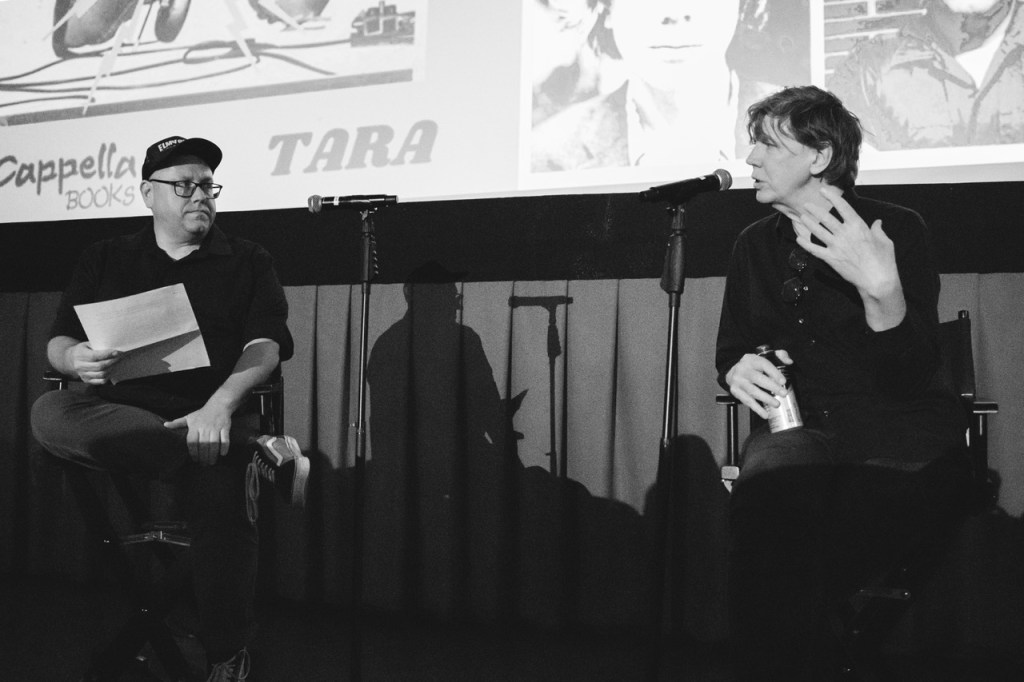
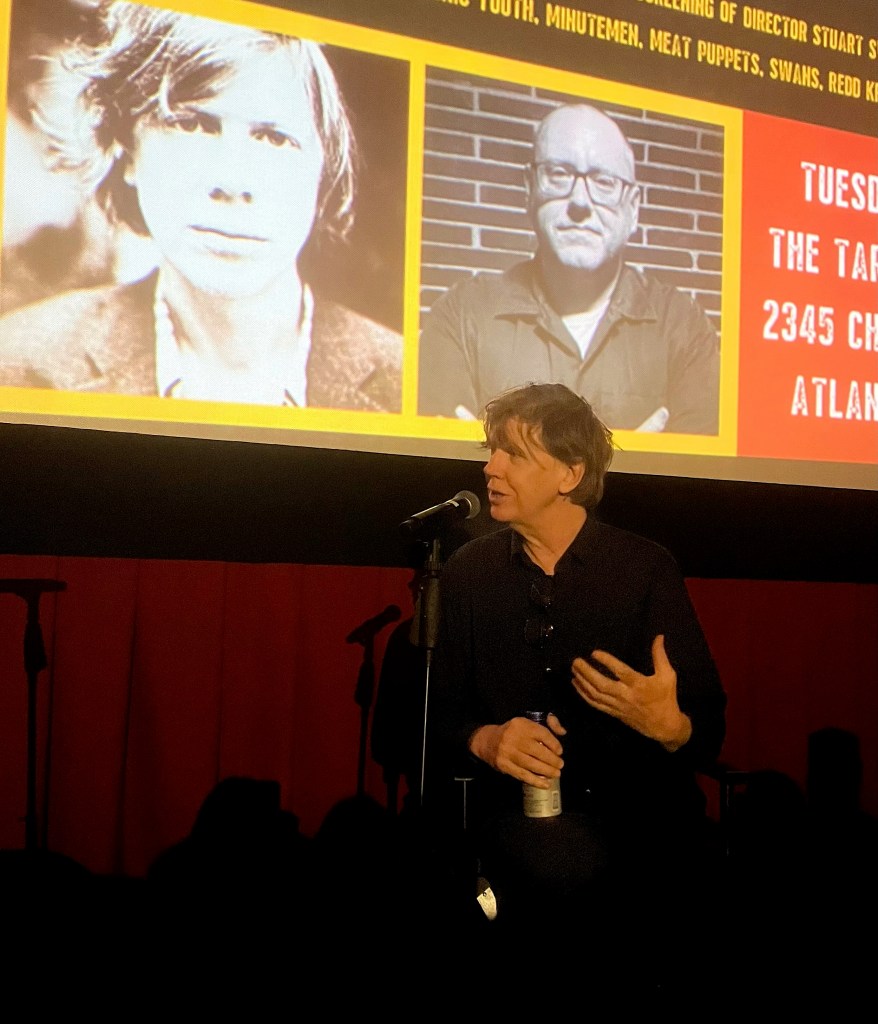
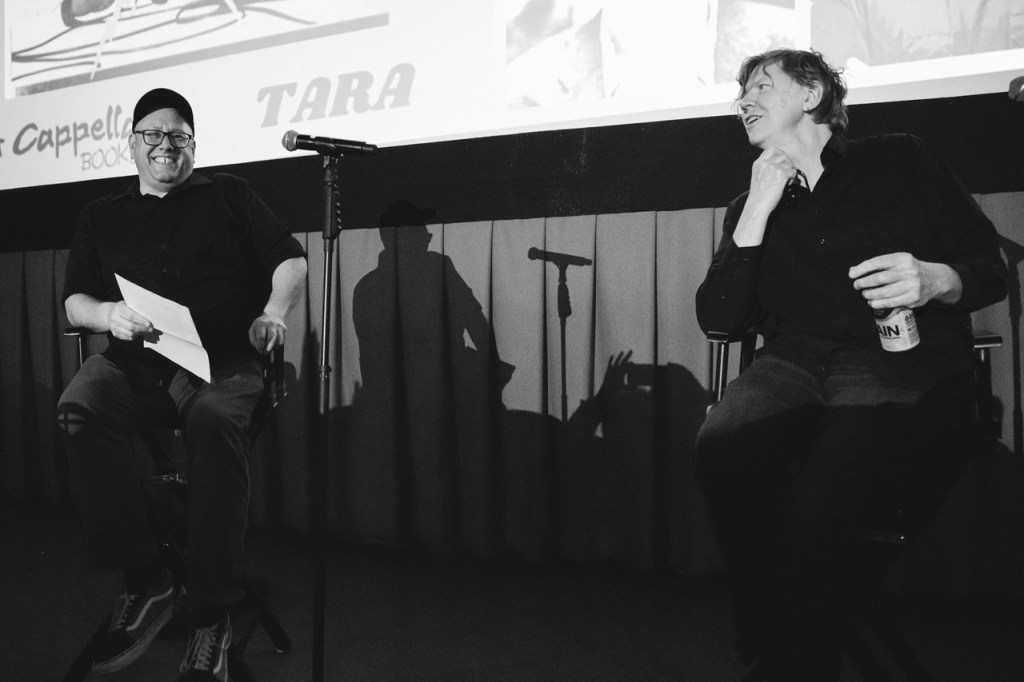
Thurston Moore at the Tara Theater. Photo by Jeff Shipman
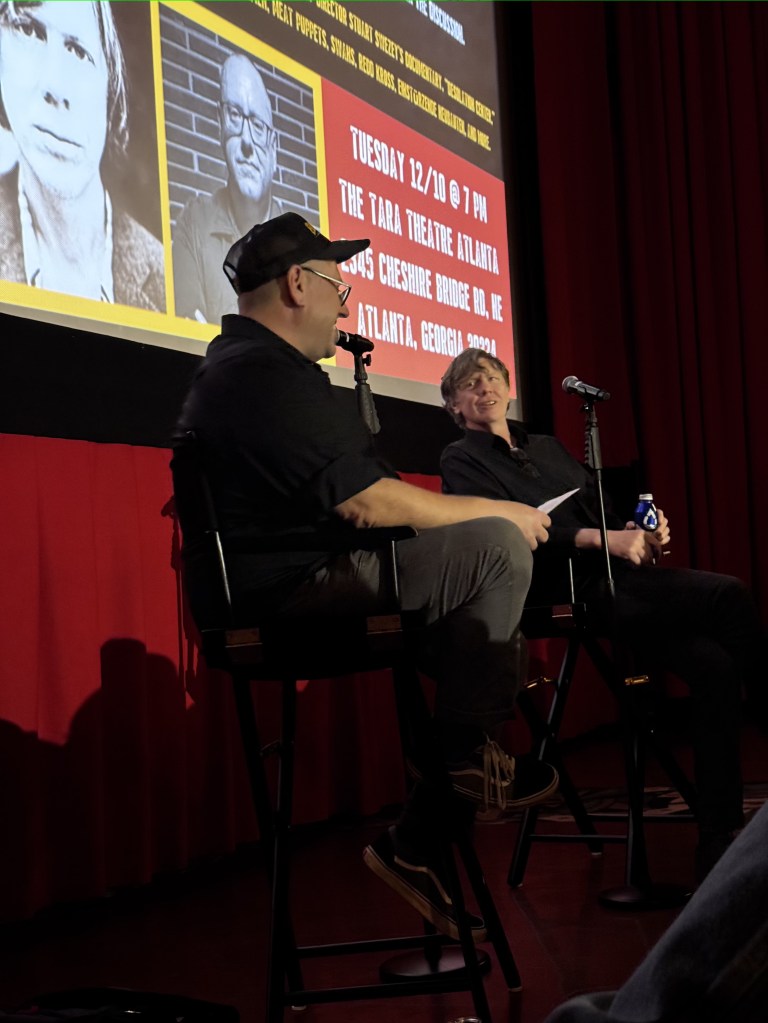
A fun and dynamic evening unfolded at the Tara Theater on Tuesday, December 10, as Thurston Moore appeared in conversation with yours truly, Atlanta music writer Chad Radford.
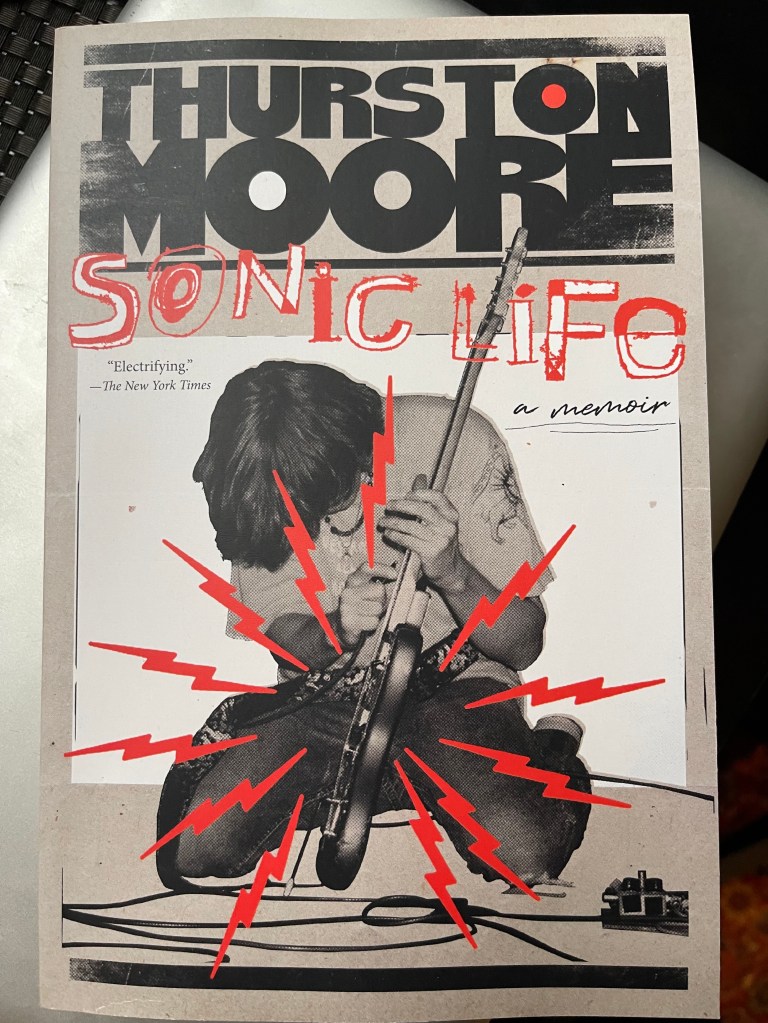
Introduced by Randy Gue, Assistant Director of Collection Development & Curator of Political, Cultural, & Social Movements for Emory University’s Rose Library, and presented by A Cappella Books, the night was anchored by Moore’s 2023 memoir, Sonic Life. He also reflected on a career that reshaped the alternative and underground musical landscapes of the 1980s, ‘90s, and beyond. In a candid exchange, Moore opened up about the forces that inspired Sonic Youth, navigating the post-punk and no wave underbelly of New York City and the ferocious hardcore emanating from Los Angeles in the early 1980s.
Moore also relived heading out on the road with his Sonic Youth bandmates–Lee Ranaldo, Kim Gordon, and original drummer Bob Bert–for their first out-of-town trek. The “Savage Blunder Tour” carried Sonic Youth and Swans from New York to Atlanta culminating with a deranged performance at the legendary 688 Club.
Later, Moore revealed how writing Sonic Life freed up his mental space, and paved the way into a new creative chapter. His latest album under his name, Flow Critical Lucidity, stands as a testament to this state of mind, blending his signature dissonant guitar textures, rhythms, and space with introspective clarity.
The conversation ranged from the personal to the esoteric, touching on topics like the divisive Faith/Void split 12-inch on Dischord Records, a perennial argument-starter among D.C.’s hardcore purests. Moore’s infectious enthusiasm for such musical touchstones reminded everyone why he remains a revered cultural figure.
Moore also recounted Sonic Youth’s participation in Stuart Swezey’s legendary Desolation Center concert series, playing the 1985 Gila Monster Jamboree in the Mojave Desert. He described the surreal experience of channeling their avant-garde energy into a setting as raw and untamed as the music itself. This set the stage for the night’s closing event: a screening of “Desolation Center,” the documentary that chronicles Swezey’s revolutionary desert concerts.
The evening offered a rare chance to glimpse into Moore’s world through his own words and to explore the intersections of music, memory, and creative reinvention.
Check out a gallery of images from the evening below.
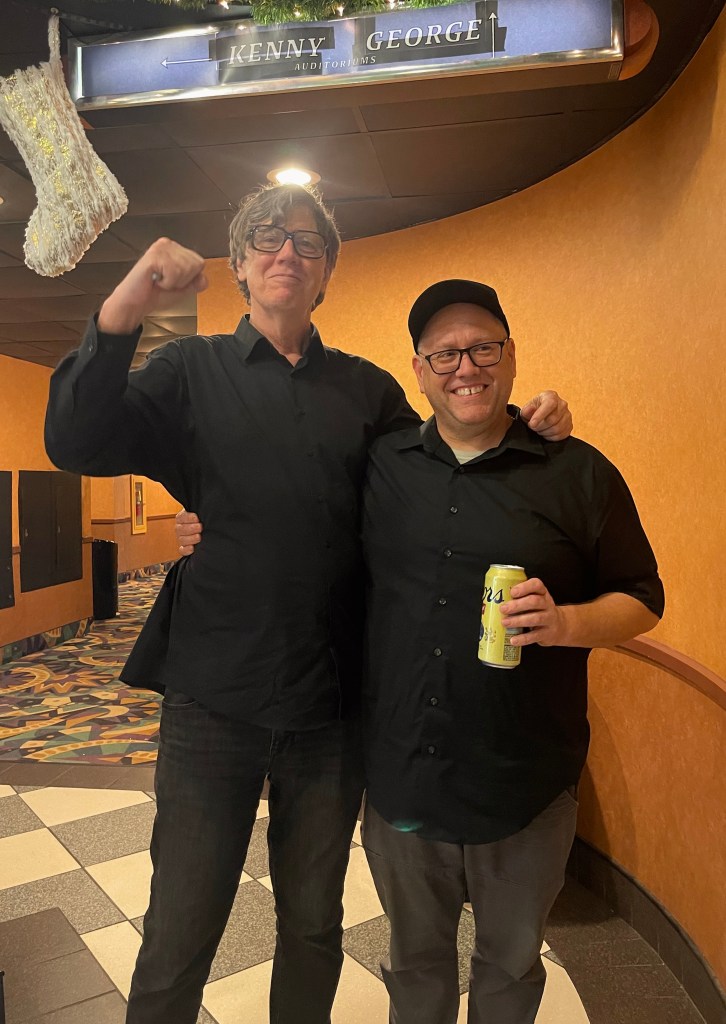
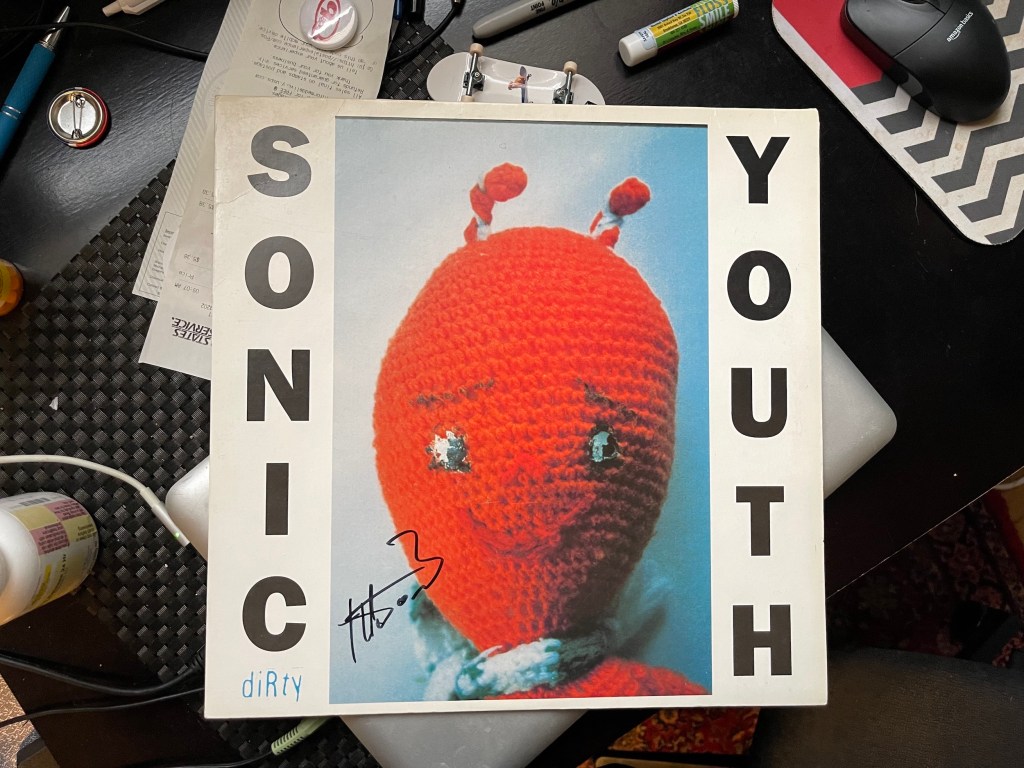
Thurston Moore. Photo by Jeff ShipmanPhoto by Jeff ShipmanPhoto by Jeff ShipmanPhoto by Jeff ShipmanRandy Gue. Photo by Jeff ShipmanSonic LifeSonic LifeSonic LifeThurston Moore photo by Laura HuntChad Radford (left) and Thurston Moore. Photo by Jeff ShipmanThurston Moore and Chad Radford. Photo by Todd PloharskiThurston Moore. Photo by Jeff ShipmanChad Radford (left) and Thurston Moore. Photo by Todd PloharskiThurston Moore. Photo by Jeff ShipmanThurston Moore with his dogs Apollo and Vinkenoog. Photo by Jeff Shipman Chad Radford (left) and Thurston Moore. Photo by Jeff ShipmanPhoto by Todd PloharskiChad Radford (left) and Thurston Moore. Photo by Jeff ShipmanThurston Moore (left) and Chad Radford. Photo by Kristin Anderson“Dirty!” Photo by Chad Radford
If you have enjoyed reading this post, please consider donating to RadATL. Venmo to @Chad-Radford-6 or click on the PayPal link below.
From the founding member of Sonic Youth, a passionate memoir tracing the author’s life and art—from his teen years as a music obsessive in small-town Connecticut, to the formation of his legendary rock group, to 30 years of creation, experimentation, and wonder.
Following the conversation, The Tara will host a screening of director Stuart Swezey’s documentary film, Desolation Center, featuring performances by Sonic Youth, Minutemen, Meat Puppets, Swans, Redd Kross, Einstürzende Neubauten, and more. Moore will introduce the film.
A note on the THREE types of tickets available for this event:
Book Talk Ticket Includes a signed paperback edition of Sonic Life and admission for the 7 p.m. book talk and signing. ($20 + tax)
Book Talk and Movie Ticket Includes a signed paperback edition of Sonic Life, admission for the 7 p.m. book talk and signing, and the 8:30 p.m. screening of Desolation Center. ($36 + tax)
Movie Ticket Admission to the 8:30 p.m. screening of Desolation Center. ($16 + tax)
About the Book Thurston Moore moved to Manhattan’s East Village in 1978 with a yearning for music. He wanted to be immersed in downtown New York’s sights and sounds—the feral energy of its nightclubs, the angular roar of its bands, the magnetic personalities within its orbit. But more than anything, he wanted to make music—to create indelible sounds that would move, provoke, and inspire.
His dream came to life in 1981 with the formation of Sonic Youth, a band Moore co-founded with Kim Gordon and Lee Ranaldo. Sonic Youth became a fixture in New York’s burgeoning No Wave scene—an avant-garde collision of art and sound, poetry and punk. The band would evolve from critical darlings to commercial heavyweights, headlining festivals around the globe while helping introduce listeners to such artists as Nirvana, Hole, and Pavement and playing alongside such icons as Neil Young and Iggy Pop. Through it all, Moore maintained an unwavering love of music: the new, the unheralded, the challenging, the irresistible.
In the spirit of Just Kids, Sonic Life offers a window into the trajectory of a celebrated artist and a tribute to an era of explosive creativity. It presents a firsthand account of New York in a defining cultural moment, a history of alternative rock as it was birthed and came to dominate airwaves, and a love letter to music, whatever the form. This is a story for anyone who has ever felt touched by sound—who knows the way the right song at the right moment can change the course of a life.
About the Author Thurston Moore is a founding member of Sonic Youth, a band born in New York in 1981 that spent 30 years at the vanguard of alternative rock, influencing and inspiring such acts as Nirvana, Pavement, the Yeah Yeah Yeahs, My Bloody Valentine, and Beck. The band’s album Daydream Nation was chosen by the Library of Congress for historical preservation in the National Recording Registry in 2006. Moore is involved in publishing and poetry and teaches at the Summer Writing Workshop at Naropa University in Boulder, Colorado. He divides his time between the USA and England.
About the Film Desolation Center is the previously untold story of a series of early ’80s guerrilla music and art performance happenings in Southern California that are recognized to have inspired Burning Man, Lollapalooza, and Coachella, collective experiences that have become key elements of popular culture in the 21st century. The feature documentary splices interviews and rare performance footage of Sonic Youth, Minutemen, Meat Puppets, Swans, Redd Kross, Einstürzende Neubauten, Survival Research Laboratories, Savage Republic and more, documenting a time when pushing the boundaries of music, art, and performance felt almost like an unspoken obligation.
Directed by Stuart Swezey, the creator and principal organizer of these unique events, Desolation Center demonstrates how the risky, and at times even reckless, actions of a few outsiders can unintentionally lead to seismic cultural shifts. Combining Swezey’s exclusive access to never-before-seen archival video, live audio recordings, and stills woven together with new cinematically shot interviews, verité footage and animated sequences, Desolation Center captures the spirit of the turbulent times from which these events emerged.
If you have enjoyed reading this post, please consider making a donation to RadATL. Venmo to @Chad-Radford-6 or click on the Paypal link below.
Pylon Reenactment Society is fronted by Vanessa Briscoe Hay, whose voice brought Pylon’s kinetic energy to a fine point in the early ‘80s. With PRS, she fronts a wholly new group rounded out by guitar player Jason NeSmith, bass player Kay Stanton (Supercluster, Casper & the Cookies), and drummer Gregory Sanders (Casper & the Cookies). With their recently released debut album, Magnet Factory, the group expands upon Pylon’s angular style with a more pastoral approach in songs like “Educate me, ” “3 x 3, ” and “Fix It.”
Maybe they’ll roll out the seasonal hit (?), “Christmas Daze,” which materialized around this time last year.
Is/Ought Gap embodies the wild side of the no-frills ethos that fueled Athens’ heyday. “Artsy Peace and Love,” “Lucky 7,” “He Said,” and so many other ramped up numbers are defined by singer Bryan Cook’s razor-tongued and fun-loving invectives.
This show is a victory lap for Is/Ought Gap, who’s playing songs from this year’s long overdue discography LP, SUA, released via Happy Happy Birthday To Me Records.
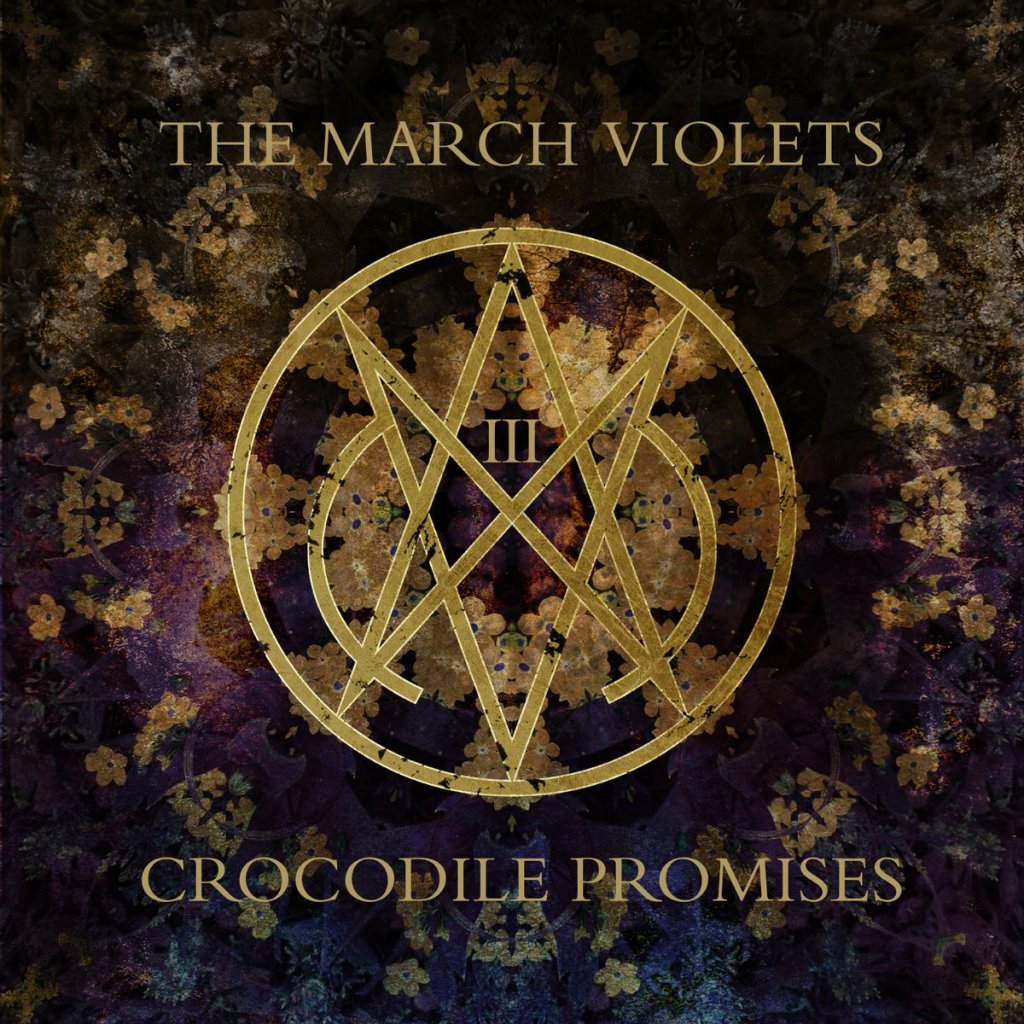
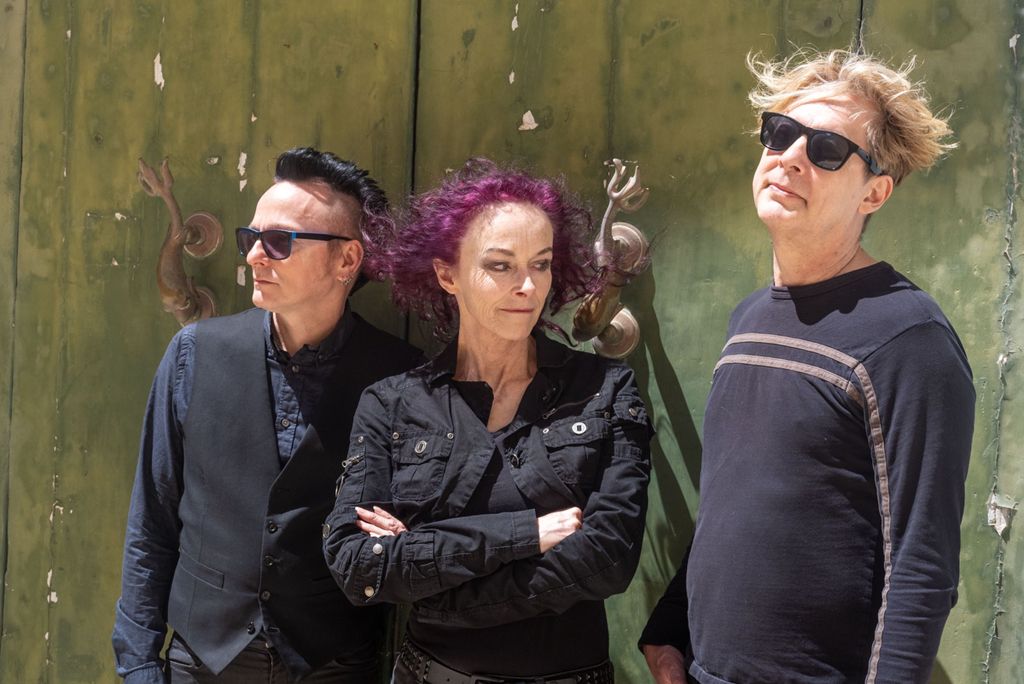
After more than a decade between releases, the March Violets return with Crocodile Promises, a sleek and muscular new album that is as much a return to the group’s classic gothic rock and post-punk form as it is a bold step forward. The secret to the Violets’ success has long been their penchant for crafting undeniably catchy songs that thrive in an atmosphere of rich imagery and ambiance. Press play on the ‘80s hits: “Walk Into the Sun,” “Snakedance,” “Grooving In Green,” “Crow Baby,” et al. The art of balancing complex harmonies and melodies with lyrics steeped in perfectly compelling abstraction is the March Violets’ strong suit. For Crocodile Promises, core members vocalist Rosie Garland and guitar player Tom Ashton were joined by former Violets bass player Mat Thorpe (also of the group Isolation Division). Together, they fleshed out nine new numbers at Ashton’s SubVon Studios in the rural countryside near Athens, Georgia, where Ashton produced the record.
Crocodile Promises opens with “Hammer the Last Nail,” a song that’s bound by billowing and shadowy textures that slowly open up to reveal the album’s vast and majestic palette. Thick and undulating guitar riffs and constrictive hooks match Garland’s bewitching traipse into modern terrain. “Bite the Hand” and “Virgin Sheep” kick up the energy with a full-bore punk charge.
The “Kraken Awakes” and “Mortality” are slow-burners invoking tales of revenge and deceit. “This Way Out,” builds into a roaring and hypnotic groove, with its thumping beats and Garland’s pointed delivery.
The March Violets: Mat Thorpe (from left), Rosie Garland, and Tom Ashton. Photo courtesy Jace Media.
There’s a real sense of urgency at work in Crocodile Promises. The production is as subtle as it is sweeping when it needs to up the intensity, pushing heaviness, real-world angst, and aggression into new dark realms, alternating between understated tension and unleashed power.
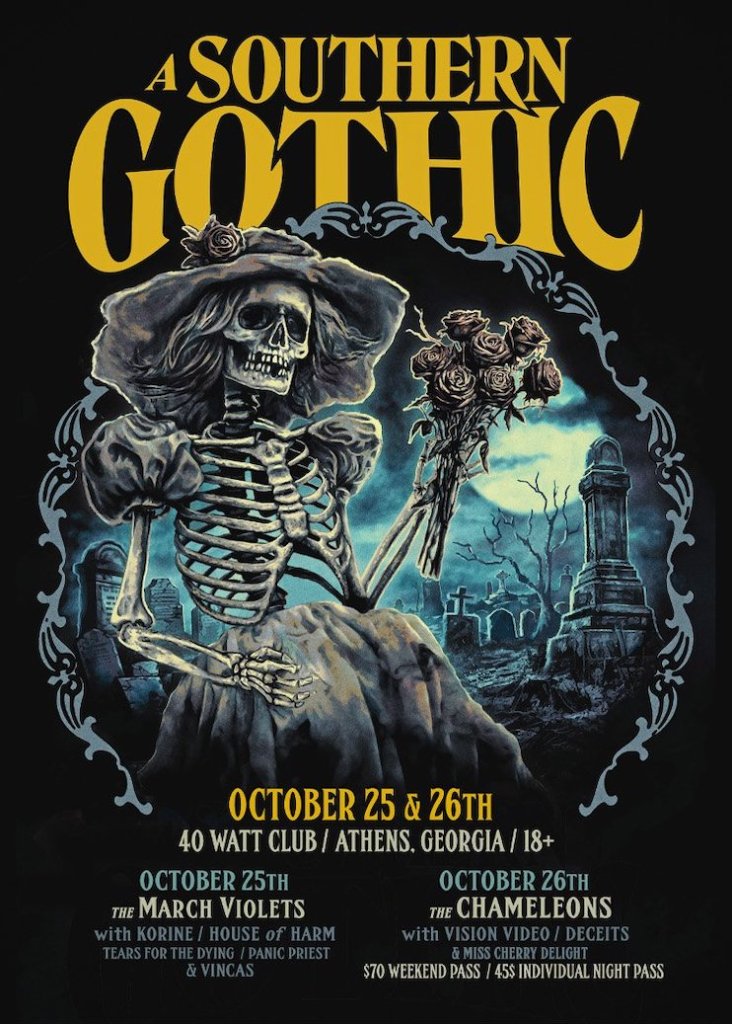
Friday, October 25 March Violets, Korine, Tears for Dying, House Of Ham, Vincas, Panic Priest, and Miss Cherry Delight. Find Friday night tickets here.
James Brandon Lewis (left) and the Messthetics (Anthony Pirog, Joe Lally, and Brendan Canty). Photo by Shervin Lainez.
With their third and latest album, The Messthetics and James Brandon Lewis, Brendan Canty, Joe Lally, Anthony Pirog, and James Brandon Lewis deliver a compelling blend of jazz and post-hardcore inflections, where Lewis’s saxophone intertwines with rhythmic intensity and experimental tones.
Canty and Lally, best known as Fugazi’s drummer and bass player, infuse the album with their trademark energy anchored by deep grooves. Pirog adds layers of sonic texture amid challenging twists and turns.
Before making their way to Atlanta to play The Earl on March 26, Canty, Lally, and Pirog talked about the creative process behind the album, working with Impulse, and the ins and outs of their favorite songs on the album. Lewis was busy playing a show in Zurich.
How did you meet James Brandon Lewis and start playing music with him?
Anthony Pirog: I met James about 10 years ago during a recording session in New York that the drummer William Hooker organized. It was a quintet: William was on drums, Luke Stewart on bass, Jon Irabagon on sax, James on sax, and I was on guitar. It was for an album called Pillars… At The Portal.
James and I liked each other’s sounds. When the recording was over we went out and got something to eat and started talking. He asked me to record a couple of records with him and to do some touring with him in Europe and the US.
When the Messthetics were asked to play Winter Jazzfest in New York in 2019, I thought it would be a good idea to have James sit in with us. He played three songs, and almost every time we’ve been in New York after that he’s sat in with us.
Joe Lally: We had played the Winter Jazzfest, and it just happened. It was hard to understand what happened because it happened while we were playing live. It was great, but then it was over and James was gone. It’s not like we got to hang out and get to know him or spend any time with him. Later, we were back up there for a show at the Bell House and we asked him to play with us.
This time, we had a little more time to assess him joining us. We got to talk about the song that he would join us on, and what we might do backing him up. That little bit allowed us to get a handle on it, and it felt good. Then COVID happened and a bunch of time went by. It was awful and lonely. At the end of it, we were getting out and playing again, and we were doing a show at Union Pool. James asked us if we would contribute a track to the record he was doing at that time.
And that’s the song called “Fear Not” on his album called Eye of I.
Lally: That’s the song! At Winter Jazzfest, we played the electric Miles “Black Satin,” we did Anthony’s tune “Adonis Painter,” and we did “Serpent Tongue.” At Bell House we did “Serpent Tongue” and we did “Once Upon A Time,” which is a Sonny Sharrock piece.
Anthony told us the day before we went up to play New York that James said if we came up the evening before—if we got there early enough—we could record in Brooklyn. So we went up early and recorded that song with him. We didn’t know what he wanted us to do, but Anthony had played that song with him before.
Pirog: I had only played it once before with him in a quartet in Catania when we had our residency over there.
What did James bring out of the Messthetics?
Lally: We get to be more Mess-thetic!
Brendan Canty: We’re Messthastecising [laughs].
Lally: Playing with James has amplified everything that we’ve reached for and everything that we’re capable of doing, and he has helped us reach even farther.
Canty: Playing with James has allowed me to play a little louder, honestly. He also reinforces a lot of the melody lines that Anthony wrote and turns them into these beautiful soaring pieces.
Anthony and James are good at playing with each other and on top of each other in complementary ways where they sound like one instrument. Anthony supplies these beautiful bell-like transient sounds and James has this big warm body. I hope that doesn’t sound too sexy, but it’s true [laughs].
Lally: There’s a simplification going on within us as far as the writing goes. We’re kind of minimalizing everything to allow for creative ways to carve out spaces that allow James and Anthony to fill in. It’s not like it’s easier to write; it’s that it’s more clear.
Canty: There is a certain level of abandon to these songs which is pretty inspiring. I have always felt that while playing with Anthony. One of the great things about playing with him is that we’re playing on stage and suddenly he’s pushing us to go somewhere completely different just to support him on a journey into cacophony.
Some people view Anthonly as a virtuoso, but I also know that he is the ultimate noise artist. I love being pushed into all of these different areas. James does the same. When people show up and play with that level of commitment and that level of ambition in terms of exploring and pushing the room around a little bit it gets exciting quickly. Every moment of the gig I’m playing catch up, and I’m trying to go with them to these places. It’s a blast.
With Joe and I there’s like an ESP in terms of playing together. We just go there with them. It’s a liberating way to play.
How is releasing an album on Impulse different from working with Dischord Records?
Lally: It’s a hard thing to describe because we have spent all of our life at Dischord. This record has barely come out, so we don’t know what it’s like.
Everyone we’re dealing with at Impulse is nice. There’s a big team there. That’s different. Dischord has like five people that make up the label. At the same time, this is the first record I have done where I feel like it’s just going to go away into the world. With my other records, everything else I’m involved with, it’s like my friend has them. They live there. I know where they are, and they’re taken care of. I feel like they’re being protected. This is the first one that’s going out into the world and now it’s gone.
I have a lot of respect for so many of the artists that I love who were and still are on Impulse. Being on a label with Irreversible Entanglements is fantastic!
Canty: Without getting too much into the business side, we’ve been working with a great bunch of people who seem to listen to us and allow us to control every ounce of content that we want to put out into the world. I’ve made all the videos myself. We’ve shot everything. I edited them all.
What happened, Chad is that we made the record first. Then Impulse heard it and got us excited. I sent it to my friend at Impulse and they said “We totally want to put this out.” So the music came first. I said, “Let me talk to everybody about it. I talked with Ian [MacKaye] about it. He said, “This sounds awesome!”
Everybody was excited about it. It’s working out fine so far. As long as we can keep it on our own in terms of how it’s being presented. They haven’t messed with any of the audio bits at all, and we got to do everything we wanted to do with it.
They didn’t say boo to us about it, about the mixes, or about anything we used. We mastered it. We got Bob Weston to cut the lathes, and they’ve been creative about distribution. They’ve worked with us. So far so good.
Lally: Making this decision about stepping away from Dischord is a really weird idea. Even if it’s just for one record it’s a weird idea for me. At the same time, what we’ve made with James is really different. It’s not like the other Messthetics records. Frankly, it all happened so fast! Brendan passed it along to somebody who is now suddenly saying, “Impulse really likes this!” It was hard to try to do anything with anyone other than Impulse because I was thinking of James and Anthony. We had to do this for them. This is too good. This is the music they’ve worked really hard at making. A huge part of it for me was we have to do whatever we can to see if this can work, and it’s been worth it.
Canty: I want to add that in no way do I ever want this to be reflected upon as us being dissatisfied with Dischord.
Lally: Dischord has always been so supportive of us, and still continues to be family. Ian has always been open to his bands trying different things and answering questions. He gave us his blessing. Working with Impulse for this record is just that circumstantial. The opportunity came up and it felt like the right thing to do for Anthony and James. It’s something that happened at that particular moment. I seriously see us recording for Dischord in the future.
You’re also bringing James’ fans to Dischord, and Fugazi and Messthetics fans to Impulse.
Canty: That’s the thing that’s so interesting about all of this, it’s the dialogue that’s coming with it. Everywhere I book a show in Europe or the US, I’m asking, “Is it this kind of show? We were invited to play the Vancouver International Jazz Festival and the Winnipeg Folk Festival, Hillside Festival, Big Ears, Treefort Music Fest, and Primavera. We’re getting rock festivals, jazz festivals, and folk festivals. It truly makes me feel proud that we’re able to play all those things while making music that I think defies categories. … Even if it’s on a jazz label [laughs].
Anthony, you have worked with indie labels like Cuneiform Records and Sonic Mass. What’s it been like working with Impulse?
I can only say positive things. My first record came out on Cuneiform when I was 32 years old. That didn’t seem possible. Then, hooking up with Joe and Brendan and being on records that came out on Dischord never seemed possible. And now this. I feel incredibly lucky that I’ve been able to work with these outlets.
In the six degrees of separation game, you’re connected to everyone from Moor Mother to John and Alice Coltrane to Minor Threat.
Pirog: Yes, and we’re all still processing that.
Joe, do you have a favorite song on the record?
I hesitate to say, but there’s something about the first song, “L’Orso.” It was such a strange thing for us to get a hold of. I remember when Anthony presented the riff to us, I spent the rest of the day being frustrated about not understanding where I was in the riff. Every time I tried to play it, I was just like, “Oh my God, I almost have it, but where am I? What comes next? I was always so lost in it.
The next time we got together to play with Anthony, I was like, “I don’t know, man. I don’t know if this is entertaining to play. When I tried playing it for him, he said, “Wow, you kind of know it. I haven’t even learned it yet.” I felt like I was banging my head against the wall with it. It was just a different type of song for us. It was a hard one for us to get a grip on, and when we finally did it, it felt great.
Canty: “L’Orso” is one of my favorites to play. I always like the songs that feel like they’re pushing things a little farther than we’ve ever done before. And the melody that Anthony came up with for this one is ridiculous in the best possible way.
I love how understated it is, but it has this really tricky melody. Then James and Anthony destroy all the solos. It makes me happy. Beyond that, I like “Three Sisters” as a whole.
Anthony, what’s your favorite song on the record?
Before I talk about that, I want to say that Joe told that story about learning “L’Orso.” That song is really hard to play, and I wanted to throw that in there. I am very proud of that song, and I am very proud every time I get through the melody.
Brendan brought up “Three Sisters.” I believe that’s the first full song we wrote before we started talking with James—after taking a break during COVID.
And it’s funny because when I played that melody I was thinking of James. I was thinking that’s the kind of thing he would play or hear. He was on my mind even before we were having conversations about playing with him.
My favorite track on the record is “Boatly” because we wrote it together. My memory is that Joe had his baseline in the A section. Then we started playing the groove and I came up with the melody over that baseline. Then maybe the next practice or later in that rehearsal I started playing the chords in the B section. Brendan started singing to the chord, and that became the melody of the B section. Then in the outro, we just worked up this chord progression and we played it a little bit, but it was always like, “Ah, when James gets here he’ll start blowing over it”.
When we got through to that section in the studio, it just took off. During rehearsal, we never played it through the full arc of what it could be. It was like, “This will sound great. We’ll just do it in the studio.” That is my favorite moment on the record because of the overall arc of the piece. It goes where James and Brendan take it to when he’s pounding the rhythms out at the peak. I’m proud of that one.
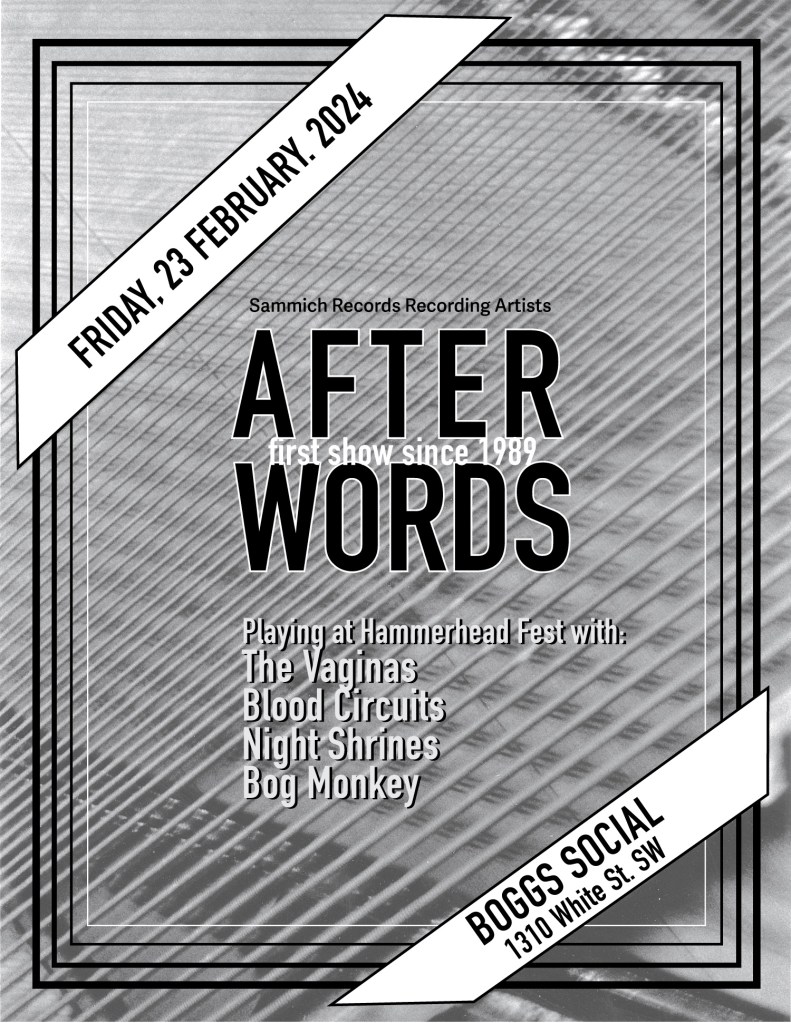
Friday, February 23: Night One The Vaginas, Blood Circuits, Night Shrines, After Words (playing their first show since 1989), and Bog Monkey. $15. Doors open at 7 p.m.
Cemetery Filth
Saturday, February 24: Night Two Cemetery Filth, Day Old Man, Shehehe, Breaux!, Los Ojos Muertos, Blind Oath (OK), and Billy Hangfire $15. Doors open at 7 p.m.
If you have enjoyed reading this post, please consider making a donation to RadATL. Venmo to @Chad-Radford-6 or click on the Paypal link below.
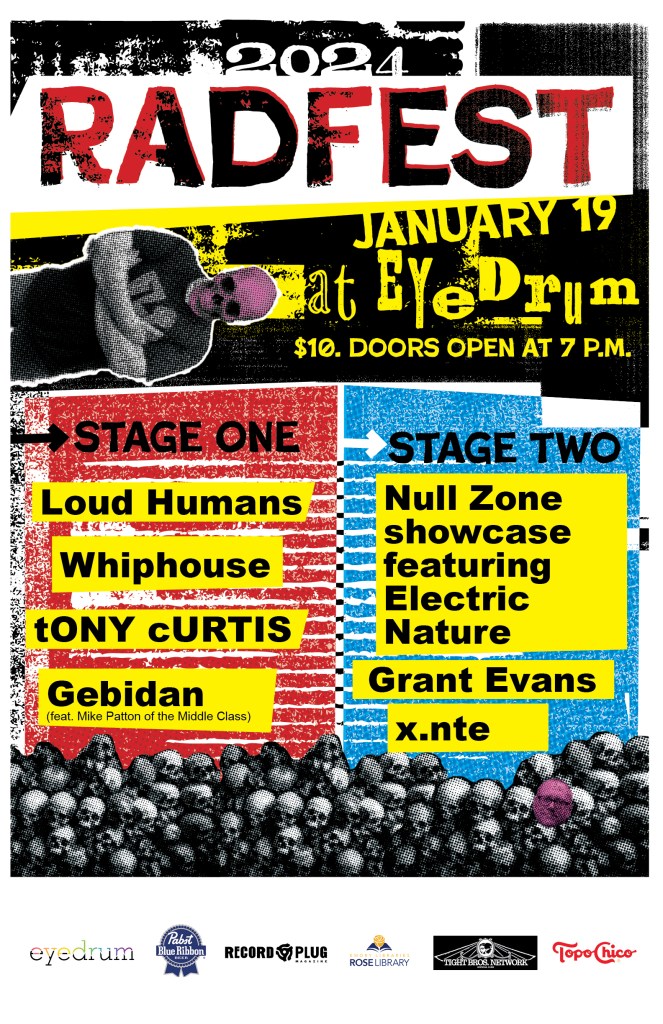
Radfest is back after a three-year Global pandemic hiatus! RadATL’s founder celebrates one more year around the sun, this time at Eyedrum Art & Music Gallery on Friday, January 19.
This year’s show features performances by seven post-punk, post-hardcore, and pure noise greats spread across two stages.
Photo courtesy x.nte
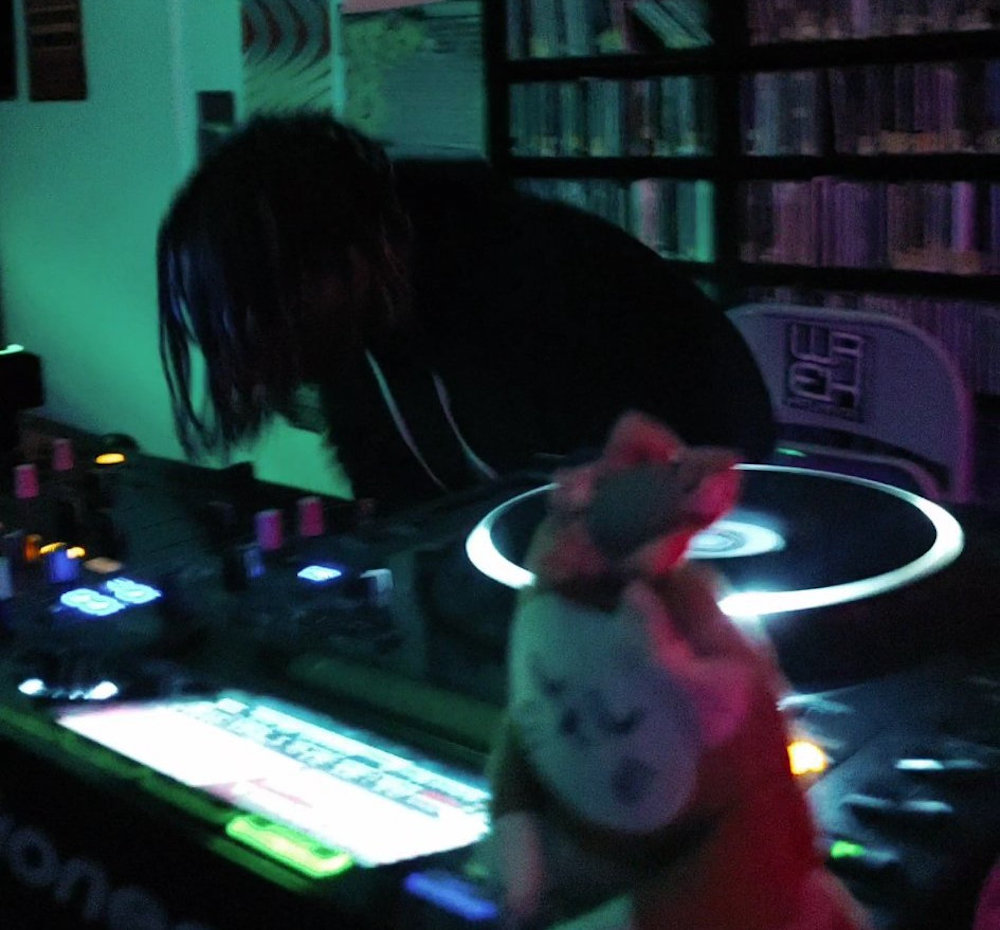
Athens-based cassette label \\NULL|ZØNE// gets the party started with a showcase of Georgia-bred noise acts including x.nte, Grant Evans (of Quiet Nights), and label boss Michael Potter’s own project The Electric Nature. Each act is cranking our short, powerful sets that challenge the traditional notions of what music is, and what it can be. Potter has been on the frontier of this scene for a long time, and it’s been far too long since his last Atlanta appearance, so it’s great to have him back.
Gebidan photo by Geoff Knott
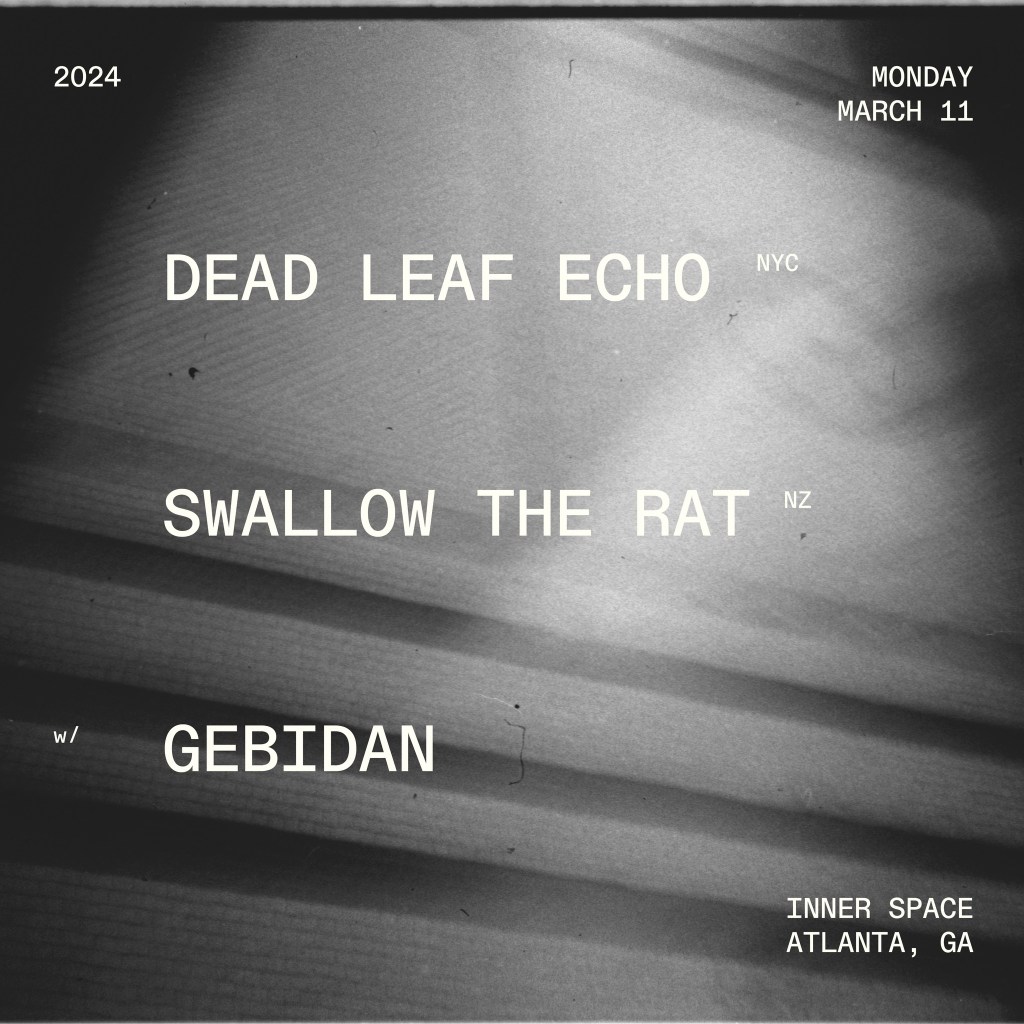
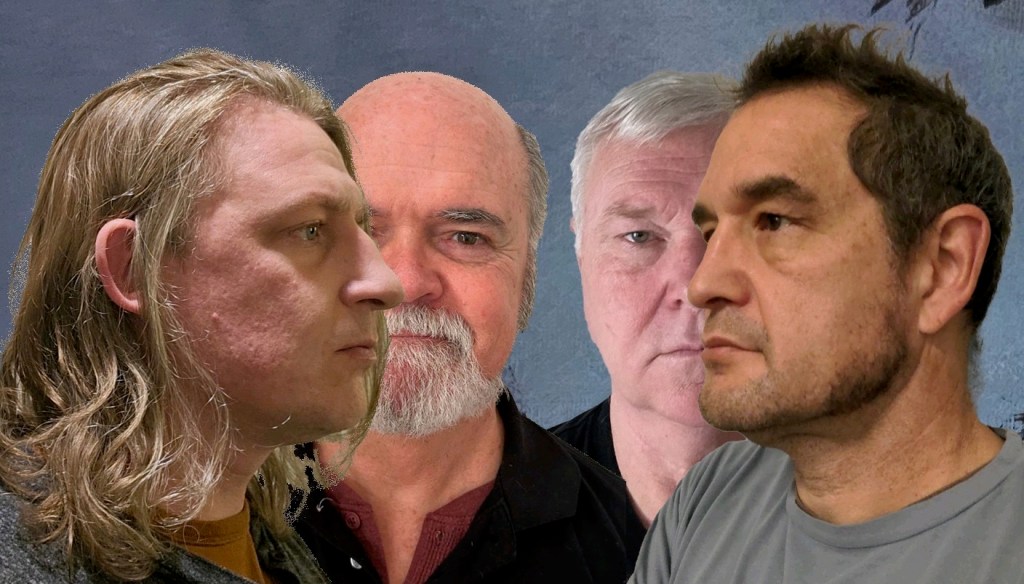
Gebidan marks its live debut. The recently founded four-piece features Mike Patton of Orange County’s late ‘70s hardcore outfit Middle Class. The group is often hailed as the first North American hardcore act EVER. Patton’s musical resume also includes time spent playing with Jack from TSOL in the band Cathedral of Tears. He was also in Eddie And The Subtitles, and Trotsky Icepick. But really, check out his credentials on Discogs to see that he worked as a producer and backup vocalist on the Adolescents’ self-titled “blue album.” He also produced the Minutemen’s “Joy” single, along with a handful of other Minutemen releases.
Patton lives in Georgia these days and is singing and playing bass with the new outfit. Gebidan’s first recordings find the group embracing a more abstract, psychedelic take on indie and alternative rock songwriting. Great stuff!
tONY cURTIS photo by Ellen McGrail
WREK 91.1 FM’s “Destroy All Music” co-host and bass player Tony Gordon teams up with guitarist Curtis Stephens for tONY cURTIS. Together, they create a scrapping, smoldering grind of earth rattling textures. Gordon (also of FREEBASS, Zandosis, and Charlie Parker fame) is well aware of the power of subtlety, especially when it’s blasted at maximum volume. The 11 numbers that make up their latest release tc2 lull the ears and the brain into a meditative state by commanding a deeper level of ecstatic listening. Beyond rhythm, beyond melody, and beyond the drone lie the pure sonic textures of steel strings, and they are teeming with abstract beauty and limitless possibilities for the imagination.
Photo courtesy Whiphouse
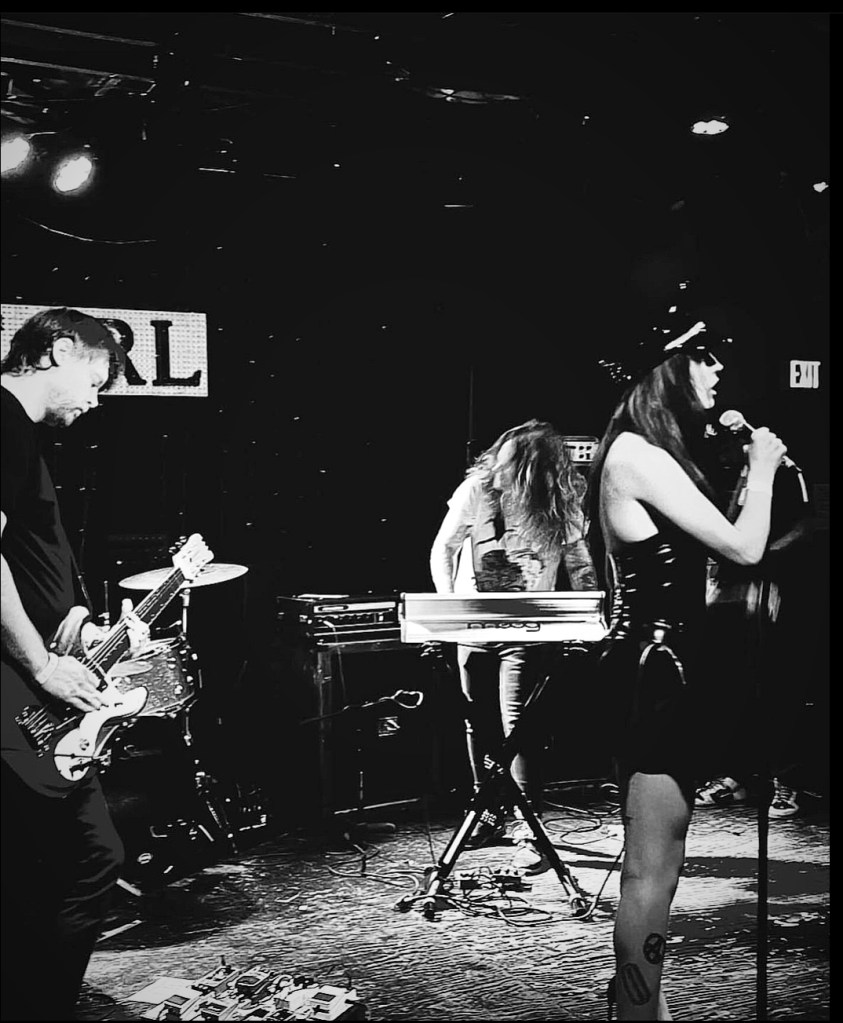
Whiphouse brings a high-energy and death-afflicted punk dirge to the stage. It’s one of my favorite new bands to emerge from these parts in quite some time. Lots of homies in this group! Michael Keenan, Mike Bison-Beavers, Debbie Beat, Stanley Jackson, and one of my favorite former interns Kelly Stroup! It’s just an awesome assemblage of people tearing up on stage the only way they know how.
Loud Humans
Loud Humans close out the show. More info. coming soon.
This is an ALL AGES SHOW! Doors open at 7 p.m. $10 gets you in. Fri., Jan. 19. 515 Ralph David Abernathy Blvd. Park in the lot across the street if the side street and front lot are full.
Thanks to this year’s sponsors! Eyedrum, Topo Chico, Pabst Blue Ribbon, Emory University’s Stuart A. Rose Manuscript, Archives, and Rare Book Library, Record Plug Magazine, The Tight Bros. Network, and to Dain Johnson who created this year’s magnificent flyer.
If you have enjoyed reading this review, please consider making a donation to RadATL. Venmo to @Chad-Radford-6 or click on the Paypal link below.
In Greek mythology, dryads appear as tree-dwelling spirits who lure men to their deaths by seducing them into a shadowy realm of the unknown, sometimes replacing them with a doppelgänger—a sinister look alike. It’s a dark and mysterious tale that’s been repurposed in everything from David Lynch’s surreal T.V. saga “Twin Peaks” to Jordan Peele’s paranoid horror film Us. It’s a puzzling metaphor about there being more to the natural world than meets the eye. It’s also a bewitching entry point into The Book of Flowers’ debut cassette tape, Pastels.
Press play on the opening three numbers, “Foxfire & Clover,” “The Housewitch,” and “The Dryad,” and dreamlike imagery takes shape amid swathes of murky country crooning, mellotrons, and British folk-style songwriting.
“I was thinking a lot about impressionist painting and things that use a lot of pastels,” says songwriter James Andrew Ford. “I wanted the songs to have a pastoral feeling to them, with a kind of a dark feeling as well, like watching the sun set over an empty field.”
Ford is a co-founder of Atlanta’s industrial, EBM, and dark wave label DKA Records. The lingering earthly and ethereal tones that he conjures in the songs on Pastels are a far cry from the digital crunch and urgency of much of the label’s output, including that of his own former project Tifaret. But from the soft dissonance of the cover art’s pink and green colors to the balance of electronic and organic textures over Krautrock rhythms of “The White Dress” and “Watch the Stars,” Ford’s shift in style emerges quite naturally.
“During the latter part of Tifaret, I was banging my head against the wall because I was having a lot of issues trying to do a full-length,” Ford says. “I was trying to figure out how to do something that felt satisfying and cohesive, but wasn’t just eight tracks of Front 242 or whatever. How do you create a sad song using synthesizers that doesn’t just sound like old synth pop? How did somebody like Trent Reznor or Depeche Mode get around the monotony of synthesizers?” he asks. “Well, In Depeche Mode, Martin Gore wrote a lot of songs on an acoustic guitar. Trent Reznor writes everything on a piano, or at least he used to. So I thought maybe I need to start writing on acoustic guitar.”
But Ford had never played acoustic before. He hadn’t played an electric guitar in nearly a decade. So he spent much of the pandemic learning how to play an acoustic guitar. The process was a period of discovery, planting the seeds for the songs on Pastels.
“It basically taught me how to have a song there before you have any music,” he says. “With Tifaret, I always wrote the lyrics last. So I was trying to cram in syllables, melody lines, and whatever else into what was already there. Versus if you start with an acoustic guitar, you’ve got your melody, you’ve got your lines written out. You don’t have to cram everything in.”
Book of Flowers
Previously, Ford was a religious studies major at Georgia State University. With The Book of Flowers he took a deep dive into British folklore. The first two songs to emerge were “Golden Lily” and “Housewitch,” both illustrate a reciprocal harmony that finds his slow and sweeping baritone voice shape the guitar tones, while the natural resonance of the acoustic guitar guides his rich, warm voice.
The lyrics call an epic range of images to mind, from rustic to quite horrific, in one musical motion.
In “The Dryad” he sings: “There in the bed she laid me to rest and slit my throat with a willow rod. She threw me to the raven. She threw me to the hound. She cleaned my skull for her god.”
“With that song, I always thought that I was basically writing an old fashioned murder ballad, but with the positions reversed.”
It’s a scene of pagan carnage that could have been pulled straight from films such as Robin Hardy’s “The Wickerman” or Ari Aster’s “Midsommar”—channeled through a palette of dark and apocalyptic musical inflections ranging from influences such as Current 93 and Nick Cave and the Bad Seeds. It’s quiet, it’s intense, and it’s not for the faint of heart, despite the music’s idyllic presence.
A version of this story originally appeared in the November issue of Record Plug Magazine.
If you have enjoyed reading this article, please consider making a donation to RadATL.






















 Rad/ATL