The great Brent Hinds—former Mastodon guitar player and mastermind behind such prolific acts as West End Motel (featuring the songwriting talents of Tom Cheshire of the Rent Boy, All Night Drug Prowling Wolves, and TCB), Fiend Without A Face, and Dirty B & the Boys—takes over the Garden Club at Wild Heaven for an evening of Southern fried surf punk, country, and monster movie rock ‘n’ roll. This show brings a veritable sampler of Hinds’ various projects from throughout the years together on one stage for a night of beauty and depravity that’s not for the faint of heart.
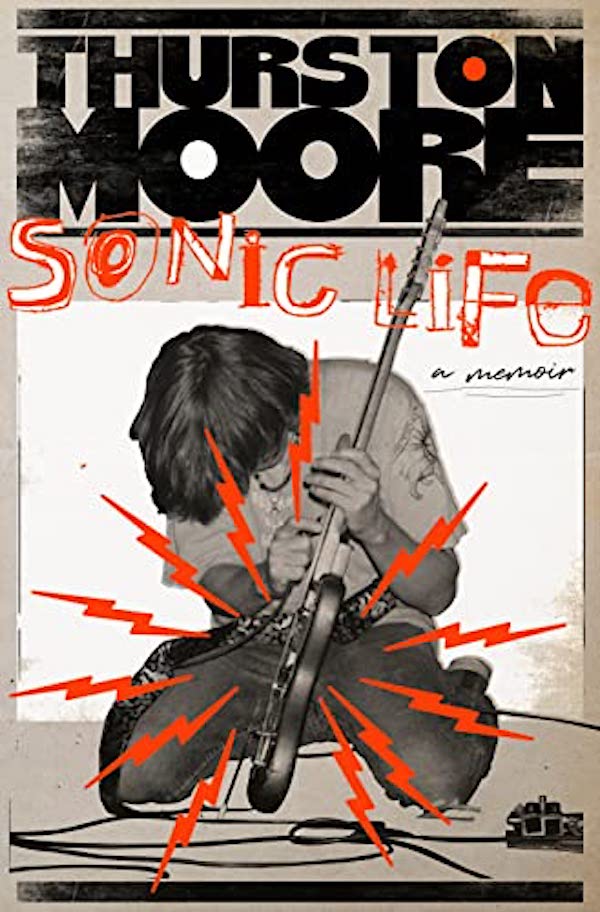
From the founding member of Sonic Youth, a passionate memoir tracing the author’s life and art—from his teen years as a music obsessive in small-town Connecticut, to the formation of his legendary rock group, to 30 years of creation, experimentation, and wonder.
Following the conversation, The Tara will host a screening of director Stuart Swezey’s documentary film, Desolation Center, featuring performances by Sonic Youth, Minutemen, Meat Puppets, Swans, Redd Kross, Einstürzende Neubauten, and more. Moore will introduce the film.
A note on the THREE types of tickets available for this event:
Book Talk Ticket Includes a signed paperback edition of Sonic Life and admission for the 7 p.m. book talk and signing. ($20 + tax)
Book Talk and Movie Ticket Includes a signed paperback edition of Sonic Life, admission for the 7 p.m. book talk and signing, and the 8:30 p.m. screening of Desolation Center. ($36 + tax)
Movie Ticket Admission to the 8:30 p.m. screening of Desolation Center. ($16 + tax)
About the Book Thurston Moore moved to Manhattan’s East Village in 1978 with a yearning for music. He wanted to be immersed in downtown New York’s sights and sounds—the feral energy of its nightclubs, the angular roar of its bands, the magnetic personalities within its orbit. But more than anything, he wanted to make music—to create indelible sounds that would move, provoke, and inspire.
His dream came to life in 1981 with the formation of Sonic Youth, a band Moore co-founded with Kim Gordon and Lee Ranaldo. Sonic Youth became a fixture in New York’s burgeoning No Wave scene—an avant-garde collision of art and sound, poetry and punk. The band would evolve from critical darlings to commercial heavyweights, headlining festivals around the globe while helping introduce listeners to such artists as Nirvana, Hole, and Pavement and playing alongside such icons as Neil Young and Iggy Pop. Through it all, Moore maintained an unwavering love of music: the new, the unheralded, the challenging, the irresistible.
In the spirit of Just Kids, Sonic Life offers a window into the trajectory of a celebrated artist and a tribute to an era of explosive creativity. It presents a firsthand account of New York in a defining cultural moment, a history of alternative rock as it was birthed and came to dominate airwaves, and a love letter to music, whatever the form. This is a story for anyone who has ever felt touched by sound—who knows the way the right song at the right moment can change the course of a life.
About the Author Thurston Moore is a founding member of Sonic Youth, a band born in New York in 1981 that spent 30 years at the vanguard of alternative rock, influencing and inspiring such acts as Nirvana, Pavement, the Yeah Yeah Yeahs, My Bloody Valentine, and Beck. The band’s album Daydream Nation was chosen by the Library of Congress for historical preservation in the National Recording Registry in 2006. Moore is involved in publishing and poetry and teaches at the Summer Writing Workshop at Naropa University in Boulder, Colorado. He divides his time between the USA and England.
About the Film Desolation Center is the previously untold story of a series of early ’80s guerrilla music and art performance happenings in Southern California that are recognized to have inspired Burning Man, Lollapalooza, and Coachella, collective experiences that have become key elements of popular culture in the 21st century. The feature documentary splices interviews and rare performance footage of Sonic Youth, Minutemen, Meat Puppets, Swans, Redd Kross, Einstürzende Neubauten, Survival Research Laboratories, Savage Republic and more, documenting a time when pushing the boundaries of music, art, and performance felt almost like an unspoken obligation.
Directed by Stuart Swezey, the creator and principal organizer of these unique events, Desolation Center demonstrates how the risky, and at times even reckless, actions of a few outsiders can unintentionally lead to seismic cultural shifts. Combining Swezey’s exclusive access to never-before-seen archival video, live audio recordings, and stills woven together with new cinematically shot interviews, verité footage and animated sequences, Desolation Center captures the spirit of the turbulent times from which these events emerged.
If you have enjoyed reading this post, please consider making a donation to RadATL. Venmo to @Chad-Radford-6 or click on the Paypal link below.
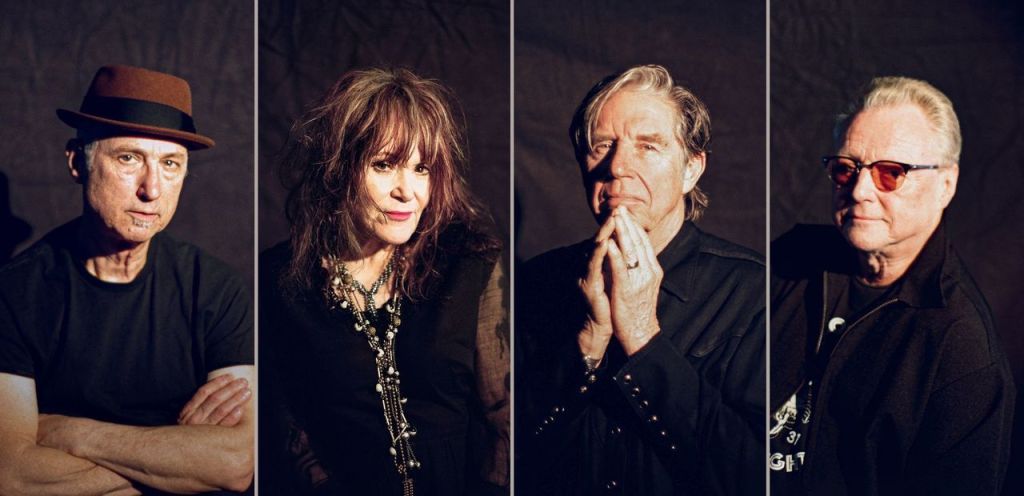
SMOKE & FICTION: From left, DJ Bonebrake, Exene Cervenka, John Doe, and Billy Zoom of the band X. Photo by Gilbert Trejo
X takes the stage at Variety Playhouse this Sunday, October 27, as part of the group’s farewell tour, supporting their latest—and final—album, Smoke & Fiction. It’s the culmination of a long legacy in red-blooded American punk and rock ‘n’ roll, featuring the original lineup of singer Exene Cervenka, singer and bass player John Doe, guitar player Billy Zoom, and drummer DJ Bonebrake. Since forming in the summer of ‘77, X has stood as the cornerstone of Los Angeles’ first-wave punk scene. Now, 47 years later, the group is taking one last bow.
Smoke & Fiction’s June 2024 release arrived with news that the band was hanging it up for good. The album is stacked with themes of finality and reflection woven throughout singles such as “Big Black X,” which nods to their early days as punk upstarts, to other songs such as “Sweet ’til the Bitter End” and “Ruby Church,” which revisit the romantic tensions that have always simmered in X’s greatest hits.
Smoke & Fiction finds X pushing their sound into the beyond and back, with deeper, darker textures, tones, and arrangements.
Zoom’s rock ‘n’ roll twang and raw punk edges, coupled with Bonebrake’s tight rhythms, ground the album, but it’s Doe and Cervenka’s balance of dissonance and harmony—urgent, commanding, and yearning—that brings it all back home. If this really is the end, X is bowing out with the same fire and fierce integrity that made the group a legend in the first place.
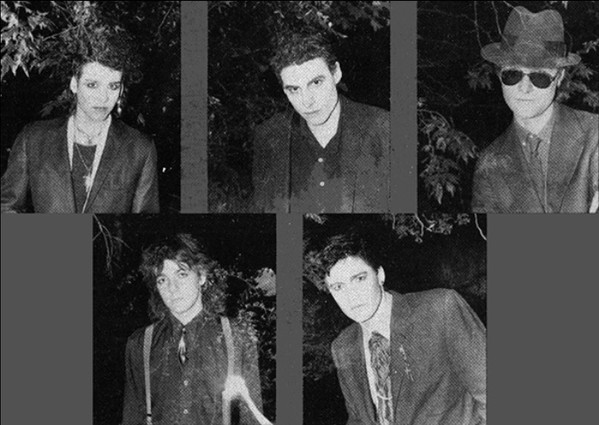
Gebidan is (from left) Geoff Knott, Daniel Whitman, Dennis Doherty, and Mike Patton. Photo by Amanda Corbett.
Entropy is the way of all things losing order as they move forward through time, evolving into something different every step of the way. It’s a concept that hangs heavily on Mike Patton’s mind while reliving his nearly 50 years of history playing music with Southern California’s hardcore and post-punk bands the Middle Class, Eddie & the Subtitles, Trotsky Icepick, Cathedral of Tears, and most recently singing and playing bass with Athens, GA’s Gebidan. The band’s name evokes the old English word for “endure” or “abide,” and there are layers of unspoken context to absorb inside the group’s debut album, titled Entropy, which kicks off with an opening number of the same name.
“That was our first song and it really describes the universal condition, I believe,” Patton says.
Since August 2023, Patton, along with guitar player and vocalist Geoff Knott, guitarist Dennis Doherty, drummer Daniel Whitman, and occasional keyboard player Drew Costa have amassed a body of songs that pull from Patton’s past while finding new meaning in the present. Press play on songs such as “Something Somewhere,” “Million Stars,” and “Achilles,” and hues of melancholy and psychedelia are corralled into bursts of alternative rock imbued with a spectral Southern allure—sometimes the writing is quite abstract, other times stories unfold as if they’re being told in real-time.
The latter number, “Achilles,” relives a night of fleeing from the famed 1979 Elks Lodge Hall riot. When a show featuring performances by X, the Alley Cats, the Plugz, the Go-Gos, the Zeros, and the Wipers was shut down by police, Patton’s former Middle Class bandmate Jeff Atta and his girlfriend Dorothy were in attendance and were severely beaten. The song chronicles a desperate attempt to get them to a hospital. The getaway car was being driven by famed LA punk producer and provocateur Geza X (the Germs, Dead Kennedys, Black Flag, Redd Kross), and the story goes sideways.
On the eve of releasing Entropy, Patton took a few minutes to talk about his past, his present, and Gebidan’s future in music.
Let’s begin by talking about how Gebidan got started.
Geoff Knott and I started playing together a few years ago. We’re both transplants to Georgia. Geoff is from Albuquerque. I didn’t know anybody here so I put my profile on some website where musicians connect. He was the only guy that reached out so we started playing together. The full incarnation of the group has been together since August 2023.
How did you wind up in Bogart, Georgia?
During the pandemic, my wife’s parents were living here. Her dad’s health is declining and she was feeling the need to come out here. I got laid off right toward the end of the pandemic. I said, “If you want to go now is the time.” We’ve been here since 2021.
I was at Bogg’s Social and Supply the first time MSSV played there. After the show, I was waiting in line to say hello to Mike Watt. You were in front of me. I remember you said, “I’m not sure if you remember me. My name’s Mike and I was in the Middle Class and …” Before you could finish your sentence Watt looked at me and sang the words to “Out of Vogue,” and said “Yeah, I remember you, Mike! I remember when the Minutemen played with you in San Diego!” It took a minute to process what I had witnessed.
[Laughs] I knew those guys back in the day, but I’ve been not going to shows for a long time. I hadn’t seen Mike in like 15 years. I wasn’t sure if he would recognize me, but we reconnected right away. I was friends with the Minutemen back in the day; everybody was. They were real cool working-class guys from Pedro. We were-working class guys from Orange County. We had stuff in common.
When I looked up your Discogs page I found your name on an impressive list of records: There’s the Minutemen’s “Joy” 7-inch.
I produced that.
Your name is also on the Adolescents Blue album.
Yeah, I produced that. I was managing them at the time. This guy Eddie Joseph that I played with in Eddie and the Subtitles would kind of let me do whatever I wanted to do. One day I said I wanted to produce one of our singles, called “American Society.” I kind of turned it on its head, and slowed it way down. I took over the vocals and turned it into an anthem. It came out good! Eddie was managing the Adolescents at the time, and Frontier Records had just signed them. Eddie was getting ready to take them into the studio and I said, “I want to produce the Adolescents.” Eddie said okay! Then a bunch of shit happened and he was out of the project. I took over managing the Adolescents for a while, and that’s when we went into the studio to record the Blue album. I was fortunate to get to produce such a great album.
That’s not hyperbole. It’s a game-changing record.
Yeah, they brought a melodic sensibility that hadn’t been there before. Rikk Agnew; I mean, those are powerful, good songs, and they were so different than what anybody else was doing.
Discogs says you do backing vocals on the Blue record.
I didn’t sing on the record. There’s one song where I was talking to them over the mic. It was “L.A. Girl” and I say “L.A. Girl, take 1,” or something like that. They wanted to keep it in there. That’s the only time my voice is on the record. I was still doing Middle Class at the time. The Subtitles had broken up. When the Eddie empire fell apart he had been managing and booking a lot of the local bands. When he bailed I took over the Eddie empire for a while. All of those bands, like the Adolescents, were just kids. They didn’t know what was going on, and they were lightning in a bottle. Everything was happening fast for them. I was just trying to help them out because they were kids! They were nice and smart and good.
I was kind of an elder statesman or something in Orange County. The Middle Class had released “Out of Vogue” and we were the first Orange County band to play L.A. and get accepted. We had a certain status in Orange County with all those bands. The Adolescents came up about a year after we started playing on the scene. I think that’s when Orange County really started happening.
The Middle Class is often hailed as the first hardcore band ever.
The guys who wrote the book—and then made the film—American Hardcore determined that. It’s always between us and the Bad Brains. They were in Washington D.C. We were in Orange County. We didn’t know each other existed. For what it’s worth, Middle Class gets the crown because “Out of Vogue” came out first. We were the first ones to release a record. We were inspired by the Damned and the Sex Pistols and had gone to see the Ramones. We were the classic punk ethos, people who didn’t know how to play their instruments.
We made up for our lack of musical ability with energy. We rehearsed five days a week for maybe six months before we got our first show. We didn’t realize it but we’d become this blazing fast band. We were trying to be the Ramones but we were way faster than the Ramones! When we first saw them at the Roxy in ‘76 we thought they were absolutely blistering. Then when we played our first show in L.A. at Larchmont Hall with the Germs and the Bags and the Controllers, the original punk scene was pretty much established. Everybody knew each other so a lot of the bills were getting kind of stale.
Hector Penalosa from the Zeros got us our first show. None of us drank. We were these normal-looking kids from Orange County. Then we got up and just roared on stage. Everybody immediately glommed onto us. We opened for everybody for the next three months. We played with the Screamers a bunch of times. We always played with the Germs. We were the opening band for everybody because we were different. So we got to be locked into the Hollywood scene really quickly from that first show.
The Middle Class
How was the Middle class received?
We were received really well when we first started playing. Everybody thought we were cute because we didn’t drink and we didn’t smoke and we wore thrift store suits—jackets and ties. We looked really straight and we were pretty young at the time. But then we were just roaring. The dichotomy between how we presented ourselves, who we were, and what we were playing really worked at that moment.
Hollywood accepted us immediately. The “Out Of Vogue” single was supposed to be on Danger House Records. All the good punk bands were on Danger House. Black Randy talked this guy Billy Star into putting up the money to record it. We went into Stevie Wonder’s studio and had like two and a half hours of studio time. We did two takes and that was all.
Then the fact that there was an in crowd and an out crowd revealed itself. Danger House didn’t want us. The guy who put up the money was stuck with the record so he released it on Joke Records because he was mad at Black Randy for telling him Danger House was gonna release it.
We were well established on the scene and were headlining or playing second bill on all of our shows. Then the dividing lines were apparent. Punk wasn’t supposed to be like that, everybody’s equal. It didn’t matter where you came from. There were no stars. That wasn’t true. So that single came out right at the time when it was becoming obvious that the philosophy we thought punk rock was, really wasn’t.
“Out Of Vogue” came out when the high schools opened up and all the kids started coming to the show. I’ll give you my two-bit interpretation of what happened:
Originally, the punk bands were into glam, glitter, Bowie, and all of that stuff. They were musicians before punk rock. They were already musicians with the ability to play their instruments and play songs. Then people like us hear that music and get a feel for what the punk ethos was: There’s no such thing as talent. Anybody can do it. So that’s what we did. By the time we got a show, we were really tight.
We weren’t proficient with our instruments, we just put it all into energy. That translated into speed. So by the time we got up and played all of our songs were like a minute-and-a-half. We didn’t think anything of it, we were just following our noses. But everybody reacted to it, and they liked it.
That was when they were still pogoing at the clubs. Slamming wasn’t going on yet. Pits weren’t happening yet. As the music became more available all of these high school kids and junior high school kids in Orange County, Long Beach, and all of the surrounding areas started finding out about punk rock, but they didn’t have a background. We had a background. I knew about surrealism and Dada and I knew about the Situationists—the cultural touchstones that punk rock was drawing from. But these kids that were listening to it didn’t have any of that background. They didn’t get any of the context. They just saw and heard what was being put out there and they reacted to it. They showed up to the scene and chased a lot of the original punks away because they didn’t get the fact that all the violence was just for show. It was an inside joke and everybody understood it. As soon as those kids came in their only understanding of punk rock was what was being presented to them by the style, the fashion, and the music. They came in expecting a completely different thing. So all of a sudden they came in and saw Black Flag and Circle Jerks and when that happened we were a pretty big band. Those kids wanted to hear “Out Of Vogue,” and that was fine. It’s good to draw a crowd, but we didn’t like the violence.
We were playing a show at a club called The Fleetwood which was just a pit in Long Beach. It was an empty warehouse—concrete walls and floors. We were playing “Out Of Vogue” when this guy came in to check out the punks. He was a regular stoner, long-haired guy. He’s watching us play and these kids from one of the high schools just beat the guy up for the duration of the song. When the song was over they had to call paramedics and haul the guy away. He was hurt. Jeff Atta, the singer, said we’re never playing that song again. And we turned away! That’s what the hardcore punks wanted to hear so they eventually stopped coming to our shows.
We started doing stuff more like the second single, “A Blueprint For Joy,” and then the Homeland album which is completely different from “Out Of Vogue.” The Circle Jerks and Black Flag were playing music to those people, and so they became really big. We went into the background, but we get credit for starting it, which is cool. So the people who know about the Middle Class are really into the Middle Class. They’re the people who know the minutiae of the scene. Most people haven’t heard of the Middle Class, but they have heard of the Adolescents, Black Flag, Henry Rollins, and Keith Morris. We were their contemporaries but we turned away from it because we did not dig the violence.
To me, all of that music was empowering and positive. Punk and hardcore gave me the confidence to be comfortable with myself and to ‘rise above’ the jocks and the people who wanted to fight.
The first time I heard punk was the first time I heard something that spoke directly to me. I was always like a stranger in a strange land, not fitting in, being an alien in my environment. Suddenly, I hear this music and it’s speaking directly to me.
The Middle Class found this community that accepted us, celebrated our music, and came to our shows. At first, there were no divisions. There was no person that’s too cool to talk to … None of that. I was no longer this isolated guy just existing in this world where I didn’t belong.
I want to ask you about a couple of different bands: When viewed through the lens of time and distance, and my taste, there are a few bands from Orange County that pique my interest. I’ll start with the Mechanics:
We might have played one or two shows together but we didn’t hang out much. They were a Fullerton band. They would be at parties, so I knew those guys. We weren’t tight but they were on the scene and I certainly knew about the band.
I think of them as one of the early—if not the first—punk bands from Fullerton.
They were proto-Fullerton. They were pretty early, and when the Fullerton scene was getting started I didn’t even know it existed. I didn’t know about Fullerton and Huntington Beach until Al from FlipsideMagazine asked me to write an article. Occasionally, I wrote articles for Flipside. He wanted me to write about the Orange County scene. I said, “What scene?” I didn’t know! He put me in contact with a couple of people. One in Fullerton and one in HB. They told me about parties that were going on so I went and saw the Crowd and China White might have been playing.
In Fullerton, I saw Agent Orange and Sexually Frustrated, and proto Social Distortion when they were called the Dustbin. They were playing at house parties, and these bands were all just kids. That’s how I got to know them. The first band from Orange County that I was the most impressed with was Agent Orange, and that was when Steve Soto was still in the band.
Agent Orange is another band I wanted to bring up.
That band was doing something distinctive and tight. They were really good. It wasn’t too long after that Mike Palm kicked Steve Soto out of the band because Steve wanted to contribute musically. Mike wanted to be in charge of all of that. Then Steve ended up getting involved with Rikk and Tony and the Adolescents started.
Agent Orange tours regularly. For the last two or three shows that I’ve seen the drummer was Sandy Hanson from the Mechanics. He was also with the Adolescents for Brats In Battalions and Balboa Fun*Zone. What was going on back then that gave rise to so many great bands?
Orange County is a gigantic suburb that was very conservative. It was home base for the John Birch Society and a bastion of conservatism in liberal California. The first person I heard say “behind the orange curtain” was Eddie Joseph. He said it to me as we were talking about how you’ve got this image of the suburbs: Everything is all manicured lawns, everything is cookie-cutter. Everything looks nice, but look just below the surface and everything is terrible.
These kids had no place to go, and unless you were a jock or were into Led Zeppelin, you weren’t a stoner, and you weren’t a surfer you had no tribe. You were an outlier. That angst and tension about living in that environment is like living in Disneyland but you can’t go on any of the rides. You just have to stand in the lines. That generated a lot of creative energy.
That’s what the Adolescents songs are all about anyway, looking around and realizing that everything you have been told is not true. I don’t have a bright future to look forward to. Everything kind of sucks. My dad’s an alcoholic. Whatever is going on you realize that the world your parents tried to protect you from or explain away is real. The stories are not, and when you realize that, you’re feeling pretty isolated. To me, that is where that punk primal scream came from. The beats probably had the same thing. The hippies kind of had something similar.
All of those elements are still there.
The strange thing is it felt for a while like something big was about to change. It felt like something was happening all over the country. There were these pockets of music popping up. Then nothing changed. We used to look down our noses at the hippies but they experienced the same thing. So did the beats; this youthful recognition that the world is not what we were led to believe it is. When you realize that the first logical reaction is anger and rejection.
The nice thing about punk rock, when I got into it, it was wide open. It got regimented once the skinheads came in and the high schools opened up. Before that, there were all kinds of different bands. Everything was allowed. Some bands were more popular than others, but you could have a band like the Eyes that did a song about going to Disneyland. Blow up “Disneyland.” And you had the Germs and the Controllers playing with them. Everybody accepted it. It was this creative free space where you were encouraged to pick up an instrument and start doing it.
To go from being an isolated loner just trying to not get too much attention because bad things happen when you get too much attention, to all of a sudden there’s this tribe of people who are celebrating what you’re doing … They get it and they’re friendly. The most extreme punks, the most-extreme looking people, you go talk to them, they’re pretty mild-mannered. I remember we played a show in San Diego with the Germs and the Bags. We went down early and half of the bands were going to Tijuana, and the other half of the bands were gonna go to San Diego Zoo.
I went to the zoo. Black Randy was going down to Tijuana with the others, and I did not want to be with those guys. They were crazy. So I was getting picked up by Pat from the Bags and Darby from the Germs. They stopped at my house in Santa Ana, and I remember my mom knocked on my bedroom door and said, “Hey, Mike, your friends are here.” I came out of my room and my dad was giving Darby a cup of coffee because that’s what my dad did. He was a Navy guy. Everybody got coffee. We always had hot coffee. Coming out into the living room and seeing these two Hollywood punks sitting on the couch was the most bizarre thing in the world, but that was cool.
I’ve talked with Jack Grisham from TSOL a bit over the years. His dad was a military man too, and he has similar stories. It sounds like a lot of people in the music scene lived at Jack’s house with his parents over the years.
Same thing with the Minutemen. They lived in military housing. Their dads were actively serving. My dad was retired, but we got all our healthcare and our groceries from the base. We didn’t fit in with normal California society. My parents had us when they were older; my dad was an Okie.
Cathedral of Tears
Can we talk about the band you were in with Jack from TSOL, Cathedral of Tears?
MTV was happening and Jack was watching Duran Duran and all of those bands. He wanted to capture that in a more sophisticated way. I saw him at a show and he asked if I wanted to play bass. So I went over there and it was cool. It was interesting being in a band with Jack. He gave me complete freedom to do what I did. There were two iterations of the band. At one point he kicked everybody out of the band aside from me and got all new players. I’m not sure how long that band lasted, maybe a year and a half, something like that. We did one release. One thing I will say about Jack: He has always been very cool to me. He even sought me out at one point to tell me that the label needed my contact information because they were holding onto money from that release for me. He didn’t need to do that, and I appreciated that.
Being in a band with him, I watched a lot of ugly stuff go on. Jack wasn’t always the kindest person to his fans, but he was always absolutely great with me.
At some point, you stepped away from playing music altogether.
For 14 years I was the Director of Transportation and then Executive Director of Maintenance Operations and Transportation for the Capistrano Unified School District in South Orange County.
I had two small kids. I was on tour with Trotsky Icepick supporting the album Carpetbomb the Riff, which was the only one that I wrote my parts for the songs.
Somebody threatened my wife at the time and she basically gave me an ultimatum. I had to leave the tour to come home and make sure that everything was ok. I joined the group back on tour and finished up. She gave me the: “Either you leave the band or this isn’t going to work.” I had kids and I wanted to do the right thing. For a very long time, I didn’t play. While I was at the school district I would meet people and play with them, jam with them. But we were never trying to be in a formal band. I was focused on my responsibilities. We would work on songs. A couple of times we’d have an album’s worth of material. I’d say, “Let’s go play a show!” But it never happened. That happened two or three times. I kept grinding away.
Then Mike Atta got cancer. He got better and changed his mind and wanted to play again. So we got back together and I was working at the school district.
The Middle Class getting back together ruined my career [laughs]. I was tapping into something extremely important to me, and I missed it. Now I was experiencing it again! At the first reunion for the Middle Class, I talked to this German couple that had flown in just to see us. We were way more popular than we were when we were playing originally.
So then I would go back to the school district and deal with this political nonsense of being a director and having 500 employees. I was good with the employees. It was my superiors. I was successful when I wanted to make it work. When I lost the desire to put up with these idiots my career stopped after a while. I eventually left the school district. I kept working for a while. The Middle Class played for six-seven-eight months. Mike’s cancer came back. We played periodically, and then he died.
I talked with Jeff Atta. I knew what he wanted but I would never do a tribute band. He didn’t want to carry on the band. I said, “I may play some of the songs, but I’ll never put together the Middle Class with a bunch of guys.” Our drummer Matt Simon wanted to do the Subtitles again. I was excited and I threw myself into that. But it turned out that he didn’t really want to be a band. He just wanted to hang out and party and play music. That wasn’t going anywhere. Then the pandemic hit and we moved to Georgia.
Gebidan photo by Geoff Knott
Which brings us to Gebidan.
Most of the songs that we’re doing are songs that I’ve come up with over the years when I was working with a 4-track or started working with a computer. There are all of these ideas that I was able to regurgitate and Geoff was able to revise them. We wrote some songs together as well. It’s very different from the Middle Class, but it’s muscular. It’s serious. Everything I’m singing about means something to me.
I would like to tour and I’d like to go play LA. I’d like to re-engage. So far, people seem to respond to the music and I’m just going forward with it. I want to do it as long as I can.
Are you approaching Gebidan differently from how you approached your previous groups?
With the Middle Class, it was this new thing. We just wanted to get on it. We figured it out together and we had a lot of initial success. Everybody embraced us. That was gratifying and I learned that it can work and people do respond to it. All of that punk ethos of just do it is true. If you do it with confidence and sincerity people are going to respond.
The Subtitles taught me that I can change things: take one thing and turn it into something else. “American Society” was a punk song and we turned it into an anthem. That was really freaking cool. Eventually, we turned into this weird acid jam band and that was cool as long as I was committed to the joke we were able to pull it off. As soon as it stopped being fun it was a house of cards.
Trotsky Icepick was my friends from 100 Flowers. They had a record and a tour. They reached out to me and I was available. They were really good guys. I always liked them. And so I did that tour with them. Then they lost their drummer. I brought this guy Skippy in and we wrote Carpetbomb the Riff and did another tour. I would have kept playing with them but I had to bail out.
When I moved out here I met Geoff. We’re coming at the music from different places—he’s kind of a jazz guy. I was pushing him to find more people. He found Dennis and Dan. Now we have a lot of songs in various states of disrepair, and we have a set that sounds good.
I know it’s kind of stupid to be 66 years old and start a rock band, but what’s cool is I’ve got the time! Why not? What else am I going to do?
Someone with your history and experience needs to keep putting your songs and ideas out there and sort of course correct underground history and culture. It’s good to remind people of what role music played in our lives before it became something to skip through on Spotify.
There is certainly an interesting perspective that comes with doing it at this point in one’s life. For me, there’s something of depth there that people—if they hear it—it will likely mean something to them. The most fulfilling thing for me is when someone that I don’t know tells me how meaningful something that I did was to them.
I communicated with them. We shared a common experience. The human experience is communal; we all react to the same things. We’re all different, but the bottom line is that we are also all very similar. When people can relate to your experiences hopefully they feel less alone. We all feel isolated but we have more in common than we realize. That might sound pompous [laughs].
This music is something that transcends time and space. We are having this conversation in Atlanta, GA in 2024. You started your musical legacy in Los Angeles—on the other side of the country—in 1978, and the music is still affecting people.
It’s cool to have participated in that. It was way more meaningful than we realized to way more people than we ever would have thought.
I wouldn’t have been able to do Gebidan in California because there’s an expectation on me in California. I’m so tied to the Middle Class and the Subtitles that when I played music with people (for the most part) it wouldn’t work. I didn’t want to play punk rock anymore. Punk is an attitude, and it’s a seriousness, but that style of music is of a time and I’m past that. I wanted to do something that had some beauty to it or be more than that. Hopefully, people can relate to it. So far so good.
CANCELED: This live appearance has been canceled, but you can hear Thurston Moore’s interview with Chad Radford on 90.1 FM/WABE’s “City Lights” on Monday, October 30 at 11 a.m. and again at 8 p.m.
From the founding member of Sonic Youth, a passionate memoir tracing the author’s life and art—from his teen years as a music obsessive in small-town Connecticut, to the formation of his legendary rock group, to 30 years of creation, experimentation, and wonder.
A Cappella Books welcomes Thurston Moore to The Plaza Theatre to discuss his new book, Sonic Life: A Memoir, on Monday, October 30, at 7 p.m. Moore will speak with your truly, Chad Radford, music journalist and author of Atlanta Record Stores: An Oral History. Moore will also perform a short musical set.
Following the conversation, The Plaza will host a screening of director Stuart Swezey’s documentary, Desolation Center, featuring performances by Sonic Youth, Minutemen, Meat Puppets, Swans, Redd Kross, Einstürzende Neubauten, and more. Moore will introduce the film.
A note on the THREE types of tickets available for this event:
Book Talk Ticket: Includes a pre-signed copy of Sonic Life + admission for the 7 p.m. book talk. ($35+tax).
Book Talk and Movie Ticket: Includes a pre-signed copy of Sonic Life + admission for the 7 p.m. book talk, and the 8:30 p.m. screening of Desolation Center. ($45+tax).
Movie Ticket: Admission to the 8:30 p.m. screening of Desolation Center. ($20 + tax)
About the Book Thurston Moore moved to Manhattan’s East Village in 1978 with a yearning for music. He wanted to be immersed in downtown New York’s sights and sounds—the feral energy of its nightclubs, the angular roar of its bands, the magnetic personalities within its orbit. But more than anything, he wanted to make music—to create indelible sounds that would move, provoke, and inspire.
His dream came to life in 1981 with the formation of Sonic Youth, a band Moore co-founded with Kim Gordon and Lee Ranaldo. Sonic Youth became a fixture in New York’s burgeoning No Wave scene—an avant-garde collision of art and sound, poetry and punk. The band would evolve from critical darlings to commercial heavyweights, headlining festivals around the globe while helping introduce listeners to such artists as Nirvana, Hole, and Pavement and playing alongside such icons as Neil Young and Iggy Pop. Through it all, Moore maintained an unwavering love of music: the new, the unheralded, the challenging, the irresistible.
In the spirit of Just Kids, Sonic Life offers a window into the trajectory of a celebrated artist and a tribute to an era of explosive creativity. It presents a firsthand account of New York in a defining cultural moment, a history of alternative rock as it was birthed and came to dominate airwaves, and a love letter to music, whatever the form. This is a story for anyone who has ever felt touched by sound—who knows the way the right song at the right moment can change the course of a life.
About the Author Thurston Moore is a founding member of Sonic Youth, a band born in New York in 1981 that spent 30 years at the vanguard of alternative rock, influencing and inspiring such acts as Nirvana, Pavement, the Yeah Yeah Yeahs, My Bloody Valentine, and Beck. The band’s album Daydream Nation was chosen by the Library of Congress for historical preservation in the National Recording Registry in 2006. Moore is involved in publishing and poetry and teaches at the Summer Writing Workshop at Naropa University in Boulder, Colorado. He divides his time between the USA and England.
About the Film Desolation Center is the previously untold story of a series of early ’80s guerrilla music and art performance happenings in Southern California that are recognized to have inspired Burning Man, Lollapalooza, and Coachella, collective experiences that have become key elements of popular culture in the 21st century. The feature documentary splices interviews and rare performance footage of Sonic Youth, Minutemen, Meat Puppets, Swans, Redd Kross, Einstürzende Neubauten, Survival Research Laboratories, Savage Republic and more, documenting a time when pushing the boundaries of music, art, and performance felt almost like an unspoken obligation.
Directed by Stuart Swezey, the creator and principal organizer of these unique events, Desolation Center demonstrates how the risky, and at times even reckless, actions of a few outsiders can unintentionally lead to seismic cultural shifts. Combining Swezey’s exclusive access to never-before-seen archival video, live audio recordings, and stills woven together with new cinematically shot interviews, verité footage and animated sequences, Desolation Center captures the spirit of the turbulent times from which these events emerged.
If you have enjoyed reading this post, please consider making a donation to RadATL. Venmo to @Chad-Radford-6 or click on the Paypal link below.
TEENAGE BOTTLEROCKET: Kody Templeman (from left), Ray Carlisle, Darren Chewka, and Miguel Chen. Photo courtesy Fat Wreck Chords.
Teenage Bottlerocket is on the road again. Originally hailing from Laramie, Wyoming, the rapid-fire pop punk outfit is on the heels of releasing a new single, titled “Ghost Story.” Bass player Miguel Chen took a few minutes between gigs to talk about playing live punk rock shows as the pandemic winds down, the music’s power to unite people, and what’s in store with the group’s next record, Sick Sesh! (out August 27 via Fat Wreck Chords).
Were you nervous, or feeling anxiety about taking Teenage Bottlerocket out on the road while the pandemic is still winding down?
Absolutely, we felt nervous all around. Our first concern was how do we get back out there and do it in a safe way? And how do we do it without a lot of backlash? We worked with a lot of promoters trying to figure it out. Once that started to settle into place a second wave of anxiety came with this one particular show where we were giving a … let’s call it a discount. Essentially, tickets for the show were $1,000, but if you showed your vaccination card it was like $20.
Talk about a conversation starter!
Yeah, it was a crazy promotional thing, but it blew up. The next thing you know we’re being interviewed by CNN about it. We’re on the front page of Apple News, all of this crazy stuff. People just saw the headlines: “Teenage Bottlerocket,” “No Vax Tax.” That angered a lot of people. So we went on the news and tried to explain that it’s just this one show. There are many other shows doing different things. So yeah, definitely anxiety from all angles.
Honestly, though, this has probably been the smoothest running tour we’ve ever had. Turns out it was all imaginary stress and drama, or internet stuff that seemed so real. But when you get out into the real world, it’s just not there.
That’s interesting to process. The internet has been everybody’s window to the world for like a year and a half. People have been stuck at home, staring at their phones and computers. All of the sudden “no vax tax” becomes the frontline.
That was just that one promoter’s idea. Obviously it worked well, that show sold out super fast, and everybody there was really happy. For us, if that’s how they want to put on a safe show, we’re all about it. But it turned into a whole big thing.
Does it feel like audiences have been bottled up and are ready to just go nuts like never before?
A thousand percent, yes. And funny enough, the last real tour we did was a lot of these same cities. Lots of shows in Florida just before the pandemic shut everything down. We played Atlanta on that tour. And here we are, passing back through Florida, heading for Atlanta. For a lot of people we were the last show they saw before everything shut down. Now we’re the first show they’re seeing as everything opens up.
Have you had epiphanes or realizations along the way about the dynamics or the value of getting out on stage and playing live punk rock shows again?
Yeah, and it all connects back to what we were just talking about with the internet. There’s this space that exists within music, and particularly surrounding live music. On some level it reminds us that we’re not all as different as we think we are. We’re all connected in some really meaningful ways. And I think that this whole thing where everyone has existed on the internet for the last year and a half has deepened some divides and made people lose that common ground. I have the feeling that getting back to live music and live shows is going to heal that aspect, and help people realize that we’re all the same on some level.
Have you noticed your audiences becoming more diverse?
We had one particular show in Tallahassee where we all noticed that the crowd was really young. Our band exists in a weird space between the old and the new. So we played this really awesome place in Tallahassee called the Bark; it’s a really Queer-friendly, LGBTQ-friendly, and diverse collective, where we all recognized that we have these types of fans. We are lucky in that we didn’t get stuck with just like the punks who are stuck in the ‘90s. We’ve been embraced by the 2000s punks too! We talked with this one fan at that show—I’ve actually had this conversation two times this year—where they said, “I’ve been listening to you since I was nine or 10 years old because you’re my parents’ favorite band.” That’s really fun, but the younger generation will always inherently bring a bit more diversity, and hopefully that continues forever.
You have a new album, Sick Sesh!, out in August. Are these songs a product of how the band spent its time during quarantine, or were they in the works before everything went crazy?
We definitely had plans to do a record before everything went nuts. Our system has always been to do a record every two years. The plan was always to go into the studio late 2020 and release a record in 2021. It just kept getting shifted back because of all his stuff. Under the original timeline the record would already be out. But you can’t release a record if you can’t tour around it. So we sat on this thing for quite a while. Andrew and Jason at the Blasting Room remixed and remastered it quite a few times because I think they were just like us, bored without the usual workload.
I’ve always thought of Teenage Bottlerocket as a band that’s super tight, super concise, shotgun blast-style songwriting. … Point being there’s never anything in the way of the song. With so much time to work in the studio, did that affect the record?
I think all of the extra time and effort went into stripping it down or making it a little more raw. A lot of bands, given that much time in post-production, might’ve gone the opposite direction: give it more polish, make it more radio friendly. Our approach was, “This sounds too clean. Tone back the production a little.”
I have found that the more time you spend stripping something down, the more you realize that, oftentimes, things that feel essential aren’t essential at all. As a journalist I’m always under pressure to cut, cut, cut. It’s a painful process, but once you have time to reflect you can see that there was too much in the way of what you’re trying to say.
Do you watch Top Chef? I think about that a lot. The chefs who always kick ass are the ones who know how to edit themselves—take ingredients off the plate and present something simple, and do it well. This is Top Chef Bottlerocket. [laughs]
There is a new single out, called “Ghost Story.” Much of the press points out that you wrote the lyrics. Does the group have one principal songwriter, or is it generally a group effort?
Generally Ray writes the songs that he sings and Kody writes the song that he sings. Brandon would write a song once in a while. Over the last few years—since we lost Brandon—I’ve tried to step up a little more and bring songs to the table. I’ve got three on this record: One called “The Squirrel” and another called “Moving On.” Kody sings on one of them. Ray sings on two of them.
Is the band rolling out a lot of new songs on this tour?
We’re doing “Ghost Story” every night because, obviously, it was sort of intentional to release that song before going on tour, and people already seem to know it, which is a great feeling. We’re trying to play one other new song each night, which is fun for us. So many of the songs we’ve been playing for a long time. It’s nice to play new songs that are fresh and that we’re excited about. But the crowd wants to hear “Skate Or Die” or “Don’t Want To Go,” or “Radio,” things like that. So as much as part of me would love to do a show where it’s only the new record, you just can’t do that.
How many songs do you power through each night?
I’d say we probably play 25 songs each night.
That’s a workout!
Yeah, but it’s our only workout, so we need this!
While we’re talking about songs, when I hear “I Want To Be A Dog,” I am instantly thinking about Iggy Pop’s song, “I Wanna Be Your Dog.” These songs are polar opposites of each other, but was there intentional mirroring going on there?
Tony wrote that song, and I’m sure there is. We’re all Iggy Pop guys. One time we played Riot Fest with Iggy Pop, and me and Ray saw him backstage. I was frozen—scared to do anything. Ray just puts his fist up in the air, and says, “Fuck yeah, Iggy!” And he gave us a fist bump back. We were both so pumped after that.
But, yeah, I’m sure there’s a loose connection there. Obviously we tip our hats to our influences. You know “In The Basement,” back on “Warning Device,” is obviously like a Ramones song.
While I’m thinking about “I Want To Be A Dog,” I remember we filmed it and got the edit back, and there’s all these dogs taking a shit. We thought, “There is no way our publicist will let this fly. She’s going to shoot it down, make us edit it. So we hit the send button, and nervously waited for her reply. She just wrote back, “I love it!” And that was it. The video was released. Then Erin, one of the owners of Fat Wreck Chords wrote, “I really could have done without all of the dog poop, guys.” So we’re all like, “Sorry …” [laughs].
That’s funny, but the more I’ve watched that video the less jarring it becomes. Plus anyone who owns a dog knows that’s what dogs do at the dog park.
Yeah, you get desensitized to it pretty quickly. [laughs]
The specter of nuclear annihilation that hung over the Reagan era feels somewhat quaint now, in light of just how much President Trump’s draconian administration, the global pandemic, and the oppressive grind of social media have twisted up the American psyche circa 2020. Still, the 1980s were a fertile time for punk rock’s cultural growth on American soil.
In We’re Not Here to Entertain: Punk Rock, Ronald Reagan, and the Real Culture War of 1980s America, author and Connor Study Professor of Contemporary History at Ohio University Kevin Mattson delves into the golden era of hardcore, punk and DIY culture blooming in the shadow of the Gipper. Countering the oppressive forces of a conservative White House regime, a community bound by the music of groups such as the Dead Kennedys, the Dils, Minor Threat, the Avengers, Hüsker Dü, Bad Brains, Black Flag, and more was compelled to enact empowering social change that still resonates around the planet.
On Tuesday, September 29, Mattson will join GSU history professor and author John McMillian (Smoking Typewriters: The Sixties Underground Press and the Rise of Alternative Media in America, Beatles vs. Stones) and yours truly, music writer and editor Chad Radford, to discuss the book, the music, and more.








 Rad/ATL