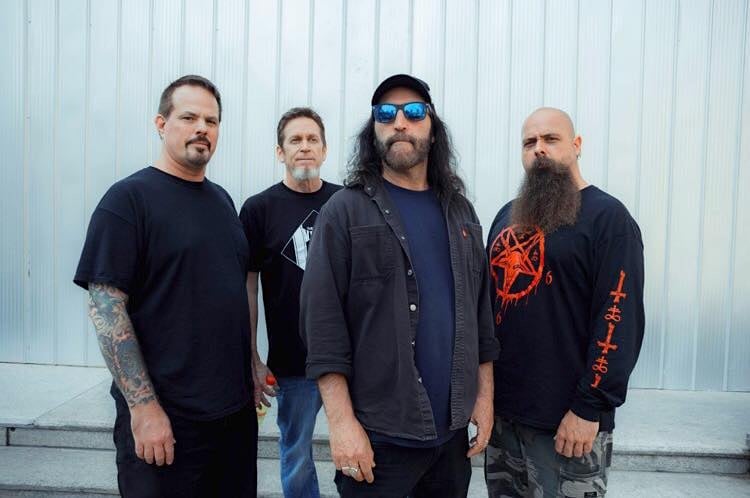
Scratch Offs hit hard withTidal Wave, an 11-song debut that distills the traditions of post-hardcore’s top-tier and most forward-thinking luminaries—Fugazi, Hot Snakes, Jawbreaker, Quicksand, Helmet, et. al.—into a streamlined and modern-sounding opening salvo.
Variety is key when propelling vocalist Mike Ligocki’s penchant for screaming melodic catharsis. Ligocki’s voice sits high atop guitar players David Lane and Jason Beebe’s winding riffs, melodies, and leads in songs such as “Puma,” B.Y.R.,” and standout cuts “Hand Replacements” and “The Chapel.” Each number draws out a balance of naked and gnarly emotions with driving force.
Bass player Lloyd Benjamin and percussionist Greg Stevens’ pounding rhythms show off depth and confidence. Together, their musical chemistry epitomizes strength, intelligence, and a full-bodied groove while exploring complex structures and tense dynamics, never losing sight of the rhythm and the sprinting momentum of the song they’re playing. The flexed arrangements of “Mountain of Light” and the powerful charge of “Jesus Night” and “Text Fight” are steeped in unrelenting tension and atmosphere—the accumulated experiences of a band made up mostly of Atlanta punk and post-hardcore scene vets. Lane plays in Skin Jobs, and has been playing alongside Stevens since circa 2001 when they made up the rhythm section for noise rock trio Hex Error.
Benjamin was in All Night Drug Prowling Wolves and is in Uneven Lanes with Stevens, who also plays in Total Peace Band. Beebe played in the Liverhearts and recorded a grip of singles for Rob’s House Records in the early-to-mid aughts. Ligocki is a Maryland-born, New York City transplant who cut his teeth playing with East Coast bands Bound & Buried (with Matt Krupanski from Boy Sets Fire on drums), Habits, and Killtakers. Look them all up! As such, Tidal Wave is an accomplished and formidable collection of fast-urgent punk and post-hardcore anthems that draw from the past to promise a bright future.
Photo by Ron Sherman. Courtesy of the Stuart A. Rose Manuscript, Archives, and Rare Book Library, Emory University
Photographer Ron Sherman will be at Different Trains Gallery in Decatur, discussing his photographs of The Sex Pistols first show on North American soil on Thursday, November 9 at 7 p.m.
On January 5, 1978, British punk landed in Atlanta when the Sex Pistols played their American debut at The Great Southeast Music Hall in Buckhead’s Lindbergh Plaza. Sherman was in the audience that night shooting pics for Newsweek Magazine.
It was just another night on the job for a working photographer. The media was steeped in a moral panic leading up to the show. Sherman’s photos portray the group as what it was, a young rock’n’roll band.
GOLD SPARKLE BAND: Live at the Silver Ceiling circa 1997. Photo by Steve Pomberg
Gold Sparkle Band, one of the most influential and far-reaching ensembles to emerge from Atlanta’s underground music scene of the early ’90s, is returning to headline an evening at Eyedrum Art & Music Gallery on Saturday, October 14. The group’s deft compositions, improvisations, and live performances defined a sophisticated era for Atlanta’s underground music scene, alongside contemporaries such as Smoke, Cat Power, and the Rock*A*Teens. Decades later, the energy the group has wielded since 1994 still resonates within the more adventurous realms of the city’s outsider music and arts scenes.
This show marks the first in a series of events geared toward raising awareness for Eyedrum’s two-night 25th anniversary party happening the weekend of Nov. 11 and 12.
Since August of 1998, two of Gold Sparkle Band’s co-founding members, alto saxophone and reeds player Charles Waters and percussionist Andrew Barker have resided in New York City, where they remain musically active under different iterations of the group’s moniker—mostly as the Gold Sparkle Trio.
For the evening of their Eyedrum performance, Waters and Barker are returning to play two full sets with fellow GSB co-founder and trumpet player Roger Ruzow and longtime bass player Chris Riggenbach.
Other co-founding members, bass players Andrew Burnes and Joe Jamerson are no longer performing with the group. Saxophonist and flautist Rob Mallard, who was also a founding member of GSB, died in 2018.
Gold Sparkle Band. Photo by Thomas Tulis
“Charles and I still communicate pretty much every day,” Ruzow says. “He sends me new music that he’s working on all of the time—any genre that you can imagine. I send him new material pretty much every day as well. We have been talking about getting together to play another show down here for quite some time. When Randy Castello and Will Lawless from Eyedrym contacted us about playing their anniversary, it felt as though the time was right.”
For this show, Waters, Barker, Ruzow, and Riggenbach will perform the first set as a quartet. After that, they’ll lead a second set performing as the Gold Sparkle Big Band, an expanded version of the group that will include tenor sax player Ben Davis (Purkinje Shift, Edgewood Sax Trio, Teardrinker Salts), oboe player Robbie Hunsinger, Jason Casanova (4th Ward Afro Klezmer Orchestra) playing euphonium, flautist Anne Richardson, and pianist Chris Case—nine players total.
“Stylistically speaking, what sets these two performances apart is the extremely high caliber of musicians that are joining in for the large ensemble performance,” Ruzow says. “They will make it an absolute blow out no matter what the hell we decide on playing.”
Throughout the years, improvisation based around deconstructing traditional musical forms while straddling the avant-garde and solid grooves to create an evocative atmosphere has remained at the heart of GSB’s sound. Gold Sparkle Band has long wielded the talents of a world-class jazz unit. Each number is built upon a structured composition—mostly written by Waters—that’s used as a vehicle to drive the melody and the musical ideas that are brought to the fore, while also creating a form and context for the music. Improvisation launches from there, and the music can glide along in a linear, blues-based progression, or it can go full-on primal scream. It all depends on the moment in which the music is created.
The group has collaborated with likeminded musicians ranging from free jazz double bassist and Cecil Taylor cohort William Parker to Chattanooga’s the Shaking Ray Levis. The group’s New York-based members have even collaborated with lauded Chicago free jazz veteran Ken Vandermark for the 2004 CD, Brooklyn Cantos.
The music often sidles up to a simmering middle ground, easing in at first, then skittering to life with muscular, horn-punctuated grooves that barrel through numbers such as “Zodiac Attack” from the Fugue & Flowers album, and “People’s Republic” from Brooklyn Cantos.
Songs from releases such as 1995’s Earth Mover, 1997’s Downsizing, and 1999’s Nu-Soul Zodiac build on an ethos that resembles something of a punk rock aesthetic, although far beit from anything that can be easily categorized.
“Punk is a good touchstone, but what we’re creating is more like a contemplated combustion,” Ruzow says. “In previous years, when we were experimenting with punk aesthetics, it was all about us learning to command a particular energy and direction. Now, we have a slightly better understanding of that energy and how to turn it into something that we drive, rather than it driving us,” he adds. “It incorporates aspects from each of our lives, which are all very different, but connected by a compulsion to play music.”
Gold Sparkle Band playing the Jump Fest at Eyedrum in 2002. Photo by Thomas Tulis
Waters adds: “All of us come from sone kinda analog punk background. Our first bassist Andrew Burnes—he was a superstar and super vital in my process of becoming a ‘composer’—has his hands in the middle of all you describe. Our frequent guitatist Jer Wilms, now back in Atlanta, who worked in a million ensembles and then brought his genius to the Nuzion Big Band, is amazing. We are a band of collaborators and saboteurs, poets, ghosts, and some special sauce that jazz mostly doesn’t have. That is because we are a BAND! We’re a fucking band, and we play each others mistakes, we love each other—sometimes each others others and many in between. Gold Sparkle is a band and thats why we rock and have a future.”
During GSB’s mid-to-late ’90s Atlanta heyday the group could be seen on most nights tearing up stages everywhere from Homage Cafe and Dottie’s to the Moreland Ave. Tavern, the Point, Cotton Club, and Frijoleros. Gold Sparkle Band even shared the stage at the Highlander with John Zorn’s Masada—an ensemble playing compositions inspired by radical Jewish culture. “It was a life-changing experience,” says Ruzow, who now leads the 4th Ward Afro Klezmer Orchestra.
All of the aforementioned venues are long gone—relics of an everychanging cityscape that no longer exists.
The Star Bar, MJQ, and Eyedrum were also regular haunts for the group. But as Waters says, the group still has a future.
For this show, the group will delve into material from their early aughts albums including 2002’s Thunder Reminded Me and Fugues & Flowers.
“During our whole trajectory in New York City, which is semi taking for granted, me and Barker have worked a million gigs and we still love doing it,” Waters says. “Barker leads his trips, and I play my wacky garden chamber music. We just keep on with it.”
Throughout the ‘90s, GSB emerged as a Southern counterpart to the post-rock, indie rock, and free jazz sounds created by Midwestern acts such as Slint, Tortoise, and the Vandermark 5. In a single musical moment, the group’s live performances would unfurl with all the flare of a conventional jazz outfit before drifting into psychedelic clusters of skronk and wail. Each number intimating a cerebral sense of immediacy that defined an innovative and iconoclastic era of Atlanta’s underground music scene, and dovetailed with what was happening with the world at large.
That sound and vision remains as potent as potent as ever, and the future remains wide open.
On Oct. 12, two days before playing Eyedrum, Gold Sparkle Band’s members are hosting a workshop from 6-8 p.m., discussing a hands-on approach to live improvisational musical styles.
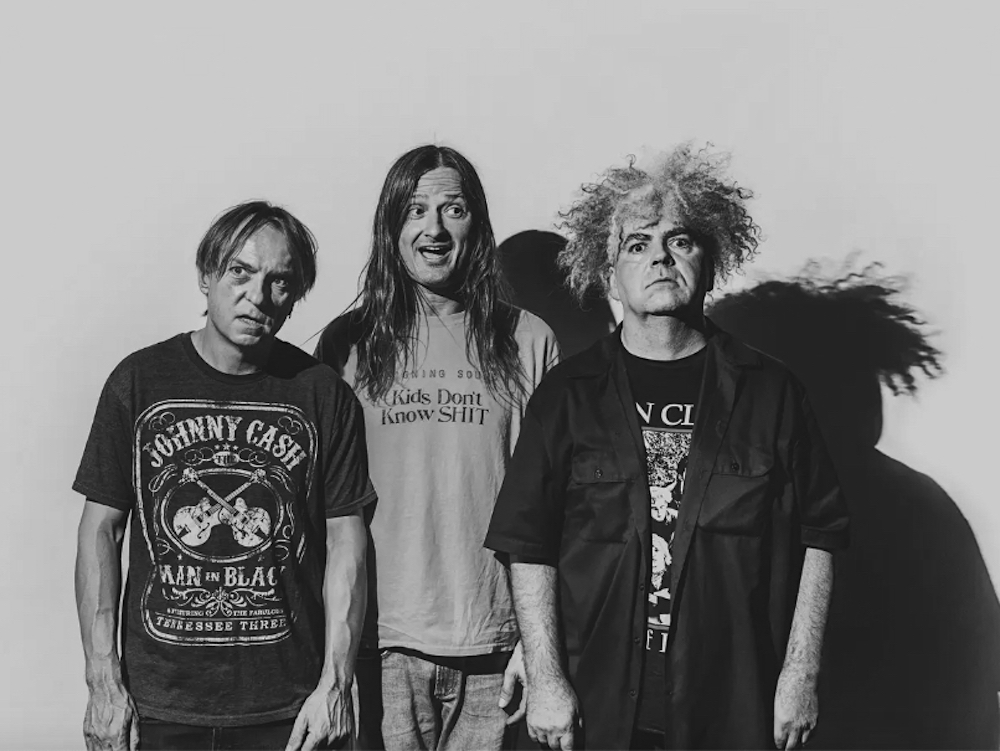
MELVINS: Dale Crover (left), Steven McDonald, and Buzz Osborne. Photo by Chris Casella.
The monolithic punk-metal speed and molasses dirges of the Melvins establish the group as both forerunners and contemporaries of the Pacific Northwestern musical underground of the early ‘90s. In the modern era, singer and guitarist Buzz Osborne, drummer Dale Crover, and current bass player Steven McDonald have continued pushing the group to creative new heights with 2022’s, Bad Mood Rising, followed by this year’s The Devil You Knew, The Devil You Know, featuring the original versions along with new recordings of the six songs from the Melvins’ debut 7-inch EP.
Now, Melvins have teamed up with Atlanta-based abstract electronic project Void Manes to unleash an homage to British industrial music luminaries Throbbing Gristle, titled Throbbing Jazz Gristle Funk Hits (Amphetamine Reptile Records). It’s an entirely electronic album—a first for the Melvins—featuring TG-inspired improv sessions and covers of songs such as “Sic Sick 60’s,” “Hot On the Heels of Love,” “Hamburger Lady,” and more. The first single is a thickened take on “Discipline 23,” which appears on the CD and on a flexi single that comes tucked inside the LP sleeve.
The video, created by Jesse Nieminen, builds on TG’s subversive late ‘70s mantra on dismantling the mechanisms of social and psychological control amid an era defined by misguided patriotism and technology gone awry. The more things change, the more they stay the same. Here, a minimalist blend of fascist imagery, made hollow under a sheen of maximum color saturation and distortion, pushes the Melvins’ vision of industrial overload to the nth degree. Press play above and get disciplined.
Throbbing Jazz Gristle Funk Hits is the latest in a loose but ongoing trend of paying homage to the confrontational and anti-commercial/pro-good-taste force that prompted British tabloids to label Throbbing Gristle “the wreckers of civilization.” “Heathen Earth” appears on the Melvins’ covers CD titled Everybody Loves Sausages. Head down the Discogs rabbit hole and there are more TG renditions by all parties involved to be discovered and devoured.
“Buzz talks a lot about giving people creative freedom and he’s right on about it,” Nieminen says. “There might be some discussion beforehand or none at all. For ‘Discipline,’ I had an idea, it turned into another, and I put it together. I didn’t ask for suggestions for it. I was free to do whatever I wanted and it was pretty close to what I envisioned from the start.”
Nieminen goes on to say: “We made the A Walk with Love and Death short film together. It was a conversation where we sat and riffed on ideas and edited it together. For Melvins TV they shot green screen in LA and sent stuff for me to do what I wanted,” he adds. “That grew from an idea where I was planning to shoot them in a studio with green screen backdrops and do a single music video in the style of those old German Beat Club episodes. Because of the pandemic it turned into Melvins TV and ballooned into 3.5 episodes.”
In a more recently released video for “Zyklon B Zombie,” Nieminen sets the songs fugue-like bouts of faux tropical rhythms and staccato electronic sounds to waves of billowing and blackened clouds, looped in a tussle of natural beauty rendered exquisitely for the simulacrum. It’s just a taste of what the album holds in store.
March of 2023 marked the 40-year anniversary of the Melvins’ first live performance. The group has spent much of the year celebrating by offering a slew of reissues and new releases, and playing shows around the world. The next Atlanta show is on Wednesday, September 27, at Variety Playhouse, where they’re playing 1991’s sprawling Bullhead LP in its entirety, along with more highlights from throughout the Melvins repertoire.
“We’ve been a band since 1983. We’ve never quit, we’ve never taken a break and stopped being a band, and I have seen people come and go from the highest heights to the lowest lows—death, resurrection, and more death,” Osborne says. “In the art world that I am in, there is a war of attrition; whomever is the last man standing is the winner. So far it’s me, with no end in sight.” READ MORE FROM MY OCTOBER 2022 FLAGPOLE MAGAZINE FEATURE STORY.
Void Manes is performing opening sets at several of the Southern Melvins/Boris shows. Keep your fingers crossed that they tear into some of the Throbbing Jazz … material on stage.
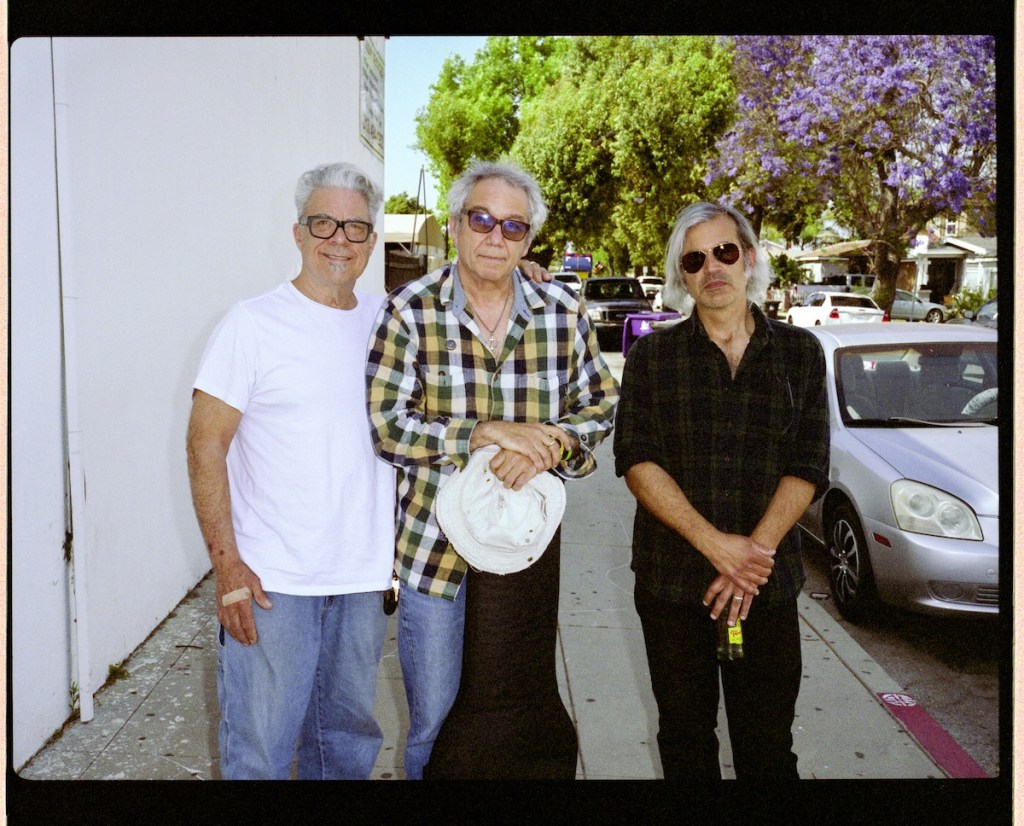
MSSV: Stephen Hodges (from left), Mike Watt, and Mike Baggetta. Photo by Devin O’Brien
It’s misleading to call MSSV an experimental rock trio, as these three elder statesmen of the underground know exactly what they’re doing. Still, bass player Mike Watt, guitarist Mike Baggetta, and drummer Stephen Hodges craft a fluid, mostly-instrumental body of work that flows beyond the confines of their impressive collective resumes. Hodges has performed with the likes Tom Waits, David Lynch, Wanda Jackson, and Mavis Staples for years. Baggetta has collaborated with everyone from Bob Stagner of Chattanooga’s Shaking Ray Levis on the Triage album to legendary session drummer Jim Keltner. And, of course, Watt raised the bar high for American punk and indie rock playing bass and singing with the Minutemen, fIREHOSE, and via scores of solo releases and offshoot ensembles. Together, MSSV hones in on a rhythm, a groove, or a subtle shift in sound to explore and expand upon with each new number. Their approach is part composition, part improvisation, and part file-under-some-other form of silent musical telepathy that is as sophisticated as it is undeniably catchy.
MSSV is on the road playing songs from their second studio album Human Reaction, due out Sept. 1 on Big Ego Records.
Atlanta’s noisey post-punk newcomers Blood Circuits (featuring former members of Free Masonry, Gaijin, Remuxers, Hal Al Shedad, and Car Vs. Driver) and the city’s quintessentially baroque chamber-punk balladeers W8ING4UFOS set the night in motion.
CANCELED: This live appearance has been canceled, but you can hear Thurston Moore’s interview with Chad Radford on 90.1 FM/WABE’s “City Lights” on Monday, October 30 at 11 a.m. and again at 8 p.m.
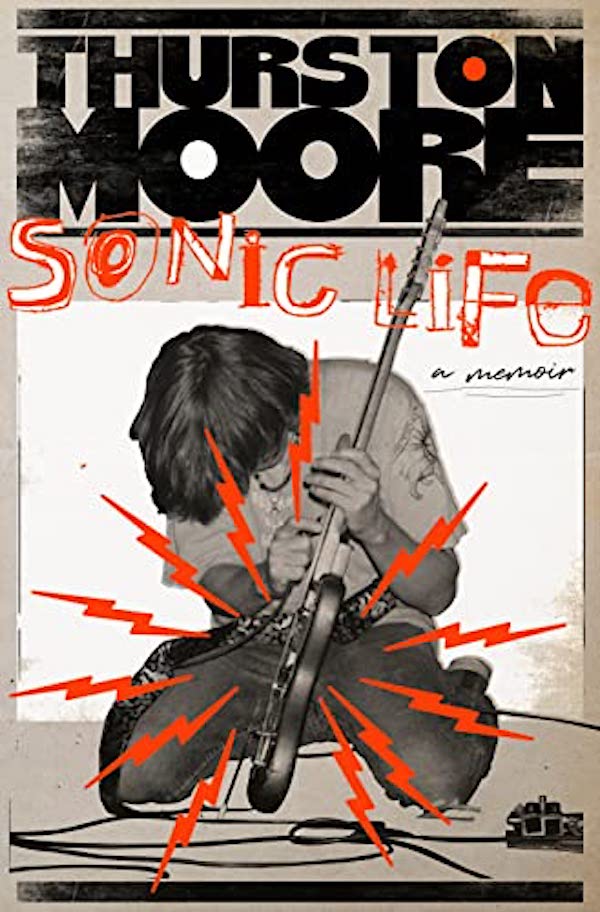
From the founding member of Sonic Youth, a passionate memoir tracing the author’s life and art—from his teen years as a music obsessive in small-town Connecticut, to the formation of his legendary rock group, to 30 years of creation, experimentation, and wonder.
A Cappella Books welcomes Thurston Moore to The Plaza Theatre to discuss his new book, Sonic Life: A Memoir, on Monday, October 30, at 7 p.m. Moore will speak with your truly, Chad Radford, music journalist and author of Atlanta Record Stores: An Oral History. Moore will also perform a short musical set.
Following the conversation, The Plaza will host a screening of director Stuart Swezey’s documentary, Desolation Center, featuring performances by Sonic Youth, Minutemen, Meat Puppets, Swans, Redd Kross, Einstürzende Neubauten, and more. Moore will introduce the film.
A note on the THREE types of tickets available for this event:
Book Talk Ticket: Includes a pre-signed copy of Sonic Life + admission for the 7 p.m. book talk. ($35+tax).
Book Talk and Movie Ticket: Includes a pre-signed copy of Sonic Life + admission for the 7 p.m. book talk, and the 8:30 p.m. screening of Desolation Center. ($45+tax).
Movie Ticket: Admission to the 8:30 p.m. screening of Desolation Center. ($20 + tax)
About the Book Thurston Moore moved to Manhattan’s East Village in 1978 with a yearning for music. He wanted to be immersed in downtown New York’s sights and sounds—the feral energy of its nightclubs, the angular roar of its bands, the magnetic personalities within its orbit. But more than anything, he wanted to make music—to create indelible sounds that would move, provoke, and inspire.
His dream came to life in 1981 with the formation of Sonic Youth, a band Moore co-founded with Kim Gordon and Lee Ranaldo. Sonic Youth became a fixture in New York’s burgeoning No Wave scene—an avant-garde collision of art and sound, poetry and punk. The band would evolve from critical darlings to commercial heavyweights, headlining festivals around the globe while helping introduce listeners to such artists as Nirvana, Hole, and Pavement and playing alongside such icons as Neil Young and Iggy Pop. Through it all, Moore maintained an unwavering love of music: the new, the unheralded, the challenging, the irresistible.
In the spirit of Just Kids, Sonic Life offers a window into the trajectory of a celebrated artist and a tribute to an era of explosive creativity. It presents a firsthand account of New York in a defining cultural moment, a history of alternative rock as it was birthed and came to dominate airwaves, and a love letter to music, whatever the form. This is a story for anyone who has ever felt touched by sound—who knows the way the right song at the right moment can change the course of a life.
About the Author Thurston Moore is a founding member of Sonic Youth, a band born in New York in 1981 that spent 30 years at the vanguard of alternative rock, influencing and inspiring such acts as Nirvana, Pavement, the Yeah Yeah Yeahs, My Bloody Valentine, and Beck. The band’s album Daydream Nation was chosen by the Library of Congress for historical preservation in the National Recording Registry in 2006. Moore is involved in publishing and poetry and teaches at the Summer Writing Workshop at Naropa University in Boulder, Colorado. He divides his time between the USA and England.
About the Film Desolation Center is the previously untold story of a series of early ’80s guerrilla music and art performance happenings in Southern California that are recognized to have inspired Burning Man, Lollapalooza, and Coachella, collective experiences that have become key elements of popular culture in the 21st century. The feature documentary splices interviews and rare performance footage of Sonic Youth, Minutemen, Meat Puppets, Swans, Redd Kross, Einstürzende Neubauten, Survival Research Laboratories, Savage Republic and more, documenting a time when pushing the boundaries of music, art, and performance felt almost like an unspoken obligation.
Directed by Stuart Swezey, the creator and principal organizer of these unique events, Desolation Center demonstrates how the risky, and at times even reckless, actions of a few outsiders can unintentionally lead to seismic cultural shifts. Combining Swezey’s exclusive access to never-before-seen archival video, live audio recordings, and stills woven together with new cinematically shot interviews, verité footage and animated sequences, Desolation Center captures the spirit of the turbulent times from which these events emerged.
If you have enjoyed reading this post, please consider making a donation to RadATL. Venmo to @Chad-Radford-6 or click on the Paypal link below.
Nearly 27 years after the tragic death of Brainiac frontman Tim Taylor brought an end to the group’s meteoric rise, the beloved Dayton, OH post-punk freak out ensemble is returning to stages once again. The group’s Surviving members—guitarist and vocalist John Schmersal, drummer Tyler Trent, and bass player Juan Monasterio—are paying homage to Brainiac’s fallen leader with the addition of guitarist, keyboard player, and vocalist Tim Krug of Dayton-based indie rockers Oh Condor as well as the electronic projects Hexadiode and Halicon.
From 1992–1997, Brainiac twisted the boundaries of indie rock, industrial music clatter and collage, and noise rock to the tune of a mangled Moog synthesizer. The group’s sound was truly revolutionary, as evidenced by their three steller full-lengths 1993’s Smack Bunny Baby, 1994’s Bonsai Superstar, and 1996’s Hissing Prigs in Static Couture.
The group’s final offering, 1997’s Jim O’Rourke-produced Electro-Shock for President EP offered just a hint at the bold and engaging new sounds the group had in store. But Taylor’s death in a single car accident that same year marked the end for Brainiac.
Cincinnati’s drums and cello two-piece Lung opens the show with a set of blackened and apocalyptic post-grunge, post-goth dirges.
Cow Punk. It’s more than just a genre of redneck rock ‘n’ roll. It’s a lifestyle, and it’s the title of Dash Rip Rock’s latest album. Since the 1987 arrival of the New Orleans trio’s self-titled debut on 688 Records, singer and guitarist Bill Davis has crafted a blend of Athens, GA-style college rock, fueled by Austin, TX-style country, punk, and rockabilly. The group’s latest release features a spread of revved up new recordings of older numbers from throughout Dash Rip Rock’s catalog. Check out a couple of Status Quo and Gram Parsons covers as well. It’s the definitive cowpunk statement—or at least it’s Dash Rip Rock’s vision of all that cowpunk can be.
Since 1982, Dirty Rotten Imbeciles (D.R.I.) have circled the globe, playing a break-neck blend of hardcore, punk, and thrash metal crossover forged amid Houston’s skate-punk scene of the Reagan era. The group’s sound culminates with recordings such 1985’s Dealing With It, 1988’s Four Of A Kind, and the 2015’s criminally overlooked But Wait … There’s More! EP. Co-founding members vocalist Kurt Brecht and guitarist Spike Cassidy have remained at the front of the stage, leading an ever-shifting rhythm section. After keeping the band on the road for more than 40 years, D.R.I.’s anti-commercial, anti-authoritarian values are symbolized by the group’s trademark running man logo—an emblem that signifies the whiplash fury the group has commanded for decades. In the pit, the ferocity remains unmatched. This marks the group’s rescheduled 40-year anniversary show.
Photo courtesy Loony!
San Antonio’s Metalriser, Atlanta punx Stripper Cult, and hardcore/nardcore skatepunk outfit Loony get the party started.
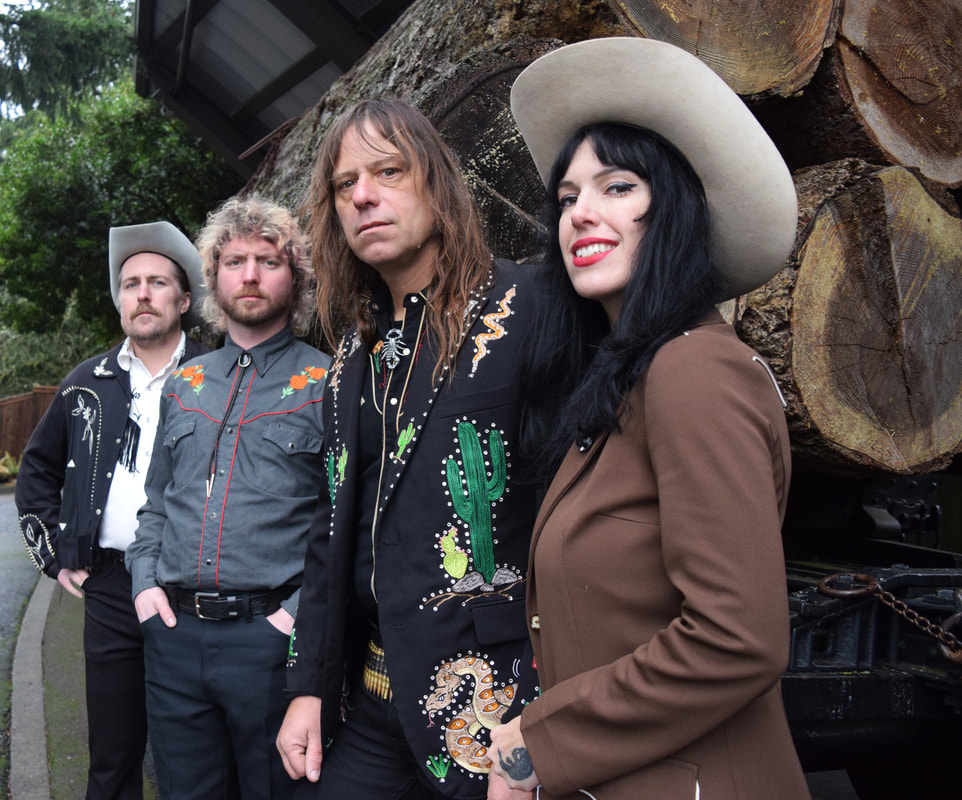
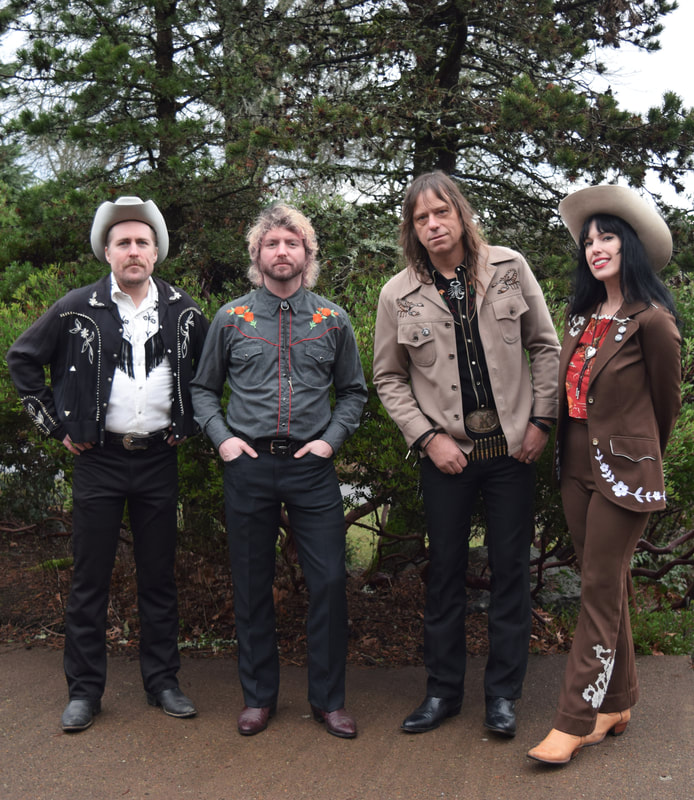
THE SPURS: Christopher March (from left), Buddy Weeks, Kelly Halliburton, and Jenny Connor.
Jenny Don’t and the Spurs are making their way across the country, playing songs from their brand new album, Lovesick Crawl, out now via Augusta, GA’s Missing Fink Records. Before hitting the road, the Portland, OR-based group’s founding members Jenny Connors and Kelly Halliburton took some time out of their day to talk about the Cramps, Dead Moon, Wipers, and the songs that make up Lovesick Crawl.
Catch Jenny Don’t and the Spurs when they play the Earl on Feb. 23, and Fink Fest in Savannah on Feb. 24.
Let’s talk about what you had in mind when you settled on the song and album title, Lovesick Crawl. It’s the word “crawl” that really grabs my attention.
Jenny Connors: We were listening to a lot of music by the Cramps. The cover art for the album is by Stephen Blickenstaff, who did the cover art for the Cramps’ Bad Music For Bad People, which is a really cool coincidence. We’d talked about doing something in the style of the Cramps, but nothing turned out sounding like the Cramps as it evolved. It’s essentially about being in love with someone—being infatuated—and you can imagine yourself crawling across the floor just to get their attention.
The song originally had an intro that was similar to the Cramps’ “Human Fly,” but we nixed that along the way. Then Johnny from Missing Fink Records approached us about releasing the record.
Kelly Halliburton: Stephen does a lot of the artwork for Missing Fink. Johnny contacted us less than six months before the record came out. We did the recording sessions in February 2022, and finished songwriting six months before that. The idea to channel the Cramps came to us before we knew that Johnny was working with Stephen so much. It added yet another layer to the strange coincidences surrounding this record.
How did the two of you meet and start making music together?
Jenny: I started stalking Kelly around 2008, until I finally whittled him down to date me. I was up front for a Pierced Arrows show and thought it was great. The drummer was super hot and I wanted to hang out with him, so I wrote to him on Myspace. That puts a date on it!
Kelly Halliburton and Jenny Connors
Kelly: Our relationship as a couple pre-dates the Spurs by about three-four years. It took a while because I was touring a lot with Pierced Arrows. The singer and guitar player Fred Cole started getting sick around 2012 or ‘13 so the band slowed down and eventually ground to a halt. Jenny and I had talked about doing something together. It wasn’t until Pierced Arrows wasn’t really a thing anymore that we had time to make it happen. Eventually all of our other bands broke up and this was the last one standing.
Jenny: Kelly and I have a pretty big age gap between us. I was just about to turn 22 when we met. He’s 16 years older than me and said, “I don’t want to date a 22 year-old.” But I said “Come on, I’m serious!” And here we are. We got married last year.
When we were talking about doing stuff together, Sam Henry and I started gigging around town playing a bunch of songs that I already had, which I used on the first album. Sam became the drummer for the Spurs.
Kelly: At first it was me and Jenny. I had an acoustic bass and she had an acoustic guitar. We wanted to keep it really stripped down, and not rely on anyone so that we could do this at any time, whether it’s on a street corner, in our backyard, wherever. It was purely acoustic and we sounded terrible. Something was missing. We didn’t have a ton of experience playing acoustically. All of our previous bands played amplified punk and garage rock. We wanted to keep it stripped down, but we asked Sam to play a snare with some brushes to keep time. Eventually there was a bass drum, then a high hat, and before we knew it, it was this loud, amplified thing with a full drum kit and electric instruments.
Jenny: Then we thought, “You know what’s really missing are guitar solos.”
Sam Henry was the original drummer for the classic Portland punk band Wipers.
Kelly: He played on the first three Wipers singles and the first album, Is This Real? They started in ‘77-‘78. He quit the Wipers in ‘80-‘81. I love everything [Wipers singer/guitarist] Greg Sage has done, but not everyone does. For most people, all you need are the first three LPs: Is This Real, Youth of America, and Over the Edge.
Sam quit the Wipers and joined Napalm Beach, which is kind of funny. Sam doesn’t play on the Wipers album Land of the Lost, but their singer and guitar player Chris Newman drew the dinosaur artwork, which is the weirdest cover, but they were all weirdos [laughs].
Jenny: When we were on tour, a lot of people would come up and say, “No way, Sam Henry from Napalm Death!” [laughs].
I was hanging around a record shop with a few older guys when the Wipers ‘96 album The Herd came out. They said, “Uh, this is gonna suck!” But I took the promo CD home, and even though it wasn’t cool to like The Herd, I loved it. The guitar playing is cosmic.
Kelly: Greg never deviated from his formula, so it’s not like anything on that record is all that different. He slowed it down, but it’s still dreamy, twangy, reverb-drenched guitar. He got more into the whole alien abduction thing. That album art has a fence around the world. That stuff follows Greg’s obsession with alien abduction. From what I understand, he firmly believes that he’s been abducted by aliens. If you look closely, that’s sort of a theme that runs throughout a lot of his stuff.
I’ll never hear “Alien Boy” the same way again.
[Laughs].
Sam died in February 2022, but he plays on Lovesick Crawl.
Jenny: Yes, Lovesick Crawl features the last recordings that he made. At the end of our January 2022 tour, he wasn’t feeling well. We were heading to Seattle to record. His doctor said, “You need some rest,” so Sam told us he couldn’t make it. A lot went into scheduling, though, so we planned to wing it and go anyway. He heard that we didn’t cancel so he changed his mind and came with us.
We finished the recordings and were supposed to have a show in Everett, but he was in really poor shape. We canceled the show and took him to the hospital, which was the beginning of the end for him, unfortunately.
Kelly: He was diagnosed with terminal cancer, I want to say the day after the recording session ended. They gave him three months to live but he didn’t make it three weeks.
Jenny: Obviously, no one saw what was coming. We were at the end of a tour. He was older and everyone feels like shit after a tour. The doctor said, “Maybe you drank too much on tour,” which he hadn’t. But he did great during those recording sessions. He didn’t complain. He felt uncomfortable, and every day it was getting a little worse. Something was seriously wrong. In the end, it makes these recordings extra special for us.
Is there a song on the record where his performance stands out?
Jenny: The session as a whole stands out for me. But “Lost Myself” stands out because I think about when we were writing the song. He would say, “How about we try this,” or “I’m going to hit the drum like this.” I have a lot of memories associated with that song.
Kelly: It’s hard not to think about how difficult it must’ve been for him to get through those sessions. There are a couple of songs from earlier sessions: His drums are great on “Right From the Start.” We recorded that song not too long after we wrote it. Later, we did the session where the album version came from. There’s the single version and the version on Lovesick Crawl. The later version was recorded after we’d played it for a while.
Jenny: “Black Cadillac” is a good example of his ability to go all out, or scale it back. He’s mainly playing snare and the rim and clicking the drum sticks together, and adds dynamics throughout that.
Not a lot of players can entertain without playing the whole kit. They get bored. There’s a video of Sam playing that, and there’s never a dull moment.
It’s kind of a beautiful thing that he did what he loved doing till the end.
Kelly: If we’d gone to Seattle without Sam we wouldn’t be able to listen to these songs. The fact that he rallied and did it is a testimony to his dedication. He was 64 and he had a ball every time we played. He was an amazing person to be in a band with. There will never be another Sam Henry.
Jenny: After he passed away, Kelly, our guitar player Christopher, and I asked, “What does this mean for us as a band?” Collectively, we acknowledged that Sam dedicated the last 10 years of his life to this band, and wouldn’t want us to end at this point. We were all on the same page, and having that camaraderie helped with the grieving process.
Kelly: Sam was such a gregarious personality, and such an outgoing, loving person. He was a good counterpoint to someone like me who’s kind of a crab and wants to be alone most of the time [laughs]. He made friends with people all over the world. Everywhere we went there were people who knew and loved Sam. So everywhere we take this stuff when we’re out on the road it’s cathartic for people who loved and cared about him. We see a lot of teary eyes out front. There are a lot of people who are connected with Sam through this music.
A lot of what we’re doing now is for Sam. Why stop now? What’s the point in creating something that he cared so much about and letting it fizzle out.
It has to be rough for your new drummer fitting in as you move forward.
Kelly: Sam’s shoes are impossible to fill. It would be unfair for us to have those expectations for anyone. Also, the band is more than a working relationship. We knew Sam before the band existed. It worked better than any other band that we’ve been in. For someone else to jump in, that has to be hard and we respect that.
Jenny Don’t and the Spurs
Jenny: For a new player, the songs have to fall into the structure they’ve been written in. But obviously if they bring other inspiration to it, it’s the band’s responsibility to respect everyone’s talents individually. Even though it’s called Jenny Don’t and the Spurs, we’re all equals.
Kelly: The band that came before Pierced Arrows was Dead Moon, which had an almost cult-like status. I stepped into an environment that was probably a lot like what anyone who’s playing with us is stepping into. The guy that I replaced with Fred and Toody was Andrew Loomis, who is universally loved. Everywhere we went for the first few years everyone was looking at me saying, “You’re not Andrew.”
Fred and Toody went out of their way to reassure me that I didn’t have to try to be like Andrew. I didn’t have to try to make my drumming style like his. Obviously I wasn’t going to do that anyway, but it felt good to be reassured. I want to extend that kind of welcoming courtesy to anyone who’s stepping into this band.
I joined Dead Moon in about 2007. They were on tour in the fall of 2006. They did a really long European tour and that was pretty much the end. They were all getting sick of each other. Initially Fred and Toody wanted to take a break, but Fred was always so restless. It didn’t take them long to form a new band. They called me out of the blue in March of 2007—maybe three months after Dead Moon played their last show.
I didn’t even play drums. I’m barely a bass player, but they wouldn’t take no for an answer. With so many expectations, it was terrifying at first. Not only am I not a good drummer, I’m also stepping into this kind of high profile situation where I’m in front of all of these Andrew Loomis-Dead Moon fans.
People were brutal about it. I was at a bar in Portland shortly after Pierced Arrows got going. There were fliers wheat-pasted on the bathroom wall. There was a Pierced Arrows flier with a photo of us and someone had drawn an arrow pointing at my head and wrote, “Worst drummer in Portland” [laughs].
Honestly, I couldn’t argue, but that was the level of hostility that I faced in that band. People warmed up after a while. It was also funny, because people invented a feud between Andrew and I—like Andrew was pissed because I took his spot. But Andrew and I would get together and laugh about it. He was as sick of Fred and Toody as they were of him.
Jenny: Another layer to all of these weird coincidences that lined up to where we are now: When I moved to Portland in 2008, I randomly moved into a house where Andrew hung out a lot. He introduced me to Sam, and then we started playing together. Small world! I didn’t know anything about Dead Moon and Wipers before I moved to the big city of Portland from Acme, Washington.
Kelly: In a bizarre, round-about sort of way, the existence of this band owes something to Andrew Loomis, which is awesome.
You have a new drummer now?
Jenny: His name is Buddy Weeks and we’re enjoying his presence in the band. Hopefully, if he still likes all of us after this tour, we’ll have a long relationship together.
Kelly: Playing together is one thing, but we love being on tour. Luckily he’s had a lot of touring experience. That’s almost as important as being able to play, because it ain’t easy. Putting four people in a tin can and carting them around the country for six months out of the year … There are only so many masochistic personalities that can endure that.
Jenny: You’ve gotta be able to play well and you have to be a good hang. You have to be funny. You have to be able to connect on some things outside of music a little bit, so you enjoy each other’s time together. There’s one hour of playing and 23 hours of being around each other.
Kelly: Christopher March has been playing guitar with us for almost six years. We’ve got him wearing a lot of hats. He’ll have the lap steel set up on stage, then he’ll play a baritone guitar for a couple of songs. We don’t have him literally juggling on stage yet, but we’ll incorporate that at some point, just to make his life that much more difficult [laughs].
There are moments throughout Lovesick Crawl that remind me of Hank Williams Senior’s recordings. It’s also rooted in punk rock mingling with country music—stripped down and rough-and-tumble. You roll with the mistakes.
Jenny: We enjoy it more when it’s stripped down and not super polished. We like music that’s a little rough around the edges.
Kelly: That’s certainly the music that I’m drawn to. I still own every piece of music that Discharge ever pressed to vinyl. A lot of people say that punk and country music are coming from these disparate places, but I’m not so sure their worlds are all that different.
Jenny: If the crowd is really entertaining and you mess up while you’re jumping around on stage … Entertaining is a lot more fun than worrying about perfection.
Kelly: Dead Moon was genius in their own way. No one in the band was a virtuoso musician. It was a lot more emotive than technically flawless. That resonated with people a lot more than these bands that really try to be total shredders. There’s a place for that, but there’s also a place for raw, emotive expression that comes from a different place than musical virtuosity.
That’s what attracted me to music in the first place. When I heard Black Flag for the first time I thought, this is it!
Kelly: Exactly, it doesn’t get more raw than “Nervous Breakdown.” It’s just a few minutes of raw aggression and teenage frustration. That set the template for a lot of things that are still important to me now, and I’m in my 50s!
Some of my earliest studio experiences, going back to when I was 19 years old, the drummer for Poison Idea, Steve Hanford, “The Slayer Hippy,” was a renowned producer. He did a bunch of studio work with some of my old punk bands. I learned a lot about recording while working with him. One of the things he would put into practice was if you can’t do it in a couple of takes, just ditch it and move on. Maybe come back to it in a couple of takes, maybe not. He always felt that the energy would dissipate if you ran it into the ground. I don’t know if it’s true that Poison Idea did that, but he always maintained that Poison Ideas stuff was done in one or two takes. That’s kind of our approach.
Jenny: The magic will go away if you do a solo 50 times. When I do a vocal I’ll do it three times. One warmup and two runs through it. It’s how I sound and it’s not gonna sound better if I keep doing it. On any recording you can listen and think about how you should have done something differently. When you’re in the studio you can do something over and over, but you learn to be ok with imperfections. This isn’t for us. It’s for the listeners, and they’ll make it their own.”







 Rad/ATL