
Jeremy Wilms has spent much of his professional life working as an auxiliary player—a sideman to a cast of musical innovators both revered and obscure. While discussing highlights from throughout his career he connects the dots from Atlanta’s early ‘90s free jazz outfit the Gold Sparkle Band to pop megastar Beyoncé; New York’s free jazz icon Ornette Coleman to Duluth, GA’s late ‘80s hardcore scene (he was in the acoustic punk outfit No Marching Orders alongside Act of Faith vocalist Robbie Fuller). Wilms even arranged the strings and brass heard in “A Few Words For the Firing Squad,” the closing number from Run the Jewels’ latest album, RTJ 4.
The more collaborators he mentions the more impressive the list becomes. From suppertime jazz to skronking and wailing, Wilms has achieved about as much as is possible in his role. With his latest album, The Fighter (Cart/Horse Records), Wilms reaches for a deeper plain of existential songwriting that comes from within.
“In the past, I never felt secure as a strong songwriter,” Wilms says. “It was easier to learn stuff on guitar, bass, piano, even drums, and work as a musician right away than it was to get out there and sing or front any kind of act. As I was writing a lot of these songs, I realized that I was reconciling leaving the working musician lifestyle behind.”
In 1995, Wilms graduated from Georgia State University with a Bachelor’s degree in music. Soon after, he moved to New York to earn his Masters at CUNY Queens College. In New York, he studied under renowned pianist, composer, and educator Kenny Werner.
“I studied off-and-on with him for about a year,” Wilms says. “At the time, I was playing pretty heady jazz stuff and was writing new music. Probably the most important lesson I got from him came when he said to me, ‘There are plenty of jazz guitarists. You don’t need to play jazz guitar. What’s your thing, man? What do you do?’ More than any technical thing that I learned from him, that was the crux of what I got out of studying with Kenny Werner, and I spent a lot of money getting that out of him!”
While in New York, Wilms found work playing alongside everyone from Martín Perna’s afrobeat ensemble Antibalas, and even played bass in the Broadway production of Fela!, based on the songs of Nigerian composer and political activist Fela Kuti. He also did a stint playing with jazz drummer Chico Hamilton, and the electronic funk band Chin Chin who released music on El-P’s Def Jux label.
When the pandemic hit in 2020, life in New York became untenable. A few of Wilms’ neighbors succumbed to early variants of COVID-19. Around that same time, the city placed massive body storage freezers within blocks of his home.
He moved back to Atlanta to escape the seemingly apocalyptic conditions. With the move came a desire to avoid returning to a life of balancing live gigs five nights a week between long stints on tour. In time, as he continued writing music, new songs bearing titles such as “All the Roads,” “Born To Die,” and “Stopping On A Dime,” began taking shape.
“All the Roads” kicks off The Fighter, laying out a blueprint for the album’s rich melodies and sparse acoustic folk stylings. The Fighter takes shape as a focused and refined effort when placed next to previous releases such as Layers: Compositions from 2010-2012 and 2013’s Dancer Pants.
“It’s happened to me only a few times in life, but I dreamed the last chorus of ‘All The Roads,’” Wilms says. “I woke up singing the last chorus, the words, and the melody in my head. Immediately I got up and figured it out on my piano.”
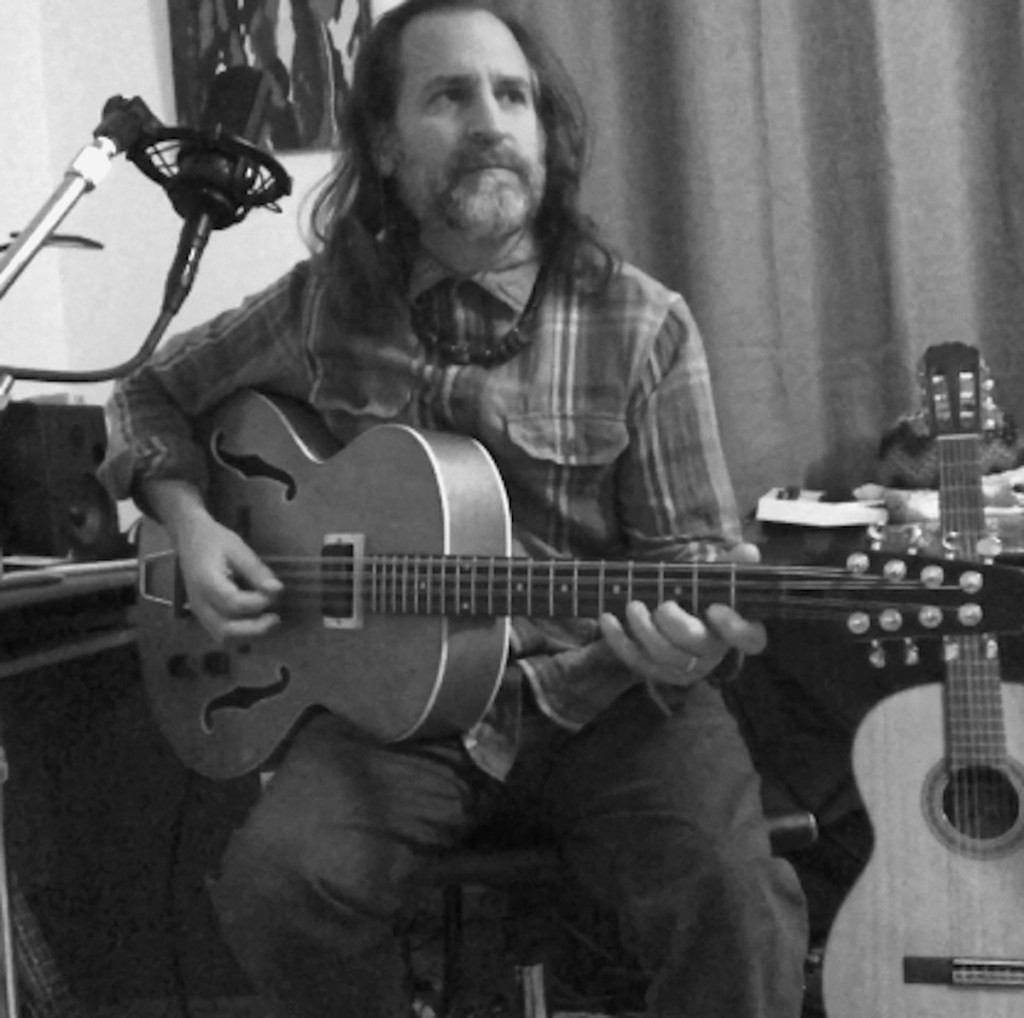
Wilms continued writing the song in his head while breaking up the monotony of his pandemic days by taking long walks alone, sometimes for hours.
“All The Roads” builds around a theme of spending a lifetime making decisions aimed at achieving one singular goal but still feeling lost. “But then you reach a point where you come back around and figure out that you’ve had what you’ve needed all along,” Wilms says.
The third song on The Fighter, “Hey My,” is a sparse and droning organ, acoustic guitar, and mandolin piece that fleshes out the album’s psychedelic essence. It also illustrates the chemistry in the studio between Wilms and co-producer Kyle Spence working at RJS studio in Athens.
The song came about after both Wilms and Spence spent time discussing the songs’ arrangements and zeroing in on the sounds they wanted.
The bright, upfront songs are the perfect showcase for Wilms’ voice. Other musicians joined in as well. Drummer Bo Bedingfield, bass player Nick Robbins, and backing vocalist Julia Haltigan all contribute to the remarkable care and depth that went into crafting The Fighter’s majestic aura.
“Hey My” and another song titled “Props”—the latter featuring ethereal trombone sounds courtesy of Smoota—are tonal pillars for a conceptual arc that revealed itself as the album came together.
“I’m not trying to jump through hoops or check off someone else’s boxes,” Wilms says. “As long as I can pull it together and keep doing that, who knows? Maybe next year it’ll be a total noise record. It might not be a singer-songwriter thing. Whatever it is, as long as I can do it without having to be someone else for other people, I will keep at it.”
A version of this story originally appeared in the January 2024 issue of Record Plug Magazine.

If you have enjoyed reading this review, please consider making a donation to RadATL. Venmo to @Chad-Radford-6 or click on the Paypal link below.

 Rad/ATL