David J—co-founder of Bauhaus and Love and Rockets—returns to Avondale Estates for a solo appearance supporting his new poetry collection, titled Rhapsody, Threnody, and Prayer, while playing music from his elegiac new LP, The Mother Tree.
It’s a seated, BYOB affair taking place in a small studio setting, that finds the legendary bass player marking a new and vulnerable chapter in his career. Both David J’s new book and album are tributes to his late mother, Joan Nancy Haskins, each one reflecting on decades of introspection, artistry, and grief processed through the lenses of music and verse. Over five atmospheric tracks, The Mother Tree conjures soundscapes for his poetry to drift through—at once dramatic and meditative, full of memory and emotional ballast.
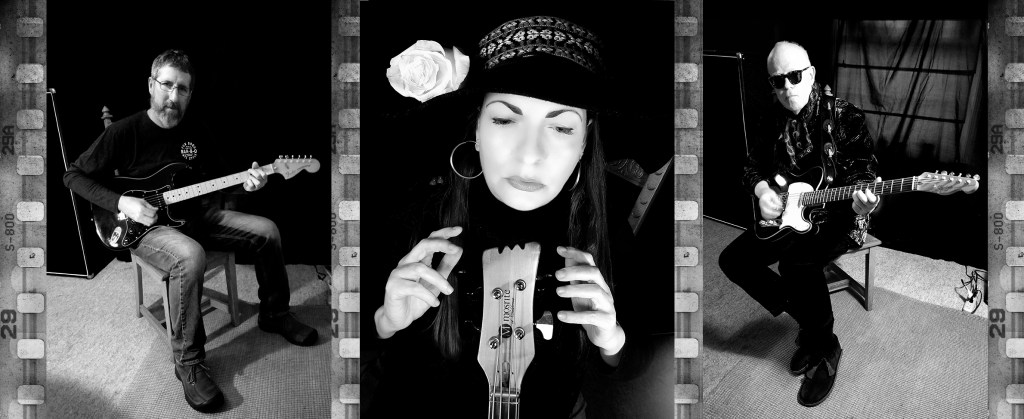
Mike Lynn (left), Lisa King, and Jeff Calder. Photo courtesy The Hot Place
The Hot Place opens the show. The long-running psychedelic darkwave group led by vocalist and bass player Lisa King and Swimming Pool Q’s guitarist Jeff Calder. Rounded out by Mike Lynn (Betty’s Not a Vitamin), the trio will offer stripped-down interpretations of songs from their 2023 self-titled album. Expect acoustic arrangements that lean into the band’s more ethereal inflections, with King also sharing selections from her own poetry collection Dark Queens and Their Quarry.
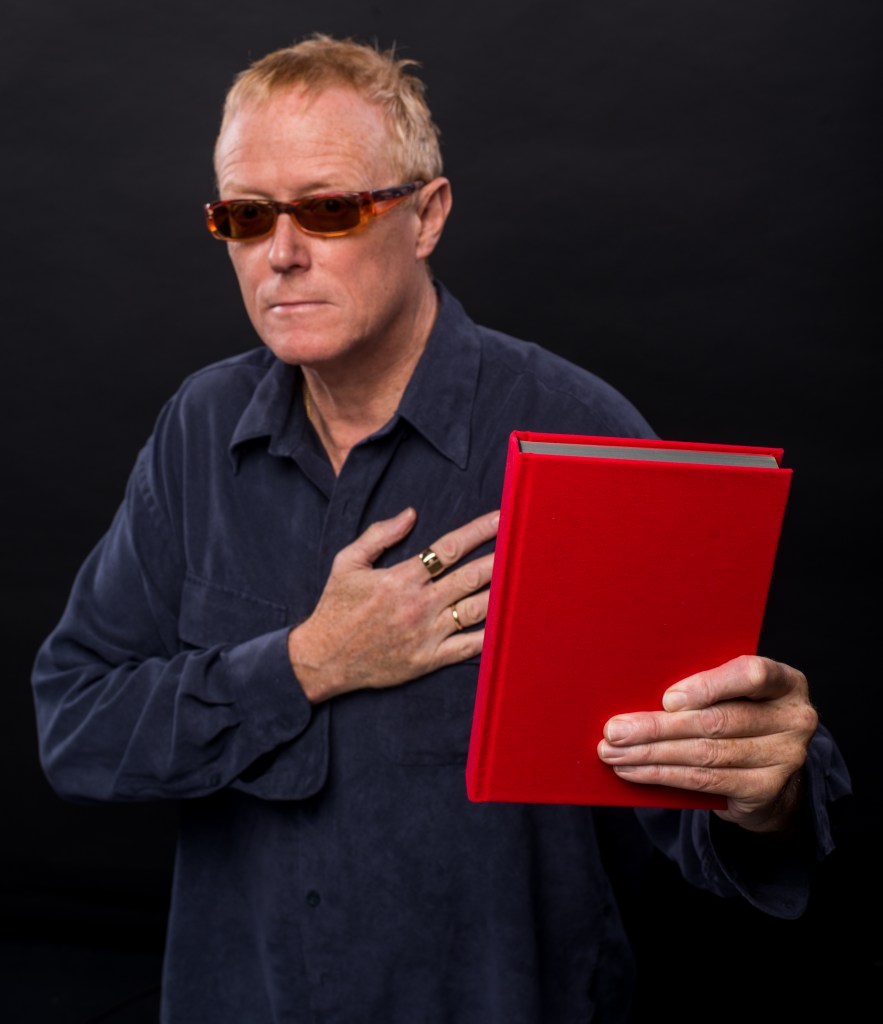
David J
The connection between David J and the Hot Place runs deep. The two have toured together playing living room gigs throughout the Southeast, and their creative paths have intersected on multiple projects over the years. This performance promises to continue that synergy in a setting designed for careful listening and thoughtful reflection.
Advance tickets are $50, and are required. There will be no tickets sold at the door, and seating is limited. Doors open at 7 p.m. All-ages are welcomed with accompaniment. Respect the neighbors and don’t park in the adjacent driveway.
If you have enjoyed reading this post, please consider donating to RadATL. Venmo to @Chad-Radford-6 or click on the PayPal link below.
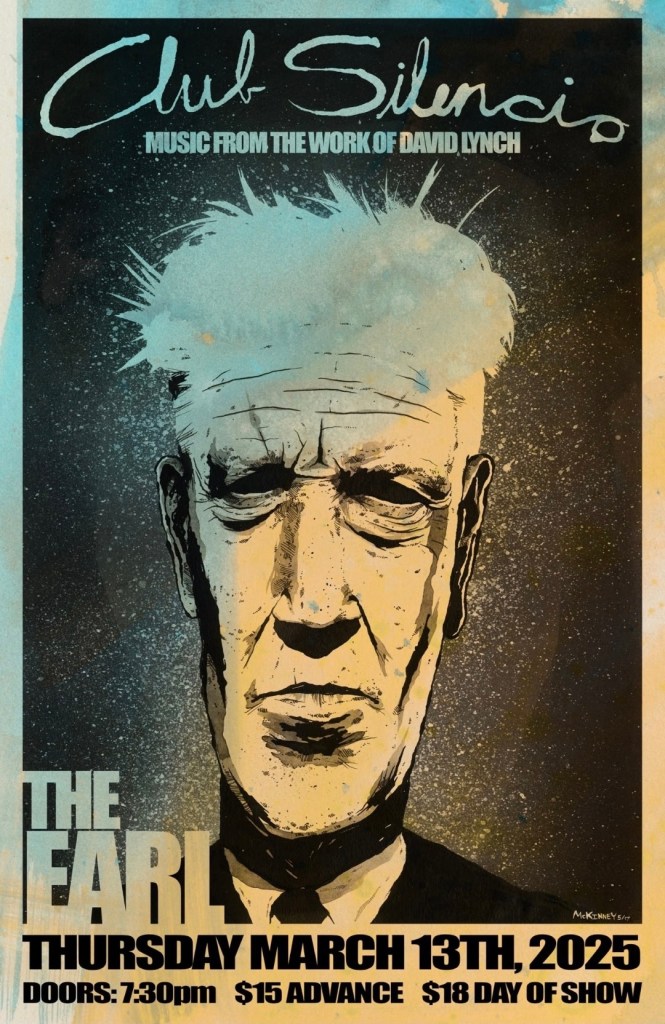
On Thursday, March 13, an ensemble of Atlanta’s finest players are gathering at the Earl to pay homage to the music heard throughout director David Lynch’s films. The cast includes Ben Davis playing tenor saxophone, T.T. Mahony on keys, Jeffrey Bützer playing guitar, Sean Zearfoss on drums, Henry Jack playing bass and baritone guitar, and Meghan Dowlen singing alongside Don Chambers and Compartmentalizationalists.
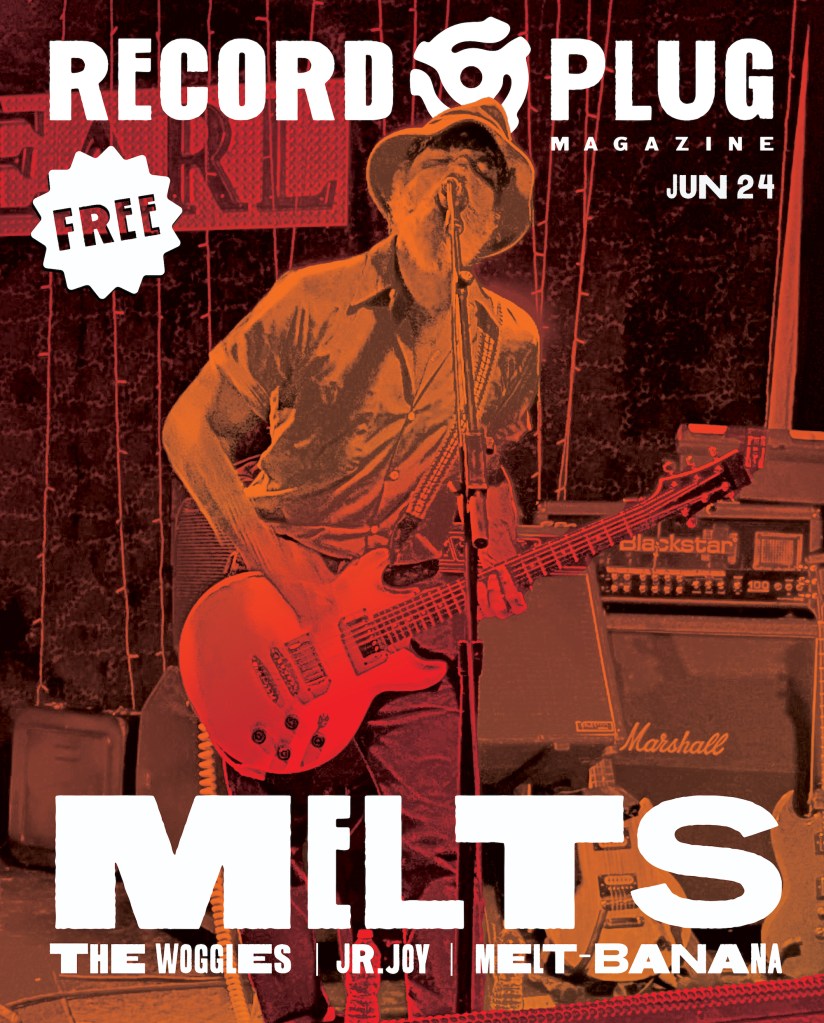
The strange case of Melts’ long-lost album Salicoutinäw begins in the winter of 1994. Drummer Andrew Barker, bass player Jo Jameson, and the group’s singer, guitar player, and principal songwriter Theo X had made the long haul from Atlanta to the snow-covered landscape of Minneapolis to record their full-length debut. After releasing the “667” b/w “Crusser” 7-inch single a year earlier on the Greensboro, NC label, 227 Records, the group was primed to cut the LP with 227. The label’s owner Jay Boone did the footwork, made the connections, and lined up a few days of studio time with engineer Tim McLaughlin at Amphetamine Reptile Recording Studios.
A few years earlier, the New York City-based noise rock outfit Helmet had become the subject of a major label bidding war. Ultimately, Helmet moved away from their home at AmRep to the more mainstream auspices of Interscope Records, to release their 1992 classic album Meantime. As a result of so many major labels clamoring to sign Helmet, AmRep Studios had become a well-funded, well-outfitted resource. Along the way, engineer Tim “Mac,” who also played bass with Minneapolis’ noise punk provocateurs Halo of Flies, had become a respected studio hand.
“Some of the members of the bands Today is the Day, Mickey Finn, and Godplow had all spoken positively with us about recording with Tim Mac,” X says. The Melts frontman prefers using his pseudonym when discussing the band. “We were excited to work with someone who was well-versed in the language of recording loud and noisy music.”
After all, it was the early ‘90s. Nirvana was ascending to new commercial heights after releasing 1991’s breakthrough album Nevermind. The word “grunge” was splashed across newspaper and magazine pages worldwide, culminating in a clearly defined but increasingly clichéd sound and fashion trend—the grunge look.
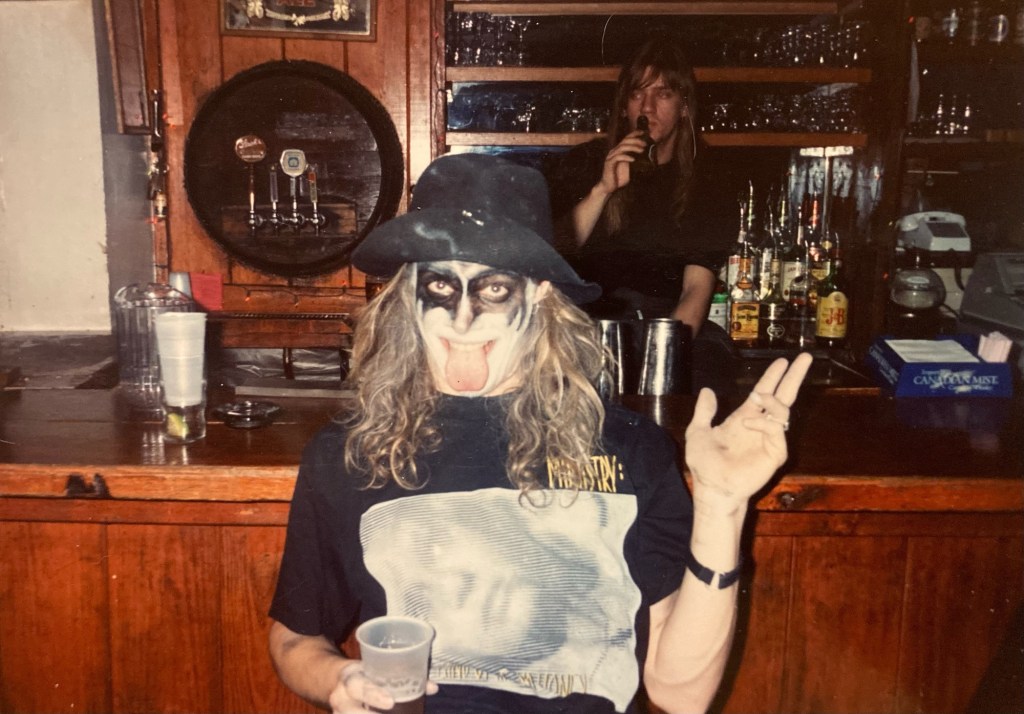
Theo X at the L5P Pub circa 1991. Photo courtesy of Melts.
But beyond the mainstream’s myopic vision, an underground noise rock scene flourished, culminating in an era of sludgy, antagonistic, and guitar-heavy bands such as Cows, Unsane, Hammerhead, the Jesus Lizard, Skin Yard, Cherubs, Melvins, and more churning out raw rhythms and distortion that moved at the speed of molten lava.
The sheer sonic intensity of Melts’ thunderous rhythms wrapped in a penchant for debauched antics drew a wild, sometimes confrontational element out of the audiences who’d come to their shows.
Barker laughs when he recalls narrowly avoiding a scuffle one night when Melts shared the stage at Dottie’s with Cat Power and King Kill 33.
“We played the show and this guy got right up in my face,” Barker says. “He wanted to fight me or have me come back to his friend’s house so we could have a drum competition. He wanted to show that he was a better drummer than me. At first, I thought he was joking but it got a little intense until Jo stepped in and talked him down.”
On another night, Melts were kicked out of the Clermont Lounge for getting naked on stage and lighting a 500-count roll of Black Cat firecrackers during their set.
“The style of music we were playing wasn’t much of a genre yet,” X says. “We had a lot of good samaritans coming to us along the way telling us we were tuning our guitars wrong. The songs we recorded for the album are tuned in B. It’s low, and sound guys would come along and say things like, ‘Hey buddy, let me help you with that guitar so we can get it tuned the right way.”
In conversation, Jameson casually mentions the name Ernie Dale, pausing only for a second as X laughs. The former soundman for Little 5 Points’ fabled former music dive The Point, was well known for not putting up with foolishness of any kind.
“Ernie is great, but if you had something that Ernie deemed to be a bad sound, he wanted to mentor you out of it,” Jameson says. “He couldn’t believe that we were intentionally making these sounds.”
Jo Jameson of Melts. Photo by Jenn Brown
Stories like these, coupled with the down-tuned guitars, heart-pounding drums, and the wide-eyed crawl of songs like “Grape,” “Jackdaw,” and “Cotton Hol” earned Melts a reputation as Atlanta’s answer to sludge metal pioneers the Melvins. But the 14 songs on Salicoutinäw stamp in time a singularly creative and distinctly Southern group that defied expectations, rather than simply adhered to trends.
When promo CDs of Salicoutinäw were mailed to college radio stations the album quickly gained traction. Salicoutinäw even broke the CMJ LOUD 100 chart in 1994. But when a pressing plant failed to deliver the first pressing of finished CDs that had already been paid for, the high cost of working in the music industry in the ‘90s added up too quickly, and 227 Records went out of business. The promo CDs, featuring a primitive, last-minute cover illustration, had a greater reach than the finished product.
By the band’s estimation, maybe 100 copies of a later second pressing of the CD made it into the public’s hands. But it was too little too late. The group received boxes of CDs with the proper cover art, but any distribution 227 Records could’ve offered was long gone, and any steam the group had built up went with it.
“I was blown away by Melts the first time I saw them,” Boone says. “I also adored them as individuals—still do! That’s why I have no animosity or was ever bitter about the shortcomings of the record. I still believe they could’ve done very well, but like so many things in life, shoulda, coulda, woulda isn’t worth dwelling on too much.”
With Melts, the 227 situation was only slightly better than the fate of their Athens labelmates Harvey Milk whose self-titled, Bob Weston-recorded debut album was shelved altogether. That album finally saw the light of day in 2010 when Hydra Head pressed it to vinyl.
Melts’s debut album has remained in obscurity ever since.
“It derailed me,” Jameson says. “The tedium of working on a record—putting so much time and energy into it—and waiting for it to arrive was frustrating. Ultimately, Theo and I parted ways over it. I was pushing for us to rehearse and to play more shows. I was all of 24 years old and was a booger-eating moron. I had no idea how many roles [Theo] juggled with everything from negotiating the release to playing the music. As we’ve discussed in the last couple of years, we misunderstood what each other said,” he goes on to say. “I had quit the band in his eyes. I didn’t intend for that to happen, but whatever I said drew a line in the sand. He had so many responsibilities with this band. I was shortsighted about it. But we’re adults now, and 30 years later, I see it.”
Not long after Salicoutinäw’s botched release the lineup dissolved. Jameson and Barker joined alternative country and Americana singer and songwriter Kelly Hogan’s band to release her debut album, The Whistle Only Dogs Can Hear. Jameson also did a stint playing with Archers of Loaf frontman Eric Bachmann in the band Crooked Fingers.
Photo courtesy Andrew Barker.
Barker continued playing drums with the outsider jazz ensemble Gold Sparkle Band. He still regularly performs and collaborates with various artists around New York City.
From there, X kept Melts moving forward with new members over the years. In 2003 he moved to Fort Collins, CO where he started working with the psychedelic Americana outfit Little Darlings.
Now, 30 years later, a self-released double LP pressing of Salicoutinäw has rekindled the group’s true power and allure, pushing the music and the English language into mysterious new realms of the imagination, while planting the band firmly in the present.
Jameson and X started playing music together in 1984 under the name Saboteur. They were high school kids by day, but their nights were spent practicing in X’s parents’ basement in Smyrna, crafting a hybrid of quasi-hair metal and thrash punk. By 1988, the band name morphed into Sabotortoise while they landed gigs at Atlanta’s storied downtown venue The Metroplex, opening up for nationally touring acts including LA Guns, Faster Pussycat, and Humble Pie.
Back then, X went by the moniker Ted Sunshine–different bands get different pseudonyms.
Melts was christened in 1990 when X and original drummer Tim Jordan recorded and released a cassette tape of early material titled As Noisy As We Want To Be.
Jo Jameson (from left), Theo X, and Tim Jordan of Melts. Photo by Steve Gaiolini.
Over the years, various members cycled through the group. In 1991, filmmaker Chad Rullman who later directed Mastodon’s “March of the Fire Ants” and “Iron Tusk” videos played bass in Melts. A year later, Jimmy Bower of NOLA sludge band EyeHateGod played bass for a stint.
Jameson’s initial run with Melts started in 1992 and lasted through Salicoutinäw. In 2021 he was welcomed back into the group. Original drummer Tim Jordan also returned to the lineup.
Since his early teenage years, X’s writing style with lyrics and band names has remained somewhat impenetrable. Everything from changing the first band’s name to Sabotortoise to an album titled Salicoutinäw to belting out songs titled “Vaccua 8 #3,” “Lessie,” and “Crusser,” X sculpts a jumble of words, letters, and numbers smashed together creating a wholly new mode of communication.
While pointing to the words on the album’s original cover, which is fully restored for the vinyl release, he explains them as though they are a Rosetta Stone to understanding his mashed-up style.
“On the cover you have ‘Sao’, like the Tao, and ‘sow’ like a mother pig,” X says. “You’ve got ‘Sally’ and then you’ve got cooties! And then chicken coop,” he says before phonetically singing, “Just like the white-winged dove sings a song, sounds like a chicken/Baby coop/Chicken coop. I borrow a lot of lyrics from Michael Jackson, George Michael, Madonna, and Stevie Nicks,” he goes on to say, “but I run them through a semantic discombobulator that turns them into some fresh pudding.”
To be sure, X’s lyrics evoke an absurdist’s sense of humor that lies somewhere in the vicinity of Marcel Duchamp’s dada-esque wordplay, Naked Lunch author William S. Burroughs’ cut-and-paste techniques, the Rev. Howard Finster’s primitive folk art, and an ecstatic Southern Baptist speaking in tongues. Still, his dynamics exist in their own avant-garde funhouse of meanings. Salicoutinäw opens with “Weu know t’live must two/ Yer muther sells sunduh the blackiss/ But under won is a vacuum/ Every tin’shy.”
When spelled out, the syntax appears to be nonsense, but it all makes perfect sense to him.
“It’s kind of like, before people were referring to music as emo, this was my version of that,” he laughs. “It certainly seems to have been very therapeutic.”
Jameson chimes in, adding in a deadpan voice: “You’ve just been granted unlimited access to step inside the mind of Theo X. Be careful in there.”
X continues describing his use of language as an amalgamation of emotions, energy, and warped synapses that he channels into Melts songs.
“My brain might have developed in a way that is slightly abnormal or has some sort of organic brain damage,” X says. “I have been around heavy metals, solvents, and thinners—in railroad car quantities—my whole life. Like, 50,000 square feet at a time in the middle of July and August with no ventilation. Also, my academic interests are in language and semantics, especially within religious texts.”
Melts circa 2024: Theo X (from left), Tim Jordan, and Jo Jameson. Photo by Steve Gaiolini
During the COVID-19 pandemic, Jameson found himself listening to songs from Salicoutinäw after so many years. “I thought, ‘I really want to put a needle on these songs. Can we press just one or two copies so that I can have it on vinyl?’”
Pressing up such limited quantities of the record wasn’t feasible, but it started a conversation that brought X, Jameson, and Jordan together to play music. Their reconvening yielded a proper double LP release of Salicoutinäw. But there were hurdles to overcome before they had records in their hands. Chief among them was the artwork.
In the late ‘80s and early ‘90s, the way to store big digital files for personal computers was on a removable 44- or 88-megabyte SyQuest drive. “It was about the size of an old 8-Track tape,” Jameson says.
They could be taken to Kinko’s, for example, where layout, design, and scanning were completed. The user would then pay for their time on the computer. The technology is long antiquated. After digging up X’s old SyQuest drive, the group’s friend, Record Plug Magazine’s Creative Director Andrew Quinn connected them with a specialist in California who was able to retrieve the files. After decades of gathering dust, everything was still in working order. Quinn led the efforts in reworking the album’s cover art and the insert, which includes a timeline of the band and everyone who was a part of it.
X, who produced Salicoutinäw made no alterations from the original recordings prior to handing them over to Morphius Records for vinyl production.
A record release party had to be booked. Barker played on the album, but Jordan is the band’s current drummer. X and Jameson delicately approached Jordan to float the idea of bringing Barker down from New York to maybe play three songs for the show. Jordan’s reply: “That sounds amazing! Let him play the whole show, I want to see that! I never saw Metls with Drew playing drums!”
As a historical document, pressing Salicoutinäw on vinyl is a necessary step in correcting the past for Melts. It also gives the group solid ground to move forward once again. They pressed only 200 copies of the LP because “We think we can sell that many and not have them lying around for years,” Jameson says.
While they don’t have new material in the works, there is a tremendous backlog of older Melts songs that have never been recorded, including a follow-up album that X wrote, called Melts Inc., which was named after X watched all the episodes the “Melrose Place” spin-off series “Models Inc.”
“Because the first one failed so catastrophically to meet its audience, we made a pact to work through some of the older rehearsal tapes and live recordings before we say, ‘Let’s write a new song,’” X says. “We’ve been rekindling some of that, and there is a lot of that stuff lying around, so there is more to come.”
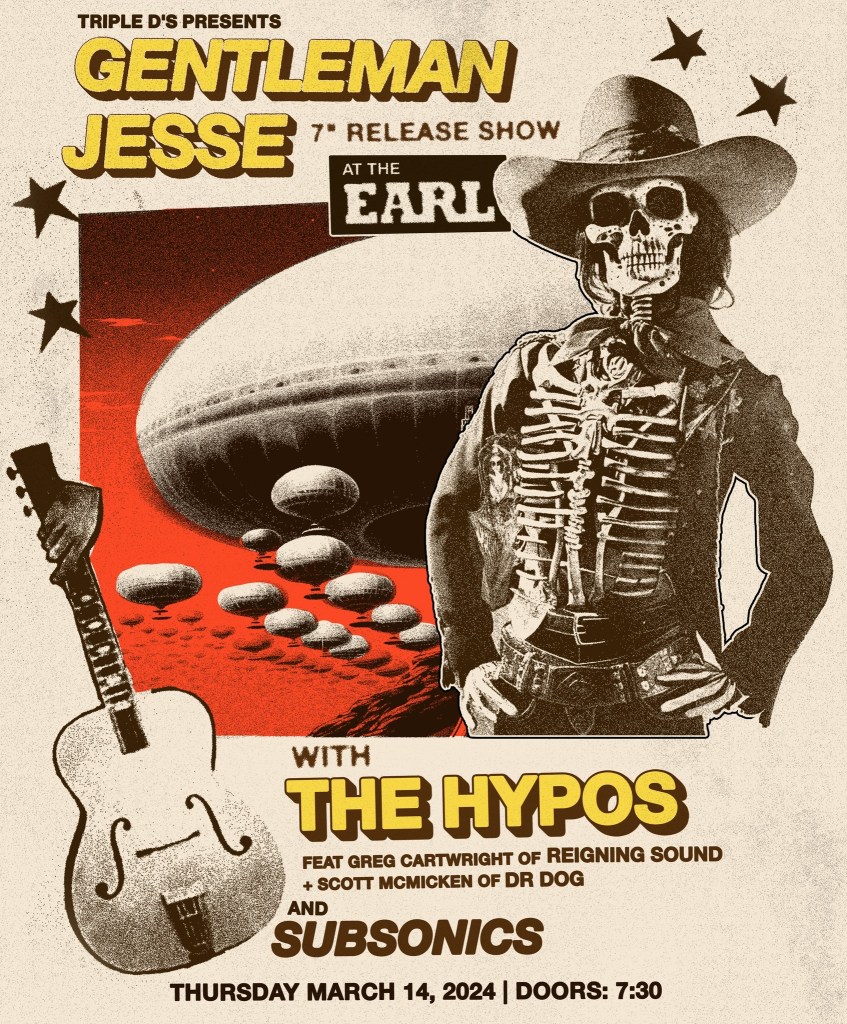
Gentleman Jesse Smith headlines the 7-inch release party for the “Where Time Stands Still” b/w “Return of the Mack” single due out in February 2024. This single is no. 12 in the ongoing Drunk Dial series, and features contributions from Greg King of GG King and Carbonas fame, as well as Ryan Bell of Bukkake Boys, Ryan Dinosaur, Scavenger of Death, et al.
For those who are unfamiliar, the Drunk Dial series invites artists to get drunk and write and record one original song and one cover of a classic tune in the same session. Both numbers will be released as a 7-inch. “Where Time Stands Still” is the Gentleman Jesse original. “Return of the Mack” is a cover of Mark Morrison’s song which appears on the 1996 album Return of the Mack.Pre-order the single here.
The Hypos
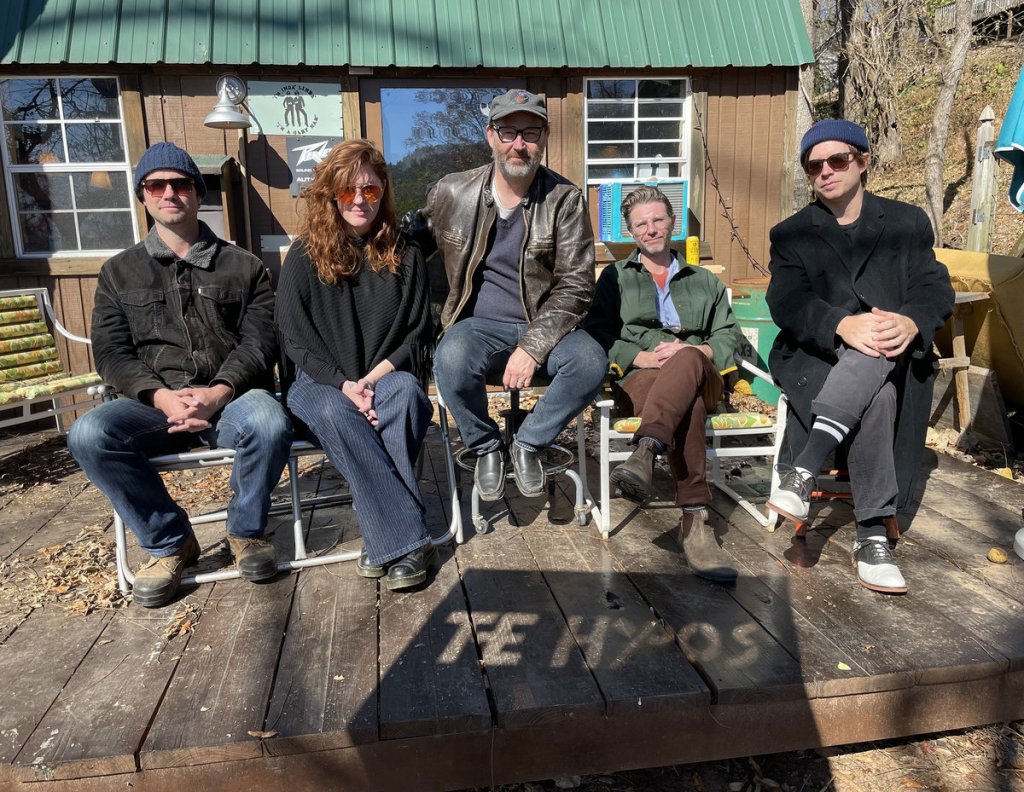
The Hypos, a new collaboration featuring veteran songwriters Greg Cartwright (Reigning Sound) and Scott McMicken (Dr. Dog), joined by some of Memphis and Asheville’s finest players (Evan Martin, Kevin Williams, and Krista Wroten) also perform. The almighty Subsonics open the show.
All three bands on stage this evening feature longtime friends who cut their teeth in a more civilized era of hardcore, post-hardcore, and indie rock—the ‘90s. Now, they’re elder statesmen of the scene, raising the bar high while fusing furious rock, noise, and angular riffs without pretense. It’s called experience, kids.
Photo courtesy of Blood Circuits
SCRATCH OFFS: Photo by Steve Pomberg
If you have enjoyed reading this review, please consider making a donation to RadATL. Venmo to @Chad-Radford-6 or click on the Paypal link below.
Nearly 27 years after the tragic death of Brainiac frontman Tim Taylor brought an end to the group’s meteoric rise, the beloved Dayton, OH post-punk freak out ensemble is returning to stages once again. The group’s Surviving members—guitarist and vocalist John Schmersal, drummer Tyler Trent, and bass player Juan Monasterio—are paying homage to Brainiac’s fallen leader with the addition of guitarist, keyboard player, and vocalist Tim Krug of Dayton-based indie rockers Oh Condor as well as the electronic projects Hexadiode and Halicon.
From 1992–1997, Brainiac twisted the boundaries of indie rock, industrial music clatter and collage, and noise rock to the tune of a mangled Moog synthesizer. The group’s sound was truly revolutionary, as evidenced by their three steller full-lengths 1993’s Smack Bunny Baby, 1994’s Bonsai Superstar, and 1996’s Hissing Prigs in Static Couture.
The group’s final offering, 1997’s Jim O’Rourke-produced Electro-Shock for President EP offered just a hint at the bold and engaging new sounds the group had in store. But Taylor’s death in a single car accident that same year marked the end for Brainiac.
Cincinnati’s drums and cello two-piece Lung opens the show with a set of blackened and apocalyptic post-grunge, post-goth dirges.
SELF PORTRAIT: Acid Mothers Temple & the Melting Paraiso U.F.O.
Rejoice! Acid Mothers Temple & the Melting Paraiso U.F.O. return to the Earl on Tuesday, May 23.
The last time Japan’s ultimate sorcerers of psychedelic rock delivered a dose of cosmic freakouts to the East Atlanta Village was in the Spring of 2019. Now, the group’s founding guitarists Makoto Kawabata and Higashi Hiroshi are on the road again, traversing the States on the “Metareboot North American Spring Tour 2023.” For these shows the group’s lineup features drummer Satoshima Nani, guitar and bouzouki player Jyonson Tsu, and their latest addition, bass player Ron Anderson (also of PAK). Acid Mothers Temple’s kaleidoscopic stage presence is the stuff of legend—full throttle exploration of inner space while reaching for outer space. Every live show offers a mind-bending portal into unknown realms of the multiverse, where ecstasy and overload collide with searing rhythms and riffs.
The group’s body of work is truly immense. Although no new AMT offerings have materialized since the pandemic shut down the world, the group filled up its official Bandcamp page with 60+ albums and various unreleased offerings.
ATTENTION COLLECTORS: There will be a full-on mountain of rare reissues on the merch table—LPs, tapes, CDs, hand-drawn artwork, and more. Speaking of which, Austin’s ST 37 will open the show, and there will be a split live cassette of recordings made during their 2015 tour together.
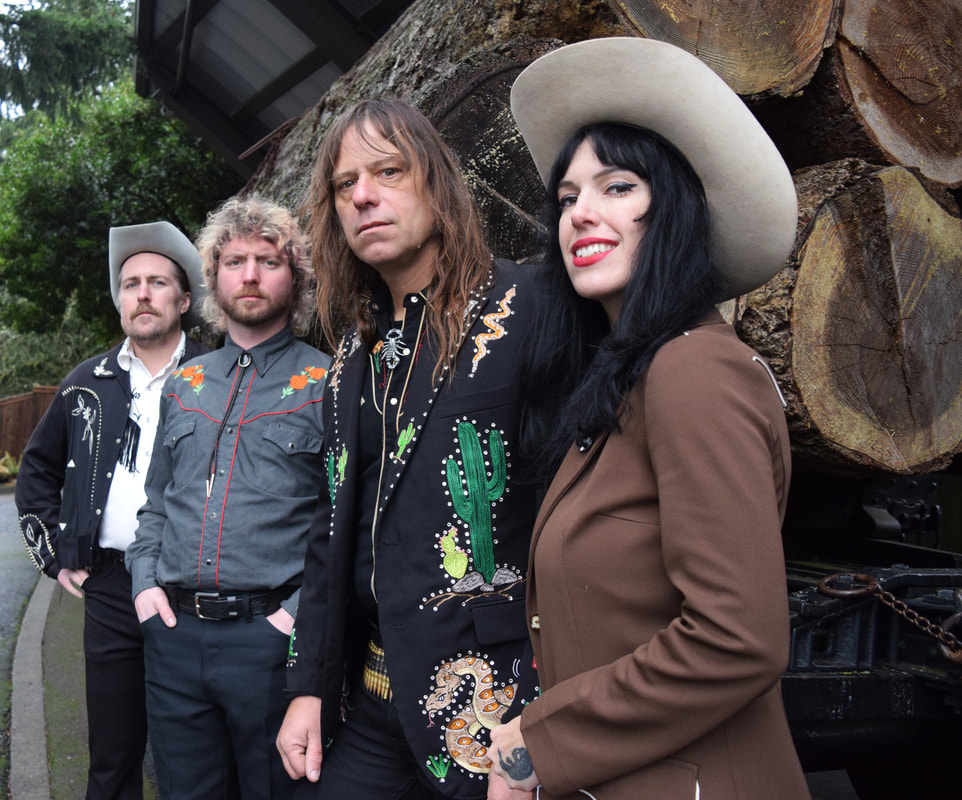
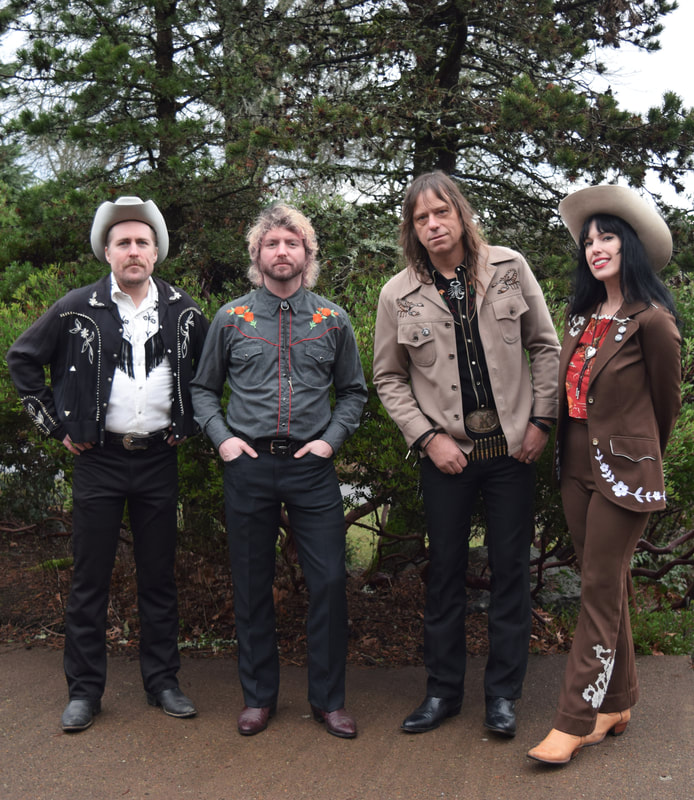
THE SPURS: Christopher March (from left), Buddy Weeks, Kelly Halliburton, and Jenny Connor.
Jenny Don’t and the Spurs are making their way across the country, playing songs from their brand new album, Lovesick Crawl, out now via Augusta, GA’s Missing Fink Records. Before hitting the road, the Portland, OR-based group’s founding members Jenny Connors and Kelly Halliburton took some time out of their day to talk about the Cramps, Dead Moon, Wipers, and the songs that make up Lovesick Crawl.
Catch Jenny Don’t and the Spurs when they play the Earl on Feb. 23, and Fink Fest in Savannah on Feb. 24.
Let’s talk about what you had in mind when you settled on the song and album title, Lovesick Crawl. It’s the word “crawl” that really grabs my attention.
Jenny Connors: We were listening to a lot of music by the Cramps. The cover art for the album is by Stephen Blickenstaff, who did the cover art for the Cramps’ Bad Music For Bad People, which is a really cool coincidence. We’d talked about doing something in the style of the Cramps, but nothing turned out sounding like the Cramps as it evolved. It’s essentially about being in love with someone—being infatuated—and you can imagine yourself crawling across the floor just to get their attention.
The song originally had an intro that was similar to the Cramps’ “Human Fly,” but we nixed that along the way. Then Johnny from Missing Fink Records approached us about releasing the record.
Kelly Halliburton: Stephen does a lot of the artwork for Missing Fink. Johnny contacted us less than six months before the record came out. We did the recording sessions in February 2022, and finished songwriting six months before that. The idea to channel the Cramps came to us before we knew that Johnny was working with Stephen so much. It added yet another layer to the strange coincidences surrounding this record.
How did the two of you meet and start making music together?
Jenny: I started stalking Kelly around 2008, until I finally whittled him down to date me. I was up front for a Pierced Arrows show and thought it was great. The drummer was super hot and I wanted to hang out with him, so I wrote to him on Myspace. That puts a date on it!
Kelly Halliburton and Jenny Connors
Kelly: Our relationship as a couple pre-dates the Spurs by about three-four years. It took a while because I was touring a lot with Pierced Arrows. The singer and guitar player Fred Cole started getting sick around 2012 or ‘13 so the band slowed down and eventually ground to a halt. Jenny and I had talked about doing something together. It wasn’t until Pierced Arrows wasn’t really a thing anymore that we had time to make it happen. Eventually all of our other bands broke up and this was the last one standing.
Jenny: Kelly and I have a pretty big age gap between us. I was just about to turn 22 when we met. He’s 16 years older than me and said, “I don’t want to date a 22 year-old.” But I said “Come on, I’m serious!” And here we are. We got married last year.
When we were talking about doing stuff together, Sam Henry and I started gigging around town playing a bunch of songs that I already had, which I used on the first album. Sam became the drummer for the Spurs.
Kelly: At first it was me and Jenny. I had an acoustic bass and she had an acoustic guitar. We wanted to keep it really stripped down, and not rely on anyone so that we could do this at any time, whether it’s on a street corner, in our backyard, wherever. It was purely acoustic and we sounded terrible. Something was missing. We didn’t have a ton of experience playing acoustically. All of our previous bands played amplified punk and garage rock. We wanted to keep it stripped down, but we asked Sam to play a snare with some brushes to keep time. Eventually there was a bass drum, then a high hat, and before we knew it, it was this loud, amplified thing with a full drum kit and electric instruments.
Jenny: Then we thought, “You know what’s really missing are guitar solos.”
Sam Henry was the original drummer for the classic Portland punk band Wipers.
Kelly: He played on the first three Wipers singles and the first album, Is This Real? They started in ‘77-‘78. He quit the Wipers in ‘80-‘81. I love everything [Wipers singer/guitarist] Greg Sage has done, but not everyone does. For most people, all you need are the first three LPs: Is This Real, Youth of America, and Over the Edge.
Sam quit the Wipers and joined Napalm Beach, which is kind of funny. Sam doesn’t play on the Wipers album Land of the Lost, but their singer and guitar player Chris Newman drew the dinosaur artwork, which is the weirdest cover, but they were all weirdos [laughs].
Jenny: When we were on tour, a lot of people would come up and say, “No way, Sam Henry from Napalm Death!” [laughs].
I was hanging around a record shop with a few older guys when the Wipers ‘96 album The Herd came out. They said, “Uh, this is gonna suck!” But I took the promo CD home, and even though it wasn’t cool to like The Herd, I loved it. The guitar playing is cosmic.
Kelly: Greg never deviated from his formula, so it’s not like anything on that record is all that different. He slowed it down, but it’s still dreamy, twangy, reverb-drenched guitar. He got more into the whole alien abduction thing. That album art has a fence around the world. That stuff follows Greg’s obsession with alien abduction. From what I understand, he firmly believes that he’s been abducted by aliens. If you look closely, that’s sort of a theme that runs throughout a lot of his stuff.
I’ll never hear “Alien Boy” the same way again.
[Laughs].
Sam died in February 2022, but he plays on Lovesick Crawl.
Jenny: Yes, Lovesick Crawl features the last recordings that he made. At the end of our January 2022 tour, he wasn’t feeling well. We were heading to Seattle to record. His doctor said, “You need some rest,” so Sam told us he couldn’t make it. A lot went into scheduling, though, so we planned to wing it and go anyway. He heard that we didn’t cancel so he changed his mind and came with us.
We finished the recordings and were supposed to have a show in Everett, but he was in really poor shape. We canceled the show and took him to the hospital, which was the beginning of the end for him, unfortunately.
Kelly: He was diagnosed with terminal cancer, I want to say the day after the recording session ended. They gave him three months to live but he didn’t make it three weeks.
Jenny: Obviously, no one saw what was coming. We were at the end of a tour. He was older and everyone feels like shit after a tour. The doctor said, “Maybe you drank too much on tour,” which he hadn’t. But he did great during those recording sessions. He didn’t complain. He felt uncomfortable, and every day it was getting a little worse. Something was seriously wrong. In the end, it makes these recordings extra special for us.
Is there a song on the record where his performance stands out?
Jenny: The session as a whole stands out for me. But “Lost Myself” stands out because I think about when we were writing the song. He would say, “How about we try this,” or “I’m going to hit the drum like this.” I have a lot of memories associated with that song.
Kelly: It’s hard not to think about how difficult it must’ve been for him to get through those sessions. There are a couple of songs from earlier sessions: His drums are great on “Right From the Start.” We recorded that song not too long after we wrote it. Later, we did the session where the album version came from. There’s the single version and the version on Lovesick Crawl. The later version was recorded after we’d played it for a while.
Jenny: “Black Cadillac” is a good example of his ability to go all out, or scale it back. He’s mainly playing snare and the rim and clicking the drum sticks together, and adds dynamics throughout that.
Not a lot of players can entertain without playing the whole kit. They get bored. There’s a video of Sam playing that, and there’s never a dull moment.
It’s kind of a beautiful thing that he did what he loved doing till the end.
Kelly: If we’d gone to Seattle without Sam we wouldn’t be able to listen to these songs. The fact that he rallied and did it is a testimony to his dedication. He was 64 and he had a ball every time we played. He was an amazing person to be in a band with. There will never be another Sam Henry.
Jenny: After he passed away, Kelly, our guitar player Christopher, and I asked, “What does this mean for us as a band?” Collectively, we acknowledged that Sam dedicated the last 10 years of his life to this band, and wouldn’t want us to end at this point. We were all on the same page, and having that camaraderie helped with the grieving process.
Kelly: Sam was such a gregarious personality, and such an outgoing, loving person. He was a good counterpoint to someone like me who’s kind of a crab and wants to be alone most of the time [laughs]. He made friends with people all over the world. Everywhere we went there were people who knew and loved Sam. So everywhere we take this stuff when we’re out on the road it’s cathartic for people who loved and cared about him. We see a lot of teary eyes out front. There are a lot of people who are connected with Sam through this music.
A lot of what we’re doing now is for Sam. Why stop now? What’s the point in creating something that he cared so much about and letting it fizzle out.
It has to be rough for your new drummer fitting in as you move forward.
Kelly: Sam’s shoes are impossible to fill. It would be unfair for us to have those expectations for anyone. Also, the band is more than a working relationship. We knew Sam before the band existed. It worked better than any other band that we’ve been in. For someone else to jump in, that has to be hard and we respect that.
Jenny Don’t and the Spurs
Jenny: For a new player, the songs have to fall into the structure they’ve been written in. But obviously if they bring other inspiration to it, it’s the band’s responsibility to respect everyone’s talents individually. Even though it’s called Jenny Don’t and the Spurs, we’re all equals.
Kelly: The band that came before Pierced Arrows was Dead Moon, which had an almost cult-like status. I stepped into an environment that was probably a lot like what anyone who’s playing with us is stepping into. The guy that I replaced with Fred and Toody was Andrew Loomis, who is universally loved. Everywhere we went for the first few years everyone was looking at me saying, “You’re not Andrew.”
Fred and Toody went out of their way to reassure me that I didn’t have to try to be like Andrew. I didn’t have to try to make my drumming style like his. Obviously I wasn’t going to do that anyway, but it felt good to be reassured. I want to extend that kind of welcoming courtesy to anyone who’s stepping into this band.
I joined Dead Moon in about 2007. They were on tour in the fall of 2006. They did a really long European tour and that was pretty much the end. They were all getting sick of each other. Initially Fred and Toody wanted to take a break, but Fred was always so restless. It didn’t take them long to form a new band. They called me out of the blue in March of 2007—maybe three months after Dead Moon played their last show.
I didn’t even play drums. I’m barely a bass player, but they wouldn’t take no for an answer. With so many expectations, it was terrifying at first. Not only am I not a good drummer, I’m also stepping into this kind of high profile situation where I’m in front of all of these Andrew Loomis-Dead Moon fans.
People were brutal about it. I was at a bar in Portland shortly after Pierced Arrows got going. There were fliers wheat-pasted on the bathroom wall. There was a Pierced Arrows flier with a photo of us and someone had drawn an arrow pointing at my head and wrote, “Worst drummer in Portland” [laughs].
Honestly, I couldn’t argue, but that was the level of hostility that I faced in that band. People warmed up after a while. It was also funny, because people invented a feud between Andrew and I—like Andrew was pissed because I took his spot. But Andrew and I would get together and laugh about it. He was as sick of Fred and Toody as they were of him.
Jenny: Another layer to all of these weird coincidences that lined up to where we are now: When I moved to Portland in 2008, I randomly moved into a house where Andrew hung out a lot. He introduced me to Sam, and then we started playing together. Small world! I didn’t know anything about Dead Moon and Wipers before I moved to the big city of Portland from Acme, Washington.
Kelly: In a bizarre, round-about sort of way, the existence of this band owes something to Andrew Loomis, which is awesome.
You have a new drummer now?
Jenny: His name is Buddy Weeks and we’re enjoying his presence in the band. Hopefully, if he still likes all of us after this tour, we’ll have a long relationship together.
Kelly: Playing together is one thing, but we love being on tour. Luckily he’s had a lot of touring experience. That’s almost as important as being able to play, because it ain’t easy. Putting four people in a tin can and carting them around the country for six months out of the year … There are only so many masochistic personalities that can endure that.
Jenny: You’ve gotta be able to play well and you have to be a good hang. You have to be funny. You have to be able to connect on some things outside of music a little bit, so you enjoy each other’s time together. There’s one hour of playing and 23 hours of being around each other.
Kelly: Christopher March has been playing guitar with us for almost six years. We’ve got him wearing a lot of hats. He’ll have the lap steel set up on stage, then he’ll play a baritone guitar for a couple of songs. We don’t have him literally juggling on stage yet, but we’ll incorporate that at some point, just to make his life that much more difficult [laughs].
There are moments throughout Lovesick Crawl that remind me of Hank Williams Senior’s recordings. It’s also rooted in punk rock mingling with country music—stripped down and rough-and-tumble. You roll with the mistakes.
Jenny: We enjoy it more when it’s stripped down and not super polished. We like music that’s a little rough around the edges.
Kelly: That’s certainly the music that I’m drawn to. I still own every piece of music that Discharge ever pressed to vinyl. A lot of people say that punk and country music are coming from these disparate places, but I’m not so sure their worlds are all that different.
Jenny: If the crowd is really entertaining and you mess up while you’re jumping around on stage … Entertaining is a lot more fun than worrying about perfection.
Kelly: Dead Moon was genius in their own way. No one in the band was a virtuoso musician. It was a lot more emotive than technically flawless. That resonated with people a lot more than these bands that really try to be total shredders. There’s a place for that, but there’s also a place for raw, emotive expression that comes from a different place than musical virtuosity.
That’s what attracted me to music in the first place. When I heard Black Flag for the first time I thought, this is it!
Kelly: Exactly, it doesn’t get more raw than “Nervous Breakdown.” It’s just a few minutes of raw aggression and teenage frustration. That set the template for a lot of things that are still important to me now, and I’m in my 50s!
Some of my earliest studio experiences, going back to when I was 19 years old, the drummer for Poison Idea, Steve Hanford, “The Slayer Hippy,” was a renowned producer. He did a bunch of studio work with some of my old punk bands. I learned a lot about recording while working with him. One of the things he would put into practice was if you can’t do it in a couple of takes, just ditch it and move on. Maybe come back to it in a couple of takes, maybe not. He always felt that the energy would dissipate if you ran it into the ground. I don’t know if it’s true that Poison Idea did that, but he always maintained that Poison Ideas stuff was done in one or two takes. That’s kind of our approach.
Jenny: The magic will go away if you do a solo 50 times. When I do a vocal I’ll do it three times. One warmup and two runs through it. It’s how I sound and it’s not gonna sound better if I keep doing it. On any recording you can listen and think about how you should have done something differently. When you’re in the studio you can do something over and over, but you learn to be ok with imperfections. This isn’t for us. It’s for the listeners, and they’ll make it their own.”











 Rad/ATL