In the meantime, a video for the EP’s title track teases out the group’s feral garage-punk charge, as co-founders vocalist Valeria Sanchez and guitar player José Rivera are joined by bass player Paul Hernandez, and drummer Sam Adams.
Check out the scene for a backyard blowout at local punk, hardcore, and headbanger hangout, The Catacombs.
If you have enjoyed reading this post, please consider making a donation to RadATL.
THOUSANDAIRE: Andrew Wiggins (from left), Tom Bruno, and Chad LeBlanc. Photo by Mike White of Deadly Designs
Ideal Conditions is an indie rock album that’s rife with layers of sonic textures, all distilled to a point of perfection, or at least Andrew Wiggins’ vision of what perfection should be for Thousandaire’s sound. “I think it all comes back to consistency,” he says over the phone while traveling from Baltimore to Philadelphia to play a show just a few days before releasing Ideal Conditions, the group’s second full-length recording.
It’s the definitive statement so far of Thousandaire’s musical DNA and the vocational drive that Wiggins has spent a lifetime honing, while maintaining control over every aspect of the music.
Wiggins is the vocalist, guitar player, and principal songwriter for Thousandaire. He is also the majordomo overseeing all creative and technical facets of the band in pretty much every situation imaginable.
In conversation, he offers a recent revelation that he’s had about leading the group, which includes bass player Chad LeBlanc and drummer Tom Bruno, while traveling up the East Coast and Mid-Atlantic states for this latest round of touring.
“We play the same, we sound the same, and we have the same amount of fun no matter what,” he says. “We’ve played in front of a hundred people and we’ve played in front of five people on this tour. We’ve played with everything mic’d up, and we’ve played with the most minimal set up, from a vocal PA in a tiny dive bar to setting up in a record store with a portable PA, and we’ve played with the same intensity. Despite these variables, it sounds just as good in any situation. That is very intentional for us,” he adds. “I have worked really hard to make that, and I didn’t want the record to be any different.”
Of course, Wiggins is pulling from decades of experience that encapsulate everything from playing and touring with a range of bands, including math rock outfit Blame Game and noisy post-punk groups HAWKS and Wymyns Prysyn. He has also spent time composing noise with his solo project Caesium Mine. Wiggins has also spent years doing live sound and mixing touring bands in venues including the Earl and 529. He also spends most of his days building fuzz pedals and repairing vintage guitars and amps at his self-run Moreland Magnetics business. “All of that experience goes into making this worthwhile for the 30 minutes we’re playing music,” he says.
Press play on Ideal Conditions and the opening number “No Good” channels an intense live band vibe, taking cues from like minded ‘90s rock acts such as Silkworm, Chavez, Dinosaur Jr., and the Meat Puppets. Asymmetrical guitar solos and fugue-like moments in rhythm take shape amid songs such as “Promise” and “Coward,” and in an older number, titled “Sgt. Billy.” Throughout each one of these numbers, extended compositions blend layered walls of sound and lyrics that are often contemplative, self-conscious, and always heartfelt.
Even at their most melodic and briskly paced moments, Thousandaire’s songs feel haunted and disquieted. Much of the inspiration behind the group’s self-titled 2020 debut album was sparked by Wiggins embracing a freshly sober lifestyle after years of consumption. Ideal Conditions reaches beyond the previous album’s blueprint as Wiggins tightens his focus on the art of crafting the music itself.
“Thousandaire was probably the best creative outlet for me to get out a lot of what I was feeling at the time, whether that was intentional or not,” he says. “I don’t need to get really personal in my songs. I have a therapist,” he laughs. “I don’t really need to use music as therapy, and all of my lyrics are hypothetical. But it is a vibe that I can’t really avoid. On the new record, there’s a little bit less of that. Time has put some distance between me and those feelings.”
In more recent years, lyrics have moved closer to the forefront of Wiggins’ mind as he has continued writing songs. The strength of the sound, the songs, the performances that keep him truly and naturally motivated.
“I used to get really frustrated about writing lyrics until one day, I was talking about it with our old drummer Adam Weisberg, after he’d moved to New York,” Wiggins recalls. “Both of us are fans of Cass McCombs, and Adam said, ‘I bet that dude gets out of bed every morning and writes lyrics all day long, whereas you get up and make fuzz pedals all day. So don’t worry about it so much, you’ve got other stuff going,” Wiggins laughs.
The raw and serrated tones and distortion of songs such as “Bar Song,” “Your Gold Teeth III,” and Ideal Conditions’ title track are instantly arresting, drawing strength from each one of their respectively visceral and emotionally stirring melodies.
“I listen to a lot of records, and I think what’s best for what I want is both consistency and intimacy,” he says. “We recorded this record as live as possible, and I want to put the listener in the room with these songs, instead of putting the listener in a balcony seat in a huge 2000-person arena where there’s a symphony that has all kinds of bells and whistles going on. There’s something to be said about those kinds of records, but it’s just not Thousandaires’ vibe.”
Wiggins owns all of the gear the band uses. He’s worked closely with drummer Bruno and bass player LeBlanc to customize each of their instruments’ singularly abrasive snarls.
Damon Moon at Standard Electric Recorders in Avondale Estates also worked closely with Wiggins to summon and recreate the sounds that Wiggins had stuck in his head, and to carve them out into real-world songs.
In this process, it’s the ability to adapt that sets Thousandaire apart.
“It’s the way we set up the equipment, the way everything sounds, the way we interact with whoever is doing sound. To me, it’s all about eliminating variables and stuff that you can’t control. If you get used to not having all the bells and whistles, like if all we did was play Terminal West where we have a huge production and a top line sound system, and then go play some record store, dive bar, or something where everything isn’t necessarily up to spec. If you can’t play your songs the same way that you play them on a big stage, then you fail.”
This extends to capturing the group’s sound on vinyl, or in the case of their latest offering, it’s on cassette. And what you hear is the culmination of Thousandaire playing under ideal conditions.
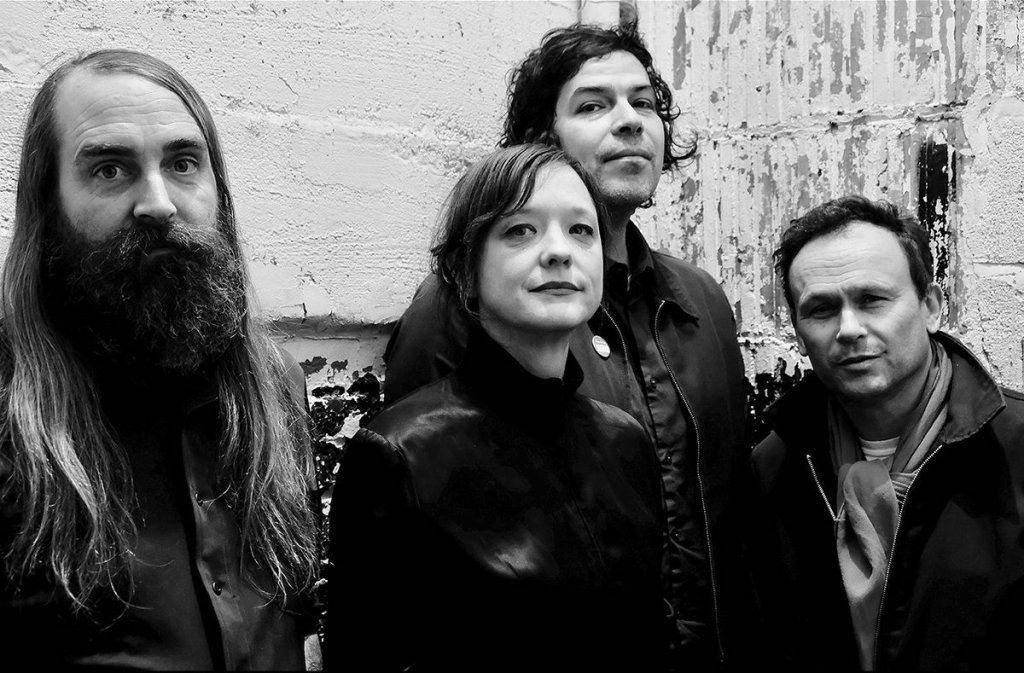
Hammered Hulls play The Earl on Fri., Jan. 20. Alec MacKaye (Faith, Ignition, the Untouchables) fronts a lineup of veteran players that includes guitarist Mark Cisneros (the Make-Up, Kid Congo Powers and the Pink Monkey Birds), bass player Brendan Canty (of Fugazi, the Messthetics, et. al. standing in for Mary Timony), and drummer Chris Wilson (Ted Leo + Pharmacists, Titus Andronicus).
The group is touring behind the October arrival of its debut full-length, Careening (Dischord Records). The album was produced by Minor Threat, Fugazi, and Dischord Records’ co-founder (and Alec’s brother) Ian MacKaye, and was recorded at Don Zientara’s Inner Ear Studio. With Careening, Hammered Hulls carries Washington D.C.’s post-hardcore and post-punk legacies into powerful and direct new musical terrain with the winding rhythms of songs such as “Bog People” and “Rights and Reproduction,” and the slower tempos of “Not Gone” and “Mission Statement.”
Gentleman Jesse Smith also performs, backed by a lineup featuring bass player Chris McNeal, drummer Sean Zearfoss, and Milton Chapman on keys.
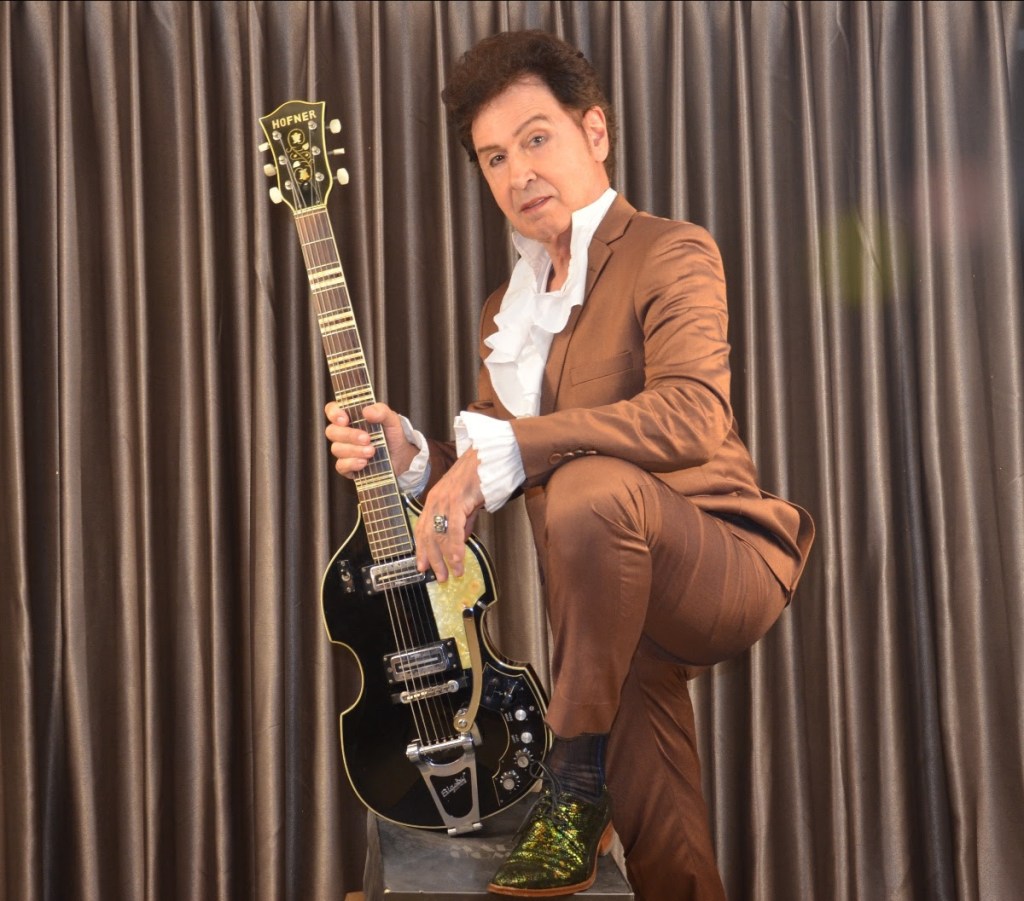
Tav Falco and Giuseppe Sangirardi. Photo courtesy Prime Mover Media.
Tav Falco is something of a renaissance man. The singer, guitar slinger, author, and provocateur began his extraordinary career in a cotton loft on the banks of the Mississippi River in 1979. It was there that he chain sawed a guitar into pieces during a performance art act. Since then, his notoriously outsider musical outfit Panther Burns has included everyone from Big Star singer and guitarist Alex Chilton to Minutemen and fIREHOSE bass player Mike Watt and Nick Cave and the Bad Seeds drummer Toby Dammit.
These days, Falco calls Bangkok, Thailand his home. For Panther Burns 2022 U.S. tour, the group’s lineup is rounded out by bass player Giuseppe Sangirardi, guitar player Mario Monterosso, and drummer Walter Brunetti.
Over the decades, the Arkansas-born auteur has mastered a singularly primitive motif. Blues rhythms carry his less-than-pitch-perfect singing, creating an off-center momentum in which songs feel as though they could tumble apart at any moment. But he always reins them in, creating a marvelous avant-garde tension on the stage. In recent years, his sound has expanded to incorporate elements of cabaret and tango performances, which underscore his latest five-song EP, Club Car Zodiac.
Before his cabaret-infused blend of Memphis rock ‘n’ roll takes over the the Earl for an evening of music and mystery, Falco took a few minutes to talk about how the new EP came together.
Panther Burns are back on the road after surviving the global pandemic!
Yes, and these are the first shows that we have played since the height of the pandemic, when we played a contagion-controlled event at the Il Castello Della Spizzichina in Italy, and that was July 31, 2021. Now, we’re out supporting our Club Car Zodiac EP, which came out for Record Store Day’s Black Friday, and it’s a highly personal recording.
What makes this such a personal recording for you?
I wrote three of the songs, “Dance Me to the River,” “Tango Primavera,” and “La Brigantessa,” which I sing in English. I wrote “La Brigantessa” for a cabaret artist in Rome, Adèl Tirant. I saw her perform with La Conventicola degli Ultramoderni. When I met her I was so impressed with her that I wrote this song for her. In Italian, “La Brigantessa” translates as “a lady thief.” We got to know one another and she sings the chorus of the song that you hear on the recording. I am so very happy with how that recording turned out, and I hope people will listen to it.
The lineup on the record also includes Mike Watt playing some bass. You also have Didi Wray playing guitar. Were you all in a room playing and recording together or were these songs done remotely?
Mike Watt initiated this recording during lockdown. He said, “Let’s do a couple of songs and put out a single.” I thought, why not? So we recorded the entire record remotely. When I got into it I wasn’t happy with the vocals I was getting. So I ordered a large diaphragm microphone, and once that came the vocals started happening for me—and my software. So I said, “This is sounding pretty good, I’m gonna do some more songs for this record. I wrote one, called “COVID Rebel Girl.” It was highly electrified, but that one did not make it onto the record because everyone but Mike Watt thought my playing on the song was just way too bizarre.
So it’s just five songs, but it’s a rather dense recording. Didi Wray is a tango surf guitarist from Argentina. She plays on “Dance Me to the River.” That is a very personal song; lockdown was a very lonely period for me, and I delved into my interior life. I brought out a lot of what was floating around in the dark waters of my unconscious. That song is set in Paris, on the banks of the Seine. It’s a personal statement about separation, betrayal, unrequited love, a sense of loss, bewilderment, and general confusion. It was the end of a period of my life that had gone on for quite some time—the shattering of a relationship—and I wanted to treat it artistically. Doing that was a kind of catharsis.
Then there is “House of the Rising Sun.”
Yes, and that is a song that I have always wanted to do. In fact, most vocalists attempt their version of it at one time or another throughout their career. I thought it was time for me to do my own version. I did ok with it. I’m not unhappy with that track.
“Tango Primavera,” is the last song on the EP, and it’s a rewrite of an Ettore Petrolini recording from the 1930s, the cabaret artist from Rome.
Petrolini has a song called “Tango Roman,” which means Roman tango. I heard it performed in Rome by Maria Freitas in the cabaret La Conventicola degli Ultramoderni.
Maria performed that in the same cabaret that Adèl Tirant performs in and Mirkaccio Dettori plays the piano.
I had done a small show there with Panther Burns, and I became enchanted with this cabaret in the San Lorenzo district, which is the working class district of Rome, where Pier Paolo Pasolini lives.
I went back to Rome after the tour and said, “I would like to perform here.” They asked, “What would you like to do?” I said, “I would like to sing and dance with a dancing cane and a Matta Low hat—the straw hat, like French singer, actor Maurice Chevalier wore.
So I started working on some songs and rehearsing, and I came across “C’est mon Gigolo,” in French, by the 1930s cabaret artist Damia. So I got an English translation from some radio people in Paris, and I put together an arrangement in French and English that I brought to the cabaret. We do it in three languages now: French, English, and Mirkaccio sings it in Italian. It is the original gigolo song, not the one that Louis Prima had a hit with in the ‘50s by grafting together the original song with “I Ain’t Got Nobody.” I’m not interested in that. I’m interested in the original, which is a very dark and expressionistic song. It’s an admonition to the gigolo of what will happen in the end.
I also brought in the Irving Berlin number “Puttin’ On The Ritz,” which has some racial overtones in today’s world. But that’s the song. I sing it, and anybody who’s heard it won’t deny that tune. And I do “Brazil,” which I do with Panther Burns, and “St. Louis Blues,” the W.C. Handy number that I recorded on Behind the Magnolia Curtain. After this tour, I will return to Rome and continue doing that under the adopted persona, L’Ultimo Gigolo, the Last Gigolo. That is my character, and I’ll bring it to America in 2023, probably as a Cabaret of Daggers, musical theater piece. We’re developing that in Memphis, with Mario Monterosso who will be the producer, as he has been the producer for my last four albums, and the lead guitar player and arranger in Panther Burns and on Tav Falco solo records.
Mario has a new record out called Take It Away on Org music. It’s a record of instrumentals from which he’ll be playing six tunes in Atlanta, prefacing the Panther Burns performance. Don’t miss that! It’s really outstanding what Mario is doing with these instrumentals.
Yes, I took the photograph that appears on the front cover of that book.
That photograph came up in our conversation. Robert said that you gave him some advice about writing, filmmaking, and anything else, and that was to just jump in and do it.
I think he’s talking about what I learned from William Eggleston. I was learning photography from William, and I asked, “How do you do this, Bill?” He said, you just have to jump in the middle and work your way out. That’s what Robert’s referencing, and that is true.
It’s good to prepare. Technique is important. Learn your instrument and learn your craft: If you are an actor you learn your body and your voice, but that will take you so far. You can learn from a mentor. You can learn in a school. You can be self-taught. You can start from the beginning of an itinerary that’s going to take you to a certain level of ability and control. Or you can just jump in the middle and figure it all out. That’s the way I did photography. That’s the way I did music and theater, and to an extent, film. It may not be the best way, but it’s one way.
In doing that you learn to rely on and to draw from intuitive sources rather than a dogmatic plan of some kind. Only now, after all this time, am I looking at music theory. I’ve started to study that because, Chad, I do not know a note from a molecule, at least not until recently.
Now I have an understanding of the concepts that go all the way back to the classic modes of music and poetry. It’s exciting, but I don’t know if it will help me as a musician or as an artist. It may help me on an intellectual level of some kind, and maybe on a subliminal secondary level. But I don’t see it having any direct effect on what I do. It might help me choose the chords that are more pleasing without having to do trial and error all the time, which is how I normally do it.
I want to communicate with musicians, and I want to do so in the language that I understand. And I want to have a better understanding of musical structure and dynamics in terms of notation, frequency, vibration, and how the musical scale and tonal parameters of music are understood. I’m making progress, but putting it into practice is not so easy.
Singer, guitarist, author, and all-around renaissance man Tav Falco brings his legendary, cabaret-infused Memphis rock ‘n’ roll outfit Panther Burns to The Earl for an evening of music and mystery.
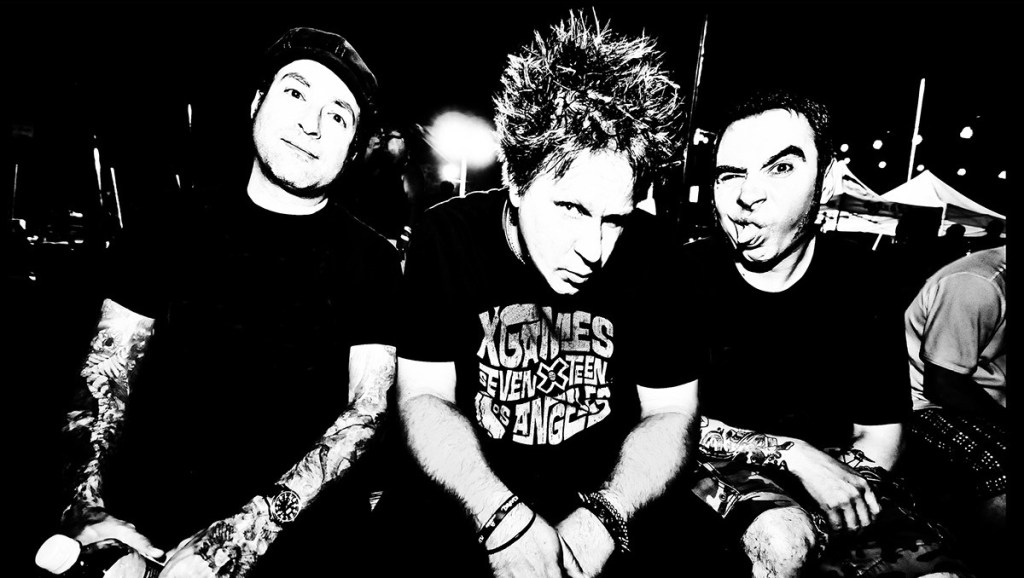
Agent Orange returns! Back in the ’80s, the Southern California trio led by singer and guitar player Mike Palm cranked out some of the most whiplash, compelling, and emotionally distraught surf and skate punk tunes ever committed to tape. Seeing the group live is kind of a rite of passage. Skin Jobs and Loony also perform. $18 (adv). $21 (doors). Sat., Feb. 26. The Earl.
Skin Jobs.
If you have enjoyed reading this post, please consider making a donation to RadATL.
Crazy Doberman makes a triumphant return to Atlanta on Mon., Dec. 6.
This time around the the Midwest / East Coast-based free-improvisation outfit performs as a seven-piece, wielding an industrial-grade skronk, drone, and clatter.









 Rad/ATL