Since March of 2018, Loud Humans have amassed a steadily growing arsenal of bittersweet indie rock tunes, based mostly around the songwriting of singer and guitar player Jimmy Ether.
The trio, rounded about by underground rock scene vets Ether (the Ether Family Presents, Spiral, and Monkey Boy) alongside bass player Dain Johnson (the Plastic Plan), and drummer Kip Thomas (Fiddlehead, Freemasonry, Chocolate Kiss, Haricot Vert, and more) has fleshed out a florid lo-fi charge by pressing pretty and folksy chord progressions through a wall of sound. Case in point: “Charm Offensive.”
“I use a few alternate tunings in the vein of Joni Mitchell, Nick Drake, or Jimmy Page’s acoustic riffs, and we fuzz them out,” Ether says.
“Charm Offensive” offers the first look at Loud Human’s forthcoming EP, which remains a work in progress. The title of the EP is yet to be determined, and “Charm Offensive,” as it appears here, is a raw early mix—the group playing live in the studio with a vocal overdub.
“The new EP is kind of a part 2 to our see, lioning. EP,” Ether adds.
Here, his voice carries a bold and unpolished presence as he careens through dynamic, energetic lyrics that are driven home by a sense of urgency that’s reminiscent of Guided By Voices’ vocalist Robert Pollard.
Johnson and Thomas’s rhythms move at the speed of post-punk and indie rock a la Sebadoh, Mission of Burma, fIREHOSE, and the Wipers.
In the interest of full disclosure, Thomas is the publisher of Record Plug Magazine, the DIY music rag that keeps this writer’s voice in the mix.
All three members of Loud Humans also play in the band Victory Hands alongside Shawn Christopher, crafting a darker, heavier noise rock dirge.
Both Loud Humans’ see, lioning. EP and the forthcoming EP are tentatively slated to appear as flip sides of a 12-inch release that’s due out later in 2024. The proper digital release will most likely arrive in May.
“Atlanta Love Letter” is the debut single from Bon Allinson and the Harm, a recently formed outfit fronted by singer and guitar player Bon Allinson.
Since 2007, Allinson has blazed a path through the local music scene playing with outfits such as Ominous Castle, Abby Gogo, More, and A Drug Called Tradition—each group plumbing the depths of psychedelic indie rock, shoegaze fury, noise, and bliss. “Atlanta Love Letter” is a statement of change for Allinson. While there’s still plenty of delay pedal and not-so-subtle nods to his fiery past, the songwriting builds on a natural evolution while looking back on a life spent traversing Moreland Ave., where ghosts are lined up at every crosswalk.
“Atlanta Love Letter” is a somber number that finds Allinson embracing a stripped down singer-songwriter approach.
“I wrote the song when I started working at Aurora Coffee, and I started seeing people I had forgotten about,” Allinson says. “I was excited about landing the job and was excited to be working with James Oh. We started telling stories—James has a great memory. I had some rough years living here, and got out on the other side of that,” he goes on to say. “This song was really coming from a place of gratitude, while being aware of where I came from and where I was.”
The song was recorded by Mathis Hunter at Alpha Centauri. For this first offering, bass player James Oh (formerly of the N.E.C.) and lap steel player Josh Tarica round out the lineup, although full band recordings are in the works.
The music is slow and direct, serving as a dreamlike backdrop for Allinson’s autobiographical reflections.
More songs from a forthcoming full-length, to be titled Now I know What A Ghost Is, will materialize soon. Allinson says there are some more rocking numbers in the works as well. In the meantime, press play below and let the history and the apparitions sink in.
If you have enjoyed reading this review, please consider making a donation to RadATL. Venmo to @Chad-Radford-6 or click on the Paypal link below.
In the summer of 1981, Drivin’ N Cryin’s bass player Tim Nielsen and drummer Paul Lenz started playing music together as the rhythm section for Atlanta pub rock/punk outfit the Nightporters. The group, which also included singer and guitar player Andy Browne, carved a path through Georgia’s burgeoning underground punk and new wave scenes, sharing stages with legendary acts such as the Clash, REM, and the Replacements.
The Nightporters infused unabashed angst and joy in equal measures into their three-minute, three-chord songs with titles such as “Mona Lisa,” “Dreamin,’” and “West of Eden,” detailing their teenage worldview—yes, some of them were still in high school at the time. Browne was only 15 years old when the group started.
LYNX DELUXE: Photo by Kelly Thompson
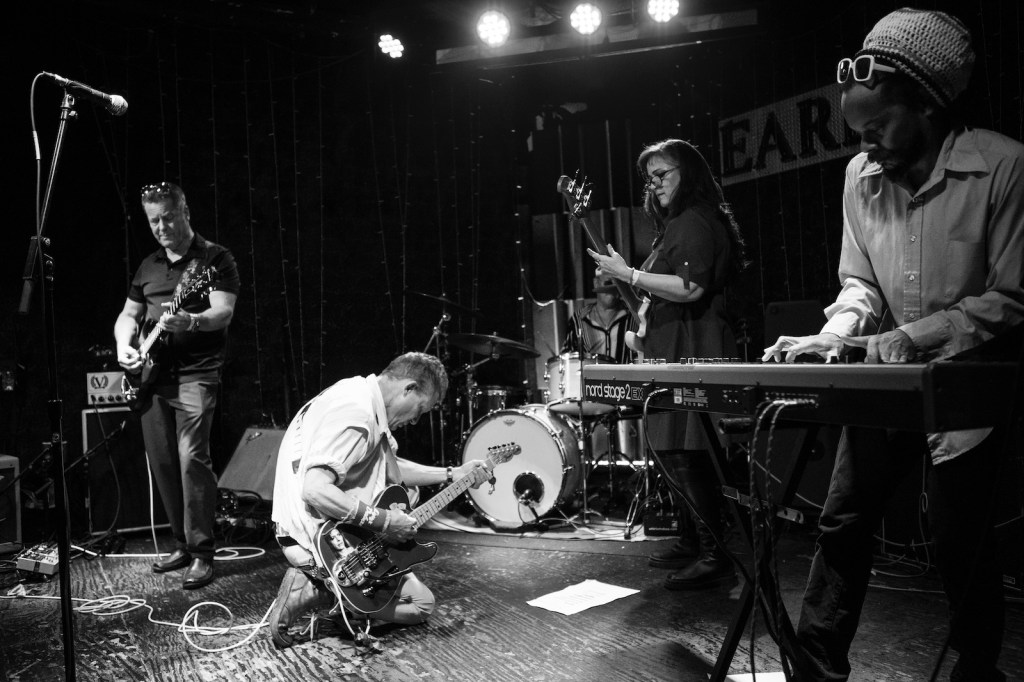
Fast-forward some 42 years later: Browne fronts the baroque alternative rock songwriting machine that is Lynx Deluxe. Backed by a lineup featuring bass player Lucy Theodora, drummer Brad Mattson, keyboard player Billy Fields, and guitar player Jeff Dean, the group’s take on “The Great American Bubble Factory” is a stylish and bucolic affair. Their cover pays homage to Kinney’s original number while reflecting on how industry outsourcing has affected the American economy and changed the landscape and middle class American culture as a whole.
“The Great American Bubble Factory” embraces a sense of nostalgia for a happier time and place in America, when daily life seemed simpler and more prosperous.
Kinney makes a cameo appearance in the song, playing harmonica, and Nielsen plays mandolin, making it the only song on the comp. to feature Drivin’ N Cryin’s two longest standing players.
Lynx Deluxe renders “The Great American Bubble Factory” even more precarious than the original, pushing the narrative forward by expanding upon Kinney’s lyrics in deeply personal ways.
In the second verse, Browne sings, “Did some time for a crime went a little loco / Slaved for two bits a day praying for a furlough.”
As Browne explains, it’s all a true story.
“I was in jail for 80 days, because I went a little loco,” Browne says. “The prescription oxycontin I was on for eight years due to a severe back injury left my dopamine and serotonin levels not so balanced for about a year and half. I was not exactly in the right state of mind, and was going through a very difficult time. While I was in there I was trying to get in the kitchen to work and make like .50¢ to $1 a day,” he adds. “But they wouldn’t let me do it.”
Later, Browne blends yet another homage into the song, this time giving a nod to “Union Sundown” from Bob Dylan’s 1981 LP Infidels. “Her dress reads Mozambique / This flashlights from Taiwan / These boots are from the Far East / Boxed and shipped from Amazon / The car parts come from China / Fenders made in Mexico,” he sings before calling back to the original number’s refrain, “If you can make it here, why you build it there?”
This new vision of “The Great American Bubble Factory” unfolds with an even greater sense of unwavering determination.
“We’re not much of a cover band,” Browne goes on to say. “When we pick a song to cover, we have to rewrite it a bit and make it our own.”
Artwork by Anna Jensen
Songs for this living tribute project are amassing over the next 10 months. Previously released singles can be found here.
The first physical installment is available on vinyl now. Check it all out via TastyGoodyRecords.com.
If you have enjoyed reading this review, please consider making a donation to RadATL. Venmo to @Chad-Radford-6 or click on the Paypal link below.
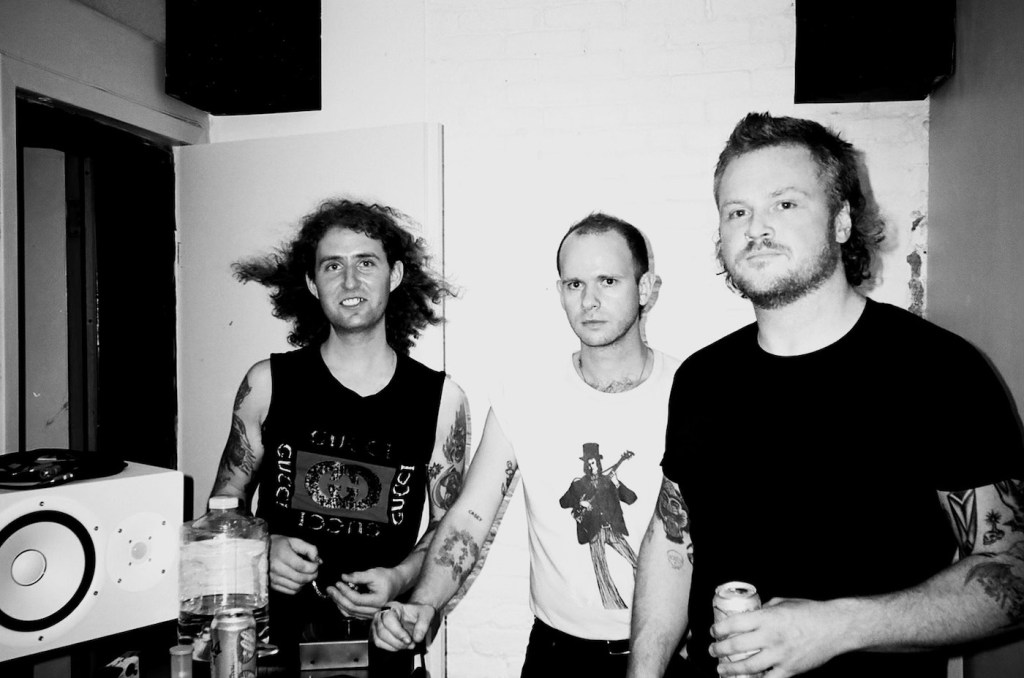
PYREX! Left to right: Arbon Elrich, Joe Hardwick, and Steven Fisher. Photo by Michelle Kinney.
Brooklyn’s Pyrex joins Die Slaughterhaus Records’ new wave of grimey post-punk adversaries with the “Struck Down” b/w “Staying Alive” 7-inch.
Both numbers plunge the group into menacing depths of real-world dejection while revealing a dark sense of humor. Atlanta expat. guitar player and vocalist Joe Hardwick, bass player Arbon Elrich, and drummer Steven Fisher summon bludgeoning intensity with “Struck Down.”
On the flipside, a perfectly nasty cover of the Bee Gees’ disco-era classic “Staying Alive” feels like a Killed By Death deep cut that was captured at a construction site—grounded in dense rhythm and noise—as Hardwick’s distorted growl finds new meaning in the lyrics, “Life goin’ nowhere, somebody help me.”
NOTE: The digital versions of these songs, mastered by Graham Tavel, sound notably crisp when compared to the spacious and deeply textured vinyl renderings that are courtesy of Ryan Bell.
If you have enjoyed reading this review, please consider making a donation to RadATL. Venmo to @Chad-Radford-6 or click on the Paypal link below.
A version of this review first appeared in the November issue ofRecord Plug Magazine. Grab a print copy at your nearest record store, coffee shop, pizza place, or music venue.
Scratch Offs hit hard withTidal Wave, an 11-song debut that distills the traditions of post-hardcore’s top-tier and most forward-thinking luminaries—Fugazi, Hot Snakes, Jawbreaker, Quicksand, Helmet, et. al.—into a streamlined and modern-sounding opening salvo.
Variety is key when propelling vocalist Mike Ligocki’s penchant for screaming melodic catharsis. Ligocki’s voice sits high atop guitar players David Lane and Jason Beebe’s winding riffs, melodies, and leads in songs such as “Puma,” B.Y.R.,” and standout cuts “Hand Replacements” and “The Chapel.” Each number draws out a balance of naked and gnarly emotions with driving force.
Bass player Lloyd Benjamin and percussionist Greg Stevens’ pounding rhythms show off depth and confidence. Together, their musical chemistry epitomizes strength, intelligence, and a full-bodied groove while exploring complex structures and tense dynamics, never losing sight of the rhythm and the sprinting momentum of the song they’re playing. The flexed arrangements of “Mountain of Light” and the powerful charge of “Jesus Night” and “Text Fight” are steeped in unrelenting tension and atmosphere—the accumulated experiences of a band made up mostly of Atlanta punk and post-hardcore scene vets. Lane plays in Skin Jobs, and has been playing alongside Stevens since circa 2001 when they made up the rhythm section for noise rock trio Hex Error.
Benjamin was in All Night Drug Prowling Wolves and is in Uneven Lanes with Stevens, who also plays in Total Peace Band. Beebe played in the Liverhearts and recorded a grip of singles for Rob’s House Records in the early-to-mid aughts. Ligocki is a Maryland-born, New York City transplant who cut his teeth playing with East Coast bands Bound & Buried (with Matt Krupanski from Boy Sets Fire on drums), Habits, and Killtakers. Look them all up! As such, Tidal Wave is an accomplished and formidable collection of fast-urgent punk and post-hardcore anthems that draw from the past to promise a bright future.
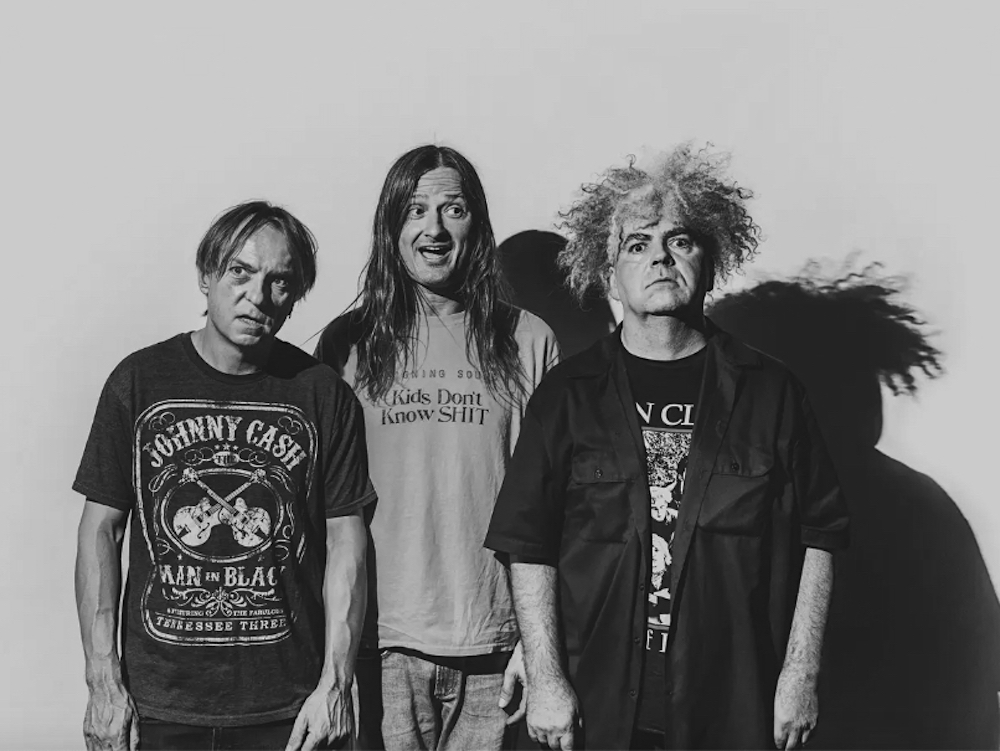
MELVINS: Dale Crover (left), Steven McDonald, and Buzz Osborne. Photo by Chris Casella.
The monolithic punk-metal speed and molasses dirges of the Melvins establish the group as both forerunners and contemporaries of the Pacific Northwestern musical underground of the early ‘90s. In the modern era, singer and guitarist Buzz Osborne, drummer Dale Crover, and current bass player Steven McDonald have continued pushing the group to creative new heights with 2022’s, Bad Mood Rising, followed by this year’s The Devil You Knew, The Devil You Know, featuring the original versions along with new recordings of the six songs from the Melvins’ debut 7-inch EP.
Now, Melvins have teamed up with Atlanta-based abstract electronic project Void Manes to unleash an homage to British industrial music luminaries Throbbing Gristle, titled Throbbing Jazz Gristle Funk Hits (Amphetamine Reptile Records). It’s an entirely electronic album—a first for the Melvins—featuring TG-inspired improv sessions and covers of songs such as “Sic Sick 60’s,” “Hot On the Heels of Love,” “Hamburger Lady,” and more. The first single is a thickened take on “Discipline 23,” which appears on the CD and on a flexi single that comes tucked inside the LP sleeve.
The video, created by Jesse Nieminen, builds on TG’s subversive late ‘70s mantra on dismantling the mechanisms of social and psychological control amid an era defined by misguided patriotism and technology gone awry. The more things change, the more they stay the same. Here, a minimalist blend of fascist imagery, made hollow under a sheen of maximum color saturation and distortion, pushes the Melvins’ vision of industrial overload to the nth degree. Press play above and get disciplined.
Throbbing Jazz Gristle Funk Hits is the latest in a loose but ongoing trend of paying homage to the confrontational and anti-commercial/pro-good-taste force that prompted British tabloids to label Throbbing Gristle “the wreckers of civilization.” “Heathen Earth” appears on the Melvins’ covers CD titled Everybody Loves Sausages. Head down the Discogs rabbit hole and there are more TG renditions by all parties involved to be discovered and devoured.
“Buzz talks a lot about giving people creative freedom and he’s right on about it,” Nieminen says. “There might be some discussion beforehand or none at all. For ‘Discipline,’ I had an idea, it turned into another, and I put it together. I didn’t ask for suggestions for it. I was free to do whatever I wanted and it was pretty close to what I envisioned from the start.”
Nieminen goes on to say: “We made the A Walk with Love and Death short film together. It was a conversation where we sat and riffed on ideas and edited it together. For Melvins TV they shot green screen in LA and sent stuff for me to do what I wanted,” he adds. “That grew from an idea where I was planning to shoot them in a studio with green screen backdrops and do a single music video in the style of those old German Beat Club episodes. Because of the pandemic it turned into Melvins TV and ballooned into 3.5 episodes.”
In a more recently released video for “Zyklon B Zombie,” Nieminen sets the songs fugue-like bouts of faux tropical rhythms and staccato electronic sounds to waves of billowing and blackened clouds, looped in a tussle of natural beauty rendered exquisitely for the simulacrum. It’s just a taste of what the album holds in store.
March of 2023 marked the 40-year anniversary of the Melvins’ first live performance. The group has spent much of the year celebrating by offering a slew of reissues and new releases, and playing shows around the world. The next Atlanta show is on Wednesday, September 27, at Variety Playhouse, where they’re playing 1991’s sprawling Bullhead LP in its entirety, along with more highlights from throughout the Melvins repertoire.
“We’ve been a band since 1983. We’ve never quit, we’ve never taken a break and stopped being a band, and I have seen people come and go from the highest heights to the lowest lows—death, resurrection, and more death,” Osborne says. “In the art world that I am in, there is a war of attrition; whomever is the last man standing is the winner. So far it’s me, with no end in sight.” READ MORE FROM MY OCTOBER 2022 FLAGPOLE MAGAZINE FEATURE STORY.
Void Manes is performing opening sets at several of the Southern Melvins/Boris shows. Keep your fingers crossed that they tear into some of the Throbbing Jazz … material on stage.
ROT: Kevin Cornelius (left) and Corey Pallon. Photo courtesy Boris Records
The story of Rot is the story of four friends—outsiders—fighting for survival amid Atlanta’s unforgiving music scene of the late 1980s and early ‘90s. Drummer Corey Pallon, guitar player Richard Googe, bass player James Liu, and vocalist, guitar player, and principal songwriter Kevin Cornelius lived in musical, cultural, and geographic isolation. Metal was a rising force amid the Reagan/Bush era, but Rot’s musical style looked far beyond the eyeliner and Aqua-net that antagonistic audiences in the southeastern United States demanded.
Rot drew power from the same down-tuned dirges of Swedish death metal luminaries Entombed as well as early Carcass and the concentrated grindcore riffage of Napalm Death’s debut album Scum.
Cornelius, Pallon, Googe, and Liu played the music that was written in their bones, capturing a portrait of a place, a time, and an attitude, driven by unrelenting darkness. The group’s would-be legendary status was constantly at odds with a litany of socio-political hurdles that came from every direction. The scene was stalked by a diabolical skinhead crew at nearly every turn. As a band that included two Asian members, guitarist Googe and bass player Liu, and Cornelius, a Black frontman, Rot found itself in the crosshairs, subjected to real violence and torment. The group played as though their lives depended on it, and often times it did.
On stage and in the practice space, Cornelius progressed quickly on guitar, rising from beginner status to death metal master within just 18 months. Working alongside his bandmates, he wrote and recorded gnarly odes of putrescence during the early gestation period of grindcore and death metal. He also experimented with a whispered vocal style that Nuclear Holocaust later made famous with their 1991 album Dawn of Satan’s Millennium.
ROT LIVE: Liu (from left), Cornelius, and Googe.
Upon arrival, Rot’s demo tape, Diabolus (The Unholy Rot), promised great things to come. Songs bearing titles such as “Mutilation of the Christians,” “Pray To Death,” and “Parasitic Withdrawal” were and still are unrelenting in their raw intensity of sound and bleak musical textures.
The demo tape has lied in obscurity for more than 32 years, existing only as a grainy video buried deep on the Youtube. Now, Boris Records has pressed the first official vinyl release of Diabolus (The Unholy Rot), unleashing one of the most strikingly raw and gutteral death metal recordings to ever come from the Atlanta scene.
The album places a remastered recording of Rot’s original four-song demo EP alongside two previously unreleased cuts, “Baphomet” and “Violent Beast.” There’s also a recently unearthed live recording filling out the B-side. Really, though, it’s John Mincemoyer’s in-depth storytelling in the liner notes that adds depth, context, and a human element to the story of these four friends, illustrating the countless hurdles and seemingly insurmountable odds they faced, and the extremely hard, fast, and loud music they created during their brief but fiery existence.
If you have enjoyed reading this interview, please consider making a donation to RadATL. Venmo to @Chad-Radford-6 or click on the Paypal link below.
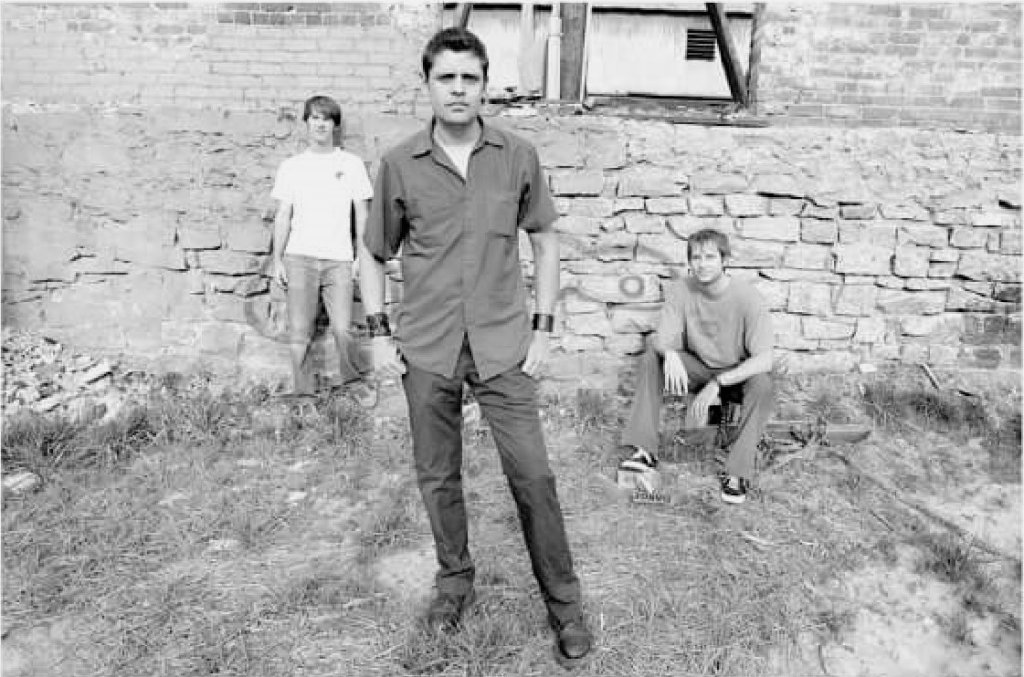
HEX ERROR: David Lane (from left), Jason Hatcher, and Greg Stevens.
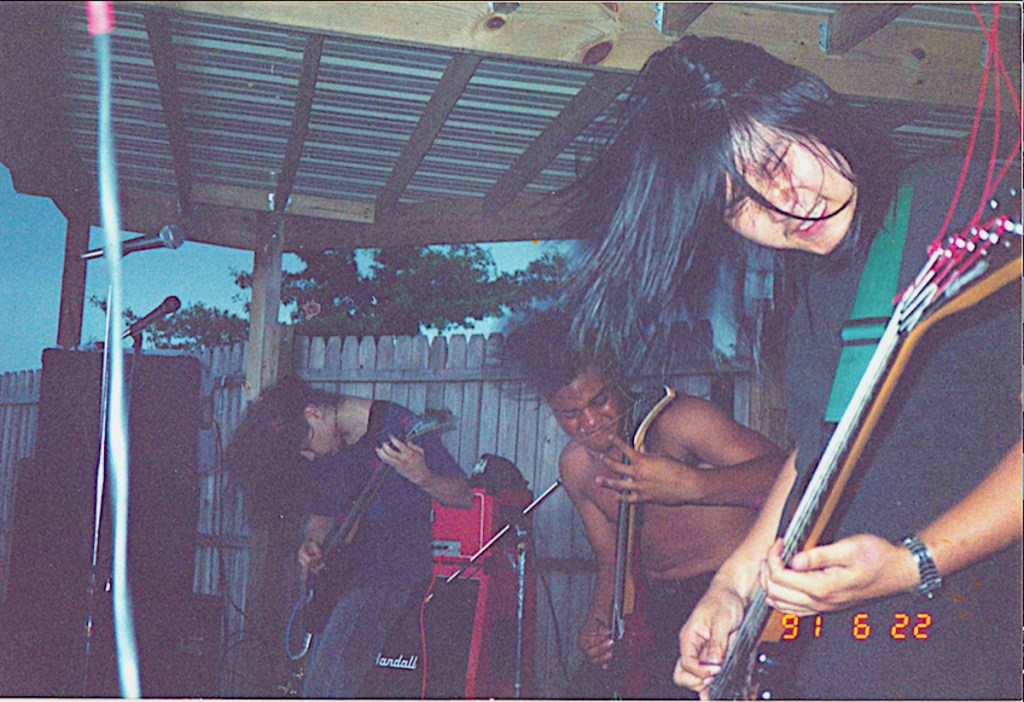
On June 19, 2003, bass player David Lane, drummer Greg Stevens, and singer and guitar player Jason Hatcher of Hex Error went into Zero Return Studios with Rob del Bueno, aka Coco the Electronic Monkey Wizard of Man? Or Astro-Man?.
The plan was to cut the instrumental tracks for six new songs the group had been working on since releasing their self-titled debut CD in 2001. Vocals were to be recorded during another session later on down the line. The rising noise rock three-piece was slashing its way through the local scene, playing shows at venues such as Lenny’s and the Earl, and landing spots at the day-long Corndogorama indie rock festival.
Alas, this fatal afternoon at Zero Return, now dubbed Maze Studios, was Hex Error’s last studio session. Hatcher, Stevens, and Lane broke up before vocals were recorded and the three never looked back.
Since then, Lane has long served as singer and guitar player with the band Skin Jobs, who released their debut album Def Bods in 2021. Stevens has spent time playing with various bands, and currently plays in the groups Uneven Lanes with Benjamin, as well as Total Peace Band. Lane and Stevens also currently play in the post-punk outfit Scratch Offs.
Hatcher died on February 20, 2022.
While doing some housekeeping during the pandemic, del Bueno discovered a 2-inch reel of the sessions and passed it along to Stevens.
The recordings offering a stark and compelling glimpse at what was a quickly evolving musical outfit. The crushing grooves that drive the opening number, “Death From Above,” and the dissonant energy of “Greed” capture a mastery of songwriting dynamics. “Social Leprosy” and the wide-eyed “Time” show off instincts that move far beyond the nascent, teeth-gnashing dirges of their self-titled 2001 debut. The instrumental recordings as they are rendered here capture Hex Error in gloriously muscular and sophisticated form.
Stevens took a few minutes to talk more about the recording.
Chad Radford: Where have these tapes been for the last 20 years?
Greg Stevens: The tapes had been in storage at Zero Return until the pandemic. During that time, Rob del Bueno let me know he had come across this 2-inch reel of tape from our final recording session. Jason passed away a year or so ago, so we figured it would be a fitting memorial to him to release this EP 20 years after the initial recording.
Did you alter the recordings in any way?
The initial recording wasn’t altered in any way. We had completed all of the basic tracking at the session on 6/29/03. That said, we broke up before we could complete the vocals, so these are instrumental tracks only. Given that Jason had passed, there wasn’t an opportunity to add vocals to anything. So we ended up putting the finishing touches on it, as is. We worked with David Barbe for the mixing of the 2-inch tape out at Chase Park in Athens and Carl Saff for the mastering.
Have you had any realizations about these songs or the band in general now that you have released this final recording?
David Lane and I have been playing music together off and on for the past 20 years. It has been interesting releasing these tracks from 20 years ago while at the same time we are putting the finishing touches on the upcoming Scratch Offs record. So from that perspective it’s interesting to see how much we have both grown as musicians over the past couple of decades. We’re really proud of how far we took the Hex Error sound all those years ago, and we’re excited about exploring different sonic territories with Scratch Offs.
What’s your favorite song from this session?
The opening track, “Death from Above,” really highlights what we could have accomplished had we not called it a day. We had started working within longer song structures and more intricate polyrhythms. That one was a crowd favorite, whether we were playing in Atlanta or out on the road.
Where there lyrics written and performed with these songs that are now just lost to the sands of time?
All of these songs had lyrics. We performed all of them live back in the day. So, yes, lost to the sands of time.
Any plans for a physical release with this one?
Not at this time. We decided to self-release this digitally mainly for archival purposes. But if a label was so inclined, we’d definitely be into it.
Do you have a release date in mind for the Scratch Offs LP? Does it have a title yet?
We just got the final master back from Carl Saff a couple of days ago. We’re aiming for a digital release in the next couple months, before we do our next batch of shows. We’re playing with Bass Drum of Death and Small at the Earl on September 7, and then headed to Florida for some dates shortly after that. So it would be good for people to have a frame of reference aside from the live experience. Right now, the consensus is to call the record Tidal Wave.
If you have enjoyed reading this interview, please consider making a donation to RadATL. Venmo to @Chad-Radford-6 or click on the Paypal link below.
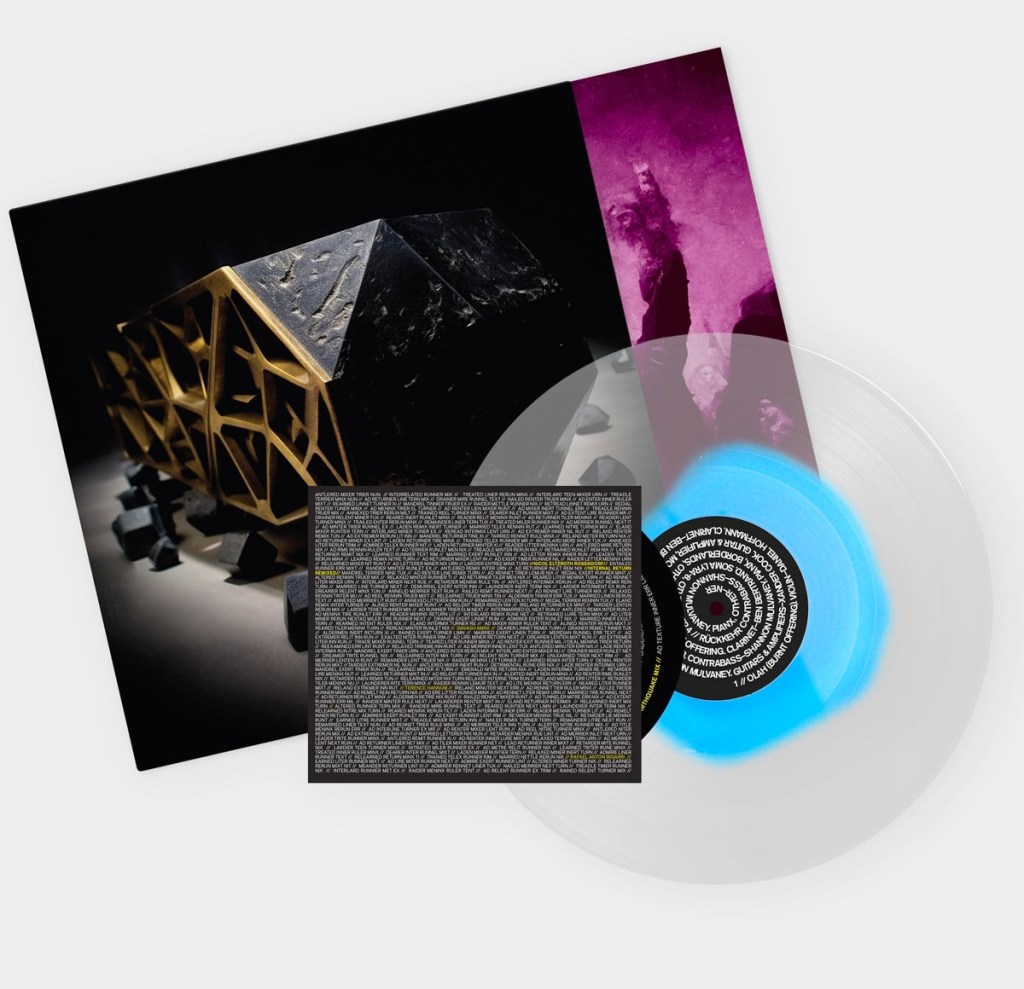
Internal Return, the second and most recent full-length by composer Nicol Eltzroth Rosendorf, is set to arrive via streaming platforms on June 9. A vinyl release will arrive in August via Negative Capability Editions.
In the meantime, RadATL is honored to premier the album’s first single and music video, titled “Olah (Burnt Offering).”
For this latest album, Rosendorf weaves together Ashkenazi musical tones, textures, and melodies with electronic drone music. The song’s magic lies in its smooth combination of these elements, giving rise to a vast, atmospheric piece of music that stands on its own as a cohesive work, as well as an entry point into a nuanced excursion into the surreal. “Olah (Burnt Offering)” retains the post-industrial essence of Rosendorf’s 2020 debut, Big Other, while placing an emphasis on environmental sublimation and a refined sense of Rosendorf’s singular compositional style as a musician and visual artist.
For this song premier, “Olah (Burnt Offering)” is accompanied by a RadATL exclusive track titled “Shûb.”
For this project, Rosendorf used Chat GPT to create a series of instagram posts—song descriptions—written in the style of a 19th century Rabbi. Follow @nicol_eltzroth_rosendorf on Instagram for more.
“For my sighing cometh before I eat, and my roarings are poured out like the waters” (Job 3:24).
The Internal Return commences with “Olah (Burnt Offering)“—titled after the sacred Burnt Offering in the Jewish tradition. Just as the Burnt Offering is brought forth as a symbol of devotion and atonement, so too does this music seek to perturb within us a sense of expansive intensity. The peculiarly unprecedented fusion of the explosive machinery of synthesizers and distorted guitars, twined with the Ashkenazi tools of the clarinet and the violin, is the musical ideal I have been seeking.
Drawing inspiration from a fragment of Wagner’s “Magic Fire Music,” I have transformed the notes with the Klezmer scale and stretched them to their very limits. The result has taken on a life of its own, evolving from a weighty drone with a prominent sampled clarinet into a powerful expression with the addition of a masterful violin solo by the renowned musician, Daniel Hoffman.
Hoffman, a true virtuoso, came to my attention with his band Davka, which created some of my most personality-treasured music. With his intervention, I have sought an authenticity of sound, and with the replacement of the sampled clarinet with the real instrument by the esteemed Ben Bertrand the composition has attained an even greater depth. I am boundlessly thankful for their contributions.
Contrasting the anti-Semitic notes of Wagner’s music with Jewish concepts of sacrificial offering is a sort of koan. Titling the piece with a Hebrew word that contains the root of Holocaust is nearly a pun. One can only try to laugh in the face of the void.
Again and again—I do not speak Hebrew, German, or Yiddish.
I am not in any way a conventionally religious person.
I am so proud of this body of work, and I hope it pleases you.
As it is written in the Talmud, ‘All beginnings are difficult.'”
Three versions of the physical release will be out June 9, including the limited edition 180g vinyl, a deluxe set that includes a Giclee print as well as a CD featuring remixes By Rafael Anton Irisarri, Siavash Amini, and Terence Hannum. More details will be available soon. Click here to pre-order “the album”Olah (Burnt Offering).”
If you have enjoyed reading this post, please consider making a donation to RadATL.Venmo to @Chad-Radford-6 or click on the Paypal link below.
Why write a book about Atlanta record stores? The truth is that you get a singularly unique perspective on a city’s history, its culture, and its personality when viewed through the lens of a record store’s front window. I have often said that if you want to understand a society or a culture, just take a look at its pop culture, and music has always remained right there on the frontlines.
Atlanta is world-renowned as a hip-hop mecca, but a rich underground rock scene has been thriving here for decades. The hub of that world is the city’s record stores. Featuring decades-old institutions to shops that existed just long enough to leave an impact, Atlanta Record Stores is a rock-centric take on a hip-hop town, unfurling the secret history of music underdogs—outliers living among outliers—telling their stories in their native tongue. From Jarboe of SWANS to William DuVall of Alice in Chains and Neon Christ to Kelly Hogan, Gentleman Jesse Smith, Atlanta Braves organist Matthew Kaminski, and those surly characters behind the counter at Wuxtry, Wax ‘n’ Facts, Criminal, Ella Guru, Fantasyland, and more, all were drawn by the irresistible lure of vinyl records—all found their communities and their own identities, leaving an indelible mark on the culture of Atlanta.
Click below to purchase a signed copy of Atlanta Record Stores: An Oral History. $25 (postage paid).
– Send payment via Venmo to @Chad-Radford-6 or click below to pay via Paypal.









 Rad/ATL