INTERVIEW: Parris Mayhew on his father’s influence and ‘Chaos Magic’ (Part 2)

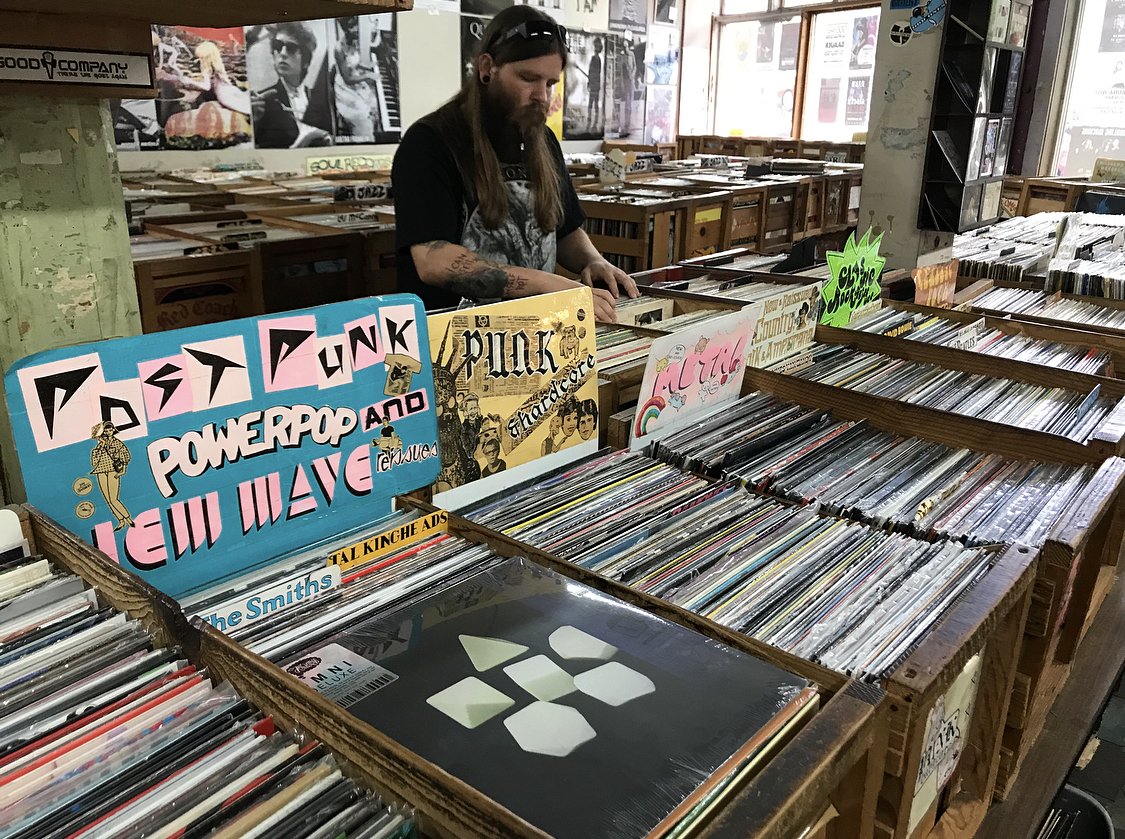
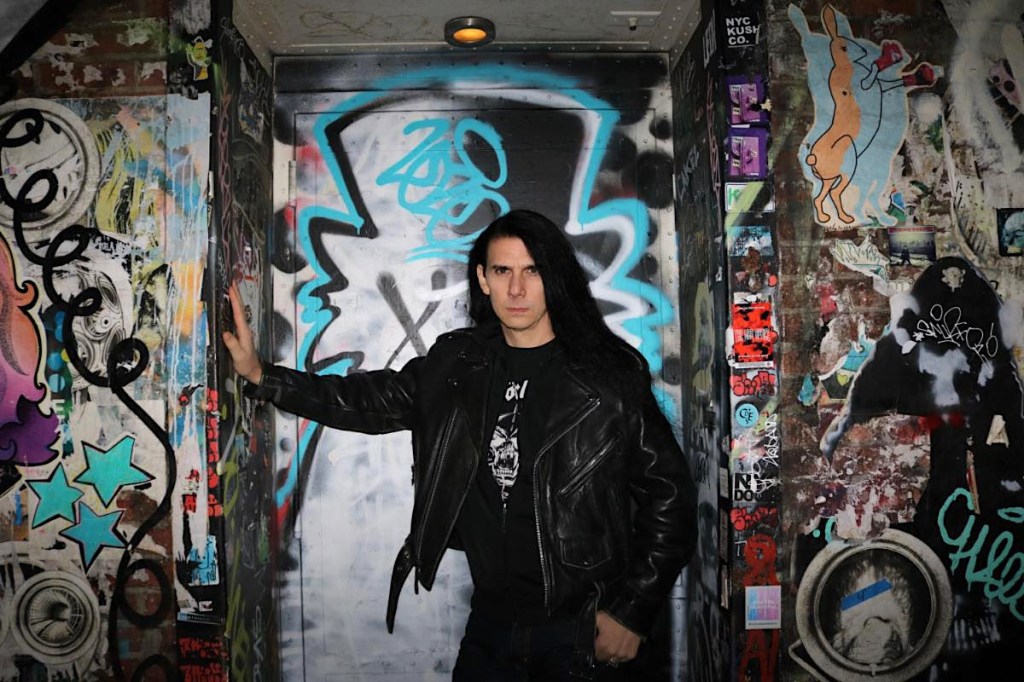
AGGROS: Parris Mayhew photo by Guy Furrow.


Read Parris Mayhew talks life after Cro-Mags, Aggros, and ‘Chaos Magic’ (Part 1)

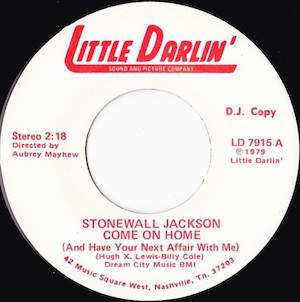
In this second part of RadATL’s interview with former Cro-Mags and current Aggros songwriter and guitarist Parris Mayhew, the conversation turns toward the influence of his father, Aubrey Mayhew. The elder Mayhew was a formidable honky-tonk and country music industry presence. In the 1960s, he worked with the budget label Pickwick Records. Later, he owned the Little Darlin’ and Certron labels. Over the years, he released hits and cult classics, such as Johnny Paycheck’s “(Pardon Me) I’ve Got Someone to Kill,” Stonewall Jackson’s “Pint Of No Return,” and even Clint Eastwood’s “Burning Bridges” b/w “When I Loved Her” single. He was also an aficionado of John F. Kennedy memorabilia. In 1970, he was the highest bidder in an auction for the Texas School Book Depository building in Dallas—the building from which Lee Harvey Oswald fired the bullet that killed President Kennedy on November 22, 1963. His influence bears a lifelong impression on Parris, whom, since his father’s passing in 2009, has fought his legal battles, working toward closing his estate.

Chad Radford:  “Chaos Magic”—the song and the video—have some very cinematic qualities to them. Have you considered moving into composing soundtracks for films? 

I’ve thought about it, and I’ll probably end up doing it soon. I am currently developing a feature-length film—perhaps a series—a documentary about my father. He has a significant history, and I’ve been assessing how it will be structured. Aside from the music that he produced, I would create my own soundtrack around it. Our stories are kind of parallel. Any story about him includes me, especially towards the end of his life, when I was fighting his legal battles for him. I figure the incorporation of a noteworthy musical son of a noteworthy musical man would be an interesting part of the story.

Your father was a formidable country music mover and shaker. How did he and the music that he worked with influence you?

Probably the best lesson that my father ever taught me is that you don’t have to do anything the way anyone else does it. When I was in high school, everybody I knew was thinking about careers and getting married. One of my good friends during the ‘80s was Peter Steele from Type O Negative. We used to have conversations with him and Louie—I loved their music, and I would always say “you guys are going to be big.” But they were both adamant that they would never go on tour. They had union jobs with benefits, health insurance, and all that stuff. That was the life they had been taught, and once they had it, they coveted it and would never let it go. When Peter started Type O Negative, the band rule was you had to live on his block, to be close, and you had to agree to never go on tour. My mindset was never like that. I never once thought about my couch, having a home, getting a job. To a large extent, I’m still like that. I work in the film business as a camera operator. Most people think of that as a job, but I don’t. I am amazed every time I get a check. I show up to these places; there are like 80 other people there, all this amazing equipment, and actors. We assemble the scenes, shoot them, and then we go home. Then I get a check for it!
My dad also taught me that there’s a bigger world out there. He was a traveling man, and half of my life I didn’t know what he did for a living. I knew he did something, but he never went to a job, never had a schedule.

The thing I love about the film business is that it’s so similar to the music business: You’re around creative people, you get to be creative, but there aren’t four other guys trying to take credit for what you just did. 

Just this morning, a Cro-Mags fan—someone who works in an archive in Washington, D.C.—sent me a stack of documents about my dad purchasing the Texas School Book Depository building. There’s one document that I’d never seen. It’s a commentary and observation of what happened the day of the auction for the building. You would think something like that would be very clinical, but the guy describes my father as this mysterious person who sat in the back, was elegantly dressed, and commanded the room. You knew something was going to happen with him before he started bidding. Then he won the auction, and the press swarmed him. It’s like reading a novel. For me—his son—I wasn’t surprised by the wording at all. I speak quite often with the producer of an HBO show about country music, called Tales From the Tour Bus, presented by Mike Judge. When they started doing interviews with people, talking about Johnny Paycheck, almost everybody they interviewed said you shouldn’t even do a movie about Paycheck. You should do it about Mayhew. He was way more interesting. So they reached out to me.

Is this the film project you mentioned working on earlier?

I am passively working on it. My father died in ‘09. His estate is still open, but we hope to close it this year. It’s still open because legal battles keep coming up. I fought lawsuits in Dallas against Texas oil millionaires. I fought lawsuits in Nashville against millionaire bootleggers, and I won both cases. When my father was at the end of his life, I basically took over his battles. After he passed away, I continued. It’s well worthwhile—I’m trying to protect his legacy.

I started speaking to Mike Judge’s producer about first doing a documentary series, which is just a natural for becoming a drama. So that’s where we are. I spoke with him about it a week ago; he’s looking for money backers. I don’t know which way it’ll go, but either way, I can’t work on it until after my father’s estate is closed. I don’t want to waive any flags and have people trying to sue me again.

Have you visited the Texas School Book Depository in Dallas? 

I have. It’s an extraordinary thing. I didn’t realize the relevance of what my father did by saving the building until I was standing in Dealey Plaza. My father didn’t just save a building, he saved the déjà vu for millions of people. Literally, I came around the corner and was standing in Dealey Plaza, and my head started turning. I had been there a thousand times: There’s the grassy knoll, there’s the bridge where the cop was standing. There’s the fence where the dark man was supposedly standing with the rifle. Then my head panned over to the building, and my eyes went right to the sixth floor—the window on the right. I could’ve hit it with a baseball. Then I looked over my right shoulder and could see the limousine coming around the corner. That moment of déjà vu—from seeing the Zapruder film that we’ve all seen a thousand times. I relived that entire thing in 60 seconds. That’s history! My father recognized that saving that building was saving that moment. And that’s what my father did. He was a music man, he was an entertainer, and he recognized that 60 seconds as something that people should be able to experience. Meanwhile, the entire city of Dallas was trying to run him out of town.
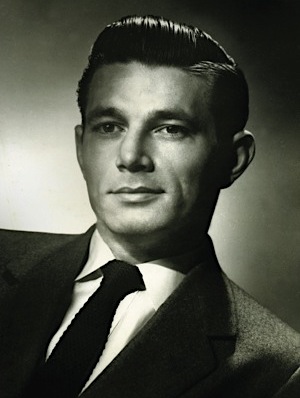
Photo courtesy the Estate of Aubrey Mayhew.

Two other bidders wanted to tear it down. The City of Dallas wanted it torn down. They planned to bulldoze the grassy Knoll, reverse the traffic on the street out front, so it doesn’t look or feel the same way. Of course, after they ran my dad out of town, they put in a museum. The Dealey family, who owns Dealey Plaza, is a Texas society family. Their name is forever associated with the murder of a president, so they want that erased. Most people don’t know this, but the Dealey family owns The Dallas Morning News, who began a press campaign against my father, calling him a hillbilly, which couldn’t be further from the truth. All you have to do is read that document that was sent to me this morning. They described him as this striking, intelligent character. The Dallas Morning News portrayed my father as a hillbilly—someone who was going to open a chicken restaurant in the building called Kennedy Fried Chicken. It was absurd.

I’d never made the connection between the Dealey family that owns the paper and Dealey Plaza.

And a lot of people haven’t made the connection with the guy whom my father bought the building from—D.H. Byrd—whose lifelong friend and schoolmate was Lyndon Johnson. Who was the one person in the world who benefited from Kennedy’s assassination? Lyndon Johnson! The guy who owned the building he was shot from was Byrd?!?! Are you fucking kidding me? 

Is the building still a part of your father’s estate?

No. The city of Dallas took it from him. It’s the most visited and most photographed building in Texas, even more than the Alamo. The city owes all of those tourists dollars to somebody they ran out of town. And my father’s name isn’t even on a plaque on the front of the building. Byrd’s name is on the front of it because he’s a Dallasite. It’s a good old boys club down there.

Read Parris Mayhew talks life after Cro-Mags, Aggros, and ‘Chaos Magic’ (Part 1)

If you have enjoyed reading this story, please consider making a donation to RadATL.

Donate with PayPal

INTERVIEW: Parris Mayhew talks life after Cro-Mags, Aggros, and ‘Chaos Magic’ (Part 1)

AGGROS: Parris Mayhew photo by Guy Furrow.

For Parris Mayhew, life under quarantine conditions has not passed idly by. A camera operator in the film industry by trade, Mayhew is best known as a guitar player, songwriter, and original member of New York City’s whiplash hardcore torchbearers the Cro-Mags.

The group’s story is riddled with lineup changes, inner-band squabbles, and just as many groundbreaking albums as forgettable releases, blending elements of hardcore, punk, and thrash metal. Just as Bad Brains adopted Rastafarianism, Cro-Mags singer John Joseph and bass player Harley Flanagan embraced Hare Krishna philosophies.

In June, Flanagan released Cro-MagsIn the Beginning LP via Orchard Records—the first album released under the group’s name in two decades. After a 2019 lawsuit, vocalist John Joseph and drummer Mackie Jayson have continued playing live under the name Cro-Mags “JM.” 

Mayhew served as principal songwriter for the Cro-Mags’ most influential albums—The Age of Quarrel (1986), Best Wishes (1989), and Revenge (2000)—but parted ways with the group long ago. In October he returned from his long silence to release “Chaos Magic,” a new six-minute instrumental song and video under the name Aggros.

In this two-part interview, Mayhew talks about the music and experiences that inspired “Chaos Magic,” and his move away from his past with the Cro-Mags on his own terms.

Chad Radford: The pandemic has been a trying time, but it has also played to my strengths: I’ve had time to focus on projects that have been on hold for too long, now that I don’t have to interact with the outside world. How are you holding up in quarantine?

Parris Mayhew: It’s an extraordinary kind of shock, like someone shook us all and said, “This is what life could be!” A lot of people are struggling, and people are getting sick. But, for example, I worked right up to the day of lockdown. After a month, when I got used to the idea of leisure time, I immersed myself in several projects. I have a pinboard with two movie ideas, and another pinboard with a television pilot idea. Over the years, I’ve been slowly assembling songs one at a time. When I found myself with all this time I began addressing those things in more than a peripheral way.

I spent 22 days shooting the “Chaos Magic” video, which is insane. I shot it by myself two-to-five hours at a time, and it was so exhausting that I couldn’t shoot for any longer than that. Then I immersed myself in editing. In one day, I went from a guy who used to be in a band to a person with a legitimate release. Probably none of that would’ve happened otherwise. I work on television shows, and got a call this morning asking:  “Will you test today and start working tomorrow? That’s how quickly it happens. That’s been my life for the past 20 years, working on sets for 13 hours a day, five days a week, and sleeping away the weekends. I find myself with very little time. Your comment about realigning priorities based on having time—that has made a huge difference. And here we are having a conversation about my new song because of it.

On the surface, “Chaos Magic” is a somewhat different approach from what you took with Cro-Mags songs.

People have asked if I intended to make instrumental music. I didn’t realize this until maybe last night when I was lying in bed: I’ve always written my music as if it was instrumental music. Even with the Cro-Mags, I wrote songs to be and feel complete. All I cared about was making the music as heavy and as fast as I could. I tried to get out these complete musical thoughts. When it came time to have a singer—whether it was Eric Casanova, John or Harley—I always thought, how can I get the singer to sing on it and be as unobtrusive as possible? When I wrote “Chaos Magic,” I did it with the same thing in mind.

I puzzled together “Chaos Magic” from parts that I wrote over the years. I tried to have the mindset of myself when I was 15 or 16, standing in the audience looking up at the stage. I even put breaks in the song to rest. I knew that I would be going berserk for 45 seconds, and I’d need a break to take a breath, and then it starts again. I would just go crazy for another 45 seconds, and needed another break. That sounds a little abstract, but I literally thought of it that way. Playing and performing live is an athletic event. You realize that if you don’t put breaks in there your arm will fall off.

I remember playing songs that I wrote for Revenge when we were on tour. I would get to a point where I would just let a chord ring out—I would literally shake my right arm off while that chord rang out. Then I’d start again, like I was playing to the peak of my physical ability every night, just to complete some of those songs. I wouldn’t say “Chaos Magic” is written to the peak of my physical ability, though. It’s just a different kind of journey. It’s not such an athletic event as it is chapters. What I’ve found gratifying is that the song is almost six minutes long, but almost nobody has commented on how long it is.

I watched the video and  thought: “There you are playing bass, wearing classic hardcore gear … a guitar player wearing a Cheap Trick T-shirt … This must be the personification of crossover. Later, I read that each one represents different phases of your life. … I don’t see how it could be less than six minutes.

Your observation about crossover is relevant, because I’m just a fan of music. I love Cheap Trick as much as I love Motörhead and the Bad Brains. It’s personally gratifying when I am acknowledged by my peers, and I enjoyed giving nods to my peers in the video—Cheap Trick and Motörhead and so on.

When I was 15 or something, I went with my friend Paul Dordal—an original member of the Cro-Mags who came up with the song title “World Peace,” and wrote the Murphy’s Law songs “California Pipeline” and “Skinhead Rebel.” He gave them to Murphy’s Law as a gift. He said, “Let’s go see this band called the Mob, I think you’ll like them.” So we went to A7 on Avenue A and 7th Street—this little club that had no windows. It had a piece of loose-leaf paper on the front with the band names written in pen—$3 to get in. Bands would start playing at like 10 p.m., and the last band would go on at like 6 a.m. It was totally illegal, and that’s just the way it was.

I’m sure we had many cans of Foster’s lager beer before we went in. The place was glowing in the most perfect way that it can when you’ve had a bunch of beers. I stood in front of the guitar player, Jack Flanagan, who was a peculiar site at a punk rock club. He was a redhead, and had a gigantic red afro. He was also playing a B.C. Rich. They burst into a song and his right hand disappeared! He was moving so fast that it was a blur. I’d never seen anything like that, and I’ve never forgotten it. When I made the “Chaos Magic” video I was thinking about this part, and how fast I had to strum just to articulate it in time. When I shot my hand doing that part, I thought of Jack Flanagan, and I 100% was trying to recreate that moment when I was 15 years old.

Playing a Rickenbacker bass is a combination of my love for Geddy Lee, Chris Squire, and Lemmy. I thought about what T-shirts I would wear, the only one I was firm about wearing was the Motörhead shirt. Motörhead is absolutely the biggest influence on me both musically and physically. When I play, it’s the physical imitation of Lemmy, and I always say that my right hand is Lemmy and my left hand is Rush. Somehow it becomes this weird mix. If I did a breakdown of the songs on the first Cro-Mags album you would be amazed at where they came from. “Sign Of The Times” is basically “Anthem” by Rush backwards. Alex Lifeson does this thing at the beginning of the song, he rides the E chord high and then low. I remember thinking I can’t believe he’s making this amazing riff with just  one chord! So I played it backwards, and instead of going high-low, I went low-high, but I played the right hand like Lemmy. So it’s like the same song flipped upside down and played by Lemmy.

The crawl at the end of the “Chaos Magic” video says COBZ plays drums …

COBZ is the drummer on this track, and he probably plays on four other songs that I’ll eventually release. There will be other drummers, too. COBZ is a Brooklynite. He’s got his own business, and he has kids. He’s got a busy life so he doesn’t prioritize music, but he is an extraordinary musician.

I have another track with Roy Mayorga from Stone Sour, and there will be others. I did it this time without trying to teach somebody how to play like me. To a large extent, when you hear the bass part on “Chaos Magic” you can’t play it kind of like that. You have to play it exactly like that. The drum beats are built into the bass rhythm. A lot of drummers have a repertoire of beats in their head, and they’ll start playing a beat without listening to what you’re playing. You literally have to place every bass drum and snare drum with my right  hand, or you’re not playing the song. Otherwise it won’t make any sense.

I did that when Cro-Mags recorded Best Wishes and Revenge, too. When we recorded the basic tracks the only thing anybody heard in their headphones was me. When we played live, the only thing in the monitors was the bass drum, the snare drum, and me … Except for Harley’s monitor, he would have his vocals, but we always did a careful monitor set up so we wouldn’t hear anything but my guitar and the drums, and us two locking. I was the pace card. I basically did the same thing with “Chaos Magic.” I played everything, and in my opinion it couldn’t have come out better because it’s the song. It’s not about skill—I guess it’s about skill to an extent—because my playing and my writing go hand-in-hand, and whenever we would go on tour with the Cro-Mags, we took on new musicians, whether it be Rocky George, Bobby the Handball, Rob Buckley, Doug Holland, or any of the number of people that would play. I would always spend like two months teaching people how to play the songs. They couldn’t just pick it up off the recordings, because it’s a peculiar thing.

I literally blasted out all the tracks for “Chaos Magic” in one afternoon. It was the same thing I did with Revenge. I did all the guitars for the entire album in three days. Of course, we took eight days to do bass tracks, and we were in the studio for nine months. But I did all my tracks in three days.

You mentioned you like getting feedback from your peers. Have you heard from any of your former Cro-Mags bandmates about “Chaos Magic?”

I don’t have any contact with any of them. I did get an email … It doesn’t take much to get Harley to say unkind things online. But apparently this was fuel for him. Most people know that I don’t care or don’t want to see it, so no one forwarded it to me, or relayed what he said. They just say he wasn’t very positive, which I didn’t expect. He’s the kind of person who’s only happy when other people aren’t happy.

I see social media posts from Harley and John. They project a lot of positivity into the world. But when it comes to each other things turn negative quickly.

You write a book called The PMA Effect, and then spend the rest of your life being negative? I’ve observed that kind of thing with John for many years—espousing to be a religious person, based on a kind and loving religion. John’s thing with Hare Krishna is a strange offshoot. It’s like a bastardization of the Hindu religion: They recruit a lot of people by appealing to what they call the warrior side. They say that some people are missionaries and some people are warriors. That’s why the ranks of the Hare Krishnas are lined with lots of ex-cons. Like John!

It was always funny to me, whenever I met any of them through our encounters, almost all of them, within the first few minutes of putting their hands together and greeting you with a soft voice, would start saying, “Yeah, back when I used to fuck motherfuckers up! Back when I was serving time in the pen!” It almost always reverted to that.

Harley is the main reason why there will never be a Cro-Mags. People can say, “There is a Cro-Mags. They’re putting out records.” But certainly that’s not the Cro-Mags that people buy into. He likes to say publicly that the reason there isn’t one is because I won’t participate, and he wants to bury the hatchet. Be nice and all that kind of stuff—we’re all grown men …

Then he’ll go and make statements endlessly. He has a whole platform for making statements that diminish everybody’s role in the band—primarily mine. He doesn’t say anything about Doug because he doesn’t see Doug as a threat. But when you look at the credits on The Age Of Quarrel it says all songs written by Parris Mayhew and Harley Flanagan. My name is first, and the reason my name is first is because I am the primary songwriter. But he puts out a press release six months ago that says “35 years ago, I wrote an album …”


How does he expect there to be any kind of reconciliation when his entire platform is based on diminishing other people? The truth is, I have outgrown him. I outgrew him long ago. For a long time, I had an attachment to him because of my pride in my music. But one thing I realized when we were tracking basic tracks for Revenge, Harley didn’t even know some of the songs. I did the basic tracks with the drummer Dave DiCenso. Harley learned them and subsequently played bass on them afterwards. It wasn’t until I was in the recording studio playing these songs that I wrote by myself with the drummer, when I said to myself, “I could have done this by myself.”

The reason we kept returning to each other was because I made this connection between what I achieved in music with him, and I believed his hype of diminishing me. I believed it to a certain extent. I felt that we were connected by it. This time, I thought, I’m going to do it the way I have always done it, but without him. The results are for other people to determine. But I am happy about them. I am as proud of “Chaos Magic” as I am with anything I have ever done?

You can hear the The Age Of Quarrel, Best Wishes, and Revenge  DNA in the riffs, guitar tones, and melodies of “Chaos Magic.” I don’t hate Harely’s new Cro-Mags album, In The Beginning, but it’s different. The values of what you’re doing with Aggros are more closely aligned with where the music came from in the first place—pushing forward into new musical terrain by looking inward.

When we got together to do Revenge, I didn’t want to call it Cro-Mags. At first we called it White Devil. I kept saying to Harley that I wasn’t interested in playing The Age Of Quarrel and Best Wishes again. We can certainly play those songs. I love them. But I only want to do anything if we make new music.

I also wanted to disconnect myself from 10 years of John touring and playing our music in a pitiful way. I say pitiful because when Harley and I left off with Cro-Mags we were playing festivals in Europe, and headlining. John has resigned the name Cro-Mags to an opening act, playing in small clubs. I wanted to separate myself from that degradation. I perceived it that way because it was my music. So we concentrated on writing something new, and I wanted it to be under a new moniker—White Devil. But as soon as we started playing gigs all the advertisements said Cro-Mags are White Devil. Literally every flyer and anything you saw, the word Cro-Mags was just as big White Devil. We were fighting a battle that was unwinnable. Just today I did an Instagram post where I said something like, nostalgia is an undefeatable foe. You can try to fight it and get washed away. It’s like a tidal wave. If you stand against it, it’ll wash you away until you’re not even noticed. Or you can embrace it—ride it. I don’t shuck off Cro-Mags. I am proud of it. I have just outgrown it, and I’m moving on.

The situation says something about the power of branding, too. The name Cro-Mags will always draw a crowd, because the songs are good, and it has good branding. But when I look at the Aggros logo, I see the same creative hand at work.

I created the logo for the Cro-Mags. I have the original paste ups! Back before computers and stuff, we would actually cut, paste, and put ink on paper. I have the mock-up for the original Cro-Mags cassette. I did it by hand—I have a degree in fine arts.

When I was going to do my logo, I wanted it to be familiar and I wanted it to be me. And to a large extent, the truth is, it was just an imitation of the Motörhead logo anyway! We even toyed with putting umlauts on it. We were kids!

I recently came across an interview where you said that you loved playing music with Harley Flanagan more than anyone you’ve ever played with, but you also hope that you never see him again. Has that changed?

At that time, I was still having a hard time separating him from my abilities. He really did a number on me. If somebody says something to you over and over, you start to believe it. In that same interview, I might’ve said that I would pick up my guitar and play a riff for him, and he would light up! We would play together for hours. To me, that was us, as opposed to us playing my song. The point is, if he wasn’t sitting there I’d still be playing the same song. And I never realized that until I made Revenge. I have finally been able to let all that go, and it’s still true. I still loved playing with Harley. It was great, but I don’t need that.

Do you have a schedule for releasing an Aggros full-length?

No. I don’t have people sitting behind desks telling me what to do. It’s not on a label, so it’s not a commercial venture. It’s just me doing it whenever I feel like doing it, but I have a number of tracks recorded and will release the next one when I finish the next video. Who knows how long that’ll take; I have something to live up to now with “Chaos Magic.”

My wife and I have an agency and we’re basically treating the band like a client to the agency. Once the second video is out we’ll construct all the elements for a 7-inch with probably four songs. Vinyl only. Downloads will be on the website. Hopefully there will be a number of 7-inches to come out, perhaps there’ll be an album collection of the singles, like Siouxsie and the Banshees did. Maybe I’ll pick up musicians as we go, and maybe we’ll re-record all the songs with singing. Or maybe we won’t. I don’t know. We’ll see. “Chaos Magic” was online for an hour and known people from known bands were texting me saying, “I want in.”

I think of the band as like Daft Punk or Ghost. There’s a creative center, and then other people are brought in. It’s presented as a band and why not? On Revenge, Cro-Mags wasn’t a band. It was me and Harley. We were the creative center, and we hired Bobby the Handball, Rocky George, or whoever it happened to be at the time. I’m approaching it that way. When this is seen on stage, it’ll be presented as a band. It will be a great band, whoever it is, but who knows who it’ll be, every time you see me.

That’s a good place to be.

It’s an awesome place to be.

Click here to read part two of RadATL’s conversation with Parris Mayhew.

If you have enjoyed reading this article, please consider making a donation to RadATL.

Donate with PayPal

With ‘Dirt Yard Street’ Clay Harper is at home in the world

Clay Harper. Photo by Kali Vermes.


Just five words — “I believe this is home.”

The title track that opens Clay Harper’s latest album, Dirt Yard Street, culminates with an intimate mantra repeated over and over again. The song is a quiet salvo that brings a lifelong journey for the beloved singer and songwriter to a place of peaceful acceptance. It’s also the beginning of a new chapter for Harper. Every lingering note and every story told throughout Dirt Yard Street feels like a snapshot capturing a night-in-the-life from long ago, when desperate and beautiful characters wandered hopelessly into the blackness of night on the unforgiving streets of Atlanta, GA, New York City, and Paris, France—all cities where Harper has lived and struggled, but never felt settled.

Forever searching for a place to call home, Harper has navigated a long career championing the underdog with bittersweet songs filled with lyrical dramatics that exist outside the realm of punk, new wave, and rock ‘n’ roll. Over the years, he has teamed up with countless gifted musicians, who’ve helped him bestow his words with colorful musical arrangements—each performer leaving a lasting impression on him. The characters that live in Harper’s songs have always been a world-weary bunch. With Dirt Yard Street, their broken spirits ascend to a higher level; the dark horses become vessels for reconciliation. As the album proves, though, when finding resolve in life, the only way out is through.

Dirt Yard Street is also a companion, of sorts, pushing beyond his 2018 CD, Bleak Beauty. If that album is taken as a meditation on death and losing the love of his life to cancer, leaving an awful lot of unfinished business behind, Dirt Yard Street is about finding new balance in life and moving forward. Each song takes a lingering and glassy-eyed look back at characters with whom he has crossed paths over the years, who now personify abstract emotional states—grief, wonder, strength, and defeat. For as rich as this all sounds, Harper seems reluctant to spell out the haunting nuances and thick atmosphere of Dirt Yard Street using such simple terms.

“The theme of the album, if you want to boil it down to that, is about trying to find your place in this world, where you are at home,” Harper says. “How do you accept that instead of continually plotting to change it?”

Harper’s songwriting has never shied away from the dark side of the human condition. In 1988, his band the Coolies released Doug, a bombastic rock opera that tells a tale about a skinhead who murders a transvestite who works as a cook. As the story unfolds, the antihero finds a life of fame and riches after selling his victim’s cookbook, only to fall victim himself to the indulgences that fame brings. Doug was the follow-up to the Coolies’ 1986 debut album, Dig ..?, a 10-song LP featuring nihilistic punk covers of Simon & Garfunkel songs, released by DB Recs, early home to Pylon, the B-52’s, Kevin Dunn, and more.


Other albums are steeped in broad strokes of off-the-wall themes that extend beyond the music. His 1998 collaboration with brother Mark Harper, titled Not Dogs…Too Simple (A Tale Of Two Kitties), falls somewhere between a children’s album and a rock opera and features contributions from Ian Dury, Moe Tucker of the Velvet Underground, Cindy Wilson of the B-52’s, and illustrations by cartoonist Jack Logan. A 2000 collaboration with Kevn Kinney of Drivin N Cryin titled Main Street is a soundtrack to a film that does not exist, complete with vignettes of turbulent dialogue piecing a story together.

“Clay can delve into extremely dark material while maintaining a sense of sweetness and innocence,” Kinney says. “He is cinematic in how he writes songs that tell stories, and he’s not afraid to try radically different things! There have been times when he played a song for me, something he’d played for me before, but as a reggae song. Now it’s played with a harp, or in a totally different way. He has an ability to see how multifaceted a song is, and how its meaning can become something totally different.”

Kinney and Harper have been friends since they met in the Atlanta music scene circa 1985. They’ve worked together on many releases. Kinney is credited as a co-writer of the song “Come To My House,” on Dirt Yard Street. The song, which is built around the structure of Zen philosopher Alan Watts reciting the words “I love you.” Taken at face value, “Come To My House” exposes Harper’s desire for a lasting connection with others, while pushing away from superficial relationships.

Harper’s 2013 CD Old Airport Road builds story elements based on recordings he made from a telepersonals phone number—prostitution ads. In the album’s opener, “Ole Ray,” Atlanta’s Empress of the Blues, Sandra Hall, blurts out, “Hey motherfucker!” over and over again. From there, the album hangs in a balance of absurd hilarity and utter tragedy

“I have always looked at things in multidimensional ways,” Harper says. “I used to listen to movie soundtracks when I was a kid. Often, there were little clips from the actual movie between songs. I always loved that.”

The goal for many of his recording projects was to introduce additional forms of art—layers of entertainment—under the guise of a simple record. Bleak Beauty marked a sea change, taking shape as a truly identifiable work of art. On the surface,the album functions like a straight-ahead song-to-song listening experience. But the honesty and eloquence poured into each number is palpable. Songs such as “The Kindness Of Strangers,” “Let Me Sleep, I’m So Tired,” and “I’m Not High” embrace a real-time exploration of personal heartache to a degree that reaches deeper and higher than most contemporary musical experiences.


Dirt Yard Street picks up where Bleak Beauty left off; the music is set in motion by sparse and lilting dulcimer strings picked by Tom Gray, who is best known for fronting ’80s new wave band the Brains and the alternative Americana act Delta Moon. Harper and Gray have been friends since the ’80s, and Gray has played on several of Harper’s projects over the years, including many released throughout the ’90s on Harper’s Casino Music, which was owned and operated by Harper and producer, cover artist, and former road manager of the Clash, Kosmo Vinyl. Casino Royale was a vinyl offshoot label used primarily as a vehicle for the “Clay Harper 45 of the month club” subscription series, featuring mostly singles by Harper, along with one-off 7-inches by Drivin N Cryin and the New York City band Jack Black.

Over the years, Tom Gray’s band Delta Moon has also cut several tracks as Harper’s rhythm section. With “Dirt Yard Street,” the two artists keep the song bare-bones and ease their way into a spacious and warm resonance. Harper’s voice drifts over Gray’s bronze dulcimer and Dobro strings, opening the door for songs with titles such as “All the Mail Comes To Neighbor,” “Life On a Windowsill,” and “Somewhere There’s a Fire Waiting.” Each one moves with a ghostly traipse, carved out of heavy emotional atmosphere and texture.

Every song tells its own story, but when taken in as a whole, the album undulates with memories and ideas drifting in and out of focus, like a soft, poetic dreamscape echoing Harper’s life. It’s not nostalgia he’s after. But from the first few notes of “Dirt Yard Street,” Harper revels in his powerful and evocative reminiscence before moving on.

“Clay knew precisely what he wanted on the dulcimer, and I stuck to that,” Gray says. “Then he turned around and gave me free rein on the Dobro. I had no clue about what he had in mind for the album’s bigger picture. We focused on the song.”

As the album unfolds, different configurations of musicians, including Gray, pianist Chris Case, saxophone player Eric Fontaine, bass player Jordan Dayan, guitar players Mark Harper and Keith Joyner, backing vocalist Marshall Ruffin, banjo player Rick Taylor, and violin player Ana Balka fill out the arrangements for each number.

The basic idea for each song is formed before other musicians come in to help bring the material to life. Lyrics are Harper’s forte, and there’s a deliberate sound that he wants to achieve with each piece of music. “He is a fan of slow and sparse, slower than some folks are comfortable with,” says Chris Case, who plays on many songs throughout Bleak Beauty and Dirt Yard Street. “The arrangements are simple, but they require a lot of restraint to play well. I try to always keep in mind the characters he is describing—his directions are mostly about the story,” he adds.

Case goes on to say that Harper represents the best parts of this city. “He is fiercely independent, and not afraid to mix it up with the unsung and unwashed. His lyrics tend to be little character studies of people on the edge, homeless drunken sunrises, down-on-their-luck lovers. I’m always like, ‘Oh yeah, I know these people.’”

In May of 2018, Case joined Harper, guitar player Marshall Ruffin, and bass player Jordan Dayan for a month-long residency at Avondale Towne Cinema. “My favorite time was when we were working up a track for those Avondale shows and he was like, ‘Hmmm … It’s too happy right now. I need it to sound like somebody who’s drunk outside the liquor store in the morning waiting to open so they can buy a rope.’ That’s direction I can work with!”

The Ottoman Empire: Lester Square.

Another player on the album, Ana Balka, moved to Atlanta from San Francisco in May of 1993. She met Clay and Mark, who needed a violin player for their band, the Ottoman Empire. The band’s album Lester Square had already been recorded with Wall Street Journal reporter Daniel Pearl playing violin, and Pearl had recently left town for work. Balka took up violin in the group and played several shows throughout the winter and spring, and then she left town as well.

The Ottoman Empire’s 2004 album, Ottoman Gold, was produced by Eric Goulden, aka Wreckless Eric, who scored his most famous hit with the 1977 single “Whole Wide World” for Stiff Records. Wreckless Eric played throughout Ottoman Gold and took the lead vocal on the song “Stages.” He and Harper continued working together over the years on several albums, including Harper’s 1997 CD, East of Easter.

In his impressionistic way, Harper relives the story of traveling to Paris and getting to know Wreckless Eric in the early ’90s in the song called “Life on a Windowsill.”

“I had always been a fan of Wreckless Eric,” Harper says. “I got to see him play at the Agora in ’78, when he came through with the Stiffs. I loved those records; they really made an impression on me, but then he disappeared. At some point I went into Wax N Facts in Little Five Points and I found his Le Beat Group Électrique LP, which had just come out, and it was mind-blowing. It was low-fi, nothing like I was expecting, and I wouldn’t stop listening to it. I thought, ‘Okay, I gotta go find him!’”

Harper made a pilgrimage to Paris, where he met guitar player Martin Stone. The late guitarist Stone had played in the Pink Fairies, Savoy Brown, and alongside the Residents’ guitarist Snakefinger in the bands Chilli Willi and the Red Hot Peppers. He was on a shortlist to replace Brian Jones in the Rolling Stones, and as it turns out, Wreckless Eric had been playing guitar with him. Harper and Stone became friends, but he did not meet Eric on that trip.

Later, he found out that Stone and Eric were playing a show together at a club near the Bastille called Au Père Tranquille. So he made a second trek to Paris, and they became friends. “‘Life On A Windowsill’ is all me and Eric walking down the Rue Saint-Denis, which used to be the hooker track in Paris,” Harper says. “It’s all changed now.”

Harper’s residency at Avondale Towne Cinema coincided with the release of Bleak Beauty and brought together people from all areas and eras of his life. “I think on the second Tuesday of that run Clay introduced me to Murray Attaway of Guadalcanal Diary and suggested we work something up for the final Tuesday, when people were covering some of Clay’s songs from throughout the years,” Ana Balka says.

Attaway and Balka hit it off immediately and shared in the chemistry that the weekly mix of themed music and spoken word performances conjured up. Their contribution to the final night of the residency included a take on “Train” from the Ottoman Empire’s Lester Square and a mashup of “Poverty” and “Coke Light Ice” from the Coolies’ Doug.

Kevn Kinney (left) and Clay Harper during the May 2018 residency at Avondale Towne Cinema. Photo by Ana Balka.


“It’s important to make events reflect, pay respect, and bring together the art community of Atlanta,” Harper says. “That was the goal. Not, ‘I like that band … I hate that band,’ but more like, ‘Let’s see what’s happening’ and then maybe … let’s do something!’”

Each night, the program began with conversations between people who’ve been a part of Harper’s life: Kosmo Vinyl told stories about his work as an artist before, during, and after his time with the Clash. Lawyer Daniel Kane hosted a talk called “Meet the Convicts,” examining life in and out of the American prison system. Author Anthony DeCurtis read from and discussed his recent biography, Lou Reed: A Life. He also performed a live set, singing Lou Reed songs with Andy Browne of the band Lynx Deluxe and formerly of the Nightporters. Ponce De Leon Ave. impresario Tom Zarrilli explored the city’s art and performance scene from the late ’70s with a talk titled “So you think you know Atlanta,” with guests including Clare Butler of the Now Explosion. Other artists such as Evereman, The Real Frank Tee, Sad Stove, and more were also featured throughout the month.

“The whole month was a great example of the way he connects people and ideas, and isn’t afraid to go out on a limb to make things happen,” Balka adds.

For Dirt Yard Street, Balka was enlisted to play strings on two deep cuts on the B-side, “All the Mail Comes to Neighbor” and “Somewhere There’s a Fire Waiting.”

“Clay had a clear idea of the kind of sound he was looking for on ‘All the Mail …,’” Balka says. “An unembellished, straightforward and minimal tone. Which was what the song needed, and what seemed true, so that was easy. These songs aren’t looking for backflips or ornate flourishes. He wants textures to create an atmosphere and to hold up a narrative woven from some pretty heavy emotions.”

After they whittled down a few ideas together, Balka’s part in “Somewhere There’s a Fire Waiting” took shape in a simple line. “We work well together because, while I love sussing out whatever it is that a song I didn’t write needs from me—if anything—it’s also great when the writer has a clear idea of what they’re looking for,” Balka says. “When you hear it the same way they do and can make the right thing happen, that’s the best.”

For Harper, Atlanta is home for all intents and purposes. He co-founded the La Fonda Latina and Fellini’s Pizza restaurant chains with business partner Mike Nelson. When not writing and recording music he’s also involved in various other endeavors. In May of 2019, he partnered with Tom Zarrilli to open Gallery 378, a low-key art gallery and performance space in Candler Park around the corner from The Flying Biscuit Café. The gallery was established as a pop-up space for underdog artists, and has hosted openings by Avondale Estates painter Jim Wakeman, titled “A Slice of the Pop Culture Pie,” as well as openings by The Real Frank Tee, Lisa Shinault Fratesi, Rose M. Barron, Atlanta rock photographer Rick Diamond, and more. Drivin N Cryin played a full band set there. Kevn Kinney and Tim Nielsen, and Harper himself have performed live acoustic performances there as well.

Clay Harper: Dirt Yard Street.

The cover art for Dirt Yard Street features a photograph of a half-cluttered, half-bucolic neighborhood scene taken in Carrollton, Georgia. One of the houses in the background is where Harper’s family lived after moving there from Philadelphia when he was just a kid. “That’s where the album’s title comes from,” Harper says. “It was such a rough transitional period, you know? You look at these houses and you understand that whatever it was that happened in your life could have easily led you there. I was led there beyond my control, and I could be there. It’s not like it’s the worst place in the world to be, but that ain’t where I want to be.”

With two masterfully created albums behind him — Bleak Beauty and Dirt Yard Street — Harper is at home in the world.

— Chad Radford

Eyedrum returns!


Eyedrum Art & Music Gallery has announced a new location opening in early 2021 at 515 Ralph David Abernathy Blvd., in a historic industrial corridor near the West End, Pittsburgh, Mechanicsville, and Adair Park.

In a press release issued September 29, Eyedrum states that this new location will feature a “flexible 3,000 square-foot interior including a small dedicated gallery, an outdoor stage, and a courtyard for programming.”

The press release also states that Eyedrum will carry on with its legacy as “a home to underserved, emerging artists, musicians, filmmakers, and writers. In times of uncertainty, members of the community need arts spaces now more than ever.”

In June of 2018, Eyedrum, along with fellow DIY arts and music space Mammal were forced to close after a nearby fire on Broad Street SW left one man dead. Soon after, both business were forced to leave their Downtown locations permanently.

Two years later, Eyedrum’s announcement comes as a beacon of hope for an underserved community of artists and musicians. In a 2011 CL cover story that I co-authored with Wyatt Williams, title Eyedrum: An Oral History, we described that scene as “those willing to embrace music and arts that are as contemptuous as they were conscientious. Indie rock acts as varied as Oneida, Don Caballero, and the Black Heart Procession to Simeon Coxe of the Silver Apples to DJ Cut Chemist all performed there amid exhibitions with titles such as The Penis Show, Switch, and Liquid Smoke.”

With the recent closure of the Bakery in Oakland City, Atlanta needs a venue that this community can call home, now more than ever.

515 Ralph David Abernathy Blvd.

Eyedrum’s new home sits adjacent to Parts Authority, an automobile parts and supplies facility.

Deisha Oliver, a member of Eyedrum’s board of directors, says the gallery and performance venue is renting “a 3,000 square foot portion of 515. The building owner has been so kind as to do the needed build out of our portion of that space.”

To keep Eyedrum’s endeavors moving forward, an effort to raise funds is underway, with plans to facilitate virtual programming, and to support the staff and curatorial budget for the next five years. A new website is planned for launch soon, which will offer membership options.

In the meantime, click here to donate to Eyedrum.

More information will be available here as soon as it becomes available.

Read more about the history of Eyedrum.

Eyedrum: An Oral History by Chad Radford and Wyatt Williams 
Eyedrum Turns 20 by Chad Radford and Doug DeLoach
Breathing new life into South Downtown: Can Atlanta’s arts communities survive and thrive in an area primed for drastic change? by Sean Keenan
Can Downtown’s art scene survive developers? “We’re faced with a challenge posed by a city developing too quickly” by Sean Keenan
Downtown DIY heads out: Mammal Gallery and Eyedrum face the end of an era by Chad Radford and Sean Keenan

Past Now Tomorrow unleashes new recordings by Whispers Of Night and Suarez + Araim + Shirley

WHISPERS OF NIGHT: Majid Araim (left) and Ben Shirley. Photo by Ryan Beddingfield.


Two new releases that bear the mark of Past Now Tomorrow were by no means created as companion pieces. But Whispers Of Night’s The Dead Blessing, and the Leo Suarez + Majid Araim + Ben Shirley trio’s voice resolve are forever bound by time, place, physical aesthetics, and a dedication to pushing improvised music into deeper and higher plains of the imagination.

At the core of both releases stands the duo of cello player and Past Now Tomorrow label owner Ben Shirley and mandolin player Majid Araim. Together, they’ve fleshed out a singular musical voice while employing an arsenal of instruments—cello, fiddle, mandolin, banjo, harmonica, recorder, piano, reed organ, Korg MS-20, percussion, walkie talkies, tapes, and radio—to explore a haunted and wildly shifting terrain of musical timbres and colors.

“We did a crazy experiment with a process of overdubbing,” Shirley says of the Whispers Of Night release. “We improvised the initial pieces, then we started overdubbing. But only one of us wore headphones: One of us was listening to and playing along with what was already in the can. The other was responding to what was happening in the room. We traded back and forth, and a submerged musical composition rose up out of the ether as we went along,” he adds.

They recorded the sessions for The Dead Blessing using both a 4-Track and a computer. When finished, they spent weeks mixing it all together before Ben Price at Studilaroche put the final mastering touches on the five cavernous pieces presented here.


For voice resolve [sic.], Araim and Shirley teamed up with Philadelphia-based percussionist Leo Suarez to record a stripped-down early morning improv session—Shirley stuck with his cello, and Majid with a mandolin, violin, and his voice. Press play on the opening number, “Morning Of A Georgia Faun,” and the session sputters to life. The opening number’s title alone calls to mind Shirley’s former band—Faun And A Pan Flute—and Georgia native and saxophonist Marion Brown’s pastoral 1970 album Afternoon Of A Georgia Faun (ECM). Both provide heady context, and the song serves as an excellent entrypoint for the album’s lush and quietly calamitous survey of Georgia’s avant-garde landscape. The music is beautiful, abstract, and reflexive as songs such as “Let The Fish Gossip,” and “Grass So Soft” draw out tension in a subtle cacophony of sounds summoned from the depths of the subconscious minds of three players who all have their antennae dialed into the same frequencies.

GEORGIA MORNING: Leo Suarez (left) and Majid Araim. Photo by Ben Shirley.


Prior to this session, Suarez, Araim, and Shirley had jammed together sporadically while Whispers Of Night was on the road playing shows around the country. In June of 2019, after Suarez played a show at the Magic Lantern, the three reconvened at 8 a.m. to roll tape. Ofir Klemperer recorded the session as they all locked in with their instruments. Aside from one small, imperceptible cut, the session went down as is.

“We consciously chose to make the trio not Leo + Whispers, as we conceived of it as each individual bringing their own independent voice to the group, rather than any sort of specific sound,” Shirley says.

Both the Whispers Of Night and Suarez + Araim + Shirley releases live on Past Now Tomorrow’s Bandcamp page. A limited edition of 50 copies of The Dead Blessing and voice resolve on CD can be found on the Bandcamp page as well—not for long, though. The sturdy, cardboard sleeves and hand-assembled cover art brings a tactile element to music that often eludes conventional terms.
“I wanted to have a unifying aesthetic for this set of releases,” Shirley says. “I’m trying to still produce physical things, even though not many people buy them. This way I can make them at a low cost and keep the charge down. I use the least amount of plastic possible, and still have sturdy packaging with a spine on the side—working at WREK, I know that your CD is way more likely to get pulled off the shelf if it has a spine that looks interesting. That’s at least part of the idea.”

Record Store Day 2020: An Atlanta field guide

Inside Wax N Facts: Photo by Chad Radford

Record Store Day 2020 is nigh!

In 2008, RSD was created to help drive traffic to record stores, which, at the time, were an endangered species. Times have changed, and vinyl now reigns supreme among music heads. The local shops that the annual hallmark holiday was invented to save now struggle to make room for the flood of limited edition RSD releases that fill the racks each year.

This year, RSD is spread across three Saturdays — August 29, September 26, and October 24. Georgia is still a hotbed for COVID-19, so things are being handled delicately across the board. If you are venturing out in search of that highly coveted Hawkwind At The BBC 1972 2xLP, Billie Eilish Live At Third Man Records, or anything else from Anoushka Shankar to June of 44, wearing a mask and maintaining at least six feet of distance between your fellow record shopping friends and fiends is a must.

No matter where you go, there you are, standing in line for a minute no matter where you go. But that’s never stopped you before. The following list is a field guide of best bets for your Atlanta RSD experience. Be safe, be cool, and check out the list of RSD official drops here.

CD Warehouse generally opens at 10 a.m., but if there’s a line they’ll open the doors early. Plenty of RSD drops in stock. 50 Barrett Pkwy. Marietta. 770-425-3472 and 2175 Pleasant Hill Rd. 770-623-1552.

Comeback Vinyl‘s physical shop will be closed for all in-store shopping and RSD pick ups. The store will be selling RSD title at Comebackvinyl.com beginning at 1 p.m. Eastern time. Keep an eye on their website, email newsletter, Instagram, and Facebook page for a list of titles, prices, and how many of each release they have in stock. 1 South Main St., Alpharetta. 678-580-0583.

Criminal Records is open from 9 a.m. till 7 p.m. Between 9 a.m. and noon they’ll allow five customers in the shop at a time. After 12 p.m. they will allow 12 customers in the shop at a time. Criminal has taken the time to put together a comprehensive list of rules to follow. Click here to find out everything you need to know about shopping at Criminal Records for Record Store Day. 1154 Euclid Ave. N.E. 404-215-9511.

DBS Sounds is the place to be at 4 p.m. when CeeLo Green stops by at 4 p.m. to sign copies of his latest album, titled CeeLo Green Is Thomas Callaway (BMG / Easy Eye Sound). He’ll be signing CDs and LPs. 10 a.m. 7 p.m. 6610 GA-85, Riverdale. 770-997-5776.

Decatur CD & Vinyl is currently closed on the weekends, but they’re posting some RSD drops on the shop’s eBay store beginning at 1 p.m. Eastern time. 356 W. Ponce de Leon Ave., Decatur. 404-371-9090.

Fantasyland Records is stocking as many RSD releases as they can get their hands on, and the shop is opening an hour early (10 a.m). There is no validation required for the entire parking deck for all three RSD dates in August, September, and October—park wherever you’d like on all three levels! Masks are required for entry, and social distancing while waiting in line is a must. Customers may purchase one copy per limited edition RSD title. 360 Pharr Road N.E. 404-237-3193.

Mojo Vinyl is operating at limited capacity from 10 a.m. till 6 p.m. Five customers will be allowed in at a time between 10 a.m. and noon. After 12 p.m. the doors are open to everyone. Wearing a mask is required for entry, and hand sanitizer is provided at the door. Outside, wearing a mask and no less than six feet distance must be maintained between each customer. The line should form from the side porch and run down the driveway. Take an Uber or a Lyft, or park at the two large lots at the soccer field next door. Each RSD title is limited to one copy per person— first come, first served. Bring a list, be prompt, and remember that we’re all in this together. 26 Webb St. Ste. 2, Roswell. 678-523-5042.

Moods Music, Little Five Points’ premier neo soul, hip-hop, dance, acid jazz, Afro-Cuban, house, funk, and rare grooves music shop is opening an hour early (11 a.m.), and the store is stocked with RSD drops. 1131 Euclid Ave. N.E. 404-653-0724.

Sweet Melissa Records opens at 9 a.m. and is stocked with plenty of this year’s RSD drops. 146 South Park Square Marietta. 770-429-0434.

Waterloo Sunset is stocked with some but not too many of this year’s RSD drops. Stop by for the sidewalk sale featuring $1 LPs from 10 a.m. till 5 p.m. 900 Battery Ave. Ste. 1010. 770-989-1967.

Wax N Facts is opening an hour early (10 a.m.) and serving up RSD drops buffet style. Customers may purchase one copy per title. Five customers at a time are allowed in the shop. Bring a list, and be cool. Wearing a mask is required for entry. 432 Moreland Ave. N.E. 404-525-2275.

Wuxtry Records: The usual rules apply. The shop is open from 11 a.m. till 6 p.m., and is fully stocked with RSD titles. Wearing a face mask is required for entry, and the shop allows eight customers in at a time. 2096 N. Decatur Road, Decatur. 404-329-0020.

Did we forget someone? We tried to be as thorough as possible with this year’s list of participating record shops. Drop us a line and let us know.

‘Time And Place’ director Simon David on the life and musical legacy of Lee Moses

Simon David is an independent filmmaker from Geneva, Switzerland, who spent three years in Atlanta working on Time And Place, a documentary film that chronicles the life of R&B and soul singer and guitarist Lee Moses.

Moses is considered by many to be an unsung genius, who blended funk, soul, R&B, and psychedelic rock during the late 1960s and early ’70s. He worked closely with fellow Georgia-based musicians such as Hermon Hitson, the Mighty Hannibal, and the Allman Brothers, and he wrote and recorded such R&B hits as “Got That Will” and “Time and Place.” He even cut an early version of Jimi Hendrix’s “Hey Joe,” alongside Hendrix himself.

Moses’s gravely voice and his fiery performance made him the star of the Royal Peacock during the club’s late ’60s heyday. Following his death in 1998, his songs such as “Bad Girl,” “Time And Place,” and “How Much Longer (Must I Wait)” have continued to attract a growing fan base around the world. But Moses has become something of a ghost in his hometown.

Time And Place is one of the featured films at this year’s Macon Film Festival (August 13-30). Virtual screenings of Time and Place will take place between 10 a.m. and midnight Aug. 19 and 28. There is also a physical screening on Aug. 23 as part of the Black Cat Picture Show in Augusta.

David took a few minutes to talk about discovering Moses’ music and telling his story with Time And Place.

Donia Moses (left) and Hermon Hitson singing “Bad Girl” in Simon David’s Time And Place. © 2020 Time and Place LLC. All rights reserved.

How did you learn about Lee Moses?

When I was in Belgium studying through a friend who is an African American himself. But it was during a screening of a French movie called House of Tolerance that I heard Lee Moses for the first time and started identifying myself to him. It was Lee’s big hit “Bad Girl.” The song appears at the end of the film.

The film’s subjects are 19th century prostitutes working in a closed brothel, who have quite little knowledge of how things evolve in the world outside the brothel. I had never heard anything quite like “Bad Girl” pt.1 and pt. 2. Such a cry from the heart. Then I started researching, listening, and singing a lot about Lee Moses. I could not understand how little I could find about him on the internet. How he became a ghost. Another thing to know also is that Lee has quite a strong following in countries like France, Belgium, Switzerland, and the UK. Not only by record collectors, but for a generation of kids like me. And that became interesting for me to discover Atlanta (later on), to see how much Lee had kind of disappeared from people’s memories and how unknown he was in his hometown. How the whole soul scene he was part of was unknown. Then I got in contact with some of the closest people to him, like his sister Donia. And the story goes on.

What was the biggest hurdle you encountered while tracking down information about Lee?

There weren’t any hurdles with subjects or whatsoever. I always knew it would be impossible to frame Lee as accurately as possible. I knew that there would be a lack of clarity concerning dates for example, talking to subjects, some of whom are quite old and having quite a life behind them. And it was always a wish for me to picture Lee Moses as a mystical and mysterious creature. Giving the audience a feeling almost having more questions than answers after watching the film.

At the beginning of the film, his sister Donia Moses quotes Maya Angelou: “People will forget what you did, people will forget what you said but people will never forget how you made them feel.”

I think it summarizes well what I tried to achieve through the doc. And I’ve been lucky to find people trusting me so quickly. Especially since I’m a young white male whose subject is a black musician. I also think I’ve had luck finding people that knew Lee in a matter that wasn’t only musical. And there was so much to say for them, to talk about someone that was such a great brother, friend, and musician for them. I do think, maybe in a very moral way, that it was therapeutic for Doris Moses or Donald High to speak about Lee—to be given an opportunity to honor him.

The one problem I had was  finding archives, because no one thought about taking “pictures for posterity,“ as Lee’s sister Donia would say. Very few people around him saw the true genius. It was hard to put a hand on archives (images and footage). Even in public archives it was hard to find anything about Lee and the soul scene from the 1960s and ’70s. I’ve been through most of the public archives of Atlanta (GSU archives, Auburn Avenue Research Library, Atlanta History Center, etc…) but I could barely find anything about the Peacock or the clubs that disappeared. Nothing on clubs like the Palladium (inaugurated by Aretha Franklin!) or Mammie’s Diner where Lee, Hermon, and Jimi would jam with the Allman Brothers in the cellar. It was so frustrating to not find anything. But also so relevant seeing that all these buildings did not exist anymore. For me, Lee has always been a ghost and it was clear for me that I wouldn’t be able to have a well visually documented life.

Why is it important for you to tell Lee’s story?

I completely identified myself to Lee Moses—I still do sometimes. Through his music first of course, through his emotions and cries, through his personality, through his traumas, through his naivety. I have never felt so attached to someone whom I’ve never met. And it’s a weird feeling to feel like you know someone that you never met. It’s irrational even, but I felt so driven, in a very spiritual way.

Of course the other part is that, seeing that Lee had barely any following in Atlanta, it was and is important for me to crystalize Lee’s memory there, because Lee Moses is more than Lee Moses.

Remain In Love: A conversation with Chris Frántz of Talking Heads and the Tom Tom Club

I recently caught up with percussionist Chris Frántz to talk about his new memoir, Remain in Love: Talking Heads, Tom Tom Club, and Tina. A Cappella Books hosted the hour-long Zoom chat, during which we talked about everything from Talking Heads’ early days at CBGB and the hardcore matinees that saved the club in the ’80s to the group’s first time playing Atlanta and hanging out with the Fans and the B-52’s.

Frántz’s book is out now via St. Martin’s Press, and it’s a truly great read. Remain in Love tells the story of a passionate band that brought a tremendous vision to American music by being in the right place at the right time, and by thinking with their eyes and their ears.

And if you’ve ever wondered what exactly David Byrne was doing with that arm-chop gesture in the “Once In A Lifetime” video—you know the one—press play above.

Remain in Love: Talking Heads, Tom Tom Club, and Tina is available via A Cappella Books.

Star Bar promoter and Post-Apocalyptic Malone show host Bryan Malone talks live streams, new skills, and moving forward amid the pandemic

Photo courtesy Bryan G. Malone

Bryan Malone, the long-standing Star Bar promoter and guitar player with Atlanta rockers the Forty-Fives and Bad Spell hosts a weekly live streaming variety show from his home in Pendleton Manor.

Every Thursday night at 8 p.m. Eastern Time, Malone takes a different approach to live streaming performances, ranging from Kinks and Ramones-themed rock ‘n’ roll dance parties to root beer float appreciation nights. On August 13, Malone is hosting a Garden Party—virtually, of course—with the Post-Apocalyptic Malone Show and Pet Showcase. Send in a photo of your favorite pet and receive a post-apocalyptic shout out. This week’s setlist also features Malone performing songs by Ricky Nelson, Buddy Holly, Bobby Darin, the Beatles, and more.

In the meantime, Malone took a few minutes to talk about how the show comes together each week, the state of the Star Bar, and the power of live music—even when it’s pre-recorded.

What prompted you to start hosting your own live streaming performances?

Well, I didn’t really have any money coming in. The Star Bar closed down on New Year’s Eve, and I found myself out of work. I had a feeling it was coming, so I was prepared to take a few months off. But when it happened I didn’t know there was going to be a pandemic. By the time March rolled around and things started getting serious I looked at the calendar and thought, “man, this could go on for a long time.” I had never done anything even remotely like a live stream, much less ever really even played a solo show live. So this was a big step for me. I felt cornered, and I had to do something to make some kind of money. I noticed that other people were doing shows online. I watched several of them and thought maybe I’ll give this a shot and see if I can pull it off.

Do you feel like you’re pulling it off? 

There are varying degrees of success with everybody, but I try to make my shows a little different: I don’t just play music. I have little segments, I tell dumb jokes, show videos, and do all kinds of different stuff. Of course, it’s always based on the music, but I try to make it as close to a variety show as possible.

What kind of a software do you use to toggle between each part?

It’s an OBS—online broadcasting software—and I think it’s originally meant for gamers, so people can play video games online with each other. When I started doing this the sound was terrible. It had this fishbowl sound, and there was no way to control it. You can’t monitor it because you’re live-streaming. There is no playback, so you’re putting yourself out there without a net. It took me two or three shows to realize I’ve got to fix this. So I started working with software and it started sounding better. It’s an ongoing struggle. 

I started watching Kimono My House live streams, and Kenosha Kid, Cicada Rhythm, and Adron did a really well-produced live streaming variety show …

Adron is great anyway, but one of the things that helps her so much is that her performances are quiet. She plays very subtly, and it’s soft, which is conducive to this kind of setup. The louder you get the more problems you run into—at least that’s how it’s been for me.

What have you learned that helps overcome the problems you encounter when presenting loud music? 

Each week is different. I started running my stuff through an 8-track, and I started using microphones and the OBS software, trying to balance it all out. It’s a wild ride. I’ve definitely gotten better at it. At first it was pretty rough, and I didn’t know what was happening.

But using a microphone makes a huge difference. I thought I would be able to do it by just sitting in front of my computer with an acoustic guitar. I was used to playing in clubs, and playing on stage. So I was really going for it and belting it out, and I was overloading the little mic on the computer. There was no way to control it, and even though I kept trying to adjust my personal volume it was just crazy.

Success varies from week to week. I put a lot of work into the show, and try to make each one different—I try to make each one an event. Quickly, I realized that I can’t play the same set every week, or no one’s going to come back. So every week I learn an entirely new set (for the most part). I usually do 10-to-12 songs and I mix it up with a lot of originals, and a lot of covers. I’m learning all this new material, and it’s been really good for me as a musician, regardless of circumstances, because I’m forced to learn new material every week.

I’ll do theme nights: I did a Kinks night where I played all Kinks songs, or I did a Ramones night and played all Ramones stuff. Or I’ll do a night where I play songs by one of my bands, like an all Bad Spell night, or something like that. Some nights it’s just a free-for-all. I’ll play songs by the Who, and I’ll take requests. People will say “I want to hear this song, not that song,” So I’ll write all this stuff down and say “let me learn it,” or  “I already know that one and I’ll play it!” 

I picked Thursdays because I was watching Kimono My House and I noticed a lot of people playing on weekends. So I thought, “Everyone’s just sitting around anyway, so a weeknight might be better.” I picked Thursday. Then I kinda fell into that slot. After a while people were kind of expecting me to come on and play every Thursday night, so I stuck with it.

How has the response been?

I usually get a pretty good response. One of the fun things about it is you have a lot of friends who log on, so it’s kind of like a little chat room. People start talking: “I love this song,” or “Hey, how are you?” People are socializing inside this little bubble. I realized that pretty quickly. So I started making it as interactive as possible, and engaging in conversation with people. That makes it a whole lot of fun.

How do you promote your live streams? Do you put up fliers in Little Five Points or are you relying on Facebook?

I do everything online. I promote it through Facebook, and I’ll promote it on Instagram, and that’s about it so far. Sometimes I’ll make a little promo video—a short thing that I can share. I am doing it mostly on Facebook, but I’m going to start doing a YouTube live stream as well.

I recently did an afternoon pop-up show with Kimono My House. I didn’t really announce that one, I just set up my phone and went live, like, “Hey, I’m going to play a bunch of stuff, whatever comes to mind!” I took requests and whatnot.

Trying to navigate the Facebook algorithm is maddening.

I know! They make it as complicated as possible. And it always seems like once you start figuring it out they change it. You’re constantly chasing that ball, trying to figure out what’s going on.

Are your live streams available afterward, or is it still like you have to be here now kind of set up?

You don’t have to be there; they’re still available on Facebook. After the show, I will put them up on YouTube for my family—my dad doesn’t watch stuff on Facebook. He watches YouTube on his TV. So, I’ll do some of that but it is a lot more fun when you’re watching it live. That’s when you’re getting interaction with all the other people who are watching. That’s one element that you will miss when you’re watching the replay. 

You run the Star Bar’s “Almost Live From Little 5 Points” live streams as well.

Yeah, we do them on some Sunday nights. We can’t book any live shows right now due to social distancing measures, and there aren’t going to be any live shows in a sweaty, windowless bar for quite a while—maybe next year. So people send me tapes—I use the word tapes because I’m an old guy—or videos of them performing a song. Then I put them all together and have Ted Weldon host. Then I transmit that as a live show. Even though it’s prerecorded, I put it all together and broadcast live. That’s why it’s Almost Live From Little Five …

Each song has its introduction and then the song plays. I’ll have like 10 or 12 different videos ready and throughout the program I put them together and transmit them live.

Is this a new skill for you?

Oh yeah, absolutely. This is all brand new for me. I’ve never done anything like this before. I have definitely learned a lot in the way of editing videos, putting stuff together, and live streaming. It’s something that I never thought I would ever do. But it’s like that old saying about necessity goes … I had to do something, and this is a lot of fun! I’m like a lot of people, and a lot of people miss live music. They miss seeing people perform, and so I think this is a pretty good thing for everybody.

I recently attended Gallery 992’s Sunday night jazz session, which they’re now doing outside, in a vacant lot across the street. It was a profound experience; I didn’t realize how much I missed, and needed to engage with live music!

There really is no substitute for watching musicians perform in front of you. That’s something that cannot be replaced. The live stream is the closest that I have been able to come to that. And that’s one of the things I love about the live streams—especially when I do my stream. It is live! I am playing in real time, so you get the bumps and bruises that come with it, man. It’s something that happens when you’re learning 10 new songs every week. You learn that some songs work better than others.

I think that is what people crave—spontaneity.

It’s a lot of fun, and it has allowed me to reconnect with people whom I haven’t seen in a while. I’ll have people watching from all over the country—people from everywhere tuning in, and I’m like, “Hey there’s my buddy from San Francisco, or there’s so and so from New York!” It really has been a lot of fun.

How is the Star Bar coming along?

They’ve done a lot of work on the bar, and it looks really good. The upstairs is closed, but they are open downstairs. They’re doing patio service, so you can get a drink and sit outside. You can go into the lounge downstairs, which has been redone. They moved the bar—you know when you come in through the back door and go around the corner, that bar was right up to the door. They’ve moved that back a little bit, so it doesn’t cause a bottleneck right there anymore. They have a couple of pinball machines in there now, and they have a couple of booths in the back, so it’s starting to look like its own little bar down there, which is nice.

Tune in to the Post-Apocalyptic Malone show via Facebook every Thursday night at 8 p.m. Eastern Time.