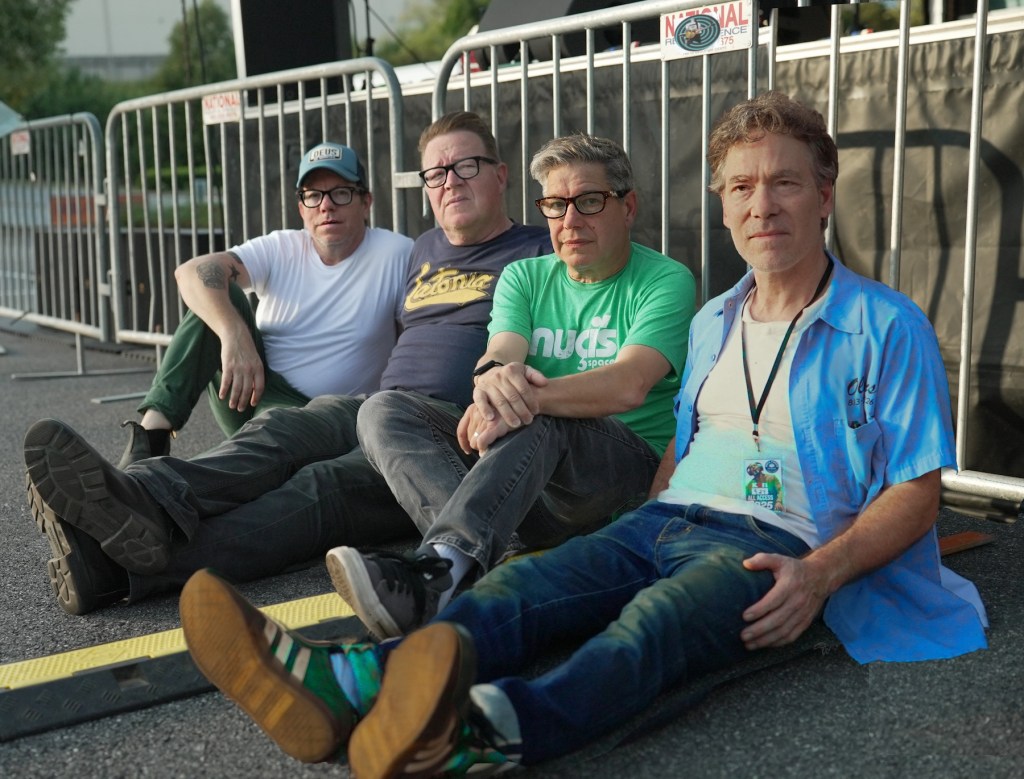
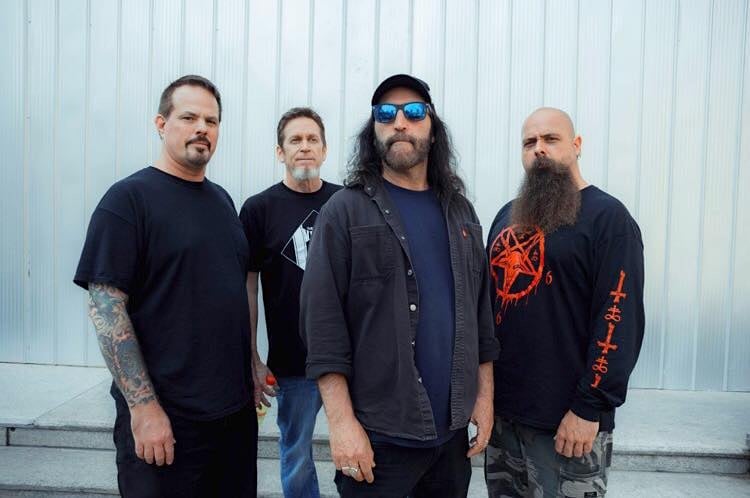
Fresh off a year of renewed energy sparked by Marc Pilvinsky’s documentary Weirdo: The Story of Five Eight, the group released their first new single in over six years, a ramped up number titled “Take Me To the Skate Park.” A successful run at SXSW served as a sharp reminder that Five Eight’s fire still burns with undeniable force.
Now, Five Eight is one of the first 100 bands announced to play SXSW 2026. In the meantime, the group hits the Music Room stage with the force of a band that’s lived through triumph, tragedy, and chaos, only to come out swinging.
Their latest single, “I’m Alone,” arrived on Nov. 7, offering a sharp, emotional snapshot of the songwriting depth that has elevated Five Eight from an underdog to a bonafide Georgia music fixture. With a new album slated to arrive next Spring via hardcore label Static Era, the show offers a chance to catch the band as they embark on a bold new chapter.
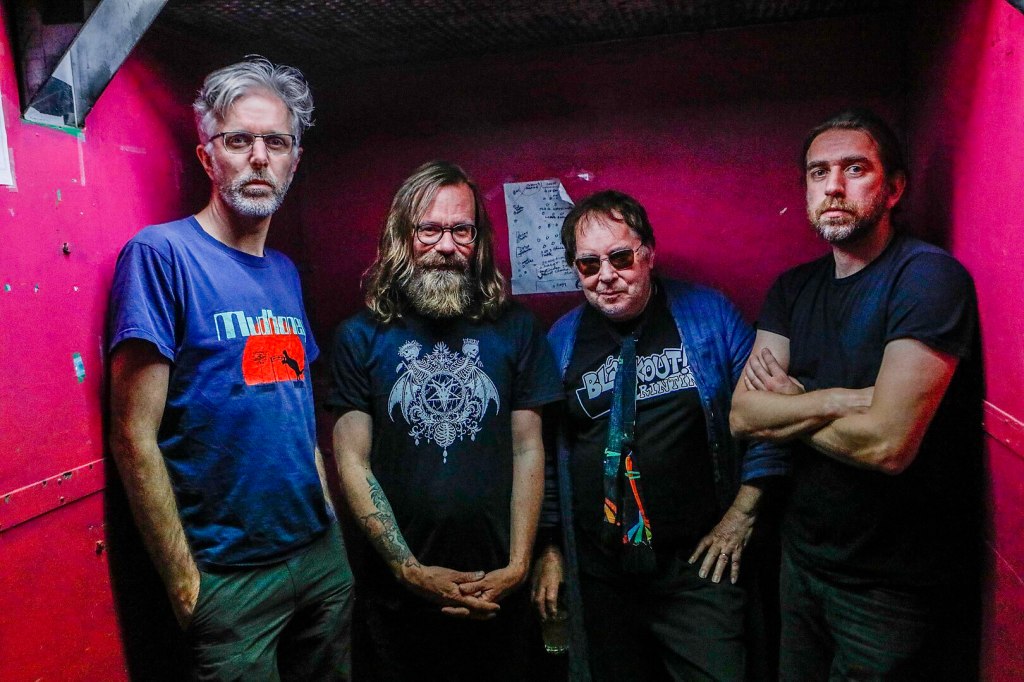
Singer and guitar player Mike Mantione, bass player Dan Horowitz, guitarist Sean Dunn, and drummer Patrick “Trigger” Ferguson share the stage with the Ladies Of… featuring James Hall, whose hybrid of glam, punk, hillbilly boogie, and dark-edged poetry turns every set into a spectacle. Hall’s presence alone brings an electric gravity to the room—equal parts swagger, invocation, and celebration. Together, Five Eight and The Ladies Of… promise a holiday show that trades sentimentality for sweat, noise, and raw, communal release.
In the true spirit of the season, the Music Room will also feature a photo booth. There will also be blind contour drawings by artist Kayti Didriksen, adding a visual counterpoint to the evening’s sonic fireworks.
Before the show at Smith’s, Five Eight’s Mike Mantione and James Hall make a stop at Criminal Records on Thursday, December 4, hosting a listening party for their new holiday tune “Christmas Without You.”
The Criminal Records in store show is free. Music starts at 4 p.m.
For the Smith’s Olde Bar show, doors open at 7 p.m., showtime is 8 p.m. $20 (advance). $30 (day-of show). $48 (VIP pre show meet-and-greet, includes a signed poster).
If you have enjoyed reading this post, please consider donating to RadATL. Venmo to @Chad-Radford-6 or click on the PayPal link below.
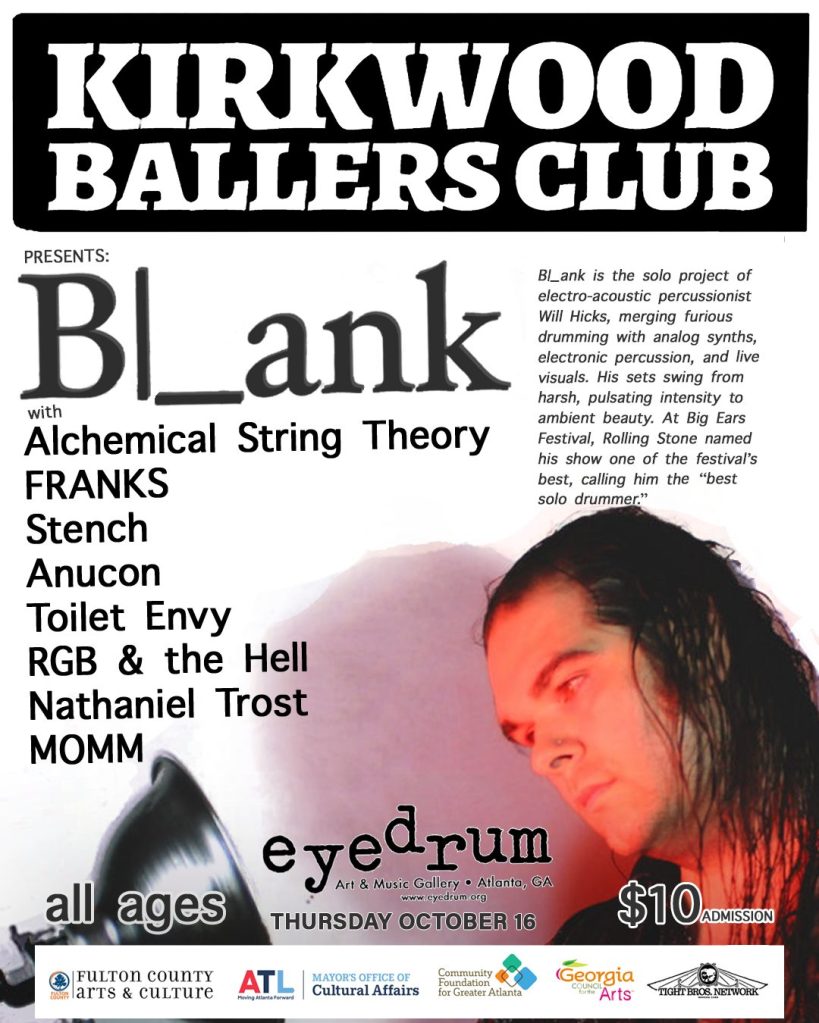
Every third Thursday of the month, Kirkwood Ballers Club takes over Eyedrum with an open forum for experimental, improvisational, and otherwise adventurous musicians and performance artists. It is the long-standing home to Atlanta’s avant-garde, experimental, and DIY musical underground. This month’s KBC takes place on Thursday, October 16. The lineup for the evening features a headlining performance by Bl_ank, the solo project of Portland Oregon’s electro-acoustic percussionist Will Hicks.
Alchemical String Theory, FRANKS atl, Stench, Anucon, Toilet Envy, RGB & the Hell, Nathaniel Trost, and Momm are also on the bill.
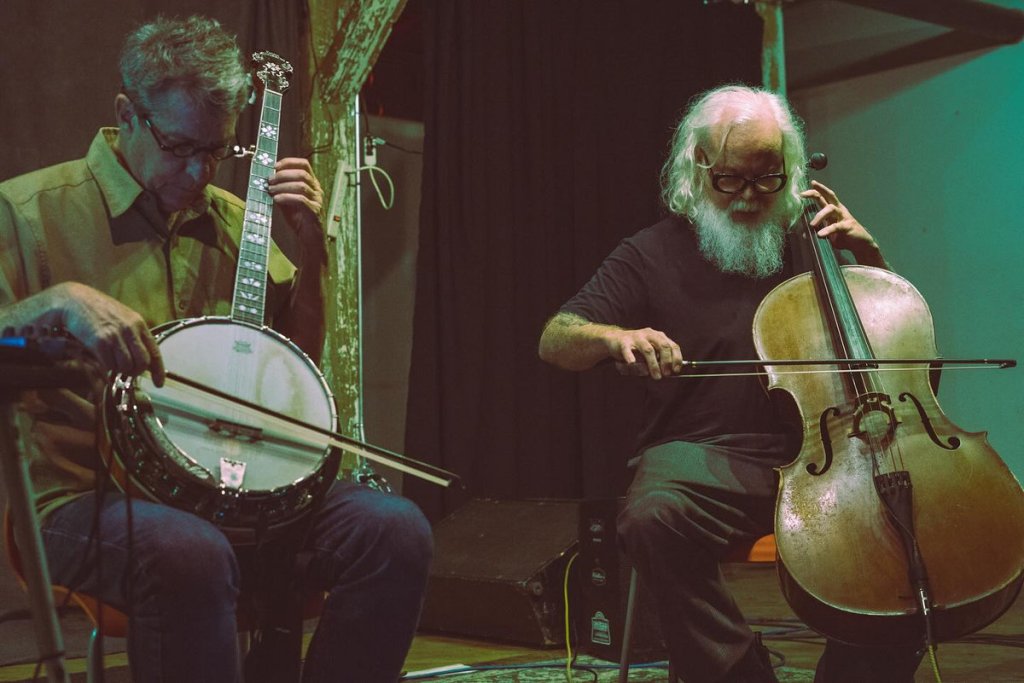
FRANKS atl. Photo by Ben Garden.
FRANKS atl, the two-piece collaboration featuring Frank Schultz (formerly of Duet For Theremin and Lap Steel) and B. Frank Holleran (W8ing4UFOs, ex-Smoke), are releasing a debut album, titled Ode to Lucenay’s Peter. They’re also hosting a Bandcamp release party on Oct. 19. Press play below for an enticing teaser of what they have in store.
Since forming in London in 1980, the Pink Dots have carved out a singular space in the underground—too strange for pop, too melodic for noise, too abstract for goth, and too open-ended to be called industrial music. Led by enigmatic vocalist and founding member Edward Ka-Spel and rounded out by Randall Frazier (synths, samples, and electronics), Erik Drost (guitar), and Joep Hendrikx (live engineering and effects), the LPDs weave together surreal narratives and immersive, cinematic soundscapes that take shape like dispatches from a fever dream.
The group’s catalog spans countless albums, each one a kaleidoscopic swirl of experimental electronics, post-punk texture, avant-garde noise, and darkly poetic meditations on the human condition. On stage, their shows become ritualistic experiences—hypnotic and theatrical, blurring the line between performance and séance.
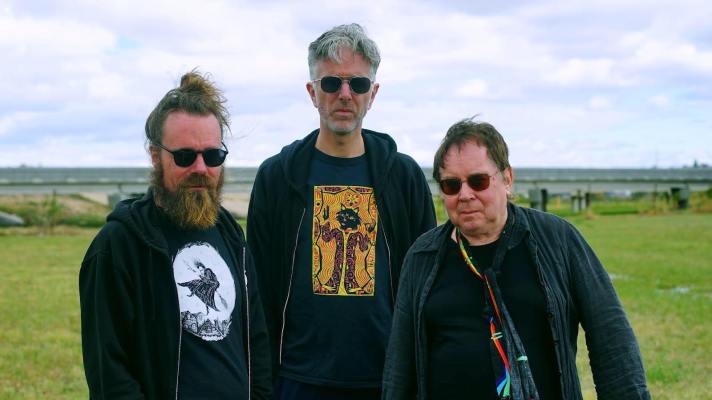
Erik Drost (from left), Randall Frazier, Edward Ka-Spel, and Joep Hendrikx. Photo courtesy the Legendary Pink Dots.
The LPD’s latest album, So Lonely In Heaven (Metropolis Records), finds the group at its most evocative, melancholy, and Orwellian in years, layering haunting synths, spectral melodies, and existential poetry into a deeply human meditation on isolation and transcendence. It’s a reminder that even after 40-plus years, the LPDs are still evolving; still chasing the unknown.
Bologna, Italy-based Orbit Service opens the evening with a set of deep, slow-burning atmospherics and haunted melodies. Featuring Frazier and Drost performing together, the duo builds patient, ethereal songs that hum with existential weight. They are the perfect gateway into the LPDs’ strange and beautiful world. The latest offering, Spirit Guide, leans deeper into cosmic territory, expanding its sound with shimmering drones, meditative textures, and a slow, patient gravity that feels like it’s tuning into another frequency.
For the faithful, this show is a rare chance to step back into the Dots’ orbit. For the uninitiated, it’s an invitation to get lost in one of experimental music’s most enduring and imaginative universes.
The great Brent Hinds—former Mastodon guitar player and mastermind behind such prolific acts as West End Motel (featuring the songwriting talents of Tom Cheshire of the Rent Boy, All Night Drug Prowling Wolves, and TCB), Fiend Without A Face, and Dirty B & the Boys—takes over the Garden Club at Wild Heaven for an evening of Southern fried surf punk, country, and monster movie rock ‘n’ roll. This show brings a veritable sampler of Hinds’ various projects from throughout the years together on one stage for a night of beauty and depravity that’s not for the faint of heart.
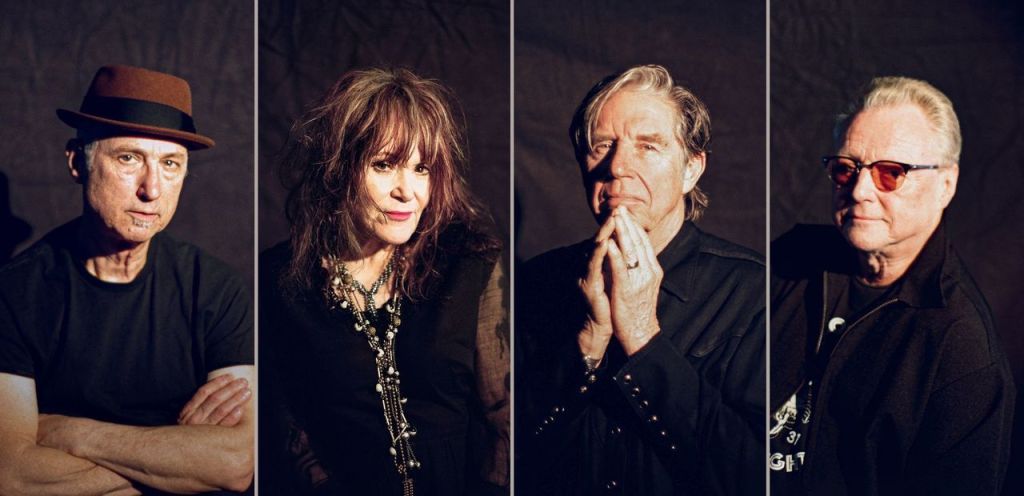
SMOKE & FICTION: From left, DJ Bonebrake, Exene Cervenka, John Doe, and Billy Zoom of the band X. Photo by Gilbert Trejo
X takes the stage at Variety Playhouse this Sunday, October 27, as part of the group’s farewell tour, supporting their latest—and final—album, Smoke & Fiction. It’s the culmination of a long legacy in red-blooded American punk and rock ‘n’ roll, featuring the original lineup of singer Exene Cervenka, singer and bass player John Doe, guitar player Billy Zoom, and drummer DJ Bonebrake. Since forming in the summer of ‘77, X has stood as the cornerstone of Los Angeles’ first-wave punk scene. Now, 47 years later, the group is taking one last bow.
Smoke & Fiction’s June 2024 release arrived with news that the band was hanging it up for good. The album is stacked with themes of finality and reflection woven throughout singles such as “Big Black X,” which nods to their early days as punk upstarts, to other songs such as “Sweet ’til the Bitter End” and “Ruby Church,” which revisit the romantic tensions that have always simmered in X’s greatest hits.
Smoke & Fiction finds X pushing their sound into the beyond and back, with deeper, darker textures, tones, and arrangements.
Zoom’s rock ‘n’ roll twang and raw punk edges, coupled with Bonebrake’s tight rhythms, ground the album, but it’s Doe and Cervenka’s balance of dissonance and harmony—urgent, commanding, and yearning—that brings it all back home. If this really is the end, X is bowing out with the same fire and fierce integrity that made the group a legend in the first place.
The Electric Nature, Magic Tuber Stringband (NC), Mute Sphere, and Magicicada play Magic Lantern in East Point on Thursday, April 11. Majid Araim will be performing a sound installation piece between sets. $15 (suggested donation, no one will be turned away at the door). 8 p.m. 2171 Star Mist Dr. SW Atlanta 30311.
If you have enjoyed reading this post, please consider making a donation to RadATL. Venmo to @Chad-Radford-6 or click on the Paypal link below.
Since 1982, Dirty Rotten Imbeciles (D.R.I.) have circled the globe, playing a break-neck blend of hardcore, punk, and thrash metal crossover forged amid Houston’s skate-punk scene of the Reagan era. The group’s sound culminates with recordings such 1985’s Dealing With It, 1988’s Four Of A Kind, and the 2015’s criminally overlooked But Wait … There’s More! EP. Co-founding members vocalist Kurt Brecht and guitarist Spike Cassidy have remained at the front of the stage, leading an ever-shifting rhythm section. After keeping the band on the road for more than 40 years, D.R.I.’s anti-commercial, anti-authoritarian values are symbolized by the group’s trademark running man logo—an emblem that signifies the whiplash fury the group has commanded for decades. In the pit, the ferocity remains unmatched. This marks the group’s rescheduled 40-year anniversary show.
Photo courtesy Loony!
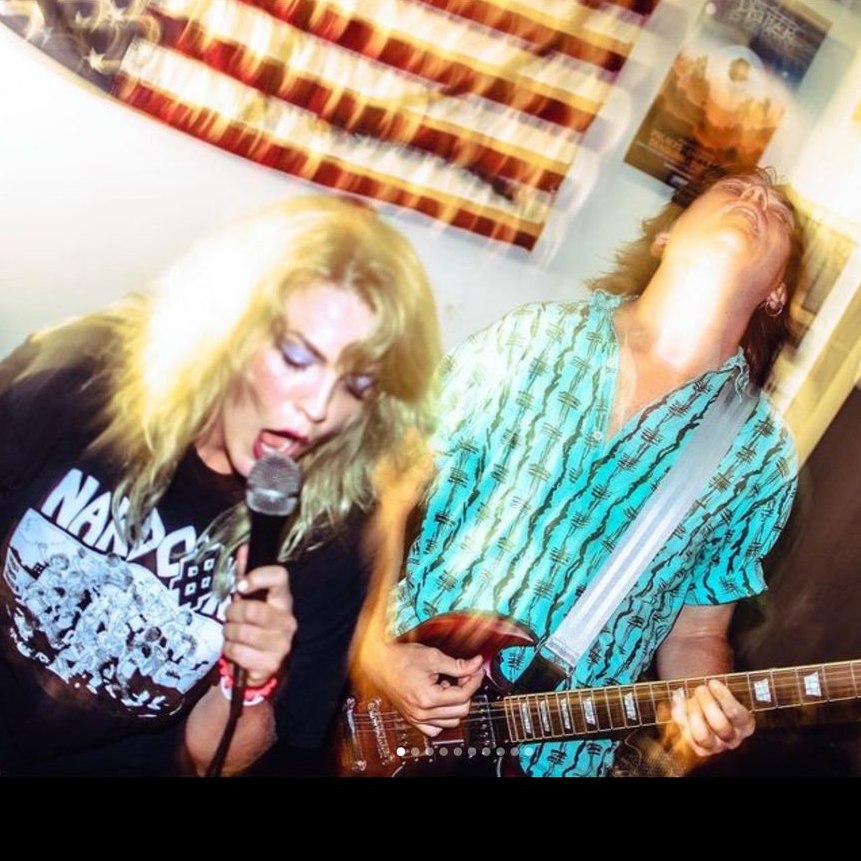
San Antonio’s Metalriser, Atlanta punx Stripper Cult, and hardcore/nardcore skatepunk outfit Loony get the party started.
Atlanta has always provided the quintessentially weird and William Faulkner-esque Southern experience that Russian Circles’ guitar player Mike Sullivan hopes for every time the group passes through town on tour.
“I do and I don’t remember Russian Circles’ first show in Atlanta,” Sullivan says of the Chicago post-metal trio’s initial stops in town, supporting their 2006 debut album, Enter.
“We always played at the Drunken Unicorn back then,”he says. “I remember at one of those early shows that we played, Brent Hinds from Mastodon rolled up pretty early in the evening. He was riding a small BMX bike and he was tripping on mushrooms. That is exactly what you want from Atlanta,” he laughs. “And that was before any of us even knew Brent! He was there to say hi to someone else who happened to be there for the show that night.”
It’s fitting, then, that just over a decade later, Russian Circles’ musical trajectory carried the group from tearing up the stage for a sweat-soaked circle pit at the Drunken Unicorn to performing under the majestic stars of The Fox Theater, opening for Mastodon in 2017.
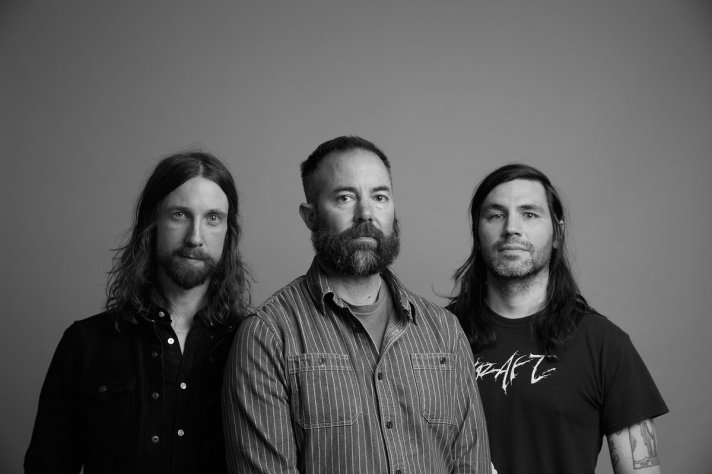
On October 29, Russian Circles return to Atlanta, this time playing a show at Terminal West supporting the group’s eighth and most recent full-length album, Gnosis (Sargent House Records).
Drop a needle into the record’s swirling orange vinyl grooves, and songs with titles such as “Tupilak,” “Conduit,” and the album’s title track weave together a rapturous opening salvo that is as heavy as it is pure.
Each song rises and falls with screaming, oceanic riffs and gut-pummeling rhythms in an ever-growing compositional sophistication that places the group on a tier that’s far beyond the post-metal continuum.
The guitars, drums, and bass swarm and move in ominous motions, as though they were guided by a hidden hand reaching out from somewhere deep within their collective subconscious. But as Sullivan asserts, these songs are among the group’s most meticulously arranged yet.
Throughout the album’s later songs— “Vlastimil,” “Ó Braonáin,” “Betrayal,” and “Bloom”—buzzing textures coalesce around massive and doom-laden imagery, painting a portrait of a society in decay.
The bleak beauty and the darkness that binds each song together eclipses all of Russian Circles’ previous offerings, delivering a record that is as furious as it is inquisitive, conjuring a mysterious aura of spiritual anxiety that takes shape as a singular work of understated impressionism.
The title itself, Gnosis, is the Greek word for knowledge, which often appears in religious texts denoting a deeper understanding of the universe that is arrived at only through direct engagement with the divine.
“And what is the divine?” Sullivan asks while pushing the conversation closer toward the album’s unrequited mystical angst. “What if we got it all wrong?” He asks. “What if we misinterpreted elements of faith and spirituality? What if we misinterpreted the Bible? What if we’re taking away the wrong message?”
In the end, there are no answers waiting to reveal themselves within the album’s monstrous roar and crushing rhythms, only a profound sense of reckoning with the unknown.
“That’s something that’s personal, and it’s different for each person, but it’s all tied to this idea of spiritual knowledge,” Sullivan says.
Russian Circles’ co-founding members, Sullivan and drummer Dave Turncrantz have been friends since growing up together in St. Louis.
According to lore, they’re both lifelong hockey fans, and they took the name for the band from an ice hockey practice drill.
Turncrantz is a former drummer with fellow St. Louisan heavy rockers Riddle of Steel.
Bass player Brian Cook is also from St. Louis. He has performed in These Arms Are Snakes, Botch, and played bass in Sullivan’s previous instrumental math rock outfit Dakota/Dakota. Cook joined Russian Circles in 2009, replacing original bass player Colin DeKuiper.
Over the years, Russian Circles has undergone a tremendous creative evolution that balances the lilting strings and metallic aggression that forms the backdrop for 2011’s album, Empros. For 2013’s album Memorial, the group enlisted the voice of gothic-folk vocalist and songwriter Chelsea Wolfe, who expands the group’s dynamic with her voice on the album’s self-titled closing track.
Written and recorded during the 2020 COVID-19 pandemic, the songs on Gnosis turn inward, capturing a singularly troubled time for the group, and for the rest of the world.
Quarantine orders kept each of the group’s members behind closed doors, creating an environment in which no one was playing music or writing together at all: No practicing, no jamming, no happy accidents, and no opportunity for mutual organic growth. So rather than building songs out of ideas and fragments that were captured live and in the moment, fully formed demos were written and recorded in Sullivan, Cook, and Turncrantz’s respective isolation. Later, they shared their songs with each other and paired the material down to create a stylistically physical and visceral release.
“Gnosis was 100-percent written in our own worlds,” Sullivan says. “It was like, you construct a song on a blank grid, and parts are added, which is a way more immersive experience, as far as presenting a full arrangement: Here are additional guitars. Here’s how it will transition to the next part. It’s a completely different and more controlled approach for us. Before, it was kind of like, we would get together and just hope that something good would happen, which is kind of terrifying,” he laughs. “The songs on our first album, Enter, were just me and Dave jamming together in a room. Now, whenever we get together, we know what we’re working on. There are plenty of ideas to choose from. And if we don’t wanna work on one, there are even other ideas we can start hammering away at yet.”
The bass and drums for Gnosis were tracked at Electrical Audio in Chicago by Kurt Ballou, who also recorded the guitar and synth parts at God City Studio in Salem, Massachusetts. Ballou also engineered and mixed the album at God City.
Gnosis is the third record that Russian Circles has made with Ballou, following 2016’s Guidance and 2019’s Blood Year. It’s also the second album for which the group divided its time between Electrical Audio and God City.
“God’s City is great because we go there and Kurt has the home field advantage,” Sullivan says. “There are so many pedals, and so many different toys to play with, and different amps. As a guitar player, I’ll never complain about heading over to God City. It makes the record way more diverse sounding, just knowing all of the gizmos that he has to play with there. Kurt is also really familiar with Electrical Audio, and he just knows what to do instinctively, and he knows how to manipulate all the rack gear and everything,” Sullivan adds. “He has preferences for mics and compressors, and a lot of it goes off of Dave’s performances and tuning and Kurt excelling at what he does. What those two came up with is the best drum tone we could have captured.”
One of the more compelling moments of Gnosis, takes shape minutes into the album’s title track. The guitar kicks in on a delayed stereo effect, revealing wholly new dynamics and greater depths in the album’s sonic dimensions. It’s an effect that’s mirrored in the album’s closing number, “Bloom,” and was also used in the song “Campaign,” which opens Russian Circles’ 2008 album, Station (Suicide Squeeze).
“It’s interesting when you start utilizing stereo manipulation,” Sullivan says. “It opens up the field just a bit more. Just now, we were jamming during practice, and Dave had in his ear monitors so that he could hear himself playing. All of the drums were in mono whereas the guitar was stereo panned. Ideally, you wouldn’t want mono drums by any means, but having it there opened up the guitars. When some things are in stereo and some things are mono, it makes the mix deeper. The instruments hit your ear differently, and in a really exciting way.”
Back in 2008, when the group recorded the album Station, their engineer at the time, Matt Bayles, as Sullivan recalls, said ‘Let’s utilize some stereo action here,’ which is how the technique became a part of the group’s repertoire.
“That was the first time we did that, I was like, ‘Wow, this is like a little bit of stereo magic. This is awesome,” Sullivan says. “Now, we’re starting to consider how that technique is something we should be doing live, making the most of it, and not just reserving it for records.”
Part of Russian Circles appeal lies in its style and how the group adapts its brand of instrumental dirges to a more traditional songwriting style, as they do with “Vlastimil,” where the group expands upon its already colossal sound, while reinventing its own musical techniques.
The chemistry between the band’s members and Ballou is clearly on display throughout the album. His approach to production and engineering dovetails with the tension that builds throughout Gnosis’ serrated and gargantuan epics.
As such, the nature of their working relationship positions Ballou as something of a fourth member of the group. His presence has become key to Russian Circles’ creative evolution and success.
“If you find people that you have chemistry with, that’s a huge gift,” Sullivan says. “Do not throw that away.”
Together, their work has yielded a late body of work that is greater than the sum of Russian Circles’ parts, even though those parts are quite impressive, summoning a sense of the divine on their own terms as they illustrate the complexity of the group’s songs and history.
This story originally appeared in the October print issue of Record Plug Magazine.
If you have enjoyed reading this post, please consider making a donation to RadATL.
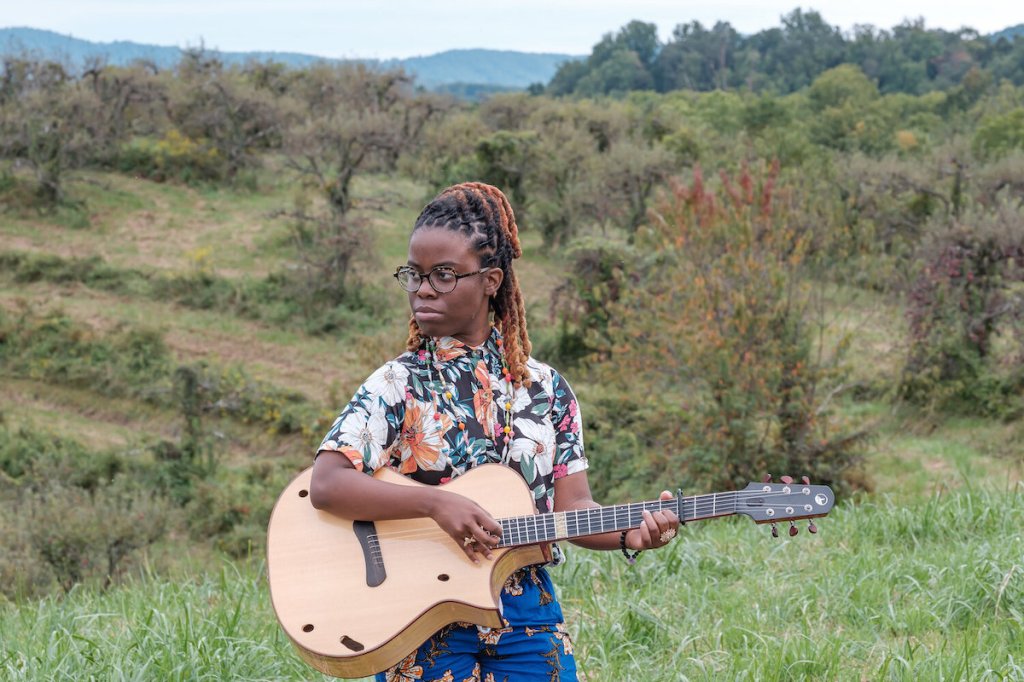
Woodbridge, Virginia native Yasmin Williams is a true innovator of acoustic music.
With her 2021 album, Urban Driftwood (Spinster), Williams fuses elements of traditional country and blues fingerpicking styles with jazz, hip-hop, and indie rock textures to weave a lush, sweet ambience. She plays the guitar almost like it’s a piano while tapping her feet on the floor to create percussive rhythms. Songs bearing titles such as “Through The Woods,” “Juvenescence,” and “Sundshowers” create a spacious atmosphere that’s filled with baroque melodies, giving nods to everyone from John Fahey to Alice Coltrane, while settling into a singularly modern and ethereal sound.




 Rad/ATL