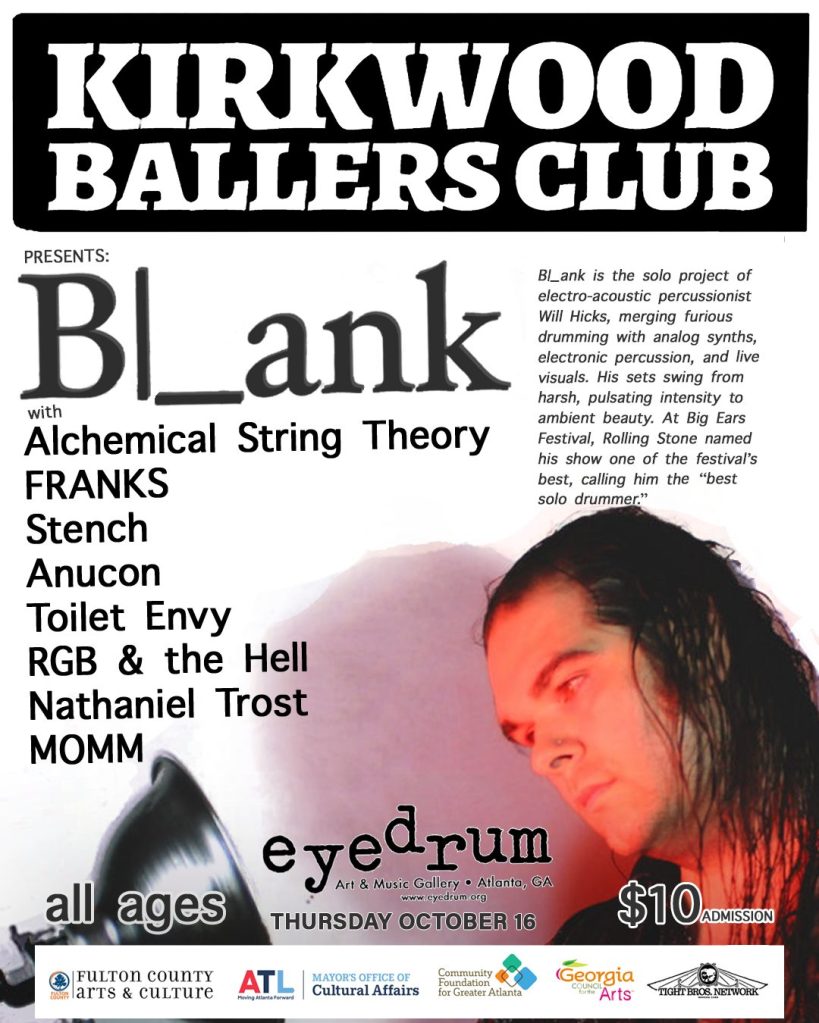
Every third Thursday of the month, Kirkwood Ballers Club takes over Eyedrum with an open forum for experimental, improvisational, and otherwise adventurous musicians and performance artists. It is the long-standing home to Atlanta’s avant-garde, experimental, and DIY musical underground. This month’s KBC takes place on Thursday, October 16. The lineup for the evening features a headlining performance by Bl_ank, the solo project of Portland Oregon’s electro-acoustic percussionist Will Hicks.
Alchemical String Theory, FRANKS atl, Stench, Anucon, Toilet Envy, RGB & the Hell, Nathaniel Trost, and Momm are also on the bill.
FRANKS atl. Photo by Ben Garden.
FRANKS atl, the two-piece collaboration featuring Frank Schultz (formerly of Duet For Theremin and Lap Steel) and B. Frank Holleran (W8ing4UFOs, ex-Smoke), are releasing a debut album, titled Ode to Lucenay’s Peter. They’re also hosting a Bandcamp release party on Oct. 19. Press play below for an enticing teaser of what they have in store.
After Words at Excelsior Mill (pre-Masquerade). Photo by Sara Epstein.
Between July of 1987 and December of 1989, After Words played a crucial role in pushing Atlanta’s post hardcore scene into new musical terrain. Seminal hardcore band Neon Christ had called it quits a year earlier. In their wake, a new generation of musicians stepped up to carry their influence forward.
In the late ‘80s, After Words co-founding guitar player Brian Nejedly began booking shows while he was still in high school. “When the Metroplex shut down, that was the only all ages venue in town, so I just started looking for places that I could rent out to put on shows,” Nejedly says.
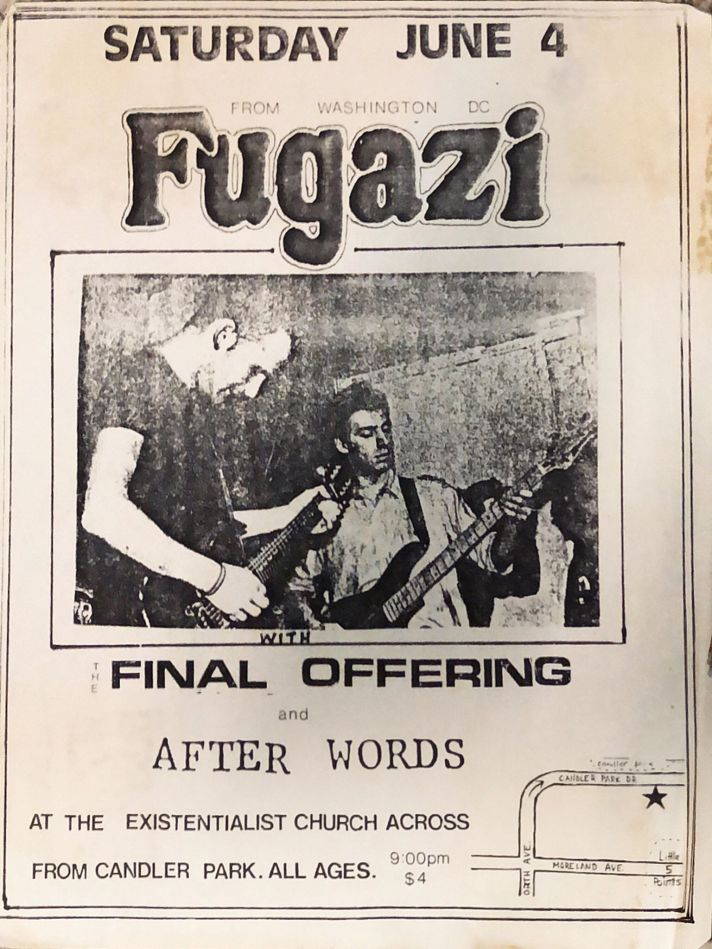
He booked Fugazi’s first Atlanta show at the First Existentialist Congregation in Candler Park. He booked Ignition, Soul Side, 7 Seconds and dozens of other acts. “Once I started booking shows, I realized that a lot of these bands had a list of people and places to call for shows in each town, and I was on that list,” Nejedly says. “For a while, I was the only guy in Atlanta on that list.”
Along the way, Nejedly sent After Words demo tapes out to pretty much every label that was on his radar. “I sent a demo to Cruz Records because we loved the band All,” he says. “We sent tapes to everyone, and Amanda MacKaye at Sammich Records wrote back.”
Amanda, sister of Ian (Dischord Records, Minor Threat, Fugazi, Coriky) and Alec (Ignition, Faith, and Hammered Hulls) MacKaye ran Sammich with Soul Side’s Eli Janney (Girls Against Boys). She offered to release the demo tape, making After Words the only band from outside of D.C. at the time to receive distribution through Dischord.
The label’s approval validated Atlanta as a place where post-hardcore ideas could thrive, and it placed After Words on the same label as Soul Side, Shudder to Think, and Swiz.
Drop a needle on After Words’ record and Nejedly’s jagged guitar carries weight over vocalist Noel Ivey’s cathartic voice, and propulsive rhythms laid down by bass player Craig McQuiston and drummer Kevin Coley. Emotional urgency guides songs such as “Looking Back,” “Ghost Dance,” and “As I See It,” all bearing the intensity of an early emo sound. The songs were never about nihilism or aggression. They were about wrestling with meaning, memory, and self-understanding.
In February 2024, Nejedly revived After Words for a one-off show 35 years after the album’s release. Ivey, McQuiston, and Coley are no longer living in the area. So Nejedly formed a new lineup featuring Geoey Cook (Fiddlehead) on vocals and guitar, James Joyce (Cheifs, Car Vs. Driver, Blood Circuits) on drums, and Justin Gray (3D5SPD) on bass to bring renewed energy to the songs.
In 2024, they locked in on an eight-song setlist—five from the original After Words LP, along with two other older numbers.
The two non-LP songs: “Things They Never Taught You” first appeared on The View: An Atlanta Compilation: 1984-1990, a cassette-only release that captured snapshots of the city’s underground post-hardcore and emo scene. Another song, titled “Without Answers” was documented during a 1989 Live at WREK session.
Earlier this year, the group recorded six songs with Tom Tapley at West End Sound—“Looking Back,” “As I See It,” “Without Answers,” “Third Party,” “Tell Me,” and “Ghost Dance.”
“We’re not doing anything different with the songs,” Nejedly says. “Pretty much keeping it true to the original with only minor changes. ‘Ghost Dance’ will always be my favorite,” he adds. “I think it’s the best song I’ve written and Noel’s lyrics were really good.”
Cook’s voice adds new dimensions to each song, adding depth and interplay. Joyce’s drumming locks into Gray’s bass lines with precision, adding heft, pushing each arrangement even further.
“We recorded it as a live studio session just for ourselves to document us getting together and playing these songs, but it came out so well Echodelick decided to release it,” Joyce says.
A release date for the record remains TBD.
What defined After Words in the beginning, and what continues to define the group now, is its place on the sonic landscape as early hardcore’s influence became diffuse and less severe. After Words proved that Atlanta was producing its own singular voices, capable of standing shoulder to shoulder with their peers in D.C., New York, Chicago, and elsewhere.
For Nejedly, the new recordings are about carving out relevance in the present tense, and honoring what the group built decades ago while refusing to let it calcify. For Cook, Joyce, and Gray, it’s about expanding on a framework that still has room to grow.
“After Words pivoted bands from Atlanta into a different direction in the early ‘90s,” says Joyce. “If you think about Fiddlehead or Freemasonry, Scout, or Car Vs. Driver, or the next wave of bands that followed them, they all changed course because of After Words.”
Moving forward, the group will play sporadic shows, but for now they aren’t writing any new material.
After Words. Photo by Brad Sigal.
If the late ’80s Atlanta scene was about carving out new space, After Words now stands as a reminder that the past can still fuel the present. The songs remain restless, powerful, and full of questions. That sense of questioning remains as vital now as it did when After Words record arrived in 1989.
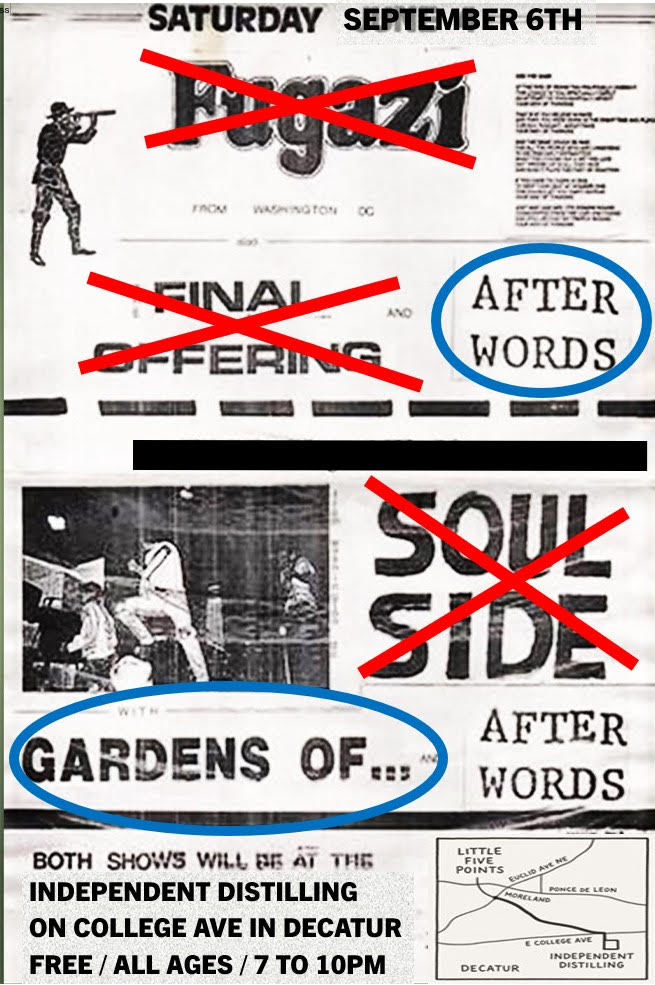
After Words and Gardens Of… play Independent Distilling Company on Sat., Sept. 6.Free. All Ages. 7-10 p.m. 547 E College Ave, Decatur.
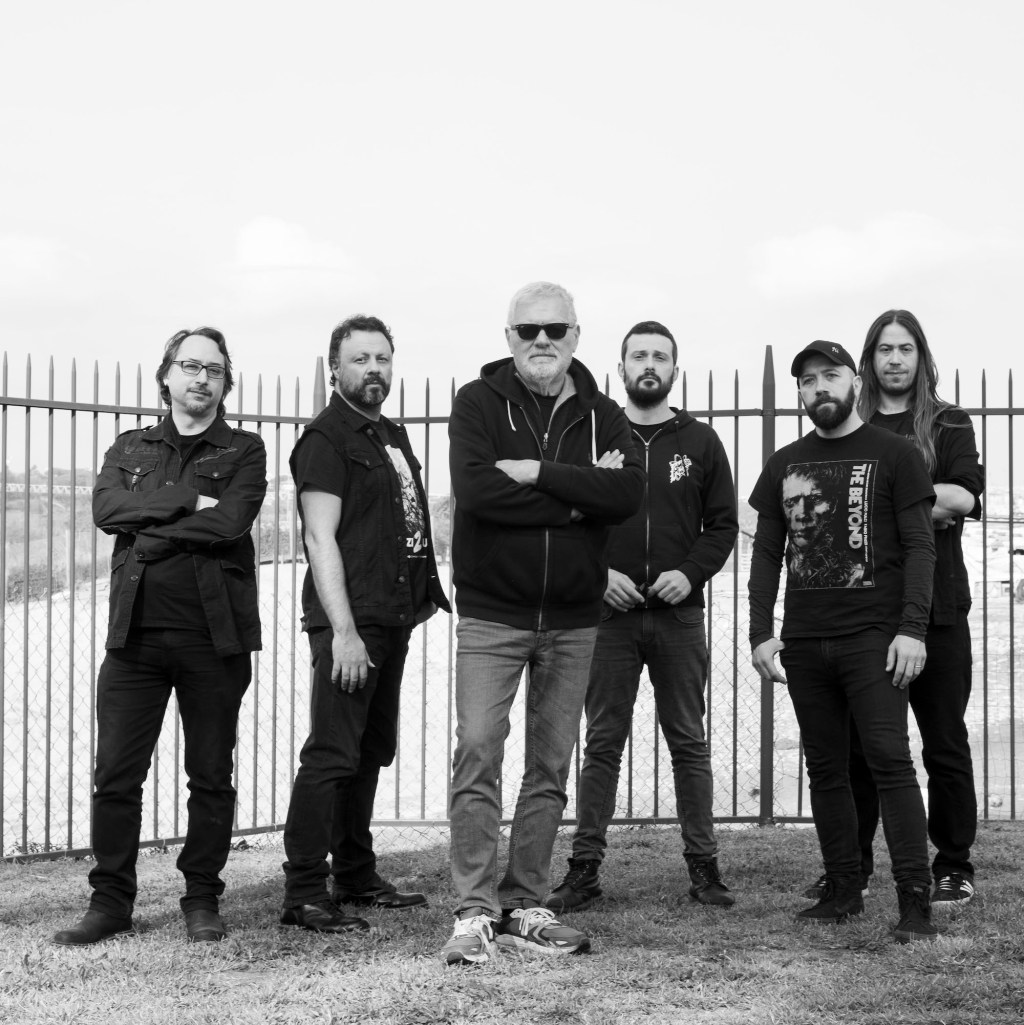
Atlanta’s mid-’80s hardcore staple Neon Christ played its final show in February of 1986. One day later, drummer Jimmy Demer, bass player Danny Lankford, and vocalist Randy DuTeau reconvened as Gardens Of… It was a new and ineffable post-punk outfit that thrived in the outer limits of punk and metal’s diffuse influence on underground and popular culture—well before the term “alternative” entered the canon.
“We never called it that,” Demer says. “We listened to a lot of Stooges and Black Sabbath at the time.”
Demer moved to guitar while Lankford remained on bass. Drummers and vocalists came and went. “We had lots of lineup changes and were never that great, but we played with the intensity of people who were sure they were great,” Demer adds.
Gardens Of… recorded one demo tape, but nothing was properly released. The group called it quits in ’89. Still, their presence on the local scene resonated—channeling punk and hardcore’s scorched earth ethos inward, transforming a confrontational sound into equal parts menace, groove, and rock ‘n’ roll. Their jagged, hypnotic sound peeled away the last layers of hardcore orthodoxy.
Now, 36 years later, Gardens Of… is back with a new lineup, new songs, and a more refined disposition.
During their original run, they shared stages with the Rollins Band, Social Distortion, Die Kreuzen, Bl’ast, Suicidal Tendencies, and like minded locals including Sabotortoise (who later became Melts), funk punk band Follow For Now, Mr. Crowes Garden (early Black Crowes), and No Walls featuring their former Neon Christ bandmate William Duvall, later of Alice In Chains. They also played with another DuVall band called the Final Offering, which featured Mike Dean of Corrosion of Conformity.
Gardens Of… also opened for Washington D.C. stalwarts Fugazi’s first Atlanta show at the First Existentialist Congregation in Candler Park, on June 4, 1988, along with After Words. After Words’ self-titled LP was released by Amanda MacKaye and Eli Janney’s Sammich Records in 1989. At the time, After Words were the only band from outside of Washington D.C. to receive distribution through Dischord Records.
“There were a couple dozen people there,” Demer says. “We had no idea what to expect from Fugazi. It was before they had released any music, and of course our minds were blown.”
Fast forward to the COVID era, and Demer was at home writing songs inspired by his early heroes. “It was time to get Gardens Of… together again to play this punk-metal stuff,” Demer says.
Lankford was in, and Brent Addison returned to drums. “He was the best of the four-five drummers we had back in the day,” Demer says. “We brazenly poached him from After Words.”
Vocalist Emily Lawson joined under unusual circumstances. At a karaoke party, Lankford and his wife Shelley heard her singing songs by Nine Inch Nails, Blondie, Prince, Beastie Boys, M.I.A., and the likes. “She sounded good and projected confidence,” Lankford says. “I invited her to sing in my basement—more informal, maybe less intimidating.”
Lawson had never played in a band, but revealed a powerhouse voice in new Gardens Of… numbers such as “Do It For the Kids,” featuring the lyrics: “Do it for believers squatting in abandoned factories / Do it for the cold case / Do it for its own majesty / For DRI and MDC / Do it for the ceremony / Do it for the summer sun / Do it, do it, do it for free.”
It’s a hard reset for a veteran act from a bygone era with nothing to prove. “We’re all better players now,” Demer says. “I had time during the pandemic to broaden my abilities as a guitar player and writer. The songs don’t sound like Dio or Black Flag, but they stand on their own nevertheless.”
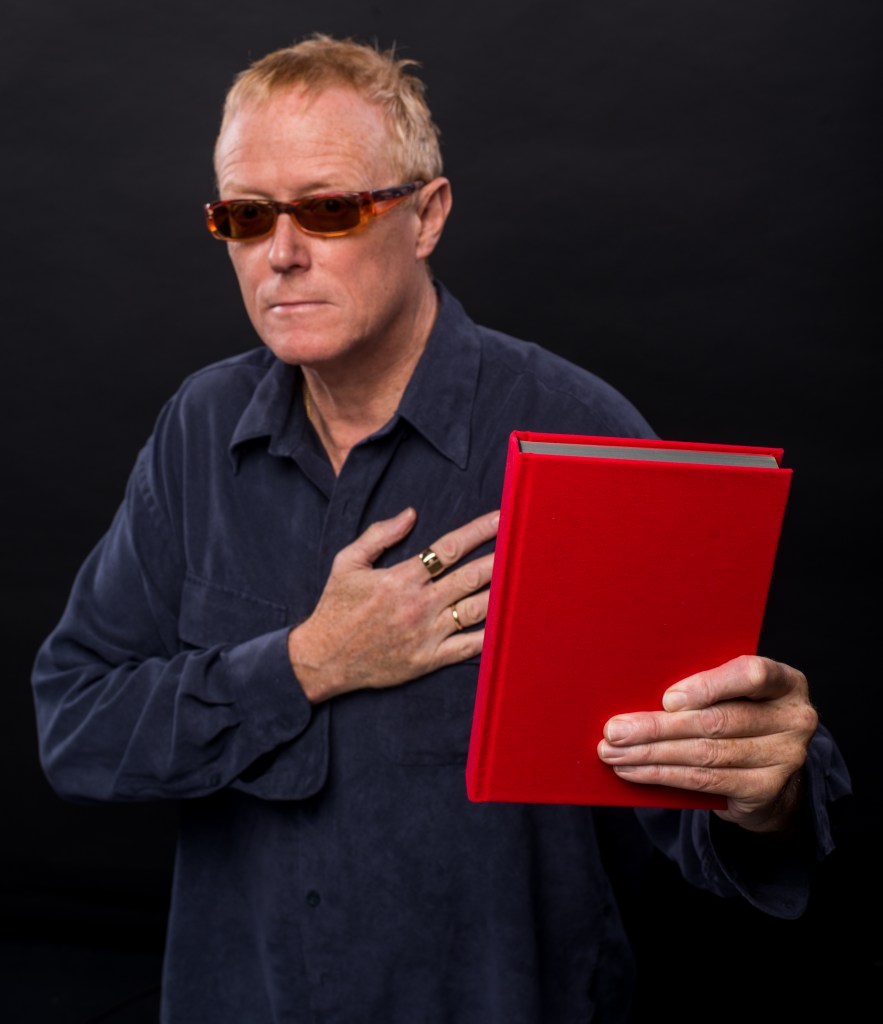
David J—co-founder of Bauhaus and Love and Rockets—returns to Avondale Estates for a solo appearance supporting his new poetry collection, titled Rhapsody, Threnody, and Prayer, while playing music from his elegiac new LP, The Mother Tree.
It’s a seated, BYOB affair taking place in a small studio setting, that finds the legendary bass player marking a new and vulnerable chapter in his career. Both David J’s new book and album are tributes to his late mother, Joan Nancy Haskins, each one reflecting on decades of introspection, artistry, and grief processed through the lenses of music and verse. Over five atmospheric tracks, The Mother Tree conjures soundscapes for his poetry to drift through—at once dramatic and meditative, full of memory and emotional ballast.
Mike Lynn (left), Lisa King, and Jeff Calder. Photo courtesy The Hot Place
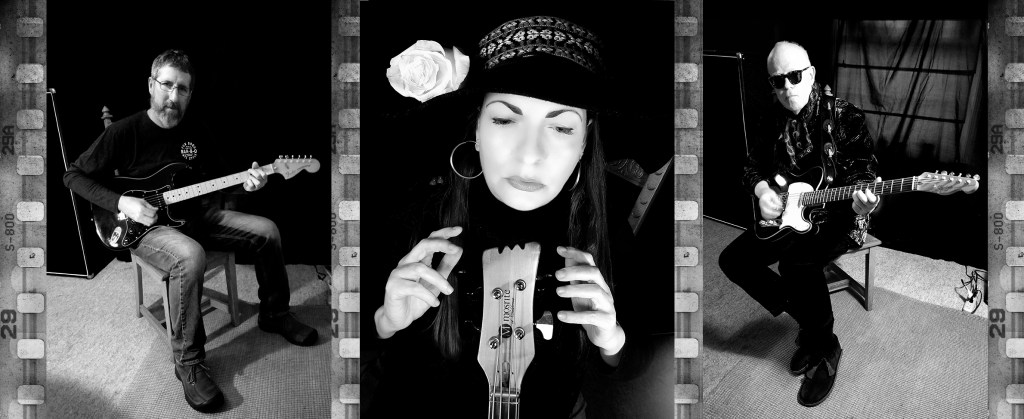
The Hot Place opens the show. The long-running psychedelic darkwave group led by vocalist and bass player Lisa King and Swimming Pool Q’s guitarist Jeff Calder. Rounded out by Mike Lynn (Betty’s Not a Vitamin), the trio will offer stripped-down interpretations of songs from their 2023 self-titled album. Expect acoustic arrangements that lean into the band’s more ethereal inflections, with King also sharing selections from her own poetry collection Dark Queens and Their Quarry.
David J
The connection between David J and the Hot Place runs deep. The two have toured together playing living room gigs throughout the Southeast, and their creative paths have intersected on multiple projects over the years. This performance promises to continue that synergy in a setting designed for careful listening and thoughtful reflection.
Advance tickets are $50, and are required. There will be no tickets sold at the door, and seating is limited. Doors open at 7 p.m. All-ages are welcomed with accompaniment. Respect the neighbors and don’t park in the adjacent driveway.
If you have enjoyed reading this post, please consider donating to RadATL. Venmo to @Chad-Radford-6 or click on the PayPal link below.
There is quiet power that comes from embracing the subtle nuances, the unheard dimensions of sound that arise when crafting analog textures and drones that fall in the gray areas between musical improvisation and composition. Kelsey Wilson, Alexander, and Hot Trash will dive headlong into this kind of delicate intensity at Railroad Earth on Thursday, May 29.
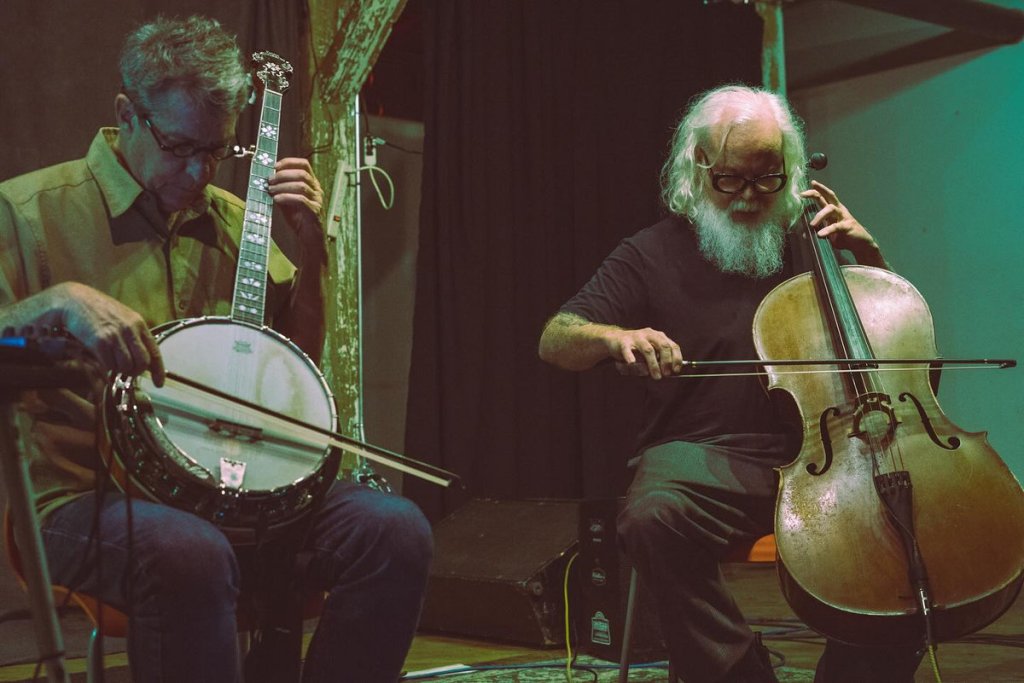
Hot Trash, finds longtime friends and collaborators Bill Taft and Brian Halloran of W8ing4UFOs, pushing further into realms of abstraction. Using heavy effects to draw out the natural tones of cello and guitar, the duo lets the ghosts of Smoke and Hubcap City echo through a loose and highly personal framework that allows for breath and spontaneous combustion. Some songs have lyrics, some do not.
Alexander. Photo courtesy David Shapiro.
Alexander is the stage name used by New Haven, Connecticut guitar player David Shapiro—an understated yet technically dazzling presence whose work bridges the line between American Primitive guitar and a broader, more introspective drone-folk sensibility. Shapiro’s fingerstyle technique is steeped in the traditions of John Fahey and Robbie Basho, yet his voice is his own—attuned to the spectral edges of memory and movement. Shapiro’s performances unfold like meditations with gravity and grace, each note a stone dropped in still water.
Kelsey Wilson
Bringing the evening to a close, Kelsey Wilson crafts immersive, slow-burning soundscapes built from cassette loops, field recordings, and improvisation. Drawing a throughline from William Basinski’s decaying ambiance to the lo-fi texture worship of early Belong and Concern, Wilson’s set promises to be thick with atmosphere—disintegrating, reassembling, and hovering just out of reach.
$10. Thurs., May 29. Music starts at 8 p.m. Railroad Earth, 1467 Old Oxford Rd. N.E.
If you have enjoyed reading this post, please consider donating to RadATL. Venmo to @Chad-Radford-6 or click on the PayPal link below.
Nicholas and Peter Furgiuele are men of few words. For 23 years the closely-knit Atlanta-born brothers and songwriters have let their music do the talking for them. They first recorded together under the name A Fir-Ju Well in 2002. Years later, in 2007, they rebranded as Gringo Star and have carried on ever since, navigating shifting cultural tides, changing musical trends, and seemingly endless lineup shuffles with the kind of determination that comes from shared musical instincts, experiences, and D.N.A.—call it brotherly love.
Gringo Star’s latest album, Sweethearts, trades indie-rock grit for a 1950’s pop shimmer, weaving together soft-focus textures that imbue their signature blend of garage rock and psychedelia with a new and introspective depth. The album’s first two singles, “Blood Moon” and “I Sleep to Dream,” highlight a musical evolution in progress, each one floating in reverb, harmonies, and instantly familiar melodies wrapped around love stories. The songs shapeshift with dreamlike grace, expanding upon elements of both nostalgia and innovation, carrying the band into new terrain.
“We didn’t set out to make a record with any kind of underlying theme, but all the songs told these love stories, and the sound evolved as we went along,” says singer and guitar player Nicholas Furgiuele. “There is an underlying theme to it all, but I wouldn’t know how to explain it,” he goes on to say while offering that if anyone does hear a coherent concept at work throughout the album, it’s something that wrote itself.
“I have always been into the idea that music is open to interpretation, and what it means to me might mean something completely different to anyone else who’s hearing it and putting it all together in their head,” he adds.
Sweethearts is Gringo Star’s eighth full-length album, and their first with the Grand Rapids-based dizzybird Records. It’s also their second post-pandemic offering, recorded between 2023 and 2024, expanding upon the murky sound and vision of 2023’s On And One And Gone. Its songs take shape as surreal nods to simpler times in American life, channeling equal parts dreamy reverie and swirling self-reflection, filtered through a lens of vintage melancholy.
“We wanted to make a record that felt good, you know? Something that felt like remembering love,” Furgiuele says. “But at the same time, there’s a sadness in that memory. It’s not all sunny.”
Familial tendencies are also behind Nick and Peter’s penchant for a 1950s sound as well. From the 1940s-1975, their maternal grandfather, Ed “Dr. Jive” Mendel, was a DJ for WGBA-AM in Columbus, GA. He was also a chitlin’ circuit promoter, and record label owner who earned a couple of gold records for a duo he managed, Peggy Scott & Jo Jo Benson. Sam Cooke, Soul Stirrers, Otis Redding, James Brown, Martha and the Vandellas, the Shirelles, Little Stevie wonder, and Jackie Wilson were also among his associates.
“He died before my parents got together so we never knew him,” Nick says. “But my grandma’s photo albums were all filled with pictures of them with James Brown, Jackie Wilson, being around all of this music and all of these images of our grandparents was for sure an influence on what we do with Gringo Star.”
But an aura of peaceful optimism is the album’s guiding light. “Blood Moon” takes shape as a waltzing lullaby where layered vocal harmonies and languid guitars remain suspended in sensual ether.
One song, “Some Things Don’t Change,” was originally written for Nick and Peter’s first band, the King Street Blues Band, circa 1995 when they were in 9th and 7th grades respectively, while living for several years in Boone, N.C.
The band was named after downtown Boone’s main thoroughfare. “Some Things Don’t Change” was originally penned by their bandmate John Fulkerson, but it had never been properly recorded. For Sweethearts, Nick and Peter took what they remembered of the song, retooled it and wrote some new lyrics here and there.
“I kind of don’t remember what the original song sounded like, and it never really had any kind of arrangements,” Nick says.
The idea to revisit the song came when Nick realized he was unconsciously noodling the bass lines between other songs when the group was on stage. “I don’t know why it got stuck in my head, but it did, and so we gave it a whole new treatment—a whole new life.”
“Some Things Don’t Change,” as it appears on Sweethearts, is now one of the more sophisticated numbers that takes shape amid the tracklist. Still, the album remains deceptively simple, unraveling to reveal miniature worlds thriving inside lush turns of phrases, baroque instrumentation, and emotionally intense shading.
Gringo Star. Photo by Francis Furgiuele.
Since recording Gringo Star’s 2008 debut album, All Y’all, produced by Ben H. Allen III (Animal Collective, Deerhunter, Gnarls Barkley), the group’s body of work has existed outside of easy classification. But they have always been interested in stirring hot-blooded emotional meditation into their work. Nick, working alongside his brother Peter on bass, guitar player and vocalist Josh Longino, and drummer Mario Colangelo the group has carved out a one-of-a-kind cosmic rock sound. Surf-inflected riffs and distant rhythms in the instrumental song “Girl,” and a traipsing cover of Sam the Sham and the Pharaohs’ 1966 hit “Li’l Red Riding Hood” underscore the album’s surreal, dream-like essence.
On stage, instruments get swapped. Roles shift. There’s an elastic energy to the way the group performs—egalitarian and impulsive—and this live dynamic carries over into Sweethearts, careening movements from the janggling exuberance of “Count the Ways” to the wall-of-sound that binds “A Lonely One.” Each number offers a distinct postcard from a dream-world version of the past. A sense of longing underpins the whole affair—an ache for connection in a time when disconnection is the norm.
“In a world where division has become a rallying cry, we wanted to make something that reminds people of what connects us,” Peter says. “We wanted to get back to that raw emotion—love, heartbreak, joy, sadness. All of it.”
It’s easy to forget, in the churn of modern music, how rare it is for a band to last this long, all the while continuing to evolve. Gringo Star is one of those rare groups that has never stopped pushing forward, even when the rest of the world shut down, and even when doing so meant carving their own path outside of whatever music scene was in vogue at the time.
They’ve toured relentlessly over the years, sharing stages with the Zombies, Cat Power, Weezer guitarist Brian Bell’s band the Relationship, Best Coast, and Shannon and the Clams. Their sound has zigzagged across records like a living document of who they were at a given moment.
But what is, perhaps, most remarkable is the way the band has retained its identity while allowing each record to bloom in its own way, bringing their songs to life, and turning raw ideas into something that is quite cinematic.
Sweethearts sits comfortably out of time, reverent of the past but not beholden to it. The songs invite listeners to slow down, and to feel things deeply.
Nick and Peter may not be chasing any zeitgeist, but they are staying true to a vision that’s lasted nearly three decades without growing stale. With Sweethearts, they’ve added a rich new chapter to an already impressive catalog—one that lingers long after the needle lifts. And maybe that’s the real trick to Gringo Star’s longevity. The group doesn’t just survive. It resonates beyond words.
If you have enjoyed reading this post, please consider donating to RadATL. Venmo to @Chad-Radford-6 or click on the PayPal link below.
A version of this story originally appeared in the May 2025 issue of Record Plug Magazine.
On Saturday, May 17, Italian composer Fabio Frizzi brings his Zombie: Composer’s Cut live score to The Garden Club at Wild Heaven West End—a rare and visceral encounter with the music of one of horror cinema’s most revered partnerships.
Known for his haunting melodies and baroque-tinged arrangements, Frizzi’s work with director Lucio Fulci defined the aesthetic of Italian giallo films throughout the late ’70s and ’80s, most famously in The Beyond, City of the Living Dead, and Zombie.
This performance pairs Fulci’s 1979 film—a grim, gore-soaked masterpiece of undead terror—with a live rendition of Frizzi’s reimagined score. Originally composed with collaborators Franco Bixio and Vince Tempera, Zombie’s music blends prog, synth, and eerie atmospherics into something that feels both grandiose and uncomfortably intimate. With the Composer’s Cut, Frizzi revisits and reworks the material, building a dynamic new soundtrack performed live by his band.
Frizzi’s legacy spans decades of cinema and television, but it’s his work with Fulci that cemented his cult status. The Frizzi 2 Fulci project has taken his soundtracks to stages around the world. Now in its third iteration, the show brings Zombie to life in ways that are both faithful and revelatory.
Presented with a 4K restoration of the film, this immersive experience folds sight and sound into a ritual of dread and beauty. Whether you’re a horror fan or simply looking to be unnerved in the best way possible, Zombie: Composer’s Cut delivers pure, pulpy magic—and the most epic showdown between a shark and a zombie ever committed to film.
Zombie vs. Shark: A Scene from Lucio Fulci’s ‘Zombie’
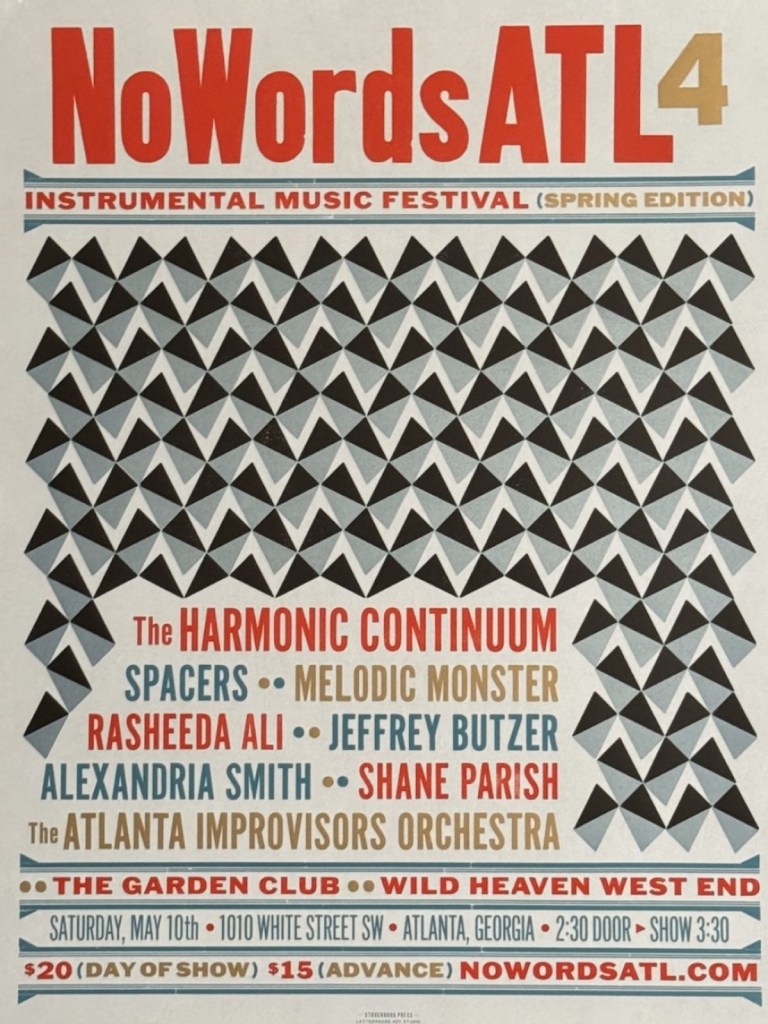
This Saturday, May 10, NoWordsATL 4.0 takes over the Garden Club at Wild Heaven West End on Sat., May 10, from 3:30-11 p.m.
This day-long festival is a celebration of instrumental, ambient, and experimental sound exploration—sans words—delivered in an environment that thrives on thick ambiance and both visceral and cerebral responses to the music.
Catch sets from an eclectic mix of forward-thinking artists, unfolding in a space that invites immersive listening. Think synth meditations, modular abstractions, steel strings, and guitar loops stretched into infinity amid light installations and projections turning the room into an ever-shifting canvas where sound and light mingle in real time.
The Harmonic Continuum is an afro-futurist, multi-instrumentalist foursome featuring Doc Calico, Billy Fields, Kenito Murray, and Kenny Web playing jazz, punk, psychedelic, and experimental rock.
Rasheeda Ali is a Grammy nominated flautist who recently stepped out from the shadow of performing alongside greats like Jeff Mills and Kebbi Williams expressing next level cosmic explorations of sound using flute, synth, and drum machines.
Shane Parish is a guitarist, composer, improviser, and leader of the avant-rock band Ahleuchatistas. He’s also ¼ of Bill Orcutt Guitar Quartet, and a renowned acoustic soloist.
Melodic Monster, featuring Ben Garden, is a psychedelic rock band that blends theatrics and effects in an unforgettable live show.
Alexandria Smith is an improviser/multimedia artist, trumpeter, and a professor of music at Georgia Tech, who has performed residencies at the Stone NYC, had feature recitals on the Future of New Trumpet (FONT) Festival West, Dartmouth’s Vaughan Recital Series, the VI Semana Internacional de Improvisación in Ensenada, Baja California, and Tulane University.
Spacers blend Kraut Rock and African rhythms to psychedelic effect.
Jeffrey Bützer is a multi-instrumentalist who plays accordion, toy piano, guitar, electric piano, chord organs, glockenspiel, melodica, banjo, and other noise makers to create a cinematic world of sound.
The Atlanta Improvisers Orchestrais a collective of experimental artists who use classical instruments, movement, and sound in spontaneous improvised compositions. Featuring Majid Ariam, Al-Yasha Ilhaam Williams, Ben Shirley, Priscilla Smith, and an evolving cast of various other artists.
Atlanta expat Adron is returning to play her first hometown show since losing her home and nearly everything she owned to the the Eaton Fire in Los Angeles in January.
The singer-songwriter is, perhaps, best known for blending Brazilian Tropicália with otherworldly melodies and a voice that is playfully dreamlike and sophisticated on albums such as 2011’s Organismo and 2018’s Water Music.
Since the fire, picking up the pieces of her life has been “insane and somewhat horrifying,” Adron says. Along with her home in Altadena, she lost a lifetime’s worth of art, letters, her beloved aquariums, and relics from her years growing up in Atlanta. It’s the kind of loss that would scramble anyone’s sense of identity. “It’s like losing my whole story,” she offers.
Adron in the home studio that was lost in the fire. Photo by Robin MacMillan
Adron also lost a home studio (pictured above) that she’d spent long hours building out and fine tuning to perfection with her partner Robin MacMillan.
In the wake of so much wreckage, Atlanta was there for her. Countless friends and fans helped her get back on her feet. Now, she’s stepping back on stage—not just to perform, but to say thank you and to reconnect with the city where she will forever be linked.
Experiencing such great loss has sharpened her connection to Atlanta and to the songs she’s written. “This show will be kind of a big deal for me,” she says. “It’s a test of faith, performing for this audience that’s done so much for me when I feel so diminished. But my music is good as hell—better than ever, even—and it’s crucial that I prove it to all of us, especially myself.”
Raw and slowly burning tension runs through TVAD’s latest single, “The Island Song,” which takes shape as a stark meditation on the damage that mankind’s obsession with religion has inflicted upon the world.
With TVAD (Television After Death) recently paring down to a two-piece lineup, principal songwriter Dizzy Damoe—who prefers to not use his Christian-born name—handles guitar, synth, and vocal duties while working alongside bass player John Holloway.
Damoe is currently a member of Alanta’s purveyors of blackened doom and death metal Withered, and is a former member of sludge metal and post-hardcore acts Leechmilk, Sons of Tonatiuh, the Love Drunks, and Canopy. Holloway first made an impression in the bands Tabula Rasa and Of Legend.
“The Island Song” conjures an eerie atmosphere, built upon minor-key melodies and mechanical rhythms that recall the bleak romanticism of early Wax Trax Records releases, threaded through with brittle textures of post-punk and dark wave. Damoe’s guitar oscillates between shimmering ambience and sharp, metallic jabs, while Holloway’s bass carves out a grim undercurrent, grounding the song’s sprawling pace.
Cut from lyrics such as “They hunt, looking for a reason. The wolf, still eats all season. A child, may go hungry. But pray, and seek out your vision,” the song stares down organized religion with an unflinching eye. It’s tone is neither preachy nor dogmatic, but there are no minced words. Damoe delivers each line with a weary conviction, as though bearing witness to the long arc of history’s spiritual missteps. “The Island Song” doesn’t offer solutions, just stark reflection.
It’s a bold move — a track that walks a fine line between sonic exploration and thematic clarity. And for TVAD, it sets the stage for something bigger. If this is the first glimpse into the group’s forthcoming body of work, it’s clear they’re not pulling any punches.
TVAD’s next show is booked at 529 on June 12, which is Damoe’s birthday. A few more shows throughout the summer will be announced soon. Until then, press play on “The Island Song.”
If you have enjoyed reading this post, please consider donating to RadATL. Venmo to @Chad-Radford-6 or click on the PayPal link below.








 Rad/ATL